Meet Paul Pape
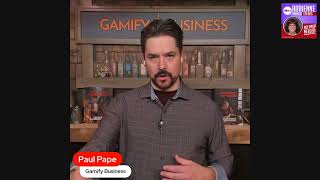
This content was created by Adrienne Barker, MAS. This content was uploaded by Adrienne Barker, MAS. This is a YouTube live-stream interview titled "Meet Paul Pape" (created 2025-10-18) hosted by Adrienne Barker, MAS. The excerpt is an English conversational interview/Q&A in which Adrienne interviews Paul Pape about his Gamify Business system — including his Creative Player's Handbook, Game Master's Guide, workbook, workshops, target markets (solopreneurs, creatives, Gen Z through retirees), team-building/leadership uses, pricing and a free sample (gamifybusiness.com/podcast). The stream includes audience interaction (participant Shadow Fox), technical issues (freezing and a power outage), live multi-streaming remarks, examples of client use cases, and practical details about running in-person or virtual workshops.
Chapters
It's obvious we are live. We're not just live right now, we're live on multi-streaming channels and on Chatter Social. Let me bring this down. Okay, so that because I have, um, attending CreativeCon with Julie Loken, C-R-E, the number 8, T-I-V-E. And I— my daughter just called. So like, really bad timing. I get nervous. She's just starting to drive. Alright. So, so I have the hat. I just wanna share with you before I introduce you to Paul, that Paul, we had an event Tuesday and Wednesday called SWAT in Order. It was a 2-day event. It was 22 speakers, 9.5 hours each day. We streamed it live on 8 platforms and Chatter Social, and And less than 24 hours after the event ran, every single speaker has their chapter that will be published in the book. Wow. And we're going to have a podcast. So we just took the idea of an event and pulled it, you know, oh, the event's over. We still know this one. When the event's over, you get a book with all— and it's not like what you think. It's not a transcript. It's an amazing narrative of what they spoke about. Okay. So what we're gonna do now is we're gonna introduce— so I'm excited. I have no clue. Paul Pape. I told him I couldn't use his initials like I normally do because it would be PP, and I can't do that. So no, but Paul is handsome. He's brave, bold, brilliant, handsome, and I have no clue. I hope I say it right. Gamma Phi Business. So you have to explain to me. You need to— I'm 5. I know I look like I'm 13. Truly 63, but can you help me to really understand what you do? So take the mic, Paul.
All right, so what I do is a business called Gamify Business. It's just like playing a game, but what we do is we take your business and you as a either a solopreneur or as a CEO or as an entrepreneur, and I teach you the methods of being a business through gamifying it. And so if you're, if you're familiar with Dungeons and Dragons, it's a lot like that, but instead of creating a fake character. We actually take you and build your business around a character of yourself, and then we look at your strengths and weaknesses. We build you a party, which is the rest of your development team or the people that you use to help you boost your business, and then we create campaigns to make running and operating a business fun. The whole point is to make it accessible and to make it fun to do. And so we have little prizes after every time you level up, or every time you accomplish a goal, you get a little prize for it. So it kind of feeds that a little bit of endorphin kick that we all like when playing games. And the whole point is that if you can scale a bit, a character from a game from level 1 to level 10, then you can operate and own your own business. And it runs on the same, the same ideas and the same philosophies.
All right. If everyone could see me, my mouth is dropped. It's like, let me pick up my jaw. What? That is crazy. So, okay, so I need to see a sample. So since we are live and everyone is going to be able to watch the video too, could you help me? Do you— I have your website up. I could show that. Or do you have another video or something you could show? I think we got a handsome frozen Paul here. Let me go down like this. Let me see if I can move him along. Hi, Paul. Hi, Paul. Hi, Paul.
Uh-oh.
Sorry, guys, we have a little bit of a glitch. Where's Paul? Let me show you his business. Hopefully he'll come back. I don't know what's going on here. Hi, Paul. Oh, no. I'm gonna actually see if I remove him and then I add him back onto stage. Nope, we need him to come back. Well, in the meantime, I'm gonna show his website because it's cool. Let me show— share the screen. See what I mean? This is— that is so cool. Now I got the dog barking. What is going on today? All right, let's see when he comes back where he is. Hi, Shadow Fox. I'm so brave, I'm doing this podcast live. Not that I've done over 200 podcasts live, I stream it, but I thought I would stream it here. But we lost Paul, so hopefully he will come back and And he has a company called Gamify Your Business, taking you to different levels, he was saying. So, like, how cool would that be? Trying to think what that would be like. So I would have a character— I would be a character in my own business. And if I want to concentrate on LinkedIn, I would then have other people. Maybe we would build LinkedIn Roblox homes and then fight the Dungeons and Dragons in between the LinkedIn messages. And then we would probably literally strangle every stupid DM that we get. Like, seriously, I love the ones that tell me they want to give me the service that I do, and I can tell that they're not even that good at it. But I don't know where Paul is. This is crazy. So I never had, um, someone just, just step off. Maybe I scared him. Uh-oh, SpaghettiOs. I'm gonna give it another— oh, there he is.
Oh, that my— we had a thunderstorm crack and all my power went out and—
Oh, wow.
Never happened to me on a podcast. I felt like, oh, that threw me. Okay. I just watched all the power in my house go out. I apologize for that.
That's crazy. Well, we were waiting for you. I wanted to say I was like, okay, if Adrian was gamifying and I did what I love, LinkedIn, and then I made a game and then I created my team for the game, the different levels. And then of course we had a really great tool. So all those horrible DMs that come in, I would like throw something that would cut off their heads and then they would not be able to give like a third, fourth, fifth, and the worst is a sixth message like, hey, I guess you don't really are interested in what I'm thinking to do, so I'll stop contacting you. Really? Like 6 messages later. Anyways, that was how— where my mind went. So I was asking you, and I will say you froze at like the cutest level, like I freeze like you froze, like perfect. But I want to ask you, so yeah, I know you're lucky. Like, that's like a gift in itself. Okay, I want to— I need to see something. So do you want to take over and share your screen if you have a video? Is there something on your website so I can really understand this?
Well, I can actually just walk you through it because everything in my background here is real. So I can actually like bring pieces.
Oh, are you kidding me? Okay, wait, I want to get down. Oh, wow.
Hold on.
Let me remove this. Hold on, hold on, hold on. Let me remove this. I feel like a real producer. Okay, hold on. Okay, now let me get you nice and big and then I'm going to hold on. Then I got to spotlight you. Boom. Now it's just you. Hold on one more step. Now you're taking over the whole— like, you're so big, you're like a billboard. Okay, hold on. There you go. Not yet. You're a billboard.
Okay, so what I do is I actually sell this book called Gamify Business. This is the creative player's handbook to business. And what this does is it walks you through the process of taking an idea, something that you're passionate about, creating the seed of your business, and then fortifying your character as well as the business itself, and breaking it down into ways that we can actually understand. We use relatable terms as opposed to complicated business terms. This whole system is created for people who are creative in mind. So if you're an entrepreneur, you're naturally creative. You don't need to be an artist to understand this. You just need to be more creative in your thinking. I like to say that business people think in a more linear fashion, whereas creative people think in more of a cloud kind of fashion. And this book is made for the people who are kind of all over the place. That's the whole thing. So what this book does is it actually walks you through step by step how to create your journey as a creative entrepreneur. And everything in this book is related to the 20 years that I've spent as a full-time creative working with companies like Disney, Universal, Nickelodeon. All the places that I've worked throughout my career. You'll see inside here there are yellow page, yellow blocks as opposed to the white blocks. The yellow blocks are actually personal stories of things that I've done in the book. If I'm asking you to do something in this book, I will give you the reason why and a story as to how it impacts you. Most of the stories that I tell in here are how not to do things because I've screwed up a lot in my business and I've learned from the failure. And what I'm hoping to do is that you'll read about my failure my stumbling block, and you can bypass it. That's the whole point. So the book starts with character creation. We actually go through your actual character sheet. We create one based on you, and there's a lot of things that you can fill out. One of the other images that you see is there's a workbook. So instead of writing in the hardcover, you can actually go ahead and write in the workbook and kind of fill that out. But once we understand who you are as a character, then we can go in and actually start to figure out where you need to be advertising, who the people that you need to have your support team, where you're going to find funding, all of that. Completing this book up until the appendices, you actually have created a solid business plan, and it gives you 90 days of actionable steps so you can start making real-life money immediately upon ending this book. Now, we have 4 appendices in here that answer almost every single question you can possibly come up with, from how do I write a letter to a bank, how do I find my audience, how do I figure out what to charge, what What's the— and it gives you all of that. We, and we break it down into things that aren't just forms to fill out, but we have like a monster manual, like characters or creatures that you'll encounter as a creative, like the scope creeper, which is something that most creatives deal with over time. And that is a person who likes to tell you, this is what I want for my job, or this is the thing that I'm buying. And then over time they keep increasing more and more without paying you more for it. That's the scope creeper. So one of my favorite monsters that you encounter in real life. And so this book walks you all the way through it. Now, I do have a second book, because the best way to earn money through your business, to attract customers to you, to attract people to buy your product is to not sell the product, but to sell yourself, sell the person behind it, to sell the story. And it's all about storytelling. And so we have this other book here called The Game Master's Guide to Business. And what this one does is it teaches you the art of storytelling so that your process becomes the compelling thing that doesn't Instead of asking people to buy your stuff, it gets them excited to want to buy it. Instead of going, buy my book, buy my book, buy my book, you tell the story behind why you would want them to have it. And then it makes them more intrigued to want to buy your product. And so that's the whole point of the Game Master's Book. So—
Paul, hold on for a second. Just so you know, I'm going to keep— I'm just going to put a post in Telegram. This is crazy. So when I'm thinking of what you're doing, I'm like, oh my God, you're taking the idea of get your client avatar in your head to, oh, we've got so much more than a client avatar. And then the other thing, the other thought that's in my head is I am a different mix because I'm— besides my age, my young age of 63, I have 35 years of business experience. So I'm a creative but with a business mind. And so I was thinking, okay, for me, I just told you I create an event that nobody's created before. I've created the first AI-driven podcast in a debate style in the global etiquette industry. Nobody has an AI and a debate over AI global, like, questions and what we do during corporate etiquette issues. But my point is that I love this. I could see where someone who's not creative would be like, yeah, what? Why would I? No, that's not for me. But I'm like, oh my God. And then you talked about the strength and weaknesses. So I don't want to stop you. I just want you to know, though, that my eyes are down for 1 second. So let me— I just want to show what, what, like, what is going on. So hold on for one second because it is so good what you're doing. I just want to make sure because I mean, gamifying your business.
Wow.
I'm just gonna say, hold on for one second. Take your business. What I'm doing, guys, is just putting this on Telegram so more people can see this. Take your business to a new level. Forget, forget client avatar. Create your character around your business. Amazing. I, I don't even know if I'm saying this right, but they create your character for your business and gamify it, right?
Yeah, I mean, the whole point is, I mean, you said my tagline. Yeah, yeah, my tagline is—
what is your tagline?
Business is an adventure. Don't be an NPC. An NPC stands for non-playable character. You should be the lead in your own adventure. Your business should be a game to play, should be fun, and you should be in charge. Don't let other people be in charge of your destiny. And that's the whole point of this.
What's NFC? What is that? What is that?
NPC stands for non-playable character. So it's like, basically, don't be a drone. Be your own person. You know, it be the hero in your own adventure story.
Oh, I love that. Okay, thank you for letting me do that, because I'm like, geez, this is way too good not to let other people coming in. Okay, all right, so let's take— okay, let's go. The set— so the first book I can order, I can look at it, I could get a feeling. Is there anything I need to buy with it? An app to gamify? Is there something that goes with it?
Well, I do a lot of things on paper and pencil. I'm old school that way because basically what you want to do is you want to— this is— this book is about introspection. It's really going to take you to be honest with yourself and to dig deep into who you are as a person and what you want to do. Now, the reason that we do it on pen and paper is because no one's going to see this but you. I don't want to have it on an app somewhere that information gets toggled back and forth to some insecure place. No, the whole point is that you are in control of this and since no one else is going to see this but you, it allows you to be as open with yourself as you possibly can to get the most out of this feature. And so when we're going through the character sheets, what we do is we say the first— we ask two questions. The very first two questions are, what are you passionate about? And if you can answer that, most people can. I love gaming, I love art, I love whatever. The second one is, what do you do differently than everyone else who has the same passion? And if you can answer that question honestly, that is the seed to your entire business. And we can build an entire business around that one idea. They say the riches are in the niches, and that's really what we're trying to do here is trying to give you your niche. And then what's nice about it is once you've figured that out, you— that becomes the island, the pedestal or the island upon which you stand upon and allows other people to know that if I'm interested in this aspect, that's the person I need to go. That one individual stands above the rest because they're clear on their motives and their inspiration and their business has a clear path.
So this is really great for what ages? Like, I'd love to actually like hear like an example of a client. And then of course, I can't help but think, oh my God, this would be amazing for our Gen Z, right? Like, and those coming up so that they can understand business in their terms and enjoy it. You see me having fun wearing a goofy beanie hat. But I do that because I don't think business should be— I mean, I know business is serious. I'm not talking to the attorneys and the CPAs and the accountants. God bless you. And I love when you can loosen your tie, if you ever do. I don't know, maybe they sleep with ties. Who knows? But at the end of the day, the creators want to have fun and enjoy. And the Gen Z, I mean, I say I love what you do. So is that who your market is?
Okay, so the market is actually widespread. I've had everyone from middle school students who do this as an after-school club all the way up to people in their 60s and 70s who are retiring, who are interested in now pursuing a passion that they had rather than working a real job. And so the age range completely— it just depends on whether or not you're interested in pursuing business, but you feel that traditional business advice or traditional business methods are too complicated and you're unsure of what to do. This makes it accessible. So the age range is wide. I teach this to high school and college graduates that are coming out of school. They've been taught all of the tools that they need to go out and do the job, but they're not given any instruction on how to do it. That's really what this does. It breaks it down. You don't need an MBA to be able to be a business. If you can run a lemonade stand, you can do this kind of stuff. And so the whole point is that it's open to anybody. One of my recent clients was a 64-year-old woman who really just needed— she had spent her entire life in education. She was trying to branch out and go into something different. And so we needed to course correct and have her really hone in what her skill sets were, what she was— we say deficient, or what she's low in, and that's what comes out on the character sheet. And then from there, she was able to apply for the right jobs, apply to get forward momentum on where she wanted to go with her career. And it worked out like a charm. I also worked with a 20-year-old who was an artist who was floundering, had great ideas, grand visions, but no direction. And sitting down and doing 3 sessions with her, she had clear direction. From there, she opened up a pop-up art an art show. It was hugely successful, and now she's got the, the vision and now the paperwork to support it to go forth and be in a business. So it's, it's wide-ranging.
Wait, this is so cool. So you heard me say that we had the SWOT event— strengths, weaknesses, opportunities, and threats. And, you know, some of it could be very boring for someone. We tried to encompass everything. But I definitely want you on our circuit because you're doing that. You mentioned strengths and weaknesses, but I know you're talking about opportunities and threats too. The business in such a way. So you're gamifying it and you're talking to a group that can understand it. But okay, so, but I'm a baby boomer, boomer. And yeah, and I love it. And I love also, I love the— I don't— I'm not smart enough to be a gamer, so I'm just going to put that out there. I say that because my daughter's boyfriend, he's like a genius and he games. So like he's high level, but, but even him, I'm like, you need to make this a business. So he should— I'm gonna get him the book because he should gamify the fact of his being a high-level gamer. He gives away every day all of his knowledge, and I'm like, dude, that age group has a hard time understanding that they can make money from things they know because they think, well, I know it anyway. So I would love this. I— this is so perfect. But okay, so come back and take me. Sometimes a lot of this is like almost too much, and it could be a little boring. I like fun, so this would be something that I could do. But this is in-facing, it's not out-facing. Like, nobody's gonna see it, the game, like, right? This is for a team of people. So it's really for a company that's probably bigger, that has a group of people. And instead of sitting around a boardroom, they could really do something like this and, and make it fun. I love this.
Yep, it's, it's made for solopreneurs up to small businesses, typically around 1 to 10. If you have a bigger business than that, what we do is we, we center two different teams. We have the CEOs or the management side of it, and then we have the workers as well. Because within any group, much like in gaming, you don't want to have 5 warriors because then you're going to wipe, you're going to, you're going to die, you're not going to be successful. You need people that have varying skill sets that complement each other to help you build a better, stronger foundation to be more successful. And that works with both executives as well as workers. It works for solopreneurs as well as entrepreneurs with small teams. Everybody has to know their position within the business so that they can help to boost it up. One of the biggest issues that I run into with entrepreneurs— my cat is really excited to be on this show, by the way.
Hi!
One of the biggest issues that I run into with entrepreneurs is that they feel like they have to wear every single hat and they have to be excellent at every aspect of it. And that's untrue. But they also feel that they can show no weakness because, especially as a solopreneur, whenever you see a chink in the armor, then you end up starting to second-guess yourself. The, the imposter syndrome really starts to show itself. And so what we do, in a lot of role-playing games, you would roll a die to kind of give yourself your strength, your wisdom numbers, and all of, all of that information. We don't do that because this is real life. And so we use a sliding scale between two extremes. So you can be either really rigid in your work, or you can be creative, or somewhere in the middle. And one, one of the issues that I run into with entrepreneurs is that they like to surround themselves with like-minded people. The problem is, is like-minded people who have the exact same ideas and philosophies as you are not going to be great business partners because they are just bolstering your voice. And then you create an echo chamber. Instead, you need people who have opposite sides of the spectrum to help to round you out and create that better foundation.
OK, so is this something that could be pulled off, like behind the scenes, if you're working with like a chamber, let's say, and they, they're pulling their leadership, let's say they have a leadership class and they're looking for like a kind of like a weekend, like retreat kind of style, something to do that they, everyone can kind of take a piece and have fun but learn. Is this, is this something that you offer?
Absolutely. And that's the great thing about it is because it levels the playing field. You can be a really strong leader, but then you're, you're as, as an executive. So if I come into like a chamber board or something like that and they want to actually do some of this training, you're going to have quiet people on the board, and you're going to have loud people on the board. And we all know, sitting through those meetings, the loud person takes the reins, and they end up bowling over everyone else. The way that this is set up is that everybody has their strengths and weaknesses. And so when you are encountering an issue, we call it— this is the campaign that we're on, that would be the terminology that we use in gaming. But when we have a problem arises, only the people who have the skill set are allowed to lead. And so it allows everyone to rise to their specialty and show their worth. It's a great team-building exercise. It really lets everyone know that even though someone might be quieter in the boardroom, it doesn't necessarily mean that they're quiet in their mind. They have a lot to say and they have a lot to contribute. And so this approach allows everyone to kind of level the playing field and everyone gets a voice.
So, OK, so I understand. So if I was going to see this, like, live, everyone would have their own computer in front of them or whatever they're using?
They'd have a pad of paper or the workbook. That's the other thing that I sell with it. So this comes with a workbook as well. So you'd have that in front of you, and we would do, uh, we would create everybody's character sheet solo. That's what you do. You do the introspection yourself, but then you get your stats going so you understand where you're at. And then we do looking for group. That's why this looks like a tavern, because in a role-playing game, the person who has all the knowledge and the place that you meet is the tavern. So I play the tavern keeper. I'm the barkeep, the tavern master, and I'm also the game master. And so they would all come to me, and we do Looking for Group. And what we do in that is an exercise of who is the best fit for me in this, in my business venture? Where do I fit in as a puzzle piece? I don't want to go find like-minded people. I want to branch out. And so we do Looking for Group. So when I'm working in a workshop environment, it can be anywhere between 5 people and 25 people. And what we do is then we break them off into smaller groups, groups of usually 3 to 5 people. And that becomes your campaign group for the adventure that you're going on.
So wait, so this is so interesting. So I, I, I love leadership programs and I'm a graduate of like over 5 of them because, yeah, I'm a weirdo. But no, seriously, they're so awesome. And so when you're doing a leadership program, I did the one with Dr Pepper. I don't know. And he has like 4 different squads. So you're kind of like, I've done it twice. So I was like where we had no money at all and we had to you know, figure out ways to get resources to having it all. And, you know, were we going to be generous and help those that don't have enough? It was really fun that way. But I'm thinking they needed a lot of props. Are props needed for this, for like what you're doing, or is it just really just kind of the props are in the computer?
The props are if you want to have it. I mean, some people go all in, they go whole hog, and I've seen it from hats that they wear. Oh yeah, absolutely. I've seen it go that way. Um, and I've seen people who are just like, no, I'm just going to fill out the paperwork and we're just going to talk. So it, it's really how much you want to get into it.
I love that. Oh, we got Shadow Fox is in on chatter, hand up. Hi Shadow Fox, thank you for being here. So ask your question, take the mic Shadow Fox.
Oh my goodness, thank you so very much. Um, and hello Paul. I just have to, I have to ask, well kind of like two questions really, because I find what you're saying is very, very interesting. Because it's having a team and having that diversity. Like, I'm an author. I've— my husband and I were indie authors. We've published our book Spiritual Logic, short title. But the thing is, is that I truly lack technical skills, like being on the computer and everything else. And I have a few people that truly helped me with that. I also have someone else that has never been in the marketing aspect of books, but yet she knows marketing. And so it's really funny because we're kind of all learning together, like me being in this room right now. Hello! That's, you know, it's a miracle almost. Um, but what I was seeing something in the background. And like, you're doing this as a podcast. Are you actually standing?
Yeah, I'm standing right now. No, I'm standing. This is me wandering around my little bar.
I think that's awesome because when you're speaking, it comes up very differently than if you're sitting behind a desk. And I just recognized, and I just had to point that out. So That's awesome. Thank you.
Thank you. Thank you.
I love that. Thank you so much, Shadow Fox.
Yeah, what she was speaking on was 100% correct. It's finding those people that help to bolster your— it's not— it's deficiencies. It's not a weakness. And you could be— you could have the skills to do something and just not like doing it. I hate marketing. It's not my favorite thing to do. I can do it, but I'd rather pay someone else and spend my time doing something that I really, truly enjoy doing. So what they were talking about, about finding somebody to help them with the technology, to help them with their advertising and marketing, that's brilliant. That's exactly what you're doing when you're looking for a group. Now, you may not want to go out and get drinks with them or go out and get coffee with them or go on a date. That's OK. These are work colleagues, but they're people in your party that will help you to be more successful. So absolutely nailed it. Can't hear you. Can't hear you.
Of course you can't hear me. I don't— I have the mic button off, so like that would make sense because it's always like user fault. So I want to understand this. Is there a piece of this where you have other players that you could bring in too? Are you sharing like player resources?
Absolutely. I mean, that's the whole point is it is a business. So like one of a lot of my clients are solopreneurs or standalones, but I have worked with teams. I had a great team. They were artists who created little dragon figurines and they were upscaling. They were seeing a definite issue with their— they were grossing really well, but they weren't netting very much and they weren't sure why. And so we sat down and we actually talked about it. And one of the first questions I asked is, what does everybody do in this business? What's your job? And their answer was, we do everything, which is the wrong answer. Basically, that's the best way to fail as a business, is to have everybody have their fingers in all the pies, because then nothing gets, gets going the right way. And so I said, we're going to play this, we're going to play your life Dungeons and Dragons Business Edition. And what we did is instead of them having a character like a ranger or a wizard or a warrior, I said, okay, you're the art department. You're the management, you're the advertising, you are market— or the analytics and the money. You're basically the one who's in charge of that. And so when we encounter these issues, and their issues were the same issues that everybody else runs into— where do I find my people? Well, that falls under marketing, but also the artists can help support that. How would we approach this? Well, I asked the marketing person, what's the best way to approach this challenge, this dragon we need to slay, which is marketing? So they give their ideas. But then we can get support from the other places. "Well, we don't have the money for that," says the money person. Or, "What if we did this art challenge where I created a coloring contest and everyone submitted it and whoever won got a 20% coupon?" Great idea. And that's how we attack it. But the person who's spearheading that particular fight or challenge is the person who has the, the most skill set necessary to accomplish the goal. And so it works great with Teams. Absolutely.
Okay, that is the coolest. I want to, I want to take a second and look at your website, if that's okay, and see if so I can understand it more. And thank you, Shadow Fox.
You—
I, I'm like listening and obviously not even picking up what, what we have laying down here. All right, so we have the website here, which looks amazing. Let me, let me blow it up on live so everyone can see it. All right.
So that is the hardcover book and the workbook that comes with it. And the workbook is basically just a fill-in-the-blank version of the Creative Player's Handbook. And so it allows you to fill it out. Now, what I don't like to tell people, because it makes them feel like it's too daunting of a thing to do, is that when you fill out the workbook, you actually have a business plan, like a business plan you can take to the bank and say, "I need money. Here's my business plan." So, but we frame it in a different way. We frame it as though you're creating this venture. And so that's what the workbook is actually for.
Wow. So you're really, you're really changing the way business can be seen. I love that you're teaching it. It's the biggest complaint that we hear that, oh, you know, your kid can go from high school to college and still not know how to, or like even dentists graduate from their dental schools but don't know how to run their business. So I am loving this. All right. Your prices are so fair. Amazing. So you get the bundle for $75. That's fair. And then I thought I saw— okay, so I like that. Nice.
We have workshops as well.
Yeah, I see that. I want to go check it out. Okay. Workshops.
Now I do workshops virtually or I do workshops in person, or you can host your own.
Wow.
And what's nice is we go do the live, the live version in person. I do bring props. Because who doesn't love a good prop, you know? And it also helps to bring people up on stage and we can talk and we could go through these battles with all the information. I do one-on-one campaigns with your business. Also, I do a Zoom version of it where we get 10, 20 people together and then we do break-off sessions where they form their own group and then we all encounter the same monster. But the monster, everybody has their different approach to how we deal with that. And then everybody learns from everybody else.
Wow. I, oh my God, I love this. I absolutely, I am so glad that you said yes. No, I'm not even kidding around. This is so— this is cool. Yeah, I mean, I definitely want to share this with the chambers in our area because I think being a leadership class, they're always doing something in that, like, retreat. And I think that's probably a difficult part. And you know what? How many times can you climb a— like, they have the telephone poles and you climb them and then you have to jump. And Paul, I'm not gonna not tell the truth. I was up there in front of 30 adults crying for my mommy, begging to be able to like— I mean, they scare me. They're like, that's not motivating. That's like, yeah, I guess I did it. But at the end, there was a couple of times I didn't do it. I just cried. Okay. I am loving this. So we've got here from side quest to main campaign. The website is cool. Okay. So how many other people, how many employees do you have?
It's just me. It is just me.
Why are you Santa for nerds?
Okay, so everybody always brings this up. That was a name given to me. So for 20 years, for my regular job, I was a designer and fabricator of custom collectibles. And basically through that, people would ask me if I could make something, and I can. And I eventually started working for companies like Disney or Universal and Nickelodeon, so on and so forth, and they would hire me for the same thing. And I had one client once say, you're just like a Santa Claus but for nerds, because a lot of the the things that I make are very nerdy in, in regards. So I do a lot of custom engagement ring boxes, and a lot of them are like either Harry Potter themed or Star Wars or whatever. I've got like— here's an example, like here's a giant 12-inch custom carbonite. This is you frozen in carbonite, like, like—
oh, you gotta see. Hold on, let me go back. Are you showing us something? Oh wait, wait, let me put a spotlight on it. Hold on.
Okay, so this is a random person. That's his face, his, his hat, his glasses, the whole nine yards. And this is the pose that he wanted. But I make every single kind of pose you can imagine. So I do this and yeah, I make all different kinds of props and stuff. And so people just started calling me Santa for Nerds. And for 6 years I was actually on a platform called Twitch, which is a gaming platform, but there are artists on there as well, about 20%. And what I would do is every day, about 6 days a week for about 6 to 8 hours a day, I would be on Twitch doing my art live. And in doing that, that's where I actually started meeting more creatives who were curious on how I could be successful. There's a statistic that a lot of people don't know, which is 93 to 97% of people who who get a degree in a creative field do not pursue that when they're done because they don't know how to be a business. And so when I was talking to these people on Twitch, what would happen is they would ask me things like, how do I figure out what to charge? Or where do I find my audience? Where do I— how do I do this? How do I do that? And I would always answer them because I'm not about gatekeeping. I'd love to see more artists and creatives be successful. And so from there, that's where the seed of this business came from. So I went from being Santa for nerds to being Santa for nerds, but I'm also now a consultant and a coach, and I run this gamified business to help other creatives figure out— again, it's all about accessibility. It's about making it easy to move to that next level.
Oh my gosh, I love that. I will say I grew up in the promotional products, logo-branded merchandise, moved to celebration because at the time Disney was our client and we did a lot of custom logo merch for them. And then also I will share with you that my dad started a toy museum in Connecticut and he Collectibles. Yes, BarkerMuseum.com. So if you ever have any extras, you know where to put them in a nice museum. I love, love, love your history. I love that. I'm so glad. Let me come off here to say, is there anything that I should have asked you that I did not ask you?
Well, I think the one thing that you forgot to ask was what can people get from me for free? Because I'm Santa and I have gifts for everyone. So if you go to GamifyBusiness.com, Forward slash, that's the leaning slash, and you put podcast, just the word podcast. It'll give you the first 2 chapters of my book for free so you can check out exactly what the process is like before buying it. So if it resonates with you, then I recommend just purchasing the whole thing. So that way it's, you know, you get to try it out before you buy it.
Oh my God. Do you have your own podcast?
I have a couple of podcasts.
Yes. Oh, you do? I'm only asking you because I love that example. We have a pod to book, Sheila. Slick Started Pod to Book, where we take— oh, actually, my, I have my book just got— it's 16 of my guests, uh, into a book. And you can check out a free chapter podcast, um, uh, podtobook.ai. But I love that, that free chapter because people try it and then you get to hear what they think. So, all right, guys, so then I am going to— bear with me for a second. I'm going to just put this in the chat so that everyone could see it. And then is that it? Gamifybusiness.com/podcast. Let me make sure I have it right here.
I'll put it into our chat too. Uh,.com forward.
Oh, here I have the tab right here. Is this what you would receive?
There we go. That is it. So fill that out, hit submit, and then you'll get a download for the first 2 chapters. Yep.
Oh, that is really cool, you guys. That is so, so cool. All right, got it right here. Um, Fill this out to check out.
Now, the reason that I asked for your information is not because I'm going to go sell it. I don't, I don't even, you know, I collect it. If you want me to keep it, I will. It's to keep the spam bots from just going in and destroying your website. So I need you to fill out some manual information on that one.
Oh, I love that. Yeah. So let me, let me put the spotlight on you because, you know, I mentioned ChatterSocial and I absolutely love it. And then there's some people on ChatterSocial that are just So smart, and they're literally killing it in a nice way, not in a bad way. They're like, like, see, but gamifying it, I would say they're killing it in a good way. And one of this is a woman named Rocky who does— Rocky probably done like maybe 400 workshops this year. Rocky is, is fantastic. I love her, her blogs and her articles and what she's teaching. So I want you to meet Rocky. Rocky, meet Paul Pape from Gamify Business. How are you, Rocky? Hi, how are you?
Oh my God, I thought I was watching a podcast. I didn't know you were doing this.
Oh, you are talking live. I know, I was like, man, she was talking about me in this video. That's awesome.
Nice to meet you. Nice to meet you.
Nice to meet you. I talk about you a lot, Rocky, because you are one of the most authentic, transparent social media experts out there. And that's why I talk about you, because you are— your lovely personality, but you're also so good at what you do. And you, you keep—
you're really good.
You can catch Rocky, she'll tell you when, um, also when, where she is and where she does her workshops. But yes, I'm so excited. So have you ever heard of gamify your business?
I have not. I was literally about to Google it, see what it is.
So gamifying business is exactly what it sounds like. Turn your business into a game, to be an adventure, to have fun. That's the whole point behind it. And it simplifies the terminology so that we— so anybody has easy access into owning a business. I've worked with a client who started a lawn mowing company. Like, he mowed lawns in high school, and he got out of high school. He's like, I don't want to go to college. I'm going to keep mowing lawns. And eventually, it turned into his own little enterprise. But he's like, I don't understand what I'm doing. I was just mowing lawns, and I got more lawns, and I got some employees. I don't know what I'm doing. So I sat down with him. We went through this process, and we turned it into a game. And so now his employees have riches that they're trying to earn as well as he does. And it turned it into so much more fun and he didn't need a formal college education to understand it. He didn't need to have an MBA. One of the examples that I love to use is when you go to a site like, like ROAS, return on ad spend. A lot of people don't understand what that means. But if I explain it in this way, you get it. If you are an adventurer and you go into a town and you see a little stand that's got all these ads on it that you can pin your own thing, say, I'm an adventuring team. I'd like to go out there and battle your monsters for you, and you put your little poster up there. And as you're putting it up there, this old man comes running out of the town hall and he's like, hey, hey, hey, hey, you can't just put that up there for free, you got to pay me a gold piece. You're like, okay, well, how long can I hang here for a gold piece? He's like, one month. You're like, okay, cool. So you give him a gold piece, you hang your poster, you don't get any business, no one hires you during that month. Well, that's a bad investment, that's a bad return on your ad spend. But if you get a lot of people coming up and saying, hey, this new adventuring team's here, they're going to go out and Slay all my monsters. Awesome. Well, then that gold piece was well worth it. That's a positive return on ad spend. Once you break it down into that, they're like, I get it now. I understand that process. And then we just elaborate out further. So it's a lot of metaphor, a lot of simile.
Yeah, is it similar to, um, now, and maybe this is old marketing, but we used to do where we did quizzes and stuff like that, and they would do certain paths that would lead them to whatever direction they needed in their business. I did check out your website. It's amazing. So is it kind of the same thing, basically making it like a journey and all that kind of stuff?
It is. It's a journey. It's like we were talking about earlier. The first part of it is character creation, which is you as a character within the game of life, your game of your adventure. And so it's a lot of introspection on that regard. So you have to really think about who you are as an individual or as a business person within your, within your story. And the reason that we separate it out like that is because a A lot of people don't like to say, "I have flaws." We like to say that we're perfect. But we can say, "My character has these flaws," even though the character is you. So we do that bit of introspection first. And then from there, we do role-playing. It's all about role-playing. It's about how would we accomplish this goal? The goal is usually the quest that we're on or the monster we have to defeat. But those are actually equate to real things that we'd have to do in business, like figuring out how to advertise or how do we find new markets. And so It's, it's role-playing. So we do it live, typically, either online or in person. And we actually talk it through as though we're accomplishing this task. Like we're playing a game of Dungeons Dragons, where we, you have an encounter, and then you have to talk about strategy, and you accomplish the strategy. And then someone like me who's playing the game master says whether or not that strategy is going to work. And then if it doesn't work, then you have to get more creative in your responses. So it's a, it's a live-action role-playing is what we're doing.
Oh, I love it.
Okay, well, you know what I love? I love the fact that I now can say, oh, I didn't make that mistake, my character made that mistake.
Exactly.
Like, it literally has nothing to do with me. I, I— yeah, no, you got the wrong person here. It's her, it's her. Yeah, the skinny one. Anyways, I thank you, Rocky. Thank you, Shadow Fox. Thank you, Danielle. Thank you, whoever came in the room, really appreciate it. Paul didn't know what he was getting into. Paul, I will share with you, I do think that Chatter Social would be a great place for you to come in and actually run rooms and explain. You have, right, Rocky, do you agree with me?
Yeah, especially because you have the ability to share the desktop and stuff too. It'd be a cool thing to like, especially me, I'm a visual learner, so I'd like to see, you know, see how it works.
Okay.
Yeah. So I, you know, I had you blown up. You were right here. You could hear how it sounds. So you get people in the room. No, I'm serious. I'm serious. I think that this would be a great group for you to do it. It's Chatter, C-H-A-T-T-E-R, Social. I'll put in the thing,.io. It's a free download and there's no cost. If you wanted to start earning like rockets, you could do that, or you could— the other ways that you can you can earn. I'm gonna put it right here, but it is free. And if you go to the store in Apple, if you're cool enough to have an iPhone, or if you are a Droid, which, you know, nothing personal, but start saving your pennies for an iPhone. But anyways, that's another story. You will see all the positive reviews, and that's, that's like gold, right? Nelson Opega, who we all love, our founder, he runs amazing starter rooms too at night. You've got some incredible people on here, and I think you could find not only new business but absolutely business owners. I love that you're teaching the younger generation too. I love everything about you, Rocky. The only thing I couldn't say is I couldn't say my— the two initials. You know how I like to put— like, I sometimes— like, if your name is Jennifer Jensen, I'm gonna call you JJ, or if you're Barry Bruce, I'm gonna call you BB, but I can't do it for Paul because it would be PP. Okay, just kidding, Paul. Sorry, sorry, Paul.
I've lived with it my whole life. I'm okay with that. It's all good.
Good. So yeah, I can't take the kid out of me. All right, is there anything else? Do we, um, are you— can we follow you everywhere?
Yeah, I'm on social media. It's either Paul Pape Designs. That's where you can see all of my work as a Santa for nerds, um, and that's where my YouTube channel is as well. I have another webs— I have a podcast which is Gamify Business Tavern Tales, where I actually am the barkeep and I talk to you through a lot of the things that we have, and I do interviews on there as well. And then you can find me on my website, paulpavedesigns.com, or gamifybusiness.com if you're interested in this aspect of it.
Oh, I love it. Thank you so much. This is really fun, and this was via PodMatch. I just want to say thank you to PodMatch. I am really enjoying that platform, and it's just, it's just so pleasurable. So I'll get this produced fairly quickly. I'll put that date in. Thank you, Paul. Have a great weekend too. I hope you do something scary.
I will. Thank you so much. Have a great one.
You're welcome. Thank you. And thank you everyone on, on Chatter Social. I really appreciate it. I'm going to end the room, but I— you really— thank you, thank you, thank you. So thank you, Rocky. This really was just lovely having you here. All right, I'm gonna end the room. Bye, guys.
Do I need to stick around? You still can't hear you. Um, Do it.










