Meet Pete with Pete vs Anxiety podcast
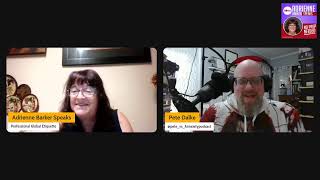
Pete hosts a podcast where he's done 300+ interviews about anxiety and mental health. He walks through his comfort-building techniques, explains the difference between anxiety and stress, and shares tools like the 5-4-3-2-1 grounding method. The 988 suicide-prevention line and text-based crisis support come up, along with how social media sensationalizes mental health.
Chapters
Okay, we are live and I'm really excited because Pete is obviously brave. He's probably bold. I think he's bold. He's brilliant. We know that he's bald. We 100% know that unless he's wearing a bald wig, which I think could be a thing. But I don't— I don't think so. But I will say, Pete, today is New Year's Day, so happy New Year's. And I forgot that we had the meeting. So Pete, I always put— this is the key, you guys. As a podcast host, as a business owner, 386-631-4577. Pete, I give my phone number away without any anxiety because if I didn't put it in there, you wouldn't have been able to call me. And I think the most important thing for us as hosts and business owners is that you can find a way, because I am a human being. And literally, I wrote to you last night and I'm like, hey, are you sure? Because I also produce some other podcasts and I know that people have done they'll like book a time, but they don't realize it and then they don't go back. So, but I had a funny feeling. I'm like, oh, I really just, I've gotta do this. So welcome the, oh my gosh.
Hi.
Hi, The Wiser and Gilead. Just talking to a few people in the room. Gilead, your PTR is pretty amazing. Like you really, oh my God. And The Wiser Tiger is amazing. So here we are. More people are in the room. And Pete, we want you on, we want you on chatter.
Just check it out. I've never been on chat about— I was gonna check it out for sure.
I mean, don't come on if you don't like real people. Real people have fights and conversations, a lot of anxiety, and we need anxiety conversations. So, okay, so I don't know anything about Pete. We know that. So I need to throw this to Pete. I'm going to enlarge in this Pete and putting you on stage because you're way more handsomer than I am, and I, I could use— I wouldn't mind being both. Okay, no, I'm not really serious with that, but my, my brains are always a part my, like, problem in life is how my bangs look. But they look okay today. Okay. I am giving you the microphone to introduce yourself and let us know who you are and what is the Pete Versus Anxiety podcast with over 125 positive reviews just on PodMatch alone.
Take it away. I'm Pete, host of Pete Versus Anxiety. I run a mental health podcast. You know, we cover everything from anxiety to those really tough subjects that you like to talk about that a lot of people— what I do is I invite people on my show to, you know, talk about these things because it's a safe space, it's, it's no judgment, things like that too. Uh, so the conversations get real raw to the point, you know, that we, we get into some deep subjects. Do we, do we trigger people? Yeah. And if we do, that's a good thing because it means that obviously we're hitting the niche that people want to hear. So, you know, and, and like, you know, Adrian said, I, I have 125 positive views of people that I meet every day. My name is probably known more than most people around the world. You know, I've been on, done thousands of different podcasts and things like that too. And I just love doing it. It's great.
Real growth starts right after the fear and the anxiety. What you— I'm assuming you have a background either on been there, done it and understand, and, you know, more like a layman.
I haven't. So I deal with anxiety myself. I have depression, PTSD now. And I have ADHD, so, you know, it— I come from it. I know what it's like, you know, when doing this show in the first few interviews. Oh man, my anxiety was through the roof. Now, down the road, 300+ interviews where I'm at now, it's like nothing. I could do this any day and do it every day. Some days I do 3, 4 interviews in a day, and I love every minute of it, you know, and it's great.
So actually, I want to ask this question to you because— I'm sorry, I'm getting over a cold.
No, good.
For podcast interviews, what would you say you have learned as a host that helps you day to day? And not necessarily about anxiety, but let's just talk about being a host of that many interviews. How has that made you grown?
You know, if you look at it where I started to where I am now, I mean, it's more comfortability. Like in the beginning you're nervous because it's like you don't know these people you're interviewing. Like, you know, like you read some of their bios and things like that too. But the comfortability comes with it too, you know, like after so many interviews, it's just like everybody will tell you the same thing. Oh, Pete's easy to talk to. I can come talk to him about anything. First 5 minutes, man, he made me feel welcome, you know. And you learn these things as you go, you know, like, hey, how to, how to, you know, keep the conversation going, you know. And like, you know, it's a lot of it's like, you know, learning when to listen and when not to say anything, you know, like what people say stuff, you know, like if they're feeling something, let them feel it and go, you know, and then you'll get in and, you know, you'll learn when to jump in this, like kind of carry the conversation where you have to. You know, and it's great though because I've learned how to get people open up too. Because a lot of times you— there's, there's some people that you get, they're just kind of like, eh, they really don't want to like really engage in the conversation, you know. And that's why I do a conversation versus an interview, because mine is more— it's more like having just a conversation with a friend, like you're having coffee with your best friend, you know. And you tend to see the conversation opens up even further, you know. And after like 200 of these things, man, it's so easy. I could just hit record and just go talk about this stuff for days, and it doesn't even matter. Most of the time I don't even prep for half subjects. I just know the topics because I study them in general, you know, and they're things I'm very interested in myself. So it's great. It's not even like a job. It's just like, you know, I'm having a great conversation every time.
And we get a little commission on, um, on PodMatch too. You know what else I've been doing? I, um, so actually, so will you be attending Podfest by any chance in Orlando?
No, I wanted to this year, but I'm not. My good friend, uh, that hosts Humanity 2.0 is going to be there on my behalf, so she said she's going to chat me up while she's there.
So, oh, I love that. I love that. And yeah, and then I'm going to go in with the app where you can put on the table and then just it records everything. So I'll let you know afterwards rooms I have. But so I actually have— I'm very excited to attend. So I'm attending with Pod to Book. I'm the chief marketing officer where we turn podcasts into book chapters. But my book just came out on Wednesday and it's actually the Pod Match edition. So it's 16 interviews including Alex. He wrote the foreword too. And Pod2Book is an AI system that takes your podcast, like each episode, and turns it into a chapter, which by the way, happy to do a free chapter for you so you can see how amazing it is. But very, very cool. What I notice as podcast hosts is that we really learn how to listen, right? Mm-hmm.
I love that. Yeah, definitely, definitely.
Bear with me for a second. I'm just going to raise my voice a little bit. Hey, Lana. Oh, she's outside too. I think she may enjoy this conversation. Um, so first of all, your listeners, let's just talk about your listeners for a second. Are they all age ranges or are you have like a certain niche audience for your podcast?
Well, based on the analytics I'm looking at now, it's, it's a, it's a male to female ratio. It's like more males than females sometimes depending on where they're listening. Like YouTube's more males than females. Instagram, it's more females than males. It's kind of interesting as you see, like, where people are looking at your content and the age range I'm tending— I'm getting is 20 to 40 range, right in that range, you know, based on my statistics. And, you know, and then I'm being heard as far as Australia, which is, which is scary to say because it's like when I started this show, I didn't know if anybody was even going to listen. And I, you know, and at this point I've met so many different people around the world. It's crazy to see where your videos are reaching these days for the power of the internet too.
That is so true. I love that. I'm going to bring back in— hold on for one second. Okay, so I wanted to show off, first of all, your— this is your AI, your Apple. So I think it's fantastic. And I love, I love this. So you have 100— isn't that—
would you—
don't you want those reviews to get on Apple? So, but 16, 4.8 is fantastic. The mental health podcast that's breaking the stigma. And starting the conversations we don't have enough of. That is so true. What is going on, Pete, with where I see a lot of anxiety? So we have on Chatter Social, there's a room I love called Debate the News True Crime. And there's, I mean, Debate the News, and then we have Debate the News True Crime because I'm a podcast host for, a co-host for True Crime. But one of the things I was just doing this morning is talking about like all the stabbings of 2025. I'm not even sure if I'm causing more anxiety when I talk about it. But my question to you is that if it seems like what we're noticing is more random stabbings or things happening randomly by people that are experiencing mental health issues, and where does anxiety fall in this? Like, can we say that anxiety is a form of mental health?
Yeah, definitely anxiety is. It's a fear of the unknown. Being uneasy at all times, you know, and everybody experiences it differently. That's a different— that's a good thing about the show. So everybody that comes on that has like similar conditions, you'll notice I always ask them the same question, like, so what is it like for you? Because, you know, that's the key question to ask, because a lot of people have similar symptoms but not always the same symptoms as everybody else. Something like, you may line up with somebody a little bit, but they may experience it differently. You know, take like BPD, which is borderline personality disorder. I've had a few people on the show, okay? So one person said for her Every day she gets up, she questions who she is, you know, versus the next person will say, you know, for me it's I cycle a lot of my emotions and things like that, you know. And that's the interesting thing that people don't seem to understand is that, you know, the deeper you get into these, these conditions people deal with, it's, it's different for everybody, but there's a lot of similarities when it comes to a lot of that stuff too.
Yeah, I, I was deeply affected. My daughter's 19, and so the, the girl that was missing in Texas that was found, and, uh, allegedly she had shot herself— again, trigger warnings, but just real, real talk too.
Yeah.
And then Angela and Gilead, if you would like to say anything, please just take the mic. Oh, my friend River is here! If you— River, you are welcome to come up. And, and, and Gilead, if it's okay, I'll make you a moderator while you're here. Just— and River, hi! I'm making you a moderator. We're at this— so I'm interviewing Pete, with Pete versus anxiety. And Pete, I agree that their anxiety and mental health issues can, can kind of combine, though you can— there is like general anxiety disorder where you, you know, you kind of grow out of it, which I think is an important conversation. But I grew up with my mom being depressed So it's always been confusing with me because I don't have depression, so I don't know how to really have experienced it. I've seen it with my daughter and other people, but anxiety feels like different. It feels like everyone can have anxiety. So at what point should you be concerned about your anxiety? At what point does it become a mental health issue?
It's, it's a mental issue regardless the way you look at it. You know, it's that, that feeling of uneasiness. You know, if you think about it, like, you know, if it's getting to the point like you're having like, you're like, your heart starts racing or you start having those moments where you feel like, you know, your thoughts are racing and things like that too, my advice is to definitely seek some help, you know, and talk to somebody about it. Because you may not— you may not— you may have a deeper level anxiety because there's, there's some serious cases where it can get worse than that, you know. But there's a lot of great techniques nowadays that you can use for those kind of things. Like, you know, a lot of people refer to grounding, you know, like you go outside and walk in the grass, you know, some people go and do breathwork, you know, where they do like breathing exercises that help you slow down your pace and, you know, things like that, you know, before you get to that point where you start having an anxiety attack versus what a panic attack, you know, feels like, like you're having a heart attack or whatever. It's a simulated same thing, you know, like you'll start having those tightness in the chest and, you know, things like that too. For me, it's like my thoughts start racing in my head, you know, and for me, you know, it's like I'll take an idea and it'll just start spinning and it'll just start cycling even faster for me, you know. And what doesn't help is that I have depression as well, so one will feed right into the other. So it's like, you know, it goes in and then you'll just like— you get that extreme moment where you're like, all— you start getting depressed about things, you know, and then your thoughts start racing even worse, and it makes it even worse because now you're battling yourself at that point. So that was the reason the whole show is even called Pete for Anxiety, because most of the days I'm battling my anxiety because, like, you know, everyday thoughts for me aren't the same thing for everybody else. It's almost like somebody that's OCD, like they obsess about certain things. Like for me, it's like I'll take ideas, you know, or my brain will start reinventing ideas, right? Like my spheres will start kicking in and I'll start reinventing things so that they're not what they really are, you know? And it's an eternal struggle in my head a lot of times, you know? And most people, most days don't even know that you're struggling like that. And, and that's why the whole reason the show is like, you know, is, is to get these conversations out front for people to see that, you know, a lot of us deal with these problems. But why do we have to make it such a demonize it so bad like social media does all the time? You know, like people start sharing their stories you hear all these crazy things get said to people, but they don't realize that the things that some of these people deal with is just like to that extreme level. It's like, you know, like, hey, go to the mental hospital. They've been there. Some of these people in there several times, you know, and it gets, it gets pretty intense from there. Yeah.
And it's, it really, I, I do love the fact that TikTok and, you know, the Reels are, you know, that you capture these videos of it taking place in real time, um, and, and But I think that, like, how do we help, right? How do you— how do you— do you, like, when this is happening to you, do you follow Mel Robbins' plan of attack? Like, what do you do?
You know, it's— that's a great question too. See, in the scenario, a lot of times, sometimes just asking the individual, hey, what can I do for you to help you in this moment? Because a lot of times that person will know what you can do to help them. Sometimes you can't. And I mean, that's the reality of things, is sometimes you can't help that person. You know, there's different techniques that they teach us, you know, that, that help you. Like, you know, the 5, 4, 3, 2, 1, you know, like 5, count 5 things, or, you know, all the different orders of things they go into. Or there's like the breathing, breathwork things, you know, like I'll go into like the, like where I work there's a cooler, so I'll go in there and just take deep breaths of the cold air. It'll refocus my brain and things like that too. If I feel like a panic attack is coming on, or I feel like I'm gonna, I'm gonna have a freakout moment, my heart will start racing and stuff like that too. You know, and a lot of people don't realize what I'm doing. They'll just like see me doing weird things and go, okay, you know. But the ones that know what's going on— but I think that people forget that that main point is to just ask them, hey, listen, if you don't understand what they're dealing with, say, hey, listen, how could I better help you? Because I think that a lot of people, uh, start freaking out and don't think like— they don't think about when you start going in that fight flight or, you know, panic mode, you start freaking out, you know, you start freaking out, they're starting to freak out. So, you know, staying calm is a big thing too. Just stay really calm, patient, and just listen to what they're saying to you. Because a lot of times, um, that person will be able to tell you, hey, listen, this is what I need you to do. And sometimes just being there helps people too. And then people don't realize it's just like sometimes, you know, just your presence, you being there, helps a lot of people too. Because, you know, a lot of times, you know, we don't know what people are struggling with. And, you know, and it's, it's tough because a lot of people can't talk about it. Like, you know, like suicide is not a topic people like to talk about, especially that one. That one's a hot topic issue for people. They freak out as soon as you hear that. You hear them blocking and they start running away because they're like, oh God, these people are talking about, you know, they're going to do something extreme. But really, at the same time, these people are coming to you to talk about these things. So in the most case scenarios, the best thing to do is just listen to them. Now, if it gets out of hand, that's where 988 comes in. Like, you know, you can always call them and transfer them, hand them over to them, because those people are trained for those things. You know, if you ever feel like you're in that situation, or yourself feels like you're in a situation, it's a great resource to just call them and talk to them because these guys are trained to handle these things. Like, listen, people come to me all the time and they'll tell me things in my inboxes on TikTok and all these other things. Like, you know, if they get out of my hands, I'm like, listen, I'm going to be honest with you. I keep insisting 988 is what you need to call because I'm not trained for this. I'm just, I'm just a guy here willing to listen to you. If you need somebody to listen, hey, reach out. I'll listen to you all day, every day. But if you get to the point where I feel like you're going to go to self-harm or something like that, or you're to the point that I can't help you, I'll then tell you repeatedly, hey, listen, you need to go call 988. These are the people that handle these things, you know, and insist. Even if, even if you're on the phone with somebody, three-way them in. That's a great way to do it too, and then hand them off to somebody else too. That's another great technique too that a lot of people don't think of. Just, you can call them, or you can text them too. If you don't want to call, you can text as well. I keep forgetting that one too. You can text them and they'll get back to you. And there's all these great text lines like that too, because, you know, these guys like handle these things, you know. And I think a lot of people Um, they panic in those situations because, you know, when someone's talking about taking their life, it's a scary moment. You don't know what they're thinking, you know. And it's funny you say social media though, because, um, the thing on social media lately I don't like are these videos where they're like, okay, so the scenario setup is like, if you take your life, okay, so after that, you know, like they say, oh well, there's like, you're gonna have to fit 18 text messages showing your mom, and they start listing this list of things. Now to me, as a person who's been there I'm going to tell you right now, this is not, not a great video to have, and it's, it's very counterproductive to what you think you're doing at this point. You're telling these people, okay, well, if you're gone, life's gonna go on without you, man. It doesn't matter. And to me, it's like, no, stop putting these videos out there because you don't know if one of those things on the list could be the trigger that's causing them to feel this way. And, you know, when I've asked several, several psychotherapists about this too, and we, we actually recently had a gentleman on the show named Liam Wick Liam Wakefield, we were talking about it, and him and I were discussing, and he said the same thing. He's like, once you get to that point that you're ready, you're, you're ready. There's, there's nothing you can do for that person, unfortunately. I know this is hard for people to hear, but sometimes, you know, if you're at that point, you're ready to jump off that ledge, man, you're gonna go for it. It's hard, like, you know, and it's a rough conversation to have at that point, you know. It's— these people have already made the decision. That video ain't gonna make any sense to them. They're not listening to that, you know. And The scary thing with social media is that everybody wants to be an expert on anything, but nobody checks their credentials. Like, listen, it's great you want to give me advice, but where— what are your credentials? Like, that's the one thing I don't think people ask enough about too, is like, these people go, these— oh, there's such a great video. Okay, so what's— who— what's his credentials? I don't know. So, and then you're taking advice from somebody, the village idiot, for all you know. You don't know what this person knows, you know. And it's, it's scary though, the, the fact that the youth of America now, these younger kids— and the numbers in kids are going up, like the rates are going up, they're not going down. That's the scary part that we all need to realize, that high schoolers and college kids, the rates are going up. We're not going down. And this conversation needs to happen now. It's like, I don't know what more percentage we need for us to start, start turning the, turn the switch on and start having these conversations openly about these things, because these kids are, are doing things or taking their lives, and we're losing kids at a faster rate. In fact, these kids are ODing because they're trying to deal with these mental health issues, you know. And that's the scary part about it. A lot of times, you know, when you deal with people with addictions too, A lot of times they're trying to get away from something, you know, and a lot of times that's what they're trying to self-medicate because people don't know where to go or they're afraid to talk to people because they don't want people to think they're crazy when you start telling them these thoughts, you know. And it's a reality of what it is. It's just, it's a hard conversation.
So let's, um, first of all, let me just say I'm thrilled to have Gilead, River, Nuala, and Angela in the— Noella and Angela in the room. Um, on mic, please just, uh, just ask any questions that you want. My next question is actually different generations, right? So you mentioned our young children. My daughter started freshman year 2020 COVID, during COVID And so a lot of it, I think, was driven by the anxiety, the friendships, just being a freshman. And she has dyscalculia, which is like a math dyslexia, right? So it's, it's very uncommon. But, and that can, that could also lead to anxiety, right? Any learning disabilities can lead. And then we have those in the 20s. Then we have 30s, 40s, 50s, 60s. I think, I think that our, maybe our traditionists, like the baby boomers, I have a feeling that they seem to understand anxiety. It may be your grandparents may not understand it. That may be a little harder, right? So I think each generation, can you just talk about like what that looks like for each generation that may experience anxiety differently?
You know, a lot of generations, I think this is the problem, is that people forget that the generation before you are just brand new parents themselves, so they don't know anything. Like, you know, when people see you freaking out, I noticed that a lot of the older generations say, you know, uh, you know, 60 and above, somebody in that range, you know, they always say, oh, calm down. Well, that's great to tell me to calm down, but it doesn't work like that, unfortunately, you know. And we have to remember though that mental health in the '90s and the '80s was way different. They thought PTSD was shell shock and only the military can get it then, you know, for an example, you know. And, and now we're realizing that anybody can have these problems, you know, like that. So we have to remember that these generational things that they didn't really— they only knew what they knew at that moment, you know. And anxiety is just a whole different thing for them then, you know. Before, it's like, oh hey, just calm down. Hey, get over it. Oh, you're depressed? Just cheer up, you know. That was the thing they were told to do. Now, they're not wrong because that's what they were told to do from their parents, you know. And you remember now, their parents are are new parents above them, you know. So like, you know, your parents are new too. They didn't know these things. They're trying to teach you the things that they only knew then, you know. But now with these, these modern-day researches, you know, you start to find that it's a lot, a lot more better. There's a lot more techniques than they had before, you know. But you have to remember that at the same time that they didn't have as much information. They didn't have the internet like they have now. Like now you can find more information faster at your fingertips than you could back then. You had to go word of mouth or you had to go to these doctors. You know, or you had to seek out these things to figure out what your problem was. Because a lot of times people didn't know what these things were. They didn't know what anxiety was looking like. They had an idea what it was, they had seen it but didn't realize what it is, you know. And, and these guys nowadays, it's like they have so much information, almost too much, because now it's like they're overflooded with the information because we can only handle so much at a time. But these guys are seeing it— TikTok, you know, Instagram, Snapchat— all these things are coming at them at a fast pace, right, you know. And then their friends are telling them things, and they know these younger kids are seeing the news and all these other things, you know, like it's, it's just almost too much information overload, you know. And then you add in like, you know, the fact that they could search these things. So now they're trying to figure out what these things are, you know, and then they're finding the wrong web pages. And, you know, that's, that's the hard thing about the internet. It's great for, you know, the ability to get the information, but at the same time, it's, it's a very dangerous place because what are we— what are these kids seeing in these videos? You know, they're seeing these creators and stuff come on and start sharing their own experiences with things, and they're telling them, oh, you're wrong for thinking this. But they're really not, because, you know, a lot of people's— the other generations are just going based on what they knew in that situation. So you really can't fault them. I mean, it's not their fault because that's what their parents taught them, just like your parents taught you your beliefs. And, you know, then we teach our kids the same things too. We're teaching things that we know, you know. And, and it's, it's hard when it comes to that kind of stuff.
So Sophie, and welcome Jessica. Hello, hello. Jessica always posts like inspirational and really fantastic TikToks. So Jessica, Jessica, this is an open mic. Oh, I'm so excited. Gilead is going to take the mic. And, and Gilead, if you— I was gonna ask you afterwards if you could look something up for me that I'm curious. But Gilead, take the mic.
Hi, Adrian. Hey, thank you for giving me a mic, Pete. Oh, great work. You definitely need to come on Chatter. I think that a lot— I think a lot of people will gravitate to that. You know, people that, that use social media during their last, you know, the, the above 30-plus crowd is really A lot of people have shared stories on here, and it would be so good to have like a person who talks to, to this illness often, you know, come on. But my question is like, how much, how much do we know about how anxiety is actually a neurological genetic thing? That's passed through families. And I know there's environmental triggers for stress that turn to anxiety, but I'm just wondering about the genetic component to it.
You know, I'm not really too sure about that myself. I know that neuroscience these days is very interesting because, you know, you have to think that your anxiety is is, is basically your fear of something. Like, you're afraid of something constantly. And, you know, it does go through a lot of generations. Like, if your mom has it, sometimes you can inherit that because, you know, she gives it to you. Um, so, but I'm really not too 100% sure on that, so I don't want to, like, speak totally on the subject. But I do know that it does pass through generations. A lot of people have experienced it from generation to generation. Now, how it presents itself is a lot different for everybody though.
That's a good question.
That's what I see. And I have one more question. So can you differentiate for people a little bit? There is a difference between stress and what is anxiety. Just, just go into that a little bit. And I'm talking from the clinical aspect. Thank you.
So stress, like, you know, like you stress out about like, you know, hey, I didn't do this or you're stressing at work. Okay. You're, you're stressing about like, you know, money problems, things like that. Anxiety is like if you took, you know, somebody on a sugar rush but amplified it almost. Like, and then the way I say like this is like, you know, you're like heightened sense of things, you know. Your anxiety basically is like, you know, you're constantly in a state of awareness. Like, you're constantly like, you know, kind of like, like you're almost looking around but you're not, you know what I mean? Like, a lot of people won't do it like that, but you know, when you're in a heightened state like you're always constantly aware of what's going on around you. Like, like for me, when it's really kicking full-blown, like I'm aware of everything going around me at any given moment. Like, you know, I'm a big nerd, so I use spider sense a lot of times. Like, you're like, you have a built-in spider sense. Like, you know what's going on around you, you know, and you're constantly looking at your surroundings and things like that too. Um, you know, and it's, it's the constant thoughts racing through your head versus stress is like you're just stressing out about, you know, like when you get home, you're— you sit down, relax, you kind of feel that weight that lifts off you. Anxiety is like a constant state, like you're just constantly going and you're vibrating at a high, high speed almost, you know. And sometimes, like I said, it's the heart racing thing too. It's like your heart will start racing all of a sudden, and you know, like you're in a constant state of awareness. You don't know what is wrong, you know. And it— sometimes, like I said, it's racing thoughts through your heads, you know. That's why, like, you know, like I say, breathwork and all that stuff, I use that kind of stuff that to try and slow it down. Because if you— when you slow it down, it's a lot better versus stressing out. It's just like 'Oh God, I didn't get the trash taken out,' or 'I didn't do this,' or 'Oh my God, I forgot about something like that,' or you're stressing out because you're worried about money problems, you know, and things like that. So there's, there's a difference between the two. Like, when your, your anxiety kicks in, your heart starts racing, your thoughts start racing, you know, you're in that constant awareness versus, like I said, stress though, it's like, you know, you're stressing about like, 'Oh, we're having money trouble,' you know, things like that too. And you're constantly worried about things, but, you know, you're not in that heightened state at the same time.
I could tell that you have a cat back there and that it probably helps you with your stress, right? You are able to— yeah, they really do help when you're petting them. It's a way to concentrate. I was just talking to my daughter the other day, the things they like, baking. Um, but I— okay, I want to address this in the room. And Gilead, I want to ask you if you would, would help me with this. Um, so I don't know how to say this, guys. I'm a little nervous here. So yes, you could call 988, but Gilead, can you— is— could you do me a favor? Would you look at like the reviews? Like, because I have also heard people share with me why they won't call 988, why they, um, what scares them about calling 988. That it's not always someone you could talk to and that easily you could be— here in Florida, we have the Baker Act, right? You know, and you can be tracked down and, you know, maybe you're just— maybe it's someone that's just upset about a fight with a girlfriend or boyfriend or like, so am I wrong? You know, I mean, I think that we need a place to call, but then what— how do you— what do you do when you have someone that says, hey, I wouldn't recommend calling? And so I'm kind of curious if Gilead could look and see like what there is reviews because Gilead really does a great job with research in the news. I'm just wondering, Gilead, if you wouldn't mind.
Well, yeah, I, you know, I, I know a little bit about this in that I have had some training with the use of that and, and with veterans and, you know, what, what— and that's not You know, this is just my personal edict, is like, there are times when sometimes can just talking to someone can, can talk you down off a ledge. Um, there are more serious conditions, and so it is valid to be fearful that, oh my gosh, they're coming, gonna come and take me. But that is almost never the case because actually it's the reverse. That it is very difficult to get help for an adult that's in crisis. And sometimes the system that follows the 988 line, there's no follow-through. But I always continue to encourage people to use that line and use the text function with it. It's really good. I mean, people sometimes are so isolated, there is not one person in their world they could talk to. So, I'm an advocate for it, but other folks may say the follow-through is poor, but I think there are some statistics on that. So I'll take a look. Thanks.
I love though that you're an advocate, by the way. So thank you so much. It's so great when you have other people that support things like that. So thank you so much for that.
Pete, if I could just say that. Gilead is— I'm sorry, I don't know why when I say this I kind of cry, because it's such a beautiful thing that she is a US war veteran that fought for us. So she fought for our freedom, and so much respect for Gilead, right?
Yeah, 100% respect for anybody military.
Now Jessica had her hand raised, so while Gilead's looking that up, Jessica, take the mic and share if you want to share your story. Take it away.
Please do.
Yeah, absolutely. Yeah, so I've, I've suffered. I've actually been diagnosed with like PTSD, anxiety. I've been diagnosed with, um, it came out last year, legal abuse syndrome. And for many, many years, I didn't know that what was happening to me when it was happening were actual like attacks. Um, I thought it was just, you know, I They make me— they, they paralyze you. That's— Gilead had asked the difference. In my opinion, the difference is you become completely paralyzed. Your mind is racing so fast that you cannot concentrate on anything, and it makes you physically sick. I have a trigger, and it happens to be court, and I've set up certain things in place. I know the day before court, I distract myself and think on anything else. I know the day of court I can't eat. I'm sick the whole entire time because the anxiety is at an all-time high. And I know that the day after court is a day that I have to take off work because my body is like physically drained from the anxiety running through it over and over again. Um, for me, because I have dealt with it for so long and I have sought out counseling and stuff like that. I have people I call, you know, I've personally, I've checked myself into the hospital before, because I've literally called friends and I'm like, you have to take me there. I don't know what I'm going to do. But I know that this isn't a safe place to be at. If I get into those attacks, I know that I have to reach out to certain people. I do have like breathing exercises that I do where you do the 5, 4, 3, 2, 1. You do, you know, like the the things you smell, the things you see, just to kind of distract your mind and get you off of it. But they are very debilitating. I don't even know how I made it through the years that I made it through because I was having them 1 to 2 times a week. Now it's only when something actually triggers me, or, you know, like there's a holiday event or things like that are going on. But man, those things are are awful, and they just—
I just—
oh yeah, they, they really take you out, and it's emotionally draining. Like, your body just gets so tired from it.
Yeah, no, especially with PTSD though, when you hit those moments. Oh man, I experienced it recently myself, and I could tell you it took me out for a few days, and it was only just something that triggers you, and you don't realize it at first, but when it hits, it hits, like you were saying. You feel drained, you know, emotionally drained, and you're just not sure what it was. And I didn't know what it was either until I got it diagnosed as well, you know. And, and that's the hard part sometimes, you know, is that, you know, those triggers come and then it's like, what do you do in those moments? You know, the, all these different techniques and how do you keep your mind busy? Like myself, I do, like, I'm a big movie guy, so like I'll recast movies with my friends. And I know it sounds weird, but this is what I do, and it keeps my mind thinking of something else. Like, if I know I'm gonna have a bad day about something, I'm like really stressing out about something and my mind starts focusing on it, you know. And, and it is, it's— I, I could see it, like, hats off to you being prepared like that, because it's hard, especially emotionally draining, man. It's like you don't want to do anything, like, you know, you just want to be left alone, you know. And a lot of people that don't, don't experience it don't understand those are the things you go through.
Oh, Jessica said 100%. Gilead has her hands up and she's gonna— Gilead, oh my God, you're in for— can you read it? Are you gonna read it? I'm so excited.
Yes, yes, I am.
So I thought this was true, but I had never actually looked it up. It says the 988 crisis line has demonstrated positive outcomes, and how they get this is they do follow-up surveys with people. It says with nearly 98% of suicider callers reporting the call helped them, 88% reporting it stopped them from killing themselves. Then 71% of the NAMI poll respondents, and that's the National Association of Mental Health, 71% who said they contacted 988 indicated they got some or all of the help they needed. So, so this is really good. And I also posted a link in the chat to SAMHSA. That's the government organization, and they have the Lifeline performance metrics right on there. It tells you how many calls they had, that sort of breakdown. So that's what I have, Adrian.
Wow. Okay, I'm going to put that in the comments so that people can see that. That was great information. Um, and again, I want you guys to unmute when you can, but I, I have something I kind of want to do that I'm curious about. So Pete, hold up, we're going to— I'm going to Okay, we're gonna have a little fun right now. A little fun here. Let me remove you. Let me minimize you. Okay. All right. So I want you— I don't know if you've ever done this before, but I want you to give us in like a sentence or two why we should watch these episodes. Okay, so you're going to promote your episodes to us. So the first one is with Morty Gottlieb. Okay, why should we listen to Permission to Play?
Morty, Morty was an interesting person. Okay, so we were talking about the topic of, you know, uh, addictions. And it happened to be a sexual addiction was the episode we discussed, you know, because I think a lot of people don't realize that addictions aren't just drugs. So Morty was a very interesting person to talk to about that kind of stuff. Like, he had a really lot of good techniques being, being one of— being a person that was experiencing himself. So, you know, he speaks from experience, you know. So like, if we go down to like Amber— Amber's episode actually was very interesting because like, we, we talk about our food every day But do we really know what's in our food? Amber and I got in this interesting conversation where she breaks down some of the things that are in there that you would never even know that were there. And, you know, she, she was very informative for a young lady at her age. I was like, I was shocked how much information she had. Um, you know, and then if we get down to Lauren, Lauren actually was an interesting person because I found out that she's actually a friend of another person that was on the show. Uh, and Lauren's story was— it's, it's her book. It's basically her story about her battle with it. Alcohol addiction, you know, and everything that she's going through and everything like that. And, and it's a memoir, and it's, you know, when it comes to memoirs, the great thing about them though is like they're so real, like you're putting your life on a magnified glass. Now she's got people around the world who are reading this, and she's been getting an overpouring response about how much they loved the book and everything else like that, and all that great stuff too, um, you know. And then if we go down to the next one right there where Beth is, which is The Journey of a Mental Health Advocate, Beth actually runs a podcast, and she was doing it with her partner, um, and she, she's actually licensed. Her partner's licensed. So she ran one called The Social Leopard. So Beth and I got into an interesting conversation about, uh, where, where she started from and to where she's now and how she got into it and everything like that, you know. And Beth being in the older generation, it's interesting because, you know, you don't hear a lot of people in their older generations talking about their mental health ever. They just, they just— a lot of people just didn't talk about that kind of stuff. Um, you know, and then if we go down to Faith Through Healing, that was an interesting episode for people that are faith-based, you know, like if you're Christian or something like that. Um, Healy runs a faith-based mental health podcast, so her stuff, it basically applies to the Christian principles of things. So I thought that was very interesting when I invited her because I was like, all right, let's check this out, why not, you know? And it's nothing like you would think it is, you know. She's not trying to push anything else on you other than just the, you know, applying it to the Bible and all the other different beliefs you read in the Bibles and things like that as well. Um, if we go down to Navigating Cancer, now this story I got to tell you, this guy was an interesting one. Jeffrey was one of the first people to have a, um, a chemotherapy pump. You know, like we all know the insulin pumps existed, well, uh, but Jeffrey actually had one of the first beginning ones of those. So this guy was working 45 to 50 hours a week and he had taking his chemo treatments while he was doing it because they had a little pump system for him set up and everything like that. Not only that, he's a triathlete, so he does all those triathlons and things like that too, you know. And him and I had a very interesting conversation. Yet again, another person in that older generation that was very open about what he was dealing with and all these things and all the thoughts he had going on his head and stuff like that as well. Um, navigating a midlife crisis— midlife was a really interesting one with Sue, uh, Dr. Sue. Uh, I actually loved her, man. She, she specializes in mostly midlife women, so 40 to 50 and above and things like that too. She was a very interesting lady to talk to, um, you know, because she didn't like— you know, like a lot of people worry, like a lot of those people, when you, when you focus on a certain group of people, you're just like, oh, we only— but Dr. Sue's principles, a lot of things are very interesting in that episode. Like, we explored a lot of different things. So if you go down to music Kat and Pete, uh, me and me and Kat, my good friend Kat. And she's actually an artist, okay? So Kat has— does a mental health, uh, it's very big mental health advocate. Her album she had created is all about her mental health journey. So we get into this whole discussion about how music affects your mental health feelings. Like, you know, think about it, like we all relate to music in certain ways. Like, you know, and one question I always ask everybody is I say, so if your mental health had a song, what would your song be? You know, and everybody answers those and stuff like that. So it gets really interesting. So now we get down to the journey through struggles That was an episode with somebody that's, um, that's schizophrenic. Okay, so— oh, sorry, schizoaffective. So, so Bunny is actually an award-winning lyricist. She, she's won awards for writing these songs, everything like that, you know. And she deals with schizo— uh, schizoaffective disorder. And when you watch— listen to that one, or you watch it, you kind of hear she's struggling through the whole episode. Because, uh, with that one, that one gets really interesting, like how they did a lot of things those guys deal with. Because a lot of times schizophrenia, they tell you— no, she'll tell you she's she sees things and stuff like that. But that's not the same thing for everybody, you know. A lot of people with schizophrenia don't always, always hallucinate anything, or they hallucinate on a small enough level, or they can get deeper. I mean, don't get me wrong, there are cases where it's extremely crazy, where you get like some real wild scenarios of things that happen. Like A Beautiful Mind's a good example for, you know, something like that, you know. And then as we work our way down the list here, we're— well, Paul Bauer—
oh wait, it's so funny. Wait, wait, I want to go back to her. She, she seems really Very, very interesting. I'm looking to see— oh wait, I should look at your show notes and see what you have. Um, that— yeah, she sounds fascinating. So I'm just looking there.
Wow. When I interviewed Kat right after her, Kat found out that's who I was talking to, and she was so excited because she knew who she was too. So Katherine was very excited to know that I actually was interviewing her. She knew who she was, very excited to see that I was talking to her, and she's like, oh my God, that's so cool. I said, listen, I'll I'll reach out there and have her talk to you, you know, and, you know, tell her say hi to you or something. You guys can link up or whatever. So it's been interesting though, because a lot of people on the show— like, like I said with Lauren, her case was that there was a guy early in the first season named, uh, Austin Carr. He's a recovery, uh, he's a recovery— an alcohol recovery coach. He actually knows her. He saw that episode come out. He's like, Pete, I didn't know you interviewed my friend Lauren. And I was like, I didn't know that was your friend. Like, so I talked to a lot of people. So it gets real fun when you start seeing people's names pop up. And people are like, oh my God, you talked to Pete? That's amazing. You know, I talked to him too. And, you know, so that's how the generation— the conversation goes. Like how a lot of people know me more than most people because everybody's talking about, hey, yeah, I was on this show. And then it turns out that, you know, other people have had a conversation with me are like, oh yeah, well, yeah, I know Pete too. So that's what gets the conversation humming too.
So interesting, Jessica. I'm curious about her— saw her music now in the eyes of you. I'm thinking about you and And then Schizo Bunny, very interesting. Wow.
So you—
so, okay, so, um, we, we don't have time to go through all of them. Joshua Shea, Understanding Pornography Addiction. You're hitting every—
yeah. So with Joshua's, really quick, for anybody that, that knows what pornography— me and Joshua end up having a conversation. He makes a note about that really quick. He goes, look, we had a conversation without having to talk about dirty things, which was funny because Josh and I were just talking about the whole idea of that You know, he talks to more women than men, which was really interesting to find out.
Wait, what? Why? Why?
Because, you know, a lot of times you think men are the ones that usually— the ones that aggressors that push for pornography. And you don't think that women have it, that have a strong addiction like that to pornography like that. Because a lot of times, all these people you talk to, it's mostly men. So there's a couple people talk to that were addiction related, what it had to do with sex. A lot of them, they were like— a lot of them were men they were talking to mostly. But with Joshua's situation, Joshua said he has more women reach out to him than men do.
Oh, I gotta listen to that one. That's interesting. I could understand for soft porn too. I just want to open up the mic again and see if, uh, Gilead River, Jessica, Latonya— welcome, Latonya— Noella, and Angela, um, would like to speak. And hi, Shadow Fox and Mellow in the audience. If you want to come up, just let me know. Other— you know, you got to open invite. Does anyone have any questions or thoughts? It's been a great conversation. All right, one more. I, I have to— this one, From Trauma to Triumph, Maddie Andrews.
Maddie has the most interesting story up to this point of these lists of people we're looking at. Maddie was on 17 different psychology psychotic drugs, uh, and Maddie will tell you that she was sharing her story live on the internet and people were being so negative to her. And she's another one of those people that, that cycle through a lot of things, like she goes into these states of, you know, psychosis and things. And actually, Maddie's actually going to be my co-host on a side project we're starting on Monday. We're recording called Voice of the Voiceless, where we let people come share their stories, and then that's strictly it. Now, the choice of the, the person is that they want to identify, they can. If not, they're, they're totally okay with being not identified. That's the whole point of this, is just so their story is heard, so other people can hear your story, you know, in that way, you know, you can get it out there. Because sometimes when it comes to certain, certain topics of those stories, they're very embarrassing. Like, like sexual assault is one of those that you don't really— a lot of people don't want to admit that that's my story. I was assaulted as a kid, or whatever the scenario is. A lot of times they're not really okay with being known, but they still want somebody to hear their story because someone out there will hear that and be like, oh my God, now I don't feel so alone.
Jessica put an emoji up, 100%, which you will see when you come on Chatter Social, how that works.
Yeah, yeah.
What, what about, what about if Jessica wanted to be a guest on the podcast? How does that work?
Are you accepting? Always accepting guests. I'm currently working into March, almost February, almost April now for Pete First Anxiety. Voice of the Voiceless is recording. We're, we're already booking into February now already. So the way to do it is just go to petefirstanxietypodcast.com and just shoot me an email and just let me know you want to be a guest on the show, and I'll reach back out to you. It's, it's just the best way to get to me, you know, um, and it's the greatest way. It's the easiest way to get me, like I said, because I'm on everything possible. I'm on Spotify all the way down to Pandora Radio. I'm literally on X all the way down to TikTok. I'm everywhere. I'm somewhere everywhere Somebody's had a chatter.
You're not, you're not everywhere. I'll be in chatter soon.
Okay.
Jessica, I see your hand raised. Take the mic.
Yeah. You, you have a thing, Voice for the Voiceless.
Yeah. It's called Voice of the Voiceless. Yes, ma'am.
That is, that is funny. Um, so I went through some stuff and I had created a nonprofit. I never did anything with it and I, could kick myself in the butt, but the name of it was Voice for the Voiceless.
Yeah.
Wow, I love it.
In Illinois.
Yeah, that's awesome. It's a crazy story though. I'm actually from the Chicagoland area originally, but I live in Texas now.
Oh yeah, no, I'm, um, I'm about 4 hours away from Chicago. So, but yeah, that's, that's funny you said that because I'm like sitting here going, wait a minute.
I think that is great. I, I have to click this because— oh, oh, oh, oh, I never saw that before. Did you put that photo in with that, or did you do that?
No, it'll let me mark it on my end when I put it out on my audio. So I— excuse me, I load mine into, uh, where I load mine into Sprecker, so my Sprecker spits it out everywhere for me. I have to label if it's explicit in the episodes, and a lot of times when it comes to those— if it's explicit usually means we got into a really intense conversation about something that's not really— it's very sensitive to certain people. Like, I did a whole video series on a suicidal— suicide awareness where we talked to one woman where she had ended up telling her kids who were like 7 and 10 that their dad had taken her life, and she was explaining it to him in such an interesting, unique way. Like, I had put a video in the front of it just so people know, like, hey, listen, there's a trigger warning, you know, this episode contains conversation, you know, including suicide. If this is not for you you know, obviously, please just move on. It's, it's not a big— you know, nobody's offended by that, you know, because it's a sensitive subject for people. And some people, that's just like their, oh no, I can't talk about it. Okay, I respectfully— I get it. So that's why we let them know ahead of time that these, these subjects are coming up in these conversations.
I think you are amazing, and, um, and thank you. We've been talking for 50 minutes, and I know we could go on, and you need to I'm coming to Chatter. I'm coming right now. Oh, wait, Pinky promise. No, we're doing it. Go put it right there. Okay.
I got it right now.
Okay.
Yeah, we're going to get out of this conversation. I'm popping on my phone. I'm going to get logged on there. So for sure, I'll definitely—
Yes.
Chatter Social. It's got little bubbles, like little blue bubbles. And if you've got an Android, I'm sorry, but if you got an iPhone, both are great. But just either way, if you have an Android, I'm sorry. Okay. Every— I'm so excited when I said to you, I'm thinking nobody's going to come into the room and— but then I was like, no, no, Adrian, you got to get— see, I wonder if that's, that's a little bit of the anxiety.
I have that same feeling when I talk to people too. It's like, you know, and like you, I'm an energy— I'm very energy sensitive and I'm an empath. A lot of times I could tell right from meeting people in the first 5 minutes, I'll know if I like you or not, you know. And that's how I get that feeling. A lot of people— and a lot of these conversations are great. There's some really good ones coming up too. Um, one, one to highlight really fast that's coming up is Shannon Curtis. She wrote some a book called No More Monsters Under the Bed, and it's basically teaching kids and parents how to emotionally regulate, but it's written in a kids' book style that, you know, it's a children's book. So, you know, like, it's teaching these kids at a young age that what these feelings are, so they know what those feelings are kind of thing. And she has a whole series coming up, so you guys will hear that conversation coming up. There's a lot more interesting ones coming.
I love that. You know, my daughter and I were watching Forever on Nickelodeon, just a sweet little love story, but it was interesting, all the lessons First of all, some lessons on racism I thought were really important to share. A beautiful father and just like fathering his child so beautifully. Watching it on TV is such a beautiful thing to do. And I think of all those that were just— had a great father and a great mother and great supporter. But in this particular case, there was a couple of scenes where the son was going through something. And he walked out to tell the parents and the mother— the father was cool and calm and like understood, but the mother was like right away attacking the son. And he's like, I just came out here to tell you, like, and you could see almost like the dynamics of how, you know, she's hurting her relationship.
It was—
it's so interesting. So I do think that I like more shows like that, which really give you an insider view that you can see. And my daughter and I can have a conversation of, okay, I think she should have handled it this way. I think that would have been better for him. So I think, I think that with shows like that and with all the help that is out there, that we can get help. And again, I, I get nervous. Like, I'm like, I'm a very nervous person, but that is not anxiety. And I recognize that myself, right? Like, I understand that, the difference. But I also have— I also understand because my daughter, who just created her website Beyond Butterflies, and She is now— her, her audience will be 13-year-olds, you know, those are the younger ages because she's already helped some kids just by being there to talk. But she's already been through it. So she understands. She understood that.
And that authenticity that she has and the fact that she's been there, it's what's going to really appeal to them because they're going to be like, what do you know? Well, I've been there, you know. And another great one for everybody is the help hub. It's actually a site that's It's called thehelphub.co. So what this is is basically a database for mental health. So you can go in and it covers literally everything possible you can think of. Any— if you are a certain, you know, you know, if your religion tells you you can't, it's there. If you're a certain race and you're— you have different principles for your race, you're like Hispanic households have different views on mental health, that's there for them too. This, this woman I met named Lisa Sugarman had created this site where it has basically—
what is it?
The help thehelphub.co.
Oh, hub, hub. I was getting— I was— okay. Oh, I'm gonna put it up here.
It's phenomenal, I'm telling you. She spent all this time to do it, like, and then we— she was on the show too. She was, uh, uh, she does another podcast called The Survivor's Podcast that she was doing with a friend of mine, um, but she had put this together, you know, of just a database for people to go if anybody has any questions or where to go. That's her right there, that, that woman right there. She's, she's amazing. She was awesome. I had her on the show, great conversation, everything too, you know. But she has like all the, all the resources in one place for people. So, you know, like you don't have to go searching 20 different places to find your mental health things. It'll all be there and it'll kind of guide you a little bit way, you know, and things like that too. And, you know, it's all right there for you. I loved it though. It was great how she did it. See, because she has all the different categories and things like that. Oh yeah, this— she spent a lot of time doing this. I think she's just—
She's giving me an idea. Alana could reference this, her, her site. Oh my God, I love it.
Hello.
Hi. Um, what is her name? Lisa? Is it Lisa Sugarman?
Yeah, Lisa Sugarman.
Yeah, I saw the sugar. Like, I just see sugar and I get all excited. Oh, hi Lisa Sugarman. I'm Adrian and, um, looking forward to following you. So we have you right here. You're up on the site. Welcome to the Help Hub.
She's on a lot of personal sites under that same name too. The Help Hub is on TikTok, I believe, as as well, and a couple other places too. But yeah, she is—
oh wow, and trying therapy online, that's a whole nother conversation, right? Therapy, ChatGPT, all of that, um, is, is a whole nother— oh, so she has a survivor's podcast, you just mentioned that, the Comrie 15. Wow, this is a really great hour. I hope everyone got some value in this. I totally did. And then Yeah. Wow. Wow. Wow. Wow. Wow. Okay. Thank you. Thank you, Lisa. Great site. Amazed Balls.
And yeah, she's come a long way with that site since you— me and her were talking about it. She's like, yeah, in our interview, she was like, I had a page long, like, just kept going. I was like, oh God, she went through extreme lengths to get that thing set up the way it is now. So like, hats off to her though. You know, I think she just, she just announced a partnership with recovery.com or what is that other site? Or something like that, or even, even strengthen it even further than where it is now. So it's been great. She's been doing all those things, you know, and I met her through a friend who does a podcast called The Shit That Goes On Our Heads. That's how I originally got linked up with her because she had mentioned that, oh, that's just a friend of mine. She— we were doing this other podcast. I was like, all right, cool, you know. And then the great thing about podcast hosts is a lot of times we all like share each other out. So everybody, everybody refers to me as a master networker because I have at least 12 different podcasters I talk to. And there's 5 of them I talk to all the time. They're my core 5 I talk to all the time. We all, you know, they have— 2 of them have addiction podcasts, one has a human interest podcast, and another one, he does a military— he's military background, but he covers all different kind of subjects and things like that. So, you know, it's so great because these guys, we all share guests sometimes, or we get guest suggestions from other people. So, you know, if, like I said, if anybody wants to be on the show, just reach out to me. I'd love to hear your stories. Like I said, I have 2 different ways to do it. Um, if you're not really sure which one you want to be on, we can talk about either one and we can discuss it further from there. Just reach out, Pete pursuinganxietypodcast.com is where to find me. It's all on there. I have a link to my school community called the You Matter Society. Um, you know, it's like, it's like taking the internet out of the internet. So like, you know, I, I'm kind of still playing around with it, still building it to something else. But you know, it's, it's a lot of things in the works coming for 2026. I have— I'm going to be on a media panel coming in February. Um, I got invited back for the second time. I was in one of the same one in October, and then there's, uh, possibly something going on in July. I'm not sure yet. But I'm waiting to get all the details about that too. So, but I'm constantly going with this thing, you know, so it's been great and we're still going. Like I said, I'm booking into March, you know, and the show's already been prerecorded all the way to February 23rd. So you have an endless amount of content just keeps coming.
Amazing. I'm going to send you a manuscript so you could see what the pod to book looks like. Um, because you could take 15 of your episodes and create some books out of it too, which would be amazing. Um, Okay, I don't have any more questions. I thoroughly enjoyed this. So, Gilead River, Jessica, Latonya, Noella, Angela, do you have any questions, thoughts?
Uh, Adrian, when he comes on Chatter, would you let me know? I'd like to follow him. I, I would love to be in the rooms that you do because I think this is a very important topic that we don't talk about enough out there, and I think it's very beneficial for people to know that they're not alone. And I remember, you know, when I was going through my stuff, I thought I was crazy. And it wasn't that I was crazy, I just didn't know what was happening.
Exactly.
So I, I would love to follow you and join your rooms.
I love it. Thank you so much. By the way, statement— I love it.
P, yeah, you'll love Jessica. Um, she's taught us so much. But P, um, you could also earn some money on— you could have, you could have subscription rooms, you could have rockets, So, you know, you could have your podcast live like what I'm doing right now or multi-streaming, but then we're also live. So you have a live chat or audience. Have you ever been on a podcast where you've had a live audience?
I used to do the show live in the beginning, but then like with the, with the subject matter, I kind of went to more of a close, personal, intimate setting for people because like the things I tell people before we start, it's like I let them know very clear guidelines of like if we hit a subject you don't want to talk about, I— that's it. We, we veer away from it. If I had to have to do it, had to do it several times now. I had somebody that works for the FBI come on and like we discussed beforehand, she's like, you can say something about it, but then we got to veer away. So I like, I hit it and then you just watch me just kind of go right away from it. Wow. But you know, that's why I keep them usually closed like that, just because like the subject matter, I just think it's real personal and it's real emotional because these are people sharing their stories, you know, and, and things like that too. I'm not against doing some live episode, live things online getting online and chatter and doing things with people, just having a conversation, inviting people to come talk. You know, I'm, I've been a part of a TikTok agency now. Actually, it's funny because I got into this call with you, uh, we were talking about opening a channel for mental health for some of the people that are in that, just in our family network for now, you know. And a good friend of mine, he runs a— he was running a show called the Unboxed Thoughts, you know, real great guy and everything too. And him and I were having a real straight-up conversation about this thing because, you know, he's very very, very open about his struggles with his own addiction and things like that too, and, and stuff like that. So hats off to him for— well, you know, Snix is a real great guy, uh, he's been on the show before too, but he's, he's allowing me to give me the opportunity. So we're testing it to see how it works. So, you know, there's a lot of things coming, you know. But yeah, I'm definitely coming to chatter. It sounds great. Like, you know, like everybody that's been on here asking questions, things like that, I'd definitely love to have more conversations with y'all for sure.
Love it, love it, love it. Collaboration is powerful. Okay, we've been talking for a while. I haven't even been charging my pod— my charger. All right, Pete, you're I thank you for your patience and waiting for me. Right. Thank you, Gilead. Gilead, I just admire you so much. I don't know if I— you know, we all admire you so much and obviously for your service, but just for who you are. Thank you so much, River. I love you, Jessica. You are amazing. Jessica taught us all.
Thank you.
Jessica Soma, Sona, Sora. No, Sona. Soon. Soon.
Yeah, it's a way to write. It's— you can write music, um, and you know, if you can't sing, you can get your feelings out through music. Yeah.
Oh, nice.
Yeah, yeah, very good app.
Hey, listen, you're hitting hard with me. I love music. We— there's an episode coming up with a gentleman named Joseph. Look out for it. Uh, we talk about a 12-year-old girl that unfortunately took her life 12 hours after the fact they recorded this song called Weird Hearts. Um, you know, so we get deep in the conversation about that and how powerful music is to people. And Joseph's doing great things out there in Minnesota that, you know, he's teaching these kids to have an outlet just to come in there and just kind of just get their feelings out. So it's great. I love that.
You know, Jessica, I took Alana— I took a page from one of her journals and turned it into a song. She was blown away. Um, so very, very cool.
I—
and all I did was snap a picture of it, and, and that's all it needed. All right. We're gonna end it. Thank you for being brave, bold. You are actually very beautiful, and you're totally bald, right?
Yes, yes, I am.
It's amazing. And, and just shout out to me and my bangs today are looking good, looking fabulous, looking amazing. I know, like, can I cut them myself? Because they don't know how to cut them when I ask them to. Um, I do go into the salon, and, uh, it was just Great Clips, and I say, I'm here for my BJ, and everyone gets all like And then I look at them and I go, gross, bang job, you guys are really gross, right?
Y'all be getting mines out the gutter. Stop being like that, okay? No, it's great. It was great having me on here. I loved it. Thank you so much for inviting me. This was great. I enjoyed it, guys. Thanks for all the questions too, everybody. Like I said, I'll be on Chatter as soon as I get off here. I'm going to sign up right away.
I'm looking forward to it. We gotta get them off then. Bye, thank you so much. I put the link right there in our private chat so you have that. Thank you so much. I'm gonna end with stream, and I love it. And we'll look, um, I'm Adrienne Barker on there, so you look, and then I'll share it with everyone else. Thank you, Pete. I'm gonna end the stream now too.










