Meet Renee Taylor is a licensed clinical social worker, board-certified sex therapist.
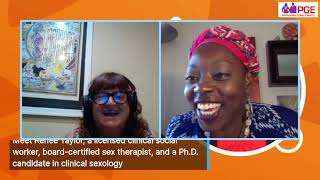
In this 32‑minute live interview streamed on LinkedIn and Facebook, host Adrienne Barker, MAS, talks with licensed clinical social worker and board‑certified sex therapist Renee Taylor, founder of Tailored Love. The conversation covers a wide range of topics: the cultural taboo around sex and the need for continual sexual growth across the lifespan; Renee’s personal journey from early fascination with sex education, through running a pleasure‑party business (Hot Pink and Black) to earning a PhD in sexology and establishing a sex‑therapy practice focused on women. They discuss the importance of comprehensive sex education for teens, offering practical parenting advice about openness, honesty, and scheduling conversations. Renee shares strategies for couples to schedule intimacy, the role of foreplay, and how chronic health issues (e.g., kidney stones) affect sexual life. The interview also touches on workplace sexual conduct, corporate policies, and the rise of designer/polyamorous relationships, emphasizing contracts and honesty. Renee outlines her professional offerings – individual counseling for women, workshops on love languages, retreats for single women, and professional trainings – and mentions her current social‑media presence (Instagram @tailored_love) and plans to expand. The host suggests leveraging platforms like Clubhouse to grow the business. Throughout, the tone is conversational, supportive, and occasionally humorous, aiming to demystify sex and promote sex‑positive education.
Chapters
Huh, you got that. I don't even have that. Welcome everyone. Renee says we're live. We are live and we're talking about not my favorite subject, to be honest with you, because I need help with it. So guess who needs to be Renee's client? But we're talking about S-E-X. Say, say the word, Renee.
Yes, we're talking about sex and relationships.
I love it. So we're going live on LinkedIn because there's a business discussion to have about sex. And also on my Facebook page. So I'm so excited to welcome, first time meeting her, Renee Taylor with Tailored Love.
That's it, Tailored Love, spelled L-U-V, because you deserve love your way.
I love that. So Taylor, first of all, thank you to Sheila Slick for introducing the two of us.
Yes, yes, besides Miss Sheila.
That's awesome. So we love Sheila. She's our new SCORE webmaster and SCORE Certified Business Mentor, and she is doing a fantastic job. So kudos to Sheila for always knowing who to connect at the right time.
Yes, thank you, Sheila, for this opportunity. She's one of my mentors, and if you are starting a business and you have questions, SCORE is the right way to go. I've used SCORE in 3 different states. So they're all over, um, New York and Atlanta and out here. So any place I go, I've always made SCORE one of my, um, go-to resources for business.
I am so excited. I hope to meet you in person. I'm also in Daytona Beach. So, so, like, male, woman, whatever it is, whatever, because woman, woman, whatever, it doesn't even matter. When did sex become a topic of a conversation that we actually have to have as a discussion and workshops? And why do we need help, me included?
Well, I always say sex is one of those taboo topics. It's one of those topics that's always talked about, but it's so coveted as well, you know. Um, sex is everywhere. You see it on TV, you see it in ads and commercials, um, but it's still something that a lot of people do not have a know a lot about, or have no— even about their own sexuality or their own sexual being. Um, I look at sex in a way of growth. Just the way we continue to grow intellectually, spiritually, we continue to grow sexually throughout our lifespan. But for some reason, people tend to not discuss or want to address the need for continual sexual growth. And within our relationships as well. It's all a growth experience.
Mindset growth, everything.
Yes. Because if you look at the way life is, we base our life on a series of events, you know. So things that we have experienced in the past, it always has an effect on us. If it's trauma, if it's something that's pleasurable, it all has an effect on us and who we are. And that also affects our decision-making in the future. So when we have these relationships, these sexual relationships, um, or sexual— different sexual experiences, all of that is shaping us, is shaping our sexual template. So that's why you might have some people that are saying, you know, they might never have had a satisfying sexual relationship, but they don't even know how to please themselves or what they like. A lot of people don't feel they're worthy of it because of past sexual trauma. So there are so many things that get in the way of that continual sexual growth that I feel— that I don't feel, that I know we all deserve to have, because that is also a part of our own growth process.
All right, I have a ton of questions, but let's, let's go back to who you are. How did you get started in this? Where you're located now? Like, let's concentrate on Renee Taylor, then we'll ask all of my questions.
Okay, so how did I get started in this? Um, I think it— you know, we all have a purpose, and I honestly feel this is my purpose. I used to joke around when I was— um, a long time ago, and I remember I was out of college, people said, are you going to go back and get your master's? You know, you just finished school, that's the last thing you're thinking about. And I always joke and say, only if I'm gonna get my PhD in sexology. At the time, I didn't even know it existed. You know, it was just something that I used to throw out there, um, just for the fun, you know, for the fun of it. And so now to see myself in this, you know, I'm going for my, my, um, in the process of obtaining my PhD, it's kind of like, wow, you know, you never know what you're actually speaking into existence. Or was it actually just a message that you didn't even know that you were receiving? But it's sounded off, but it's still a full circle thing. So I do feel that this is my purpose and where I'm meant to be. I've always had a curiosity about sex. I'm one of those people that will sneak at night and listen to, um, oh, it was, um, Judy, Dr. Judy, and, and, you know, Dr. Ruth. I'll be listening. I was like about 12 listening to these sex therapy, you know, sex therapists or educators. And it was, you know, Susan Johansson, anything real sex, anything dealing with sex, I was all for it, watching it, absorbing it. And just when it— so when I— this came up, um, I just knew it was meant to be. But it was not something I always thought about. I actually lived in San Francisco for 2 years, and I went to a pleasure party that a friend had And, um, the person that was doing the pleasure party, I was like, oh, this is interesting. I was like, you know what, I think I could do it but do it better. I was working for a branding company at the same time, so I think my thought was, if you market this and brand this in a, in a way, you could actually make this a really great product. So I had, um, started Hot Pink and Black, which is a pleasure party company that I had in 2002 right up until 2012 when I decided to go back to school. Um, I did well and dabble in it off and on, but it was still always a passion. I love sex toys and educating people on purchasing sex toys, um, self-pleasure. And, you know, it just became more apparent based on the questions I would receive when I do these shows, how many people— the amount of people that still have questions about sex sexuality, sensuality, um, their own experiences. And they have— so just all these questions out there really propelled me to, like, when the time, you know, just happened to come around, I was like, okay, you know what, I'm gonna go for this. And so here I am now.
I love that. I, you know, it's funny, so I have a— I have 3 sons, and raising them was really easy. There wasn't any issues. Not that raising my daughter is so difficult, though it really is, but But what I find is interesting is that she is more open speaking about sex, whereas I would never ever have had the conversations that she has with me with my mom. Oh my gosh, no way. And then I think you're right when you say it is what you grew up with. And I, you know, my parents were so loving and close. I mean, they, they literally— my mom passed away like a month before her 70th. Wedding anniversary, my mom and dad— my dad was like not even himself, um, and he lived for another 2 years, but he wasn't even in his right state of mind because he like— it was the love of his life. But I never really saw— they actually had separate beds for growing up. I remember that. I never caught my parents in any compromising situations, um, and maybe that's just because I was a kid and I would never go into the room with the door locked. Like, I just didn't do— I, you know, even close. But I naturally feel Slightly a little prudish. Like that, like there were times where I would be at different events, business events, I'm talking business professional events, and I would watch, um, you know, the discussions, like talk and that sexual in— in what is that called? That kind of like—
thank you, a little flirting.
And yes, and I would get totally awkward. I mean, I'd be— I'm ready to leave. By the way, Sheila wrote, hi Renee and Adrian, love that you know your purpose.
So that's—
oh, I see that.
Hey, I just—
I don't feel like I— I don't mean to be talking about Mimi, but I think that I'm a good example of someone that when I do see the TikTok videos, I'm like, whoa, whoa, that's a lot you're showing, young lady. And, and I'm thinking maybe that's also— though in a weird way, maybe I'm a little jealous that, like, I wish that I could be comfortable in my own skin. Because isn't that what it is? Once you're comfortable in your own skin, then it makes it easier to get passionate.
Yes, definitely. Um, yeah, that speaks a lot about our own self-confidence and we feeling sexual within ourselves. There was a time— and you have to look at the view of women and men, you know, shapes and bodies and attraction change throughout centuries. So there is always this kind of look that people tend to feel like they should have in order for them to be sexual. But the truth is, we're all sexual beings. We all have equipment to be sexual. And it does start with that self-confidence and that mindset to say that I am beautiful in my skin and all of my curves and my body. So all of that is very important. Um, I love Lizzo for that. Love, love, love this though.
I got my nails done.
There you go. I love this. She's all about that, loving her curves and embracing her sexuality, um, and she is gorgeous. She is very gorgeous and within her skin. But that's also something that I resonate with because it's something that I grew up with. My mother was a curvy woman and she was extremely comfortable in her skin. In her sexuality. And I know that's one of the reasons that you talked to, you know, you say, mention your family and what you was raised around and seeing. Everything was behind closed doors. They had double beds. So it truly gave that impression of there was no sex going on. We were loving and close as far as, you know, feelings and sharing of emotions, but not talking about sex and sexuality. So, but in my household, it was completely different. My mom was very open about sex, talking about it. She— again, I said, um, as a curvy woman, I remember she did a fashion show and she wore lingerie in her— in this fashion show, you know. So growing up for me and seeing that, I always had— it really did instill this confidence about sex and sexuality and the birthright of it. The birthright of that sex being— sexual pleasure is my birthright. I have a right to be sexually pleased, and it doesn't have to be with a partner. It could be with myself. It could be just within the way that I love to get dressed and go out and dance and have a good time. And just being in that comfort of itself is also in a lot of ways a sexual, um, feeling and uplifting inside.
Interesting. So yeah, I think of that sometimes when I look at myself and I see immediately all my flaws, and then my husband's going, no, no, you're beautiful. And I'm like, I have a hard time to kind of— but you're right. I, and I also think years matter too, right? Like, you're different. So I, I personally feel my daughter is way too young. So I'll be honest, I did not have sex until I was one month before my 18th birthday.
Okay.
And yeah, my mom really wanted me to wait till I was 18, but I couldn't. But I was so proud of myself even at that time. Now when I tell my daughter's friends I was like 17 and 11 months, they're like— they look at me like I'm a weirdo. So what's going on with, like, what's happening this day and age with our teenagers? Because they know that they can get pregnant, they know about STDs. But they still think when they're watching TikToks and where they're seeing adults that they can act like an adult. So do you have any advice for parents that have teenagers, daughters or boys? Because I mean, my daughter had a boyfriend and he was all— he was also very vocal about it. And so dealing with that was kind of difficult too.
Yeah.
So I'm all ears for advice.
Yes, I talk about it. Be open, be honest, don't shy away from questions. Uh, they might not want to hear it, but just letting them know, you know, that it is pleasurable, but there are risks and you have to take precautions. You have to just have the conversation. They are listening, they want to know. Um, studies have shown that comprehensive sex education, that is talking about all forms of sexuality, protection, not shying away from it, not talking about abstinence only, is much more effective with teens in making a decision to abstain. So telling someone, don't do it, don't do it because it's wrong, or religious reasons, or, you know, you're going to get— you're going to be a scorned woman for the rest of your life, whatever they say out there, you know, does not work. The only thing it does, it just makes them more curious. And then you're not giving— arming them with the right information to protect themselves. So that's the disservice parents do to their children, because it's everywhere. You can't really hide your children from sex. The image—
that's a question. You can't, right? Not this day and age.
No, you can't. And even if in the '60s and the '50s— I have a lot of older clients and I talked to them and they talked about getting the magazines and, um, you know, and seeing their parents, their, their, their friends' mothers, the hot ones. And so, I mean, it's still there, you know, Marilyn Monroe. I mean, the imagery, the pinup girls, the imagery has always been there, is still there.
So it is, you're right.
Hide it. Even if you were walking, look at architecture from the 18th 1900s, you will see images of sex.
Like, when my husband and I want to get it on, like, do we do— like, I lock the door. Do I tell my daughter, like, don't bother me? Like, we just kind of, like, lock everything up and tell her we're watching TV. But I was always wondering, what do other people do? Like, do you wait till you— she never goes anywhere, so we would be stuck. We'd have to go to the car. So what's the advice for, like, you know, when you have other people in your house right? Do you think about them or do you just go forget about them?
It depends on what's taking place in the house as far as other people. How old is your daughter?
15 and a half.
She understands what's going on, right? So you can always, um, there are so many ways you could do this. There are— just depends on your routine. And sometimes, you know, it might be your routine to say, you know, we— the both of you sleep in late on Sundays and you're there and that's your time together. So your daughter will come to understand that Sunday mornings, my parents like to stay late in their room. They like to sleep in. You don't have to be doing anything. It could just be your time to connect, you know, um, and that's gonna be something that you choose to do. Or, um, you know, just setting your own dates and going out on dates and having that for yourself. And I think your daughter, she's 15, so she understands if you're in your room and the door is locked You're in your room, the door is locked, and you have your private time and you're private. It's— I think for, um, parents that have younger children, it gets a little bit harder to do the scheduling. And, you know, got to put the children down. By the time you do that, then, you know, go back to the room, you know, you're kind of tired. And so it gets a little bit harder when the kids are younger. I say schedule it. That's one of the biggest things. We schedule everything in life. You schedule your doctor's appointments, you schedule, you know, um, even schedule when you're going to go to the grocery store. I have this amount of time, I'm going to go to the grocery store. Schedule it, put it on the calendar. You don't have to say it's sex night, you could say it's date night, it could say it's coupling, whatever you want to choose. Um, I know a lot of people tend to think if I schedule it, then it's not spontaneous. Well, it is in a lot of ways could be spontaneous. The act of what you're going to do is spontaneous, but when you schedule it, you're actually now starting to build up the anticipation for the day because you know it's on the calendar. So your mind is thinking about what you're going to wear. You get in, you know, you start— that's the whole mindset. So now your mindset is starting to get on this evening and all the things are going to come into play.
That's good advice, actually. You know, it's funny, you think like, I can think to myself, I'm 59, I know everything, but this is one topic, the topic of S-E-X. You have to say it at least once before we end. No, I'm not saying the word S-E-X. So very good. I mean, this is great advice. I, you know, we were talking a little bit beforehand that I was admitting that it also takes me some time to relax. So I can't go from like working, doing dishes and cleaning, to hopping in bed and like fooling around. Like, that doesn't work for me.
And foreplay is very important. That's the reason why, um, it takes a woman 30 minutes on average, you know, between 18 to 30 minutes to warm up, for their body to become fully relaxed and ready for penetration, or just, you know, you you know, just things that needs to do, a whole lot of things in between. Um, and that's— we talk about scheduling, uh, you know, an evening with your partner. That's one of the ways you could actually do that. Everybody start getting ready because of the mindset and start, you know, thinking about it. And so when you are meeting, you could kind of work your way into it slowly. And, you know, so that's just one of those ways of actually going about getting yourself prepared.
Okay, and I'll use a limoncello too that's in the fridge. All right, so I— you know what's interesting to me too is that I have seen, um, I like— I, I remember this one time we were at this event and it was a great event, and one of the girls that was working was fooling around with a couple of different people, and it was very really noticeable that she was leaving and going to the hotel room and then coming back down and leaving, and we were all like, oh Oh my gosh. But she ended up getting fired. She got fired and was asked to leave the conference, which I thought was pretty smart. And I, you know, I worked for Muscular Dystrophy Association for years. That was really one of the first times of not going with the family business, but going outside the family business to like the conferences. And I was really surprised at how a little bit of liquor would let down your guard and then people would And I'm like, oh, you're going to get caught or you're going to get in trouble. But that was before too, like social media and the discussion of, you know, what not to do. Do you think that companies have to have some kind of contingency or in their, you know, in their handbook about, you know, two coworkers fooling around or being very careful of, you know, not going through all your coworkers?
Right. Um, I think it's interesting that number one, she got fired. I wonder what happened to the men that she was actually engaging with. Um, so that's one that just came to my mind. But the other thing is, I do know some companies— I've never worked for a large corporation. I— this is even before I got into counseling, mainly because I don't like a lot of rules. So I know that working with the large corporation, they do have some of those rules in place that, you know, you cannot date a co-worker. If you do, you have to let it be known to human resource. Um, there are some companies that might have— I'm trying to think of the right name for it— but they have certain clauses in there depending on if they're a key owner or principal. Uh, you know, that you can't be caught in compromising positions. You know, you have to always present a good front, uh, to represent the agency. So something like that might be, you know, sexual scandal would be something.
Yeah, that's the X scandal. Yes, yes, that could get you fired.
So, you know, corporations could do what they choose to do. Some of those things are in there, but I would say for individuals, we all have to be smart about our sexual choices and how it's going to play not just a role in our careers but a role in our personal life. How is it going to affect our family by when you make these decisions? Um, I read these things sometimes about people saying, oh, you know, wanting advice because they slept with their husband's father or their mother, you know, their wife's mother, you know, these types of things that take place, and you kind of wonder what is going through your mind. I know there's a whole no judgment on anyone, no judgment, no shame, but you do have to wonder sometimes what is this decision behind that. Like, what decision did you make for this, you know? So there's so many questions that comes into play, um, but people, individuals need to kind of just have better decision making. And if you find that you, you're getting in a lot of issues because of sex, then you might want to seek therapy, counseling, to find out what is that, you know, is a trauma response that these actions are coming from, um, you know, lack of self-worth, looking to feel connected. So there are so many reasons why someone might be having these— making these decisions that are affecting them, um, in such a negative way and using sex as a— because as a way to kind of hide our pain.
Wow, okay, very interesting. We'll get off this subject and go back to actually what you will be offering. So I see that you have like workshops, presentation. Who is your ideal customer? So who would be— who are you— who would you target to? Who are you going to target to? And tell me about your presentations and workshops.
Okay, so I do several things. So one of them is, um, Tailored Love Individual counseling is sex therapy, sex and relationship therapy for women. That's my target audience, um, with the individual counseling. Yes. And the main reason for that is because, you know, women, um, depending on what studies you look at, 60 to 80% of women have never experienced an orgasm. Uh, 1 out of 4 women experience sexual trauma. Relationship, domestic violence. So all of that is rolled up. It really stops women from being self-actualizing, becoming their full self and who they could truly be. So that's one of the reasons why my individual practices focus on women. I do workshops and presentations for— I've done them for various community agencies. One of my favorites is The Five Love Languages. I do that for teens. I've also done that in a retreat setting for mothers and daughters. It's just an understanding of how we show love and how do we accept and receive love. It's not what you might think. And recognizing your children, your partners, the people that matter to you, their love language and how you can communicate that. To them, and also for yourself, understanding your own love language and how you can help people understand your love language and how— what, you know, and what makes you feel seen, in other words. So, um, that—
I feel like that would be good for my daughter and I. Yeah, yeah, this—
I've, you know, done it at a tea party, so there's a lot of ways. I used to do— since I've come from the party world of home parties I could. And I also had a women's group called Wine Women of Wisdom. So I'm able— I'm very creative when it comes to coming up with, um, different ways of teaching. Teaching is another thing that I love to do, and just ways to kind of bring that together. So I could do home parties, tea parties, presentation. It's like, you tell me what you're interested in hearing and I could create it. So I'm a master creator.
You mentioned the Pure, the, the, uh, the, the, the parties. It's funny, I actually did have a great conversation with Chris Cicconelli, the CEO of Pure Romance.
Okay.
Yeah, we talked and he was really excellent. It was really exciting to talk with him. I couldn't believe that I scored Chris Cicconelli. But anyways, I mean, when you think about how many women are selling his products And he, every day at 9 AM without fail, he does a live with all of them, which I thought was really interesting. Yeah, really great. All right. I love that. I really think having a daughter that 15 and a half, that, that really makes a lot of sense. And it would have really helped me if my, if that was available. I mean, it wasn't, SEX wasn't talked about when I was growing up. So, but anyways, I really am interested in that. So I want to definitely make sure I receive that information. So we can join. And then, and then what else? What other programs do you offer?
I, um, so I do professional trainings. I've done a few of those even for in the agency that I work with and for peers as well as graduate students. Again, just depends what you're looking for. I'm in the process of— I have a retreat that I have prepared for single ladies and sex. So think of it as an adult sex education for single women about, one, loving yourself, and two, um, coming up with your own sexual template. What are the things that you are looking for when it comes to looking for a romantic relationship? And this is for all women regardless of sexual orientation. So that's something I'm currently working on and will be launching, um, start advertising really soon about that, but, um, it'll be scheduled for sometime in February.
I love this open conversation. I remember when I first saw the Ashley Madison commercial and it was on like CNN, and I thought to myself, this is crazy. So I, I, because it was on CNN, I was like, okay, this is CNN, is a reputable news station. And then when I Googled it, I couldn't believe it. I couldn't believe that there would be something like Ashley Madison. But then I'm like, Adrian, you're such a prude. It's not a bad thing. It's kind of could be a very good thing. That you have the ability, because open relationships are out there.
Yes. So the thing to know is I call them designer relationships. There are so many names, the whole— the poly queue, the, um, poly, no, solo poly. There's like so many terminology now. So I just say designer relationships. The main thing of any relationship is honesty. You could be in a polyamorous relationship and still break the contract. Just because someone is in a poly relationship does not mean that they cannot still be a cheater.
So explain what that means though, just so that everyone knows.
Polyamorous means, um, being in love or having a relationship with more than one person. Uh, it is intended to be an open relationship amongst all people involved. But sometimes there might be someone in that relationship that still decides that they don't want to tell the other partners that they're seeing someone else, and they still see someone else. That is still cheating. Anytime you go against the contract— contract meaning this is our understanding in this relationship— anytime you go against that contract, it's cheating.
Wow, interesting.
Wow.
I mean, I really don't even know what to say with that.
That is—
wow, that really makes sense.
Yeah, but a lot more people are looking to be in, um, open relationships. They're looking to be more honest about their own sexual desires and needs. And just because someone says, you know, I really desire to be more adventurous in sex and my partner does not feel that way, um, if they are open to say, well, let's explore what this will look like, it does, you know, as long as they're open about that and that person who might want to be in another relationship understands this is our contract, this is our do's and don'ts, as long as they maintain that then great. But as soon as you don't maintain it, then it's an issue.
All right, that's a good point too. That is really a good point to be upfront and honest and have that— those conversations. Wow. All right, I'm gonna start taking your advice and I'll see if it helps me a little bit. And then, all right, is there— do you have Facebook groups? Any other way? I know that's website. And tell me what you have for social media right now.
I just have Instagram. Um, tailored_love on, um, you know, @tailored_love. T-A-Y-L-O-R-E-D underscore L-U-V. Um, that's it at this moment. I, I'm just in the, you know, like I just launched my Tailored Love 2 weeks ago. I've been doing a lot of other things like the workshops and the co-authoring on um, you know, articles. But, uh, so now I just need to focus more of my time on building, building. I do have a few clients, but so it's exciting.
It really is. Sounds like a really exciting time. Okay, before we leave, we've been 32 minutes. I would like to hear your elevator pitch. How do you just— how do you introduce yourself?
Oh gosh, usually all I have to say, hi, I'm Renee Taylor, I'm a licensed clinical I'm a licensed sex, sex therapist, and that's it. You know, once you say you're a sex therapist, people don't want to know anything else. They just have all these other questions. You don't need it.
That's okay, that's fine. You're right, you're leaving it in the open. I guess you could add that who you help, who you serve.
Yes, yes. But yeah, yeah, but I was saying, once— as soon as you say you're a sex therapist, there's so many questions come. You don't even have to say anything else, right?
Right, right.
But if I were to come up with the elevator pitch, it would be, you know, um, I have my name. I'm Renee Taylor. I'm a licensed clinical social worker and board-certified sex therapist. I specialize in counseling services with women, and I also provide workshops and retreats to— for self-education, sex education, and pleasure and love.
I love it. That's awesome. That's great. It's so nice to meet you, Renee. I'm so excited that we have this conversation about SEX. And I actually will keep— stay in touch with you so that once you start to have some of these different things, I would like to get involved and talk to you more or send me the price list of what it means for coaching, because there must be something inside me that can sometimes make me— oh, I mean, the other thing though is I do have— I do suffer from kidney stones. I have a sponge kidney. If you were to cut my kidneys, they look like sponges, and then in the sponges are all my stones. So it really is uncomfortable. So that's another conversation, right? Yeah, sex with someone who is chronically in pain. Yeah. And what that looks like.
Yeah. So yeah, there's so— I mean, it's so broad. That's one of the things about sex. I think people always tend to think about just the physical act, but it's so much more to it. It is so much more. Um, and that's one of the reasons why I love it and it keeps me intrigued. But definitely, so working with someone that has health issues and how do they maintain their sexuality and feelings of sex and ways to help someone with just learning different positions and, um, techniques. So all of those things are reasons why you would definitely come to see a sex therapist.
I love that. Thank you so much. You know, I do think that you would really be terrific on a Clubhouse, which is an audio app, and I think that you could definitely start having rooms and, you know, build your business that way. Another way where you're talking to people that are from all over, because you don't need to actually see the person in real life, right? You could Zoom and all. Okay. If you need any help with Clubhouse, I will share with you and Sheila. Otherwise, thank you so much for today. It really was nice talking to you. You're very sweet too. Thank you for your emails and you're just lovely in person and I look forward to meeting you. So thank you so much. I can't wait. I can't wait. And we will talk XEX. I'll say the word when I see you in real life. Okay, great. I'll say XEX. I will. I will really do it.
You said it earlier, so when you had— it was funny because you said it when you had a conversation with this, but there she just said it.
She just said sex, sex, sex, sex, sex, sex, sex. I got it. But normally when I do talk, I'll spell it out, which is weird too, like why I spell it out. All right, there's all these personality tests, but they're never like about like your sexuality too. Like, can you imagine if the DISC test all of a sudden tells you like, oh, you're an introvert, you're an extrovert, oh, you love sex, you don't love It's a lot.
It's a lot.
All right, I'll let you go. Have a great rest of the day. Thank you so much. If you've been listening on LinkedIn, this is a business conversation. Sex in the business— I'm not talking about that, but we all work and you go home, and those are the times that you need to relax and you need to think about how you can, um, be confident in yourself and mind— mindset. So I love all of that. And if you're on Facebook listening, yay, great. Maybe it seems like it's better for Facebook, but I disagree. I think that you have to have your S-E-X conversation really every day because a lot of business conversations do turn to it. And the only thing I would say etiquette-wise is make sure around the table that everyone is comfortable because if you do see someone like me that's sitting there like, maybe tune it back a little bit or ask someone like me to go get you a drink. Adrienne, can you leave the table for a few minutes? Because I would rather do that sometimes. Then listen. All right, I will let you go. I'll stop recording. I love it. Thank you so much, Renee, for your










