Meet Roy Coughlan - Podcast Coach
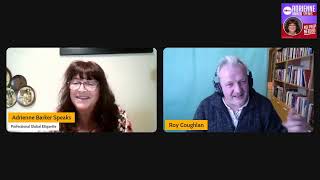
In this live interview, Adrienne Barker welcomes Roy Coughlan, known as the "Podfather," a seasoned podcaster and coach based in Łódź, Poland. Roy shares his journey from Toastmasters and real‑estate ventures to launching multiple podcasts, amassing nearly 1,800 episodes and millions of downloads. He explains why aspiring creators should consider hiring a podcast coach, emphasizing the hidden cost of unpaid advice. The conversation covers practical steps for starting a podcast—simple equipment, naming, branding, and committing to a regular schedule—while warning against perfectionism and excessive editing. Roy outlines marketing tactics such as leveraging niche Facebook and Reddit groups, optimizing logos for small app icons, and focusing on audience engagement over vanity metrics. He discusses platform choices, noting Spotify’s free hosting, dynamic ad monetization, and recent censorship issues that led him to migrate shows. The duo also explores handling feedback, dealing with negative comments, and the importance of authentic emotion, especially in true‑crime podcasts. Throughout, Roy stresses that the market isn’t saturated, that unique personality and curiosity matter, and that budgeting for a coach or course can accelerate growth. The interview ends with promotion of Adrienne’s upcoming book and plans for future episodes.
Chapters
Getting excited. Look, all right, we are back. I'm gonna stay calm. Look who I have, you guys. Look at this. First of all, handsome, really nice looking guy here. Roy, hold on, I'm gonna make this, uh, I'm gonna advance it so that we are bigger. You look like you're in someplace cold, Roy. Guys, welcome to Adrienne Barker Speaks, No Prep Needed. I absolutely don't have no idea who Roy Coughlin is, but But we did meet on PodMatch where I said, Roy, what did I say? I wrote, let's do it, dash, my phone number and my name, right?
Yeah.
Yeah.
So PodMatch is fantastic. Yeah.
PodMatch is fantastic. I have to accept everyone because I don't know who they are. So I, how can I make a decision? It's not like I review anyone. So in front of us is Roy Coughlin. He's brave. He's bold. He's brilliant. He's handsome. I want to learn who he is. I know one thing about him. I'm excited. Words that I put into the live. Okay, Roy, take it away. Tell us who you are and who do you help.
Well, I'm known as the Podfather, so I help people start a podcast, existing podcasters improve, help people do a podcast tour. And I've also got a virtual assistance business. And previously I was big into real estate. I've done a lot of real estate as well, built 30 apartments and houses and things like that.
Wow, where are you Located.
I'm Irish and I'm living in Poland, in ��ódź, Poland. So you mentioned cold. It's kind— it's not too bad today. It's like 0, but it was like -17 degrees centigrade. Yeah. For the last few days. So, so yeah, very cold.
I'm in Florida and we were cold. We were 42 degrees this morning. Absolutely frightening how cold it is. Our blood is— our blood has been Okay, the podfather. Yep, the podfather. I absolutely love that. Okay, so how, how, how old is podcasting, by the way?
I don't know, is this 2010 or something like that? Because I've heard of people, they're doing it 15 years, so it's around— yeah, it's about 15, 16 years, something like that.
Oh my gosh. So tell us about your history with podcasting.
So I was very shy and I joined the Toastmasters and with the Toastmasters, then I kind of done projects where PR or if it is news and stuff like that. And I went to an event and somebody was showing you how to do a podcast. I was like, okay, this is a good way to, you know, get my message out. And the first one I did was in 2018, was the speaking podcast. And because I was in Toastmasters and I'd entered a lot of competitions, I got into the final of 5 countries. I knew a lot of people around Europe, so I had a lot of guests for that. And that was basically the first one. And I have 6 shows and I have a meditation one. All 6 have been in the top 5% and 4 have got to the top. Half Percent. I've released something like, I know, nearly 1,800 episodes at this stage, and I totally enjoy it. I love the guests that I've got. I love guesting as well. And, uh, I'd encourage everybody to get involved with podcasting.
It really is great though. I think that having— I started my podcast during COVID just to show off my friends, and then somehow I got picked up by a PR agent and like boom. But there's so much to learn, and I am a podcast producer too, so I have other people that I work with, and then I have my own shows. So at what point did you feel like, you know, I have enough knowledge here, my wisdom matches my handsome face, I should go out there and be a coach? Like, is that like what happened? What made you decide that?
What happened is I— because I was still kind of heavily involved in Toastmasters, so I was doing a lot of speeches about podcasting. Then when there was events I would actually do a workshop and I helped a lot of people get started. And then people would come to me and they were asking me, hey, I want to start a podcast. And no problem, I was helping them. But then I found I was spending a lot of time helping people and I wasn't getting any kind of reward. And they weren't exactly saying, hey, come, I'll take you for dinner because you've just spent so many hours helping me start the podcast. And when the next people started reaching out to me, I just said, yeah, I, I'm a coach and this is it. I'd set it up. And the first person that reached out, they said, yeah, grand. And they hired me and I kind of, it kind of went from there.
Okay. So I put myself back on screen because you said something so important. And I think that we both should have a message to our listeners that it's very, picking someone's brain is costly and it actually hurts when you go in and you pick my brain, please don't pick my brain. But no, the point is Roy made such a great point. I mean, why would we expect that you would deliver your knowledge at no charge. Because I mean, I wouldn't go to the doctor and be like, oh, can you check my ears out and my throat? I feel like I have a cold, but you know, no, don't charge me. It's only gonna take you like 5 seconds, like forgetting everything else. So I love that you were honest and transparent to say, you know, I gave a lot and now it's kind of my time, right? But I just, I think that's beautiful of you. I just, and I teach corporate etiquette and I was a SCORE mentor myself in the United States. I saw certified mentor, I did 400 years of volunteering my time to help businesses grow and succeed and scale. So in my mind, I'm like, this is huge, you guys. If you want to start a podcast and you're thinking of this, you need to look at hiring a podcast coach. And I know I'm not live on ChatterSocial, but you could put notes into the— you can actually write us messages. Hopefully I'll get them. But the point is, is I'll, I'll be your voice to ask these kind of questions. And next time when you're thinking about it, consider your budget because you're going to need a budget anyways. So you might as well start your budget with your coach and then move forward than just thinking I'm going to start a podcast, I'll pay a couple dollars and I'll move it along. So Roy, I don't want you to give away all the juice. So now you know you're not, you're not. As a matter of fact, I will mute you and I will edit out any good— I won't do that. I want some golden nuggets, but give your golden nuggets carefully. Because it really is important. This is a man that has had many years of experience. He knows what he's doing, and he's gonna teach us now, like, some of the things that you can that are maybe not a secret. So Roy, take the mic and share with us. Let's start from the beginning. Why should someone even consider starting a podcast?
If you've got a skill set that can help people, like there's a lot of people even getting into mental health, but it can be anything. It can be something that will improve the world because a lot of people, they're watching the likes of CNN or BBC and they're just hearing negative things and it's not really helping anyone. Whereas if you've got a skill set that you can help someone, it's in your interest to do that and you will feel so good because you're helping humanity. And it's not that hard. Like, you don't need to be technical. Some people think, oh, you need like to have IT skills and everything. It is very simple. You can get a mic that just plugs into your computer I use Audio Technics. Some people have a mixer and stuff like that, but like, you can all do that. And you know, you mentioned hiring, of course, like that was another thing that I did as well, is that's why I set up a school group, because I'm conscious of all budgets and I don't want somebody not to do it because they can't afford it. And even at that, you don't even need to get into the school group. You can just go onto YouTube and do it and you can learn yourself. You can watch people, there's even books on stuff, but you kind of have to be aware as well because I know a few people, they've written books and they didn't even have a podcast. They've written, they've wrote 4 or 5 books. Yeah. So sometimes kind of learn from people that have kind of done it or understand it. And like, there's a lot of things. I mean, like the, the name, I've got speaking podcast, I've got meditation podcast, and I've got the domain names for them. So I've got.com. If I don't get the.com, I get.org. And I think that actually helps because when somebody is searching, so I've learned Polish, when they're searching for learn Polish, there's a good chance that my podcast will come up. So sometimes people, they'll create a catchy name and it's not saying that it won't work, but when you have a kind of a catchy name, does the people know what it means? And so the search engines, so that's what I kind of done. My crypto podcast, everything is kind of related to the name. And I think that has kind of served me and logo as well. So a lot of times people, when they're creating their, their logo and their graphic, they'll go in, they'll do something nice, and they're looking at a big screen and they're saying, that's great. And sometimes people put a load of text. What you need to do is shrink it down to what it looks like on the Apple Store or the Spotify Store when it's a tiny little box. And does it stick out? Does it grab your attention? Because Most people, they don't, and they're wondering why it's not working. And there's a lot of things like when people start, there's a lot will kind of commit and they'll say, I'm going to do this. And they'll do 3 episodes or they do 10, and then they just throw in the towel and say, ah, this is taking too much time. And when I'm talking to people, I'll say, commit to a year, you know, just commit to a year. And most people are grand once they kind of, okay, I'll commit to a year. And whether they do 1 episode a week, some even do just 1 a month. But others can do a few, a few a week. And when you do that, you're not going to be throwing in the towel after so many episodes. And a big mistake a lot of people do is they kind of, they become perfectionists, so they start editing too much. It's good to have a good sound system, good mic, that, that's critical, because if someone's listening on earphones or they've got good sound system in their car they'll turn off if you're kind of using a laptop mic or something like that. But so, and you can get a mic from $50 that will do good, $100 you get a better level, but make sure that you've got a good sound system. But what most people do is they're going in and they're spending a load of time taking out all the pause fillers, putting in intros, outros, all the bells and whistles, and then they're going, this is taking me so much time. And then they stop doing it. And what I say is, eventually, if I— if I— if you look at the most successful ones, you've got obviously Joe Rogan, most people are aware of him. If you look at, say, uh, Patrick Bet-David, they're just doing raw, they're putting it out, and the show is—
it's—
is as is. It's just like when you put out stuff live, it is as it is. And does that mean people aren't interested or that it's not good? No. So you're better off not to be too critical and spending hours just, you know, if there's a pause that you're kind of taking, no, taking no pause fillers, that's not really serving you. Where you should be putting your time into is actually in the marketing, which is where a lot of people, they kind of fall down. They'll do the show and then they go on to the next one. They might post it on, say, Facebook and LinkedIn. And then they're gone. And what you should do is find the places where your audience will be. You can find Reddit for Polish podcast was good for me on Reddit. I found a few groups that they were allowed. Other groups were kicked out because they have kind of strange rules. But say on Facebook, I'm in about 50 groups. I'm in Foreigners in Poland, I'm in Polish in the UK, Polish in Ireland, Polish in Chicago, and different places like that. There are places that are interested in learning Polish, and when I post it to them, I get good engagement. And another kind of trick is when somebody gives a thumbs up or a heart or a like to your post in these groups, you can just hit that and then invite them to your page. So then when you're posting again, they're seeing it. And it's, it's everything is kind of like a strategy, because a lot of times people will be asking me loads of things like and they're all going, what's the secret sauce? What's the secret sauce? They all think it's a magic thing that you just do and then you get straight into the top of the charts. And it's combination of things. It's preparation, like, you know, that you know what you're talking about. You have a nice conversation, because if you can engage, you have a nice conversation, the people are more likely to share it. And so that, that's an important thing. And Yeah, go on. Sorry.
Oh no, no, I love what you're saying. I, I just, I, I know everyone's got to process this, so that's— I'll put it all in the show notes. You know, it's funny, so I, I think that one of the things that people say to themselves is, well, I mean, I, I speak Polish too, so I could teach, uh, the language. Ah, but Roy is already doing it, and Sue is already doing it, and Mark is already doing it. Can you share the real truth behind that and the, and the importance of not thinking that way, because nobody really talks about that. But I really think that, that, that is said often. Why, you know, there's already— there's 100 podcasts on how to drink water. Why do I need another one, right?
Yeah, it's— and it's an important point. And like, I've heard a lot of people that reach out and they'd say, oh, I I can get you on lists of 4 million podcasters. And if you want to, and I just reach out, I say, there's not 4 million podcasters. There was, but active, there's, I think it's, it's a 450 or 475 that have posted within the last 28 days. So that's realistically, you've probably got half a million active podcasters. So first of all, the market isn't saturated. And second, We have a different style, and so does everybody else. Some people are technical and they're going to— and people like that. Some people are very calm and people will be attracted to that. And somebody would be like Clay Clark and they're just really loud. I couldn't handle that when somebody's really in your face, but some people are attracted to that. So there's the personality type as well. Then there's— everyone has a different thing. Like my crypto one, I mean, I've read books on crypto and I was like, it's You know, I, I didn't really get it that much. I understood it a bit, but, and I started bringing on the specialist. So you don't have to be the specialist as well. You can be curious and bring on the specialist and learn from them.
So, oh my God, wait, you just said my thing. If you wanna learn something, teach it or have a podcast about it. I love it.
Yeah. You know what I'm saying?
Keep going. I love, I love what you're saying. Or we could play a fun game. What if we play— what if we play what adjectives do you need before you start being a podcast host? I'll start. You need determination.
You could say curiosity.
Oh, I love that one. Curiosity. Okay, I think you need Grit. You next.
I mean, you could say love because it's the love for your audience or the love for what you're doing.
I absolutely love that. I was thinking you need to have time. And you really need to understand what that time looks like. Because as you said, most people, you're right, that 7 to 10 mark, boom, the podcast has ended. And maybe some people think, well, it'll live forever, but at one point you got to deactivate it, right? Or you're going to be paying the host, right? Or maybe I'm wrong.
No, it's— so this is an important one. I had all mine on, except for the Polish one, on Spotify. Spotify is free and people that are in America, and I think the UK and a few other countries, can monetize it by having dynamic ads in it. But in Poland, you weren't able to do that. And I started making money from dynamic ads on the Polish one, but Spotify started censoring me, love. And just two things to that: one is Spotify is free, so if you are paying on some platform, all you can always move it to Spotify. All your episodes will be there and it'll be free, and at least it's evergreen, it's not disappearing. So if you don't want it to disappear, because it'd be a shame to have it, say, on one of these paid platforms and they just remove it. You don't want that to happen. But the thing is, when you're choosing a platform, like Spotify started removing some of mine. So I have one podcast, it's called The Awakening. I expose fraud and corruption but with solutions. I'm always giving solutions. It's not a doom and gloom one, but they removed a lot of stuff. And a recent one It was about the phones, the dangers of phones, the frequencies and stuff like that. And they removed it. They wouldn't give me any answer. And when they replied, they said, if you do it again, we'll remove your podcast— not your podcast. And I was like, oh. So that's why I moved it. But what they did is they're supposed to transfer the numbers. So like, I had one and it was like 287,000 downloads on it. And it went down to 6,000, and they didn't transfer the numbers. And even after— so, and then the meditation, when they started removing all of my meditation, uh, frequencies of healing frequencies. So I've lost respect for them. But on the side of somebody that wants to keep their podcast and decide, hey, I don't wanna be paying the $15 or $30 or whatever, someone's $100, depending on what you're paying. If you want to keep it, Spotify is a free one. And there's a, there's a few others that are there. I have a schedule of about I think there's something like 37 that I've come across of all different ones.
You have to get that for free, by the way, unless he's got a book or a course. Join the school community.
It's actually in my school community, which is $27, but you could just go and grab it and grab the course. I have a course that was $1,000 that I put in there.
So if you're gonna go to grab it, you need to give a good review and follow and share and like the— sorry, right? But I, I like, you know what I mean? Like, we— because that's another thing too, is like likes and sharing. And, and I'm so Let me share this. I know I have a sweet looking face. Look how cute. I mean, good, those cheeks. Okay, and I am the co-host of Debate the News True Crime, which by the way, I love that name. Do you like the name Debate the News True Crime?
Yeah.
And then there's another podcast called Just Debate the News where you would be fun going in there, um, and Chatter Social, which I wish we were on right now, but I can't do it, guys, because of time. Uh, there are some really great rooms that you have fun. I like to debate the newsroom. There's conspiracy rooms, all kinds of rooms. Um, and of course a lot of discussion on podcasts. I go live with my podcast and other people do. But anyway, so if you're like, like, shares, all of that, don't count that that's going to automatically happen too, correct?
It's an important thing because like a lot of people think nobody's giving me a thumbs up, they're not commenting, and they think there's no engagement. And I've said this to a few people, I said, how many things did you watch today, say, on TikTok and stuff, or Instagram? And they go, you're scrolling through. I said, how many times did you give that a heart? And then you just— they all go, oh.
It's like, even the person itself is not like—
yeah. So I'm conscious of that. So I actually, I try to, you know, go in and same with the podcast and different things, that when I see people I'm connected with, but I see they're doing the same, it's kind of showing the love. So it's like when you see something you like, It doesn't mean that people don't like it, because usually people can put a comment, a nasty comment, rarely, but they can. But they won't put a thumbs up. It doesn't mean they don't like it. It just means they've scrolled on to the next thing. And I think it's an important thing for podcasters as well, that be prepared that sometimes people might write a nasty comment or go on. And what you do is do not give them the energy. You would have maybe 100 beautiful comments and you get 1 or 2 nasty. And unfortunately, people go to bed and they're thinking about that and they can't sleep. Forget about them. Don't respond. Don't reply. Report it if it's really nasty. Ignore it if it's just kind of negative. But do not give it the energy and do not engage in a conversation because usually they have no friends. They have nothing. They're just hurting people. So hurting people try to hurt others. And what you do is concentrate on the beautiful message that you've got. Because I've seen people that they've stopped because of that. They gave it the energy. They started engaging. And that's what they want. That's fuel. They'll keep attacking you. Just ignore it and just concentrate on the beautiful things, and that way you just keep moving forward.
But, but Roy, I'll go— I'll cut back a little bit on that one, or whatever it's called. I, um, so Debate the News True Crime, catch us live Thursday nights at 7 PM on Chatter Social. Uh, last night was a really good— oh, last night we did the story of Dr. Petit. I cried throughout the whole podcast. Let me— I have one— hold on for a second, I gotta remember. I want to go back to our game, and I— you're coming back for a second time even if you don't want to. I'm making you, so I'm not even worried about that. I know we're not going to finish everything. And, and I do want to go back to Gabe, but I want to ask you, so I, I was crying a little bit last night. Well, it was a lot, um, and I, and, uh, Joseph like redid it, the paragraph, but, um, because it was a case of a very horrific case in the United States and in my, um, in my hometown. How awful is it to show those kind of emotions on a podcast, on a true crime podcast? Should, as a host, Should I cry or should I try to, you know—
you be you. Don't ever try to hide your emotions because when you touch in with your emotions, the, the audience can feel it and they touch in with you and you'll actually connect with them more. Because you can be sure that if you're crying, there's a lot more out there crying as well. So don't ever be ashamed of— and this, that goes for men as well because sometimes a lot of men think, oh, I'm weak if I'm crying. I mean, if I'm watching a sad movie, I cry. Or if I— even some research that I do, there was times like I— the research was so deep I was crying, thinking, you know, of the horrific things. And just embrace that. Don't ever kind of put up a wall for that. So if you're on a live and you're crying, good for you.
Okay, I'm going to take advantage of this free advice, everyone. I'm kind of doing the fourth wall on TV talking to— okay, sorry, if you're watching this on video, you'll get a kick out of it. If you're listening to it, you'll be like, what is wrong with this woman? Um, and if you've been watching me for a while, you'll actually know that answer, what is wrong with me. But, um, So two things. So, so with, so with the true crime, so I do, so you're on my business show, but I also do true crime. So my algorithm is so weird. I'll get like stock markets are down today due to AI tech, mother buried 3 children in a bathtub. Like, I'm like, what the heck? My brain. But is that it? So that could be a question that someone may, you know, I do one thing, but I'm doing a show on another, or I have two opposite shows, but then I'm listening to you and you, you You're kind of all over. You're doing Bitcoin, you're doing mine. So I think I'm going to answer that myself. It's okay.
It's okay. I have a Polish one, you know, so it's like, yeah, you know, it's, it's okay. And it's nice to have variety, so don't worry about that either.
Okay, I'm going to go back to the feedbacks and the reviews. So we did get a review and it was a 4.9. And I know that they were asking me because sometimes I don't enunciate and sometimes I'll get the names wrong. And a lot of these serial killers, I don't have the easiest name, right? So I always want to make sure that I get the families, right, the victim's name correctly. And of course, you know, I would like just call everyone a monster and not give the killers a name. But you know what, it was sweet because someone said to me, well, don't worry about it, Adrienne. I'm like, no, I know it myself. So that was feedback for me that I felt like, okay, now I did. It was just on the like Apple, so I couldn't say like, okay, I'll listen. But I have made more of a conscious effort to make sure that my, you know, my— that I'm pronouncing names correctly. And so I actually think there's times when that was really thoughtful. It was a 4.9, we brought it all back up to a 5.0. Thank you everyone for subscribing to Adrian— I know this is Debate the News True Crime, but at the point, at the point I'm just trying to say, sometimes there may be feedback in there that I didn't get myself angry. I immediately said thank you because as a businesswoman, I— that's what I want is feedback, right? I want to know, you know, when you say, hey, listen to this podcast, what do you think? And someone's like, oh, it was great. I'm like, oh man, that's not what I really wanted. I wanted that kind of feedback. So all right, we're gonna go back though, unless you have something to say.
I, I have on that actually, because sometimes people think— I had 5 stars on a lot of them for ages, and then I started getting a few through the kind of pod lottery kind of thing. And I was like, I thought we were supporting each other on this. And I, I mentioned to somebody else and they said that it actually helps you because it makes it more realistic. Instead of everything is 5, sometimes they think it's bought. And on my Polish one, I had a beatboxer. How I met him, he was in the speaking group. He was 16 years of age, but he joined under his dad because you have to be 18. And I was just impressed with his work ethic and everything. And he was a beatboxer. So I put in the beatbox into my Polish one and I had it for ages. And then after a couple of years, I thought, ah, I'll take this out. And about 20 people commented thanking me for taking it out, saying it was cringeworthy. And now I still get comments because people— I've got like, uh, total combined over 3 or 4 million on the Polish one. People still write and go, can you stop that beatboxing? Even though it's gone because they're listening to earlier episodes. Whereas if people had told me at the start, hey, I don't really like this, I would have listened. You know, once you hear a few people, obviously one or two, you'd be kind of like, ah, maybe. But when there's a lot— but nobody told me till I removed it. And then I'm getting reviews now of 1 star and 2 star. I like the podcast, but I hate the beatboxing, hence why I'm giving it 2 stars or 4 stars or something like that. But it doesn't matter because you think, oh, this is desperate, and it isn't. And what I've heard is it actually helps it. And what's strange is on YouTube, I'm really trying to work on the, the YouTube, uh, like on the Polish one, I've got 1.5 million, 1.6 million views. My own one is 100, and because I've got the other podcast going through, that's like, it's like 180,000 or something like that, and 186 or something. But I'm constantly looking at the things and what's working. And what I've noticed is when there's thumbs down, when there's negative, if it's a 50%, they get way more engagement. So the platform goes, oh, people either love this or hate it, and they push it out more. So don't be worried when people don't like it. It's actually helping you. So whether a person gives a thumbs up or thumbs down, it's helping you. It's only when it's nasty, as I mentioned earlier.
So I feel bad. I have a doctor's appointment I have to go to. So, um, I want to go back to playing the game when we meet again. I do want to say one thing that I think podcasting, the greatest thing is you have to have focus and it does help the focus. And I actually, I hear a lot of people say, well, I'm just doing the podcast so I can, you know, get smarter, stronger, curiosity, learn. I love all of that. I also like to do it live so that I test myself, right? So when a guest says that's a great question, I'm even happier because it's a great question because it came off the top of my head. But okay, so before we go, put your pinky up. Pinky up, Roy. Pinky. Okay, curl it a little bit so I can believe you. So, okay, I promise, I promise to reschedule, to reschedule my second interview.
My second interview.
Adrian will go live on chat. We're done with pinky. We're done. Go live on chat.
I look forward to it. I come back anytime.
You are so— you're amazing. Okay. I have this book. Have you seen this book?
No, I haven't. Well, I have now.
Oh, sorry, I'm kissing my own book. Okay, so this is called Unscripted Brilliance. This is the PodMatch edition. Alex wrote the foreword. Alex is in a chapter. Sheila Slick, who created this— this is called Pods to Book. I'm just gonna do a 2-3 second commercial. And I can't wait, Roy, to get you in the book because you're— this book, it's like a— it's what it comes out, it's like 80% manuscript. And then we got a little editing, you know, dedication page, your cover needs to be done. But it's an amazing book. And it really actually, it kind of starts with a title, a quote that you would say, and then it's put into a narrative that I will tell you that if I had to say out of the 60 authors that I have used this program Pod to Book and put into a book, so I have 3 books, this one, my first one, Unscripted Brilliance, Brave, Bold, and Brilliant. I would say, oh my God, I would say about maybe 50 edits between all of them. Most people, unless their name was really difficult, that would get coughlin' at me. And we'll get your name right in the title because I pull from the episode. But anyways, I just wanted to share, you have dropped so much. I, I really can't wait to get you in into chatter. This has been a great conversation. I'm sorry that I have to run. I hate this.
I'm mad. No, I understand that. Thank you very much.
Oh my gosh, thank you, the podfather. Thank you so much. We're staying connected, and you're going to start seeing some likes, and you're going to be like, oh, that's Adrian. Adrian's a little angel. Um, the things I want to talk about next time— I do want to talk about, um, growing it, your, your listeners. Is it important? Do you have to have all these listeners, or is it better just to attract? Doing it for, you know, business-wise. So there's so much to talk about, you guys. We're going to be back. I don't think I've had a second with anyone in over 250 interviews. So, Roy, and I'm making you— and I, I get— let me book my flight. Hold on, I'm booking my flight to Poland so I can find him, and I will. Okay. All right, bye everyone. Love you all. Thank you so much for being here. Roy, I'll see you soon. Thank you. It was great. Let me just go like this and let me undo the live. Roy, thank you so much. I hate having to leave.










