Self-Leadership: Overcoming Criticism and Setbacks
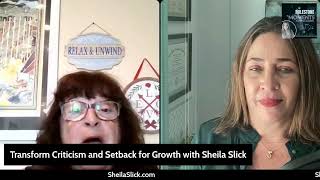
In this live episode of Milestone Moments in Business and Leadership, host Sheila Slick interviews self‑leadership expert Adrienne Barker, MAS. Adrienne shares two recent experiences: a disappointing Upwork client review (a 4.3 rating after a high‑performing project) and real‑time feedback that she talks too fast during a live chat session. She walks through a self‑leadership framework—recognizing emotional reactions, owning the response, and converting criticism into growth. Specific tactics include qualifying clients and setting realistic expectations for LinkedIn lead campaigns, separating actionable feedback from unhelpful judgment, and employing reputation‑management steps for negative or fake reviews (documenting, responding with emotional intelligence, and reporting). Adrienne also highlights ways to rebuild momentum: seeking referrals, creating case studies, and leveraging her strong overall rating and $100k earnings on Upwork. The conversation underscores the value of private criticism, the principle “praise in public, criticize in private,” and promotes her upcoming Upwork success workshop and the ChatterSocial platform. The episode blends personal anecdotes, practical advice, and encouragement for entrepreneurs to use setbacks as catalysts for self‑leadership development.
Chapters
It takes a minute. It's got to connect to all of the— okay, yours.
Let's see how this will look.
Yeah, it should go live on your banner.
Okay, let's go do it again. Gonna connect for me. Go live. Still working it. 3, 2, 1, and we're live! Welcome to another episode of Milestone Moments in Business and Leadership. I'm Sheila Slick, your host, and today I'm actually hosting this live with my special guest Adrienne Barker. Welcome.
Hi, Sheila. Adrienne, thank you for having me. Great topic today.
Yes. So if I understood correctly, this is getting live streamed to a few different social media platforms, yours and mine together. So what a better way to talk about transforming criticism and setbacks for growth today.
Very true, Sheila, especially what happened to me first thing this morning.
Yeah, so before we get into those details, uh, let me just introduce the topic to our audience. Uh, we had wanted to talk about something that we all face, right? It's receiving unexpected criticism, and sometimes we may ask for it. Feel free to criticize or provide any kind of suggestions for our episodes. And sometimes it just comes uninvited. And Adrienne, a close friend and client, received a less than stellar review after completing some work. And this isn't uncommon. Sometimes when we're in business, we even have to deal with fake reviews from people trying to sabotage us online who perhaps weren't even actual clients. Thank you for joining me today and talking about how we can help people overcome these setbacks and not just overcome them, but transform them in a catalyst for growth using a self-leadership approach. And self-leadership is the practice of intentionally influencing your thinking, your feelings, and most importantly, your actions. Welcome back, or welcome, Adrienne. Tell us about what exactly happened.
So I actually have two stories. So I— client on Upwork. Now I was having 100% of recommendation, very proud of it. The client had a difficult task, a difficult project to product to try to sell, a very large minimum of 4,000 units. And I was reaching out to medical clinics and weight loss clinics. What I knew in advance that it was going to be so difficult to try to get these connections and leads for him using LinkedIn lead system that I happen to be really an expert in, but I know sometimes just there's not able to— person won't be able to connect. There's whatever the reason is. So what ended up happening is I kind of thought to myself, okay, let me do this. Let me go above and beyond and I will create a newsletter for him and that way I will run that every Wednesday. He seemed to like that a couple of months ago, said, Adrian, no longer need me to review your newsletter. It looks great. That made me feel good. But when he said, okay, we have to stop it, it's not working anymore, I in turn gave him 5 stars. It was always great communicating with him, very, very easy. And he gave me a 5-star on 3 of the areas and a 4.3 on a couple of other things. And wow, when I read it, it really hurt. But then I realized, you know, I have to shake it off. It's not really— it's a reflection on how he looked at me, but it's not going to be a reflection on how I see myself. I'm not going to let his mirror shine on me. So I was able to shake it off, but maybe at 62 it's a little easier for me to do than other people. Now last night on Chatter, I was enjoying a fun room. I do the— I do the early edition of debate the news, and it's called The Local News, and I have a lot of fun. They've called me the creative director, which I'm really excited about, and I hosted it. And when I get excited, I talk fast. And so I was told by a lovely Allison who said, Adrienne, you're talking fast, slow down. It seemed to bother everyone else around, but I actually appreciate it. Sometimes when you are a fast talker, you need a reminder. But Sheila, what was so interesting is that everyone kind of wanted to defend me, but they didn't realize that there really was greatness in Alison Scheer. And it's interesting how sometimes criticism in front of others can actually not give you what you wanted to accomplish. So I really witnessed both those stories happen just in the last, uh, 48 hours. So I'm excited to share this, and then I'm excited to learn from you the steps that we can take when we're dealing with something like this. Thank you for letting me be so transparent and honest.
And thank you so much for being authentic and being able to use you as an example, which I think will make a great episode for today's show. So, and you shared two separate stories. So with the second one, I agree with what you said, and there's a saying where you Praise in public and you criticize in private. And so there's always not only, you know, the perfect place and time, but then it's how you say it as well. So the original one that I really wanted to talk about, because it's more of a business con— you know, concept in our industry was the Upwork one. And so the very first step is that self-awareness, right? Understanding your own response to the criticism. And so you use some keywords like, it hurts. And that's normally a natural reaction, especially when you feel that you've done your best, you've gone above and beyond. And this is something that even happens way before we become entrepreneurs, right? Like when you're in school and you just study, study, study for that exam and you're like, I got this. And then you get your grade back and you're like, what happened? Where did I go wrong? So the first thing that you need to do is understand your own response to the criticism. Accept it's okay to feel hurt, right? But like you said, brush it off. Um, you know, once you identify, am I being defensive? Am I trying to avoid it? Am I, you know, repetitively thinking or dwelling on these negative thoughts? So you can't make any of those changes if you don't take that first step and think about what is my natural response to, you know, a criticism or even a suggestion. And then the most important part is what you can do about it, and that is own your response. So self-leadership begins with recognizing that you can't control other people's opinions, but you have complete authority and control on how you respond. And that gap between receiving that criticism and your reaction is where your power lies. So you accepted that it hurt. You practiced avoidance, would you say, by saying, I'm going to just shrug it down. Maybe it'll just go away. What I loved was you decided to move forward and not dwell on those experiences, right? You decided to come here and see what value You, you know, you can get out of that. You're discarding that judgment, which is my second step. So what else did you do? We know it hurt. You gave your client a 5-star review, and sometimes it'll hurt even more if it wasn't a client, right? So let's just be happy that it's actually a review that is productive, and now you're not having to fight a system saying this person doesn't exist, or I don't know this person, or I've never met this person. Before. I don't know why they left me a review.
It was a client though. This, in my case, it was a client that he canceled the contract and it was a client.
Okay. So I can't see the review because we're not screen sharing it. So I'm going to have to, maybe you can look at it or look for it, but since we're live, you may want to just want to recall. So anytime that we receive that criticism or that review, what you want to be able to do is separate the actionable feedback from the unhelpful judgment. So let's talk about what that looks like for you. What was some of that feedback that you felt you could take a different action or that you could control?
So he seemed to be unhappy with the service. But the service is what I do. So that's exactly, you know, how I was helping him. But my second thought was, okay, Adrian, maybe next time when I take on a client, I should make sure that it will make sense. Let them know it may need a couple weeks, may even take a month to see if the program will work. Otherwise, I should be the one to stop the program. And say, you know what, it doesn't seem like you're getting the reviews that you like. I could continue doing something else for you. But I think that's how I should have handled it, and that's how I will handle it next, next time. So good learning lesson for me.
Okay, so what exactly— I know that was the part that you felt it was, it was 3, right? The service. So was that a 3-star on how you communicated the service, or was there a rating for that, or the actual service in itself that could have had improvement. This is where we need to separate so that we can figure out what else you could do.
So communication, 5-star, you know, my, um, by communicating with him, um, was that, that was 5-star. But what the problem was, what's under like the service when it comes to Upwork, and that is truly not necessarily correct. My service and the way I do it is great. But if you said— I always say you can't find a chubby 62-year-old woman on LinkedIn, me. And in this case, very hard that the people that are running the medical clinics, they were happy to actually connect with him, but I couldn't bring him another step further to even say yes to like free samples. Another thing too is that You know, he was a client that started with like very low amount. It was under 100 connections. And you know, most people when they connect, they want to see you at 500 connections. So he didn't really fit what I would say the perfect client is. So I've got to go back and look at my clients. And if they're not where they need to be, I need to let them know, listen, first let's get your followers and your connections growing, and then we can make the ask. And so it may be a little longer of a process. Nobody ever claimed— complained that it was scammy or my messages weren't great or any issues with that. It's just in this case, you're asking a clinic to really do something pretty difficult. And especially if it's a minimum of $4,000, that may be too much for them. So I think the ask itself was probably way out of line that they would expect. But otherwise, those are the things I learned. There was nothing different that I did. I had this happen with another client who was also looking, a very targeted program that they were looking at, but their program, the people weren't on it. So a lot of people will say doctors, dentists, a lot of them are too busy to be on LinkedIn, and that absolutely could be correct. So if you're going to be reaching out to them, you have to make sure that it's going to make sense at the time. So I'm learning about that. And so next time I'll make sure I work with clients that are ready and have a good looking profile and they're able to. And then I'll just let them know, you know, we'll know in a month that if it doesn't work, then either let's do something else. That's the best I could think of that I could do. And so, yes, I am taking it, shrugging it off because I know I'm very good at what I do and my 15, 5-star reviews that I've gotten on my Professional Global Etiquette Google page makes me happy. So I'm going to focus on that. And in all honesty, I'm still 95% now with Upwork, which is still amazing. Hit my over $100,000 mark, which is still fantastic. So there's a lot of good anyways. And at the end of the day, it was like a 4.57 when they average it all out. So it wasn't horrific, but I love 5.0s, like, just like all of us and all of you out there.
So do I. And sometimes I think people may even be like, is that a real person? How can you have so many perfect reviews? And we don't. I, because I've done web development and technology development, I normally have dealt with people and they're normally in a hysterical mode. Like, this just happened. How do I handle this?
How do you get that off?
I'm like, no, no, no, no, no. Uh, if it were critical, it's called reputation management, right? Uh, but that's normally the first response people have. They're either hurt or they, you know, get defensive or they just want it to go away. And this is something that we all encounter. So that's why I'm thrilled to be having such an open conversation and live. So what you have done is you have filtered and you even compared it to other clients that you've had, and perhaps it, you know, where it had worked. And it's fair to say your communication was good, right? Because that could have been where perhaps you could have improved that, that process. And It hurts even though you, you know, it's like going from 100 to 98%. You're still, you still have impeccable reviews, but because you love to, you know, go above and beyond what you deliver, this is, this is a letdown. So the third step, once you have been able to filter what works, what didn't work, or what are the good things I can take out of that? Feedback, and what am I going to not focus on so that I can move forward, you're going to build that momentum and bring back your confidence, so to speak, by taking action. And rather than, you know, shrugging it off and forgetting about it or keeping it in the back of your head like I'm angry, by being able to do one of three things, it'll set you up on the right track to build that momentum up. And the first one is look back at your other feedbacks and perhaps refine one thing of your process. And it sounds like you've already done that because you said, I think I need to better qualify a client for that particular service. So you already set out some criteria that is gonna filter whether or not that client is a good fit for that service. And then number 2, you can go back to some of the clients, and we always talk about the importance of referrals and requesting those reviews. So you can look back at a client that perhaps, you know, you went above and beyond and absolutely loved your work. Ask them to give you a review and that'll help balance out not just emotionally, but the mathematical algorithm or equation that is showing up on your Upwork. But that always is a great way to counteract, right? It's a positive going against a negative. So not only will it help you, you know, mathematically speaking, but it'll also bring back some confidence that You know, the service does work. It— that wasn't the problem. And the third one is write a case study, right? And a case study doesn't have to be a book. It could be a blog post. It could be a 200-word summary because we all learn from our mistakes. And so by writing about it, uh, you're able to use the positive and the negative and make sure that it's a learning experience for you. Now, if it were a fake review, and the only reason I'm addressing this is because I, you know, we, we see both, right? We see the ones that are perfectionists and wanting to go above and beyond, but then if you have a, you know, Google My business profile review or anything on social media, you more than once have probably encountered what you think is a bot or a fake profile trying to just, uh, either sabotage your profile or your business. And so if that were the case, then the steps would be a little different, right? I'm not going to go out and write a case review on How, how I'm going to overcome that, right? Those 3 steps would change. And the first thing I would do is at least outline and document that suspicious activity so that I can build a case and report it to that platform. And it's really hard a lot of times to get these big companies, whether it be Facebook or Google, to even respond, but I promise you that I've worked with clients that have received, have gotten taken down within 24 hours, these fake reviews. And in the meantime, what you can do is respond and respond with emotional intelligence and respond professionally. Something that first acknowledges, you know, the feedback and then expressing the, the truth, which is we are going to investigate this, or we're going to take the next steps because we can't find any records that show, you know, when we served you. And that is really important with these platforms because they're looking for genuine reviews. So if you can prove that that person has never worked with you, they'll take down that comment immediately. And the third one is to always redirect your focus, right? And you always want to reach out for one testimonial and showcase the real impact and value that you are offering. So that does counteroffer or counter— what's the word I'm using? I'm looking for—
counteract.
Contrast. Yes, the negative. And so that pretty much sums up today's episode, what I have wanted to go over with you. I don't know if you want to talk about anything else in relation to how we can use this criticism and setback for growth.
So I love what you said about criticize in private And what was the saying again?
Praise in public. Praise.
So very interesting. So I, if you, if you know me, you know, I talk about Chatter all the time. ChatterSocial.io is an amazing app. I absolutely love it. And I've been enjoying some fun being on the app. And I can't remember if I even shared the story. Did I already share the story, Sheila? I think I'm losing my brain.
At the beginning, you had just talked about the positive and some— how somebody said you were talking too fast. And then the audience was like, whoa, that wasn't so nice.
And, you know, people said, you know, your tone is fine, don't change who you are, your cadence is great. And I thought, but that's all good. But if I don't have that feedback, and I love that it was real-time feedback, then now I know to slow down. The problem with me is that I get so excited when I'm sharing something or and having fun that I I do talk fast. That, unfortunately, I come from Connecticut. My mom told me my whole entire life, stop talking so fast. So I love the feedback, but it is interesting. They always say, do it in private. So Sheila, this is a great, great lesson. I'm not that I'm glad that this happened to me and that you're able to use it as an example. I do believe in Unreasonable Hospitality, which is an amazing book, by the way. And I want to give my best. And on Friday, Sheila, if you don't mind a shameless plug, I am doing an Upwork conversation. I'm going to show you the secrets of the success. And I guess I'm going to add to it sometimes a downfall of working on a platform like that with Upwork. It's a program I have, I love, I've hit the $100,000, but this is perfect because it comes in time so that we could talk about this in Friday's program. I'm doing that at noon and it will be streamed live. And Sheila, thank you so much.
And thank you for getting me out of my comfort zone and doing this broadcast live, opening my own self up for criticism, whether it be constructive— it could be in a comment which is public, or it could be through a message which is private, but it will be welcome. Because I am always looking for opportunities for growth.
Thank you, Sheila. I really appreciate this and your fantastic live. I hope you continue to do the lives. And we're streaming today to Facebook, LinkedIn, Sheila's LinkedIn, Sheila's YouTube. So hopefully we got some coverage and your lessons will help other people.
Yes. And tune in to Milestone Moments in Business and Leadership where every week I have a new episode where I interview experts, business owners, and leaders to share their insights and their stories. I'm experimenting this season 2 that just began with a biweekly space where I'm giving some of these tips on how to be your best self through self-leadership.
This felt like a coaching session, so really fantastic. So a little coaching live is always good for the soul, so I appreciate it.
Well, then you're gonna have to repeat it for me, right? How to Break the Six Figures in Upwork. That could be my first workshop because that requires persistence. And you know what, I'll join your workshop. So thank you. I can't turn this off because you're the one—
I got you, Sheila.
I don't even know what to do.
You're doing great. Thank you so much. I'm glad to have hosted you. You're amazing. And I'm going to end the stream right now?










