Special Guest John Pastore of www.EmergencyInfoPlan.com
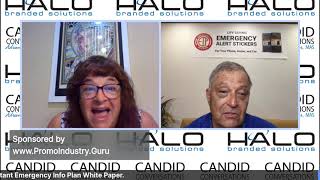
In this YouTube interview recorded on May 3 2021, host Adrienne Barker (MAS) speaks with John F. Pastore, founder of EmergencyInfoPlan.com. Pastore explains how a personal tragedy—his wife’s death after a delayed 911 response—led him to champion the built‑in Emergency SOS and Medical ID features on iPhone and Android devices. He describes the technical workflow (press‑and‑hold SOS, automatic text to contacts, location sharing, and Medical ID display for first responders), the gap that most users have (features are enabled by default but rarely set up). To bridge that gap, EmergencyInfoPlan offers free tutorials, a downloadable Android app, and a low‑cost sticker package (phone‑back, refrigerator, car) that visually cues responders to the SOS function and provides a QR‑style link to the user’s Medical ID. The conversation covers product packaging, pricing ($6.99 per pack), distribution channels, community‑level deployment (HOA guardhouses, CPR‑trained security, clubhouses), privacy/security assurances (data stays on the phone, no HIPAA concerns), outreach ideas (Clubhouse, American Heart Association, promotional‑product industry), and personal anecdotes from both participants about emergency experiences. Pastore shares contact information and invites collaborations, emphasizing that a one‑minute reduction in response time can save thousands of lives.
Chapters
this app too. Okay, good, we are now live. So, oh, hello everyone, good morning, happy Monday, May 3rd. This is actually my husband's birthday, 59 years old. I follow him in a month, so I'm really excited. So I, last week I had an opportunity to be on a networking call, and that was prompted by Transmedia Group, right, John?
That's right, Transmedia Group and Adrian.
Adrian, yeah, the president Adrian invited me, Adrian, to go on. I really didn't know what to expect, but I enjoyed it so much. And I got to meet John Pastore. John, let's say it right. Is it Pastore or Pastore?
It's Italian. It's got to have a Pastore.
Pastore. And what you're doing is so interesting. So I actually downloaded your white paper and so excited to have you on this morning to talk about your company and the, what the business that you do. So John is the founder of emergencyinfoplan.com, and this, uh, his, this idea came out of the, the, uh, passing of your wife, correct?
That's right. It was a tragic situation. I think many people probably face the same thing, and I'd like to try and help those people. So the situation was that my wife called 911. I was away on a business trip, and I didn't receive the call from my neighbor. Uh, he called me and left to let me know until 40 minutes later, and I wasn't given the opportunity to really represent her, and she passed away that day. And a few months later, my phone went dead, and I went in and I got a new iPhone. And the person who sold it to me said, "Do you have emergency SOS and medical ID set up on it?" And I said, "No, I didn't even know what it is." And he said, "You know what? This is a software change that occurred in September of 2017." My wife passed away in November. So this could have potentially saved her life.
Okay, but you, okay, so you went from something that could be in the phone To creating it, so you understood that not everyone, I have an iPhone 11 Plus, but I don't have the emergency, I don't know anything about that, that it was on my phone.
Well, it's there and it's been there all along. And if you take your phone like this and you squeeze it, up will come Emergency SOS and Medical ID. All right, that's in the phone, that's built into it. Don't do it. You might call 911.
So what happens when you do do it? So that's why I've never done it. Who plays with that?
All right, so here's what happens. When you do it— and this is on the iPhone— when you do it on the iPhone, instead of dialing 911, which is what everybody does, you squeeze it, and you take that red SOS and swipe it. You talk. And when you talk to 911 and tell them your situation, you hang up. If you have it set up properly, it automatically sends a text message to your contacts. And it says, I'm having a problem. I'm having an emergency and I'm right here. So it tells you exactly where you are. So you can locate that individual.
Okay, so this is so, all right, so now let's just go into groups. So you have those that are really humble and don't wanna bother anyone. So they would say to you, John, I'll call 911 and I'll get the ambulance here, but I don't wanna, why would I want to bother my neighbors or have anyone be bothered?
Well, let's put it this way. Today, people live far apart from their children, all right? And they need to be notified. There are people who can represent you. If you don't have somebody who can represent you, something might be done for you that you really don't wanna have done. So having them in your court and available is important. 911 would want to talk to them also so they could find out, those first responders. So let's go to the second step. The second step is here. It's called Medical ID. 911 arrives, or first responders arrive, squeeze the phone, and they swipe that Medical ID. And when they do it, your information comes up. So now they know if you have allergies or if you've had a past medical condition or if you're taking medications or anything of that sort. Plus they can actually dial your emergency contacts. So they can just hit the phone and it will go, okay?
Yeah.
So that's what could have changed things because I would have been alerted 40 minutes earlier. Now, wow. All right, go right ahead. You've got more questions.
No, no, I'm just, I'm just thinking, thank God for the neighbor who even thought enough to contact you, because I'm just not even familiar that neighbors would do that. That's pretty amazing.
Yeah, well, the, uh, here's the thing about this particular, um, app, or not app, this is built in, it's a feature on the phone. I haven't found very many people who have actually set it up properly, so we help them set it up. But we also provide what we refer to back here on the sign as emergency alert stickers. They go on your phone. And those on the phone show somebody who comes to your aid how to access that information, how to operate it, how to get at the medical information in your phone. And then the stickers that we put on your home and your car, they tell first responders, call the phone, find the phone, get the information. And so it's all tied together in one little package for them. And we realized that, you know, this is not— everybody has an iPhone. So we developed an app for an Android phone that can be downloaded from our website for free. And show people how to set it up on their Android phone also. Operates slightly differently, but about the same. You text, you, you tap on the app, goes out, sends a text message back, you know, and they'll call you. 911 will call you. And when you hang up, you tap again and you alert your emergency contacts. So it's the same thing. They know exactly where you are and your medical information.
Okay, so let me ask this question. So Apple creates this, this product that they have on the phone, and they sell their phones by the millions, and they're out there. You hear about it and you say, wait a second, this could have saved my wife's life. You're, you're just kind of sharing it with me right now, but you're not giving me any information. So you're taking what Apple kind of placed on the phone and creating a way for people to actually not only use it, but understand, and then visually, uh, EMT or someone coming in would understand. Now, would they understand enough of this with a sticker? Do you have a sample sticker? I see the one behind you.
Um, I do, just a second.
Did you have to get approval from Apple?
No, it— no, this works just providing information about them like other people do. And that's really all we're doing. And that, that's really what's, what's important. Okay. And, um, and I would think that this would be really appreciated because it will bring it there. It will bring more to it. And you need to let people know about this. You need to have people involved and those people need to have certain things available. Also, they, they, they need to have documents so that they can represent you. Because without them, they can't. So this is a sample sticker right here.
Nice.
Not sure if you can see it. All right, there we go.
Nice, nice looking. Goes right in the back of the phone, love it.
It goes on the back of the phone. This is a sample sticker that goes, is that good there?
Yep.
All right, okay, that goes on the home, okay? It could even go on the refrigerator for that matter, because that's where they look for things. And then you have another one, which will look a little opaque because it sticks on the car and goes out.
Love it.
So that shows 911 that you have it. They know it. And 911, when they get there, and so you see in the white paper, and people should download the white paper, find out about it, right? Because the white paper says, look, 911 already knows your phone number, give it a call. When they give it a call, they hear the phone, they run to the phone, they pick it up, they squeeze it, see the directions, get the information, and they could save a minute of time in the process of doing this versus looking around and trying to find things out. They could even save hours of time from that standpoint. But a study shows that if you save a minute of time when it comes to a heart event, a minute of time, it can save 10,000 lives a year. Just one minute.
Wow. Wow. You know, I love the show 911 on TV. I know it's like a black comedy, but it'd be great if you could contact them to share. And would that be cool where that becomes a standard when they get— because, you know, we watch it, so it would get people.
That's a great idea. We're open to any ideas. We, we sell these little sticker packs And they're very inexpensive. They're like $6.99. It's a one-time. It's not a— you don't have to subscribe or do anything of that sort. We just sell them. And we actually have sponsors who give them away because they really care about the people that they work with. So they give them away as we'll call the promotional. And we even have advocates who just want to share the idea with their their groups. It could be a charity, it could be a charity with people with special needs, it could be anything from that standpoint. So it's, it's very exciting to be involved in this, and it's— I'm very, very passionate about it.
I love that you took the app. So, you know, I've grown up in the promotional products business for over 35 years, so I'll age myself, but I remember throughout the years there were always something, whether it was an item that you would just, you know, like a clear case that would have your medical information years ago, and you put that on the refrigerator, and maybe there'd be a sticker to let them know to look at the refrigerator. To what I thought was really fancy but didn't turn out to be so popular was putting all of your information on a USB drive, and then that has to be stuck in. So that kind of was a fad, and then that kind of left. And so all of these different ways for years of how to make people understand that that information is so important. And I love that you took something that already existed, but most of us are clueless about, and actually put it into a product. So I definitely see this could be a great product for anybody in the promotional products industry, especially for human resource directors to make sure that all of their employees have it. Can I share with you my two stories?
Please do. Please.
So when my mom fell, my mom took a horrible fall one night. And my mom, you know, just at 87, 88, she was on a variety of different medication. And my mom wasn't, you know, I take after my mom. So believe me, I'm not insulting her, but she wasn't as organized as like you really could be. So when my mom had fallen, it was so scary. And we had called 911. And I remember my brother Stephen was like, oh, you know, he wanted to go to the hospital. And I looked at him. I said, you need to stay here. And go through all the medication and try to put it all together because we're going to get to the hospital and they're going to ask what mom is on. And I don't think that dad really knows. So, and I was surprised that he even knew that, but that's because I watched 9-1-1 and, you know, the different TV shows that that's what's going to happen. And sure enough, I was right, and it did take a little time for my brother to, to get all that information together. And so, but anyway, so that was the beginning of really understanding the seriousness of, you know, what do you do to, like, those few minutes. But then when my father, he ended up 2 years later, so actually April 3rd, 2019, he went into the hospital and there was some miscommunication, so his information wasn't relayed clearly that he was on a blood thinner. And my dad actually bled to death in the hospital from a simple— he had a little fluid in his lungs And when they went to remove that, and so that information wasn't actually relayed, which is kind of crazy. And I don't know how that happened, but I know that when my parents both at one point in like 2013 through '15, when my mom had fallen, also just like coordinating with the hospitals. I think my sister Amy had to do that, coordinate who had what and what medication, because they don't communicate to each other. So the primary doctor, so if you're in a hospital And I read that in your white paper, that that's another issue is that you call 911 and you get picked up, you really may not have a say in where you're going. Can you talk a little bit about that?
Yes. You know, when 911, when you call 911, they're directed to get you to the hospital that can serve you either best or quickest or fastest, let's put it that way. If it's not your hospital, and let's talk about Florida, let's face it, You know, half of the population or a little bit less than half the population lives in two places in Florida. So they live up north and they live down south. Okay. So they probably have two hospitals anyway. They don't know if they're going to have an emergency up north or down south. And even if they are down south, they don't know they're going to wind up in the hospital that they go to. And when that happens, they can spend hours trying to locate your information. So we, in our tutorials, And the tutorials are very easy to follow. They're really designed for seniors. We hope that juniors will help seniors, but they're really designed for seniors. Easy to do. You pull them up on your computer, you watch them, you go on your phone, and you set your phone up appropriately. If you don't know your medical information, you come back or you call your doctor. You get them to give them a list of whatever it is. And you put it in there. We have other ideas in there and other— when people visit the site and they see the tutorials, we have some key secret sauce in there that basically will protect you that you should include in everything also. So there's good communication. But that's so important. And look at you, you had this experience. What a terrible experience. And that's like me. I don't want anybody else to go through my experience. I want them to have a better experience.
And you, like, the average person thinks that, like, I have a good memory, I'll know exactly what to happen, I'll be here, I'm the proxy, I'm going to make sure that nothing bad happens, and then that could go down the drain in a second.
It can go down the drain in a second. What I do is I ask people to go to our website, www.emergencyinfo plan.com. So they go there. There's an assessment when you go down and you see, you learn about the stickers, you learn about the phone and how easy it is to set it up. There's an assessment. Most people think they're prepared, but when they take the assessment and they realize that being prepared means in a moment's notice you have to respond, there are a lot of extra things you you have to do. So it's really worthwhile to give yourself and find out your own preparedness. You can get a rating from it and see what you do need to do.
Oh, I haven't done that. So, so this is only available in the United States with the iPhones, this medical alert, or do they have it in other countries?
Actually, it's in all countries.
It really is?
Almost, almost every country that's out there. Now, in our case, we have different languages in the phone and how we work, we're working now because we have a full delivery system. So where you order, you go online and you order this, we deliver, we mail it to you. You get a nice little package that comes out and has the tutorial, has pictures as to how you set things up. And then you're taken to the site. And while actually, after you order your stickers, you go online, you set your phone up and then the stickers arrive afterwards. Now, as we move forward, it could be more than that. And we can deal with this in other countries also, because as you know, Androids and iPhones work in different locations. But right now we're focusing on the United States and I think 600 million people is enough, you know? So at this stage—
We should do Clubhouse. Are you on Clubhouse? You have an iPhone. We got to get you on Clubhouse. I'll send you an invite. All right. So, um, so when this is over, I'll get your cell phone number. I'll send you an invite and then we could do a room. I'll, I'll interview. We'll do a room about, do you know USA? Do you know the emergency alert on your iPhone? Because actually right now everyone on the app Clubhouse is on an iPhone. So, so now it's just kind of figure out the, you know, USA. There's other countries, but it could be really, really fun. So let's get you on Clubhouse. I love it.
You know, I watched your interview before I came on here. You've got one of the most exciting interviews. You like capture people and I love it. I absolutely love it. And, uh, and, and I, and I like that, that part about it. I really am enjoying what I'm doing here and helping people. So it's for businesses, it's for families, it's for communities. In our white paper, we show communities how to save time, which saves lives, in going to response. And if you have a gated community that has a CPR-trained guard at it, we can get them to the people 5 minutes before 911. And I actually just witnessed it.
Interesting.
I witnessed it in my community where that actually happened. And, um, and the, their CPR guards showed up in an accident that I was— I came in, boom, somebody had an accident up the way, and I watched what happened. It was really pretty amazing.
Okay, so that— I read that. That's really, really cool. You get the white paper. Just first of all, the white paper is free. You just download it from the site. But I, I thought that was so interesting about the security guard and the gated. Can you, um— no, I think I interrupted you. Were you going to share a story? I'd love to kind of like have a story of how it actually worked. So that you have this— the guard is, the guard is trained, and then what comes after?
Here's what we do. We work with the community, work with the community, educate the residents about this so that they know what it's all about. And we can do with our tutorials and Zooms and other things of that sort. We can support it. And we have other allies, people who in technology who train seniors with technology because it can be challenging. Okay. But let's talk about the community and the HOA. So they have these great resources at the front gate. They have a guardhouse that lets people in the emergency. They also have trained CPR guards in some of the communities. So all we have to do is put a cell phone in that guardhouse, put an emergency contact of that guardhouse. So when, You hang up and you've talked to 911, and now you alert your emergency contacts. They're alerted. If you're in the community, they know it and they'll come running so they can get there faster. They can save 5 minutes. There was a study done by the International Association of Firefighters that showed the difference in response times from different types of responders, emergency medical services and fire and rescue. And there was almost a minute's difference in those two in their study that they had. But just imagine if you could chop off 5 minutes, because with a heart event, you have 6 minutes, 6 minutes to really save that life. Those are the critical minutes there. So the faster you get there, the more chance you have to save a life.
John, have you reached out to the American Heart Association?
Not yet. We're just about ready to do that. If you have, you know, if you know any contacts or people do where they could help, let's all pull together. Let's make this work because everybody has a story. You talked about a business. I did a small group meeting. I sat there and we talked and I asked, well, who has the story? And everybody has a story just like you did. And that's not a nice story. It's a hard story to take, okay. But one person said, you know, my employer, we had an employee, he was really, really prompt. Every day he showed up at 8 o'clock, every day. And one day he didn't show up, and the employer got concerned. So he called up a friend of this person. Now, that guy had been out fishing, and he just came in on his boat, jumped out of his boat, ran over to the house, and saved the person's life.
Wow.
So just imagine if an employer or other members who are employees of that employer were maybe notified when a person had a problem at work or just out of work or whatever. Maybe they were an emergency contact. They can make a difference for that person. But there's lots of people you should put in there. And your neighbor's not a bad idea. And your doctor's not a bad idea either.
I love this idea. I think that, um, you know, I live in a, in a complex too. I think that the clubhouse, it's a great idea for the clubhouse to at least explain what the program is and find out who has an iPhone and then get the information or get the app. I love this. I'm happy to help promote you. I think you're brilliant that you went to Transmedia. That's a great company to help you get your word out. And now you're on the circuit, so you're— are you— so you're going to start to do interviews. Am I your— I couldn't see any other interviews. Am I your first, second, third?
Second or third? Third. Third. There we go.
I'm gonna get mine on that YouTube quickly. I'm gonna get you on YouTube.
You're really my first, okay? You're number one, okay? Yeah.
So seriously though, I'm gonna get you on, uh, on YouTube really quickly. I, I love this. As I said, I think that there's There is— this would actually be very cool in the promotional products industry because they could actually tie in to a first aid kit, a ready kit, a safety kit in your house with a flashlight and some of the other things that you need. So we'll have to get that out there to the industry because I think it's brilliant. What I see is a supplier picking it up, so a supplier that maybe will include it. So it comes with— so what do you have, the package of how it comes?
Well, it comes in an envelope, so you order it and it comes in an envelope, and then in the envelope you have the instructions on how to do it, and you know the website so you can go to the website. Then in addition to that, you have a— you have these that come, the stickers. I don't know if they're all right upside down or not right there, but the stickers come in a plastic little pack, and that pack holds them all together and they're there. So you have instructions and then you go online. So it's all done, it's done electronically where you order and you'll find out about it, but then it's automated and how you receive it, and we do all of that. And, uh, yeah, it's crazy.
You have a great— you have an excellent product, but you need communication in order for it to get to the market. Like, that's the thing you need. And so you're so smart that you're starting to do the interviews and to, to get it out there because it just is a brilliant— I love this story of yours that you find something that's already available, realize that it's just kind of sitting there for all of us. That is really—
we found what was available and then we replicated it. So for the Android users, which there's just as many Android users out there as there are iPhone users, We created the app. Free, you download it, you go on. Now I want to mention one thing because these are frequently asked questions and these are things that hold people back. So one of the big questions they ask is, how secure is it? Okay. First, I want, want you to understand, we don't know any of that information. It's on your phone. So we're not a gatherer of that information or medical information and all of those things. That's not what we do. You have it on your phone. So then the next question is, how secure is it on this phone, okay, like this, when this has been activated? Well, when I hit back, what comes up? You gotta have my passcode to get into that phone. Right. So I'll give you maybe the next murder mystery that's going to come about. Everybody has face recognition on their phone, everybody has fingerprint recognition on their phone, so somebody comes up and hits you over the head and you pass out and they hold the phone over your face and they get everything you have, right? But in this particular, they could do that, right? It's terrible, but they could. But in this particular situation, when you activate the emergency SOS, it's locked on both of them. So you get in. The only thing you get is your emergency information. And so you make a decision. Do I want people who come to my aid to have my information or not. If you don't, you don't put it in the phone. Okay. But they're the only ones who are going to get it. And that's when it's important. And when it's not there, that's when there's a problem.
No HIPAA issues, people. No HIPAA issues. You are allowed to tell the doctor what's happening with your body. You actually can. Maybe someone else can't, but you can. So, and if you can't because you are not able to speak, it's in your phone and your phone will speak for you.
And also the sticker will speak for you. So when somebody comes, let's say you're out with a friend, okay, the sticker's there. They know it's on the phone. They operate it. They call 911, hang up, and notify your emergency contacts. Okay. And that's why we say we stick up for you when you can't stick up for yourself. I love the pun.
I love puns. The pricing is great. The white paper is free. You're a lovely man. You You have a great— not a great story, but you have a reason why your passion is definitely in the right place. Your heart is there. And I'm going to— I'm going to order my stickers. I really think everyone should really at least go on the website and read about it, learn about it, and share the information. Because, okay, so here in Daytona Beach, we really do have— we have a lot of seniors, and the seniors are living here, and their family members are from all over. They're not local. And so this is really important for them to have this. So please, please, please make sure that you consider this. It really is important. I love that you're doing this, John. I'm so glad that we met. And is there any last few words that you want to say about your product, yourself?
What I would say is that if you have a question, you can email me. It's john@emergencyinfoplan.com. Oh, I'm going to put that in there. You can really call me if you want. Also more than happy to talk. If you have any speaking engagements or anything of that sort, I'm more than happy to help in whatever way I can. And I'll give you my direct number, which is 802—
wait, oh, 999. Okay, 99—
sorry, 802-999-7300. And I think together we can all make a huge difference. We can really make a difference and save lives, and that's what it's all about.
I love it, John. It really is. Matters count. I hope that a lot of— if you're an EMT or in the medical field saving lives, thank you so much. Add this to— learn about it. So are EMTs taught about this? How do they know?
We're teaching. We're open to talk to anyone and show them because it's so fast. Okay, you think you arrive at the scene, you have the phone number, you call it, you locate it. It's a lot better than looking in drawers or wallets or all around the place. It's immediate. And then you can actually, while you're driving back, triage the person to the emergency room with additional information.
So when I swipe, so when it says emergency, you swipe it, that then do they answer 911 or you're automatically there?
How does, what is it automatically dials 911. You swipe it and you talk with them. If you can't talk, well, because you can't, but you can just move, you do it and you hang up and it automatically sends it out to your contacts.
That is so incredible. I can't wait to learn more about this to actually do it myself. That'll make a difference. So thank you, John. Thank you so much. It was lovely meeting you.
Can you put the website up there too?
Oh yeah, it is crawling right down. Do you see, um, under— see if you look at the screen It says, guest John F. Pastore, founder of www.emergencyinfoplan.com. Check the website for important Emergency Info Plan white paper. And that's been scrolling along the bottom.
Okay, great. As I said, you're number one.
Thank you. Us Adriens, we know what we're doing. Have a great rest of the day. Thank you so much. I do want to connect and have a conversation offline with you. I absolutely think that this is brilliant, and I hope I go to another networking meeting. I, I'm hoping— just pass the word to Adrian to invite me again. I would love it.
Well, I'm gonna invite you.
Yay! It's really nice. I didn't know what to expect, but I love it. Do you meet once a week? Twice a week?
Yeah, it's on— it's on Wednesday.
Oh, very nice. Oh, I'll have to make the plans. Okay, love it, love it. All right, have a great rest of the day. Thank you so much. This is fantastic. Thank you. Bye-bye.










