Superstar Guest Felicia Jeffries, https://bizcreditmovement.net/
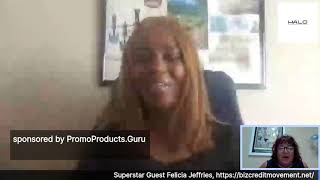
Felicia Jeffries, a Fort Worth business credit specialist, explains how business credit works separately from personal credit. She walks through a four-phase process: vendor net-30 accounts, fleet cards, other credit lines, and building a strong profile for loans. COVID-19 shifted suppliers toward longer payment histories and more documentation.
Chapters
Hi everyone, it's a— this is a double header today. I'm very excited. So I have with me Felicia Jeffries out of Fort Worth, Texas, hence her beauty, because I was just saying women in Texas are just absolutely gorgeous. So, and I, I love that area, but I'm really excited because I really want to talk business credit and what that looks like. And then, so your website, I love it, bizcreditmovement.net. So what, what got you in the credit business?
Oh my goodness, it's, it's, it's a— I have a bit of a history as a paralegal. Oh, so in, uh, 2010 I started going to school to become a paralegal. Well, 3 months after I started school, I decided, okay, I want to start my own business. So I put myself on Craigslist, and the business and bankruptcy attorney called me, and I started working for her. And during my process of working for her, there was one particular case that caught my attention. And what happened, a young lady walked into the law firm. She had been going from law firm to law firm in person because she was being sued. She had been crying. You could tell she was stressed out. She had started a business as a boutique owner. She couldn't afford her rent. Well, her rent was $5,000 a month. Whoa, she was behind 5 months. Whoa. So they went after her personally, not just the business. Well, we filed for bankruptcy for her, but it devastated her. And so I sat down and talked to the attorney, and I was like, you know what, I think I'm going to start a credit repair firm. And she was like, well, do you have experience doing that? And I was like, no. So I went home and I talked to my husband. I was married at the time, and I told him I want to start a credit repair business. And he was like, okay, how much does it cost? So he paid for my education to start my credit repair business. Well, fast forward to 2016, a lot of business owners started coming to me to fix their personal credit for their business. Well, I had went to my continuing education and I learned about business credit, so I ended up taking on my first major client. And helping them build their business credit. And it just took off from there.
So you know what you're doing. You like it.
Mainly it's business credit.
Okay, so what— so does this mean— so if someone— because some people just don't have any credit and that can be an issue, or are you looking for people that actually have a bad credit score or negative credit score and how to get them, move them into business. So you're repairing it or you're building?
Well, no, with business credit, it's totally separate from your personal credit. So, you know, we're born, right? Every time a child is born, they receive a Social Security number, right? Well, the same concept applies to a business. When a business is formed, it receives an EIN number from the IRS. The IRS— the EIN number is similar to a social for a human. So a business is able to build credit apart from the owner.
Wait, oh, I didn't really realize that. I always thought it was connected. Does the— does the— is there a connection between the EIN and the person that's starting the business as far as financial?
It depends on the structure of the business. You know, there are sole proprietorships, there are LLCs, there are corporations and trusts. Depending on the structure of the business, the person does not necessarily have to be linked to the business. However, if it's an LLC or corporation that's normally being formed, when a person applies for their EIN, the IRS will ask for their Social.
Got it, got it. So if a business— so if a person has decent credit, they start a business, how are they building that, that credit then?
Well, the business credit isn't attached to the personal credit. A person can have bad credit and still build good business credit. They're not linked at all.
Okay, I need a second to process this. I, I did not realize that actually, so I obviously don't know that much because I, I always thought that there was a connection. Am I— do other people think Is this like news to other people in business, or am I getting—
it's the business credit industry has been around for over 100 years. You know, you have Dun Bradstreet, that's the major player as far as the top business credit reporting agency or business credit bureau. So when a person receives a DUNS number for their business, they apply for that DUNS number and they start getting credit, that credit is put onto the business and it's attached to the DUNS and the EIN. They can have poor credit and their business could have good credit.
What— so is it— so when you— they're getting a loan, so if they're looking to— if they want their credit looking for a loan, is the bank or the lender looking at their business credit, their personal credit, or both?
It depends on which lender you go to. So with the conventional lenders like the banks, there are laws— now this is not to be taken as legal advice, it's FYI.
Got it.
There are laws that have been put into place where they have to check the social of the owner who has more of the majority ownership of the company. Another conventional lender, they may just check the business credit and not check the personal credit.
So where do you fit in? Are you helping people to build the credit or repair? So I'm still confused with that part.
What, what you actually do? We do a variety of things. So the first thing that I would, I would do is I would have to assess a business's situation and I have to know their goals. Once I find out what their goals are, then I know what route to take. But the thing that we focus on in most of the cases is building business credit. Okay, apart from the owner, so that they won't have to use their personal credit in most situations.
And what are some ways to build business credit? Is that similar to like getting loans and paying back, or getting open account and paying back suppliers?
That's a good question. It's a bit different from building personal credit. So it's a 4-phase process, and it starts out with vendor credit. Vendors are companies who extend credit for their product that the business purchases. Normally, there are net 30 terms. What that means is a business will apply for the credit They'll get the merchandise and they have 30 days to pay it off in full. That's the first process. The next process is fleet cards. Those are gas cards. A lot of people are like, well, what would I do with a gas card? Well, if you're in business and you have a car and you're using that car for business, you'll want a fleet card. And there are like Shell, um, 7-Eleven, numerous gas stations have their own fleet cards. Okay, never—
that, that makes so much sense. What about for nonprofits too? Is this also for nonprofits?
It is. And so what is a nonprofit? I'm sorry, go ahead.
No, I want to hear what you have to say. I'm just curious what— why the gas card? So that's so intriguing.
Well, it's a— it's, it's interesting, but just think about the government mileage regulations that a business can write off on their taxes. Now, this is not tax advice. It's just FYI, right? Well, a person might itemize, right, and use their gas receipts, right? Every time you go to the gas pump and you swipe your fleet card, you have to put in your mileage. Oh, so it's tracking your miles. Oh, oh, so it kind of does both.
It tracks your miles and it offers you credit on your gas, and then you pay it on time. That builds your credit while giving you— while allowing you to make it easier when you go to file, right?
That's a golden— that's a—
I didn't know that. That's Oh wow, that's great, that's great information. Our guest credit card easier to get than like other credit cards?
They are. So normally with your fleet cards, they are also on net 30 terms. Sometimes they're on net 15, sometimes they're even on net 7, but you still have to pay them off in full.
Wow, got it. Very interesting. Okay, okay, so now, so you're a business, you're building your credit. What happens if you're a business and you, your accountant, your, your account and your bookkeeper— let's say that account, your bookkeeper forgets to pay 3 invoices and now you are, uh, behind and it's, it's, uh, dinged your credit rating? What, what do you do?
Well, business credit is pretty simple. It's not like personal credit. You know, with personal credit, if you mess up and there's a late payment, it's going to stay on your credit for 7 years, right?
Yeah.
Business credit, all you have to do is start paying your bills on time and your score goes back up for your business.
Is it like a number or a letter or—
I forgot, there are numbers Letters. So you have 3 agencies. You have Dun Bradstreet, Experian, and Equifax Commercial. Oh, they all, they all report differently. Now, Dun Bradstreet, for example, they have what's called a Paydex score. That's a number. Anywhere from 80 to 100 is a good score, or you can have A through F. Okay, that's what I remember. Uh-huh.
A number too, like 5A1, or like numbers like that, right?
No, they're not 3 digits, they just go up to 100.
Okay. And then, and then when— then what's the other one? Because there's 3, right?
Yes, the other ones have letters, so there's A through F. So anywhere from a B and A or B, sometimes a C. I wouldn't advise anyone have C. Business credit, right?
Okay, so that's that. So C is not good.
But what do they—
so would a business hook up with you in the beginning to build it, or the end, or at the— or when they need help because they have problems?
Normally it's both. Okay. Normally when a person comes to us, they don't know they have problems 100% of the time. They have problems within their business that we have to correct.
Wow.
Once we correct the issues, then we're able to build the credit. It's like building a foundation on a house— well, not the foundation, but it's like building a house, right? You have to have the proper foundation. If the foundation is shaky You've got to have a shaky house.
Okay, so then what about COVID-19 now? So COVID hits and businesses have all of these, you know, I mean, some businesses are doing great and because of COVID it helped their business or they pivoted and they were able to do some different things. And then some businesses are unable to pay some of the bills that they had or they weren't able to I'm in the logo merchandise promotional products business, imprinted pens and mugs. So I know that all of a sudden companies couldn't deliver their product, but maybe it was printed and they still owed the supplier. So what, what's going to be happening to credit and the look of business credit from the last 8 months?
That's a good question. There's been a trend that I have noticed with the suppliers to where they're changing the way that they extend credit. Now they're making people put skin in the game, so they'll want people to buy product from them first on a consecutive basis for like 30, uh, for like 60 to 90 days consecutively, and then they're looking to extend the credit. Or either we have to go through more, uh, red tape to get to the people in the credit department and have them look at bank statements. And because, um, they want to see that the business isn't going to default on the credit, right?
That's interesting. What about public utility companies? You know, your electric company and, and those kind of bills, your gas company if you need that. Does that affect your business credit too?
It does. They do report. So for example, like your phone bill, they, they report, um, to the business credit bureaus. Sometimes they don't report to all of them. Some of them may just report to Experian Commercial. Some may only report to Dun Bradstreet. Some may only report to Equifax. The interesting thing is that they're not connected to each other. So if you want to— it's not like personal credit, they connect, they're connected somehow. And if there's a bad mark on one and you have it removed, then the others will go and remove it, that bad mark. It's not like that in the business. Credit industry.
I have a question. So now you have— there's so many people that are doing these online stores and using Shopify, and Shopify has also been loaning money, so they're— they become a lender. Do they look too for business credit and what that looks like?
They don't really have to. They are the type to look at the merchant receipt. So they're able to see what the business has coming in, and that's how they know how much credit to extend.
Whoa, that is really a whole different ball game. Mm-hmm. Wow, wait a second, that is really interesting to think about that. So do you think Shopify, when they started, thought that, like, knew that at one point they would be lending?
You know, with a company like that, I'm sure they had a plan, and someone that planned most likely was the intent to lend to their, their merchants.
Holy crap, that is— that's really interesting to think of that. And now it makes me wonder what other companies like Shopify, so e-commerce companies that do the e-commerce billing have access to know— well, that would be QuickBooks too, right?
Right.
Does QuickBooks lend money?
Well, you know, with the Paycheck Protection Program, QuickBooks did get involved with that.
Oh, oh, I didn't realize that. Oh, that is interesting. So they were, so they were lending money then through the PPP?
Yeah, through that platform of business apply for the Paycheck Protection Program money.
Talk about changing in a credit industry. So where do you think— where, where— so where do you see credit now in the next 5 years?
That's interesting because I've been following the trend with digital, more digital currency, and there's a lot of talk, you know, with them getting rid of, you know, change and Oh, it's interesting because from what I see, that everything tends to be flowing towards a digital type currency. And as far as credit, credit is still going to be necessary because a lot of people cannot afford to pay the out-of-pocket expenses that's necessary for growth. I don't see credit going anywhere. That's so interesting how they choose to monitor a business to see if it's creditworthy. I do think that would change.
Interesting. I do too. So you mentioned, um, the, the, uh, oh my gosh, what is the name of the one that everyone knows? The cryptocurrency?
Bitcoin.
So Bitcoin. So my, my dad, he was at the age of— so dad, at around 86 years old, 86, my dad called me, said, I want to be one of the only art galleries in Miami to sell art using Bitcoin, will you go to this trade show conference? So I went to this expo. Oh, it was so over my head. I mean, I told my dad when I got back, if I got like, if I got like a fingernail of information— and I remember he would say he bought it and then it was $750 and then it was going up and he was following it and he bought a few more. I'm not even sure where they are right now. And if, you know, if my brother has, I don't even know. But, but my dad really believed in the Bitcoin, and he— what, he had big signs, we take Bitcoin. The other day I was getting— I was at an ATM and they offered that you could buy Bitcoin.
Uh-huh. Pay cash. Transitioned. Bitcoin went up, their coins went up, because they were, they were hovering around $10,000, $11,000. $1,000 and it went up to a little bit over $13,000 per coin recently. Yes, recently, a few days ago.
My dad, he's up in heaven, but he would be— he would be like, I told you, Adrian.
I could hear him.
That's interesting because actually, if someone has Bitcoin and they pass away, where does that Bitcoin go? That's like You know, that's an interesting, uh, issue, I guess, for a state, because— yeah, I don't know how that works, but I know my dad has— how was that?
They have a Bitcoin wallet. My dad would have Coinbase wallet, or possibly to their heirs, you know.
I'll have to ask about that. That's interesting. Thank you. That's really interesting. Coinbase. So pretty cool that an 86-year-old man would have been cool enough 4 years ago when it was kind of still in its infancy to talk about— and all the negative people, like, I always supported my dad and his like wild thoughts because, you know, just because there was no reason not to in my mind. Why be negative when you could be positive? But a lot of people, my dad, were like, oh my God, no. And I'm like, let him learn, what's the big deal?
Your dad had a great vision, and he was right. He was the top cryptocurrency on the market.
Wow, wow, it's so nice to talk with you. So how can people reach you? I know I have put the website, and then what do you want them— do they want them— do you want to email you, uh, connect with you on LinkedIn? Like, what's best for you?
Well, um, they can always give me a call at 888 387-1117. I'm also on, uh, Fiverr. I do consultations for people if they want to like get an idea of how their business should go. I do that on Fiverr's platform and it's fiverr.com/lady— ladiesville with two I's. Oh, I love that!
I love that. Oh, I'll have to find you. So wait, so just to be clear, you just do business credit and not personal credit?
I also do personal credit as well.
Okay, and is that repair? Like, what, that word business credit repair, is that repair?
Well, it's personal credit repair and building. So once we repair it, we also have to build it back up.
Beautiful. Wow, you're like a wealth of information. I really appreciate your time. I asked you too, um, about SCORE. So, uh, you know, with an invitation, if you would like to talk to entrepreneurs, I would love to have you do a presentation. So I'll send you our guidelines if that's okay.
That's perfect.
Oh, that'll be great. Read it through. We'll pick a date. I think that, um, the audience that we have here locally, but Uh, and the workshops are now being watched from all over, which makes it great. So you could promote it in your area too. Um, so it's great for both of us, and we always love helping entrepreneurs too. That's so important.
Thank you, Adrienne.
Oh, thank you. It's nice. Now I got a new friend in Lake Worth, Fort Worth, Texas. I love that area and all the food you have. And Chuck Norris, the Mavericks are there.
I know, I know.
It really is great. All right, so thank you so much for your time and energy today. I love it, and I will talk to you later. Oh my gosh, it's my pleasure. I learned a lot. Thank you. This was fabulous.
You enjoy your day.
Oh, you too. Thank you, thank you. I loved every second.










