Superstar Guest Janis Isaman of https://www.mybodycouture.com/
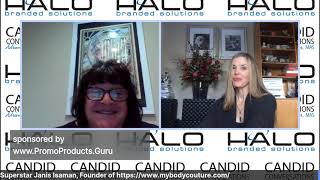
Janis Isaman, a nutrition coach and movement specialist in Calgary, talks about listening to your body's signals to decide when to rest or push, ditching carb myths, and why small incremental changes beat New Year's resolutions. She founded MyBodyCouture and works with clients on body awareness and mindset shifts.
Chapters
It's really— all right, here we go. Hi everyone! Wow, so this is it. This— so today, just to make sure that we're all on the same page, today, January 5th, unbelievable. And I have Janice Iceman here from Canada, where it's, uh, bitter and cold, and we're just— Hi Janice, how are you?
I'm good. How are you?
So not very good. So I was telling Janice that I, I'm like under the weather, but I don't know really what the, what the weather is. I just like, I'm feeling tired. I, I can't, you know, like a little bit, like I like almost feel like I have a fever, but like I don't know what— I don't think— do you even know what a fever— like hot, like most people have a fever, they actually have like cold or chills, right? So I don't think I really have a fever. I just feel my hat, my head feels a little hot.
I don't know.
But I said to Janice, this is awesome that I'm going to be speaking to you because this is no prep needed. So I don't— we don't rehearsal. So I've got you here and I'm like, I'm not going to say, oh, I'm too sick to take a call to speak with Janice Eisenman. So, so what do you recommend when this goes on? Like, I don't think I have— I can't even drag myself to the gym or to— I have to drag myself outside to walk the dog. What do I do?
Good question. So just to contextualize, I am a health and fitness expert, and that's why you're asking me this question. So I'm not a doctor, but I, I do teach awareness every single day. And part of that awareness is an awareness that we actually have different bodies every day. So that when I say that out loud, it seems super obvious. But that's not the message that we're sold by the big health and fitness culture machine. It's like, okay, it's New Year's. We're going to do this program. We're going to feel great. We're going to get it done every day. We're going to have a certain eating regime. And then subconsciously, we actually expect to be machinery. We expect that, well, we've made this plan and we're going to execute this plan and it's going to be the same. And I've had the opportunity in the last 10 months because I'm teaching digital classes in ways that I didn't prior to COVID. And so I've had the experience every day of doing very similar things. And I, even with 14 years of experience with this work and my own body, I have been fascinated about how much our bodies change with the weather, with hydration, with sleep, with hormones, with, you know, the kind of thing that you're describing, which is just feeling a little off but not really having a reason. And I think that we're kind of given this messaging that it's like a just do it thing and just override it. But the reality is, when our bodies are giving us these signals of, it feels hard to walk the dog, that's the day that we just, we just take that rest because pushing through that, for most of us, isn't going to help us. Your body is actually giving you that information for a reason. And so, I mean, within the realm of like, if it's just, I don't wanna, that's a little different than, you know, I feel a little feverish, my body needs to rest. So I might take the dog for a walk, but it's certainly not a day that I would go to the gym or do high-intensity activity because your body needs to recover from those activities. So taking all of that into account is really, really important.
I really appreciate that. I was saying to you earlier that my, you know, my, I wasn't really allowed to take like a sick day when you work with your parents, you, you work. And if I'm home, I mean, they can stop by and visit. So I better darn well be like really sick in bed. Yeah, like really young. So I, so I've, you know, I don't think I've— I think it was over the holiday, there was like one day where I like kind of stayed in bed, but not really, like getting out and doing things and, you know, cleaning the house. But I love the idea of what you do, so I want to learn more about what you actually offer. And then I want to tell you, just for a little brag session, my son Sam has a business called Set for Set, S-E-T-F-O-R-S-E-T. And he sells and does the workouts with a steel mace.
Oh, cool.
Yes, I wasn't sure if you're familiar with that or if you've used it.
No, but I'm gonna go Google that after.
Set for Set. So tell us about you. So 14 years, so what were you doing before 14 years ago?
I actually had a completely separate career and I did health and fitness in my spare time as what we would now call a side hustle, even though we didn't use that terminology 14 years ago, but it was a personal passion. So I actually used to work in the fashion media, and I loved that career, and my health and fitness passion was something that I did for myself, and I did end up with a little side hustle, but it was something that I took trainings, and I went to conferences, and I just really followed that passion and curiosity, etc. And ultimately, the root of it was, I mean, this was a really long time ago, probably 25 years ago. I had an injury in my knee and I couldn't sort it out. So I would go to different practitioners and specialists and it would— I would get some temporary relief, but then it would always just kind of come back. And so that set off kind of, I guess, what has turned out to be a lifelong passion in how can I feel really good in my body? And that means a lot of different things. So it crosses into fitness, it crosses into nutrition. But, you know, increasingly, especially It's emotions, it's relationships, it's, you know, all these other factors in our life. It's not just sort of make a fitness plan and hit it because life is a lot more complex than that.
This morning my daughter, she started her cycle and she said to me, I didn't get it because of all the stress that I'm under. She's 14 and I'm like, wow. So she recognizes at that age stress, her body, she's reading on the web, hopefully things that actually are truthful. And, you know, I'm not like policing everything she's reading, but it sounds like, okay, that makes sense. And she's able to say, I, I, I've relieved myself of stress, so now I've got my cycle, and that's normal, Mom. And I'm like, it is, it is.
It is actually. I mean, I think it's just amazing what the internet has delivered to us because when I was that age, we didn't have that, right? And so nobody talked about it. And I definitely come, you know, I really relate to that lineage that you talk about. I grew up on a farm, so there's no rest for the wicked on a farm. There's no sleeping in.
Did you, did you ever eat out when you were on the farm?
A little bit, not a ton. I mean, it was mostly home-cooked, mom's cooking and So I do have a really strong foundation of healthy eating, and I do enjoy a meal out now. But it's a small town. Farms don't tend to be located in urban areas, so there just weren't a lot of choices of places to even eat out.
Is this in Canada?
Yeah.
Wow. So I had the opposite. So my parents worked very hard. My mom would make, like, steak and, like, rye bread. And I remember actually, I remember 2012, we— it was very funny. My brother, we were talking and my brother said that he remembered the first time he left the house and found a tomato. He didn't even know like fruit existed and salads. He was teasing my mom a little bit, but it was true. Like my mom would like maybe buy lettuce and like tomato and a cucumber and it would be like separated like a, like a deconstructed salad.
Oh, that's hilarious.
Or green beans out of a can with like, um, with the— this like French sauce, ketchup and something, I don't even know, like ketchup and mayonnaise, I think. And it would be served cold. Like, that's literally like what I remember growing up. So I, I just got the Misfit Vegetables. I just ordered that actually this morning. I woke up and I'm like, I've got to do something. And they send— in the United States here, they have like the, the organic vegetables and fruits that aren't really pretty looking, and then they put them in a bag. Yeah, so I'm gonna start that at least.
Yeah. And so tell me, we had what seemed like when I was a kid like 400 acres of, of garden that we had to weed. And you know what, I definitely know that there's some ugly ones, and it never occurred to me until I grew up that people didn't want to eat the ugly ones because We always had to eat the ugly ones.
That is so— well, how many brothers and sisters?
I have one of each, actually. So we would— my sister is 2 years apart from me. And I have fond/very unfond memories of being told to go— we actually had a whole garden that was just for potatoes. And it was downhill. And so they would send my sister— my parents would send my sister and I down to weed the potato garden. And then we would end up fighting because we were kids. And you know, it was, it felt like it was an all-day task. It probably actually wasn't, but it felt like it was. So I actually just grew up thinking that that's, well, that was my normal, just the same way that yours was separated tomatoes and lettuce.
Are potatoes healthy for you? I get confused with that.
They are. So I have two nutrition certifications and my philosophy for food is just It is with exercise as well. Just keep it simple. So there's all these crazy rules around it now, especially carbohydrates, and it just, it ends up really confusing people because it's just, it's designed to be confusing. So bread is healthy as long as it has no carbs, and I look at that and I'm like, what is in that if it has no carbs? And potatoes and carrots sometimes hit the like not healthy list. My general rule kind of falls in line with, I don't know if you're familiar with Michael Pollan, but basically if it's, if it's grown on a tree or grown in the ground, you're good to go. And I think it's when we're trying to kind of figure out the, well, if it has carbs, it's even if it's bread or even if it's a pastry, it's good. That's where we really get into trouble and it gets really confusing. I had a client a couple of years ago that I remember came in for some nutrition coaching and told me that they didn't eat any carbs and simultaneously wanted to lose 50 pounds, like not a small amount, not 5 or 10 or 15, 5-0. And so I started kind of searching for that disconnect because most people who come in for nutrition coaching will say the same thing. Well, I eat really healthy. I eat, I often get the same kind of list. It's always oatmeal with fruit for breakfast, a salad for lunch, and then, you know, something that also sounds like a healthy dinner. And I'm like, well, you know, bodies don't retain 50 pounds in weight when we're eating truly oatmeal for breakfast, salad for lunch, and kind of like steamed chicken and vegetables for dinner. That's, that doesn't add up. And so kind of when talking to this person, they were eating an entire bag of potato chips every night, and it's— and then avoiding eating carrots at dinner because, well, carrots are high in carbs. And to this day, that's my favorite nutrition story because I'm like, we all know the difference between carrots and carbs. It's that consumer messaging that's so confusing. And then we think in our heads, well, I'm eating this beautifully clean diet, and then we just have this magic ability to like completely discard the entire package of Oreo cookies that we ate, or the giant bag of Miss Vickie's chips. And those are the things that actually, you know, I don't know, I don't actually, I can figure it out, but I don't know how many calories are in a bag of Miss Vickie's chips, but that is, that's going to be enough to make you gain weight that is hard to take off your body. So my philosophy around potatoes is, you know, boil it, bake it. I have an air fryer, air fry it. That is one of the foods that's as close to the ground as it gets. Like, it comes out of the ground, they send it right to the store, you cut it up, you know, you don't have to do that much to make a potato taste amazing. So I'm a big potato fan.
I love that, and I love sweet potatoes. You know what, I was gonna ask you, so can we talk about the air fryer revolution, which I just claimed, and my daughter gets so mad at me. Like, "Stop putting everything in the air fryer." But I'm like, "Why not?" I do. So what do you make in the air fryer? And then is the air fryer really healthier for you than— because I wouldn't fry anyways. I'm not a fryer. So I need to know.
Well, I think that we do need to actually be a little bit mindful of how much oil we're putting in our food. So I know that a couple of years ago, we had the big keto revolution where everything was about as much fat as we can. But it's really hard for the average person to eat only fat and protein. So generally, especially, you know, I live in Canada and you mentioned that you used to live in Connecticut. In these cold weather climates, our body tends to actually really crave those carbohydrates. So, you know, October, November, when it starts to get chilly, you know, I've thought back through to what my ancestors were eating and they were literally eating whatever was harvested And when I say ancestors, like we're talking about, you know, my grandma is 98 and she's still alive and she would have lived like this. But you had that big garden of potatoes, you harvest it, you store it, and then that's kind of what you eat. So you're eating your cabbages and your, your beets and your potatoes and the beans that you pickled. That's really carb-heavy food. You know, that's not low carb or no carb. What's that?
Cabbage too? Is cabbage—
Yeah, yeah, yeah. So we would— well, not we personally, but yes, we would grow cabbages in this region. And a lot of that kind of— Yeah, cabbage is great.
Sorry, cabbage is carbs?
Yeah, cabbage is carbs. It is? Yeah, because it's not protein and it's not fat. Yeah, so that's, that's why carbs are really confusing because carbs are basically, basically in a, in a super nutshell, carbs are going to be anything that's not protein and not fat. And carbs are basically all fruits and vegetables are carbs. So when we talk about eliminating carbs from our diet, that makes no sense because then you're not even eating fruits and vegetables. But we just don't think of it that way. So the air fryer is something that I got an air fryer in the fall and it is literally one of my 2 or 3 favorite kitchen appliances. So like if I was actually to say, okay, this is what you need to actually be able to cook healthily, quickly, and easily. The 3 that are on my list is a Vitamix or similar blender, an Instant Pot, and the, and the air fryer. And I think what the air fryer really allows in our family is just really quick food. That is one-stop. So you open the drawer, you toss the stuff in, you put it back, and then you've got that texture. And you can also control how much oil is in there. So I have actually done air fried dishes with literally no oil in there at all. So it's actually just like a, it's like baked. Then I've had other things just depending on what it is where obviously there is more oil. So the last thing I actually made in there, I cut up tofu and air fried some tofu and it was amazing. And then I was able to have that. Yeah, it was really good. And then my son loves it. It makes it crispy. Does it?
Oh, okay.
Yeah, it's really good. I would recommend that. So I think that it, it really fills our human need for warm food that has been, you know, cooked. And when I say that, think back to when we would have made a fire and then actually cooked our proteins over top of it. I don't have any other kitchen tools that are as effective at making that sort of crispy idea where we're like, it's kind of the idea of I've made a fire.
That's interesting. What about spices? Because I'm curious about that. Like what spices are really good for, I know pepper can help speed up metabolism. Is that like false or is that real?
No, I think that that stuff is all true. I think though that that goes into, it's a bit of an overreach to actually think that we're gonna add enough of any spice to make a huge difference. So yes, pepper's healthy, turmeric's healthy, but like at the end of the day, so I made a smoothie this morning in my Vitamix and it has some turmeric in it. The amount that I put in there is really minimal. It has a health benefit. It's great for the heart, it's great for the skin, but if I don't enjoy the taste of that, you know, forget it. And I do, it gives it a little, but it's because we're really talking about kind of like a microdose of it. So I love a spice, and the reason that I love a spice is because I actually am a lifelong vegetarian. So my child is not, but I am. And the only way—
sorry, wait, what are you again? You're what, a veggie? What did you say? Okay, very good.
Um, and so that's not necessarily in my health coaching work. I'm not saying that people should or shouldn't, that just works for me. But essentially 100% of people need to eat more vegetables. That's just something we need to do. And the way to make a vegetable or a fruit taste good is some sort of spicing or vinegar or hot element. Generally, short of literally going out to the, you know, the raspberry bush or the apple tree when that fruit is falling off, we are going to have to enhance that flavor. So whether it's, you know, we use the cabbage example earlier, a lot of people really dislike it, but a lot of people really do like it. Think about a sauerkraut. So even 100 years ago, our ancestors knew. Yeah, exactly. But they knew, you know, you don't just cut up the cabbage and jam it in your mouth. There was vinegaring and, and a spicing process to make it actually have palatability. And so just about everything that I eat has some sort of spice. It's not like I'm just cutting up, you know, raw tomato and lettuce and being like, "Oh, wow. This is so satisfying." There's always dressings and sauces and spices. And I'm doing that for flavor.
Do you think that I— you think that— you know what's weird is that I actually don't really like a lot of flavor. And I wonder if it is because I grew up— because I won't— anything like Italian dressing or vinegar or gin or tonic, sauerkraut, ew, corned beef, ew. But what about our blood type? Like, I'm anemic. And so I remember my mom making like the steaks for me and then having me drink the blood of the steak. I like that.
Wow, that's super hardcore. You know, I think that I have read the blood type diet. I am interested in it. I believe it was scientifically debunked, but I think that there are all kinds of frameworks for people to feel better. And at the end of it, the process that I take people through when it comes to nutrition is let's experiment and find what works for you. Because, because you just explained, I mean, really our upbringing and those flavors that we had when we grew up are part of it. What feels like comfort food to you? What feels like community to you? What is actually familiar to your body? What does your body digest? And there isn't kind of a list on the internet that's ever going to show you what that is. So that's part of the problem is that it can become this really complicated web of too much information. But there are existing frameworks like the blood type diet. What I actually personally do is, yeah, it's twice a year, sometimes more, sometimes less, just depending on the year. But I'll do a program for a couple of weeks, and there's always a little nugget that I take away, like, oh, I didn't realize that I need to eat more fat, or I didn't realize— you know, I did this, I did this program in the fall. It was terrible. It wasn't for me, where all fat was removed from my diet, and I was just like, oh, interesting, when I don't eat any fat, I ended up really craving sweets, and I ended up eating a bucket of honey, which isn't like me. I don't, you know, and so that was really interesting because then I had that awareness for myself just being like a living laboratory almost that if I'm not getting enough fat, that's when I'm in my kitchen being like, I want a cookie. I want, you know, just craving these, these really sweet carbs. So I help people really walk through the process of let's start to peel that onion wherever you're at and figure out what does work. That are slow, sustainable changes, not these big, you know, New Year's diet programs that have, P.S., been written for someone else.
This is so— this is like, this is pretty fascinating to think that, like, growing up and then where that connection is. I worked for the American Cancer Society, and this beautiful woman, Tracelyn— I love Tracelyn in Tucson— and Tracelyn was telling me her story of growing up on a farm too, with a lot of family, and like, they would never go out. Like, so going out to eat was such a big deal. But I love like hearing that. Yeah, like my, you know, and nothing with my mom, but like, you know, maybe she would make a roast, or what she really would make that we all loved was like spaghetti with like a stick— a block, not a stick, a block of Velveeta cheese. Oh wow. Yeah, and then like tomato sauce, and then it would get baked, and it would be— and it was delicious, but it probably was like a million and a half calories. So I like— we— you don't even know, like, really. And then I'm thinking, I'm a mom, I've got my daughter, so I really have to start. So how does someone work with you? And then one more question before I ask that. How does someone work with you? And then you also— was I reading that you help people? You can help them through, like, digitally, like, to, um, if they're having something like a headache or whatever it may be that you can help? Okay, I want to hear more about that too.
Yes, yes. So the vast majority of my practice at this point is actually people coming to me with physical aches and pains and discomfort in their body. So people come to me with sore necks and sore backs and headaches and vertigo and you name it, it's all come in the door. And so I'm helping people to kind of uncover those. You know, it's actually very— it sounds like something totally different than what I just talked about in nutrition, but it's actually the same thing. We dig underneath the surface to try to figure out what that kind of systemic patterning is. So whether that is diet or whether that is how you're moving, there are conscious and subconscious things that we just do. So, you know, I gave us an example earlier of how I ended up doing this. It was because I had a knee injury. So I would go to the, you know, massage therapist or the chiropractor and it would feel better. Then I would go back home and I would walk up and down the stairs. And I was a student at that time, so I'd sit at my desk and study, and then I'd stand up and my knee hurt again. And I'm like, well, that's annoying. So, but there was something, you know, in my body's patterns with my muscles and my emotions and the stress load and how I was carrying that, where that problem just was alerting my body, hey, we're back. And a practitioner can't solve that. They could offer a pain relief remedy for that. But it wasn't until I did the work on my body to process emotions differently, be more aware of how I'm sitting, how I'm standing, strengthen my glutes, etc., that that problem permanently went away. So I am doing a kind of fitness scenario with people, but it's fitness unlike any other that you've done because the first long time there's no sweating, there's no discipline. It's literally body awareness where we say, okay, that feels better. What does that feel like to actually feel better? And then you almost get addicted to that feeling of, okay, now I'm not tight and constrained or in pain or my neck hurts, you know, like And there hasn't ever been a person I've talked to and explained what I do that, that says, oh well, there's nothing in my body that I can't relate to that at all. All of us have things, including me, where it's like, you know, we have these body patterns and there's little weaknesses in our body, but we live a long time. Our average life expectancy is now in the 80s. So if we're telling people that, you know, We get these age-related aches and pains and discomforts when we're 35. We're basically saying you've got to live with that for the vast majority of your life. My job is really to help eradicate that so that we can live this amazing life and we can have this, you know, at the beginning you said that you're normally high energy. Yeah, like let's bring that back so that you can accomplish your podcasting, be the best parent and live the life that you want to live. It's so far outside of fitness. It's let's get rid of the stuff that's dragging your body down.
I love this. And what do you think about like supplements and all of that that people are selling and buying?
And, um, you know, I'm a little mixed on it. I think that if you found a supplement that truly makes a difference in your life, carry on. If you have gone to a lab or, or worked with a specific practitioner to actually come up with a customized supplementation plan and you kind of continue to work with that person, those are great things. I think for the average person to kind of like read a manual of, you know, we go into gnc.com and we're like, oh, this has this benefit. There's a 90% chance that you're guessing and that that supplement may or may not actually help you. I'm a proponent of taking probiotics. Most of us are not getting enough of those. I'm a proponent of anybody north of a certain region taking a little bit of vitamin D because we don't get enough of that. Other than that, I actually don't really supplement. I tend to try to get nutrition as opposed to supplementation. So I'm not opposed to it, but I think in a lot of cases We are trying to literally find a pill instead of eating our fruits and vegetables.
So how does someone work with you?
Well, I see that my website is scrolling along the bottom, so that is the first stop. Just come to my website, check it out. Working with me is also working with my personality and working within that framework of that belief system that we are going to be looking for that bigger, more holistic solution. So go Go check out the website and then on the website there's links for my Facebook, my Instagram, my email, so reach out to me in any kind of format. You can send me a text, whatever makes you happy and I will respond to you. And we always start with a package of 3 sessions that I always guarantee will give you some life changes. It's not the end of the process for most people, but it will give you some tools. I commit to everybody that they walk out with some tools that they can implement themselves at home. Home by themselves. So, so I'm doing, you know, I've done digital sessions since 2018. So I have services and have had clients literally throughout the world. So the internet is our friend. And it doesn't really matter where you're located. So that's how you can contact me.
I think it's great. I actually, and I feel like better just talking to you too sometimes, because it could get in your head like, Okay, I could just stay in bed today and I'm tired and let me just enjoy that. And so I'm always fighting it, but literally I really do.
Oh, that's awesome.
It's been 30 minutes, so just talking and learning and getting information. So changing my perspective too, like not walloping in like, oh, like so down. That, that seems to help.
There's a huge element to that in my work. Um, we always have the capacity to change. And it doesn't mean that we don't accept where we are, but there is always something that we can do to just take that one step. And I'm also a huge proponent of small steps, not big ones. So small step, you decided to do your podcast today instead of wallowing. You know, that's it. That's actually fairly significant. Um, small step might be to decide to actually walk the dog for 20 minutes instead of outsourcing it entirely to your daughter because you're like, okay, well, You know, and so I, I do help people see what is possible, especially because when we're either confused— because I mean, I find out nutrition, it's just like this flood of information, so we can be easily confused and overwhelmed. With fitness, a lot of people have actually just been doing a lot of stuff that's not working for them and/or they don't like it. So we really help you dig into how do we make a realistic, sustainable plan that's going to actually make your body feel better, as opposed to guilt, shame, willpower-driven plans. I love it.
You know, so I sell logo merchandise, promotional products for a living, and I kind of felt like I lost my mojo. And, uh, Pat Nauer in town, who's an amazing coach, was talking to me and she said, you know, come up with 50 ways of what you would— what, what you could do, what— like selling to, to people promotional products, how can that make you feel good? Because I get all, you know, I love the nonprofit and all this, but actually, as I was asking you about the cabbage and the, I was thinking I actually have access to sell like, um, like those, uh, slide guides where you slide it in and it tells you about each fruit and vegetables and how to work out. And our industry has, you know, we have these stretch bands that have an imprint on it, or you can have a stretch band that has actually everything you need to do and you just follow your stretch band. So I'm thinking of Pat too, and you, and I'm like, oh, so I really got to get out there to even keep promoting promotional products as a way to also give someone the information that they need to stay healthy. Because sometimes just having something on the refrigerator saying, have you walked around for a day? And also a lot of like programs where you can go on and you can earn clothing and different, um, you know, balls. Stress things. And so I thought I would do that with Pat to say, okay, I am listening. And during the podcast, we're coming up with, coming up with a solution. But because I, I really did feel like I, over the holiday, kind of lost my, um, my mojo, my like, you know, what I, what I need to have to feel excitement.
And there's a lot. Oh wow, that's a long time. Yeah. And I think we have to be always reinventing ourselves. But I think there is a lot of different tools and information bits in the health and fitness category and having promotional products that actually help people keep it simple is especially kind of on the heels of 2021. People are going to be looking for that.
Yes. Thank you. That you also helped me like with my mind too, body and mind, right? The 3 things. So, and you're really, I mean, I'm sorry to say this, but you're really beautiful. So it's, you're like the whole picture. So on a serious tone though, what is going on with COVID in your community right now?
So we have, I think it was, it was in early December, our numbers started really spiking up. And so actually my bricks and mortar business is closed. So we have, Some— it's not a complete closure here, but it is a closure in the sense of, um, a ton of different categories of business are closed. Um, school was actually online and kind of extended for an extra week, so the kids didn't go back to school. And then, um, it has been illegal to actually socialize with people who you don't live with other than in outdoor settings, which I actually find hilarious because it's Canada. And so like, you know, Outdoor settings, socializing can be somewhat cold. So we live in an area close to the mountains, so there are massive outdoor recreational areas, which is really nice. But, um, and it's funny because my son was telling me, Mom, you tell too many stories about what things were like when you were a kid. I'm never gonna do that. And I started laughing because I was like, bud, you're gonna be the ultimate doing that. Like, appreciate your grandma, because when I was a kid, it was illegal to see my That's crazy.
Is it really? When you say illegal, what does that mean? Like you could get arrested?
Well, no, like they can issue you a ticket if, if you're discovered socializing. There's like a hotline you can call. I don't know how many people have actually been given tickets for this, but it's, uh, I, I had the same question. Like, what does that even mean? But I kind of love the word because I think it's so dramatic, like, whoa. Um, so I think we wanted to that it's more than just like a guideline. It's actually like legitimate, and you can actually— you can have like a, you know, I know there are people who've been given $1,000 fines for it. I think that's what— I think that's like when you're egregiously not listening to the guideline. I don't think it's if I was to go over to my parents' house, but technically it could happen. So, so that's what's going on here. Um, And then of course, like everywhere, our vaccine rollout has happened, but it is a little on the less rapid. It's, you know, it's not fast enough.
Oh my gosh, we had, um, I— and I'm not, I'm not judging. I'm like, I just, I'm just gonna tell you the facts, but I'm like, I'm not here to judge because I— there's things that, you know, we all don't know about. But there was 1,000 vaccines for seniors And I think that there wasn't enough time to, for some reason in our county, Volusia County, to actually have people make appointments. So those that are 65 and older, and we were chilly last night, so we were in like in the, the 40s, they were able to sit in their car all night long. So a lot of them got there at 12 o'clock yesterday, and then they were starting the vaccination at 9 AM this morning. So they, so they showed on the news, and those that were waiting though, I mean, at that age— and I mean, I'm 58, so I should say at that age, you know, they, a few that they interviewed were excited though. They were like, oh my God, we're so excited! And they were looking at it in a positive way. But yeah, they were spending the night in the vehicle too because there's, you know, there's 2 bathrooms open. It was like in a stadium.
Oh my goodness, that's actually funny. I hadn't seen a story like that, but it's kind of like, you know, when you're a teenager and you're in line waiting to buy the tickets for the concert. Right, right.
Unfortunately, we have a lot of lines right now for people waiting for food lines, and, you know, things are very tough. Florida, we are— we're the opposite of illegal. Like, you pretty much, if you go into a store You, you need to honor the store's mask, but if you don't, nobody really wants to have a confrontation or have a fight. Or so, so you know what I've done? I just don't even— I just literally don't judge. I go into a store, I put the mask on for myself. I don't even look at— like, I look at people, but I don't look at them and like, are you wearing a mask or not? I literally somehow have been able to like swipe my mind from there, so I, I don't make any judgment call. So I don't even know. Yeah, it doesn't matter.
Fascinating just to see how this has played out over the last almost year and how different jurisdictions have, you know, I've spoken to people in Texas where there's like, again, there's no regulations. And then there's other places, California is one of them, that's just like us. And I'm really interested in how in the spring we kind of all North America had kind of one mandate and now it's all over the place, just depending on where you are. And then within that, people are making their own different choices. It's really interesting to see, and I'm with you. I'm like, well, I'm gonna do what I'm gonna do. And literally, if I see someone without a mask, I'm not calling the 1-800 number either. Yeah.
But the reality is though, is that what we are finding out is that you really have one thing that you could do, and that is to get yourself to the optimization of what— where you can be. Because we know it will affect someone whether they're healthy or not. So there doesn't seem to be— though we know that there's some traits, but I know that the one thing that we can control is what we're putting in our body and our health and, and our mindset. So you, you play an important role, maybe even more important than doctors, because you, you don't have to be a doctor to have the advice and the information and allow someone to share with you. So it's a coaching too, right? Are you a co— you're a fitness coach, right?
Yeah, yeah, yeah. I would— my titles are nutrition coach and movement specialist. And so the coaching process is different than a prescription process or a, you know, if somebody who listened to this was to call me and say, make me a fitness I can't do that. I need you as part of the process because it isn't something where I take book knowledge and say, well, this is what's best. The coaching process understands that we have emotions. We have days like you're having. You know, one of my favorite days with every client that I work with is the first day that they come to me and they're like, I'm not feeling well. I'm like, awesome. Whether that's in your head or whether, like, whether that's an emotional feeling, whether that's whether that's a weather change, whether that's like actually being sick, it's the best day because we have to at that point learn tools and mindset and awareness about how to get through that because our life includes that. We don't exist in this place where every day is, you know, this, this moment when we wake up and you're like, I just, I want to, I want to eat my oatmeal and I want go for a walk. We know that that's not true. So, but we're not ever really taught the tools for how to get over that hump. So, you know, we just— it's January 5th, we just had New Year's, and there's incredible bodies of research that show, you know, there's already a huge chunk of people who left their New Year's resolutions accidentally behind yesterday because we all went back to work and the kids went back to school, and then all of a sudden real life is a barrier and we didn't see it coming and we don't, haven't been given guidance on how to get over that. Okay, now I've got something else to do for 12 hours today, you know? And so that's the coaching process is we're going to wake up sometimes and be grumpy or, you know, women have our periods or we have PMS or we've got, you mentioned thyroid earlier. These are real things and we have to learn how to work with that. Not try to say, well, that's never happening to me again. Because it's going to.
You're right. You're right. This is really interesting to me because you can really talk it out to understand it. So I love what you do. And OK, so now, do you have your own podcast? Or do you do lives yourself?
I actually am basically like— I'm laughing because I'm like, I'm a quasi-professional podcast guest. Didn't mean to, but last year I actually wanted to start a podcast, but I am a business owner and I am a parent of a school-aged child. And so instead of actually taking on the responsibility of, of starting my own podcast, I decided in the summer to start guesting on podcasts. So I do 3 to 5 a week. And starting, I think, this Friday, I have— I'm going to start co-hosting. So the podcast podcast is coming, but as of today, not yet.
I think that's awesome. And then your brick-and-mortar store, so just, just so I know, what is, what is that?
So it's actually a physical space. It's about 400 and— when I say about, it's exactly 436 square feet. And I see people live, so if you are local or want to travel to me, you can come to my physical space where we can use tools tools and equipment and, you know, see each other flesh and blood. Um, and I do all of my coaching services from that space as well as, you know, I also have a retail sales arm that all operates out of that space as well.
Intense. I am so glad to meet you. It's so lovely to meet you. I hope you come to Florida. What part of Canada are you in?
I live in Calgary, which is north of Montana, so we are part of the Rocky Mountains.
Oh my gosh, I'm gonna follow you too. I'm gonna like find you on all the social media, and I really thank you so much for telling you. Do I— I feel like I, I feel like me.
Yeah, you look better. Your, your vitality is definitely better than when we first talked.
Boom! See, everyone, Janice works, okay? So we all need We do. And I think I, I love what you do, so thank you so much. I'm gonna get all your information and put it on the YouTube channel. And you are just so beautiful. So, you know, you're, uh, it's, it's lovely to see. I think that that is— it's nice to look at someone who exudes and looks like health. It makes— I think you're helping me feel better just by looking at you. Is that weird to say?
Yes, that can be a thing. There's actually It's called emotional transference. So it's the reason that TV shows actually use laugh tracks, because you hear someone else laughing and you start to laugh. So you're looking at me, I'm all like, yeah, and it's rubbing off.
It is. Oh my God. Now I'm going to go have a nice cup of tea and think about what I'm going to eat and think it twice. And thank you so much. Have a great rest of the day. And oh wait, wait, wait, what's your New Year's resolution?
Oh, I actually didn't make a resolution. I am not 100% into resolutions because I find them— they do actually set us up for failure. So instead, I have a series of kind of small goals that I'm working on, but nothing as significant as a New Year's resolution. What is yours?
So mine has been the same. Mine has been the same for a few years. I just keep it up. It's, uh, really working hard to not make excuses. If I'm late, I'm late, you know what I mean?
If I'm— if I—
if I didn't send you a card, I just get the card. Like, I—
there's—
like, I'm not going to make excuses up. And so I just consistently every year remind myself. I also had, um, one for many years that I won't do, uh, any MLMs, which was wonderful because someone would say to me, oh, I'm selling this. I say, oh wait, It's my New Year's resolution from like 3 years ago. I don't look at anything. And I still don't really.
I'm okay with that.
But excuses, I won't make an excuse up. I just find that, you know, it just, it doesn't, there's just, nobody really cares anyways about your excuse. If you're late, you're late. There's nothing you can do. But let people know you're late. I teach etiquette. I mean, obviously I'm never gonna let someone wait for me 'cause those things will make me sick. Like, the fact of someone— like, I am always so worried about other people. Like, if someone's behind me, am I— can they see behind me? Like, like, that is, that is something that I'm always thinking about other people and their feelings and where they are. And so as long as I can make sure that I am handling myself as best as I can and I don't make excuses to people and I just own up when I make a mistake, I'm proud to say I make a mistake. So that's really my same old New Year's resolution.
I love that. I might take that one. I love it. That's, that's fun.
Thank you so much. Have a great rest of the day. Thank you so much. Thank you.
Thank you.
I really feel good. All right, I'm gonna end the stream now. That was awesome. Yes, I, I really do.










