Superstar Guest Jim Keaton, Manager, Helen Reddy Official Fan Page and lifelong friend of Helen.
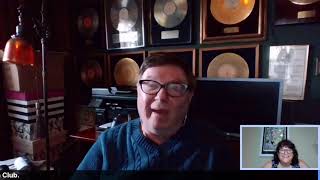
In this 83‑minute live Facebook interview, host Speaker A talks with Jim Keaton, longtime friend of Helen Reddy and manager of her official fan club. Jim recounts his difficult upbringing in West Virginia, his early suicidal thoughts, and how a letter from Helen Reddy saved his life. He describes how Helen and Capitol Records helped him launch an official fan club before the internet, his role in organizing concert trips, securing front‑row tickets, and preserving Helen’s legacy through memorabilia, letters, and personal archives. Jim shares anecdotes about Helen’s humility, charity work, humor, family background, favorite songs, and her impact on fans, especially LGBTQ+ youth. The conversation also covers fan questions about Helen’s career, recordings, personal preferences, and the ongoing efforts to honor her through the Ready Rocks fan community, a potential documentary, and Hall‑of‑Fame campaigns. Jim also reveals his parallel career as a 911 dispatcher and educator, emphasizing the importance of suicide intervention and community support. The interview ends with gratitude, plans for future talks, and a call to keep listening to the best music.
Chapters
ever, even at your dinner table, please don't talk politics. And we are live with Jim Keaton, and I don't want to share Jim's own story. So Jim is a lifelong friend of Helen Reddy, and we— and I think this is Jim's first, like, interview on live on Facebook.
This is my first podcast interview live on Facebook. I've done TV and I've done radio and network fine, but clearly I'm new at this.
I am so excited. So, Jim, we really just have to start with your story, if you don't mind, and how you connected with the beautiful Helen Reddy.
Well, when I grew up, first of all, in the hills of West Virginia— and when I say the hills, I mean no electricity, no running water, no indoor plumbing, no nothing. No, no TV, obviously, if there was no electricity. And we listened to the radio all the time. And I knew from a very early age that I was gay. And my mother was Pentecostal, snake handling Pentecostal. And my father was born again Baptist. So I was taught from a very early age that gay people were going to burn in hell. There was no way around it. And I thought, well, if it's going to happen anyway, why not just shorten the trip And so I had my suicide planned and everything was ready to go. And I heard Helen on the radio singing, I Don't Know How to Love Him. And then shortly after that, I heard I Am Woman. And I thought, well, if she can stand up and say what she believes and, and she was being called some awful names at that time. And so was I. So I thought, well, I'll just write to her, tell her everything I'm thinking. 'And at least somebody will know, you know, if I do— when I do kill myself.' So she wrote back, which I thought, if somebody in her position can take the time to acknowledge me as bad as I am, then I might not be as bad as I think I am. So that gave me the courage to reach out, and I reached out to what used to be called Hotline, which would now be Suicide Hotline. Um, and I started talking to them, and Helen and Jeff Wald— actually, Jeff Wald was wonderful to me the entire time I knew him. He, he treated me like, um, somebody who needed to be protected, and I, I did need to be protected. And so he wanted Capitol Records to start a fan club, and they called me, and they wanted an official fan club, which meant that They wanted somebody that was responsible for getting out information. Now, this was before computers, so they would call me at least once a week, um, or I would call them at least once a week. They'd give me the information where Helen was going to be, anything that I could tell fans. And some of you have been around for a long time, remember, um, calls from me— I'm gonna get emotional— um, calls from me telling you that Helen was coming, quick, get your tickets. Um, and that's how it started.
So did they— okay, so, so first of all, when you sent your letter to Helen, how long did it take? Was that like a week turnaround?
Two weeks? I sent it— she was actually— I, I had called Capitol Records to get an itinerary, um, to see where she was going to be, and I wrote to a theater in Missouri. And I thought, she's never going to get this anyway, so I can say whatever I want to say. So I said it all. And it was probably 3 weeks later, I got a letter in the mail. And it was from her. And it was, it was the fact that she took the time to acknowledge somebody who was in so much pain. That meant the most to me.
And did Helen give you any insight when she read your letter, what she was feeling when she read it?
But she didn't really say don't do it. She didn't give me answers. She didn't give me this is what I think you should do. She basically said that I was important, and she closed the letter with, it's fans such as yourself who make all the years of hard work so worthwhile for me. And I thought, well, if it worked, if, if what I did worked for her, then maybe it'll work for me. And then from that point on, Capital, Capital was wonderful to me. They had— I was going to go to, to University of Southern California. They had a job for me. I had a part-time job with Capital. They were going to help me find housing. They were helping me just do everything I needed to do. It was like, you know, a godsend. And my mother got diagnosed with cancer, so I didn't go and still kept doing the Helen thing. And one thing led to another, and here we are.
And so if you had to do it again, you would send the letter?
Absolutely. And I recommend any, any gay child, any gay person, anybody who's feeling lonely, who's feeling depressed, who's feeling like they don't matter, please reach out to somebody. And sometimes it can be the most unlikely person you reach out to that makes all the difference. I mean, who would have thought that Helen Wright, the biggest-selling female vocalist of the '70s, would take the time to respond to me and save your life and save my life?
And in fact, I really appreciate I really appreciate your bringing this up. I have a 14-year-old daughter who is definitely in a, in a rough spot with just everything going on and feeling dark and depressed. It's a scary thing. And last night, actually, because of my daughter, I had to Google and realize that there's a location— I can't even think of where it is— where they've already had 19 students commit suicide. So it's definitely, it's definitely very scary. And you're— and I've been looking for teen groups. I've been looking for a teen counselor. Just, it's, it's not so easy to find. A lot of advice out there, but I'd love to get all the kids on Zoom.
But I know I would like— another story. So you see, I'm teaching— yeah, another story. But when I'm teaching my communication courses for dispatchers, and then we'll talk about that another time, but one of the things I teach is suicide intervention. And one of the things that I always tell people is that everybody is fighting about— everybody is fighting a battle. We may not know it, and we probably don't know it, but everybody is fighting a battle. And sometimes it's just that smallest little thing that's going to make all the difference to that person. So I try to— Helen used to say to me, why do you put these people through this? But every class I teach, I play I Am Woman. No matter what it is, I play I Am Woman to say, okay, you need to listen to these words. And to sell records. But you need to, you need to listen to these words.
So Helen was— didn't understand why her own words— she seemed to be humble. The one thing I've noticed with, with looking at all of the videos, she still seemed— she understood the magnificence of herself, but she really did seem humble. So how— so I got—
I think you froze. So, well, one of the things that I started doing from an early age when, when, when I was getting all of the, um, um, itineraries and everything was I thought, well, you know, there's a— there's there's power in numbers. And so I started organizing concert trips, and I would get as many people as I could together, and we would go see Helen as a group. Um, I saw Helen perform in 29 states and 3 countries. Um, our 2 greatest hits were a weekend in Atlantic City where we got 78 tickets, um, and then the greatest hit was at a place called Anton's 1201 Club in Washington, D.C. 125 people went over a period of a week, and the management told me after the week that our group spent over $10,000 that week. That gets people's attention. And the, the thing that I felt best about, about that was that it reflected so well on Helen. It wasn't about us. It wasn't about the fans. It wasn't about buying the most tickets. It was, we're here to support Helen, and the fact that she appreciated— and Helen did appreciate her fans. She, she went out of her way to make sure that her fans knew they were important to her. Um, and so I felt really good about that. Um, 29 states is a lot of travel for somebody who doesn't drive, and I don't drive. So, but I got to 29 states with groups of people.
Did— when in the '70s, was— did Helen sing? Was Helen the first singer at Disney World for Grad Night?
I don't think— I don't know that she was the first. I couldn't swear to that, but she was one of the first. Um, that was— I have actually— I have a program from that night, and it doesn't say anything about her being the first. I have Um, first of all, you should know I'm a completist. If it has something to do with Helen, I have to have it. So I have 20 Foot Locker-sized trunks full of material on Helen from her parents from the '20s to now. Um, I have— my house is really a Helen Reddy museum. She used to call it her museum, and when she came to visit us, she would— I would, I would tell her, there's more in this house about you than there is about me. So you're, you're going to feel at home. Um, and to her that was, you know, it's just, that's my career crap. I've, I've seen that before. But one of my favorite stories about Helen when she came to visit, um, I have a book of, of, uh, autographs of people from Australia, and most of them I don't know, but Helen's mother and father are in it. And I didn't tell her that her mother and father's autographs were in the book, so I just gave it to her. And we were sitting on the couch and I said, could you just tell me who some of these people are? I have no idea. And she's going through and she's telling me and she gets to her mother's autograph and she started to cry and she kissed it and she said, I'm going to be with you soon, Mom. And I, I mean, we sat there, cried for a little bit. We didn't go further in the book. That was enough. But she was really, really close to her mother. She loved her father, but she was really close to her mother. And that made me— that, I don't know, that just gave me comfort in the fact that it meant so much to her to see her mother's handwriting. And then, as a matter of fact, in Helen's apartment, she had pictures of 6 pieces of sheet music of her mother framed on the wall. She had very little of her own, nothing basically of her own stuff. But 6 pieces of sheet music from her mother, songs her mother had recorded on the wall.
So her mom and father were— so she, she— the talent is so amazing. So her parents were in the music business, were in show business.
And, and another interesting thing there is it's very hard to get information, um, and especially recorded things on people, um, in, in Australia because they, they made so few copies of, of records and of things because they were selling them basically in Australia and they— very few were exported. Mark, my husband of 36 years, I'm glad to say, um, is very good at genealogy and at finding things. And we found some— well, he found some recordings of Helen's parents from the '29s, from late '29, early '30s. And we didn't tell her what was on the CD. We just played it for her. So it was amazing to see her reaction when she heard her parents' voices on the radio performing their act. And Helen's mother recorded a '78 called The Girl at the Ironing Board. And that record was destroyed years ago. It got broken. And Helen always said, if I could find that record, I would love to see what it— you know, I would just love to see the records. Well, Mark not only found the record, he found the record with the original picture sleeve. So I got to show Helen the picture— the— her mother's record with the picture sleeve. And it, it, it was one of those moments that you, you can't describe. I mean, it would be like me finding something, a quilt that my mother made that I didn't know she made. My mother died in 1983.
Did Helen's mother sound like— did— does Helen sound like—
those Lamont genes are very strong. Helen's mother had a higher pitched voice, but they look a lot alike. And Helen's nephew, Tony, Tony Sheldon, starred in Broadway. He's been— he's been performing his entire life, basically, but he was on Broadway in Priscilla, Queen of the Desert, and we took Helen to see him. It was so weird to be sitting next to Helen watching Tony perform, and if I didn't know better, I would think that's Helen up there. The movements, the facial expressions, the tone of the voice is so— it's so identifiable. It was wonderful. Wow.
Oh my gosh, I love all of these memories and stories. I feel bad my end is freezing up a little bit, and we've already Well, I can keep talking as long as you want me to talk.
I have 50 years of memory. Well, I'm sorry.
Oh no, no, you're fine. Um, Jefferson Harmon LaSalla has a question. Yes, he wrote, it sounds like Capitol is really supportive of both you and the fan club, yet even though I followed Helen from the beginning, I never knew there was an organized fan club. Why did Capitol not put the address of the fan club on her albums? I would have— I would have participated from the start. It makes me sad, the missed opportunities. Thank you, Jim, for all you do.
Thank you. That's a good question. Well, that was one of my questions. We— the fan club is actually on one of the albums, but it's on Imagination.
It's—
that was MCA. Capitol used to, um, they didn't do a— put a lot of fan club information on on records because I think— and this is an opinion— part of it was they would be taking responsibility for whatever that person, you know, did. They're, they're sort of, um, uh, not advertising, but they're, they're validating what that person does. So what they used to do for me was they would send me letters that people wrote, and they would— I would answer the letters. If it was a request for an autograph, they would take care of that, but otherwise I would answer the letters and it was usually, where is Helen going to be? Um, you know, what's her favorite color? That kind of thing, because we were, we were all teenagers and young kids at the time. And those were the things we were looking for. Um, but I still have a lot of those letters. And I, as a matter of fact, just before we did this, I was looking through a file of letters that people had written me and, um, It means a lot to me.
Oh, that's so beautiful. And if you're younger watching, letter is actually something that is like written either cursive or print, and then it's on paper, and then it goes into an envelope and it gets mailed. And, um, and no, there were no horses at that time. There was the mail— the mailman, he would come around Sorry. So, and then, but actually I'm laughing about it, but you know, there's a lot of patience back. We were much more patient. You send a letter and someone knows, okay, it may take a couple of weeks.
And that was why I called people when I had like a concert coming up because it wouldn't, it would take too long for the letter to get there. And by that time the tickets would have been on sale. So Capitol would let me know before the tickets went on sale and I would call people And one of the things, as a, um, my, my goal as representing the fan club was to get front row tickets. So what I used to do is, if it was at all possible, I would go meet the manager or the, the box office manager or whoever was selling the tickets so they would know, number one, I'm not some stalker that's, you know, gonna be a problem, and two, tell them what what we wanted, and we wanted as close to front row as possible. And almost every time we got either front row, second row, or third row. And when Helen announced her retirement, when we went to Edmonton, Alberta, Canada, which is a wonderful place, she performed with the symphony there. I called the symphony and I said, look, we've been following Helen for, you know, 30, 40, wherever how many years it was. Time, and we really need front row seats if we can get them. I didn't know that there were going to be as many people going as there eventually went. And the lady at the box office, the manager of the box office, she said, I would love to help you, but we have seasoned subscribers, and I'll do what I can, but I can't promise you anything. Well, there were about— I'm gonna say about, I don't remember the exact number, but there were about 37 people from 13 states and 3 Canadian provinces who went. And when we got there and she gave— they gave me the tickets, I was shocked that we were in the first 3 rows. They gave us basically the front 3 rows. And it was wonderful to be at Helen's, what was then going to be her last concert, and for us to see, you know, her fans there who have been with her basically her entire career there to support her. It was very rewarding. We had a lot of fun. Some things I could talk about, some things I can't, but let's just say we had a good weekend.
So when you say a concert, you know, and I'm thinking, you know, for the kids watching concert and they think that, you know, it's a big, you know, in Madison Square Garden, a concert. But when Helen was first performing, were these more of those beautiful cabarets and kind of, you know, nightclubs.
And actually, that was one of her favorite venues to perform in because it was such an intimate audience. She enjoyed that more because she could interact with the audience better. But usually she performed in venues, older theaters like '20s, '30s, '40s, those refurbished theaters that are so wonderful, um, that seat usually between, uh, 3,500 and 6,000 people. Um, so it was not, you know, stadiums, but it was not, you know, 30 people either. It was, it was, it was very nice older theaters that were wonderful.
Oh, that's— oh, I just wish I could go back. That's all I like. I really don't— I, I don't like any other scenes. Did, did Howard ever perform for— yeah, did Howard ever perform for the Jerry Lewis Telethon?
She did that a lot. She did a lot of, she did a lot of work for charity. She did a lot of work for women's shelters, battered children. She did a lot of work for AIDS research. She did the, she did a lot of telethons, a lot of telethons to help raise money for muscular dystrophy and other, cystic fibrosis. She donated a lot of time. She donated a lot of time to political causes. To a political candidate she believed in. She was very supportive of people who had less, and she was very conscious. I mean, I can remember driving down the street with her, and she would see a street person and say, we have to give him money. And we would give him $5, $10 because she knew that those people who did have less were not less of a person. It's just the condition that they were in at the moment might mean that they need a little more help. And that's one of the things I liked about her most.
You know what, that's a beautiful thing that you just said, Jim. If we could just get people to understand that just because someone's in a difficult position doesn't mean that they're less of who they are. That's really beautiful. What a heart. So I'm confused with her songs as far as how do we know which songs Helen wrote or which songs are written for her, and then, or a combination? I don't know what that looked like for her.
She wrote music. She wrote— she did write some songs, but, um, she didn't, uh, only I Am Woman was the biggest hit. She wrote Love Song for Jeffrey from that album. She wrote several songs, but there were artists who wrote songs that I really liked. Like, she said she would never do an album without a Leon Russell song on it, so she always recorded Leon Russell. Harriet Shock, she— No Way to Treat a Lady and Mama, she loved those songs. Becky Hobbs, who wrote I Can't Say Goodbye to You, She wrote several other songs for Helen. So Helen was— would look for people that she could help with their career. She helped look for people who were not the biggest, you know, success yet and help them along. She believed very strongly in her success helping pull people up. One of my favorite stories is Elaine Boozler, the comedian. When Helen was on, she hosted The Tonight Show, and she wanted Elaine to open to, to be on the show with her because Elaine, Elaine is extremely funny to begin with, but she was very good. It was the beginning of her career, and so she was on the show with Helen, and then she went on tour with Helen. And Elaine to this day gives Helen credit for helping her get her career off the ground. Helen never forgot that it was not easy to get a start and that you needed people to help you along the way, um, to get that little, you know, your foot in the door to go anywhere. Otherwise it was not going to happen.
Such a beautiful way to be. I wish we had a whole world like that.
No, that would be amazing.
I'm sorry. It's so beautiful that she would just—
and she was that way with, with her entire life. It wasn't just, um, you know, I'm gonna get successful and forget the rest of you. She was that way. She helped people all her entire life. And I want to just tell you a couple of funny stories because we're talking about the, the serious stuff, but there's a couple of stories that I will never forget. And one of them— Helen did a show called Shirley Valentine. And it was written by Willie Russell, and it's a one-woman show. She did about 5 productions of it. And in the script, there is a line, and it's talking about how until you hear a word pronounced, you may not know how that word is really pronounced. And one of the words was clitoris. And so in the In the script, she says, you know, when I read that word the first time, I thought it was clitoris, and it sounded like a woman's name. So you would have, you know, like, oh, clitoris, let me tell you, I have a story to tell you, clitoris, how about you hear this? And she said, and then people would tell me that's neither. And I'm thinking, well, why not? Why can't clitoris be a woman's name? There's plenty of men walking around called Dick. And that, you know, there was a good laugh. And a woman about halfway back in the audience, it took her a split second to get the humor of that, and she started to howl. And when she started to laugh, everybody started to laugh around her. And it took a good 2, I would say 2 minutes for that laughter to die down. Helen's laughing, the whole place is laughing, and it was wonderful. If that line could have been written with that woman in the audience, Every week, I mean, every show would have been wonderful. Another one, Helen used to, she would do 3 or 4 shows at, you know, in Atlantic City, and Gabriel Kaplan opened for Helen. And I like Gabriel Kaplan, but his shows were not the funniest things I've ever heard that week. He must have had an off week. And so it's the 4th show, and we're sitting at the show, And one of the fans is talking about her first visit to the gynecologist. And the gynecologist— the nurse, excuse me, the nurse said, could you empty your bladder? And the fan said, I don't have one, because she thought the nurse said platter. And the nurse says, you don't have a bladder? And the fan said, oh, I thought you said platter. And she, you know, emptied her bladder. Well, She tells us that story. The lights go down. They say, "Ladies and gentlemen, we're proud to present Gabriel Kaplan." And everything that he had said the first 3 shows struck me as funny. And I started to laugh. And when I started to laugh, people around me started to laugh. And then it started to spread. The man had not said one word yet. Years later, we were talking about that. And Helen said, "You know, he still hates you." And I said, why? What did I do? She said, that show in Atlantic City, you ruined his entire show. And I thought, well, I couldn't help it. She didn't have a platter. So Helen loves stories like that. She loved double entendres. She loved, you know, risqué jokes that weren't vulgar, but were, you know, a little bit colorful. She had a wonderful time.
I can understand that. That's awesome. Oh, there's a few more. Um, let me just pull this up. I love these stories. Oh, Jim, let's see here. Um, okay, so there's a couple more. Your stories are very beautiful, and thank you for answering Jefferson Harmon Lasala's question. Um, Jennifer Kelling Willey said Helen went out of her way once for me at a lecture. She was so sweet and kind. Sweet. And then Anne wrote— Anne Dorfo wrote, Elaine opened for, for her at a concert in Saratoga Performing Arts Center in New York in late '70s. Very funny.
She is. I'm still friends with Elaine. Oh, and then Helen wrote, I'm still friends with Elaine actually and visit her when we go to LA.
Oh, that's so cool. And it— like, are comedians just funny all the time, or are—
like, is she the same? Funny all the time. Elaine is one of those people that sees humor in everything, and, um, so she, she's a lot of fun to be around. Um, and I don't know that many other comedians, but basing it on Elaine, I would say that they know how to find the humor in things. And I love Elaine anyway, so I love that.
You know, I'm Jewish, and I didn't understand how, how much I love Jesus Christ Superstar for the music, the song. I would listen over and over, and my parents were so confused with— like, I didn't even understand how to explain that I don't know how to love him. One of the—
every single time, one of the things that Helen used to talk about that song, and I think worked so well for her, she wanted I Believe in Music, as most people know, to be the A-side of the 45. And when she sang, um, I Believe in Music, the the— it wasn't joyful sounding. It was almost desperate sounding into some people's ears. And when she sang, um, I don't know how to love him, that, that desperation worked. It was so strong. That feeling was so strong that I think that's what people identified with. You could feel the emotion in that song. And I think that's one of the things that makes Helen's songs so meaningful to people. It's not just the words, it's how she said them. And when I hear a song that's a Helen song, or when I hear somebody else sing it, I don't hear that person's voice. I hear Helen's voice, and I see Helen's face and the facial expressions, and I identify whatever it is, the emotion that's being that's being evoked because Helen evoked it. Not— and I'm not saying that other people can't do a good job with the songs, it just doesn't mean the same. And I, I am a little biased, I'll tell you that. Another story I wanted—
you know what, it's really fun.
Another story I wanted to tell you. I almost— this is one of those times when God put his hand on me and said, sit down. When Helen When Helen was performing in "Blood Brothers" on Broadway, which was a wonderful show and she was wonderful in it, the first, we were there for opening act and we were supposed to be in the front row. Well, somehow there was a mix-up, so we were in the second row and I'm like, oh no, this cannot happen. So the show was about to start and two ladies sitting in the front row who we had been talking to turned around and said, you know, these seats are not all that good, would you mind switching seats with us? And I thought, Well, there you go. So I'm sitting in the front row. My chin is like right on the edge of the stage. And at the end of the show, Helen is on her knees sobbing because both of her sons are dead at her feet. It's not a really an up kind of story. And I see her sobbing. She's inches from my face. And for one split second, I was almost out of my seat to comfort her. And then I thought, This is not her. She's performing a role. But I thank God that I did not jump up out of my seat and say, oh, everything is going to be okay. First of all, she would have made her very unhappy, but second of all, I would have probably been persona non grata from that point on. Sometimes these things happen.
That is a funny story. You know, I think part of what I love to do is when I go down the rabbit hole of Helen Reddy and her and the YouTube videos. I love watching her with Merv Griffin, and I love— because I love Kathy Lee Griffin too. I just— there's something always— I don't know. So when I love that with Kathy Lee and Regis, oh, oh. And it makes—
one of the things that I liked about—
I mean, it is really fun.
She— well, she liked to have a good time. But one of the things that I liked about a lot about her. And somebody asked me about this this morning on the Facebook pages. Why were interviewers, and especially men, so nasty to her? It's almost like, you know, that song is so angry, why are you singing it? She always handled them well. I don't know. I don't know that I could have controlled myself and said, you know, what I really thought to them. But Helen was always professional. She was firm, but she was, a person is liberated, not a woman is liberated. And until a person is liberated, none of us is liberated. They didn't know what to say to that. I also recently read a review and Helen had done a concert for, it was a benefit for St. Jude's Hospital. And it was in 1971 and she was the first person to perform. Each performer had 10 minutes and Helen did her 10 minutes. And as she was leaving, the male MC said, "That was Helen Reddy. It gets better from this point on." And the reviewer who reviewed the whole show said— I mean, he called him out on it. Not only was that inappropriate, but it wasn't true. Helen was one of the best performers on the show. But I always wondered what made people want to say things like that. Helen's response to that was, "I'll listen to a critic when they go out and make an album." I love that, that she said that.
I don't know why, you know, I teach civility. I don't get why people can't be nice to each other. But definitely, I want to read a few more things here. And I'm sorry, I know some— there may be a little glitch in sometimes with just the virtual. When Helen announced her retirement and moved back to Australia, This is from Don Harkaway. I accept that I would never hear her sing again live again. What a surprise and a thrill when she came back to the US and toured again. Did she enjoy those shows at that time as much as we did?
And one of the things that she liked about them, she would say things like, I'm gonna sing the songs I want to sing and not the songs that people want me to sing. Because, you know, when you pay to go see a singer, you go you pay to go see them sing the hits. And Helen did a lot of songs during that sort of that comeback that were important to her or that meant something to her that she felt like doing. So she felt a little bit more freedom. I also think that after 10 years of not singing, she really enjoyed performing. She did a lot of meet and greets and she did a lot of interacting with the fans and she'd had a lot more fun when she was on stage. I mean, she performed since she was 4, basically, 4 or 5. So, you know, years of that's got to get old. So I think the break did her good. I thought I would never see her perform as well. And she never let me forget that we didn't go to Australia to visit her. She invited us several times, but we could never make it. And she never let me forget that.
I love it. Drew, sorry Drew, Helen had the best quick wit too. In 1979, I think, she was performing at what was then called the Forum at Ontario Park in Toronto. Someone rude kept yelling, 'We can't hear words,' even when she was singing, and she quickly and kindly but poignantly reported MUSIC.
One of my other favorite responses she would have— would people would yell songs out, and sometimes, and especially in casinos where people have had a few drinks, you know, they wouldn't stop. So she would be singing a song and they would yell songs, and her response to that was, write that on a $100 bill, pass it up here, and I might consider singing it. Um, another, another one of my favorite stories, and I am a little bit vocal. I, you know, when I support somebody, I like for them to know that there's a live audience there, not, you know, sitting there. So she was at a— she did a show in Gulf Shores, Alabama. Actually, no, it was Baton Rouge, Louisiana. And it was at a huge venue. And it was with the symphony. And so they didn't tell me— normally with the symphonies, you know, you dress up. Well, they didn't tell us that it was a picnic and that there was a table decorating contest. So we show up in our tuxes and we're, you know, all front center table and everything. Well, as I yell, you know, I'm yelling a little bit. There were peacocks there. Peacocks like to respond. So periodically I would yell, peacocks would start yelling back. So after a while, the peacocks were yelling when nobody else was yelling. So Helen would finish a song and a chorus of peacocks would go off screaming. And if you don't know what a peacock sounds like when they are yelling, Google them. They can make it with their, their, their appearance known, let's just say. It's wonderful.
So what did Helen do?
She had a wonderful sense of humor about that. Yes, she would say, "The peacocks like me." Oh my gosh, I love this.
All right, I'm gonna read a couple questions that I have so I don't miss anyone here for their questions. So Barbara Scott just wrote— she was a last-minute question at 1:11. I may be too late adding a question for Jim Keaton, but I was wondering why on the Grammy.com website under her page there's not a picture of her displayed as there is for other artists. Was this her choice or an oversight by the Grammy organization?
Was not her choice, and I'll have to get on that. I'll contact them and find out why.
Thank you, Barbara. Beautiful. Okay, so good. So Barbara caught something, and that's good. Thank you, Barbara.
I'd say I'd like to say something about the, the—
ever have anything recorded? Oh, sorry.
No, go ahead.
Did Helen like to swim? The first question. Oh no, I'll ask the second question afterwards. Did Helen like to swim?
Oh, she loved the water. She went to St. Martin with us a couple times, and I can't swim. And she loved the water. And that's one of the things I sort of regret. I trusted her implicitly. I mean, I, with my life, I would trust her. But she thought she was going to get me to learn to swim. It never worked. And she used to tell you, don't trust me. Yes, I do. I just, I'm afraid of water.
Right, right. It's a real fear. Um, the next question is great too. Did Helen ever have anything recorded when she was a child, like when she was 4 or 5?
There are, and I'm looking for them, but there are recordings that exist of Helen when she appeared on stage with her parents. Um, she was a plant in the audience, so she used to like to tell this story. So her father, her parents would, would ask, you know, is there a little boy or a little girl in the audience that would like to come up and 'Sing a song with me,' and Helen would run up and sing the song. And at the end, her father would say, 'You've never met me before, have you, little girl?' And she would say, 'No, Daddy,' and run off. You know, there are recordings of that, but I, I don't have any. I'll get them. Oh, Helen also—
I love that story.
I think that I can hear that a couple of commercials, um, that are, that are out there. I have a couple of those where one was for a cigarette company. She did another one for a tourism bureau when she was a teenager.
Oh my gosh, please find that. We will love that. That's awesome. Thank you.
Oh, that—
so that question was from Jennifer Willis. Thank you, Jennifer. Oh, oh, I would love to see that. Um, let me see here. You know, Green wrote to you, I'd like to preorder, please just take my money.
For preorder?
For what? She, she— it was something that you were at, like offering if someone wanted any photos a couple days ago. And Rochelle wrote, I'd like to preorder, please 'Just take my money.' I thought that was adorable.
I am, I am working on a little surprise, um, that I'll offer on the, on the— it's going to be a kind of— I used to do a newsletter, and I'm putting them on, as you've seen now, on the, on the, on the Facebook page, the Ready Report. I'm going to do a final, final version of the Ready Report as sort of a memorial for Helen.
I love that idea. Okay, so now this is a good question from Anne Dorfel. I'm hoping I'm saying her last name right. Thank you for doing this. I've been a Helen Reddy fan since I was 12.
Yes, she has, and I've known her most of that time.
Air Force office training, and she's taken the words to heart. Now, she told me the next thing I would say— she told me, she said, I didn't have to tell you, but it was so cute. She wrote, in fact, I had the DJ at our wedding reception play I Am Woman twice. I think that's just absolutely lovely. It's great. So thank you, Anne. And then Cox, Cox, had a question. Helen had grown tired at times of singing the same old songs, although her performance never showed it. Did Helen have a favorite that she enjoyed singing Or that was special to her heart?
Um, she— well, I don't— one of the special ones to my heart that I used to beg her to sing was Somewhere in the Night. That is my absolute favorite song. She, she went through different phases where she would prefer to do some songs over others. Um, I can't think of any specific one, um, that she, that she wanted to perform more than others. She used to say though at the end that she didn't And I feel sorry for the person who wrote this song, Linda Laurie. "Leave Me Alone," you know, she didn't like that. "Leave me alone, leave me alone," all of that. But that song was really good for her. It made a lot of money and was one of her biggest hits. But she, some nights she enjoyed singing some songs more than others. And I think a lot of that had to do with the audience's reaction.
I saw the interview when she said that about leave me alone and say she was— she really was funny. There was a tulip created in Holland, I believe, or— did Helen have a favorite flower? And if so, she—
well, that, that tulip, let's talk about that tulip. That tulip, I tried to get some in the late '70s and And in the late '70s, you had— money was a problem. It still is a problem, but money was really a problem in the late '70s. You had to order $5,000 worth of bulbs. I had no— first of all, I didn't have $5,000. Second of all, I don't know what I would do with $5,000 worth of bulbs. So I went to a show, a benefit, and I usually try to get front row seats, but the tickets in the front were $10,000. It was in Kentucky. I said, do you have somewhere in Tennessee I could sit perhaps? So we're at the back, but the party favor they gave was Helen Reddy tulip bulbs. And one, nobody ever takes the party favors. Well, they took all of them. I only had 3. It's been probably 25, 30 years now. And those bulbs have only, I only now have 5. They are very fragile. Helen loved roses. Um, so she, she loved— she— her favorite color was purple. She loved purple, but she loved yellow roses. Uh, Frank Sinatra loved yellow roses, and every time we passed a yellow rose, Helen would say, that's Frank's rose. And I am, um— Helen was at the Motion Picture and Television Fund home, country home. That's where she lived the last few years of her life, and They have a garden there called the, uh, it's the Roddy McDowell Garden and it's roses. It is one of the most wonderful places and we used to spend a lot of time there and I begged and pleaded and I'm purchasing a bench to be placed in that garden in honor of Helen so that she's surrounded by roses for the rest of time.
That's so beautiful. I'm so sorry, I keep freezing, so I apologize, everyone. All right, Jennifer Franklin has a question for you. With all the love songs Helen sung, was she a hopeless romantic?
Um, at first, I think she was. At first, she believed in love and she believed in marriage, but not necessarily the typical marriage. She believed a committed relationship was, is a marriage. She, she was very romantic in the sense that she believed that love existed and that two people could commit to each other and stay committed to each other. I don't think she was necessarily, you know, everything is going to be— I know she didn't think that everything is going to be roses and wine all the time. There's going to be ups, downs. And there's— it— the work goes into relationships. I always look at it like a baby. There's me, you, and our relationship. Our relationship is a baby and we have to take care of it. If we don't take care of it, it's going to die. And I think she believed that same thing.
She's so amazing. Her interviews reveal what a compassionate person she was. Was she like that day to day?
Oh, very. And she loved kids. Kids were her— just, we would be walking or be in a restaurant and there would be a baby. She could never, ever not go over and talk to the baby. She— kids were just a joy to her.
They are. I love that. And when she commented that she is determined, how did that quality play out in her life?
How she was— she was determined?
Good question.
Say that again.
Yeah, when she commented that she is determined, and when she commented that she is determined, how did that—
Yeah, she did not like no. And if, especially if somebody told her she couldn't do something, she would find a way to do it. There were many times where there would be obstacles put in her way Um, she would find a way around them if, if there was— if it was something that was important to her, she was going to do it.
Oh, I love that.
There was no question.
All right, let's go back here because there's a lot of questions on the, on the comment section. So let's just see what we got here. Marilyn Keaton. Oh, is Marilyn related to you?
She is my sister.
Marilyn Keith. Oh, hi sister Marilyn! Marilyn said, how many people could say Helen's saying, how much is that doggie in the window at their house?
Well, one, Helen, Helen, Helen went— when we were going to, um, St. Martin, um, my brother-in-law took us to the airport and my sister's dog was in the window. And when Helen saw the dog, she loved animals too. She stood there and sang, how much is that doggie in the window? Another story about my sister is when Ear Candy was released in 1977. I told you I don't drive. And I have an artificial eye on the right side with no depth perception. So I'm dangerous. So we had to go to DC to pick up the album because it was the first day it was released and it was in the store. And she— Marilyn is 9 months pregnant and she didn't like driving in heavy traffic, but she drove to DC. We got the album, got home, she went into labor shortly thereafter. But I had my album.
That's awesome. That's a great sister. Jennifer— Jefferson Harmon Lasalla wrote Write that on a $100 bill and I might consider— say, oh, that's funny, he laughed, he liked that classic. Over the 50 years— wait, let me see— that I adored Helen, I saw her perform or attend special events 30 times, and the last time I saw her, she gave me a hug. Not only did she make my day, she made my life, and I told her so. Lori Olson.
Well, let me tell you something about Lori. Lori, um, a lot of people sent cards and letters to Helen, um, and Lori unfailingly sent a card every week and Helen read them. And so when we used to go visit her, we used to visit Helen every 2 months, and I would, you know, we would go in and, um, she would say, here's my— look at the card, and she would show me the card that Lori had sent her because she knew I knew Lori. So Lori, I want you to know that Helen appreciated those cards.
That is so beautiful. Madison Webb wrote— let me just put this— that's so beautiful. So nice to see your face and hear your stories after reading your posts and a letter or two. These stories about such a beautiful woman are so valuable. I knew we all love her so much. I know we all love her so much. I may get a small tattoo or something that reminds me of her this weekend, and I want to write a movie based on her songs when I take my screenwriting course this semester. That is from Madison Webb.
Well, I want to say something about Madison. Madison is, is young, and I want to say something about young people. We need young people to be aware of what Helen has done to get women to where we are now, because there is a lot of work to do. And a lot of times what happens is you go through the phase and then people take it for granted that this is, these rights and these, these, um, advances are here to stay. They're not. And if we don't get young people interested, in women's rights, gay rights, other rights, then we're going to lose them. And I think it's really important that looking at Helen's life and using that as an example of what you can do if you put your mind to it and you don't give up is really important. There were many times when Helen was told, you know, this is not going to happen. We're not looking for a woman. You're not going to— nobody wants to hear you. When she would— oh yes, they do. I'm not done yet. And her first single, she said, sold 6 copies. It was— I have to tell you, it's not one of my favorite songs, but it sold 6 copies.
Wow. But a little, a little that— okay, so, um, So I'm curious with Madison though if that would be her first tattoo or additional tattoo. So Madison, if you're there, if you hear me, can you, can you let us know? That's very special. I don't have any tattoos, but I really admire people that have tattoos because they're a lot braver than I am. And I love the fact that you would get a tattoo. I, but I love what people have them and I love their stories. I actually enjoy someone— there's so much conversation to make with a tattoo.
Yes.
Drew Guyork. Helen did many things in her studio in her subtle, indelible ways. Not only did she reach us with her music at various times in our lives, but she brought many of us together. I miss her, but she lives on in the connection of so many of us as a result of her, a special legacy. So Drew's saying that she brought all of you together and you're still really all together.
Absolutely. I met Drew at a Helen concert in California. Um, and I, that's one of the things, that's the united part of Ready Fans United. I have made lifelong friends. I have people that have, from the very minute I met them, I felt like I knew them my whole life. Um, and it's, it's since Helen passed, a lot more people are becoming aware of her and In the, in the 3 weeks, um, between her passing and her birthday, I had over 700,000, um, uh, engagements with the Facebook page. And it's, it's incredible to me that these are continuing. I'm not quite, we're not quite at that number, but I get hundreds of messages, uh, a week. It thrills me.
So beautiful. Oh, oh, for, um, Helen's— for— oh, so Jeff— Jefferson wrote, Helen's version of Somewhere in the Night is the best. Love that song so much. Oh, like, okay, that's—
oh, and her doing that live, that's a beautiful song, is absolutely my favorite. And one of the stories she used to tell about that is Barry Manilow released that song at about the same time she did, and they were at a Grammy Award show, and they were backstage, and he said to her, you know, Helen, your version of Somewhere in the Nine is really a lot better than mine. And she said, yeah, it is. She used to also tell stories about Anne Murray. Helen was, um, mistaken for Anne-Marie a lot and the other way around. So they told stories about each other. And I, we were in St. Martin and, um, when Helen was— this is one time I wish I had a camera that I didn't. Helen got dressed for dinner, we went out, and they were— there was a band playing, and my husband Mark loves to dance. And Helen is there and she's, you know, clearly wants to dance. And Mark asked her if she'd like to dance, and she said you know, I was a dancer before I was a singer, so they danced and danced and danced. And a lady came up to me and she said, is that who I think it is? And I wanted so badly to say, yes, it's Anne-Marie, but don't say anything. And I said, well, who do you, who do you think it is? She said Helen Reddy. I said, yes. And she had her picture taken with Helen, and, and we had a nice time. But those stories are ones that used to to me show Helen's witty side. Those, those, she, the way she told them, it sounded like it was the first time she was telling them every time I heard them. And I laughed every time.
I can understand that. Oh, by the way, Madison wrote to us. Ready for this? It would be her first real tattoo. She has— I have one small wildflower that I gave myself on my finger. Madison.
Madison's also a very good artist.
Make sure it's in an area where it's safe. But, uh, I love that, that you would get a tattoo. I think that's really just a beautiful thing. So wait, oh, Jefferson also made a list of all of, um, the songs that, uh, wrote or co-wrote the following. So with 2 songs added by Helen Reddy Official, and then he has a list of that so people can read that. Oh, your sister wrote, Jim made sure my sons could say Helen Reddy as some of their first words.
I do that with every child. I start, really?
Not mommy, Helen.
And then I would tease, I would, I would question them, who's your favorite singer?
Oh, I love that.
Who starred in Pete's Dragon? You've got to start them young.
Oh, Pete's— what was that like for Helen working with Disney? I agree. I agree. What was that like for Helen?
She loved the final product, but the actual making of the movie, like so many things, it's, you know, you work a few hours and then the rest of the time is waiting. So you do the scene and then you have 10 hours of waiting until your next scene. One of the things that she did in 1979 that I will never forget is she invited the entire fan club to the taping of her first special in LA. It was my first visit to LA and I had no concept that when you see a TV show that they don't just do the thing and it's done and it's up. It was 3 days of taping for an hour show. And so they tape, they— so the first song might be, uh, the closing song, the, you know, and then they— so it's not done in the— in any order. And at the end of that special, one of the, um, endings that ended up on the cutting room floor, thank God, um, was they had the audience and there was a lot of fan club members there, so they had us up on stage with the audience members, and they put me out front, and we sang "I'll Be Your Audience" to Helen. I cannot sing at all, and so I thought, if this ends up on TV, I will be mortified. It didn't, but it was a nice experience to be singing to Helen while she's sitting there backlit in the audience. It was a very— it was a wonderful experience.
Oh, Jim. Oh, so, um, um, oh, so MJ Wile— Wiley— Wiley— and I'm so sorry, MJ— she writes, her music sustained me as a young lesbian at a time when it was so hard, and in my 50s, to spend time being hypnotized by Helen and Sydney reflected so much more than her wonderful music. Her spirit will live in and live on, and I'm so grateful.
Yes, I, I, I still to this day get letters from people who say that I Am Woman gave them the courage to leave an abusive relationship, or from kids who say, um, that they're being bullied at school and they play that song before they leave so that, um, they have the courage to go, or women who say that, um, they went to law school. Helen used to tell that story all the time. Or, or just people who say, it's had a huge impact on my life. And I would show Helen those letters, and I would show Helen those messages, and she cried a lot. So I want people to know that it meant a great deal to her to know that her music and her words and her life meant so much to so many people. It, it was important to her.
And we need more people in the world to be Helen Reddy. I just think what a beautiful world we would have if the whole world was, was like her, just a little bit. So Madison Webb wrote, Jim, you're absolutely right. Every time it is to be remembered, it's hard to be hereafter, but it's important to be part of the group that does, does get to help a legacy be remembered. Oh, Madison, and 18 is a great age. Thank you so much. What a, what a special young lady. Okay. Oh, oh, someone has I Am Woman tattoo. Maybe we have a little tattoo contest and see. And Jennifer Cowling Lewis wrote, I have a Reddy Rocks tattoo on my ankle and a roar on my wrist. Can you tell me what's a Reddy Rocks?
It's R-E-D-D-Y-R-A-W-K-S. Ready Rocks, R-O-C-K-S. But it's, it's her— excuse me, she uses that on Facebook and it's sort of her play on words.
Oh, I love that. I know, Jefferson, I'm sorry, the, the internet Caltreona Humphreys, beautiful. Jim, the collaboration I made with the ladies from different countries. Okay, so I made or was made— did she make that? Yes, that beautiful video with all the ladies. Wow, is that the first time I Am Woman was done like that? Oh my gosh, this is a woman that did it. She just— that was beautiful. That's had to be difficult putting that together. So I'm sorry, so her question is, is that the first time I Am Woman was done like that? Each of us recorded her part and after the next lady using just a phone and a headphone.
It's the first time I've seen it done quite like that. It's not the first time that I've seen it done, um, in Australia. The, the women's choruses throughout Australia recorded it, and they did it from where they were, and it was put together. And that was actually used at Helen's memorial to honor I Am Woman. And I posted that on the Facebook page. I'll face— I'll post it again, the way they did it. But the way that they, that they did this with just them doing their parts with the phones, that's the first time I've seen anything like like that, yes.
Very remarkable. Wow. I would imagine— I don't even know if there was editing to that, but I think you did an amazing job. And I hope I'm getting it— Catriona Humphreys, I hope I said that right. Beautiful. And everyone was just beautiful too. It's really lovely to watch. I mean, okay, I watched it many times. It's just enjoyable. That is really, really great. So, Jim, we have 73 minutes. So I don't want to go so long that it becomes difficult to watch on YouTube. This is— I'm so— I can't even thank you enough. We have Barbara. Barbara Scott asked a question. Oh, good question.
What are the chances Helen will be inducted in the Rock and Roll Hall of Fame? I haven't heard anything about that, but My personal opinion is it's not very high. One of the things that we're going to try to work on is getting her inducted into the Women's Hall of Fame first. So I'm about to start a letter-writing campaign on that. I also, just before we go, I wanted to know what you thought of the movie I Am Woman. We haven't mentioned that.
Okay. So I, I absolutely loved The movie. And so I, so I grew up, my birthday is 1962, so I, I was listening to Helen's music. And actually, when I was in my teenage years, my parents had like a screen-in porch, and I would not only listen to the radio, but I would call in all the time, and I would win every prize on the radio until my parents really asked me to stop because it was getting to the point where everyone in the town knew that their daughter was doing this. But I couldn't help it. I love, love, love And so when I saw I Am Woman, I'm like, oh my gosh, Helen Reddy! Like, love— you know what I loved? I loved the director. I love her story of how she met Helen and couldn't believe that there was no movie and that she took charge to make it. I love the acting. I, I happen to be an Evan Peter's fam from American Horror Show.
Wonderful.
I look like such a stupid girl, but I love— I know, I love that. Oh, I could imagine. You're so— oh, did you— you met him? You met the— and the girl that plays Helen Reddy.
Oh my gosh, she has a— she has such a wonderful career ahead of her. She's, she's wonderful, and she's a wonderful person. So the one of the things— she was just one of the things, um that people criticize the movie for is that it skips so much time. But it was, it was specifically made to tell 3 periods in Helen's life, and a lot had to be skipped in the interest of time. I would personally like to see a documentary done on Helen's life that has more time to spend doing it so that, you know, that, that you can tell the story and tell the whole story without having to skip any parts. Um, just one real quick thing at the end when she sang at the March on Washington. Um, we had picked her up at the airport to go do that, so we were there with her. That was one of the most powerful events of my life, to see her standing on stage singing that song with hundreds of thousands of people singing along. Was incredible.
Thank you, Helen, for doing what she did to really try to pave the way she did. But you're right, when you start where we started, that we have a long way to go. And for the movie to be made and for us to, to just, just remember Helen— she lives through her music, but also through her personality and her kindness and her heart, and how easy it is to be kind, how easy it is for just— we have to recognize that. There's a few more questions coming in, or I can answer them if you have time. Oh nope. Oh yes. Okay, so okay, blah blah blah. Sorry. So yes, there'll be a recording of this. This app that I'm using, we go to YouTube and then I'm able to put it on YouTube. And Thomas Kelly said— Tom Kelly said, I love the movie I Am Woman. And you know, it's funny, I mean, I just found it on Netflix with— there's— it came out and there's so much right now due to COVID, right, that there's like so many movies out there that I, you know, I'm sure that the director didn't want it to get lost, but I definitely would recommend if you haven't seen it. I mean, it is just— I, and I don't like watching a movie twice, but I Am Woman, I'll watch like— I'll go to bed with it every night. I just loved it. I love the way they mix the music into it when it opened.
Um, Originally it was scheduled to open in theaters, obviously, and so when it premiered on Netflix, it also premiered in a few theaters around the country. And I found it interesting that it appeared at a theater that's 30 miles from my house.
That is interesting.
Wow. Wow.
And what— so, um, Trudy said that she loved the movie and she read her book.
It's called The Woman I Am. Is that Yes, um, and it's her, it's her autobiography, her memoir.
Oh, so okay, I see. I did not read that.
Let me see if I can find it for you. I don't have any copies right now, but right now it is selling, thank you, like on websites for $175. I, I, I don't have any. I've sold all the ones I have, but I will try to find you one that's not $175. Oh wow.
Oh, Drew, Drew wrote that he agrees with you about that.
I would love to be able to do a documentary, but I don't know how. I can't even sign on to, um, you know, Facebook and share, so I could never do a documentary.
All right, and then, um, thank you. And then, um, Sandra wrote, thank you, Jim. Your stories and memories are a treasure. You make me smile, Jim. So you really, really, you're doing exactly what Helen would have wanted you to do. You're just continuing just to, to 'Cause you're a beautiful, you're a beautiful spirited human being and the work that you're doing, I mean, I just want everyone to know that we are looking at a hero. And our conversation yesterday was interesting, Jim, because 911, I would love to join and help in however I can to make sure that public, that it becomes a public relations, those that are doing the work that you're doing, But Jim, will you take a minute to tell everyone what you've done for your life's career?
Well, in 1979, when I just turned 21, I went with a friend to drop off an application at a county government. And she said, what do you have that he could do? And I said, well, they say, can you type 21 words a minute? And I said, yes. And they said, take this test. And I took the test and they sent me to the police police department. I had no idea what a police department was. I mean, I knew what they were, but I didn't know how they worked. And I, um, to be honest with you, I think I was hired because they were looking for a specific group of people. I was wearing a t-shirt that said, a day without human rights is like a day without sunshine. They hired me on the spot. And for the last 41 years, I have been working in a 911 center. I teach at the Northern Virginia Criminal Justice Academy. I communication. And I would love to do a podcast with you talking about 911 and what dispatchers go through, because it's really important that people understand that this is not just a matter of answering the phone and sending the police or the fire department. There is a lot more that goes into it. It's a, it's a story that needs to be told.
I would love that too. Thank you so much. Hero's work. All right, a few more. Okay, so let me see here. Um, thank you, thank you, the stories. Thank you, Jim, was fun to hear your stories from Jennifer. The movie premiered in Toronto, I Am Woman.
Oh, so, so premiered in Toronto International Film Festival.
Thank you both. Can I ask— and I feel bad, I think we— there were a little freezing here, and I apologize everyone. I did show— oh, how cool! Jennifer showed Helen her Ready Rocks tattoo and said, oh my, yes, that's awesome. And Madison Webb wrote, oh, Madison Webb wrote, thank you both so much for this interview. Jim, you're a wonderful person, and thank you for So beautiful.
Well, let me, let me just close. Well, I would just like to close my part by saying that everything I do related to Helen's page is to reflect well on Helen. It's not about me. It's not about anything but Helen and reflecting well on what she did. Her life and her career.
You're a beautiful, beautiful, beautiful person. Yes, Jim is definitely a hero. Ah, thank you, Jim. Thank you so much. This was, this was before, but this is like the best 83 minutes and 22 seconds of my life. I really, really love talking to you, so I want to do this again. So we'll set up another time. And thank you everyone for your questions and being be part of this. I really just loved every minute. Thank you so, so much. I just can't thank you enough.
And everyone, keep listening to the best. My last words were keep listening to the best.
I love that. Thank you, Jim. Thank you so much. This was so great. I'll get this. I'll do this right away and get it to YouTube. Thank you everyone. And I am going to click.










