Superstar Guest Linwood Jackson, Jr - https://www.linwoodjacksonjr.com/
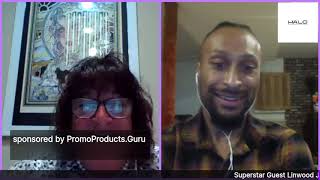
Author and Bible scholar Linwood Jackson Jr. discusses his book Perfecting and Reforming Personal Religion, his method of studying scripture through original Hebrew and Greek, and his poetry collection Growth, which documents nine years of applying biblical principles. He frames prayer as an emotional, frequency-based practice and describes his community work with Healthy Souls International providing disaster relief.
Chapters
You are? Oh my gosh. Hi everyone, I am so excited. Okay, so let me take a second to calm myself down. I want to introduce everyone to Linwood, with an I. With an I. I love that. Jackson Jr. is your— so, so you're an author, a poet, like what I've read about you is so incredible, but first of all, are you— is there a senior?
There is, yes, my father. Yeah, he is. Yep. Yeah.
Where does he live?
He lives same state as me, Massachusetts.
I love that. My husband's from Southbridge.
Really?
Yeah, for like the Sturbridge. So, so, Linwood, was— is your dad— is your dad— has he provided you any Is this his route too? Like, what does he do for a living? I know it's weird to be talking to you and asking about your dad, but I have a— I'm curious.
Curiosity lingers. No, not at all. The only thing he told me was when he went to college, he really enjoyed philosophy. And so like, I carried that with me and I didn't think anything of it. I was just like, right, philosophy, okay. And then I got to college myself and then I ended up being a philosophy minor. And it was interesting, but I got more into philosophy and more into critical thinking after I graduated college. So like, you know, the philosophy route, that was him directing me in that way, even though I didn't follow it at first.
It's funny because when I think of philosophy and when I was younger and I was in college, there was no interest. But at 58 years old, not that I want to like share how young I am, but 58 years young, now I'm really craving to understand philosophy and what it means in understanding our Bible. And so, so what point did you start to write your books?
That was— I actually started writing my books around 2013, but the first was published in 2017. So yeah, you have a lot of books.
Can you share? Tell us about your books. By the way, do you have any books handy that you can hold up?
Oh, I actually don't. I gave a majority of the ones away that were, that were either sold or, you know, so I don't have any handy right now.
That's okay. Tell us about your books because I'm, I'm curious. So the first book that you wrote, Perfecting and Reforming Personal Religion.
So this one was due— attributed to me going through college. And you know, you, you're told to go to school, this is what you're supposed to do. And you're in school, but you never are taught how to learn in school. There's an assumption in our educational institution that children know how to learn, and that children will be directed somehow mysteriously into what they're supposed to be. So, and I ended up going through school, um, ended up in college. I didn't really like being there because I knew it wasn't for me. I wasn't there for me. It was there because I was told, told to do it. And that be— that became pretty tragic to me because I'm listening to, you know, voices from a childhood in school and at home telling me that this is what I'm supposed to do, but I'm going through my life at 20 and 21, and I'm seeing society isn't matching up to what I was told is supposed to happen for when I graduate. So that, that weighed on me. In that weighing, I, I disliked myself for going through an experience where I knew I shouldn't have done it. And I ended up picking up exercising, which isn't bad in and of itself, but I ended up abusing it to where I ended up in the hospital. And so I was just, yeah, just, it got to the point where, you know, what, what, why did I end up, why did I do this to myself instead of getting myself to critically think, exercising in the gym?
Oh, so you went, so you go full out. Is that like who you are? You just, when you go to do something, you do it full on.
Yeah. But, but this was a little bit different because there was, there was a bit of a judgment I was, I was putting on myself. I was judging myself for not taking responsibility. So let's pick up something I can be responsible for. Let's go to the gym. And so I did that, and then I overdid it with supplements. So like abusing, abusing the supplements to make the transition from weight classes and appearances, physicality, something I can transform myself. I can take responsibility for that transformation because I'm doing it myself and I accept it. But I ended up overdoing it and so led it to the hospital. And then that point I was just like, so where do I go from here? How did I even get here? And the conclusion I drew was I didn't know the definition of love. And so the next question was, how come I didn't have the definition of love within myself naturally? So you have parents that give you love and give you every single thing, but then that's not it, you know, it's just really not enough. So why, why was that missing in, in myself? And I went through different experiences of different philosophies and teachings that didn't really match my mind. And I remembered growing up with the Bible, wasn't really raised in a religious house, but I picked it up anyways just to see what was inside of it. And what I found out was the philosophy within the Bible is more directed towards perfecting and honoring your personal um, devotional habits above community knowledge, which is what traditional religion is. You go off of community knowledge and that's how you know who God is, instead of personally getting intact with the words to know what— not simply who, but what God is.
Well, I love that. Wait, so is that— okay, so you have— when you sent me your bio, there was something I didn't understand. So through his book speeches and discourses, he encourages to think and feel for self through the knowledge acquired from experience. I get that. Wait, is that what I had? Hold on. There was— where the self-love may bloom into self-possession. All right, could you explain that to me? Courage is to think and feel for self, that self-love may bloom into It's a self-possession through the knowledge acquired from experience. Okay, I need more depth on that.
That goes right back to my very first book, because when you can— by nature, we are naturally just— we're not human in a sense of being physical. There's something unnatural within us. Like, for example, neither you nor I nor anyone on this planet can ever remember saying, I consent to life. I'll do it. So, so since none of us can remember the consent to be here, how is it we are here? So who consented for us? And why was that consent made? So it wasn't made by— if we're going to say that it was made by the creating individual or the creating mind, that really wouldn't make sense because then that would make life a prison. So the decision to live was not made by us, it was made by the creating mind that formed us, which isn't— that's not viable. So the other thing is, is that there's something within us that consented to life inside of an organism. And what consented to life inside of an organism was created by a creator. That's why we're here. And the whole point of the experience is to get to a state of awareness to where we can understand that what is within, we need to love that first. And to love what is within the initiator for life, what initiated this life, what allows you and I to even have a click of a neurotransmitter within our brain to have consciousness, to do anything. Loving that, that side first allows you to then possess who you are. So when you can learn to love who you are within, then you can possess who you truly are, to then give yourself in the correct manner to society and to the age, to your family, to the people around you, because you've gone through the experience of, of the struggle of learning what it means to, to now being in a state of consciousness, consenting to that consciousness. So like, Keep going. Yeah, yeah. And that's, that's, that's just what the—
sorry, is this like a mindset? Is this like what people say they practice mindset too? Is it kind of hand in hand?
It's a, it's a developing mindset. It's a developing mindset of how you can see and, and acknowledge yourself as a human being. And it's not in us But it is in us. It just takes exercising and perfecting and also performing or practicing our devotional habits and also reforming how we think. So Perfecting and Reforming Personal Religion was the name of the first— my first book, because that's the philosophy that I found deeply within the Bible, is that as opposed to going by traditional understanding of how to do and act and think and dress and eat and live. The flip side of that is taking knowledge of what the words are saying and practically applying them to your life so that you can personally have a knowing of what those words are saying and who you are to attribute your actions and your thoughts and everything else to you too.
Okay, I have a question for you.
Yeah.
So doing all of this feels like to me that, that, that it would be a good person. You know what I mean? That like good people really take the time to kind of reflect and get to know yourself so that you can help out others. And because there's so many, like, first of all, when I was in college, that was the last thing I was thinking. And just growing up in a family business and just being me, it really has taken me to about this point in my life to some things happening where I really could sit down and kind of reflect. And when I talk about philosophy in the Bible, I'm so intrigued and interested, but yet if it was 10 years ago, I would have, you know, smiled and been nice and heard, but it wasn't, it wouldn't resonate with me. And then, so can we just talk about that? Like, so it's not in everyone to really be so open. I mean, there's people that probably don't even, even think that they could think like this.
Well, it, it actually— what you just said is what happened to me. It just happened to me, um, earlier. Some have a midlife or late life or no life crisis. Happened that I just have a— I had a quarter life crisis.
I love your smile, but you seem very serious, and I'm not sure, like, you know, like, I want to ask you— I love all of this, and I want to hear more, but I'm going to ask you a little later what you do for fun, and you know, what's fun for you, what makes you smile and laugh, because, uh, you're very serious. But this is serious.
Well, this, this is, this is, this is what makes me— this is my, the highlight of my day. And just like when you said, you know, you've gone through things in your life and if you would have heard them 10 years ago, it would have just been like, oh, okay. And then, and then nothing. But the mindset, it comes from what you've gone through. It comes from recognizing what you've gone through. And, you know, you said that it takes a good person to do that. But, you know, the things that these things you know, things affect us. They don't affect good people. They affect people that realize that they're tragic. And not simply that they just realize that they're tragic, but that they realize that they're tragic and they, they really need to do something about it to be healthy. And that was me. So I don't know if, you know, if good— I wouldn't say good people. I would really— I'd say people understanding their tragedy of their human condition. So that, that might be— that's how I see it. Because, and then from there, when you can realize that there is a condition within you that is not healthy, then you can be on the track of getting good. But it's just people that are sick that, that have gone through, just like you said, something to let them know that something is missing or something isn't so decent that it just makes them go, I need to be decent. How do I be decent? And then, you know, gears kick and then you just start moving.
This would be really great work inside for, like, those inmates that are in prison that really, you know, have a lot of time and can reflect and can You know, when I was younger, when I, when I was younger, I used to say a lot or think a lot like, well, I go to bed at night and I think back on my day and what I could do better. And I thought that was the meaning of self-aware, that I could go to bed and look at a whole day and picture myself, everything I've done horribly, the good, bad, and ugly of the day. And that was my self-awareness. But that is really just the skim of it, right? That was just the little, like, the fat that rises above the top. I was never really getting down to the bottom.
It's when you can take that, when you can take that nightly practice 24 hours a day, and then when you can take that nightly practice 24 hours a day and make it 48 hours a day.
Yeah, keep doing it, keep doing it. It's interesting now. You know what? It's funny that, like, my— I like social media, and I like Facebook and all of that. And my feed right now is filled with positivity. I have so many people that I follow that are all positive. And right now that the political season is over, there's really nothing. I've noticed that, like, the last few days, it's been just, like, shiny, and it's been fun, and just a lot of goodness, you know, which is what we all need. After coming through such a tough political season. It just really wasn't. And so when you're studying the Bible and when you're learning, like, to me, there's so many stories of the Bible. Do you know all the different stories?
Well, yeah, the Bible can't be read. The Bible isn't like a novel. So to sit down and to read the Bible like a novel, it's really going to be exhausting and very boring. But you— I have read all of the stories and the meanings within those stories, but it was due to the need, the need within. The, the found— my foundation for even going into the Bible is, is still love, understanding the definition of love and the application of love, and not how love— how I've seen love throughout my life, or how I've seen love secularly, or how I've seen love in school or at home, but what is the root of love? And you know, the Bible, even though it's written in English and it's translated, the original root is as close as we can get Hebrew. So you know, I take the words in the Bible and I bring them back to the original Greek and the original Hebrew, and then I retranslate the original Greek and Hebrew back into English just so I can get a better understanding of it.
You know, I'm Jewish, and I think also part of— there was a lot of antisemitism growing up. There really was. I mean, I, you know, could joke about having the pennies thrown at me, and— but I, you know, it was very tough. I didn't really— I didn't want to ever admit that I was Jewish, and I wouldn't wear anything. When my 13-year-old, when my son Rudy turned 13 and he wanted a bar mitzvah. It was so beautiful and he was so proud of being Jewish and would wear his Star of David. It was such a lovely thing. I, I didn't have that luxury, and I don't think it's anyone's fault, not blaming anyone. It's just that just growing up at the time when I was in school, between like '73-'75, it was very, very tough. And I felt that, um, I was made fun of so much that I didn't want to admit it. So I kind of lost a lot of time also myself just getting to know the Bible. I was always— I am still— I'm jealous when my friend Maria said the other day that she was in Bible study class. I felt like a sense of like jealousy, like I wish that was me. Oh, I missed them. Wow, this is really interesting to me because I am not, um, you know, if you know me, I, you know, grew up in a church, I've always loved it, and I need to learn more, and I just never knew that it would actually share this philosophy with me, and I would always be biased. So I'm always willing when it comes back on to see Cross. Give us a second. And come on. I'm not sure if it left the power or whether the master— I know we have this one here, so it could be Am I back?
You are back.
I thought maybe my crying was— was got you scared.
I have no idea. Yeah.
Oh, I'm glad that to be back too. I just did a little commercial announcement. So, so I was sharing some, you know, like pretty— so do you offer— what do you do, Linwood, as far as— I know you write the books, but do you hold anything online? Do you have groups or do you do any kind of classes, any kind of teaching?
When I can. It's been really weird with the COVID season. I'm trying to reorganize all of that. But I offer my phone number and my email on my website, and I am constantly being reached out to different people. And individually, I either guide to where the person is needing assistance or just talk if talking is needed.
I love that. I wanted you to meet my friend Maria. So I got involved in something different. I like doing different things. I met Maria about a year and a half ago at an event, and watched her create, and I'm chairwoman of her nonprofit, Healthy Souls International. But the thing with Maria, she did it all while she was homeless. She had gotten in a horrible car accident. But all of us that know Maria— and I don't even know if this is nice to say, so tell me, tell me the truth— I like to say that she's been touched by God. Is that okay to say?
I'd say that's decent. I guess it depends on how you phrase it.
Is there another way? Because I mean, she— just when you meet her, you could feel, you could feel the sense of the presence of God or angels and what she has done. And, and her, you know, she can, you know, she can pray and it'll come real. She'll think of something, it'll happen. Like just everything she does, you know, if it was a business world, it turns to gold.
Well, how is, how is she, how is she doing? How is her organization? What is the, the found— or the basis of it?
So it'd be the mission to be the, um, the hands and feet, to be in the ground during disaster relief. So she literally, uh, right now she's actually delivering food to— when COVID-19 hit, Maria knew that, okay, everyone's taking care of the children, you know, she looked around the whole community and she said, oh my gosh, Nobody's taking care of the most vulnerable in our community, those that are 65 and older that can't leave their house, whether they have COVID or not. They need to, and they don't have family because a lot of, we live in an area by the beach, Daytona Beach. So we do have a lot of seniors that don't have a lot of family here. And so she reached out and she was able to start right away. Now she's got some grants going on and she's, but she's still driving right now. So she drives, we pack a big bag of groceries, and then Maria drives it out and she takes care of the whole thing. So we've got— she's amazing. She really is amazing. And there is something about her. What's some other words that people say besides touched by God?
Well, you know, if touched by God, you could, um, say special, um, you could say gifted, you could say just benevolent. Oh, you know, so we're all, you know, we're all— once we go through what we go through and we— something within us clicks, there's just no turning that off. So for her, like, she's found— she's found her in a way. And that's, that's what we do, you know. I, I write books and I study, but publishing the books, it's It's really not monetary gain. It's more of I'm learning something and I just want to share it publicly with other minds going through the same thing I'm going through. So, you know, once we, once we find out who we are, we want to take care of the people that are similar to us or that we believe are in a situation that can lead to them becoming as similar to us. So, you know, props and commendations to her. Definitely.
She's amazing. So, so following the Bible, you could take like the stories of what's happening in our lives and kind of find that in the Bible too? Because I love that too, like when if I'm thinking of something and then someone will say, well, here's the whole story, and kind of be able to relate it to a Bible story.
Oh yeah, of course. And you know, in an intellectual way, because you can— the stories in the Bible are, they're written so that it's ageless. They're written in a sense that it's timeless. And being timeless, it fits in with every single generation and every single age that we live in, even though back then you're hearing about mules and horses and whatnot and whatnot. But in every single age, there's always going to be the equivalent to what you're hearing in the Bible, and also the same practices and the same, you know, foundations, whether it's from governments or whether it's about slavery. Or whether it's about war, or whether it's about love, or whether it's about any kind of service, or whether it's about philosophy, whether it's about technology, you know, everything in the Bible is still relevant to this day. And it is true, when I do hear different people telling me the stories in their lives or what's going on, I say to myself, well, this sounds familiar. And if the discussion would go that way, I would bring it out in that way. But I'm just such a person that I don't really read the Bible. Like, I've never— I can honestly say I've never read it. I study it. And by studying it, you do read it at the same time, but I examine the words and the context of the language within the book, not simply as reading it, but letting it read me. So when I hear different things, I can connect it in a way that can do something for the person that is referencing it and really not knowing where their reference may lead to.
So when COVID-19 hit, it feels like to me that that was really something that people could turn to to understand, or the word plague. So did you find that— were there some comparisons with what's going on you know, back when it first happened to the Bible?
Well, the tricky thing is that within the Bible, the different terms that are used in the illustrations, they're not really natural or they're not really that literal. So in the way that they're written, they're written in a sense to convey a literal message, but the Bible in a sense isn't a literal book. It's more of a spiritual or devotional kind of book where that it's sort of beyond physical, but it's brought into the physical realm to be taken out of the physical realm to be better understood. I love that. So the physical, the physical part of it and the COVID-19 part of it, the plague part of it, if you're a follower of what is, you know, popularly theological, there will always be connections because that's just how religion is, whether it's modern or ancient, religion has always had a long stream of thought to where physical life is supposed to be detailed by something that's extraordinary. But the philosophy in the Bible doesn't really go into that direction. So the conclusions that would be drawn for the seasons that we're living in and looking at the signs of the times, or it says that it will be like this in the last days, it's the language in the Bible and the context that it's used doesn't really support those types of sayings, quote unquote.
Interesting. What— so I used to say, well, I'm not religious, but I'm spiritual. Does that even have any meaning when I said that? Like what? Like, I mean, like, to me, can I be spiritual but not be religious?
There's so many organizations of religions and how they define themselves that that one term can be taken so weirdly by, by so many different people. But to, for me, as I know it in the Bible, the term is in the Bible to be spiritual, but in a sense, to be spiritual as it's connected to the words in the Bible is to be mindful of who you are and mindful of the words that are written within the Bible, and to be mindful how those words are impacting who you are. If you can do all of that, then you are a spiritual person.
I love that. Maria also helped me to learn how to pray. Actually, like, um, what was it, about 10 years ago, I met a man. He was in Orlando. He would fly a plane and he would, you know, have like the smile face and God is love, and he would do beautiful words in the sky. And everyone would stop and you would be at Disney and you would look up at the sky. And then I got to meet him. It was amazing. I really— there was a point in my life where I felt like people were coming to me. I still do it. Like, you'll meet someone and it's just like a wow, and it changes your life. And I, as I was speaking to him, I told him the truth that I really didn't know how to pray. And I didn't understand, you know, I could pray for other people. I didn't know how to pray for myself, I really should say. And I didn't, and I always felt guilty and all of that. So he helped me. And then Maria helped me again, 'cause you know how you still need to like repetition, someone, you know. And so it's a good feeling to feel like I know how to pray. And I'm gonna be honest that I don't, you know, just didn't come naturally to me to really understand 'cause I get so caught up in the words and then I get all guilty and I don't wanna ask for something that I shouldn't be asking for, or if I pray for myself, I have to pray for everyone. It was like my son. When my son was in Afghanistan, I couldn't just pray for my son. I had to pray for like every single person that was in Afghanistan at the same time that my son was there because I didn't really understand it. Have you ever met anyone that said the same thing to you, that like they don't know really, they need help in praying?
Of course. And it's very tricky because you read all the— you feel like the, the saying is just is just prime. Ask and it shall be given. Knock and it shall be opened. And we take that and we say, okay, I'm praying and I'm praying faithfully, but I'm not getting anything I knocked for. And I'm praying and I'm praying faithfully and I'm asking for everything, but I'm getting everything I never asked for, or I'm getting nothing that I asked for. And so, like, like, as you were saying just now, it was easier for you to pray for other people than it was for you to pray for yourself. And the, the trick to prayer is actually in that saying, ask and it shall be given, knock and it shall be opened. So when you prayed for other people, it was easier for you because you followed that guideline. Whenever we ask a question or whenever we go up to knock on a door for something It depends on the intention that's behind the asking and the knocking. And what's underneath all of that asking and knocking is emotion. Is a certain level of emotional intelligence is guiding you to ask a question for an inquiry, or is asking you, or is moving you to knock somewhere to get to something or to get to someone. So like when you're praying for someone else, It's so easy because you feel, you feel for that person, and you— and because you feel for that person, you want the best for that person. And that's what prayer is. That's all prayer is. When you're praying to the living God, we, we don't have a physical church to go into. We don't have a physical person to go in, to go into. We can hear all kind of legends about all kind of physical beings that we can call God, but we don't— we don't— they're not here. So all that we have is what is not physical when we're praying, because that's all that we, we should know the living God is. And that's why it's so much easier to pray for someone else, because it's feeling. The secret to prayer is feeling. We are heard. This entire universe, if you strip it down, which they have And they've broken down the atom in the past, in the past years, they found that the foundation of everything, including the atom, is sound, sound waves, and frequency. And if you break that down even further, even though it's sound waves and it's frequency, attached to all of that is feeling. Feeling moves waves of sound, and that's all prayer is. When we're praying, the more sincere we're feeling is the more sincere we will be heard, because the sound waves are coming out of what is within us. So when we're praying for someone, it's so much easier to pray for them because we feel for them, or vibe is for them. And sometimes it's difficult to pray for us because we really don't know who we are. I can— I'm speaking for myself now. We really don't know who we are, and it's difficult to latch on to an idea of us because we just don't have the words for it. And that's why that first book, Perfecting and Reforming Personal Religion, when you learn that thing in my bio that you read of the self-possession and the self-love part, it goes down to feeling. You know, self-love and self-possession, it leads to feeling, and that feeling leads to a wave that we can transcend the physical realm upwards. And that's how we communicate with what is above us. It's through waves of energy, it's through feeling. That's, that's why prayer is just so beautiful. And that's why prayer, prayer works when we're tuned in to our personal need, into our personal self. So the experience to go through that, it's so worth it. Because when you can learn to love you, you can then learn to feel for you in the prayers for yourself. It can then transcend what you believe you are.
I'm glad I'm recording this because I want to listen to this like a few times. What, um, is manifesting the same thing as prayers, or is that just a new terminology?
I wouldn't even connect the two because that's a whole different religion.
It is.
Okay, yeah, yeah, it's, it's manifest. I, I would say that even though it's— prayer is emotion, but prayer is also faith. I'm not sure if I can— there is a way you can link faith to manifestation and all of that, but the break comes for what prayer is about and to who we're praying to. As opposed to what we're aiming to manifest. The term manifestation is linked to material or to gain. Prayer, right? Prayer, in a sense, isn't really linked to material gain or to gain. It's really linked to loss and arrival. And, and, and not arrival physically, arrival mentally or inwardly. So that's, that's why I say you can link the two, but I— it's really tough to just bring them together due to what the two are, are really targeted towards.
I think your book is really for me. I actually think when you're describing your book, I, I'm the person that should be reading your book. That is really— I like— I'm still— I see how I don't even know that much. So I'm going to order your book so I can understand better, and then I can communicate with you if I have questions. That'll really help me. I will say one thing I love about about faith and hope is the fact that it gives hope. Like, to me, that's always been a big thing. And how people can forgive when horrible things have happened and they will turn to forgive because that will give them hope at the end. I just, I love all of that. That's so important.
That sort of, that touches on my, well, my most recent book. Which is a book of poetry. I call it Growth because it's documenting my 9-year journey putting the Bible's practices into play. So each poem is dedicated to one scene or maybe 50 scenes in 9 years that just repeat. And it's a process of creatively attacking human growth and development from placing into what we would term unnatural counsels. Because it's just, for example, one of the principles I give in my book Perfecting Reforming Personal Religion is the cutting off of meat. And in the Bible, it's not firstly or primarily literal. The meat is within the heart. So we all have specific meats that we look to and that we consume that will get us overweight if we keep on doing them. If you can cut that out of your diet, If you can cut that idol or that meat out of your heart and just slowly, you know, with patience and temperance, live without it and putting faith in the fact that you will get help from an unseen eye and mind while doing so, you will see health and you will find better habits and a better way to spend the time that you used to spend on that meat. So this book of poetry, for example, relays that message but creatively and in an entertaining way. And also in a way that can get you to think. So that kind of ties into what you were just saying also.
It's so beautiful. I could talk to you for hours. Thank you for all of this. This really did help me. So before we go though, tell me what you do for fun.
What I do for fun? I, well, now I'll say I exercise, but in a healthy way. But also writing, um, writing and studying the Bible I do for fun because I, maybe I'm just different, but I look at me being able to critically analyze myself to be better on a daily basis as fun. So when I can be more stable within myself and I can better understand how to organize my human being so that my human being does not get in the way of me living, to me that's fun. And so like spending my time writing or analyzing different things about life, um, and to, you know, put a little, you know, sweetness on that cake, sometimes I go to the beach and I sit down at the water and I listen to the water. And so that's, that's extra, more extra fun for me. And, you know, yeah, just, or just get out and walk by the water, and as I'm walking, I'm still thinking and I'm still analyzing. So to me, that's my fun. Like, that's, that's my fun.
I love that, that—
wow.
So you really um, just are like— I mean, you're living and breathing what you're writing. Yeah, it's all compass. That's beautiful. You're a very beautiful man. And I was saying in the beginning before film that you're good looking, but now it's really your heart. Like, now the beauty is, is also coming from within. Like, you know what I mean? Like, it's like a double beauty. You're a shot of double beauty.
And it's really because I I don't even feel it. I don't notice it. I don't know it at all. To me, it's just, I'm just being.
Well, you're being symmetrical. So like everything is kind of perfect too. You have a really like perfect face, which is great. Do you feel like, are you, so I'm sorry. So besides being an author and a writer, though they're both the same thing, but an author is published. Do you speak? Are you also— do you— I wasn't sure.
Oh, speaking engagements. Yeah, I had some lined up, but I had to— they— I had to— well, back then I had to cancel them just due to the COVID thing. But still, that's really tough to get speaking engagements. Um, but yeah, I do, and I have some coming up in the future.
Sorry, tell me about the topics. Like, who would be hiring you, what is the topic? What are you speaking about?
The topics generally, they, they revolve from— they revolve around from topics of how does religion differ from what is in the Bible, how can you, how can you practice personal philosophy, you know, things along that manner of self-help and also self-love and also motivation and inspiration.
I would— this now is the time. Why, why are you— it really is patients. But what, like, you could do Zoom presentations.
Yeah. And, um, yeah, the Zoom presentations and, um, radio stations. Like, there's a whole lot that, that I'm mulling over and also working on. So you're definitely— yes, you're definitely right about it.
I— all right, so I'm trying to think, on your website, can someone give you your email address so they can stay in tap, like to follow you?
Sure. The, the contact page on my website, fill out that contact page. You don't even have to put anything in the message, or just put your email in the message, or put— you could put anything. You can email me at the very bottom of the screen on my website. There is an email icon even, so you could even just click the email icon at the bottom of the screen and and just email me and I will answer.
Awesome, I love that. I will— I would like to just stay in touch with you. And then, so did you do your own website too? Is that your website? I mean, did you create your own website? Is that your work too?
That is my work. That, that it's— I kept it nice and I kept it simple. And as I'm evolving and as my business is evolving and it's growing rapidly that I didn't really expect, but I'm very happy. The website also is going to have to go through some construction, so for now I'm keeping it simple, but in the next year, year and a half, it's probably going to have to go through a rotation.
Yeah, it looks good. I thought it was great. I love that you have the store program because I, I sell promotional products, so I love to see what people brand, and I love the black and white the sketch, the pencil sketch that you have?
I love doing things with pictures.
Is that you? Did you do that? Who's the artist there?
The artist is an app. So the app— yeah, the app is, um, Photo Lab, and you can take any pictures and you can do anything with them, and you can combine different pictures to different sort of filters or backgrounds or, or anything like that. So I, I love doing that with pictures.
I think that's great. Your prices are really fair too on your wearables, so I was like, that's go, that's awesome. So you have— so everyone, go on the website, it's right there, scrolling on the bottom.
And if you tune into YouTube, you can find me on YouTube, but those are my main two, uh, Facebook and Instagram.
Thank you for coming on and talking to me today. I always feel so selfish doing these, uh, conversations because I'm the one that benefits because it's like personal therapy for me because I'm always learning something. So it helps my self-education. But religion has always— I wish I was younger. I wish I was your age and I had, I don't know, the desire to want to learn. I don't know why I didn't. My parents weren't themselves very religious, but one of my brothers was. I don't have an excuse except to just wish that I, I just wish, but it's never too late. So I'm not saying that. So I'm going to pick up your book and then I'm going to follow you. And then I can ask you questions if I'm reading something and I'm not getting it. And that, that makes me feel a little like more comfortable that I can have you in my back pocket. Awesome. Of course. Thank you so much for your time today. I really appreciate it.
Thank you for having me. And to your audience also, um, stay blessed, stay benevolent, be empathetic, and take every day one step at a time while you learn how to love yourself and to live well.
Those are beautiful words. Wow. All right, I'm going to, um, I have to replay that. Thank you, thank you. Have a good rest of the day. Be safe.
Thank you. You too. Take care.
Oh, that was just beautiful. Wow.










