Superstar Guest Martinique Mims, author with her book coming out next year!
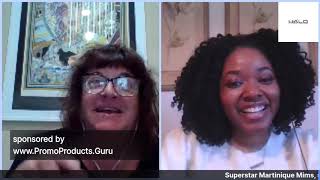
In this live YouTube interview, host Speaker A chats with Martinique Mims, a former AmeriCorps City Year student success coach based in Cleveland, Ohio. Mims explains how City Year places young adults (18‑25) as student success coaches in under‑performing K‑8 and high‑school sites to improve attendance, behavior, and coursework—the "ABCs of learning"—and to close the achievement gap. She discusses the pandemic’s impact on student equity, noting increased dropout risk, digital‑access challenges, and the need for community‑based support. The conversation shifts to Mims’s personal journey: her work with disability‑focused nonprofits, self‑care practices for corps members, and her upcoming children’s book about a girl named Unique who embraces physical differences through a magical butterfly journey. Mims also shares future aspirations, including a potential art‑healing nonprofit, mentorship experiences, and practical advice for prospective AmeriCorps applicants (housing, education award, application criteria). The interview ends with mutual enthusiasm, holiday greetings, and promotion of Mims’s website (thecolorofstories.com).
Chapters
Well, you definitely have a face for the stage. So hello everyone. So okay, so we're live and this is exciting because I really look forward to hearing about your book. So I have with us today Martinique Mims and she is beautiful. So, and her hair is perfect. But I— okay, so first of all, I don't even know where you are. Where are you?
Yes, so I'm in Cleveland, Ohio. So if you don't know about the Browns, we're doing pretty well. I'm so shocked.
I'm happy. That's why I'm glad the Cleveland Browns are doing great. I just like the peanut butter and chocolate, so I, I like Buckeyes, right?
Yes, there you go. Yep, the Ohio State.
It is really a beautiful country. I actually was there to see Smuckers.
Oh yes, yes, that's our hometown here. Yep, that's something I love. Mitchell's, um, is like Cleveland, Ohio, um, you know. So I love ice cream, anything ice cream, give it to me. So if you're ever here, go to Mitchell's.
Oh, I will, I will. I love that. I, I'm in Daytona Beach, so that is— well, we were cold this morning, we were actually 32 this morning, but But what— have you had snow? What's the weather like?
Oh my gosh, we had a big snowstorm, um, last week, and I mean, you couldn't get out. Cars were sliding everywhere, stuck. So I have not really gone anywhere.
I don't know, better, better with the COVID to stay in. All right, so are you, are you healthy? Everyone, your family, do you have friends that have COVID?
So I mean, a few people I know have got COVID, um, so it definitely is real. It's a thing, and we have to make sure that we are protecting and keeping everybody safe. I stay at home with my grandmother and my mom and my aunt, so I definitely, um, you know, want to be respectful.
So, oh, I'm jealous. Who does the cooking in the house?
Oh, not me. I wish.
I'm trying.
I'm going to do some cooking, um, for Christmas, so I'm gonna do like, uh, some green beans and some— the mac and cheese, that's gonna be big. Yeah, yeah, my grandmother.
I don't know, I'm jealous and happy for you. That's really lovely. I really wish— I'm sure we all could wish we could go back in time for, for those days. But, um, okay, so I will go positive on this one. So tell me, so you are— you work for AmeriCorps, and what do you do for a living? Because I think that's really interesting because I have a feeling that you're someone that likes to to wake up in the morning and dedicate your life to helping others. So, yeah, am I right?
That is true. That's what AmeriCorps— like you said, I work with City Year, and so we are a national education nonprofit. We have 29 sites all across the country. We have some in Florida. And, you know, we have sites in Chicago, New York. If people are looking to figure out their purpose, they're taking a gap year right after high school or college. And kind of, you know, figuring out what, what are the things that I really like, what I don't like. This could be an opportunity for, for young people to work in the education field. So we go into underrepresented schools across the country, and the idea is to close the achievement gap. We hire young people 18 to 25. We call them student success coaches. So if you're going into a school, you're making sure that you're getting students on track to graduate.
Whoa, wait, okay, so first of all, how do you identify the schools again? I know you use the term, but what does that really look like?
That's a good question. So it's schools where the graduation rate is fairly low. And so we go into district, school districts, we team up with like superintendents and things of that nature. And we look at what schools are going to benefit from a student success coach. And so depending on the site where you go, I'll speak for Cleveland. We do have two sites here in Ohio, Columbus as well, but we hire about 76 corps members all coming from different walks of life to do a service year in the Cleveland district. And so we have about 7 to 8 schools that we're partnered up with here in Cleveland, Ohio. And yeah, we are going into those schools and making sure that we're looking at what we call a whole school, whole child approach. And we focus on something called the ABCs of learning. So we got a lot of little quick lingo that you can catch on to, but we look at attendance, behavior, and coursework. So we have AmeriCorps members go into schools and they track student attendance data because that all correlates to, you know, if a student is doing well academically. We look at behavior goal setting. So teaching young people how to respect their peers, respect their teachers as well as themselves. And then we also look at the main focus point, obviously, is the coursework. And that goes into the statewide testing, which is centered around math and literacy. So we train our corps members to create lesson plans on a daily basis with students who might be a little off track from graduating or getting to the next grade level. And we mainly work with K through 8 or high school. And if we're in a K through 8, we're focused on 3rd all the way up to 8th grade. And then we also work in a high school, but predominantly with 9th grade students. So the idea is that by the time our students are juniors and seniors in high school, they already have the resources we've given them in the 3rd grade and up to get themselves to graduation.
So, wow. Okay, that is great. And I know my son— I can't think of the program, but he was going to Celebration High School and they had something So it wasn't an IBT program, but it was a program that would allow for success. I have a question for you. So with COVID there are schools where the, where they're closed and the kids are unable to really, they're smart. I know a lot of them are very smart and they're really unable to be successful with online and they're dropping out. And is this something that you're seeing? Is this happening? And what can we do for those students that are only really a product of this horrible COVID-19 and otherwise would be going to school and doing great and graduating on time.
That is very true. We're seeing a big shift. And for just to kind of let you know, we've already seen a lot of students throughout the years drop out. You have like, what we say is there's one student every 31 seconds dropping out of school. And so I'm sure that has changed quite drastically since COVID-19. And we'll all be real, like a lot of our students aren't able to have access to internet, certain resources, right? And that goes for not just the schools that we service, but schools across the world, right? And so we are seeing where some students aren't able to get into the Google Classrooms, jump on Zoom. And so there's a big shift in equity as far as, you know, access for just simple internet access or lack of resources or computers in their homes, or they're sharing computers with more than one other sibling, you know. So our corps members are going into these, these spaces, their computer screens into the students' homes, and they're trying to encourage them to tune in and just uplift them. A lot of our students, and this is across the board, are being depressed. They're depressed from this. And so our corps members are there to be like an encouragement, a support. And I will say that in some of our sites, they are in person, maybe like a half day, or they're going to give, you know, lunches or after-school snacks at some of our rec centers that are in the communities where we serve. So they are in person in that aspect. And that's not every site, but we are seeing a big shift and it's going to take a whole village, right, to get these students back on track.
So, so, okay, so, so right now, if I was— if everyone was— if we were live in a real world, in real life, right? And I said, does everyone know what AmeriCorps is? You, like, 8 out of 10 people raise their hand. But do they really know what—
I always know nobody really knows about us. We've been around so long since the '80s. Like, Bill Clinton was the one who really, like, ricocheted this and got it going. And then for City Year, we— for City Year Cleveland specific, we were founded in the '90s. So we've been around for years, decades, right? But yeah, a lot of people are not aware of this opportunity. I'll be honest, I wasn't aware until I was— I'd already graduated from high school, I mean, from college. And after college, I was just like, I don't, I don't know what I'm supposed to do. I don't feel like I have a purpose right now. And then I just stumbled upon this, and I— this is my job now, to go around and tell other people that, you know, if you don't always know what you want to do, here's an option. So yeah, we've been around for a long time.
What is the option? Give me that elevator speech. Like, what? So you explain this one feature of it. Is there— what is the program called for going into this? Oh, the Student Success Program. Is that what it is?
Student success coaches, you're a near-peer mentor. So like I said, you would take a gap year with us. A gap year is the time you spend after you've either graduated from high school or from college. It's about 11 months, and this goes for not just City Year. All AmeriCorps programs are pretty much a gap year, 1 to 2 years of service. And you could do— AmeriCorps has hundreds of programs, you know, anywhere from like environmental, civil rights. Things like that. And then education is our umbrella. That's where we fall under. And if you hear about like Peace Corps, if you hear about Teach for America, Urban Teachers, those are all our kind of family members, our siblings there. So we're pretty similar to that, except you're not a teacher, right? You'll be an assistant to the student, assistant to the teacher. So you're bouncing off the teacher and you're paired up with a teacher and you're bouncing off that person's curriculum. In order to create your lesson plans for individualized or group tutoring with students in a classroom. And you'd be serving on a team of about 8 or 9 other individuals. Like I said, you could come from California and do a service year here in Cleveland, or somebody from Cleveland could go to Detroit and do a service year. And again, everybody could either have just graduated from high school, getting their master's. We've had people who are getting their master's right now while they're doing the program. And so all those unique perspectives are in one setting, and you learn a lot about teamwork, you learn a lot about diversity, um, and you learn a lot about yourself and how you can push somebody else, um, to success, right?
So I love it. I absolutely think this is incredible. I also think my son would have done great. He's in China, um, he lives there now. He went there to teach English, so For anyone that wants to teach English as a foreign language, this is like a step in the right direction, right?
It is. And you don't have to have interest in education actually to do a service year with us. I've had people who wanted to be lawyers, doctors, engineers do a service year. I did it. I had no interest in wanting to be a teacher. Really, like working with youth is great. But I was a business and communication major and I did this program and it really helped me a lot to to humble myself. I needed that. And then also, again, just learn about my city. I've been here all my life and I discovered a lot of hidden gems by doing a service year. You know, people tell you, oh, go out the country, you got to help this business. You can, but there's a lot of help that we can do and service that we can do in our own backyards.
Wow. Wow. That needs to be— that is beautiful. And you deliver that beautifully. If you're going to travel, I want to be— I wish I could go back in age, which would be like 40 years ago. But anyways, so if I would like, I would like to do this if I was 18 and I would like to go to San Diego. Where do I live? Do I have to have— do I have to have my own apartment or do you help me to go put up somewhere?
That is a good question. So some of our AmeriCorps programs will provide housing. Unfortunately, City Year does not. And we know that can be daunting, but we— I like to say we're pushing you into the adult world. We will give you neighborhood recommendations in the city wherever you're choosing to serve. And then, like I said, with all the incoming corps members in a cohort, we will pair you up like on a Facebook page. We have— I forget what it's called, but it's like a Kik or something like that where you all can join as a group together and we can figure out roommate situations and you can figure out affordable housing that way. And I will add too, this is a great opportunity before or after college because we do provide you with an education award. So once you complete the full-time 11 months of service, you will receive a $6,000 education award and that can be used to any student federal loans that you received in college or say you wanted to go to school, you can use that towards tuition. So I did 2 years actually of AmeriCorps. I was an AmeriCorps member and then I came back and served as a team leader and I was able to receive $12,000. They helped me pay my federal student loans and it has helped me so much. And I just used half of it last year. So I do encourage people to investigate this a little bit to see if this could be a good step.
And you have to have good grades. Like, what is it like when you graduate? Your grades are like—
so we are open. If you have that idealism, right, you're looking to, to give back to the community, if you have that passion, and you can tell us, you know, your experience and leadership, if you've had any experience working with children, you don't necessarily have to have that because we will train you. But that is a plus. But we're not necessarily looking at your grades. We do have an application process. It takes about 30 minutes to complete. And there's like short answer questions about teamwork, about how would you encourage young people if they're struggling academically or, or personally, right? And we look through that and we look at like, you know, some references and things of that nature. And how do you do well in an interview? But yeah, we also have people who have, you know, received their GED come into our program as well. We're very open.
I, I cannot get over it. I think it's absolutely fantastic. Like, this is amazeballs, this program. Wow. Because that is the year that it's easy to get sucked into working. Yeah, easy to, to say, well, I don't have the money for college, I don't know what I want to do. Um, used to be, well, you know, go to Europe and travel or go around. But, but all of that, when you could do something like this and actually We're learning with COVID not to waste any time in life.
And so I was just going to call with the corps members today, all 76 of them. I led a presentation just around self-care and time and how it is important right now more than ever to take the opportunity to reflect and discover yourself. And then also with self-care, we're really big on making sure that our corps members take some self-care time. But I told them, like, what are some of the things that you do that you, you wanted to do but you didn't give time to even during this year? You know, so many, oh, we got so much time on our hands and you still didn't read the book or you still didn't start exercising or something like that. It's the small things that can really help push you up even during these very difficult times. Wow.
They're lucky to have you. Wow. Wow. Wow. Okay, let's switch. Gears because, you know, like, I'm excited, right? Oh my God. Okay, okay. So tell us what you've been doing. Have you been writing a book?
Yes, yes. This has been on my mind for a year since I actually was a core member. Um, but yeah, I'm writing a book. I started writing a book, uh, in February. And then boom, COVID came. And that actually, again, with time, it gave me a little more perspective and push to actually complete it and get it sent off to an editor this summer. I actually had two editors. But yeah, getting this started has been a journey and a process, and it's still ongoing. So—
Oh, it will be. It will be. It will be until it becomes a movie. So here's the thing, it's so funny you said that. I just have to say this because you know what, everyone thought like, okay, what's going to happen in 10 months after COVID? And the answer is a lot of babies and a lot of books. Yes, a lot of babies published, a lot of books published, because that's what a lot of people are doing. But okay, so now tell us what the book is about and let's have this conversation because this is so important. You're hitting on a topic I don't want to— yes, you're hitting on a topic that even my best friend, her sister is such a brilliant young lady but has some physical disabilities. And, and, and Dee is— Dee, I know Dee's been talking about writing a book. You know, it's easy to talk about something, but you actually did it. But that means that, that you could help so many people. So zip, I'm gonna be quiet now. I want to hear.
That is the idea with it. So When I started, I actually had an idea for a book in 2017, um, and a friend told me, wait for that book, wait for that passion purpose book to come out and kickstart, um, with something else. So I sat and thought about this for some time, and I have a coach that has been helping me throughout the process. Her name is Marcy Pusey. Check her out. She's an author. She's really great and nice. Um, but yeah, she told me to think about what has gone on in my gone on in my life and why would I want this book, or how can this book fulfill some type of purpose. And so, um, just to jump right into it, my story is about a little girl. Her name is Unique, and she must confront her fears after her family has recently moved to a very different side of town halfway through the school year. And she has some physical differences, and in a new school, that's can create some worries for, for young people and for my character Unique, it does. But a changing butterfly takes her on a magical journey in a dream of self-discovery to like celebrate her differences and to find out exactly how and why unique she, she is and how unique she is. And so the power of like imagination and self-empowerment and acceptance is really celebrated in this upcoming book. And so, um, I'm really excited to, to share this with, with everyone.
I, I, I just—
I—
this is just touching my heart so much. I had a conversation. There's something— there's a, there's an organization out there called SCORE, and S-C-O-R-E, and we are mentors, business mentors. We mentor for free, and we also do workshops, and we're, we're 10,000 of us in the community. Just wanting to help anyone that wants to get into business for the life of their business grow. So I handled the workshops and I had Dara Leese Lyons. Dara Leese is amazing and Dara Leese specializes in talking about diversity and equity and inclusion. And we had— so we did the workshop and a beautiful woman asked a question and I said, would you like to come on the Zoom? So I made her a panelist and she came on. First of all, her smile lit up the room and she spoke from the heart with her own disabilities. But it made me realize, wow, that is part of the diversity. So when we talk about diversity and equity and inclusion, I think people are thinking colors, but I don't know if they're really thinking about disabilities and how important it is And it's always been— I, even when I was younger, I used to work at a camp for years. I loved it until I got bit in the back. And I don't know what it was, a camp with, you know, very mild and just a variety of disabilities. And I loved it. And it was, you know, like, you know, like a Y camp or whatever, but it was just focused on the disabilities. And I was young to be doing it. I was like 16 to 19 and 16 to 18 in Connecticut. And I loved every minute of it. And then I worked for Muscular Dystrophy Association. And yourself disabilities. I did that for almost 10 years, and we would go into the community with MDA— Muscular Dystrophy Association had— I don't know if they do, so correct me if I'm wrong, everyone— but they had a program called Everyone's Different, Nobody's Perfect. And that my goal, I would take a wheelchair or whatever mobile, um, that would, you know, mobility piece that we had, and I would go in the school and have the kids understand it We did the all day be in a wheelchair where the kids, a certain group of kids, so that they could really understand and then talk about it. But now we're adults and I don't know if it's just me, like, you know how you like wonder, like, was Monica's revelation to me when she spoke, I'm like, oh my gosh, or is that already included in your mind? Like, is that already there? And I'm just the one that like, just, it hit me, wait a second. I'm not putting that in the same boat.
Yeah, I mean, I think that that's the conversation we should have, you know. A lot of people aren't talking about what, what are physical differences and what does that really mean? Yes, it's the skin color too, right? But there's so much more, and especially for young people, because, you know, working in schools, I've seen students who have some physical differences or a different body than others. And it can be difficult for our students to understand. And so when we can have these conversations, you know, open and like we say, safe space. I know some people are kind of iffy about what is a safe space? What does it really mean? Well, if we can open that up for kids to have those conversations with their families, their parents, their teachers, I think it would be really important.
So you're a great teacher with this. This is fantastic that you're doing this because you're young enough to relate to, you're great to, to listen to, and, you know, excuse me to say, look at. And so, but that's, you know, that's important. But then that also goes against what I'm saying too, like, oh, okay, Adrian, you— I just said that to you, oh, you're beautiful, but what does that really mean too? So I really—
that's real.
I, I, I really think that it's unfair that we would take someone— there, there is a— there was a— there's a Netflix show, I can't remember it. I love when I was watching it, it was like, at, uh, those that have autism or Asperger's out in the— I think it was in Australia, so everyone had an accent, was so cool. And they were finding love for the first time. And what was interesting to me is a lot of the girls didn't even— they weren't even identified, or like they didn't realize that they even would be labeled as Asperger's until they were older in life. And now they're dating, and it was each of them— obviously the thing is, is that like their hearts are so big and they're just, they're just so beautiful. And a lot of times that's exactly what we have. Excuse me for one second. This is why the show is candid.
Alana!
Alana! Okay, so the guy's gonna come in. Can you open the door, let him in, but tell him that— that— yeah. Oh, he's for the drop.
Hello!
Oh, oh, oh gosh. Okay, here, come here.
I know.
Oh, you can't hear. I know, we're having a really good conversation. I'm sorry, it's one way. So Lana is 14, and now the thing not working. Oh wait, no, it's off. It's weird. Okay, hold on, let me put you back in. All right, Alana. Yeah, my microphone. Answer the door, honey. OK, so this is so like my girlfriend D. Her sister hears everything, knows what you're saying. She's holding down a job. She's incredibly smart. And she also— I told her it was cold, honey. I also— it's sad how she's treated by other people when they're not even—
It's society, right? Yeah, it's us. It's us. And I think that this is what I want to highlight in the book. I want, like you said, they, they grew up and their family didn't make them feel different. And so that's kind of the piece in this story. I wanted her to be a diverse character without it being a big emphasis on, oh my gosh, she, she has a prosthetic leg. I want it to be like this little girl has confidence and this is just something that has happened in her, but it's not her, right? It's not right. And yeah, so we kind of touch on it, which is why she's battling some worries. But it's not just worries about her physical differences, it's worries about where she's come from, what neighborhood she's from. You know, again, even maybe her skin color could be anything. We don't really touch on it too much. But I want it to be a piece where parents can have those conversations. So I hope it goes over really well with that. Um, we'll see.
It will. No, wait, you can't say I hope. You say it will. It's it, right? You're excited to hear how great it's gonna go because you're gonna help.
You're right.
The world. And you're gonna help. You're good. Okay, thank you. Yes, thank you. You're going to help to change the world. This—
I like that. I take that in.
Yeah, because you know what? Because we need to have more conversations. So your goal to write a book is exactly that, so that there's conversations around the table. And hey, all you bullies out there, just because you're not happy with yourself, don't project it on someone else.
Yes, that's real.
Take your heart, like open it up, and it's going to get wide. And wow, because everyone has a gift to give in this world, and everyone has beauty. And I know Dee— yes, my girlfriend Dee's gonna be happy that you wrote this book because she, she wasn't able to do like— and that's the thing, and I'm not— and she may in the future, but the truth of the matter is everyone who really does sit down and writes the book and has the energy— and, and you know, she just turned 60, so she's old, but that's a joke. I mean, it's not a joke because she really is old, but that's okay. But anyways, D— I love D, she's my bestie— but you do, you have the energy, you're younger, and you put it together and you did it. At the end of the day, it's not about, oh, I'm doing it, it's about it's done. And so it's going to come out. And, and, and so D, D, well, should take your book and then hand that out to say, here's a story. And so that's what we want to have, is everyone that believes in this and understands has a child You know, when I was younger, I don't know if my parents even understood it, but I just wanted a child that had a disability. I know it sounds so weird, it's like, who is she? But I wanted a child that had Down syndrome because they are just the most beautiful. And I obviously was too young, I didn't know all the other things that— all the other, you know, what do I want to call it, like where there are definitely you know, challenges— eyesight, breathing, you know, heart— like, I get that. I— and I'm not trying to say, but just as a little girl, that was always in my heart because you could see that children with Down syndrome and with Asperger's and autism and a lot of other disabilities have the biggest heart in the world. That's all they want. They're innocent and they have a heart, and they're actually nicer and kinder than most adults that I know. Like, like, they can change the world. And I always felt that as a little kid. I was like, but if everyone was like little Johnny over there who has Down syndrome, we would have a perfect world. Everyone would be nice to each other. And isn't that how we're supposed to be? So that's, that's kind of like, to me. So I never stopped just loving, and I would never ever ever bully or hurt someone's feelings. There's no pleasure. I don't understand how you get pleasure in hurting someone else. On the other hand, you know, it's happening, so I'm glad you're writing the book and I'm glad you're sharing your story. And I think it combines beautifully with what you're doing for a career. So where do you see yourself in 10 years from now?
Oh, 10 years from now. Oh my gosh. Well, it'd be nice to say that, um, you know, I had a few books down the road and some more children's, but I do have some tucked in my head. I need to start writing it out. But yeah, I would love— I always thought, because I'm an artist at heart, I thought I would have like some type of art healing program, a nonprofit or something like that. And I've been working on that slowly. Again, that too kind of started and kicked in my mind in 2017. But, you know, certain things just fell off with it. Um, but it's starting to come back again. Like, something inside of me is like, oh, you need to get that out there, you need to share that. And so yeah, some type of art healing where we're spreading awareness, um, about issues or current events that are happening in the world, um, that sometimes always don't get highlighted. But we're doing that and expressing that through art. I think it's really important.
That is really important. We, you know, my family has art galleries, and that is always something that And I always like talking to the artists and finding out it's so healthy and going to the museums. And actually, COVID-19, right when it happened, a lot of people recognized that one way to help people heal is to have tours and talk about art, bring the art from the YouTube into your— you know, and that we all have the creative juice and how important that is. I had a couple of conversations with some people that I'd love for you to watch. Colonel Carla Bass talks about all your— I'll send it to you. All just like how words— and, and she— and I love it because she says like, like teachers say to their students, I want a 1,000-word essay, and like all the fat that goes with that. Whereas what if you said— it's— isn't it harder to say I want 150-word essay with every word having meaning? And so he is— that's what she does, the power of words. And then Shannon wrote a book I have regarding media and how to get the attention of the media. She has a couple pages of powerful words, the words that you want to use to get attention. So I thought that's cool too. And then Nir Bashan did creativity, like unlocking your creativity. And it's not just like sitting down with a piece of paper and just doing it, but really actually practicing because we all have it inside of us. So I've been doing this and I love— and you know what, you could do this too. Have conversations. Can't give your book away as far as the whole story, but you could take parts of it and actually have conversations and maybe actually talk to all ages about what it's like to have a disability. That's another thing. First of all, it's a great opportunity to always get on camera for everyone. And I think we need to hear more stories because you said it takes a village, but the truth of the matter is the village helps raise the child and helps raise each other because they all know each other. They've all talked, they've all learned about each other. And, and I always said in school, the best way to stop bullying is to know each other. Because I'm, you know, if I say to you, what's your favorite ice cream? I'm actually asking you.
I like vanilla.
I love it. I love mint chocolate chip ice cream. Well, my, my daughter, she came home and she was a cute little French girl, and she just, they weren't connecting, and they, they were always being mad at each other. And I went outside one morning. My husband used to bring my daughter to the bus stop, and I went to to do it. And I said to them, wait, so what's your favorite TV show? Got that answer. What's your favorite ice cream? What's your favorite cookie? What's your favorite drink? What's your favorite Barbie doll? And then all the matches. And you know what, they became friends from that moment because all of a sudden they're like, wait a second, she, she likes Dawn too. And oh, and she watches that, she likes NSYNC or whatever the band was. They were able to connect and I think that when you have family, when your children come home and they're like, I don't like so-and-so, it's important to say, what do you know about so-and-so? And let's— yeah, there's a couple questions to ask. So just putting that together. You could do this. I see you. Oh my gosh, I will follow you and watch every podcast video.
I love that what you said about getting to know your village, really knowing them. So I was in— after my AmeriCorps experience, experience. I actually started working in the neighborhood where I served, and I met a lovely couple. They become my mentors. I've been shouting them out everywhere. I'll give them a shout out there. Lee and Kevin K. Hi, Kevin.
Yes.
So they have a company. It's an LLC that is all about network weaving. And so I was kind of— even after my year of service, I was like, I don't know what I'm gonna do. And so they took me in, myself and another friend, and they had us just going around the community in the neighborhood. And like you said, getting to know who's there, building up your, your village, building up your network. And so yeah, I was a network weaver for a little bit, a little stint. But it taught me a lot about community and that you just can't go in anywhere and expect that, oh, I'm it, I'm going to change this. No, get to know that person so that you can collaborate and build together, I think is really important. So I do appreciate that time having that space.
You are just so— I have this like, I want to know like, who's your mother? I want to meet your grandmother.
Are they right there?
I told them to go off in the rooms and don't— Can you call them out? Can you call them down? Can they come out? Would they come out? They must be amazing. You're so lucky. Wait, are you all women in the house? Yes.
Oh wow, family, all generations.
Oh yeah, it's like multi-generations. So 20s, 30s, 40s, 50s?
Yep, yep. Well, no, no 30s yet, um, but it's me. My, my great-grandmother would be here too. She's in her 90s. She's 93.
Where is she?
But, you know, huh? She's got her own house.
Wait, what?
Making sure she's— yeah, so she's distant and she's able to— she's—
at least she lives at her— does she live on her own?
No, no, she does have someone there.
Oh my gosh, do you look like— like, do you all have the same beautiful faces?
I guess. I don't know. That's totally— I look more like my father, so I love talking to you.
I'd like— we're gonna say— oh, can you like me on LinkedIn, please? I connected with you.
Yes, yes, I have a message up that I'm good. Like, thank you, thank you so much. Awesome.
You're awesome. I look forward to posting this, uh, when I, you know, so everyone's watching it live now, and then I'll go to YouTube, and then I'll, I'll push it out for you. And whenever I can help you, I am here for you. You are changing the world. You're just Inside and out beautiful, and you made my Wednesday. Thank you so much.
I appreciate you having me on here, and if, you know, people want to reach out, you can find me at thecolorofstories.com. That's my new website. That's what I've been pushing. It's been a lot. It's been a lot to get the platforms together, um, in order for the book to come out next year, next January.
So, so we— oh my God, next month, honey!
I know! It's in the illustration phase right now, so we're getting the COVID and everything together, um, and ready. Um, so I'm happy about that. It's— I'm, I'm nervous, but I'm here.
Oh my gosh, it's gonna be great. Enjoy every part of this. Every stage of this is gonna be lovely. And then you know what, next year— well, next year, like 6 months from now, you're gonna be able to help someone else who's in the newest process of it, and you'll be mentoring them. And that's a beautiful thing. The best gift that we could give— forget all the money in the world and taking all your vacations, if you're traveling, helping one another— that to me is more important. And I do like the— I like all the other stuff, but like, you know what, right?
That's just added bonus, right?
I wore the same shirt for the last 3 days. Nobody even knows. I mean, like, how cool is that? Because I don't really care. I don't care. I only care about wanting to do the best that I could give to my world and the community, and that's what matters. And that is clearly what matters to you. So my new friend— oh wait, are you called Eminem? Eminem?
Yeah, everything. Martini, Eminem, teeny, you know, everything. So Marty, I'm all for it. Eminem.
You're awesome. Have a great rest of the day. Have a great holiday and enjoy being safe. Thank you. Oh yeah, I think Hanukkah starts on, on Friday, so Oh wow. Yeah, yep, yep, yep, yep, yep, yep. I'm Jewish and my husband is not, so we have both. And I have a lovely Christmas— I have a palm tree that we light up. Oh, I like it. Different.
There you go. Thank you so much for your time.
Oh my gosh, I feel like if I— the only thing better than this would actually be seeing you in real life.
And get us some ice cream. That's what— you got to come to Mitchell's.
Oh my gosh, I will, I will. Thank you. Have a great rest of the day. Thank you so much for everything. Bye-bye. That was just wonderful. I'll stop










