Superstar Guest MASTER COACH KIMBERLY GILES
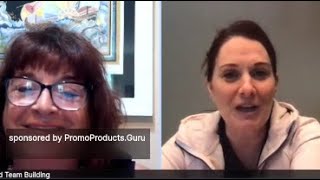
In this interview, host Adrienne Barker, MAS, speaks with master coach Kimberly Giles about her unconventional path to coaching, the development of her Clarity Point Coaching academy and the 12Shapes behavior system, and her core philosophy that human worth is intrinsic and unchangeable. Giles explains how a foundational belief—that human value can change—underlies the common feeling of not being good enough, and how replacing it with the belief that all people have equal, immutable worth transforms self‑esteem. She describes practical coaching methods, including daily homework, shape‑based personality insights, and how sessions help clients rewrite subconscious beliefs. The conversation also covers advice for women dealing with narcissistic partners, workplace self‑doubt, and domestic‑violence awareness, emphasizing the need for safe, value‑affirming environments for children. Giles promotes her book Choosing Clarity: The Path to Fearlessness, the 12Shapes quiz, and offers affordable coaching through her platforms. The interview ends with mutual gratitude and a call to action for listeners to explore the resources.
Chapters
Okay, I'm so excited. Okay everyone, this is serious right now. Serious face. Because I actually really believe in what Coach Kimberly Giles teaches. So I am very excited right now to introduce everyone to Kimberly Giles, Master Coach. And then along the bottom I have everything that you do, and it's, it's so much. So first of all, I don't— where are you? Where am I? Where are we speaking from? I'm in Daytona Beach.
It's Salt Lake City, Utah.
Wow.
It's where I live.
It really is. It's beautiful there. How lovely. Is that where you were born?
It is.
Wow. Yeah. So you have a story behind your becoming a Coach.
I do. It's kind of a crazy one. Yeah. You want to hear it?
I do, I do.
Um, so I, I started college many, many, many years ago, but I never finished. Ended up getting married and, and having a family, and, um, 15 years later found myself a single mother with 4 children and no education and no work experience and no idea what I was gonna do. But I'd gone through a lot of challenges in those 15 years, and I've always been such an avid self-help person, reading every book I could get my hands on and, and trying to learn and improve myself. And so, I actually got a job doing sales training. I was a pretty good speaker and I had a company that taught me how to do it. And they opened a coaching academy and gave me the opportunity to do some coaching. And I loved coaching, but I was frustrated because the material I was given really wasn't helping my clients at all. And I started playing around with things I thought would work better based on all the books of psychology and everything I'd read. And, and I put together a coaching process. And I thought for me, it would work, it would work great. So I ended up leaving that company and starting a business as a coach. And it only took about 6 months till I had other coaches coming wanting to learn about the process I was using. And that was 20 years ago. And, and I have been running— I've got 3 companies now. And one is a coaching academy that certifies coaches, therapists, social workers to facilitate this coaching process that I developed. And it's been kind of a wild journey because I felt like I had, I had no credibility to do the kind of work that I've done. I've been self-taught and have been able to build a business that we have over about 170 certified facilitators around the world using the program. And like I said, I've now got 3 businesses and my father, every time I see him, just shakes his head. He cannot believe that I have been able to do all this out of thin air is what he says. You've created all of this out of nothing. Yeah, that's true. A little belief in myself and, and a lot of self-taught learning. But that's kind of where I am. And that's kind of where your company is.
The company Clear Clarity. What is that one?
Yeah. Clarity Point Coaching is the main coaching company that runs the academy. I have another business called 12Shapes.com, and it's even a more wild story. About 5 years ago, I was asked to speak at a Women's Economic Forum in Delhi, India, which is amazing anyway that they wanted me to speak at this thing. But I met a woman in an elevator in India who ended up moving to Utah and coming to work for me and helping me put together a brand new people science called the 12 Shapes. So our website is 12shapes.com. And that business, it's kind of like a personality test only— it's not based on your personality at all. It's based on your behavior and what actually drives your behavior. But it's really fun. You get to take a quiz and find your shape and find your family and friends' shapes and learn how to get along with them.
I love that. I actually am— I just, I just like kind of like signed up for it, but I've got to take it. So that's really cool. Can you get that website one more time?
Yeah, it's just 12shapes.com. 1, 2, the number 12 shapes. Awesome.
Awesome. I'll put that on the site too. I love that.
So that's fun.
Coaching is some— so, okay, so I'm 58 years old, not that I want anyone to know, so if you heard that, just get it out of your mind. I'm really actually 25. But the, but the key is, so growing up, we didn't have coaches. We had, uh, counselors, psychologists, and, and psychiatrists. So I don't recall that But a lot of people— I'm sure my friends may be a little tired of my sharing the story, but so I wrote a book called Head Down, Shut Up, because— but I've learned a lot since I wrote the book. So what I believe, growing up in a family business, I was not seen as an important person in the business. So I often was told that I And it continued for until I wrote the book. It finally stopped. And I heard kind of the same mantra: nobody respects you, nobody wants to work with you, nobody likes you. And it was a consistent conversation that was told to me over and over and over again. And also, as I said, back last year too, until I wrote the book in November— I published it December 9th— I never heard those again. I heard this one now because I didn't put this in the book. You like to make others feel bad so you can make yourself feel good. And it's not so much the words of why in all of that, but I really believe that if I had a coach, if I had someone that would have mentored me, that would have said, Adrienne, that's not necessarily normal that you're being told that, and that's not necessarily true. Or, you know, like, how do you feel? You know, what I missed is I never got any mentorship. The same two brothers that were telling me that weren't saying, Adrian, look, come here, let me help you. What is it that you want to do? Would you like to speak more?
What—
like, what is it that would make you happy? Even if they felt that nobody liked me or nobody respected me or nobody would want to work with me, wouldn't they then at that point, instead of just saying it, want to actually helped me to, to grow. And so I can look back on all of it and I don't— I'm not angry. I'm more like, how do I help someone else that maybe is in this position? And the best thing I could do is say, get a coach, right? Because so if I came to you 20 years ago and I said, I am consistently hearing these words and it's, it's consistent, it's not like just once a month, You know, it's, it's in most conversations. What would you say to someone who's hearing those kind of things?
Okay, so, so first of all, I really believe that there's a, there's one belief that we all learned in childhood that's responsible for most of the behaviors, the patterns that are holding us back in life. And, and it's the belief that I might not be good enough. And some of us, it makes us shrink back and not try. Some of us, it makes us try too hard and overcompensate and try to prove we have value. And either way, we're showing up with some weakness. We show up insecure and people feel that in us. And if they feel that you don't know your value, they don't see value in you either. You have to know it. So, I started looking for a way to help my clients to fix that belief that I'm not good enough and I actually discovered something really amazing that, that belief, I'm not good enough, that we all have is created by another belief that rests under it and I call this one a foundational belief because it's created the fear that you're not good enough. And when I tell you what the underlying belief is, you're gonna go, okay, weird.
I don't—
this— I guess I do have it though. It's the belief that human value can change. And you think about it, you believe if you could just do better or lose weight or make more money or, or make fewer mistakes, that you could then gain more value and finally feel good about yourself. Even to the extent that some people feel like they're better than others, right? I've earned it. I've done all these things and I'm actually better than other people now. But if you believe that it's possible for anyone to earn value, you also believe they can lose value, which means you believe if you gain weight or lose money or make mistakes, that you're less than other people. And, and the bottom line is every single person on the planet has bought into this belief system, and it's not a fact, it's all belief that our value can change. Therefore, some humans have more value than other humans. And we all subconsciously believe that, that some people have more value than other people. And if you really look at all the problems on the planet, behind them all is this issue that we believe some human beings can have more value than other human beings. And it's not a fact. It's a perspective, it's just a belief. So what I've realized to really help clients change their self-esteem, there's only one way. You have to change your belief about how all human beings' value is determined. You've got to decide that for you, every human soul has the same exact intrinsic worth and nobody can earn more and have more value than another human being. And no one can lose value and have less than any other human being. Now, we can make different choices and we sign ourselves up for different life experiences, but our value, our intrinsic worth, has to always be the same. Now, if you'll do this and you will make it your truth about other people, okay, now there's a trick to that. You have to give up all judgment. You cannot be in judgment of other people anymore. You cannot see them as better or worse. You have to see them all as the same. But if you will do that consistently, practice it, you will— it will sink in that your value is the same as everybody else's, no matter what you do too. And I can't tell you, I've been teaching this principle for almost 20 years in my coaching program It is the only thing I have ever seen drastically change a person's sense of self-worth. But it's so tied to how you see other people. And if you still get caught up in the darkness that you see in this person or that person and gossiping and, and judging them, you're— that person is showing you this this place inside you that still believes some humans aren't worthy of love, that they have faults that make them unworthy. And as long as you do that in other people, there's going to be parts of yourself you will never be able to love either. Does that make sense how they're tied together?
It, it absolutely makes sense. So then my next— I really— if, if this was a video and I was watching someone else take watch this video, I would pause it for a minute just so I could wrap my head around it because I know it's kind of a mind blow. This is like a big gold nugget that you just placed. All right, so it is. Boom, pow. But here's the question, and I, I— so my mom used to say, right, parents would say to us, what, um, You know, if you talk about someone else, maybe you see it in yourself. Is that kind of also along the same thing?
Yeah. And it's not always necessarily the exact same bad. I mean, sometimes it is. Sometimes I hate bossy people. And it's because I like to be the boss, right? And so we have, we have some of the same, but there's— but think of it more that if you keep seeing darkness of any kind, any fault or darkness in another person that you think makes them less, you will always do the same to yourself. They are showing you the limits of your love of yourself. So this is kind of a fun thing that I like to do because all of us have people we don't like or people that annoy us, and those people serve such an important role in our lives. They show you the limits of your love. You are so loving to everybody right up until we get to those people. And, and we get to practice loving those people and really working on it, working on seeing the same value in them that every other human being has and, and make them in your mind worthy of love and appreciation even though they're different from you and they have different faults and weaknesses and strengths. Really practice being in, in a place of love and appreciation for them because the more that you do that, you will be able to love yourself. And if you can't do that, if you cannot find a way to love those people, that will stop you from, from loving yourself and seeing your own value. So, this has to be really a daily practice, you guys, and if you've got kids at home, let me tell you, there's nothing more important you could teach your kids than that their value can't change no matter what they do. If they get an F on a test, they still have the same value as every kid in the class. This was an interesting learning experience to get an F. What are you learning from it? But it did not change your value. And if they get an A, I tell them the same exact thing. This was an interesting learning experience. What did you learn from this? But this did not change your value. You still have the same value as every other kid in that class. You win a game and lose a game, you still have the same value. And I actually like to tell my children or ask my children to teach this to me. I want you to watch me, kids, and anytime I do something dumb or I make a mistake, remind me that that didn't change my value. And they will. If I crash the car and scratch it, the first thing one of my kids says is, Mommy, that didn't change your value.
And I'm like, okay, I needed to hear that.
That didn't change my value. And you guys, you're still going to have moments when you get hit with that fear of not being good enough. But in that moment, you have a choice to accept that old subconscious belief system that people can be not enough, or to choose your new one. No, no, no, this didn't change my value because nothing can. All of us have the same value no matter what we do. And you just have to practice it. But I think anybody that's, that's struggling, that feels like they're not appreciated or seen, that's where we have to start. We have to start changing that core belief that your value as a human being cannot change no matter what you do. That answer that.
Wow. So when I was younger, it's pretty amazing. When I was younger, I always self-reflective. So I always look back on the, you know, every night I would go to bed and I would reflect on my, on what I did that day. And it was very natural. And I remember I would, I would say to my brother, don't you reflect on the things you've said to me and how you treat me and talk to me. But What I'm hearing too, so I do feel— I, I belong to a couple groups of women that are dealing with narcissism, so they may have a husband or a partner that's narcissistic. How— what, what would your advice be to them? Because I want— I'm thinking of— I'm going to post this on some of the sites because I think what you're offering is so important. But wow, they're seeing themselves through the lens of someone who's so narcissistic. How can they help themselves. Yeah, that's besides just putting it in their mind is you—
they make you think you're the one that's crazy or broken. They have such a way of constantly eroding your sense of value in yourself. And I think one of the most important things is you recognize that you are living with someone who's got narcissistic tendencies and they cannot see you accurately. At all. And, and most of what they say and do is about maintaining their own sense of, of value. And so they don't care who they hurt in that process. And you've got to accurately realize that's what's going on and know that it's an interesting classroom that you're in. You're, you're having an amazing chance to practice every day Knowing your value cannot change no matter what. I think it can be a beautiful time of practice. I've had that experience dating somebody with narcissistic qualities, and boy, every single day was a chance to practice knowing my value. And it makes you— can make you strong if you're using it as practice and not letting it just wear you down.
So what would a coaching session look like? It'd be like, are you— do you help them to actually go from practice to actually put into, into the work? And I don't even know, but put, put practice into what? What is it? Practice into production?
Yeah, with, with our coaching, first of all, I'd want to find out your shape. And I'm guessing that you are probably an octagon. And octagons are some of the most amazing people on the planet. And they are— they all come hardwired with desire to help others and make a difference. Like they all kind of have a sense of mission. And they're so people-oriented. And I would want you to really understand the magic of the octagon and who you are, what you have to bring to the world so that you get your magic. And it kind of helps you to stop thinking you should be like other people. Because we think, oh, I should be smart like her and I should, you know, be fashionable like her and I should have this and that. Well, I'm an arrow and we are not fashionable and we are not good at hair and makeup stuff. And there's a lot of things that I am not good at, but I know what my magic is. And, and that helps me let go of any other expectations of myself, really helps me know, know and love myself better. So I would do that. And then, um, my coaching program steps you just piece by piece through changing some of these foundational beliefs at the, the deep subconscious level. And I've got homework that I give clients to, uh, that they do every single day that literally changes those beliefs at the subconscious level. And, um, that's, that, that's the work that's got to be done, because those beliefs that you have about yourself and where you fit in life and what the nature of life is why you're here. You've, you've got beliefs at that subconscious level that are driving how you experience everything and how you feel about yourself every minute of the day. And a lot of those beliefs are wrong. They're, they're not serving you and they're not even accurate. And so we get the chance to write better ones, to come up with ones that really help you be your magic. And I think that's the, the beauty of coaching versus, you know, I try to always learn reading a book, and it's, it's great. You can get a lot out of read— I've written a book, you've written a book, people should read them, they're great. But, but having the weekly accountability of a Coach who's your cheerleader, who believes in you, who's giving you the tools that you need to make those changes, that makes real change happen faster and easier. Coaching's the best.
So I, so actually I have kind of like a burning question. If I, first of all, just so you know, I always say my shape, my shape is round and I'm getting rounder by the day. But oxycodone is not so bad, so I'm gonna go for that. I actually, and that is kind of part of, uh, almost at play in the heart of me is, uh, you know, the fact that I do give so much that I don't have that much. I try to give my time and whatever I can do because there is a, there's a satisfaction. But I also kind of wonder if there's almost a, um, an addiction to wanting to give, wanting to, uh, what, you know, I just got another job and it's nonprofit, of course, because that's really what I do love is being able to help. And I do wish that I just could, um, manufacture millions of dollars just so I can you know, enjoy giving it to people. My mom used to say that, and I used to think it was so silly, but I understand it now. But I want to ask this question. So somehow I, I came out okay. Yeah. What, what could happen to someone if they are hearing those words in the workplace? You know, not when they go home. When they're— when I went home, my husband was lovely to me and always made me feel like a queen, like I was so special. But during that 8 to 10 hours at work hearing that, what could have gone wrong for me? Where could I have ended? I'm just kind of curious about that.
Well, I think you end where a lot of us, and I'm going to say especially a lot of women in the workplace, I really believe we've got more subconscious blocks in our way than a lot of men do. We've got beliefs that we're not as capable and we're not as smart and they show up more at work. They, they show up and get in the way of our career and they hold us back and we don't go for things. We also, we don't speak up and share our ideas because we're afraid they won't be valued. And, and so we get overlooked and we get passed over and, and those kind of things happen all because you don't believe in yourself and, and you're afraid to take risks at work because they might make you end up looking even worse, or you'll find out that you aren't good enough. So, we play it safe. And one of the other subconscious beliefs that we all have about life is basically a belief that we're not safe. And we're not safe because we think that life is random chaos and people can make choices and their choices can take from us. So, we can be held back and hurt. But what I want you to recognize is all of that is belief. Believing that the universe is random chaos is a belief. You also could choose to believe, if you wanted, that the universe is a universe of divine order and that everything that happens to you actually happens to serve you. You could choose to believe the universe is on your side, not against you. And that every single experience that shows up is you and your choices and the universe co-creating this perfect classroom journey for you. And if you believed that, then you could take risks and you could speak up and you could be you without any fear. And you would know that at the end of the day, you have the same value as everyone else and that whatever's created in those experiences is your perfect classroom and you're, you're safe and you're enough all the time. And you could have both those beliefs if you chose to adopt them. We just have to make the choice. We have to reinforce it all day, every day, that we believe the universe is actually on our side and that we're always good enough. And guess what? You're bulletproof. Nothing can stop you.
So I know it's amazing. I actually have to say that I do believe when I see a rainbow, I believe it's a gift. And I do, I really am comfortable that, and I'm grateful that I have that, that belief system. But I love what you said. So classroom, so why are we not teaching our children this? Like, I don't, like, my daughter's a freshman in high school, and the amount of, of so-called friends that tried who put her down and consistently drive. Like, just, it's just so, it's just, it's just so hard to watch my daughter go through it. And I know other kids are going through it. And I kind of say to her, unfortunately, the bullies that you're in high school with, they're going to go to work with you too.
Yeah.
So why are we not teaching this? Because I think it's, it's, it should be taught in the classroom, the real classroom for the younger.
Yeah, I, I do too. I think there's nothing that your children need you to teach them more than that they're— they actually are safe and that they're good enough. Um, and, and the problem is that everybody else who is not working on this is functioning in a state of fear themselves. And in their fear that they're not good enough, one of the most common ways we overcompensate for that is we put others down. We think if we, if we focus on how bad other people are, that that makes us better. They're worse, so we must be better. And at the subconscious level, a lot of people are going around tearing others down thinking that's going to make them feel better. It doesn't, but they think it will. And so that's what we experience, a lot of that all around us. Even, um, I do a lot of work with couples, and in a lot of these struggling relationships, um, there's so much looking for fault in the other, being so quick to be offended and, and find fault in each other. And they're all a symptom of the same thing, that you're afraid you're not enough. And so you're right, all of us just need help to work on changing those beliefs so that we can show up for others. But the screen kind of—
October is Domestic Violence Awareness Month.
It sure is.
So this— so I think what you're saying, and I apologize for the app, it sometimes gets a little quirky, but seems to look good when it goes live. But so for domestic violence awareness, what would you— what, what, what— where could people get help? How could they talk to you to get help?
Well, um, for— there's a lot of resources out there. There's domestic violence hotlines. If you're— if you're in a situation and you wonder if it could be considered abuse because it's causing you a lot of pain, call someone and talk about it. I find a lot of people in these situations, they've been in them for so long that they think this is normal. And it's not until they talk to someone and explain what they're experiencing that some professional has to tell you, yeah, this is abuse. And you're like, oh, I just thought every family functioned this way. I thought every wife was treated this way. And they're shocked. And so I want to tell you, you know, if you're in a relationship where you're constantly made to feel like you're wrong and a failure and not good enough, if you're made— if you hear things about what's wrong with you and that you're messed up and broken and bad, I want you to call and talk to someone. And get a second opinion, get an outside opinion about your situation and what you're experiencing, because it may very well be abuse. And abuse is not just physical. It can be very emotional, and it's just as damaging, sometimes even more. So that's the first thing. Just reach out and talk to someone. And you may be afraid of judgment. I know For a long time, I was, I was really good at pretending everything was fine at home because I didn't want anyone to think badly of me. So I would just pretend everything was fine. And, you know, you can only do that for so long. It's going to catch up with you. There'll come a day when you can't do it anymore and call and talk to somebody. I always feel like people, when they finally call and they finally find how much help is there and how much better things can be, they just wish they'd done it sooner. So don't wait. Do it now. If you're struggling and unhappy, if you— your relationships seem very unhealthy, call now and talk to somebody and get some help. There's so many resources. If you contact us through Clarity Pointe Coaching or 12Shapes, we promise that we will have a coach to work with you no matter your budget. No matter what you can afford, we will find someone who will work with you and help you. So, so reach out to us on any of those websites and, and we promise we'll get you help.
That is really a great gift. Thank you so much. You know, you may not have the MD or the doctor, but in my mind, you're, you're just as important because that is— well, the value, right? Because what you're saying is First of all, offering at any budget is a really beautiful thing to do. So you're really all about saving lives. And so in my mind, I want to call you Dr. Kimberly because you are incredible, really a life-changing lifesaver. And thank you so much. I am going to, um, okay, so you have a book. I just want to hear about your book.
Okay, I have a book on Amazon. It's called Choosing Clarity. The Path to Fearlessness. And you can get it on Amazon. I also have a little book that you can get on 12Shapes.com that teaches you all about the different types of people there are. And it's really fun because you can figure out just reading the book who half your relatives— what shape half your relatives are. And it'll really teach you to understand them at a new level.
I love this. Thank you so much. Thank you so much for your time. I'm going to have all the information out so everyone could get it, and I'm going to send you an email if I really am an octagon. So I I look forward to seeing what you— okay, I want to know.
Let me know.
Great. Thank you so much for your time.
Thanks for having me.
This was great.
Okay, bye-bye.
Thank you. Oh my gosh, this was my honor. Bye-bye. This is great. What a fantastic interview. Thank you.










