Superstar Guest Shahara Wright,
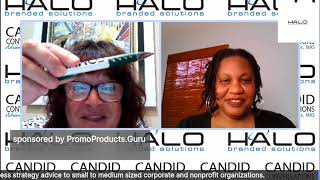
Houston attorney Shahara Wright explains why entrepreneurs need legal advice early, especially when forming nonprofits. She breaks down when you actually own a business versus being self-employed, why nonprofit founders don't own their organizations, and how to build a board based on passion rather than just credentials.
Chapters
Hi everyone, it's Adrienne and I am excited. First of all, I'm very excited to meet Shahara and I absolutely love her last name Wright. Shahara, you know what it is? I, I sell logo pens, right? And printed pens. So I'm always like, oh, the Wright idea is a pen, or I'm always like, you know, so I love it even though you're spelled a little differently. It's a fabulous last name. So I think as we grow up, as a parent, you say to yourself when you're talking with your significant other and you're talking about children, you say, I hope one of my children grows up to be a lawyer, because everyone really— you want a lawyer in your family. I don't even know if lawyers are able to give advice, but you're the type of a lawyer that someone really wants to have because you are a business attorney.
Yes.
So tell me more. Where are you located?
Well, I'm in Houston, Texas.
Oh, interesting. I love that. Okay. So you're in beautiful Houston. And so tell me about your— tell me about you and your law firm.
Sure. Well, I'm a business law attorney. I work with small businesses and nonprofit organizations. Um, I act as general counsel for the most part. Um, whereas I do a lot of different things for businesses. So there's some attorneys that really, really niche into, you know, certain rules, you know, interesting aspects of law. I do that in a certain way, probably a little wider niche where I work, you know, with small businesses and nonprofits. But as general counsel, I kind of have to handle a whole bunch of different things. So I touch a lot of different types of law dealing with my small businesses and nonprofits. And really, you know, the reason why is because, because my clients obviously don't want to have to hire like 24 lawyers to handle, you know, all these little specific issues. So, you know, it requires me to kind of know a bunch of different things, but I like it because it's challenging and, you know, always, you know, keeps me on my toes and having to make sure that I'm protecting my clients with the things that they need to know. So I enjoy that. So I've been doing this for 20 years, almost 21 years. I've been practicing law for 21 years. So I— when I first came out of law school, I worked for a couple of solo practitioners, did some contract work, and then I started my own practice like a year, year and a half after I finished law school, but like a year after I became licensed.
So, okay, so really the first question is always going to be, at what point do I need an attorney? So if you're a— and let's just focus— so you're a young, you're a young woman in her, in her 30s, just kind of describing, and you're looking to start a nonprofit. When would they reach out to you to talk with an attorney?
You know, I think you should do it as soon as possible. I mean, you know, everyone's amount ranges, you know, in terms of what they charge for consultations. Not everybody's free. Like, I have a free 15-minute, but that's, you know, all it's going to be. You know, there's some that may need something longer that are going to charge and things like that. But I think it's worth whatever the amount is, you know, better be $250 or $400 or whatever for the you know, who depends on who you're hiring, obviously, for the consult, to at least understand what you're doing, especially with nonprofit organizations. I always say to people, and I probably have the most challenging in terms of consults because I ask lots and lots of challenging questions. But I think that in terms of nonprofits, they are harder to start, harder to run, harder to manage than a for-profit entity. And so, you know, I think that is very important. To have that conversation very early on, especially with an attorney that is very knowledgeable about nonprofits, because they understand how difficult they can be to run. You have lots of rules that you have to adhere to, a lot more again than for-profit businesses, and they're not the same. And so a lot of times what I hear people doing when they start their own— start a nonprofit is, you know, it's my business, or, you know, I own a nonprofit. And these are things that are not true, can't be said. Um, and that starts off on a path that when you're referring to the nonprofit as your own or you own it or things like that. So there's a lot of things that I think that people don't understand and know about running a nonprofit organization that I think if you start off with having a conversation with an attorney early on, even before you form it, that you at least have an understanding of what's expected of you and whether or not you need a nonprofit or not.
Wow, so that's interesting. I, I would think, okay, that you would have said, well, you need it for, you know, getting your articles and getting all your incorporation and your filing together. But what do you mean about saying what you can or cannot say if you are— you could say you're the founder of a nonprofit.
Sure, you're the founder of it. So this is the, the nuance I think that people don't understand, and I have this conversation over and over again. And I know probably some of my clients probably think I don't want them to have nonprofits, and that's not the case. But I tell you, I'm probably like a drill sergeant when it comes to this issue because I, um, you know, IRS— nonprofit organizations are really more controlled by IRS than they are state laws, right? Um, and so because once you decide that you're going to be a nonprofit organization and that's what you're going to organize on, you're going to ask for tax exemption you become the public, right? It's owned by the public. It becomes something that the public has a right to know about what's going on. The public has, you know, because you are tax-exempt, which is what you're asking for. So if you're not paying taxes, then who's, you know, who's contributing, right, to our greater economy? Not this organization. And for the privilege of being tax-exempt, that means Some things are open book, not everything, but some things are an open book and people have a right to know, which means also that you can't own it. It cannot be owned, it cannot be possessed by any particular person. You're basically certifying that you have no financial interest, you know, to the organization and the interest, and there's no interest that's going to you individually either. And that, I won't get into the nuance of whether you can be paid or anything like that, but I'm really talking about you know, if the nonprofit is earning money, you know, there's no profits that are going to you. The organization doesn't owe you any profits. You don't have any, you know, stake into the ownership of the organization because it's not owned by anyone. And so that's, I think, something that is very important that a lot of people don't think about. But once you decide that you're going to be a tax-exempt organization, the rules change.
Wow. Okay. Yeah, that is very interesting to me. Wait, so is there succession with the— so it's really all falls on the board then?
Correct. Yes.
So it's really board. And there's always been that feeling that when you're on a board, that around the table you should have the accountant, you should have, you know, the, the business person, then you should have the attorney. And is that a crazy question? Is that fair for attorneys? Are attorneys often placed? Because if you're an attorney and you're serving on a board, are you able to be paid for your board service, or is that your volunteer part of what you do?
Usually not. I mean, it's a conversation that we have between the legal circle all the time. It's like, what's your board service and what's your legal fees? And as an attorney, I mean, sure, I can give free advice and give my thoughts and things like that, but I don't represent the organization. And that's a completely different point of view. And so it would be a conflict almost really for me to be able to represent the organization and be on the board because you have to be— it's two different mindsets, so to speak. And so I'm not really of the opinion that you have to have all these professionals on your board. I don't think that you have to. I mean, really what you want to have in terms of picking board members, I think you want to have people that are passionate about what the organization is about, what the programs are, who want to push it forward. I mean, yes, it's great to have a lawyer on there, but if you are a dog rescue and I don't like dogs, it's no point of having me on the board even though I'm an attorney, because I'm not going to be of any use for you, right? You want to have people that are passionate about the organization. And yes, it's good to have people who are knowledgeable about different areas and, you know, you know, finance person and all those things. I don't disagree with, you know, having those people there, but that shouldn't be your first priority, you know. And a lot of attorneys serve on boards, but they don't do nonprofit work, and because— but they just serve because they, they are passionate about, you know, whatever, you know, the thing is that the nonprofit is doing, which I think should come first.
I love that. I also think that if I— what I was saying in the beginning about having a family member as an attorney, but I don't think it's fair for any of us to, um, you know, whether it's a doctor, whatever that service is, to expect service day after day for free and not pay for the service. You know, I could imagine if I had a son that was an attorney, once in a while, or I would retain them, but I, I don't think that any of us should take advantage of anyone else. I just, I put that out there because I know that attorneys tend to have that a lot, you know. Oh, Oh, is it your, is it your brother-in-law Mike, an attorney? Oh yeah, he is. Oh, like, let me call him. I have a question to ask. I'm not that person because I just, I just don't believe that that's— and I'd rather pay for someone's time. But can we talk about small business then? So, so what is considered a small business?
Well, the definition is quite broad. I mean, you know, in terms of SBA, I think that goes up to like $500,000. Like $5 million. No, I think it's like about $5 million and maybe 500 employees. I think it's their definition of a small business. And to someone that maybe is making $50,000 and an insurance agent, that may seem like huge. So the definition is broad. I personally kind of break it up into different levels in my own head. These aren't official levels, but there's micro businesses that earn under, you know, $250,000. Um, maybe they're still solos, um, and don't have employees, you know, those kinds of people. Self-employed is usually how they're referred to. And then you have, you know, people that are kind of in the $1 mil to $10 mil range. They're probably in the process of hiring, probably don't have more than 10 employees. And then you have those that are maybe from the $10 to $20 mil that are kind of bringing in employees, maybe have multiple locations, those kinds of things. And so each kind of set, as you— 10 meal set, which could be, you know, huge, um, really, um, kind of changes the aspect of what that business looks like. Um, and whether it's small in terms of ownership or small in terms of size, I think it can vary just depending upon, you know, how your business is. You know, my clients generally are between the $1 and $5 mil range in terms of revenue. And really what we're looking at, a lot of those clients are kind of switching from that mom-and-pop aspect, really having to turn into, you know, paying more attention to their business and sense of organization, you know, and, and making sure that they have structure and things like that. Because, you know, once you get to that 1 mil to 5 mil range, you know, in between there, you know, you just can't run like a mom and pop anymore. It's not possible.
That's interesting. So when COVID-19 hit, and I, you know, as I'm a 1099 employee, so an independent contractor, and it was interesting that then we were able to, uh, go out and, and see if we could get the pandemic unemployment insurance. But I noticed a lot of times when I'm reading, there'll be that discussion: is an independent contractor a business owner? Is someone that has an MLM an MLM that is, uh, involved with a multi-level marketing, are they considered a business owner? Because often that's how it's sold. Oh, you know, come join me with, you know, my whatever it may be, healthcare, and you'll be a small business owner. But is that really true?
Well, yes and no. I mean, I guess it depends on how you define it. Again, you know, if you're going by government standards, they would call it self-employed. Um, and you can have an entity, um, which you have business ownership, but they will still probably classify you as self-employed, meaning that you earn your own income, which is true for business owners, but it's a little bit different because there's no salary involved. So you're paying yourself. So it's like your job is you, um, so to speak. So, you know, you're working, things like that is paying you. You don't have like a, a W-2 or anything like that. So they define that as self-employed. Doesn't mean that you're not a business owner. Um, I, I don't, I don't take that viewpoint of it, but in terms of IRS, in terms of how the government looks at it, they look at it as self-employed.
Okay, now I have another burning question. My burning questions, love it. And this is actually kind of serious because I may be wrong, so please correct me if I'm wrong. Shahara, I don't feel that there's enough conversation about COVID-19 and what to do for employees. And I am seeing it with friends and family that are employed, and that they are— and especially small businesses, so not that many employees— and all of a sudden someone is next to someone that tested positive. And the companies don't— they're saying, well, you know, uh, you know, test, or it doesn't matter if you were close to them, that's not considered And everyone is trying to change the CDC guidelines, which clearly says if you spent whatever that time is, more than 15 minutes next to someone, especially eating or doing something like that, that did test positive, that you should quarantine. But then who's paying for that? And nobody wants to, especially if you're— the company is saying, oh no, no, no, no, no, no, unless you test positive, Shahara. You come to work and the only way that you're going to quarantine or isolate is if you're positive and you are sick. So there's no discussion of this at all. I can't find any information.
Yeah, unfortunately. And, you know, in this, today's political climate, there's just, it's everywhere. Like there's, there's no one way, right, to do it because of the misinformation that's out there. And because of the back and forth and arguing about businesses and health, and it's a fight between everybody about everything everywhere, right? Like, there's just no one place that you're going to find information, right? The federal government has one thought, states have another thought, cities have another thought, counties have another thought, individual business owners have one thought. Employees have another thought. It's pure chaos is it feels, that's exactly how it is. And there's just not really one way to handle it. And unfortunately, I don't think it does us any service, you know, as business owners not to have some clear guidelines. The CDC is the best we have at the moment. You know, I would also kind of go to WHO as well, the World Health Organization, and see their guidelines as well would be helpful. You know, just unfortunately, that's just the way it is right now. So every individual business kind of has to make their own decisions about how they're going to handle things. It's not fair, so to speak, but that's just the way it is. So, you know, I could say one business, you know, needs to handle it this way, and another business may need to handle it another way. There's a lot of ifs, ands, and buts, and there's just no real clear guidelines. I think from a business standpoint, Following the CDC guidelines, following the WHO guidelines, I think are the best thing to do. I mean, I think as citizens, we want to try to suppress this thing as much as possible. It's highly contagious. I know there's some people in this world that don't believe that, and some people who believe it strongly. I don't, you know, it's not about changing people's mindsets. I mean, I think, you know, in your best interest, you have to do what you think is best for for you and your employees. I think, you know, as a business owner, if all your employees are out for the count, that's not helping you. So you would want to do the things that are necessary to protect your employees. And I think, you know, from a customer standpoint as well, you want your customers to know that you're doing what you can, you know, to protect them as well. So I think regardless of, you know, your individual beliefs about, you know, the severity of COVID-19 and the pandemic and things like that, I think any business owner, you know, is going to want to do what's best for their employees. They're going to want to do what's best for their customers, and you're going to want to ensure that they are knowledgeable, your customers and employees, that you are taking their health seriously and care about it because you care about them. And I think that's the, that's what you want, you know, people to see. Um, and you know, if they feel like you're not doing that and you're putting your employees' health at risk, then obviously as a customer, you aren't going to care about mine. And I think ultimately what that's going to do is reduce the amount of business that you get.
So is it weird that a company— so if I was sitting around the table with a company, um, and I said, well, you also should— everything you said was beautiful, but you should also be concerned about a lawsuit against the company. Where does that fall in? Is that always a concern for a company with everything that there could be a lawsuit?
I mean, listen, we are a very litigious group of people in the US. People sue about anything and everything and nothing. And so it's not that hard to bring a lawsuit whether you win or lose or whatever. I mean, that's just the way it is. And with attorney's fees, it can be extremely expensive, even if you come out on the better side of the lawsuit. So I mean, I think these are always concerns that you should have. My philosophy when I'm talking to my clients is, you know, do the best that you can with consideration of, you know, again, the health of your employees, the health of your customers, if you're following CDC guidelines. If you're following WHO guidelines, which are stricter, I mean, that should be— I'm not going to say sufficient, but it should show that you are doing what you're supposed to be doing, right? You're not just taking this, being negligent in how you're dealing with stuff. So if somebody is testing positive in your facility and you haven't notified anyone and said, you don't have any procedures in place about cleaning, you don't have any procedures about getting testing, you have nothing in place, that's a problem. And I think you're opening yourself up to lawsuits. Again, it's not about whether you win or lose, right? I'm not arguing that point, but the cost of having to deal with that is significant in and of itself without even getting to whether or not you're going to be on the right end of that lawsuit or not.
So my dad, growing up, my dad always says, don't sign anything unless the attorney looked at it. He was very adamant about that and made sure he wanted nothing signed unless his attorney looked at it to make sure. Nowadays, I wonder how my dad would have been if there were so many forms and different things that are available on the internet. So how do you compete with that? How do you tell people, don't just find a form online and think that that's going to be good enough? Or is it good enough?
Well, that's a good question. I'm glad you asked me that because I'm actually, um, segued into my self-promotion. And starting a form-based company as well called Contracts Done Right. And that's going to be right, W-R-I-G-H-T. So another play on right. So I get to use my last name in all kinds of ways. So here's the thing. I used to be kind of like that as well in terms of forms online, not really being a fan, feeling like everything needed to be customized. And I still do feel strongly about that, but I have noticed, and I'm sure a lot of business owners have noticed as well, is that, you know, there's just a demand, a request, you know, for forms. Um, you know, there are people that just don't want to pay to have everything customized. So, you know, I had to kind of take the, the, the idea of kind of like fashion where you buy it, you know, off the rack, it's good enough, you know what I'm saying? It's a size 2 or size 9, maybe it doesn't fit your body quite perfect perfectly or size 22 or whatever size you wear. It may not fit your body perfectly, but it fits good enough, right? Versus having to get everything tailored and fit and all that kind of stuff. And so there's time and place for off the rack, and there's a time and place for customized agreements. And I think in terms of where we're going in the law, where we're going with all this stuff, there are some times where forms will be sufficient and not all the time. But there are times where it will be sufficient. And again, not all forms are created equal, right? I mean, you can see when you buy stuff from the internet and you see all these— and I've been a victim too, right? Where you buy something, these cute little clothes, and you think, okay, you find out it's from China and it comes back and it doesn't look anything like what it said, or the fit isn't what it said it was going to be. You thought you bought a 1X and it's actually a size 12 and you can't fit your toe into it, much less anything, you know, those kinds of things are going to be the case. I think it's just kind of knowing where you're buying from, being trusting, you know, of where you're buying from, um, knowing the quality, you know, of the place that you're buying from. Because I think, um, there's a change in that sense that, you know, again, in terms of contracts and stuff like that with the internet, all these different things, um, you know, it's just a matter of knowing, you know, where you're buying these forms from and whether or not they're going to really serve your purpose.
Well, sounds great. I'm glad you're doing that. One of the things I think people have a lot of questions are, um, you know, do you, do you have an attorney on retainer? Is that kind of still the conversation, or do I call you when I need you? So what, what is— what, whatever the answer is, but what do you like better?
Um, I, well, I definitely prefer being on retainer, um, for sure. Um, it makes my life a lot easier when, you know, I And just in terms of practicality, because I have clients that, you know, regular clients, right? Like, our, you know, in a perfect world, right, you have something that you do, right? You, you finish it and that's it, and then you move on to the next thing. But really, reality, what happens is stuff happens all the time. Um, and so especially the bigger your business gets, things happen all the time, things, you know, are going on all the time. And so you have to be able to be responsive. So for me to be able to be responsive to my clients without having to create a whole new contract, um, you know, get the fees, you know, send a new invoice, all that kind of stuff that slows things down, right? And things at times we need to get. So for me, it's easier to be on retainer because I don't have to have that. We've already have a contract, we already have money on file, we already have things in place. And so when my clients call me and say, hey Shahara, I need you to handle this, I can do it without a lot of back and forth. And so that helps a lot. And just in terms of time, just in terms of stress, just in terms of a lot of things, because some things move so fast that, and, you know, trying to get a client onboarded again for like the 10th time, you know, it becomes time-consuming. So I definitely, you know, encourage my clients that know that they're going to need regular services to, to do, um, you know, a retainer. And retainers look different for different, you know, attorneys. Um, I have, you know, 3 different pay fees that I do for clients, um, that make it to fit whatever the needs. Because again, you know, as we talked about, small businesses look different, um, and how they do business. And so, you know, I try to, you know, create a process where a business of a particular size or whatever can, can engage me.
Wow. Okay. That was good. Thank you. That's really interesting to hear it all. I mean, I think that I could talk to you for hours and days, but so you are licensed in, in Texas?
Yes, correct.
Okay. And then Houston is your office. Are you working out of your house or office space?
Yes. So I have an office. I have an office and my office is in Stafford, which is It's like a suburb of Houston. So, um, you know, my office is there, but I also, um, you know, I work from home most days. Um, and since of course COVID hit, I've been mostly at home. I haven't been to the office. I go to the office, check my mail and whatnot, but I haven't really been there. Um, and I— but I've been kind of doing this for a while. Like, even though I have my office where I meet my clients and stuff like that, I've been doing virtual meetings and stuff like that for a minute.
I've—
I have clients all over the US. Um, not just in Texas, um, you know, because of course a lot of clients are digital virtual businesses. They do, you know, business all over the US. And so, you know, I'm able to rep them, um, to do a lot of stuff because not everything is just state-specific, you know. You know, it's not— businesses change so much where it's not— local businesses aren't really just local anymore, um. So because of that, you know, I have clients all over the US. And so that means, you know, I have to be available I very rarely meet people, um, in the office, even before COVID hit. And I live in a very large, large, large city, um, and even within Houston, you know, it could take an hour to get from one side to another. So a lot of my clients would prefer anyway to do things virtually. They don't really want to come to my office. So, um, it's very rare that I have people come to my office, even though I have one, um, just because Practicality speaking, a business owner doesn't want to leave their business for an hour or 2 hours, come there, maybe even longer, just depending upon where they're coming from. That's a lot of time out of their office when we have the technology to be able to do it online. I love it.
I want to ask you, is Wright your maiden name or married name?
Yeah, Wright is my maiden name. So long story that none of you probably care about, but yeah, Wright is my maiden name. I got married, um, so Minchin is my last name now. I may write my middle name. Um, got divorced, and I just have not had the time or patience. Ladies, you already know changing your name back is not fun process. Um, and so yeah, I just go by Shahar Wright. I've been— I was Shahar Wright for like 30 years before I got married. You know, everybody always calls me Ms. Wright anyway, so it never really changed. Um, so I just always go by Wright anyway.
It's a fabulous name. It's so perfect, you know. I mean, nobody wants to go up against Miss Right. Don't get me wrong. Thank you so much for your time. I love that you can work with anyone outside, so they can contact you. I have to say that you're very likable, and so that right away I think is so important. You have no airs about you. You have a beautiful smile. You're a beautiful woman, but you, you can just see how like nice and likable you are, and, and you look like you have a lot of, you your high integrity. And so I think that is— there's a connection that I think people find in you right away. I'm not the first person telling you this, obviously, because I know you've heard this before.
I appreciate it very much. Thank you so much.
Nice. It does. It's a nice feeling because sometimes, um, different people can get like uppity or, you know, and, and, or get full of themselves.
But I definitely don't see that with you. So yeah, she, she makes sure that I stay grounded, so she won't let me get, you know, full of myself for any reason.
So that is so perfect. Thank you so much for your time. I learned a lot, so I really appreciate it, and I look forward to following you. And your information's below so that people can, um, see that. Are you writing a book? Everyone's writing a book these days.
Um, so I wrote a book called From Entrepreneur to CEO. I wrote that in— well, it was published in 2016, so that's been out. Um, I have a couple of ebooks that are on, um, that are available on my website, and I actually just finished another one that I have not released, but it'll be releasing soon, um, in conjunction with the Contracts Done Right, um, template shop called The Guide to Independent Contractors. Um, and so that'll be available soon. And this is a full guide that really talks about, you know, hiring independent contractors, understanding what kind of contracts you need, understanding, you know, 1099s and when you need them, um, even the new law for, um, uh, for, um California, those kinds of things are there. Um, so it's a real full-blown guide that'll be available probably in the next couple of weeks.
Do you have a place on your website where you could sign up to be a part of your newsletter so you'll let us know?
Yes. Um, I will let you know what that is because I'm changing up the website right now. So, but I will email you and give you all the information and you can let your viewers know.
That is huge. Smart to look at independent contractors from one I see. I think that that is really amazing. So I, I will be the first in line for that book. So thank you. It's nice talking to you. Have a great rest of the day, and if you're ever in Daytona Beach, you're coming to visit me. Yes, thank you.
Definitely. I love it. I haven't been to Florida in forever, so I would love it. Thank you.
I love Houston. Uh, thank you so much, Shahar. This was great information. I'm excited for the book now. I really can't wait.










