Superstar Karen Ford, a motivational speaker, and Master Financial Coach. This is Part One
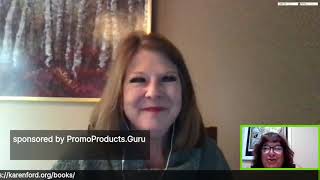
In this live‑stream interview, host Adrienne Barker, MAS, chats with motivational speaker and Master Financial Coach Karen Ford about personal finance. The conversation begins with Adrienne’s struggle to give away money and her desire to understand “manifesting” wealth. Karen reframes the term, emphasizing that true financial health comes from building wealth through disciplined budgeting rather than vague manifesting. She defines budgeting as a proactive plan that tells money where to go, shares alarming statistics about the majority of Americans living paycheck‑to‑paycheck, and critiques the lack of financial education in schools. The dialogue moves into practical budgeting steps: writing down income and expenses, using spreadsheets or paper, and consistently following the plan. Karen introduces the “he/she money” concept for couples, where each partner has a personal discretionary allowance after shared household expenses are covered, reducing money fights. For families, she advises replacing the word “allowance” with “commission,” assigning chores and tasks that earn money, thereby teaching children the value of work and self‑esteem. Adrienne’s personal challenge of over‑giving is addressed through the lens of the five love languages; Karen suggests allocating a fixed monthly giving amount within the budget so generosity is sustained without overspending. Throughout, the tone remains conversational, supportive, and instructional, with Karen offering concrete examples (e.g., cutting a $350 latte habit to $20) and encouraging empowerment through financial awareness.
Chapters
Hi everyone, we're live! Happy Monday, very excited. Crazy to think in one week we're gonna have— we're gonna know what's happening in the world of politics, but today it's about the green, it's about money. So I've heard with us, Karen's taking a minute to, uh, get a watch party going. So if you know me, I talk often. One of the things that I'm not great with is money. And, and part of the reason is that, um, I want to give it away. It's, it's, it's a— it really, it's a weird problem, but I just want to— every time something passes my Facebook page, I want to donate. And I just want to get— I just, I want money to give. And, uh, it's my mom's mantra, and I never understood it. She would say, I want all— wish I had all the money in the world to give it away. I didn't get what that meant, but I don't have all the money in the world, and I still want to give everything away. So I'm excited to talk to Karen So you let us know, Karen.
Did it work? I can't— I'm on your Facebook page right now and I don't see the live events. Oh, let me see. Yeah.
Oh, I turned off my thing. Oh, I turned off my phone. I forgot. Sometimes with a bandwidth in the house, I understand.
No, I don't see it on here. Uh, but oh, you know what?
Yeah, let's, uh, hold on for one second. Let me, let me go on. Hi everyone, this is fun. Let's, let me go on my Facebook to make sure. Do you want to follow me anyways? We'll be friends.
Absolutely, I got you on here. Yeah, I'm following.
So this is like getting a cup of coffee, Karen. If you and I met and we said let's get a coffee, I really wouldn't have time to, uh, to run and— wait, hold on for one second. Oh, I see it's live. Oh, we already got Jeff Newman's in the house. All right, so I need to maybe make you my friend. I bet you that's it.
Yeah, because I'm following you.
Oh, you are? Can you find— um, okay, but it's still— it is there, so I'm wondering, can you, um, can you request me to be your friend?
Let's see here. ADR.
And I'll say, do you have more than one Facebook page? Well, I've got one Professional Global Etiquette and Promo Products Guru.
I'm on your personal.
Okay, good, good.
Yeah, I'm on your personal. Oh no, I'm liking some stuff here.
Awesome, awesome. I see we've got some people joining us too. This is nice. I normally don't— we normally go live, but I don't look at the comments. So it's, uh, it's fun to kind of look right now. But you tell me. So I see I am live right now.
It's 2 minutes. Well, it looks like it's not a place where I can request you as a friend.
Oh, I'm so sorry. Oh, there is. Oh, that's weird too. All right, hold on. We're gonna do the old-fashioned way. Karen, how can I find you?
You are Karen Ford. And, uh, yeah, Karen Ford. and you'll see my picture. I don't know how many Karen Fords are on there, but yeah, Balloon Works.
Um, what is your, uh, what if I do this?
Oh, I can't tag you, can I? No, I can't tag you because we're not friends. Oh, I appreciate everybody's patience. I'll message you.
There's a lot of Karen Fords.
You can find my face.
Oh, here you are, Karen. Oh, I got it right here. Lovely.
Okay, awesome.
I like your hair. Okay, so I'm gonna add you as a friend. Oh, I love, I love this. Okay, confirmed.
Yes. Okay, now I'll be able to find it, right? Uh, thank you everyone for being patient. I can't wait to talk about money though.
Hey, looky there. Oh, I can say this, Karen. You and I are now really friends.
Yes, the times we live in.
So meet Karen Ford, everyone. First time meeting Karen with my coffee, excited. And we're going to talk about money. And, and Karen, I want to, I want to jump into this because one of the things People talk so much about manifesting money. Yeah, but you're not about manifesting your money, you're about building money, the wealth. So can you tell me like what you think of when you hear people talk about manifesting money?
Well, I mean, it's just to me it's just semantics. I mean, either you're going to make the money, right? And if you're not making money, then it's probably like water running through your fingers. So, you know, you're either going— I don't know, I'm not sure I understand that term manifesting money. Either you're a wealth builder or you aren't. So one of the keys to being a great money manager is that horrible word that most people think is 4 letters, and that is the word budget. It's not a four-letter word. Actually, a budget— simply put, a budget is you telling your money what you want it to do instead of wondering where it went. Let me say that one more time. A budget is you telling your money what you want it to do instead of wondering where it went. Now let's face it, we have all experienced this. How about when it's income tax time? You get that W-2 in the mail and you look at your income and you think, Hey, I made all that money this year. What happened to all that money that I made? Or at the end of the month, you have, you know, more checks in your checkbook than you do money in the bank, right? Or you have more month left than you do money. I mean, some people, actually 70%, 7 out of 10 people in America are living paycheck to paycheck. Paycheck. I don't know about you, but that is a very scary statistic. 7 out of 10 people in the United States of America live paycheck to paycheck. That tells me that's 70%. That's over half. That's almost three-quarters of Americans are living paycheck to paycheck. And that means, you know, by the time you get paid and you put, you know, you put gas in the tank to your car so you can get back to work, you go to the grocery store, you pay your bills, and you get the kids whatever it is that they're needing at the given moment, and you're already thinking about what you're going to do with your next paycheck, which is not at least a week away or 2 weeks away. That's scary. And I hate that for people because it should not be so, you know, we live in a great nation of opportunity, lots of options. And so what is the key here is budgeting. Learning what to do with the money that you make. And it's a sad state that the school system, you know, I'm 58 years old. I just had a birthday. I'm 58. And I can remember in junior high and high school learning how to balance a checkbook, learning how to budget. They don't teach that any longer, which is very sad. And a lot of times that's why we have, you know, the younger ones coming up that have no idea how to manage the money that they make. Because their parents were never taught, right? That's so true.
It is so true. I have a question regarding budgeting.
Okay.
So when you're— so first of all, you have to get it out of your head and on paper, right?
Oh, you got that right. Oh, you got that right. Yes, you have to get it on paper. I've talked with some people and they say, well, I budget, but it's all up in here. Well, that's great. But you need to write it down, whether you're going to put it on an Excel spreadsheet, a number spreadsheet, you need to put it down. And I've had some people say, well, I did the budget, but then I just put it in the drawer. Well, that's not going to work either. It's more than just writing it down. You have to follow it. You know, you have to follow the budget that you created. And that's an important point that I just said there. You're in charge of your budget. So if you want to go out to eat, you know, 25 times this month, you can do that. You might end up eating beans and rice the rest of the month and may not have money to do other things that you want to do. But if you want to eat out 25 times, you can do that. You're in charge. And I think that's the important thing that people don't always grasp, or maybe they believed certain things about a budget, which is just not true. You're in charge of your budget. I'm not telling you to not go out to eat. I'm not telling you not to go get that specialty latte on your way to work. I'm not telling you certain things that you're depriving yourself of. You get to be in the driver's seat when it comes to the money that you make, and that's the important key right there. Because if I tell you something to do then you're going to choose or decide, I'm not doing that. I am just not going to do that. But if you decide, you know what, maybe I shouldn't drive through and get that specialty latte every day on my way to work. And I have coached people with that, that addiction. But they've decided, you know what, I'm spending $350 a month on that specialty latte every day on my way to work. And I think what I'm going to do is just do that every Friday. So they changed their behavior from $350 a month to $20, $25 a month, and they're able to pocket the rest. And that is empowering.
What is it called when you—
this is going to be a doozy of a question, I know.
So what is it called when you, you look at your bank and your bank budgets the money for you and you're budgeting after the fact?
Oh boy, well, a lot of times what you need to have a communication with your bank. I know that the bank that I deal with, they always, they also have that option, but I have to type in the particular numbers or the percentage, you know, of my housing or whatever it is that you're needing to budget. You still have to be in charge of your money, not your bank, Not your kids, not your neighbor, you know, you're in charge. So you actually need to have some communication. And if you're in a relationship with someone, married, et cetera, then it's not just the one person that's in charge of the money. I've coached many married couples and I've asked this question, who should be in charge of the budget? And sometimes the husband will say, well, my wife should because she's really good with numbers, wife says, my husband should because he, he should, whatever the reason is. Well, the point is both of you should do it. Both of you should do it because you're gonna eliminate money fights. And that's an important thing. If you're in a relationship, you wanna eliminate any question, you know, and it can't be, well, you do the budget, you take care of it, and I'll be happy with whatever it is you decide. No, because you may decide later in the month that you wanna do something. So that's an important aspect when it comes to budgeting money if you're in a relationship. And my husband and I have what we call he/she money. And what that is, is, and this is fun, that is you bring the money together, you take care of your utilities, whatever the, whatever it is the budget is, right? Whether it's your car payment, house payment, rent, gas, utilities, tires on the car, whatever it is, and you decide that budget for the next month, because next month's budget needs to be planned and determined before the first. You don't start a budget in the middle of a month. You start it before the month begins. And let's say, you know, you have your take-home pay, and you have— let's just pretend you have $5,000 coming in every month. And your budget to run your household is $4,000, that's everything, food on the table, gas in the car, utilities, mortgage, all of that, and that costs you $4,000 a month, and now you have $1,000 left over. You have to have a plan for that $1,000 because if you don't have a plan for it, it's going to leave your hand. Now that is, that's almost a no-brainer. I don't know about you, but if I don't plan something for that money, Before I know it, I have no idea what happened to it. How many times has this happened? You've had money in your wallet, and at the end of the week you think, what happened to all that money that was in my wallet? You have to have a plan. So the important point is, okay, you've got $1,000. You decide, he/she money, are you gonna allot yourself $50 every week? Are you gonna allot yourself $100 every week? You decide what amount is the he money and the she money. So it may be $50 every pay or $100 every pay. Here's the beauty of having he/she money, right? Let's just throw a number out, $100 every week. Okay, I get to spend that $100 every week, the she money, however I want. He gets to spend his $100 every week, he money, any way he wants. If he wants to go blow it, on restaurants or go buy ammunition or go fishing, whatever it is, I'm not going to say anything to him because that's his he money. So if I go out and I buy some new shoes or a new purse or whatever it is, he's not going to say anything because that's the she money. It eliminates money arguments.
Yay!
Wow. What that amount is Wow.
Okay, so that is really good advice. And not that I'm telling my son Alex to take that advice, but that is— and me too, me too. My mom said money, uh, burned a hole in my pocket, and she's right. Yeah, but it burns a hole in a different way. Like, it's so weird to me. I don't, I don't want things for myself. I don't need to have my nails done or my toenails done, but But I can't pass up something for my daughter. And if she wants something, she's 14, so they like to try new things in the restaurant and the food in the grocery store. So she'll try all this stuff and I can't, I can't tell her no. So if I have the she money, I'm gonna spend it. So do you budget your daughter too? How do you like budget your children?
Oh, absolutely. You know, one word that I want to eliminate, and hopefully other people will take this advice is don't use the word allowance. Because what, what you're doing is you're giving your children money just because they exist. And I know we love our kids, we love our grandkids, and it's fun to give to them and watch them get it all. I get it. I love that myself. But eliminate that word allowance and use the word commission. Because listen, if you go to work, you come home, you gotta cook a dinner, you don't wanna have to do all the dishes, clean the house, do the laundry. Hey, your kids live in that house and because they're a part of the Ford home or the Smith home or the Barker home, okay, you're putting a roof over their head, you're putting food on the table, you're paying the utilities, all of that. Allow them to earn money. Why? Because this is gonna build their self-esteem. Self-esteem, it's gonna give them self-worth, they're gonna know their value. Hey, I did that, right? So when I was growing up, I'm one of 7 kids, we never had an allowance. Mom and Dad would assign us, okay, you do the vacuuming, you do the dusting, you boys go out into the garage, clean the garage. They gave us assignments. My brothers had to mow the grass, whatever it was. But we had an opportunity to earn money. Some parents decide to do a little board. They'll put it up on the refrigerator. Hey, if you mow the grass this week, you're gonna earn $20. If you vacuum the carpet, you're gonna earn $5. Whatever it is, you load the dishwasher, you unload the dishwasher, this is what you're gonna get. How early can you do this? Hey, you can start with your children at 3 years of age. Is it gonna be perfect? No, it's not gonna be perfect. But they're going to learn, hey, if I work, I earn money. If I work, I earn money. That is an epic word today because we have a culture now with— and I won't throw all of them under the bus because not all of them are included in that— but we have a lot of young people that have taken upon themselves an entitlement mentality, meaning they're entitled to certain things just because. Well, listen, it's not a free ride. You know, I mean, the government was never meant to be our, for lack of words, sugar daddy. I mean, you know, we're not supposed to, we're supposed to be able to give to others, but if we are able-bodied people and able to work, we need to work. It's gonna actually make us feel good about ourselves. Now, if you have a household and you haven't done this yet, your kids might kind of buck the system a little bit, but you can transition that because you, you create the culture in your home. You create that. So 3 years old, yeah, they can fold little washcloths and maybe they can, you know, earn 50 cents. You decide the amount for whatever the task is, but that is going to be epic. Plus, You're not going to have to do everything when you come home from work. I can remember when I was maybe 10 years old, whatever, mom showed us how to turn on the oven, etc., and she'd have a note: put that meatloaf in the oven at 4 o'clock at 350 degrees and put this on the stove at such and such a time. That way she already had the things ready. We were able to do that. We had assignments. You vacuum, you dust, whatever. That way when she came home after working long hours, she was a schoolteacher, my dad worked as well, parents are not supposed to do everything. And it's a reward for our kids to earn money by doing. So to answer your question, yes, you can give your kids money, but let's put something with that money so they're earning it. And lighten your load in the process.
I, I do love that. And with my daughter, what I did was, so I had a woman come in and clean, and actually my daughter was like, she's not doing that great of a job, what are you paying her? And then we worked up a deal, but my daughter still doesn't understand the value of money. So like, what we— and I, it could just be a teenager, but I was talking to my son and we were talking about the same thing, like, you know, you go out and you buy delicious food from a restaurant, let's say, because I don't really make delicious food. But you know, so you buy delicious food from a restaurant and then like she'll grab it and then she'll leave it in her room and she won't put it back. And my son said— my, my— I have a granddaughter who's a year younger than my daughter, so she's 13. And my, my granddaughter did the same thing. I guess they bought a big tray of lasagna and then she went to eat it and left the whole thing out. So $30 ruined. Ah, value of money. Like you could say, look at these sneakers are $40 'And that's 2 hours of work,' like whatever you say, but how does it stick?
Well, one thing to, one thing to note on that is she's, she, she may not completely understand the value or the value of money. So I think that if you start having her, uh, do some things, whether it's cleaning the house, whatever, this is how much you're going to earn. I'm not going to pay you by the hour, I'm going to pay you by the task. Because if you pay them by the hour, they can turn a half-hour task into 3 hours because they're getting paid by the hour. So I don't pay by the hour, I pay by the task. And so that's a motivator for them to get it done. But then you also add on there I'm going to look at these specific things. I'm not gonna ask you to vacuum and you're not moving any of the furniture. And I wanna know if you move the furniture or not, you know? So there are certain things that to look at in that respect. Don't pay by the hour, pay by the task. And then, you know, what you may have to do is say, if you don't start doing this, you're at an age, what is she, 14 years old? You may have to say, listen, if you're not gonna put the food back, then I'm we're gonna have to start deducting your pay, you know, and this is how much it's gonna cost you if you don't do these particular things. And you could actually make up some type of a poster board. I know that's gonna be very difficult for parents to do, but if they can see, hey, this is gonna cost money, my money, if I don't do this, then it's more, it's reality to them. Becomes real.
Because I really believe, Karen, that, um, you know, and I'm doing these candid conversations, I'm pretty open and, and transparent. And so obviously I'm not good with money. I mean, it's, it's, it's, it's obvious that I'm not. And it's, and it's, and the problem really is not— nobody looks at me and says, oh my God, she's always wearing something new, and she—
I—
because I don't, I don't buy, I'm not into brand names. I'm, I, I don't—
everything, nothing is branded out.
I don't have to have water. My problem is I truly just want to donate everything I have. I want to— I want it to slip through my hands and give it to someone else. Everyone is more needier than I am, even though my family's like, what are you doing? Like, what is wrong with you? And I, and I think I did get that from my parents. They were always so generous, and they always, they always— when they went to eat, they always treated everyone. And I didn't know how to, like, ask, like, how— you know, I went to the Protocol School of Washington to just try to even learn how to be able to fix that problem that I had. Because if you and I were going out to eat, I would— at the end, I want to pay for it because I would feel all uncomfortable. Even if you asked me out to eat and you're supposed to be treating me, it's a weird feeling.
One of the things that you're just saying right there, I'm not going to tell you to stop doing that. Your love language is giving. You enjoy giving. Does that fulfill you when you give, when you give to others? Okay. I don't know. I'm going to put a plug in here for a book I didn't write, but it's called The Five Love Languages. It's by Gary Chapman. And long story short, every person has a love tank on the inside.
And it—
what I mean by that is you get fulfillment by doing one or two or all five of these things. One of them is giving. What really stirs you up, makes you feel good on the inside is you're a giver. Another thing is touch. Another word, another one is words of affirmation, or time, or gifts. Those are the 5 love languages. So you like to give. So I'm not going to tell you, oh, you can't give anymore, because then you're not going to get your love tank filled. You're, you're going to not be able to express that. So what if you were to do this, Adrian? I'm not going to tell you you can't give anymore, but what if you allotted in your budget every month, I am going to give this amount each month. And you're allowing yourself to do that, but you're not going to allow yourself to overextend yourself or give more than what you have allotted. In other words, if you say, okay, for my budget this month, I'm going to give $100, and you keep track of that whether It's buying a meal for someone when you go out to a restaurant, or you put something in the Salvation Army bucket, whatever it is, right? But then once you reach that particular amount that you allow yourself, you have to stop that month. And you could increase it the next month, you might decrease it another month, but you're still allowing yourself to have your love tank filled by giving. But this way you're going to eliminate overextending yourself or eliminate a problem. Does that make sense? Is that something you think you would be willing to do?
Yes, thank you.
That is great advice. You're sound.
That is great advice.
Oh no. Did you—
that is great advice.
Accidentally?
No. Let me see something. Let me try.
I don't know what happened. I can't hear you. Okay, here we go.
All right, there we go.
All right, I can't—
sorry about that. Can you hear me now?
Wow. Uh, I can't hear you. Can you hear me? I just read your lips. I can hear you perfectly, but I can't hear you. That is okay.
How about—
are we able to jump back on, you think?
Yeah, we, um, yeah, let me, let me get rid of one second.
Let's see, stream.
Let's see, how about now?
Nothing.
I can't hear you. Hold on one second. How did that work? Can you hear me now? I can't hear you. All right, sorry, I don't— nope, nope. Let me see what's going on. Let me try the— let me Let me try the Facebook. Let's see if we are on. It's crazy, right? That is the only thing with this app sometimes, the technology. And I know I'm not the only one, so let me go in and see what is going on and if we can be heard. Let me look. I'm just looking right now. Oh, so I'm sorry, I, I could think I could be here. I could be heard. You can't hear me? Check. I don't know. All right, I'm going to toss us off for a minute and toss us back on.
Shoot.
Okay, let me, let me see. Let me stop streaming.










