Superstar Liliane Grace, author, inspirational speaker, writing coach at https://lilianegrace.com/
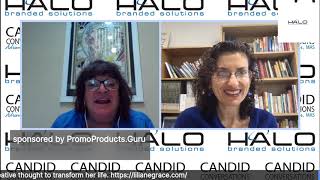
In this 38‑minute YouTube interview, host Adrienne Barker (MAS) talks with author, speaker, and writing coach Liliane Grace about her life, writing career, and the suite of books and programs she has created. Liliane explains how she legally changed her surname to "Grace" at 21 as a symbolic act of marrying herself, and recounts her early love of storytelling influenced by Enid Blyton and Mills & Boon. She describes the origins of her flagship novel, The Mastery Club, which grew from her mother’s Holocaust‑survivor background, a family library of esoteric texts, and a desire to give children tools for personal mastery. The book presents a ten‑lesson curriculum covering goal‑setting, visualization, vision boards, resilience, the law of polarity, resonance and vibration, identity transformation, application, and the balance of nurturing and releasing goals, with a strong anti‑bullying focus. Liliane shares how the book has inspired real‑world mastermind groups for kids worldwide, a 10‑week program taught in several countries, and an online club for adults. She discusses her other titles—The Hidden Order, Power of the Light, a teen finance novel, and several biographical/ inspirational books—each extending themes of self‑leadership and responsibility. The conversation touches on the practicalities of publishing: distribution via a printer/distributor, library acquisition, bundling options on her website versus Amazon, and her ongoing website redesign. Liliane also mentions a TV‑series deal for The Mastery Club, her work as a creative writing teacher and editor, and personal updates about moving within Australia and the impact of recent bushfires. Throughout, Adrienne connects the material to her own experiences as a parent and educator, emphasizing the potential of these resources for schools, academies, and youth organizations.
Chapters
Hi everyone, I'm very excited today. Look at the smile, you have the prettiest smile, it's so captivating, it's the first thing everyone just take a second, it's just really lovely to see. So Lillian, saying your name right?
It's really pretty name, it's actually, it's spelling French, yeah, so it's the pronunciation with the E on the end is Lillian, you know, It's French, but, but mom called me Lillian and dad called me Liliane, so both are good.
I'm gonna call you Liliane. I'm gonna call you Liliane Grace. Is Grace your last name?
Yes.
Yes. Oh, it's such a pretty name. Wow. Okay, I'm all ears.
You want the story? Okay. All right, here's the story. The story is that I was one of these girls who wanted to be married. And when I was— by the time I was 21, I'd have been engaged and unengaged and disengaged twice. So I was so heartbroken by these broken relationships that I decided I was trying to be Mrs. Somebody. And so rather than that, I had to be— marry me, be me, you know. And so I decided to marry myself, and I chose my own surname and changed my surname by deed poll. And that's what Grace is. It's my own chosen surname from the age of 21.
I love that story. Oh my gosh, yeah, it's such a pretty name. I'm like, wait, that— okay, that's a great story. And you know what? I would marry myself if I had a smile like you too.
Do you know the really funny thing about that story, which I'm only just realizing, is some 10 or 15 years ago or something, I wrote a song called Looking for Me. and it's just finally coming to fruition, you know, composers working with me and all that sort of thing. And I remembered the story and I thought, oh, that song is actually an expression of this story, you know, because it's all about instead of looking for someone to be your other half, it's about connecting with yourself, loving yourself, marrying, committing to yourself, you know. And then out of that, you're a whole connecting with another whole rather than a half looking for another half, you know.
So I love that. Yeah, I always thought that, I always thought that narcissistic people would want to marry themselves. Now I see that, that what you made a whole new meaning of it. I think that's brilliant. That is really brilliant. So you're very brilliant. I, I'm— your website is chock full of so much. We have to actually break you into pieces because There's so much. And then, and then I love the way with all of your books that you've written that you're also— that you also put it to like work as a speaker for, um, for professional development. So when did you want to be a writer?
Since I was a child. So I've probably filled my first exercise book with stories when I was about 7 years old, you know. So I've been writing since I was very young. And entering, I think I placed in my first literary competition when I was about 14. So it's been a long time thing for me. Yeah.
Wait a second. So the stories that you were writing when you were younger, were they real stories of your life or were they made-up stories that you came up with?
Oh, made-up stories. You know, when I was a young child, they were influenced by Enid Blyton. And then as a teenager, they were influenced by Mills Boon. You know, so they were all, they were made-up stories. Stories, definitely.
Yeah, I love that. I used to read the Nancy Drew stories and Bobby the Bobby. What was the Bobby one? There was a Bobby, I can't think of her name. Oh my gosh. And so The Mastery, tell me about the book.
Yes, you want to hear about that one?
I really do because I have a 14-year-old, Alana, and, uh, she's just getting into reading. It's that, you know, so if you have a child that's not loving reading, then this sounds like an exciting book. But I love the fact that you've got the bullying and you're hitting like the issues that take place. So yes, I would like to hear more about it.
Okay, all right. So let me give you some background context on me and why I wrote the book first, all right? So my mother— I come from a Jewish family. Mum went through the Holocaust in Poland, and so when she came here to Australia She, she had all these questions about how could such a thing happen, how could such an attack— how could people treat each other like that? And she began to study and, and look for answers, and she felt the rabbis were not giving her the answers she wanted. And so her search took her into Eastern philosophy, and she ended up accruing— you know, see this library behind me? So she had this vast library of books, and there were books about like everything from UFOs to the power of your subconscious mind to Life and Teachings of the Masters of the Far East, to, you know, just all this stuff. So as a teenager, I started dipping into her library and reading the books, and I became fascinated by ideas of the power of the mind and personal mastery. And because I'd grown up with these stories of the war and the really shocking thought that at any moment one group could turn on another group and persecute them, you know, and I guess that gave me a feeling of lack of safety. And so I was looking for how to be safe. And so at an unconscious level, I think, you know, and so this idea of mastery really resonated with me. And then I had children and, you know, you want to give your children the best ideas you have, don't you? You want, you want to, you know, really empower them for life. And so all the three things came together with one, the love of writing and especially fiction, because I do love imaginary stories and the love of these principles and these ideas I'd been studying and the fact that I wanted to introduce these ideas to my children and other children around the world. And so I wrote this first novel, The Mastery Club, and it, it came to me as an idea about a girl who's fascinated with stories of magic like Harry Potter. And she meets another girl whose parents have been engaged in study of the power of the mind. And so this other girl who's been engaged in this power of the mind stuff is called Nina and has green hair, you know, she wants to set up a mastermind group, you know, a mastery club for young people who will sort of support and challenge each other in using their minds productively and creating, achieving their goals and their dreams. And so Natalie, who's been in la-la land with make-believe wands and all the rest of it, it's just her mind is opened by this possibility that people can do magic for real. And so together they start to form this club and in the process, that, um, 10 lessons about how to deliberately create one's reality, you could say. So there you go. That's the background of what it's about.
Has anyone taken this into real life to create a mastermind for for our teenagers?
Well, there are definitely kids, you know, from around the world. When the book first came out, you know, I'd have people emailing me and saying they're starting a mastermind group in New York or, you know, here or there, whatever, which was very exciting. And then I developed a 10-week program based on the book, and that's been taught here and in 5 other countries. And I'm at the moment, I'm actually teaching a Mastery Club group online to a couple of women. So it applies to women, to kids, to families. I've worked with families.
Yeah, I love this. I love this. First, I want to tell you thank you. I am Jewish, and so, uh, the story of your mom is— it means a lot. And I was involved with, um, in South Florida we have I know I'm not going to say it right, but we have the Holocaust Remembrance Center, and they created an event that was amazing. What they thought was to team up high school students, you know, 10 to a table with one survivor or a child of a survivor so that they could hear the story, all to really stop the hate, just like what you were saying. So I know you teach the bullying And there really is a correlation between what you were saying, like what happened in the Holocaust and how people could turn on each other and the hate. And these— I mean, I witnessed it. So I was a— I helped. So I was kind of like the— oh, I can't even think of the word— to help the survivor make sure that they had everything that they need. And then the students could understand because sometimes the accent's pretty thick and it's hard to understand. So just helping to make sure everyone was comfortable at the table. And I could really see the change when they really understood and learned what was taking place and how they felt when they were younger too. So that is brilliant. And so what are some of the topics, like the tips that the kids would receive reading the Mastery Club? One is the anti-bullying.
Yeah, but I'll tell you those 10 lessons, all right? Because that will put it into context. So the very first lesson in the book is a foundational idea around that thought is creative, that we are Creating our lives with the way we think, alright? So that's the first one. The second one is where the kids are— Nina invites them to choose a goal they want to achieve. So it's this idea of planting a seed of what do you want to grow in your life. In the third session, in the third lesson, she teaches them visualization. So they learn to relax and visualize this thing they're wanting to create. The fourth lesson, they do something that is often known as a vision board. or I call it in the book a treasure map, where they get pictures and things of all the things they want to create in their lives and they create this map. So those are the first 4 sessions or lessons in the book and they're all quite practical. But then it goes into the powerhouse ideas. So the 5th lesson in the book is called First Force, Second Force, Third Force, which means if you have a goal or an intention and then we typically experience some resistance, a reaction, and then we have our response. So what's our response to that going to be? Are we going to get up or fall, you know, give up sort of thing? So that's that, that next one. So that's about resilience. And then there's something called the law of polarity. So that's your yin-yang symbol, you know, where we've got light and dark, male and female, life and death. You know that all of life is is a set of polarities, and we're always somewhere on this continuum between the two extremes of something, and that the point is to be in balance, in the center, as much as possible. And so that's a lesson that has an interesting ramification in relation to bullying, because with bullying you've typically got someone who's very puffed up and full of themselves, who is energetically attracted to someone who's very kind of self-demeaning, you know, or has lacking in confidence, you know. And they're drawn together energetically, chemically, you could say, in order to balance out the charge. So one is like a positive charge of how good am I, and one is the negative charge of how little, how, you know, inadequate am I, or whatever it is. And so they're drawn together to learn from each other, and often all they do is they clash and there are sparks and it doesn't work, and there's there's a crushing experience, but essentially the purpose is for the bully, for the one who's too full of himself, to come down a little bit, to experience a little self-doubt about their behavior. And for the one who is lacking in confidence to get a spark of kind of anger, even frustration, like, "Don't you treat me like this, I'm worth something," and to come up a bit. In self-worth, you know, so there's— so that there's a balancing. So then there's a lesson called the Law of Resonance and Vibration, and the principle there is that everything in the universe is in a state of vibration. Absolutely everything. We are— and our emotions are energy in vibration, energy moving through our bodies in vibration. You know, when you're frightened, you're vibrating. When you're angry, you're vibrating. When you're happy, you're vibrating. You know, like, they're just different frequencies of vibration. And so our goals also in a way have a frequency. And so if we are vibrating at, oh, I'm not very good at anything, you know, like that kind of vibration, and the goal is to be a champion something which is vibrating up here, we're out of sync with it. We're not in resonance with that vibration. So we have to be in resonance with the thing that we want to manifest it. We have to be at that same level of vibration, you might say. So it's about changing where we're vibrating, you know. Okay, so then there are another couple of lessons that are things like you have to become a new person. So the person who sets the goal and the person who achieves the goal are going to be different people because you grow into the goal, you know. And also the idea that they're not just ideas, you've got to apply them. We can't just read them and leave them in the book. We've got to apply the ideas in our lives to get the result. And then the last lesson is that, um, You've got to sort of hold the goal, but then also— and nourish it, but also let it go. You can't— it's not like, you know, like you can't plant a seed and then keep digging it up to see how the roots are going, you know, because it will never establish. So there's a bit of a kind of a care for it and let it go, trust, you know, kind of a process. So those are the 10 lessons and how the bullying kind of concept relates.
I want to go back and be a kid again. This is so interesting because right now, so I'm 58 years old, and it's really the first time in my life, maybe about 2 years ago, hearing about this positivity and mindset and dream boards and how you can, you know, your vision. And I often will say something like kind of negative, like, oh, I don't know, blah, blah, blah. And then I'll have someone say, you gotta stop talking and thinking like that, Adrian. You're, you're setting your own path. And I'm 58. So if I started, let's say 3 years ago, 55, but you're saying that I could teach this all in a lovely book style for my 12-year-old, that is really a beautiful gift that you wrote and that you're doing. And I don't know anyone else that's actually targeting to an audience that really needs it more than anything. Yeah, I mean, our teenagers. So what's the youngest you would say for your— the mastery?
Well, I would say, um, 9-year-olds are probably really good. I've had parents read it to 4-year-olds, seriously. But wow, yeah, but, but I'd say 9 is probably a good, a good age.
Yeah, I, I have a crazy question. What— at what point do you get a book into a library? Like, what does that look like? Because I would think that as much as you want to sell books, and I get that, how does it work in like a library? Is someone donating your books to a library, or do they have the opportunity to order the books?
Yeah, absolutely. You know, you can either ask the, um, the library to order the book in, um, which is either a question of contacting me directly or contacting, um, usually it would be a distributor, but it could— but at the moment it would be the, the printer who produces my book because they are effectively the distributor. Or you would buy it and donate it to the library, I guess. So yeah, that would be a lovely thing to do.
And then when the kids are reading the book, can they tell that— is there like a few ois in there with Australia? Or is it like—
there are some Australianisms in it, but I don't have an oi. I don't think there's an oi.
How about a mate?
Mate. Is there a mate? I'm not sure there's a mate actually, because it wasn't, um, this particular one was not, was not that Australianized, you know. I've got written other books where I think there's a mate, but not this one. Yeah.
So, and then, okay, so now, so thank you. I, I feel like I understand this book more and I definitely want to get it. And I think, so is anyone doing, um, masteries here? Like, when a school gets this book, are they understanding that it's not just a book for kids to read, to really have conversations around it?
Well, there was a woman who was running programs in schools in America, but I don't think there is anyone at the moment. So if anyone's listening and watching this interview and is interested, contact me, you know, or Adrienne, if you are. You—
I've got to say, I need more time. I really do think it makes sense though. Yeah, yeah, because it's not just a book to read, it's a book to really build, you know, it should be a part of the curriculum.
Absolutely, absolutely. And, and, you know, there are schools where I've taught it, and there was one particular teacher who said, I want to make this a Mastery Club school where every student goes through the program. Now, unfortunately, she then swapped schools and her role changed and all the rest of it, and it didn't end up happening. But that was like, she just nailed the idea, the vision, because, you know, when I wrote it, the idea actually had was mastery clubs in any— in every neighborhood, the way that we have football clubs and tennis clubs and whatever else. Because, you know, we all have got goals and dreams that are important to us, and to come together in a group and support and challenge each other with achieving that goal, don't you think that would be fantastic?
I think it would be here in Volusia County. I live on the east coast of Florida, Daytona Beach. A lot of the schools have what's called academies, so Academy of Finance, Academy of Video Games. They could easily have Academy of Master. This is really, it's really a foundation for your future. I absolutely love it. I love hearing, you know, I can read, but sometimes I need to absorb by actually hearing. And that's why when I think I'm very into differentiated teaching. So, you know, I know myself, I was— oh, I know what I was watching. I was watching Edward Snowden. I was watching the movie Snowden. I learned more from like a kind of a fake, semi-fake documentary than reading. It's just how I learn better. So, so yes, I think that this is a great idea, and hopefully someone listening will actually take it and, and offer it to— or just, you know what, like the Girl Scouts or you know, it's just smaller groups. It's for boys too, right? So the Boy Scouts could do it as a, as an example. So I think any of that would be a great, great way. You get them to read and then to learn and then to imagine and then for vision. And it's all positive. Yeah, there's not one thing negative about anything. This is all about getting your mindset. All right, so now, so now tell me, so you've written a few other books too, and then how do you also now you're you're teaching leadership development. So can you weave that into what you do?
Well, so the Mastery Club is the, the core of this leadership development, and I've written a sequel to the Mastery Club called The Hidden Order. And The Hidden Order takes all the ideas further, goes deeper into the goal-setting process, into some of the challenges with it. And it also looks at things like— so we look at the world around us, and especially today and this year with the madness that we've experienced. And we say it looks like the world is just chaotic and broken, you know, and unfair and all those things. But there is a hidden order at work when you know what to look for. And so the hidden order shows the reader some of the other laws that are at work and how to recognize this hidden order. And in that book, there is an indigenous character, there is a puberty rite of passage, there is a character who has cancer. You know, they talk about war. So there's all this sort of stuff about that's deeper, deeper ideas. I've also just written— I'll show you some covers actually. So this is The Mastery Club.
Oh good, thank you.
Visualizing the stuff that they want to create. But the original cover had this green-haired girl on it. And this is The Hidden Order. I've got a new cover coming out for The Hidden Order, but the original cover was just—
whoops.
I'm doing that the wrong way. It was just this, where am I going, this way, green-haired girl on the COVID of The Masterclass. But since then, my latest book is Power of the Light. And this one is about a boy whose father has cancer and what they do about it. Cancer is a true pandemic as compared to this COVID virus, which they're establishing is really just a flu. But Power of the Light is about this boy whose father has cancer and how it affects the family. And he goes into a sort of a dream world where there is a regime trying to crush people and sort of government control and things like that, which is all kind of spookily reminiscent of what's happening today. And of course the wartime things that you and I know about. And so this book, there were some lessons taught in that book. About how to respond to things like that, and it's all about emotional responsibility. So there's leadership in that as well. And then this one is a novel that I wrote for teenagers about money and finance, and this is a collaboration with a woman who created a business called Money Mastery for Teens, and she wanted to convey to teenagers that there are 4 money personalities, so 4 ways of responding to money. And so we came up with the idea of a story about 4 teenagers who are offered a school trip to India and how they respond to the opportunity. So, you know, one of them is very entrepreneurial and another one is very good at saving and another one just assumes her parents will pay for her and send her on, you know. So that's the kind of, and so the first third of the book, they're raising the money for their trip and then this middle third, they're in India and the last third, they come home and each of the families is dealing with financial issues so that we could kind of teach some principles about money and finance and all the rest of it. So that's that book. And then I've got these, these are for the younger kids. Whoops, I keep forgetting where the camera is. So this is a book for, about a man called Don Tolman. This is a real man who is a health educator and he's very inspiring. And this is a man called Dr. John Demartini who is a behavioral educator. Also very inspiring and who's influenced me and my thinking a lot, The Boy Who Barfed, and this one, The Boy Who Found His Pulse. So you can see that all of these books are about leadership at one level or another. You know, they're all about really self-leadership. It's about responsibility. And so then I develop programs and I give talks and teach and all this, you know, around bringing these ideas out of the books Books into our lives.
Wow. Wait, so how long has it taken you to— how long did the Mastery Club take to write the books?
Well, it depends if you want gestation from the initial idea to the, the end, or just the writing, because the whole thing, like, I like from the whole thing where you're thinking, you know, I've noticed.
Yeah, yeah.
Yeah, you know what, I reckon that there's kind of almost like it's an 8-year process. You know, I'll have an idea and it would be cooking around at the back of my mind and, you know, for long, and I'd start a file where I'm gathering ideas and then suddenly it's like, now, write it. And boom, you know, 8 months or something and it's written. So that's the, that's been the process with a few of the books, you know, where there's been a bit of a gestation period and then And there, here's another one. This is my book for women, Adrienne. You might like this one. All right, Wanted Greener Grass. Whoops, which way is this blooming camera? So yeah, so this one is about a couple who, uh, whose marriage is, you know, just flat. It's just not fun anymore. And, um, at the beginning of the book, the husband goes to England for his father's funeral. Well, he goes hopefully to see his father before he dies, but he just gets there in time for the funeral. And while he's gone, his wife thinks, "I'm going to— when he comes back, I'm going to suggest, like, let's call it quits. It's not really working anymore." But while the husband's in England, he's been very affected by his father's death and what he's learned about his father. And he writes her and says, "I'm coming back different." I'm going to be different, you know. And so she's like, okay, wait and see, you know. And he comes back and he is different. He's much more present in the relationship and more romantic, and he throws off his very staid side of his personality, you know. And he returns, he resigns as an accountant and he starts mowing lawns, you know, like real behavior change. And so things are different and she's really happy and they're going along, but something isn't right, you know. And so In the process of kind of trying to understand what's not right, she learns some things that are very, very shocking. Now I'm not going to tell you anymore because it's really, you've got to, you've got to get the journey of the book. But one of the things in this book was what I wanted to convey was the idea of the hero's journey, that each of us is on a hero's journey in our own life where we reach a point in our life where we are what's called called to adventure. Because we are living too small and we need some growth. And so we're presented with, you know, whether it's something out in the world for us to tackle, some challenge, or something inside of ourselves that we need to tackle and overcome or grow through or whatever it is. And so we go on a hero's journey, and along the way we experience all sorts of obstacles that we have to deal with, or, you know, enemies. And, and, and ultimately we want to achieve the nectar, the the treasure, the whatever it is, you know, at the end. And so that's an idea that is woven through that book, is this hero's journey and the process we go through in self-realization, you know, in becoming—
I love this. My brother Stephen used to say, because I moved, I think I went through the same thing. And at 44, I had a baby, my third, my fourth child, a three— I have three older boys. At 44, I had Alana, and I wanted to move from Connecticut to Celebration, Florida. Part of the town that Disney built. And my brother— and then I moved again, and I moved a few other times, and my brother said, well, you think the grass is greener on the other side. And I'm like, no, I mean, I don't know if the grass is greener. I just want to go check it out and see. Like, it wasn't because I felt that there was something better, but it was more like, what else is there? Is there another color grass that maybe I don't know of? So I love that wanted greener grass. That's really great because that's That I can actually— what is that called with the word where I want to say where I could— I want to say resonate, but I know that's not the right word. I can resemble that, I'll say.
Yeah, you— so you relate to that idea. And, you know, really and truly, like, my core message is there is no such thing as greener grass, you know, because you get over—
that's awesome.
Yeah, it's different. Exactly, you nailed it. It's as you said, you get over there and it's different, and there are pros and cons to that, that new world, you know.
Exactly. I love this. I love what you do. You do this full-time, so you are really busy with your writing and then you're selling. You do your— do you do your own website too? Is that, um, is that— do you have someone else for you?
I've had, um, oh, I've got to tell you, another part of my story. I've had other people do the website and I'm in the process of upgrading it and changing it and all the rest of it and moving it to a platform where I can maintain it more myself because it's been in one of those languages that it's hard to understand the code and all the rest of it. It's coming into something I can manage. I do other things as well in that I teach creative writing, which I love doing. I teach short story writing or novel writing or just creative writing. I teach business writing at times And I also work as an editor, so I help other people develop their own books. So all of my work is, yes, it's around, it's around story. It's around whether it's imaginary story, my own story and marketing my own story and, you know, all that sort of stuff, or it's around assisting other people develop their story, or it's around personal development and our actual real life story, you know. So it's all kind of just one of those aspects, you know. That's, that's the core of what I do.
Yeah, I love it. I'm so glad that you connected. I'm so glad that we connected. I want to ask you about Australia. I, I, I want to let you know that all of our hearts were really very heavy with what was going on with Australia and your fires. And, uh, it was happening at— with so many things going on, I don't know we were ever able to really— I mean, it was just so heartbreaking. And I know that we— I was grateful that we could bring our firefighters over there. Was it close to where you are? And what is everything like right now?
Not close to where I am at all. We were— we are actually in a kind of rural, semi-rural area here, but we were quite, quite safe from those particular fires. But I know that was really disturbing. But my niece's father lost his home, you know. So close in that sense, you know, in, in that. And we're actually about to move from where we are into another area, so into another state in fact. So it will be interesting to see what happens this summer. But yeah, hopefully, you know, that, that was very difficult. And you mean you've had the same in California?
No, we don't. So sad. When was it in Australia? Awful. When was Australia's fires?
We had last year.
Was it last summer or was it—
Yeah, well, it was actually before the summer. It was in spring, I think, that it was happening last year. It was sort of already happening now a year ago. And it was just that horrendous where, for example, in Sydney, in New South Wales, their air was thick. With ash. It was just like, you know, everything was just orange and ash and just horrible. I just so felt for them. It was so, so difficult to live through something like that, isn't it? You have frozen for me, so I'm not sure if I have— Say that again. You just froze there for a moment.
Oh, sorry. Was it, was it during COVID-19 or was it before?
Before. It was before. So for, for those people who'd been through the fire, it was really, you know, you're just, you've just, you've been, you're down, you've been knocked down, and before you can get up again, you kind of knock down again with this next crazy journey. So yeah, it's been an intense couple of years.
And that is why we need books like yours because our kids experience the same kind of anxiety and they have the same kind of wants and dreams and wishes and it's so difficult for them. And my daughter's dating now, a lovely boy, but it's all— it's, it is so hard. So I'm so glad that you wrote a book that really can be shared and I definitely will communicate this and share this, uh, our conversation because getting to know you, I mean, I could read your website and I could see everything But like really getting a breakdown from you was really worth it. So thank you so much. The other thing I want to say is it is really smart to be able to at least manage your own website. I do all of my own sites, but I'm glad because I could— something could come to me and I can make a change or whatever. And your site is great. And I just want to say, I love that you're doing bundling because your books are so great and I could see where someone would want to have actually a group of all of them. So is it better to buy your books on your website where you could bundle, or is there a bundling offer on like Amazon?
Well, you know what, if someone does buy from me, I often throw in extras, freebies, you know, things like that. So, so there is an advantage, but there is certainly— I mean, if people are ordering from America, it's— it— the freight from Australia is a bit um, you know, is significant. So therefore, if they order directly from stores and whatever, that the, the books can be printed in America. Um, although then again, so if people can order directly from me, they could email me and say, well, I want these books, and I can have them ordered through the American facilities, so printed in America for them. But it, but it just means then they're shipping from America rather than from here, so I'm not able to slip in the extra books unless there's— they're prepared to pay the extra, you know, freight. So that, that's the situation that I have to say something else before we finish, and that is, you know, you've complimented me on my smile, but I just wanted to say what a beautiful personality you have. You have such a gorgeous smile and such a gorgeous energy, so it's easy to smile on your show because it's in response to you, you know, because you just have this, this luscious, warm, engaging personality. And, and, you know, you're the sort of person I'd love to have marketing my book. So I'm saying that you're good at marketing. I'm thinking, oh, what a, what a beautiful lady who, you know, you're just so enthusiastic.
Thank you so much. They— I actually just, I just opened up a website called Podcast Promos because, you know, podcasters, authors, you know, that's what you need sometimes. A lot of people I'm working right now on some characters that come alive. People stuff the animals. All that is great. That's what I do for a living. I do logo merchandise. So anything with a logo on it, one of my favorite items. I love this piece right here. And it goes on your phone and then you could hold your phone, a little grip, but it's really about you. So thank you so much for your time today. And everyone go on the website at the— one more, I'm sorry, the green hair girl, because I saw her on your website. Can you— so what made you think of green hair for her? Was short and she's adorable.
Do you know, it, it's just one of those things, you know. I'm a firm believer that our ideas are channeled through us, you know. It just— it's how it came. She, she was just— I was writing it and she just showed up with green hair, you know. It's just how it is.
And I love—
it was symbolic for me because she represented independent. And also because for me, you know, the earth, looking after the earth, the green hair is symbolic of nature and healing and health and being holistic. And, you know, I just liked all the associations of it, so hence the green hair and a bit different. Martian alien.
I love it. I love the creativity. I will tell you, to me, you know, if there's a room of 20 people, I'm going to pick the person that has the the colors and the tattoos. And I, you know, I don't have a tattoo, but I'm always so impressed by it. And just, you're right, independent. And it's funny, so when I went to the Protocol School of Washington to become an international protocol and corporate etiquette educator, the hardest thing was, oh my God, I have to— I can't have like beads in my hair, I can't have— I felt like, I felt like that was the only thing that I— because I love teaching corporate etiquette, but then I'm like, 'You know, can I have stripes and be, be different?' And that was— that's like my hardest part about just trying to, to be cool. Because when I was younger, I had my hair shaved on one side. I love unique personalities, so she really came out to me like strong. I love her. I love— she would be a cute poster too. She's the— wait, what about a movie with your books? What— has anyone approached you?
Yeah, yeah, I've been approached, and I've actually signed a deal for a TV series. So, um, for which one? Mastery Club. Yes!
Oh my God, that's huge!
That's huge.
Oh my God, a movie that— oh, we need this, we need this, we need it, we need it.
Yeah, so, so hold the vision, hold the vision.
Yeah. All right, I got the vision. I will. I know I'll be positive. I'll think about it. I'm really working on that. If I only had that when I was younger. Oh my God, all the things, because I— it isn't so easy to do, you know. You think of— in your mind, when you're older, you start questioning everything. When you're younger, you read it, you could vision it, you could feel it, and you could concentrate on it. They don't have all the other stuff that we have in our head.
Yeah.
So thank you so, so much. I really appreciate— now we went longer, but I can't help it. I'm sorry. I took 40— 38 minutes and 22 seconds. It was worth every second to me. It was just— thank you.
Thank you.
Oh, you're awesome. Thank you so much. All right, I'm going to close out. Everyone get the book. I'm just telling you, I'll make sure that everyone has access to your website and the ordering. And thank you so much. Have a great rest of the day.
Thank you so much.
Australia's always the place I want to be too. One day I'm going to come visit you. Good. All right.










