Teen Talk Host Chantal Szinegh speaks with Adrienne Barker, MAS
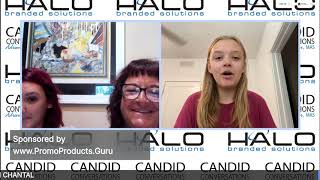
In this YouTube interview recorded on August 21, 2020, Adrienne Barker, MAS, sits down with teen radio host Chantal Szinegh and her 14‑year‑old daughter Alana to explore the unique challenges teens face during the COVID‑19 school shutdown. Chantal explains how her dad encouraged her to start a teen‑run radio show, "Teen Talk," to give peers a relatable platform. The conversation moves through the emotional impact of senior year ending abruptly, typical middle‑school drama, early dating experiences, and the importance of setting boundaries. Adrienne and Chantal then delve into online safety, highlighting real‑world examples of hacked Instagram accounts, phishing, and the dangers of sharing personal content. They discuss how filters on Snapchat and other apps affect self‑image and can border on deceptive presentation. Throughout, the hosts share personal anecdotes, practical advice for parents, and strategies teens can use to protect themselves while navigating relationships and digital life.
Chapters
Okay, I, I can't even wipe the smile off my face. I'm so excited to have Chantel with us. Teen Talk with Chantel. Chantel, this is so exciting for me because look what I have. I have right here my own teen, my own 14-year-old who promised that she won't be shy so we can have this conversation. So tell us first, tell us about— first pronounce your last name and then tell us about yourself and what prompted you to do Teen Talk, and then we could start.
Okay, so my last name, it's, uh, it's confusing. It's Hungarian, so it's pronounced sin egg, like a sinful egg.
I love it.
Yeah, so everybody gets confused all the time at school. They're like, Chantel, how do you say that? Yeah, I know, it's complicated.
So what started— what prompted you to do Teen Talk?
Um, well, my dad actually did. I, um, I was— I've been studying TV production for, um, all 4 years of high school, so I just graduated. That's what I'm going to be studying in college. And, um, my dad was like, you know, since COVID you haven't really done any video stuff and you haven't posted anything. Like, I want to see what you can do if you you don't tell me what you can do, then what's the point of sending you to college if you're not gonna do anything TV production related? So I made a video and posted it on Facebook and I talked about going into college and I talked about what I was gonna be studying and how it was gonna help me with my future. And so then I saw, I posted that video and my dad did a radio show with Heroes Hope Network and the guy that he did that with was like, we need to get her on the air, we need to like, get her on here so she can talk about her, what she wants to do. And so I went on once with them. And I talked with them for like 30 minutes on my own. I did one on my own. And then I also did a full hour on Heroes Hope Network. And I ran the first hour and got to run the soundboard and got to experience that. And then after I did that, and I did my first solo one with a friend of mine, my dad was like, hey, why don't we do your own radio show? And I was like, oh, okay, like, I didn't even think about that. And I was like, yeah, that would be so cool. So he helped me come up with the name and the logo and what it was all going to be about. And I kind of wanted it to just be like relatable in a way, like teens can relate to it because I've gone through some of the same things, like basic stuff. Then I've also gone through some different things that not everybody has gone through, but maybe they can relate to in some sort of way. So I just wanted to make it kind of like a show that teens can like listen to and relate because there's not a lot of radio shows out there that's teen-run for teens. I mean, people talk— adults will talk about teen topics, but there's no teens that talk about teen stuff. So I thought it would be really good to help them.
And the timing is so perfect because teens right now are having some of the most difficult, incomprehensible way of living right now, which is unbelievable. So can we dive right in?
Yeah, let's do it.
And so this is Alana, my daughter, who's 14 years old. And all of a sudden, right, March hits Alana and you are told you're not going back to school. You're, you're gonna get— you have to work online. And first there's like 2-week vacation, I think it went into 3 weeks, and then the school was able to get everything together. And as— so what, like, what was going on in your mind, Chantel? And I want to hear what was going on in Alana's mind. When all of a sudden you find out that you're gonna be locked away at home? Giving a new meaning to locked in your room.
Yeah, they kind of told us that it would happen. Like, one of my teachers kind of went over it with us and was like, you know, this is a possibility. You know, if anything, they're gonna extend it just an extra week and then we'll come back. But, you know, if the chances we don't come back, they, you know, we're gonna have our classes online. You guys know how to access them. If you had any online classes, like, you guys will be okay. And so they kind of walked us through it a little bit of what it would be like. But going home, you know, like, I didn't know going home from spring— for spring break would be like, that would be my last day on campus seeing my friends and seeing my teachers because I'm a senior, so I won't go back next year to see them. So it was sad because I didn't get the goodbye that I wanted. Like, I didn't get to say, like, hug my teachers and tell them thank you for everything and like get them to sign my yearbook or, you know, get like the traditional things you do on the last day of school. So it was really different. And, you know, when I went home, I didn't expect that to be my last day. And I feel like if I would have known, I would have treated it so much differently. But, you know, there was no way of knowing that it was going to be the last day. You know, I thought they would at least do something for us to like go back and like say bye to everyone, but they didn't. But, um, So when we, you know, they kept saying, oh, we just pushed it back another week, another week. So I was like, okay, yay. Like, you know, I was still looking forward to because we had a date, we were gonna go back. I'm like, okay, we're gonna go back, we're gonna go back. And then they were like, no, we're not going back. And so when they finally said that, it really— that's when it really hit me. And I was like, okay, this is real, we're not going back. And as bad as it sounds, I kind of started crying because for me it's like the end of the world for me because it's all I have to look forward to. So for me, I was like, my world is ending, this is horrible. And my dad's like, your world's not ending, you're okay. Like, this is a very minor thing that's gonna happen in your life, you're gonna be fine. And I was like, but this is like, this is my senior year. And I was like so upset. But you know, it didn't really hit me until they said like, we're not going back. You don't expect it until you like hear it for sure.
Scary. Teen depression is is definitely real. What about you, Alana? Do you want to share your experience with all of a sudden finding out? Alana, an 8th grader, so— or now in high school, starting high school. So you didn't get to end your 8th grade. How was it for you? I'm glad. Oh, you were glad?
Yeah, get away from the drama. Oh yeah, I That is true. You don't have to deal with that at home when you're by yourself, you know.
Alana's bringing up a good point. Can you tell us more about the drama, Alana? We won't say names, but what the drama that, that an 8th grader has is pretty tough. Yeah. So do you want to share anything? Like, just what was it, um, just regarding boys, regarding No, her face when you said starting boys, she's like, no. But a lot of it is— I mean, not for Alana. What happened with Alana, uh, was, you know, you know, you're making friendships and then it's so easy at this age of 13, 14 for someone to say something wrong and, you know, or think they're joking around with a post. Was there anything that you felt was like— can you give us a little bit more? Because you, you were going through a lot, and actually now it's been like a few months, I almost forgot what was going on.
Um, well, it was just drama with friends. It wasn't like a whole lot of drama, but just enough to make you feel like—
yeah, you know, kids are so tough to each other too. It's, it's, you know, we haven't started talking about the, the bullying, but sometimes the bullying is not overt. It's like, you know, quiet, you know, not inviting you to sit at the table or walking by and snickering, things like that. No, no. So just drama of other people's dramas. Yeah, what's, what's happening in their lives. What we say—
I said that's a good point, like get away from that.
Alana, Alana at one point was really boy crazy. It's funny because I think that to me, you know, you shouldn't even start dating until you're at least 18. But I understand— I don't understand 13, 14-year-olds dating. I, I have a— I, I don't just feel like it's too, too young to think that you're in a relationship. Can you talk about that, the dating at 14, 15?
Well, see, I never dated in middle school. I I didn't like— I was— I like, I had little crushes here and there, but I never really like dated in middle school. I started dating my 9th grade year, so I was around like 14. Um, and you know, it was like, I feel like you, when you start off dating young, you don't really know what you want in a relationship. Like, I didn't really know. It was just like, oh, okay, like this is a thing, you know. I'm just gonna like, I'm I'm gonna date this boy, see what happens. Um, I've had my fair share of relationships. Um, they all have gotten better as you get older because you mature and you kind of know like exactly like what you want and what you don't want in a relationship. Um, I think it's— in a way, I kind of think it's good to start off like around like 15, 16, um, because you kind of learn and you know what you want and what you don't want. And if you, you know, you start off at 18, then you're kind of just like, well, I don't know what to do, like I've never experienced anything with guys. Um, so in a way I've learned— I'm now in a state of mind where I kind of know what kind of relationship I want and what I don't want because I've been through different relationships and I know what's— how I should be treated and how I shouldn't be treated. Um, and just meeting different people and knowing the type of person that I want to be around and spend time with.
I—
it didn't bother me dating. In middle school, I thought it was a little weird that like 6th and 7th and 8th graders were dating, and I was just like, that I thought was too young. But high school, I think, is a good age to start dating and start getting to know what you want and what you don't want in a relationship.
So we talk dating, are we talking like going to the movies? Are we actually talking where there's no parent and you are going out to eat or doing something just the two of you? Is that, would that be the vision of dating for a teenager?
Yes, yeah.
So a parent at the age of 14 has to allow my daughter to go to a place and I'm not there. That's a scary thought unless I really know the young man or woman, girl or boy.
Well, I always had, um, my parents always met the person, like met the guy. My first relationship, I kind of was really, I was really scared to tell my parents, so I kind of waited a little too long to tell them. And just because I was scared and I didn't know how they were going to react, um, because I've never dated anybody before, so I was scared. In that first relationship, we always We never did anything by ourselves, we always hung out with friends, so it was me and him and then it was a bunch of our friends, so we hung out in, like, groups because we weren't, like, always by ourselves, so we never really did anything by ourselves. After that, I started to do stuff separately with the guy, like, like, go out to the movies or go out to dinner or something, but my parents always, like, met the guy either, like, before, like, when they dropped me off for the date or like after, they always like met him or, you know, so they knew who I was going out with and they knew that like I was safe and not gonna— nothing was gonna happen.
It reminds me of Alana had a young, young, young teen boy that came to the door. Remember that? And then you walked out and we live in like a community, like, um, uh, so, you know, you could walk to the pool and there's all kinds of places and a fire pit by the pool and all of that. And they were talking and I thought, oh, he's such a nice young man, the way he came in and said hello. And Ilana, remember you came back and you're like, yeah, no, I think he kissed you, right? I think he tried to kiss you. And I was so mad at myself that I didn't see that because that's, that's another concern right now is we have the concern of the, the, the, I mean, obviously sex, We have the concern of what's happening with teens and how they— it's very scary to trust someone. And you hear the stories of what's taking place where, you know, someone will say, oh, let's go to a party, and next thing you know, you're, you're being drugged with something, and then you're put in a hotel and you're having to— I'd be like, these are the things that like scare a parent when we look at something like this, because it's real. I mean, it's reality. So, so, and how do we make sure that as a teen you understand that this is a big concern for a parent, or at least for me, because I read so many stories, that how do you make sure that you are not going to be put in a position where you're taken advantage of?
Um, I'm always— that's a good question. I, like, in a relationship, I always make my, like, boundaries, if you say, known to the guy. Like, I'm like, this is what I want, this is what I don't want. Like, I don't want to be doing any of this or any of this. I don't drink, I don't smoke. Like, I don't want to do this and I don't want to do that. And it's like, if they don't respect that, then I'm kind of just like, why, why are you here with me then if you don't respect that that's not what I want to do? And my parents know that, like, I don't want to do anything. And my parents know kind of like where I'm at with, like, what I want and what I don't want. And I feel like just talking to them and like, you know, if— talk to your parents and know their concerns with you going out with somebody and what they're comfortable with and what they're not comfortable with. And just talking with them, of course, like, it's good to talk about those subjects with your teenager because then they— because they need to understand that those are real. Like, I know I've had, um, we watch like a lot of crime shows and we see like, you know, like they have their headphones in and this van is following them and then comes, picks them up. And then, you know, my parents always like, they pause it and you're like, you know, this is real. Like, you know, you have to be careful when you're around people and, you know, you have to be aware of your surroundings. So I've definitely had that talk with my parents about like being careful and like, um, making yourself kind of clear of what you want and what you don't want so that you don't get like taken advantage of and just kind of watch your surroundings and be careful who you're around because you never know what could happen or like what somebody could do without knowing.
That is fantastic advice. That— thank you. That is, Chantel, it's amazing advice. I want to talk about this right now, and I want to talk about— and Alana, no names, but Alana does have a friend who is, and maybe this question is more broad, that some, and I don't wanna say female or male or anything like that, but some teens feel the need to always be loved by someone that's a peer. That's, you know, so they got their mom and dad's love and their brothers and sisters and all of that family love, but then they feel this need to be loved by someone that they may not even know. And, and developing relationships with someone on social media and on Instagram and TikTok and Snapchat when, when they— but they really don't know the person. And then what Alana is experiencing is that the whole conversation is always around this person who we don't even know if they're real or not real or fake or, or what's going on. And so, you know, Alana has you have a friend that you really like. I mean, Alana one time had a friend over the house who she was on with a boy almost 24 hours. It didn't bother you though? Yeah, that's cool. It didn't bother. I was like surprised because it was like this— it was Alana, her friend, and then the phone which had a boy on the other end all night long. Like, they fell asleep and then they woke up. Hey, good morning! We went to Wendy's together. The boy was right there at the table eating with us. It was the weirdest thing. Have you heard of that before?
Um, I have, yeah. Like, I've, I've heard of people doing that where they, like, they fall asleep on the phone and they wake up, or they, like, have a conversation throughout the day. Never, like, as extreme as that. I've never heard of that. But I've heard of people, like, having, like, 7-hour, 8-hour, like, FaceTime calls because they fall asleep on the phone together and then they wake up the next morning with the same person on the phone with them.
And so then they start building this relationship, and next thing you know, someone's getting hurt. Because it's really— so I guess, I guess my question kind of is, to be really honest, is, is it really a real— is it a real relationship if you're having a relationship with someone that you've never met, that you don't know, but you maybe you see them online? So maybe you're FaceTiming, but is that really real? 14.
Um, I mean, I don't, I don't consider that real because you're not— I mean, if you're only— if your only communication with them is on through online, I don't feel like it's real because I feel like in a relationship you need that like face-to-face kind of interaction as well. And you need that, like, you need to actually spend physical time with that person because A person can call you and talk to you on the phone and act a certain way on the phone, but because you've never met them in person, you don't really know if they're going to act like that in person or if they're just, you know, playing pretend because, oh, they're on FaceTime, so they know that like, okay, like I can put on this act and make sure that I'm like good on the phone, but then I don't have to see the person because they don't, they don't know who I really am.
Right, that really does make sense. We want to— can we share the story of what happened? So this is interesting. Alana was, uh, was dating a young, young boy who had to move to Orlando. And, uh, to me he seems sweet enough. So he seems sweet enough, but all of a sudden she gets like— what, like maybe 3 months later? They're not talking, they don't talk to each other on, um, on Instagram. And then 3 months later she, she gets hit up again and it's like 'Hey Lana, do you want to, you know, like, something about being friends and, um, and getting back together?' So Alana didn't know, so she's like, 'I don't know, Mom.' She's like, 'Okay, I'll just be nice online.' And then the next day or two days later, she gets a message saying, 'Hey, do you think that if we were to meet up that we could kiss, right? And that, and that maybe we could do some cuddling?' And then Alana's like, 'Huh?' And then it was like— so I have If I could be honest, I have Alana's Instagram on my phone. So I get the alerts too. Now, some days I haven't even really looked at it in probably 4 or 5 weeks because nothing really was going on. But at this point, Alana came to see me and I went on my phone. I'm like, whoa. And so I wrote back a message like, you know, go— he's like, would you go in the bathroom and take a picture of yourself with just your bra? And I wrote back, yeah, that's not going to happen. And I don't take pictures. I'm nobody's model. It's, you know, to kind of talk like Alana. T. Tyler. Remember? But it wasn't. So this is a crazy story. So we wrote, we wrote that back, and, and I said, I also wrote, and don't even think of sending me a picture of yourself, right? And so they said, okay, like, that was the end of the conversation. About 3 days later, Alana gets a message saying, hey, did you see his messages, he's been sending the same similar messages to other girls. And Chantel, it immediately hit me. They sent the message, it immediately hit me, it wasn't him. So I go, Alana, I think your friend was hacked. And Alana's like, no, they couldn't have done it, it was his Instagram page. I'm like, no, he is— he got hacked. You need to send him a message saying that your, your account got hacked. And send it to his cousin in case the hacker is doing it. So sure enough, this poor young boy got hacked, and all of the girls— nobody thought that he was hacked because they all thought it was him. So talk about damaging your reputation at a young age, because all of a sudden one of the girls sends a picture, a video of the predator's wiener And I'm looking, I'm like, oh my God. And I wrote back, you just sent me a picture of the wiener. Because I'm like writing as Alana, because really it was never the boy. So someone thought they were doing this big thing to Alana, saying, oh, your, your boyfriend is doing this. But it was never, it was never him. And by the way, this young man, he just like loves Alana now because she saved him, because she, she spoke up and she said, that's not, that's not him. And so He now has a real soft spot for Alana, so he keeps trying to, uh, to communicate with her more, and Alana's like not interested. But what about, um, so something like that is really scary. So you would have to also, with social media, remember that it could— everything could look the same, but it could be someone hacking. And so all of a sudden, if someone you know does something that seems so inappropriate Do you think that you would realize that it was a hacker? Because these— none of these kids realized that it was— that his account was being hacked.
Um, well, I've had like— I've never had like that happen, but I've had, um, like sometimes random people will tag just random accounts and I'll get tagged, but I never click on anything or like do it because I've had that happen to a friend before. There was like she was tagged in something or a link was sent to her and it was like, hey, I made this for you, or— and it was somebody that she knew. And so she clicked on the thing and it says to view this, put in your username and password. So she puts in her username and password and the thing hacks her account. And then all of a sudden she's like, send— all these messages are getting sent to all the people that she knows and it's like, hey, I made this for you, click on the link. Hey, I did this for you, click on the link. And she's like, that's not me, I didn't send that. So I've gotten a couple of messages like that, like, hey, I made this picture for you, click on the link to see what it is, or hey, your posts made it in like the top 10 of something, click on to see what it is, and I never click on it because I know like, okay, I know this is not them because it's, it's a, it's gonna click, you're gonna click on the link and they're gonna steal your information. So I never click on this stuff or I just send them a message back and I'm like, If I have their number personally, I'm just like, hey, I got a message from you on Instagram. I think your account was hacked. You might want to change your password.
It's amazing to me that, you know, that, like, you understand that because adults— I mean, there's a lot. If you work for a new company, you go in and you have to take training on how to make sure that you find out what is, you know, phishing and spear phishing and all of that. And yet you, you know this at an early age, even before you go jump in the business world.
Yeah, because I've experienced it and I've had— I knew somebody who went through that, and then I, I know, kind of know what to look for. And also, you know, my dad has told me a lot about, um, how like you get a call— like, we've gotten calls, oh, this is the IRS, or this is so-and-so. My dad's like, first of all, they'd never call us, so I don't even believe that for a second. So, you know, there's just— we've gone through similar things. He's gotten like calls, oh, to transfer this money, I need you to transfer the money to me, and then, you know, we'll take it into— we'll give you the money back, or, you know, stuff like that. Like, it's just— so he's gone through some of that stuff, so he kind of gives me like a, you know, know what to look for kind of thing. And he's like, if you ever get anything sketchy, send it to me, or like tell me, and I'll like look at it and see if it's like legit before you like actually like click on it or read it or something. So I'm always like very cautious now when I get messages and stuff because I never know where it's coming from.
Chantel, this is really important information that I, I, you should also have on your show. I wish that when, when you bought a phone for a teenager that it would have a video or something in it that says here's all the things. I mean, my husband, you know, even just the other day he started a new job and part of that onboarding was understanding the security and threats that happen with a phone and a computer. So here we are giving our teens a phone, but you got to make sure that you really address all of that because otherwise you're right, they— I mean, the whole system could go down. And, and parents, you've got to know, I think that's a whole— maybe you could do a video about that, the things to worry— the things to like really keep an eye out for. Like what you said, the picture, even as an adult, I still get The silly things that I see all the day, people saying, oh, my account got hacked in and they got in. And I'm thinking, because you must have clicked something, you got to be careful. And even accepting friends. Now, what about filters? Tell me about your thought on filters, because filters are funny on phone, like Snapchat and Facebook, because sometimes you just— all you—
if you—
I was saying this before to another, something to another person that I was doing an interview with is If every time I'm using a filter and all I see is myself through the filter, I start to— will I start to think of myself as the filter, or will I really see myself as I look in the mirror?
You cut out, I can't hear you.
It's a complicated question. So hello, if I always take pictures of filters, of me in a filter— oh, can you hear me?
I can't hear you.
Oh, okay, hold on for one second, let me hide myself. Can you hear me now?
No, no, no.
Oh, I'm so sorry, the program probably went on us.
So no, no, I can't hear you.
This app sometimes can be a killer. All right, let me, let me just say, let me remove myself. I'll be right back, I'll be right back.
Okay, okay, I can read your lips. Nope, still can't hear you. No, I can't hear you still. No, nothing. What? Touch my mute button? I still can't hear you. I muted myself and then unmuted myself. It's okay. Um, do you want me to just answer the question? I kind of heard what you said a little bit before you cut out. Okay. Um, before I answer that, I wanted to touch on something else about the hacking thing. Um, my dad has gotten— this has happened to him before— he's gotten like a message from an old friend and, or like somebody he hasn't talked to in a while, and they reach out to him and then he's like confused because he hasn't talked to that person in forever. So sometimes he'll go back and message the person and be like, hey, did you email me this? Or like, send me this? And the person's like, no, I didn't send you that. And because he hasn't heard from the person in forever, so the people will try to— the hacker will try to use that person as somebody to get in contact with, like somebody they know, because— but because they haven't talked to that person in forever, they're like, well, this is weird, like, why are they reaching out to me? So sometimes he'll be like, did you send this to me? And the person will be like, no, don't open it, that wasn't from me. And so he knows that it wasn't from that person. But the filter thing, we actually had a conversation about this. Not too long ago with a couple of my friends and my parents because we were talking about filters and when we use them on like Snapchat to send pictures back and forth. I used to use filters like a lot because I was like self-conscious of my acne or like my face or like something like that. And because I was like, oh, like I want to look good for like sending it to, you know, like my friends or like this guy or like the person I'm talking to or something like that. And I would always use it. And then I started to stop using it because, you know, like, people see me— like, my friends see me every single day at school. If I'm gonna send them a Snapchat with a filter, they know that's not what I look like. So it's like, they, they already know and see me in person, and they love me for who I am in person. So like, why should I put on a filter when I send them a Snapchat outside of school? So I, you kind of stopped using it. I still use them for like funny purposes, like I'm gonna send a funny picture, so I like use it to make my face look funny. Um, but I've kind of stopped using it now as like an everyday thing, or like to— like the filter that makes your face look clear or something like that. I've kind of stopped using that because, um, then it's like if I see them in person, they're like, well, that's not what you look like on in this picture. Your face is completely clear. Why 'Why do you look like that?' Like, you know, like, that's not real. It's not real life. And, um, and especially if you're talking to somebody online, um, like, I knew of somebody who was talking to somebody online, and every picture she sent back, she had a filter. And I was like, 'Why would— why don't you send a picture without a filter?' She goes, 'Oh, I never take pictures without filters.' And I'm like, 'Why not?' And she's like, 'Because I just don't like the way my face looks.' And I'm like, 'Well, that's not real. Like, if the person sees you and if he sees you in real life, he's not— he's going to be like, well, that's not what you look like in the picture. Like, it's, it's almost like, um, catfishing in a way, because it's like, it, it's like, or like you're hiding behind something that's not real. And I didn't really think of it that way until now that I'm talking about it. It kind of resembles that in a way, because you put a filter on your face and it takes like the acne away or your freckles or something that you have on your face that's always there and you can't— that's like not gonna get rid of in like a day or two. And so when you then— when you see the person, see them in real life, you're like, that's— you, you didn't have that. You didn't have freckles in your pictures. Why do you have freckles now? Like, what, what is that? Like, you know, they don't know who you really are. And so I've kind of stopped using it to be kind of like— and also in a way, like, oh, if I send a picture back to somebody and they don't like what I look like, then oh well, that's on them, it's not on me. Like, I like the way I look, so I'm just gonna send a picture of my blank face without a filter, and if they don't like the way I look, then oh well, like, you know. No, I can't hear you now. I can't hear— I still can't hear you, I'm so sorry. This sucks. I don't know what the problem is.
Yeah, I know.
Thank you so much for having me on. Thank you so much. I enjoyed coming on. Thank you so much for having me. Bye! Tell Alana I said bye. Thank you, it was nice to meet her. Bye, thank you so much!










