William Holsten Entrepreneur, Corporate Innovator, Author, Speaker, Workshop Leader
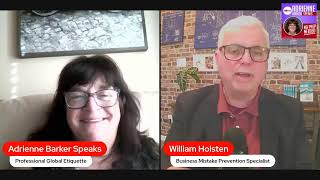
In a live, conversational interview hosted by Adrienne Barker, MAS, former corporate marketer and innovation specialist William Holsten shares his journey from a side‑gig inventor of carnival games to a retired entrepreneur turned business‑mistake‑prevention specialist. He recounts the creation of the drought‑proof dunk‑tank "Pitch Burst," the material failures that forced a redesign, and the eventual sale of five patented games generating $2 million in revenue but also $2.3 million in losses. These experiences inspired his book Uh‑Oh! How to Avoid Unintentional Blunders That Derail Entrepreneurial Success to Goof‑Proof Your Business and an online Mistake Risk Quiz (mistakeriskquiz.com). Holsten explains the quiz’s four key risk factors—stress, fatigue, faulty assumptions, and distractions—derived from a survey of 300 U.S. entrepreneurs, and demonstrates the live quiz, showing how users receive personalized one‑page tip sheets (e.g., distraction, fatigue). He discusses practical mitigation tactics such as sprint‑end shutdowns, premortems, and energy‑mapping, and emphasizes that behavior, not external forces, is the controllable lever for small‑business success. The conversation also covers resources for entrepreneurs, including SCORE mentorship, SBDCs, AI tools like ChatGPT, and the value of external perspectives. Holsten shares famous "uh‑oh" case studies (Steve Harvey, Miss Universe; a sky‑diver’s fatal camera mishap) to illustrate learning from others’ mistakes, coining the term "uh‑oh‑ology". The interview ends with calls to action: visit his website (williamholsten.com), take the quiz, and consider his workshops or SCORE mentorship.
Chapters
All right, we'll see when it goes live. Oh, you know what? Shoot, I need to change the banner. Your name looks good. We're live. We're live. We did it. William has the patience of— well, what?
Patience of me? Yeah, I'm a patient patient.
Amazing. So thank you so much for waiting. So, okay, so with William, we know 3 things because that's literally— I don't know who he is. I know he's brave. He's got a nice head of hair. And he's brilliant. So welcome, William, to Adrienne Barker Speaks. No prep needed. I have no idea who you are, but I love this business mistake prevention specialist. So take it away. Tell everyone who you are.
Well, thanks a lot. I'm glad to be here, Adrienne. Thank you for having me on this post-holiday day. Yeah, let me tell you why I call myself business mistake prevention specialist. I worked for 38 years for a big multinational corporate company in marketing and innovation, and in— I'm now retired. I retired 2 years ago. When I was working with them full-time, my wife and my family and I launched a side gig where we ran things on nights and weekends and vacations. We invented and marketed unique carnival and party games. Uh, and in doing so, I just see you— saw you go away, Adrian. You still there? Well, this is a live thing, so these things happen. Are you still here, Adrian? I don't see you. I can continue the story, but I don't know if you're watching, Adrian. Uh-oh, it's funny I said that. I'll explain it in a little while when we get back on. I'm gonna call you on your cell, Adrienne, because— oh, now you're back. Now I can't hear you.
William, sorry about that. I'm here. Sorry, everyone, sorry. Okay, a little missed thing, but I wanna put the focus on you. You're way more handsome than I am.
Okay, so wait. Yes, as long as I know you're there. I began by saying, while I was working for my corporate life, in the final 10, 15 years of that, We ran a side gig where we invented unique carnival and party games. It began, and in doing so, we made tons of mistakes. And after I retired, I wrote a book about it, which I can show you later. But in that environment, we called our company Whirlwinds LLC, and we invented a game that was an alternative to the dunk tank. We were invited by my sister's family one summer when it was really hot to help her daughter with a Make-A-Wish Foundation carnival. And we went out and rented from a rental company a dunk tank for that day. Well, 2 weeks before the event, the rental company called and said, sorry, we can't rent you that. That requires 500 gallons of water. And as you know, there's a drought and we're not allowed to rent something that requires that much water. Do you want to toss across or something else? We said, no, no thanks, we'll figure something out. So over our kitchen table, we sat down with the back of a napkin and sketched out how do we get— how might we create that experience of getting dunked when you hit a target without all that dunking, without all that water? What we came up with is a game that ultimately was called a game called Pitch Burst, and it's one where we used a Home Depot plywood sheet, a bar going across from it that held a basketball rim. In the basketball rim, we put a filled water balloon and we set up a toggle so that when somebody hit the end of the toggle, the other end went into and popped the water balloon and the water fell down on the person in a chair below it. It was called the drought-proof dunk tank at the time. We had a magnificent day where kids lined up around the block to pay $1 to get 3 throws to get their mom wet, to get somebody wet. It was fantastic. We went home tired and sweaty, but happy that we had done something good for the charity. The next day my phone started to ring. People were asking, "Hey, that was cool. Where can I buy that? Where can I rent a game like that? I'm thinking about having a party too." Well, my business development wheels in my head from my day job went into high gear when we realized, hey, there might be a business here. Let's, let's go and investigate. So we— the next step we did was look more deeply into patent situations. We realized this had never been done before. We hired a lawyer to help us file a provisional patent so we could move forward. When that was issued, we then went to the small bank and got an SBA loan for almost $100,000 to allow us to make 100 of these things.
Wow.
Put them in a warehouse. And then also we used money to begin to create and then put ads in rental business magazines so we can begin to spread the word. That was where my marketing background kicked in. These are the days before you could go post it in social media and get attraction like that. We were doing 4-color magazine ads, uh, to get this, the, uh, the story out. Well, I'll move forward just a little bit. We succeeded. We, uh, had the 100 wooden units made and began selling in the trade show season, the American Rental Association, things like that, over the winter, and sold about 60 of those first 100 units in the first month or two. We were thrilled by this. And then the warm weather came and they began renting them out to their customers and they began being used. And then one day the phone rang and somebody said, you know, the wooden piece broke. And then the next day another phone call, the nice logo panel peeled off. And then there were dozens and dozens of calls within about a month we realized, uh-oh, we had— uh-oh is a big word for me— we had made a very big mistake by the materials we chose to make this. We used the same wood and setup that we used in our carnival, but we didn't take into account, even though we had visited rental companies in our research, we didn't take into account that commercially rented items are used quite heavily and treated quite roughly and they break. So we realized that what we had made 100 of and paid a lot to advertise was not commercially viable because it wouldn't last the season. We did what we needed to. If I sold you something, I'm going to make good. So we sent a lot, a lot of spare parts, make goods, replacements, and where we had to, we also made a lot of refunds. Which put us in a disastrous position since we borrowed the money to make those units and advertise them. We had no money left and we had no way to repay that loan. So that was a very big— I call it an uh-oh moment. The moment is when we realized how bad things were and we were in trouble. The good news is we did look into it, asked the customers who had used the game Did you like the concept and would you be interested if we made a more durable version? And to a person they said, yes, of course. The people loved playing it until it broke. So we borrowed more money from our credit cards and from the bank and hired a designer, an engineer who recreated the game out of steel. A steel frame with aluminum and plastic panels was the ultimate version of this game. This was in 1999. That game, the new one, is still being marketed today. By the way, that's the patent drawing of the original one behind me if you're watching this on video. So I will never forget it. But that set me down the path of there's lots of mistakes happening all the time with entrepreneurs. We in that business later launched 5 different games. And each one had some in-process learning. One was a bicycle pump game that looked like a dynamite detonator to blow up balloons. It was a balloon popping race. And the mistake we made there was we used normal cheap bike pumps in something that was being used for hours in aggressive racing. And the heat inside the pump builds up and the pumps clog because things flaked and broke. That got fixed when we chose better pumps and learned the dynamics that we have to oil those little O-rings more. So those mistakes continued to pile on, actually cost us money on make goods. And we wound up, um, 8 years later, we had 5 games in the market. We wound up selling off the, uh, patents and trademarks to another company, and they're still selling most of those games that we invented. So, uh, and during the time we sold them, we sold about $2 million worth, which is substantial.
Wow.
But when I did the look-back accounting, we had spent $2.3 million doing it. So there was a big loss to swallow. Um, move ahead a little bit. Uh, I was in my marketing job and I switched in my day job company to, uh, an innovation role where I was the creative designer of workshops to help this consumer health company come up with new products and to solve marketing problems.
So what year are we now?
The game was in 1999-2000, and we sold it till about 2010-2012. Uh, from 2010 to till 3 or 4 years ago when I retired, um, I was doing these workshops, and I was using creative problem-solving techniques, design thinking techniques, to lead these professionals in ideation. When I retired, I got to put both of these pieces together. Uh, first talking about these, uh-oh moments, my own and some famous people's, with some of the tools that can be used to help prevent mistake-making with entrepreneurs. It became a project that I became obsessed with and I wrote a book. The book, I'll hold it up. It's called Uh-Oh! How to Avoid Unintentional Blunders That Derail Entrepreneurial Success to Goof Proof Your Business. This is where I first began thinking of myself as a business mistakes prevention specialist. But that wasn't enough. The book came out last, this year in February. And it's, it's doing well. It's on Amazon. You can find it. I'll give you my website later. Um, but in calling myself a business prevention— a business mistake prevention specialist, I was realizing I've really only given you a handful of tools and given you my experience. I was hungry to really help people find out their own risk of making mistakes and then do something about it besides reading a book. I created, and this came out in the fall recently, an online quiz that your audience and any entrepreneur can use to answer 12 simple questions about their behaviors around risk and get a, a reading on what level of, of mistake-making risk do you and your business have. Is it low, is it medium, or is it high? And it, it's out there and people have begun to use it, but I wasn't satisfied with that. I wanted to have quantitative numbers of what the, the universe of entrepreneurs is like. So in October, November, we just got the field work in. We did an online, uh, survey of 300— over 300 entrepreneurs across America and asked them the same questions that are in that quiz. And we found that there are 4 really big factors that if they're true with you, they put you in a medium to high risk.
Ask me, ask me. I want to—
I'll let you take the quiz. I'll give you the link in a few minutes. Those 4 are, and they happen in combination, stress, fatigue, faulty assumptions, and the number one one is distractions. If those that are present in your day-to-day work, you're more likely to make mistakes. So, um, we, we had a lot of other learnings that I'll be putting out the, the report in January, but they include what, what mistakes most entrepreneurs are most afraid of. They include hurting customer harm, operational errors, financial mistakes, marketing missteps, people issues like hiring the wrong people, or more important, procrastination or even burnout. That's true with many people who are entrepreneurs. We spoke to— of the 300 people, more than half were solopreneurs. Another big group were groups of people from company size 1 to 4, and the balance were up to about 10 people. So it's small business focused. So if people— if you're interested, listeners, or you, Adrian, in finding at your own risk, I invite you to go to mistake risk quiz, all 3 words together, mistakeriskquiz.com, and you'll be asked to answer 12 questions. And right away on screen, you'll get your result. And then you'll get an email with no promotion behind it, with an email with 3 or 4 suggestions for what you should do because of your—
Give me that website again.
It's called mistake risk quiz, spelled the regular mistake risk quiz way,.com. So that's what I've been up to. As I'm beginning to write the final report, I'm learning even more things about the frequency and impact of mistakes that entrepreneurs across the country are making. It looks like— and I'm still finalizing the analysis— it looks like it doesn't matter what your age, your gender, your ethnicity. I didn't collect regions, so I can't talk about regionality, that those things don't matter. It's all about personal behaviors with respect to 6 specific categories. I mentioned before that rose to the top. It's an interesting time. I'm looking forward to finishing the analysis and learning. And people can start— you could use that quiz right now.
Oh, yeah, that's what I'm going to do right now. So hold, please. OK, go. Share screen. Can't do it. I got to have everyone watching. There we go. OK, now we're here.
And you're right there.
OK, beautiful. Okay, ready?
Okay, so slide down and it says start the quiz. Take the quiz. There you go. Wow, this is exciting. You do it. This is the first time anybody's done this live with me.
I'm a lot about the first-timers because I take the risk, but I also think ahead. I, I tend to— we just had a 2-day event called SWAT in Order. I tend to SWAT things out. So honestly, I think that I may have been sitting around your table. I probably would have said Wait, this is for commercial use. Okay. 12 quick questions to spot. Okay.
I'm still seeing this.
Oh, I got to my email, which is no worries.
Yeah, I'm still seeing the website screen. I'm not seeing the quiz itself. Right. I'm not seeing your email.
I'm starting it right now. Okay. When I'm under stress, I rush decisions without fully checking details. When I'm under stress, I rush decisions. Ooh, I sometimes could do that. Yeah, sometimes. I hate when I do it. I miss early signs that a customer is unhappy. Uh, very rarely. I could— you could tell. You could tell. I really do believe that. And the slower replies are interesting. Oh, that— so that must be a sign that a customer is unhappy? They start to be slow in their requests?
Yeah, if you're used to getting an order every week and then suddenly they stop, or There's lots of explanations for that. Yeah. So if you missed the customer signals, no, that's your fault. But if you're not getting the frequency of feedback or calls or anything, they could have gone on to somebody else.
Interesting. Okay. When I'm tired, I skip or forget steps that cause rework or small errors. When I'm tired, I skip or forget steps that cause rework. Oh, Definitely not awesome. I, I rarely— I can't say never, and I've been in business for many years, but even currently, when I'm making business decisions under pressure, I rely on assumptions instead of checking in the facts. Yeah, that's never. Yeah, even under pressure, I'm going to want the facts. I don't believe in assumptions. When I have too much to do, I focus on easy or minor, minor tasks instead of the priorities that matter most. So I have too much to do. I focus on easy. Well, you know, David Metzler said, if you love what you do, then learn to love the things you don't love to do. So I've been really trying to just get the hard ones done so I can then have fun on the easy ones. So rarely, because I'm sure I have once in a blue moon. I'm on question 6, everyone. When I'm responsible for a task I don't fully understand, like contracts, taxes, or compliance. That's crazy. Those are exactly what I don't understand. I proceed without first learning or getting expert help. Yeah, often. Yeah, I'm gonna actually say always, because how I would even be able to do the task. And thank you to ChatGPT, that makes everything so much easier when explains to me like I'm a 12-year-old, then I can move forward, right? Okay, 7. When I'm stressed, I put off important conversations or decisions even when delay makes things worse. When I'm stressed, I put off important conversations or decisions even— no, I'm gonna say rarely on that too. Okay, 8. I move ahead assuming customers or colleagues are on the same page, only to find out later they weren't. I've never really had that happen where I thought that they were like I was starting to proceed with an order or request or something that they wanted, but then found out that they didn't. No, no, no. How did you answer that one, William?
I'm a sometimes person.
Okay. I mean, that would mean that I would have had to have a conversation with someone, and let's say even the last 10 years, that, oh, I thought you wanted me to do that for you kind of thing, right?
I found it in corporate life that was part of Just being there because you're working with large teams and you can't always ensure everybody understands and aligns with what you want to do.
Oh, like, okay, so boards, committees, the businesses. Okay, I'm going really early on that. When I'm tired, I delay important tasks or make careless mistakes. Yeah, sometimes I do. I doubt— I don't delay, but sometimes I can make a stupid mistake. Okay, number 10. When I'm multitasking or not fully focused, I miss key details. Yeah, definitely. Okay, I put sometimes in case you were interested. Distractions from email, phone, or social media pull me away from focused work. Okay, I'm gonna say it. Email, phone, or social pull me away. Well, sometimes social media is my work, so I'm not going to get that, but the phone because I try to answer the phone so I don't have to call that person back. So sometimes. Okay. Often. And when I face a business challenge for the first time, I guess or wing it instead of following a process, research, advice, small test. No, I don't wing. I don't wing because I think that's the most important part of a business challenge is how you handle, handle that challenge.
Especially when it's part of your business, right?
Oh yeah. And I grew up in the logo merchandise promotional products business, and mistakes are often— and I noticed that clients were, they were understandable if you admitted you made your mistake and you had solutions on how to fix it. But for those that, you know, like, um, on the other hand, we were distributors, so as the suppliers would like give you all these excuses. So actually, William, about 10 years ago, I had, um, my New Year's Eve resolution was no more excuses. So I refuse to do it. Okay. I'm submitting it to look at our results. Okay.
I'm still seeing that first screen. I'm not seeing what you're seeing.
Oh, glad you told me. There we go. So now I'm medium. So based on my answer, my risk is medium, and that means each answer score rate. Oh, I love this distraction. I have a 6 out of 10 fatigue, 5, 10. Okay, what does this all mean?
You're in the medium range, uh, and among the 6 categories of mistake risk, if you scroll up a little bit, looks like the ones you got 6 on are a little bit higher than the ones you got 5 on. 6 is medium level, 5 is between low and medium. In your email now, you should receive an email right away that says what you might do about those, and it's got a PDF on each of those categories. So let's say distraction was a big one for you. You can click on the distraction PDF and it will give you some tips for reducing your distraction risk. So—
oh, I like this.
There you go.
Oh, then it gives me steps. You have steps right here.
Yeah. Now, wow, it has all the steps because I couldn't find a way to customize it exactly to you. But you read your score and you were 6 out of 10 on distractions, you can click on Distraction One-Pager and it'll give you, here's some tips on how to reduce your distraction. Some of them are just common sense.
Yeah, but sometimes we almost need, like, common sense I get, but sometimes I feel like we need to also, you know, refresh ourselves on common sense too. This is beautiful. And then I'm sharing the tab right now so if people can see it and how beautiful.
So these are grouped. There's the first group, the ones that say moves you can do right away, like you do a sprint, you do some end-of-the-day shutdown before you close down, think about this and think about that. And the other ones, the bottom 3, are things you might do longer term. I like to talk about a premortem. If it's a new product, a new project or something, the premortem is all about the opposite of a postmortem, by the way. Why did something die? You think 'Today, my business 3 years from now died. It was horrible.' And you imagine with you or your team, what are the things that could have killed, what that did kill it? Because it's, you're imagining it's in the past. And you make up a list of a whole bunch of things which went wrong in your imagination. Then you stop and you prioritize them. And you say, 'Well, the top 2 or 3, How might we keep those from happening as we finalize this business before it's launched? So those steps are very adaptable to anybody's situation, but it's a great way of doing it.
This is beautiful. This is beautiful. I absolutely love this. I, I love— wait, let's go to Fatigue, guys. I'm gonna put the tab. If you were live on YouTube too, so people can see this. This is a beautiful, beautiful gift. So here, fatigue, low energy leading to careless errors. I love this. It's got a little example of a story and then the steps that you take, energy mapping. These, this is killer, really good. Oh, you did a great job. You have done something very special here. Wow. A lot of links. I hope people do take the time to do all the links though, but I love it.
And then when you have a few minutes, Yeah, Adrian, all you need, if you do the test and you find out, even if you're in low risk, there are some things you do to stay in low risk. But if you're medium or high, if you're somebody who's making lots of mistakes, they do, they give you all 6 of those tip sheets. You only need to open the one that's relevant to your highest score. Try that this week. And then if you're still hungry for more, go back to the other ones.
Oh, I really like this quiz. I like the— oops, sorry, just— okay, I like this. You did a great job. This is fantastic. Okay, really, really good.
Because I care and, and I do want to be the specialist intending to help people, because I'm a mentor on the side. I'm doing other things. I do love helping small businesses succeed. And I know that a lot of small businesses, when I talk about this topic, they say, I'm not thinking about mistakes. But if you think about— don't worry about the mistakes, think about your behaviors, because it helps ensure your success if you don't have to stop and redo, if you don't buy the wrong thing by mistake. Hopefully these things are small, like a typo, you can fix it. But sometimes they're disastrous. In my book, I write about I talk about some very famous, uh-oh moments where very famous people made big mistakes. There's Steve Harvey when he was emceeing the Miss Universe contest and he announced the wrong winner. And then the next year at the Academy Awards, they announced the wrong Best Picture. But they can be more serious than that. One example in the book is about a skydiver who years ago was asked by another couple, an instructor and another skydiver student, to film them as they jumped out of a plane. So this guy, Ivan McGuire, he had been a skydiver for 20 years, very good at what he does. So they're up in the— he got himself a camera because it was before GoPros and before your cell phone cameras, it was film. So he got a camera, strapped it to himself, they all went up in the plane, and at 10,000 feet they gave each other thumbs up. Ivan jumps out of the plane and points the camera upwards and he gives them the thumbs up and they jump out and get the most beautiful shot on his film camera. Then they both pull their ripcords and their parachutes open. Still a beautiful shot. Then Ivan reaches for his ripcord and it wasn't there. Literally, he fell to his death. It's a horrible, tragic situation. It's in the book though, because there are, there are learnings small businesses can take from anybody else's mistakes. That one, tragic. Nobody should ever have that happen to them. It's even hard to talk about. But you can think for your small business, what one thing, if I ever forgot it, could be dangerous, tragic, or even worse for the business or for me personally? I think of an urban retailer who leaves at night and forgets to lock up and everything gets stolen, or Uh, somebody who's in charge of renewing the insurance every year, he forgot it and there's a disaster and a fire kills the business. Those are the type of things you can never forget. And anybody listening to this can think in their own business, what is that one thing? Well, remember the skydiver. You're glad you're not him. What is it for you? You can make your next day better. I call that— it was Warren Buffett, who said, "It's good to learn from mistakes, but it's better to learn from others' mistakes." In the book, I write about my own mistakes, the whole bunch of them, and about 20 of these famous ones I've been mentioning. And I call the art of learning from others, uh-oh-ology. There are two steps to this. You observe and understand what happened and understand why. Then it's think and apply. How do I draw a lesson from that which is outside of my business that applies to me? The parachutist is the very strong example. Steve Harvey's with Miss Universe, uh, he might have done good by taking a pause, or if he was not sure, uh, to pause the contest and just ask, did I get this right? Much better than announcing it to— there was a billion people watching. He was a man. He made us a man about it, though. He came out within 5 minutes. He says, folks, it was my mistake. Here's what happened. This is the real winner. I'm very sorry. And that gave them 2 years of things to talk about on his talk show, uh, how they overcame that.
The content, yeah, became the content. That's funny.
The, the, the, the phrase I like to remind listeners on podcasts is fixing mistakes is expensive, preventing them is priceless. Now, it's important to realize making mistakes is part of growing up. When you're learning to ride a bike, you're going to fall down over and over, keep trying, then you get better. These types of mistakes I'm talking about, these uh-ohs, are not those because there's no learning related to them. They're just hindrances to your daily success. That's why I love it. That's why I'm— yeah, go ahead.
No, no, finish it up, finish it up.
That's why, that's why I wrote the book, and that's why I care, and that's why I'm a mentor, and that's why I'm happy to share with your audience tips and ways to do this. And I invite them to look at that website. I'll repeat it again if you want, uh, and take the test themselves.
Oh, mistakeriskquiz.com.
Yes, that's it.
It'll be in the show notes too. Um, can you hear that phone in the background?
I don't hear a phone.
Good. All right, so I want to, um, ask you a question. Okay, so as you're talking, I'm thinking, oh, this is so interesting because it's actually like looking at your business and looking at your weaknesses and your threats together and that combination. And I like that because a lot of times when you're SWOTing a business and you're adding the strengths and weaknesses, you kind of can, you know, be all over the place. A strength could be a weakness, all of that. But here you're just focusing on what that weakness is. And as a SCORE mentor for over 8 years, I'm no longer, but I was chairwoman here in our town. First woman, I have to always say that. But anyways, my point is, is that people, I just want to make a little clearer for, for business owners and entrepreneurs that, that you, you very hard to, for you to see your own risk and your own threats, even your own strengths and weaknesses and opportunities. That's why you need someone from the outside that could come in and see it in a different refresh, like a different, different face, right? Different eyes, different ears, so that you're like understanding it and you're going to ask those questions. And a lot of times when people do this, like, let's gather around and do our risk assessment, let's look at our threats, let's look at our weaknesses, they're all like echo chambers just doing the same thing. Nobody's looking outside of it. So I loved your example. I was wondering about the— well, first of all, I have to tell you, when you were talking about the games and all of that and the dunk tank, I love that. My dad, when he started his business years and years ago, he did the game of— oh, no. Where you have the horse racing. Yeah, but it was horse racing using like a cloth and like little figures.
And is that where they roll the dice? You roll the dice and you move ahead a couple spaces and it's a step-by-step race. You're— I don't hear you now. I still don't. No, do you hear me?
Oh shoot.
Oh, now you're back. Whatever it was.
Yeah, I can hear you perfectly.
Okay, okay.
I think, yeah, the plane flying over us. Okay, so what were you saying?
I was trying to guess the game that you said your dad had. I've seen a, a—
what do you think it was?
Where, uh, they, they have 6 hobby horses and they— you draw on the street some lanes that they move forward one step with each roll of the dice. So you roll two dice and horse number one moves three spaces, etc., until they get to the finish line. Is that what you had experience with?
Yeah, yeah. My dad loved those. He had all the games and the bingo games and all the things that you could play, and I love that. And then I worked for Muscular Dystrophy Association for 12 years, and Jerry Lewis's carnivals were huge. So watching kids, you know, so I, I, I love the whole idea. I love that you We actually had a woman who came to us who had the idea of doing, like, backyard games and, you know, and setting everything up and then renting them so that people didn't have to buy it. They would go and set it up. But when she found out what her risks were—
yeah, and there's liability insurance is quite expensive these days. Yes.
Yep. So she said nope. But that was part of it. But that is actually the beauty of working with someone like you. Like, You know, don't say to yourself, oh, this is too risky, or there's too many threats. Talk to William because he could show you how to do it with less than that, first of all. And but I don't think anything we do in life is really a waste of time. So everything that she ended up doing, she put to— she ended up starting a permanent jewelry business, completely the opposite.
And all of that was background because she learned, okay, not that. Yes, this. Yes. To me, I started my business almost by accident because we couldn't rent the dunk tank then. But then I got the passion for it and I got to meet a lot of people who were small business owners of rental companies. And I saw the struggles and I saw what does make them, what thrills them so they can thrill their customers and what pisses them off. By the way, a game that they bought from you that breaks, that pisses them off.
Yeah, so that's so true. For a time, I also sold like prize game wheels and the, the different games, you know, that you go to trade shows and see. So that's great.
You're in the promotion business, of course.
If that— yeah, one thing goes wrong, one ball gets stuck, that there— yeah, you have to know how to like work the crowd and make sure everyone's happy while you're shivering.
Yeah, you were discussing when the team gets together and they want to go through their strengths, weaknesses, opportunities, threats, the quiz is really focused on the behaviors of the owner or the the person or the people. And if you look at strength, weakness, opportunities, threats, their behaviors can be part of any of those, whether it's procrastination or not sleeping at night and making mistakes, or the opposite, that they are superstars and they can do anything. But it's about the behaviors because that's— you don't control what your competitors do. You don't control when the government says there'll be tariffs. You don't control lots of things. You do control your behavior. That's why we're focusing on the behaviors which can help you succeed more. If you realize adapting a few behaviors, and the quiz can help you find them, can help you. And you can't do it all at once. Uh, you, you're— the email you got says try one of these this week. It does need to be taken. Try it out, and if it works, cool, do more of it. If it doesn't, go down the list and try the next one.
I like that, William. So, okay, so back to, back to like the reality of this day and age though, where if you, if you send out something and it breaks, it's not fixable, your clients could very quickly do a chargeback that will just hurt everyone.
And you get a zero-star review and it damages the reputation instantly.
Exactly. And they didn't just put that review on, they actually copied that review to all the event leaders and like, Yeah, it's, it's really a scary time. And so don't wait and then find out it happens. It's better to meet with you. So I like this idea of business mistake prevention specialist, and you are semi-retired. I heard the word retired, but then I'm doing this now.
I'm promoting the book and I'm, I'm, I can lead workshops. I can consult. I'm, I am also a SCORE mentor. So for free, I'm seeing people in the state of Delaware. I'm a Delaware SCORE mentor. You can find me on score.org, find a mentor.
Oh, I love that. Who's your— wait, no, we're going to talk SCORE for a minute. Who's your regional director? Do I— because Delaware, did you go to Jacksonville for a meeting a couple of years ago?
No, no, I've only been from home and I've met my, my Delaware mentor colleagues at one luncheon once. It's been since COVID it's been all remote and all of my mentoring sessions are remote.
Do you want to shout out your SCORE office?
It's the Delaware SCORE, but whoever watches this anywhere in America, go to score.org and click on find a mentor. You'll find somebody in your zip code or near you, and you can put in some— something about the business you're dreaming of or having problems with, and somebody will be assigned to you who's got some relevant experience. I see people and I tell them, I know lots of things about how not to make games. I know lots of things about from my corporate life, but I don't know everything. The magic about SCORE is there's 10,000 volunteers across the US and we're networked. So when I had something on, somebody wanted to open a barge business, the barges they use to construct bridges. And I know nothing about that, but I found a colleague who'd been to something in that side of the heavy, heavy, equipment industry, and we got some advice. So it's— I, I'll shout out even more, it's free. And it's not only mentors, it's a library of resources and templates and even a whole bunch of live and recorded workshops on any topic you can think of, from how to do a business plan, where to find financing, how to use AI in enhancing your marketing. It's, it's a very good tool. I must also say SCORE is not the only one that's a free resource to entrepreneurs. You can reach out to the SBA, your state small business development council, I think it's called.
Oh, SBDC.
SBDCs. All of those services and resources are there for the taking. If they can just help you think through and bounce off ideas on one thing that's got you bugged, it's worth the time. And Adrian, you mentioned it, a good friend of mine is ChatGPT because it does— if you don't understand something, you can say, hey, ChatGPT, I have to do something here, explain it to me like a 5th grader, and it will instantly do it. I say watch it with a grain of salt because you get some bad stuff out of that too, but it will send you down a good path to do more research of your own. And thinking of your own. So it's a good time to be an entrepreneur because there's lots of resources out there.
I love, I love that you can be retired with SCORE. As a matter of fact, I did a SWOT on our own chapter and when we got to threats, I said, oh, I'm, I'm your— I was like, I said, not the threat, but I'm the biggest weakness. And they're like, why? And I'm like, because I'm working. And so I only have a certain amount of time and at one point I may have to leave to I won't have all this time to volunteer. And, you know, sure enough, it was like a year later, I, I passed it on to Sheila Slick, who was co-chair for— who chaired it for a year and then went to someone else. And I always feel too that it's important to actually leave sometimes those positions so other people can come up. So sometimes it gets stagnant with the same president. So I love that you're— I love what you're doing. I love everything about it.
All right.
We've got your website. We've got the mistake. We've got your information. We know that you can do workshops for companies. You could do workshops for yourself. And you'll be perfect for my next SWAT and Order next year.
Sure.
We'll have you.
The other thing I— I speak on these topics as well. And when I finish this new 300-person research report in January, I'll have a much richer set of learnings really on the behaviors that can lead to success or mistakes.
I love it. Thank you so much. Is there anything that I didn't ask you that I should have asked you?
As long as you got in the show notes, they need to know my website. Besides the riskmistakequiz.com, just look me up by my name, williamholsten.com.
Beautiful, beautiful. williamholsten.com, you guys, very easy. Thank you for your time today. Enjoy your rest of your Friday and the long week. Well, you, you enjoy every day. I want to be William Olson. Thank you so much. I'm gonna end the stream and have a great rest of the day.
Thank you, Adrian.










