Job Loss Claims: The Signal Nobody's Talking About

In this group session Alan Solarsh leads a discussion with participant Yaku (and mentions of Martin, Jacque, Niels) about how job loss claims and broader unemployment trends can signal future movements in gold prices. The conversation begins with a legal disclaimer that no trading advice is being given. Alan walks through a macro‑economic narrative: government infrastructure spending creates private‑sector jobs, which drives consumer demand, leading to price pressure; factories respond, and central banks may raise interest rates to curb inflation. He challenges the conventional view that rate hikes are necessary, suggesting they are a tool for banks to generate profit and can lead to stagflation or depression if misapplied. The group examines recent Fed “dot‑plot” data, noting the split among governors on whether rates will stay steady or rise, and infers that a stable or rising rate environment is bearish for gold, while a rate cut would be bullish. Alan critiques the idea that news releases move markets, arguing that institutions manipulate price by shifting between supply and demand zones and use news as a narrative distraction. Yaku shares observations of “Freaky Friday” moves where markets spike before the weekend, and both discuss practical trading tactics: using an 8‑EMA on a 4‑hour chart, watching for Harami patterns, managing stops, and being cautious of emotional exits. The session ends with reminders of upcoming meetings and encouragement for participants to ask questions, emphasizing education over speculation.
Chapters
I want to talk about— Yaku, you said something on Discord. You're saying that— just explain to me what you're saying. No, you need to unmute yourself. Okay, so firstly, I want to go just to do the formalities of the meeting. So nothing that I say here is construed as trading advice. I'm not qualified to give you trading advice, and past profits do not predict future results. So, anything that I say here on this group is only for educational purposes and to explain to you how I read things and how I do things. Please, can I have a thumbs up as confirmation that you have understood what I've said? Everybody, thank you. I'll leave anything else, Martin. One second. No, that's it.
Okay, cool.
Okay, Jacque, explain it to me.
Yeah, on what group did we discuss this all?
Probably News Events.
News Events. I just wanna—
So you're saying that more people unemployed, less money to spend, gold south. Then you said people will live on credit, economy not growing, interest rate hike, gold up. Okay, explain to me how you came to that understanding so I can then understand it.
So if people are not working, they must still eat.
And the money they've got— That's what I thought you meant.
Okay, cool. Yes. So they must still eat. Although they're going to get money from the government, I don't think it's enough to live off. So they will actually live on credit and then they won't be able to pay their cars and houses, which will cause problems for the banks. And less people will borrow money from the banks because that's how they make money. And if they don't have money to lend out to get from the interest, obviously I don't— I think, well, that's going to be problems for the banks because people are going to default on payments.
Explain to me why you say interest rates will go up.
Well, they— if people start defaulting on payments, they have to make money somewhere to pay their staff and things like that. So the obvious way would be to hike interest to make up for the deficit. Of money that they lose.
It's an interesting thought process. It's not how the economics work though.
Okay.
So I'll explain it to everybody so that— does anybody else want to take a bash before I get involved? Okay, cool. It's— it works like this. It's a— you need to start from the beginning to understand how economy works. So, and it starts with the— actually, it starts with government says we need to build roads. We need to build infrastructure, schools, universities, hospitals, etc., bridges, whatever, entertainment parks, stuff like that. So they put out tenders to the public. Public then gets employed. And then because the government can't do it, they have to employ private sector to do it. So that creates job opportunity. So now there's— we look at NFP. And we look at the payrolls. Okay. Non-farm payrolls, which is ex-military, ex-government. So it's basically private. Okay. That's the one indicator that we're looking for. And ADP, which is— happens on a Wednesday, which is also, it's an employment indicator. Okay. So the people now get employed, they build this infrastructure, they get paid by the government. Now the public have got money and then they start buying things. That creates demand. What happens when there's demand for things?
The price goes up.
Correct.
More people want it, less available, the price goes up.
So then we look at the factories. So now the factories have got this massive demand, but no supply. So that's why the price goes up because there's no supply, not because of greed, it's because there is no supply. So people will pay anything to have those goods and services. So they'll go, oh, there's a list. Okay, I want to buy whatever, put me on your list. Then you get a rich person that says, I want to be in the front of the queue. I'll pay you double to put my name first. This is the basics of economy.
Okay.
Okay. The prices start increasing in value. Then the factories in China start manufacturing in larger quantities and then they supply. Now the government says we need to quash this rate, this price increase, the increase in pricing. And how we do that is we do that by increasing interest rates. But they need to be careful because if they increase the interest rate too much, It means that the public can't afford to pay bonds, and that is a very big problem because, number one, people won't buy new houses. So the whole property market comes to a standstill and that can crash the economy. So it's a very fine balance of when to increase rates and when not to increase rates. I personally think that the whole rate thing is a sham and a scam because— and I'll tell you my thinking— it's people will pay what they can afford to pay. If they can't afford to pay it, or they will not prepare to pay that price, then the price will decrease. There's no reason for interest rate if you really think about it.
Yeah, it's actually just the money-making racket from the banks.
Yeah, so it's for the banks to make money, but they They can't do it irresponsibly because it affects the economy, because bonds are affected by this increase and decrease. So if they increase it too much, they'll have stagflation or maybe even depression. So it won't be a recession, it's depression where the economy just stops. That's when war happens. That's why I've been saying I don't know how long you've been on my groups, but that's what I've been saying for years, that there's got to be a war because the American economy is flat and actually declining. They have to have a war. So the numbers, if you look at them, so continuing is 1810. So they've got more job losses than previous and more than the— what everybody thought there was going to be for everything. Mm-hmm. It's like that for all the results except the initial. Okay. Which is like almost month on month. So what does this mean? It means that the interest rate is working according to the Fed. The money is being sucked out of the economy because people are paying interest on their bonds.
Okay.
So they can't afford to buy goods and services anymore. So the price of goods and services is now dropping. When the price of things start dropping and there's no money to buy goods and services, what happens? Nobody goes to the shops. Therefore, the shops start retrenching, and businesses all around start retrenching. They have to cut back. So whatever business you're in, if things start increasing in value and you're not making enough, you have to retrench your staff. So— This is how it starts. This is the catalyst of the interest rate. So when the rates— when there's— when the unemployment goes up, means that the interest rate is working.
Okay.
And then my other question was, is that what— where do you see gold going in the next 6 months? So then we need to look at a nice little website called the dot plot. So this website tells you Let's put it on the group, Alan's Tools. Okay. Which says that here are the dates for the dot plot. Okay. So this was yesterday. No, yesterday's gone. So the next one is 29th of June. So if we click it, 29th of June, we're saying 67% of the governors are saying that they want the rates to remain where it is. 32% of the governors are saying they want the rate to actually increase in value, go up.
Mm-hmm.
In September, it changes quite drastically where you've got 32 to 51% are saying they want the rate to increase to 400. October, they're saying again, yeah, 400. So I don't think that the rate is going to increase. So yeah, here again, you've got 38 and 33, okay, which is like 70— what is that, 60, 71, 71.5% out of everything is saying that they want an increase.
Mm-hmm.
So, or remain the same. So maybe it'll go up a little bit, maybe it'll stay the same. And then only in January, February, Are we talking about March 3.75%, April, uh, June 27%? Yeah. So I don't see the rates decreasing anytime soon. So what does this mean for gold?
So—
Good question, it's not rhetorical.
So if the rate doesn't decrease, it stays the same, well, that will all depends on how the economy is going and how the war is going. If they increase it, people will rather put their money in the bank and earn interest than in gold. So then gold will maybe go down. But if they decrease it, then I think gold will spike up.
If they decrease it?
Yes, if they decrease it. But if they increase it, I think gold will go south.
Yeah, so this is why the price dropped yesterday, is because they kept the rate the same, and it allows the institutions to then use this news as a reason to move the price from supply to demand. You get it at a cheaper price. I don't believe that the news is moving the market. I think it's a fallacy. I think that the institutions— and we've seen it many times where news announcement has come out and it's a significant news announcement and nothing happens. The chart does nothing. Who's experienced that? Me.
Right.
Yes. And the reason is because The institutions are moving the price according to their supply and demand zones. That's all. They're just moving it from supply to demand to supply or demand to another supply. And that's how it works. And so that news announcement, they use it as the excuse, as the narrative to confuse you. It's not an aftereffect of the announcement. It's there to confuse us. Okay.
I've got a saying, I've called it Freaky Friday because what the Americans do after everybody is closed for the week, they tend to move the market in a certain direction very fast to catch everybody off guard. I call it Freaky Friday. So Freaky Friday in the afternoons, you can start watching, something funny is gonna happen sometimes on a Friday. I don't say every Friday, but I've noticed that there's no news, nothing is happening, and all of a sudden the market just spikes 2 or 3 hours before closing time.
Yeah.
And that tells me they manipulating the price.
Yeah. They moving it to their advantage.
Yes. So that everybody's off guard by— if you wake up Monday morning, you didn't have any chance to do about your sells or your buys. So I make sure before close on a Friday, late afternoon, say 4, 5, they open when all the other markets close at 6. I check what's happening and then I place my stops. If something funny happens, then I know I'm safe.
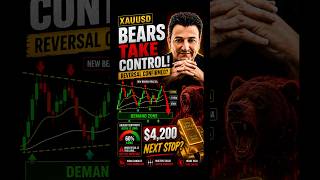
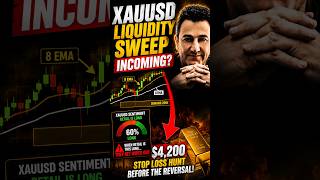
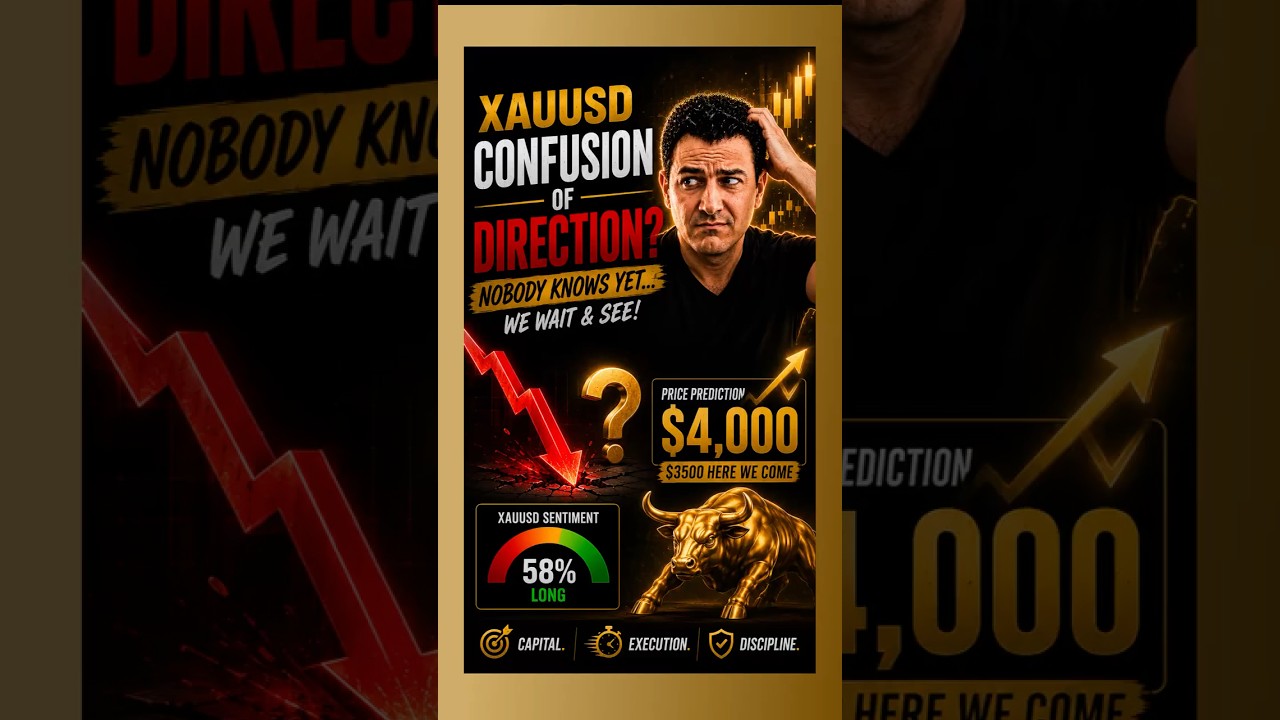
Okay. If that works for you, that's cool. XAU/USD. Long 53. Long 53. Short 47%. We're almost at parity, which means that the price can definitely go down to what I said, which could be less than $4,000.
Yesterday the sales was at one stage at 53% to 47% buys.
Yeah, so it just means that there's room for the price to go south, and I think it's going to. I don't think we're done yet.
I'm—
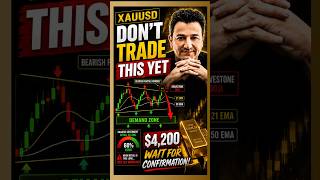
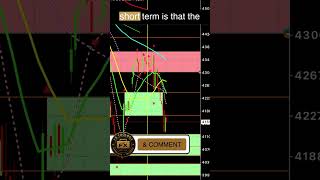
This is why I said on the group don't get excited, yeah, that we're in a demand zone, and then you go in and emotionally close out your trade because there's no confirmation that there is a reversal. If we change the timeframe to a day chart, we are north with the day chart, south with the lower timeframe, only one candle below.
Mm-hmm.
And the higher timeframe, the week is just down. Oh, look at that. There is a, that is a bullish Harami, a bearish Harami. You don't often see it. So the definition of Harami means pregnant lady, and you can see here's the lady and there's her belly.
So she's gonna give birth and then it's gonna drop.
Yeah, so we don't know the direction, but it's usually north after the Harami, which is interesting. So again, nothing to get so excited about when you looking at these trades over here. It's not exciting. Like a lot of you get excited by watching these numbers. I don't get excited. I'm only watching my chart. So according to macro fundamentals are saying that the price is still going to go south. But again, I don't trust the macro fundamentals. I'm using my own tuition here. Intuition, tuition and intuition.
Yeah. By saying that, Alan, I just want to say thank you for the last meeting that you placed on the groups. Where you explained your 8 EMA on a 4-hour chart magnificently, and I'm trying to stick to that. My emotions still take over and I take, take a chance here or there, but 100% from now on, I'm going to trade the 8 EMA on a 4-hour chart and just look at the chart and forget the numbers and be conservative with my lot sizes.
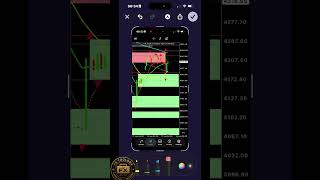
That's all. Just prepare yourself. It's all preparation. This is amazing. So I didn't say it on the group of what I saw. Nobody knew what I was looking at. So let me go back here. It's under T. No, Alan Solarsh— trading, trade analysis. Cool. So I said, ooh, could I see anybody here that knows what I'm looking at? What was that? Chart analysis. Yeah, it's on the screen. Yeah, but that's small. Okay. Sorry, I'll take another screenshot. I don't get to read Discord too often. The guy I work for keeps me busy. What am I looking at?
If I look at the previous 4-hour candle, there's no indication that there's a long—
I'm only looking at this picture.
Green one.
Not looking at anything else. What do you see in this picture, anybody? Potential— Morningstar?
No, the price is below—
Don't say a potential Morningstar until that candle closes.
The price went below the— I think it's a 21 moving average.
No, it's got nothing to do with that. The price is at 4248, which means that we were at a psychological level.
So we don't know.
And the chances of it going north was fairly good. But if you look at the— if you look at the price now We are 4244. It got to— I mean, that's just mad. That is just madness. Okay, even this one, madness. So that's interesting. So it's just more proof and more confirmation for me that the way I set up my charts is the rough— it's what the institutions are trading. So we must remember that the candles are different. On all different brokers because you're dealing with different liquidity providers. There's no central hub unless you're trading directly with COMEX, which you need a Bloomberg terminal for, cost you about $10,000 a month, and then you're trading directly. But then you're trading proper futures. And if you don't sell your future, you need to either deliver the gold or the money. Mm-hmm. So you better know what you're doing there. So it just gives me more confirmation that it's right. The price is the same everywhere on all brokers. It's the same. So that is the price of gold.
Okay.
X the spread. The spread is what's the difference between what the broker's charging you and whatever, but that's the price. It's just the candles that are different. Because of the liquidity, but the price normally stays the same. So I'm still expecting it to go south. Currently we're south, and that's what I'm— that's what I'm expecting. So do you guys have now a better understanding of how to decipher these numbers and what these numbers mean?
Yes.
Very important to understand what the institutions are doing and what the— what retail is doing. What their understanding is of it. So it's interesting to listen to you and how you came up with your thinking, because from that you can start understanding how other people are thinking. That's why I like to understand what your thinking is, because if you're thinking like that, I'm sure you're not alone. But it's not—
Yes.
It's not the correct way to be looking at the numbers.
That's good. And that's why I ask people to comment so that we can learn together. I mean, if you are available and you can speak to 50 people at one time, I mean, then it's beneficial to everybody. So I don't understand why guys are—
Yeah, also, I think a lot of people are scared to ask questions. They're scared to be wrong, and they're scared maybe I'm going to shout at them, or I don't know.
Luckily, I'm old enough you can shout, I'll listen if I want to.
All right, so that's that. I hope that I've helped you. I'm going to go back to my trading. And looking. And anybody got any questions before I go? Don't forget our next meet at half past 5. Okay, cool. Okay. All right, guys.
Thank you very much.
Thank you very much for the meeting. Hope you enjoyed it. Thanks, Alan. It's appreciated.
Pleasure. Thank you.
We'll thank you, guys. See you next week. Cool. Cheers, everybody. Yeah, so long, Martin. Thanks again. You're welcome, Niels.
More from Alan



Double bottom forming - Gold ready for $4000 #trading #technicalanalysis #xauusd