Rewriting the Internal Stories That Shape Your Performance and Legacy | Alessandro Sciaraffa

Performance strategist Alessandro Sciaraffa argues that breakthroughs come from rewriting the limiting stories we absorbed in childhood, not from working harder. He traces his own path from a privileged upbringing through his parents' divorce to coaching elite athletes, showing how vulnerability and honesty in coaching unlock what people thought impossible.
Chapters
Welcome back to Echoes Across Time. Today's guest is Alessandro Sciaraffa, a coach, mentor, and performance strategist whose work with some of the world's greatest athletes, leaders, and creators points to a profound truth at the heart of this podcast. The biggest force shaping our lives is not our talent or ambition, but the invisible patterns that govern how we show up in the world. Over the last 13 years, Alessandro has helped extraordinary performers break out of what he calls their mental containers, the inherited stories about who we think we are, what we think we deserve, and how far we believe we can go. When those stories dissolve, something remarkable happens. Our health, our mission, our relationships, and the very texture of our lives begin to shift. In our conversation, Alessandro reveals that real breakthrough isn't about squeezing out more effort. It's about stepping into a deeper presence, becoming more aware, rediscovering the dormant confidence peace, and trust that were always there beneath the noise of self-doubt. This is the work of navigating life's defining moments with clarity and courage, and in doing so, elevating the people around us. Whether you're building a company, leading a team, competing at the edge of your ability, or simply trying to become the next version of yourself, Alessandro's perspective offers something essential, a way to rewrite the internal story that ultimately becomes the biggest echo of who you leave behind. So welcome, Alessandro.
Wow, that was a beautiful romantic introduction. Thank you.
My friend, I'm so happy to have you on the podcast as my very first guest. This is very exciting. And as you know, this is a podcast dedicated not to what people have achieved materially in their life, but what they have learned spiritually in their life and what they want to leave behind that they would like others to learn from and grow from. And so as we embark on this journey together, thinking about what your legacy will be. I'd love it if you delve deep into yourself and try and let yourself go, be comfortable, and we'll hopefully have a great conversation.
Beautiful. Just like another week for us this year, isn't it?
Exactly. So I want to start with a question for you, which is, when you strip away everything that you have achieved in life. Who are you really?
Big question out the gate. So yes, thanks a lot for that introduction. It was beautiful. I think if I could answer that question in a couple phrases, I think I would be someone who sees the potential and possibilities of what is possible. And I allude a lot to the founders of Airbnb who they look at society and they go, do you know what? it's not gonna go like this anymore. We're gonna actually do something that hasn't been achieved before. And, you know, that's basically my life story and this is why I'm so invested into helping others to be able to see the possibility in things rather than the kind of avoidance strategies or what we don't want to achieve, if that makes sense.
Yeah, I've, you know, we've known each other for quite a few years and we've talked a lot about performance and how to get the best out of yourself and how to deal with others as we try and strive for that. I think I've always seen you as an enormously giving person, someone who is very good at putting yourself into the shoes of other people and helping them get the best out of themselves. What do you think it is about you that makes you passionate about doing that?
I mean, thank you, by the way. That's very kind of you. And I think I could relate it back to a story. I think we all learn from stories. So, you know, when I was younger, I was growing up between London and south of Italy, very beautiful lifestyle with my parents. And then the catalyst for, I guess what you are saying is my character of giving, was my parents getting divorced. And I started to see other parts of life that I had no idea were, you know, were there. And I started to become empathetic. I started to realize that our parents, these archetypal roles that we think are just like these caregivers that don't have any issues, I started to realize they actually got some problems they're going through. some stuff. And so I started to become very conscious of how my friends were reacting to other adults speaking to them, how adults spoke to children. And so I was in a lot of sports teams growing up. Obviously, we played tennis many times as professional tennis players, and I was a track athlete, rugby player, and all of those things. I was looking at how the coaches were speaking to me and my students and my teammates and seeing how we respond. Some of them would respond you know, and give us empowerment whilst the others would make us feel like we did something wrong or we should feel ashamed. And, and so I started to take responsibility for making sure that we could give to each other through communication, through talking, that we make sure everybody leaves with a, a sense of abundance or someone leaves with a surplus when they're connected with me.
Yeah, I see that when we talk together that you're Sort of unrelentingly positive and encouraging and feeding back to me in a very nurturing way. Is that because you were very nurtured when you were young, or was it the opposite?
Yeah, great question. I mean, through 0 to 12 years old, I had like a perfect lifestyle. You could say you live between 2 beautiful countries. I've got a huge Italian family. I was the first boy. to be born in my family. So I was very loved, cared for, affirmed. So yes, I'd credit that to my upbringing. And I guess I felt as a teenager, I felt a little bit in debt. I felt like I needed to give that away. I was like, I don't need any more love. This is too much. Let me give it to people. And so that's really a testimony to my family, I'd say.
Yeah, which is great. I mean, and that speaks to how much we are shaped by the early experiences that we have in life, Right, exactly.
And obviously, as you know, in the studies out of neuroscience, and I mean, these are all dated studies now, but we're very highly shaped from the ages of 0 to 7 when our brain is in this theta brainwave state and delta brainwave state where we actually can't reject information.
I totally get it. And I think when I think about you, I also think about someone who You've never struck me as a really materially driven guy. You've always struck me as someone who has really solid values and who lets those drive you in your life. And we're going to come back to your values and how those were shaped. But are there things that people profoundly misunderstand about you, do you think?
That's an interesting question. Yeah, profoundly misunderstand. I think potentially, as you alluded to, you know, I'm a very good encourager and I like to see the possibilities and things and get grounded into what's actually happening versus the story of how we experience things that are happening. And I think, um, like every other person potentially we speak to, we don't really know what's truly going on with how people perceive things. And so if I was to be misunderstood on any level, it'd probably be the depth to which I can speak to people on. And that they could feel safe to venture into certain topics that I don't really hear much in day-to-day coaching or, you know, particularly outside of our conversations where people are willing to go into things that are going to free them, topics that they haven't even discussed for 20, 30, 40 years that if they did discuss or just even tap their toe into, they'd find a lot of liberation and freedom in their life. So I think, um, yeah, I think that might be a misunderstanding with people that It's just about when they talk to me, it's just about performance and mental skills and getting from A to B. And the reality is that's all going to come as a byproduct of unveiling, you know, what are we trying to avoid in the first place where that's not even happening?
What you're saying is that actually people tend to think about that in quite a superficial way. They think that performance is a product of better nutrition, harder training, more hours in the gym, more speed training. But actually what you are saying is performance is a byproduct of actually really deep self-analysis.
Yes, exactly. And having worked with so many professional athletes in tennis and now in the NBA basketball, everyone's gonna have a professional schedule routine, right? So what is making the difference? And I've asserted over, I don't know how many case studies I've worked with, but over 100 families that it's the energy people are doing activities from. So if I'm walking around in a subtle state of guilt, shame, and embarrassment, but I'm still doing a 6 to 8 hour training schedule versus someone who's doing the same schedule in a place of freedom, possibility, exploring opportunities to win without having to avoid a story in my head, I've noticed that the person with the same schedule but coming from a place of liberation is a little bit more forward moving. Things are going more in their flow. If something happens that looks unideal, They're able to move forward quickly. So yes, I'm seeing the performance benefits for people are coming from the energy that they're living from, their state of being.
So when we talk about you being misunderstood, really the point is that you want people to be able to connect with you at quite a deep level. You want them, particularly when you are coaching them, You want them to open up and you want them to trust you and you want them to be able to be vulnerable to expose who they really are. And I think the point that you are making is that your personality is actually engineered for that, ideal for that, but actually people find that quite difficult to do.
Right. And I think as any coach might tell you, I mean, I can't speak for many coaches, but for myself, the extent at which people are willing to be vulnerable with me is the same. It meets me at the same level that I'm willing to be vulnerable with myself and with them.
Right.
So if I'm incongruent in my own personal life, professional life, that's gonna show up in how people feel towards me when they're in conversation with me. So it's obviously radical responsibility, accountability, using life as a mirror and not as like excuse or, or being a victim, it's just using it as feedback of where I can help people to feel safe around me.
Got it. Yeah, that makes complete sense. And what do you think about your personality has stayed very constant over time? If you think throughout your life, what do you think has remained the same?
Yeah, I think it's that state of inspiration. My mother was always honing into me that just do what you love and find things that you are happy doing. And If you can make a living from that, then I mean, that's amazing. So I was always drawn to, consistently drawn to being in this state of love, inspiration, possibility, which obviously, as you know, being an entrepreneur is challenging at times, but it's like a north star. It's like a guiding post. So I think I'm always drawn to where there's the possible inspiration, possibility of who I could potentially grow into. And that's been my, my kind of guiding star. Yeah.
We talked a little bit about you grew up in a very loving family and you had a very idyllic childhood. Were there any negatives from that early childhood?
Negatives, I'd say, like growing up in a bit of a Catholic environment where there was miscommunication, or it could say just communication on the whole, that adults didn't know how to communicate with each other without making them feel like shame, blame, or or guilty for anything. And I think from the story of a 6-year-old, 7-year-old viewing people speak like that and the energy that comes with, I think I personally categorized it that there's something wrong with me. I'm bad. I'm a bad boy. I've done something wrong. And as I've worked, you know, with people in like, you know, Fortune 500 areas of the world, that as an adult sounds like I can't make a mistake or If I do this, then everything's over. And it starts to cascade into a bunch of narratives which aren't healthy for human beings. So I think that would've been one of the things that I overcame, which is to realize the lie about there's something wrong with me or I'm a bad boy.
And as you grew into a teenager and your sort of early 20s, did anything change about your family life?
Yeah, drastically actually. Um, obviously my parents got divorced when I was around 12 and I was living with one parent for the majority of life up until 16. And then I actually decided that because of the environment, what happened was obviously one of the, both of my parents were going through a lot of pain and grieving. However, I wasn't in that place. I was actually, you know, excelling in my life. 100-meter track athlete. Playing national rugby, playing national tennis, soccer team. Everything was going right for me and the environment wasn't matching that. So I actually decided to leave my home at 16 to stay with my other parent without telling the original parent. So it was a bit of a wound for them. We later patched everything up like about 10 years later. So yeah, I actually, you know, kind of similar to like what I mentioned about the Airbnb founders, I looked at my environment and I said, Yeah, this ain't for me. I know what's in my heart where I should be going. I need to be around that environment. And that actually led me to move to Miami, work with Olympic athletes. World number ones were hiring me because of that bold decision I made. Obviously you can say, is it right or wrong to do that? But at the time I was resonating with, I've gotta be free. I've gotta actually pursue what's on my mind's eye.
So this move from one parent to the other, What was it you think that precipitated that for you?
Well, if you could categorize it as one parent was more about control and fear-based control, like not wanting their child to grow up and be a loser or potentially not successful or whatever the case may be. And I don't even know if that's true. That was my interpretation as a young child.
For sure.
And, and then the other side, was, be yourself, be free, do your routines. I trust you. As long as you're happy, you're going to make the right decision. I think as a child, I think I was more drawn to the latter.
So the first one was more about safety and the second one was more about finding yourself and experimenting, I guess.
Exactly. Yeah.
And as you grew, there was a point where you sort of tipped from one side to the other.
Yeah, exactly. I felt like the expansion was to have a little bit of freedom, particularly for my personality or the version of myself who I wanted to be and the things that I'm doing today. I needed that freedom to experiment, to find my own ways of operating. And I think one environment suited me better than the other.
Super interesting. And what do you think Particularly as you had time in your idyllic family together and then you moved into this phase of with one parent and then the other. What do you think you absorbed without being specifically taught?
I think on the first environment, I absorbed fear-based control, meaning if I don't do this, things aren't going to be okay. Some sort of consequence that was rooted in a bit more of guilt. Rather than consequences of, okay, if you are a basketball player, you miss a shot, you've missed a shot. That's the consequence, not the story of the consequence. So I think the first one was that. And then the second environment was more of trust, deep trust, being able to go out there and bank on my own ideas, follow through with them, look at the feedback, and have no one else to go back on and say it was their fault. It was all on me. And that was pretty empowering for me.
Yeah, I can imagine that. But I can also imagine that actually both had a positive influence. The safety and security that the first environment had for you was probably something that you felt very connected to from that very idyllic childhood and breaking out of that and then growing and breaking free was an evolution in your personality, right?
Exactly. Lovely. Well put.
Yeah. When you think about your parents, I'm sure both have had a significant impact on your life. What do you think they taught you, maybe not intentionally, but indirectly?
Indirectly, I think my mother specifically was teaching me that from her own childhood, she was a mother at 20 or 21. So She was always teaching about living, living your life, whatever that meant. So being in love with who you are and the decisions you make, making, being at peace with them. And so, yeah, discerning between what's gonna bring you peace versus, I don't know, the latter.
Yeah.
And then the other side, my father, I think, you know, passion, deep compassion, you know, this caregiving, energy about someone having your back and holding you accountable, even if it's not easy at the time.
Which was the one which was the safe environment and which was the one that encouraged you to break free?
Yeah. So my father was the safe one. I think my mother was the breaking free one, which ironically is the product that I mostly, I would say I sell now, which is helping people break free.
Yeah. And super interesting because as we spoke, we obviously hadn't identified which was which. And I'd automatically thought, well, the mom is a caregiver and therefore would be the safety-first one. But actually that's not the case at all, right?
Interesting, right?
Yeah. I mean, it shows how wrong we can be when we form views without knowing. So very interesting. And then is there anything you think that from those early days as a child you learned that you realized you had to unlearn later?
Yeah, I think mainly on the communication side, right? So if I've got role models of communication based in arguments or using not violence, but very aggressive ways of communicating as my baseline model, and then I get into a romantic relationship 10 years later where I'm seeing myself use the same models of communication, that's why I realize, wow, really gotta unlearn whatever I thought communication was. And obviously, if people studying neurolinguistic programming, they know that communication is all about the other person receiving the message that you intended to, to, for them to receive. It's not really about other personal agendas. You want them to be able to respond back the way that you wanted them to respond back. So if you don't communicate in a way which is facilitating that, then it's accountable on you to do that. So. The communication side was a huge unlearning process for me. Yeah.
Yeah, that's interesting. You grew up in Southern Italy, at least in part, right? And Southern Italy is a place where I guess that it's very strong in storytelling. There's a big sense of community. I can imagine you grew up in a community where a lot of families knew each other very well and a lot of stories probably survived over quite a few generations, right?
Yeah. Yeah.
Most of us have quite a romantic notion that that must be great. You have a great sense of who you are. There's a lot of color, but also possibly when it comes to communication, there are patterns that are established that are quite difficult to break out of.
Yeah, exactly. Yeah. I mean, it's just assumptive behavior. I think it's very part, it's the nature of being human where we To save resource and mental capacity time, we generalize. And that also leaves us open to not seeing new possibilities. We kind of shut things down and we assume things are the way they are, or so-and-so's the way they are. And by doing so, we meet people not really as they are. We meet them as a version in our head of who we think they are, which really is not intimacy. It's the opposite of intimacy.
Yeah. Super interesting to grow up in that sort of environment. I want to talk a little bit with you about values because I know Values are very important to you. And I'd like to actually first ask you, what values have you had that have survived contact with real life? I think that's an interesting thing to think about.
Yeah, these are phenomenal questions. Yeah. So what values have survived? Okay. I think, and I don't even know if you'd call this a value, but rejection of, I guess, societal rules or potential conditioning that, you know, we have the choice to accept or reject. And I think one of my values is to reject what is truly not serving me. I think that's one of my main values where I can look at something and I can critically analyze it and go, yep, that's not for me. Even though millions of people might follow that way, I'm in touch with my true values, which are to do with possib— possibility, inspiration, making sure that there's always an avenue for achieving something that's on my mind. Because obviously, you know, being working with children and helping them grow into, you know, elite athletes and D1 athletes, this is the crux of some of the work that I was doing where children don't really need past evidence to decide what goal to do. If they want to be an astronaut, they want to be an astronaut. They want to be a tennis player, they want to be a tennis player. So a lot of my values are based in like Exploring possibilities for achievement. What are all the options here on how we could achieve it?
So rejecting limitations, really?
Yeah, exactly.
And that has survived contact with real life?
Exactly. Yes. Loads of stories on that. I mean, one comes to mind about COVID year, being in the UK, London. I don't know if you were there during that time.
I was.
And, uh, there was this notion about it was illegal to fly. And I'm sitting there, you are sitting there, our businesses are operating or trying to survive going into all that paradigm. And I was just sitting there like, I've got a bunch of families relying on me in terms of, uh, children's development. And I'm sitting there and thinking like, I'm not, I can't stop for this reason. So I'm investigating the validity of, are you allowed to fly during pandemic? And on the news it's apparently illegal, but you're still allowed to buy tickets. et cetera, et cetera. And it comes down to it that you are allowed to fly. It's just been spread that you're not. And I go, you know, take a flight to Florida so that I could continue working with some of my clients. And the director in Florida was saying, it's impossible for you to come here. The UK's banned from America. And I'm like, just, just to calm down. Don't worry, there's a way, you know, fly to Mexico cuz then you can go into Miami and enter Miami. I end up on his doorstep and he is like, you're crazy. You know, crazy motherfucker.
Yeah, that's great. Some of the things that you have always, I think, struck me with is you are someone to whom truth, honesty, directness are very important, and those are values. Do you want to talk a little bit about those sort of human values and how important they are to you?
Yeah. Thank you, Tim. I really appreciate that reflection. Yeah. Trust is, is a big one. I think it stems from, like I said, with my mother allowing me to even venture into trusting myself. So, you know, I don't know, most sages or people that you might've heard, wise teachers, they talk about to know yourself, you've really gotta know who you are not as well. So I've been through phases of not trusting myself and being incongruent with my word and I think, uh, go being around children a lot. It teaches you that every time that we abandon our values, the children are looking at us like role models and they are just ingesting everything you're doing. And it really hurt me to realize that I could be inflicting another child's kind of future and role models because as I said to you earlier, I was on many sports teams. I had so much, you know, uh, access to coaches, rugby coaches, tennis coaches, whatever. So I was hugely studious, looking at all these different people, how they were affecting me. And I, you know, when I told you about the value of rejection, I was like, we can't have adults make children feel disempowered. It's just not on. How are they going to, you know, make it in life if they haven't got the right, you know, mental capacity or frameworks to deal with that? So luckily, from my childhood, I had the capacity to reject, you know, societal norms or, or certain limiting patterns. Thanks to my mom and dad also breaking free from the Catholic values as well, which limited them and they moved out of Italy as well. So I think those values are really important to me in that essence. Yeah. Yeah.
I think that you have always struck me as someone who is very rooted in honesty and you see it in a way that it is more important than issues like material success. And I've always admired that in you. Those strong values, you think, come from your family, your cultural roots, the environment that you grew up in?
Yeah. Thank you, Tim. I think honesty, I mean, it's 2 things. I think you've got, like I share with people, you've got awareness and self-awareness. And what I distinguish between the two is awareness is seeing things for the way they really are. And self-awareness is seeing things for the, in the story you experience them. And I think the honesty, uh, you know, is such a big deal for me because I've experienced seeing things that really aren't such a big deal, but seeing them through the lens of my own story of I'm not good enough, you know, I'm embarrassed, I feel guilty, has totally manipulated the way that I would operate. And it would impede upon success, performances, relationships. And so for me to really delve into being honest about what is actually going on versus the story of what I think is going on, yeah, is really vital for my clients and, and for when, you know, we have discussions like this to help people differentiate between the event that's going on and the story of the event that's going on, because it really allows access for the right action to be made.
So this is a great point that I think we should talk about a little bit, which is when we say the word honesty, people think we're talking about telling the truth to other people. But actually, the most important thing about honesty is how honest are we with ourselves? How open are we with ourselves? How much do we accept that our behavior patterns are limiting or impacting ourselves as well as the world around us, right?
Yeah, totally. And I mean, these all stem from what I call these core memories, which is we're 5 years old, we're 10 years old, and we're in the playground and somebody, a friend, a group of people, kids don't want us to join in on their gang. And we conclude that we are not good enough. I mean, it really could be as benign as that. And because of that core memory has never been challenged, we walk around in this story. We don't experience life how it is. We experience the story from, we live life from. And that's why this congruency, to be honest about, you know, where is this core memory coming from, really allows people to just be free from that narrative, which could be impacting so many operations of their business, their relationships. And, you know, we're basing all of our decisions from these memories. So if they can get reconciled, if there's a space where we no longer bought into the narrative of not being good enough, we start to see life more as it is. And because of that fact, we're able to access ideas, opportunities, presence, as you started to talk about, deeper presence, because before we were too preoccupied about disproving this lie about ourselves.
So what you are saying is all around us, there are a lot of people who are thinking with a mindset framed when they were 5 or 10 years old from experiences they've had. Where they might think they're not good enough.
Exactly. I mean, they might not know that. They might come back to something when they were 20 or 25, but at the core root of it, on the third trimester of pregnancy, you're actually already receiving information from your mother's blood chemistry. Is she in a state of protection because her environment— and by the way, even if her environment is safe, but she's got a narrative of I'm not safe, Her blood chemistry's gonna actually reflect that. And so as children in the womb, the third trimester, we are already becoming familiar with a world out there that's not safe. So you and I could have the same upbringing, and because of what my mother had been through perceptually, I might relate to the world as not safe. And so I'm gonna conclude if I get cut from a team, If anything happens to my business, I'm going to use it as fuel to say, you see, life's not fair. Life's not safe. I need to hide. I need to become smaller. And yeah, it's totally disempowering. And reconciling these memories is such an empowering process. Yeah.
We are being shaped by forces from before we're even born, but at some point in time in our lives, we have access to be able to deal with that more proactively. I think you said the first 7 or 8 years of your life are the time when you don't really have the agency to be able to deal with the experiences that you're going through. And then after that, you start to be able to have some agency. So is it that those first 7 or 8 years, the shaping part where you don't have agency, that's the bit that most profoundly affects you as you move on through your life?
That's great. That's a great way to put it. Yeah. I would see it as inviting people to see it as that's the genesis, that's the start of your journey. And you're going to probably be having some values you want to run away from, from your childhood, and you're going to have some values that you want to walk towards. Now, often we are going to be as successful as possible based on the upbringing and values we've had that we want to walk towards and move away from. But what typically happens is when we're rooted in running away from values, then we are basically trying to avoid things whilst having success. Like I talk about the analogy for a basketball player, you know, if they're on the court and they're trying to avoid something about themselves from coming out, you know, maybe that they actually secretly think they're not good enough, they're trying to do that whilst trying to play basketball. So their presence is completely in conflict. and it limits their potential. Now, for some people's talent, like for you, for example, you are going to go through life and be extremely successful even with those limitations until we want to break free and we want to experience wealth, success in a totally new way that we've not done before. That's when we'll have to investigate, you know, past conditioning, as I call it.
I'd like to explore with you, are there any values that you think you you had, but actually when push came to shove, you realized that you didn't?
Let's say when I was competing as a professional tennis player, I think persistence was something that I thought I had, that the value of to always keep going forward. And then I think the evolution of that, realizing what it takes to actually hold true to that value.
Yeah. So would that be persistence, commitment, dedication? Would that fall into the same Category.
Yeah, yeah. I think, uh, the example I'm using— I was playing a tournament in Miami and there was 4 lightning delays in my match. So I was up 4 or 5 love in the first set, and I— and then after 4 lightning delays, I didn't use my time appropriately. I warmed up 4 separate times, which was way too many times because I was so nervous, and I lost the first set 7-5 somehow. And— but it just showed me a little bit about, you know, am I able to recoup Am I able to kind of just keep going forward despite what's going on? You know, to lose 6 games in a row, you know, it kind of invited me to use it as a catalyst now.
Do you think that ultimately you didn't go on to have a long-lasting professional sports career because you didn't have that value?
You could say that. Yeah, for sure. I mean, there's other values that I think I didn't have, which was I wasn't very highly educated in kind of the financial world, so I had this limiting belief about how much money is available to me, which meant that I quickly looked at, okay, how else can I kind of live, be self-sufficient? But that's a bit of a bigger story there. I was always passionate with helping people before me actually becoming a professional. So the main reason I did that was because I wanted to be in the shoes of an athlete. I wanted to feel how it felt to be them. I wanted to empathize with them. to as long as I could do it for. But yeah, it got cut short because I think my beliefs around my own access to wealth were quite limited.
So interesting. Obviously, you know what a brutal life it is being a professional sportsman unless you're at the absolute top of your game. You think you were held back not by the lack of the value of commitment and persistence, but more by not really understanding how you could afford to continue.
Yeah, exactly. And these are byproducts, right? Not being committed enough, not being persistent enough, and thinking you don't have enough money or access to money. They're all byproducts of thinking you are not good enough.
Yeah.
Yeah.
So that's the interesting bit, right? And why did you think you were not good enough?
Yeah, that's a great question. I think it comes down to maybe mine wasn't not about not good enough. Mine was more about who am I to think I can do this? Other narratives that come to mind was I'm, yeah, I'm not safe potentially. So I was more, obviously unconsciously looking years back, I didn't know I was doing this, but at the time I was more concerned on making sure that wasn't true than actually playing. Or investigating, getting the funds, you know, because that's, that's the whole point of an insidious narrative is you don't even know you're doing these unconscious habits, which is why I love working with people on these things because it reveals a lot of habits and behaviors. But yeah, why was I thinking that way? Yeah, probably because of the, the guilt I categorized as a 12-year-old from my parents divorcing, thinking it had something to do with me as children do. It's kind of egocentric. Children always think everything's got to do with them. That's the nature of how they learn and grow. And so I'd misidentified that their divorce had something to do with me being not good enough.
So that's interesting because as we both know, people's response to trauma, because an event like that is a type of trauma, can be very different. We've seen how some people respond by Effectively getting into a zone where the only thing they focus on is becoming absolutely brilliant at the one thing they do to the exclusion of all else. Whereas your reaction to it was a little bit different. Your reaction was a feeling of, I'm responsible for this, therefore I'm not good enough, therefore I am not going to make it as a great professional sportsman. Therefore, I'm going to dedicate myself to helping other people because I come from a place of understanding what they may be going through.
There you go. You just summarized my whole life there. Congrats.
So it's beautiful, right?
It's very well put there. This is beautiful because this is what I kind of differentiate for people is not to feel guilt or shame about their past because it got you to where you are today. Now, potentially, you might have to say thank you to the past and move on.
Yes.
Start to operate from a different place. Okay, now I know it's nothing to do with not being good enough. Now I know it's got more to do with how we perceive things. Okay, we're going to say thanks for that personality, but now to carry on in my life and where we want to go, we're going to have to actually believe in some of the truer parts to our nature, which is abundance, safety, Love, joy, peace, all the things that we want.
So in fact, working with other people really has been a mirror by which you have been able to see inside yourself.
Exactly. Yeah. And if any other coach tells you that's not true, then they'd be lying probably.
And that's why it's powerful. That's why that self-reflection is great. And that's, as you say, why people enjoy— the people who love coaching, It's part of the reason why they love it, right?
Yeah, exactly. There's actually a doctor called Dr. Hugh Len who speaks about this, and he's coaching a bunch of other coaches. He's saying, your clients are paying you for you to improve your own life. Do you realize that?
Yeah, it's interesting when we unpack it a little bit, isn't it?
Exactly, yeah.
Which value do you think has cost you the most to live by?
I definitely think that misidentifying with where I am versus the story of where I am has cost me. For example, thinking, thinking, sometimes thinking I'm better in a better position, like a higher placed position authority-wise than I actually was.
Yeah.
Has cost me turning down potentially a lot of roles. It's not right or wrong because it's gotten me to where I am today. But I think that was a lesson, a good lesson for me.
Yeah, I think if I can add a little of my own personal perspective on you here, I have always felt that you would only ever accept something you thought you really had the capacity to do. So I don't think you ever oversell yourself or overpromise, and I think a lot of people do. So I think the value is almost of humility. You have a very strong value of humility, probably that comes from the environment you grew up in. And I think you never will overpromise what you can deliver. And that probably somewhat limits the opportunities that you have, but it probably also creates other types of opportunities.
Yeah, that's very sweet of you, Tim. Yeah. And I think I've transitioned from that and being able to Be bolder and say, no, we're going to go for this. This is the things we're going to do. You're going to aim for the stars and land on the moon. And so I've adopted that, but thanks. Yeah. Humility. I agree. Yeah.
I want to move on now and get you maybe to think about one or two stories from your life that tell us more about you than any resume could. Do you want to think about one or two episodes in your life that you think strongly give us some color about you?
Yeah, definitely. I mean, I remember when I moved to Spain when I was just turning 18, I was being hired as a coach, a tennis coach and sparring partner. And they also gave me the opportunity to train there as a professional. And I was doing a drill with one of the pro women tennis players. And I always remember this story because I'd essentially gotten the yips. We're doing like a 2-shot cross-court, one down the line. And I essentially couldn't do more than 3 struts, which is not normal. And my coach snapped at me and he was like, you know, Alessandro, like, do you want me to fly you back to England? Like, you're not even trying. What are you doing? Swearing and cussing me out. And my, in my head, I was arguing with this guy because I was literally trying so hard to do, to do my job. And then I was just like, okay, well, I've got to respond here. So I'll just put 1,000% effort in, put 1,000% effort in, ends up all working out. But what I learned years later was he snapped me out of not being present in that moment. I was actually more worried about the player thinking I was not a good coach. They won't listen to me later if I got things wrong than playing the ball.
Right.
And, and so, yeah, I'd learned years later that I had a dream opportunity, worked for it, got invited, sponsored, didn't have to pay, and I'm not even present.
Yeah.
I mean, that's crazy, right? So, and I always remember his name, his name Nathan Rooney. I think he's the agent of one of the top UK players now, escapes my mind. But yeah, he really made me feel something, got me to snap out of a certain feeling. But again, comes back down to I was relating to myself as someone who could embarrass or do wrong or be bad. And because of that narrative, it wasn't allowing me to be present to a dream I had created. So Again, that's one of the things that comes to mind when you've mentioned that.
So that's a fear-based limitation, basically.
Exactly. That's the distinguishment.
And maybe give us a story more recently. Now you feel that you've overcome those limitations of fear that show us a little bit more about who you are today.
I mean, lots of opportunities I've been like, graciously able to take on. Like, for example, last year I was working with the UCLA tennis team and being flown out there to where you are right now, which was great fun. And just having great trust from veterans, you know, the, the head coach there, Billy Martin, he's 30 years into his job and opening, opening doors for me and being very kind to let me speak to his whole team. And the team really, uh, opening their arms and trust to be able to have my guidance. And these are, you know, young guys at 20, 21. They need some guidance in life about what's really happening versus, you know, the story of what's happening. And they really appreciated it. So that was the most recent one. That actually was when the fires were going on actually last year.
Maybe you can relate a couple of stories where failure taught you something more powerfully than success.
Yeah, I think When I was living in Naples, Florida, I had chosen to go back to London and start my own business, start my own tennis academy back then. And I was very fortunate that I had a big following in England at the time, and people were leaving their tennis clubs to come join my club, which is just 3 outdoor courts in the middle of winter. So I don't know how that happened, but Yeah, essentially I end up liquidating it and end up moving on. And I guess you could call it a little bit of a failure where I wasn't able to expand and get a team together and, and, uh, have not me doing every single hour piece of the work. As you know, as an entrepreneur, you need delegation and so you can actually live your life and keep expanding. So I think that taught me that, you know, you can't do everything alone. The humility, as you say, to trust in people, but also to build up, build them up, educate them on your values that you want to obviously display in your company and to live like a value-driven life. Like my, I learned the ability to actually build people up is, is much stronger than just kind of thinking you're a solo guy and going around and doing everything by yourself. And I think that was one that I learned a lot.
Yeah. Great, great story. We talked about how your parents divorced. I think you said when you were 12, and obviously that had a big shaping impact on your life. What do you think would've happened to you if your parents hadn't divorced? Where do you think you would've ended up? What would you have been?
Yeah, I think too comfortable because you've got this family that lives between Italy and London. I'm going to a private school in England and No hardship technically, you know, not much going on to push. I think before the divorce, I was one of the, you know, most unfit people at my school. And post-divorce, I was the fastest 100-meter sprinter in the school. And my dad always loves telling that story, you know, even when I was playing football, he said you had 2 left feet and then by the end, you know, you were the captain of the team. So yeah, I think this It's interesting that you pointed that out, that a little bit of hardship and adversity ended up helping me to step into this role, this calling, you could call it, that I was pushed in. You could say I was pushed into it, but I think there's other kids that go out there that don't respond that way. So it's obviously something I accepted and took on.
Yeah. So I know that you've traveled a lot. I know that you've worked with a lot of people around the world. I know that you are always on the move. Those are not symptoms of someone who's sort of deeply comfortable with doing one thing. There's a restlessness, there's a desire to learn, desire to push yourself. These are things that probably came out of that divorce, right?
Yeah, for sure. Definitely. There's a few distinctions, isn't there? See it as like inspiration to be able to affect people on a multicultural and multi-continent level. I think that was my great inspiration because of, uh, the nature of, you know, what I went through and how many people could I actually help? How many people and cultures is this happening to? You know, this kind of divorce experience where people become misidentified with what's actually going on. So yeah, definitely shaped me to be able to be like a global have a global presence and see. It was also just a test for me to see what I'm doing in coaching and my principles. Are they actually working across multiple levels or is this just a local thing? I really wanted to test that theory and so far it's working out, it looks like.
Yeah. I mean, you are someone who is, I would describe as a seeker. You are seeking inside yourself and outside yourself for deeper meaning and for truth. And I doubt you will ever stop being a seeker. I think it's just inherent in who your personality is. Do you think that comes out of a yearning for that security of childhood and kind of wanting to feel that again and that you won't stop seeking until you find that again? Or do you think it's because of the sadness and the feeling of missing something when your parents separated that sort of set you on a journey that you are never going to stop? You'll be relentless because you are always Kind of finding a way to run away from that sadness.
Yeah, it's a great point. I mean, there's a distinction I make between seeking and exploring. I think being secure in who I am and being at peace with myself, but accepting the way things are, but wanting to explore how far can we take things? Like, what is possible? How many people can we support? What lives can we transform? I think that's where I'm at, where I'm at peace and, you know, I love my life and I actually really grateful for what happened with my parents because we wouldn't have been, they wouldn't have been able to move on and be happy with their life. I wouldn't have been able to go on to what I do. So there's this exploration now. It's okay. Now that everything's okay, now that I know that I'm enough, now that I know, you know, I am who I am, what, what becomes available? What would I like to do? And I think that exploration comes out. And yeah, I mean, this is interesting because The chaotic nature of, uh, my, my parents' divorce obviously imprints on children where they think that becomes like a normal, normal routine where there's supposed to be chaos. And so, you know, in earlier parts of my life where things were stable, I actually unconsciously made it chaotic because I thought that was the norm. That's the foundation. And so, yeah, overcoming that and, and reconciling to realize that actually, no, You know, security and I guess safety, they are the foundation of life, whether we accept, access it or accept it or not, even in the circumstances we're in financially, whatever challenges we're going through, we can see if we see beneath that, that we're still supported, we're still breathing, still got a roof over our head. You know, if we can see past the stories, I think it gives us access to be a little bit more safe. Internally and explore outwards instead of running away from something.
Yeah. I often think, as you know, I come from divorced parents too, and I often think a lot about trust and how much we trust other people when we've been through an experience where the people who we trusted the most let us down. And how that imprints on our future behaviors. And I'm sure there isn't one script for everyone. I'm sure people respond in all sorts of different ways, but it strikes me that a lot of highly motivated, driven people come from that environment where they have had that breach of trust from early in their life, and it's then motivated them to become Both very independent and to be seekers.
Yeah, exactly. And I'd say there's a lot of truth to that. And I think that what I remind people of, that there's nothing right or wrong with that. It's the way it was. It was the path that got you to where you are. And now the only time where it comes a little bit more relevant, as I said before, is when you want to experience a breakthrough, when you wanna experience life from a different angle. Maybe you wanna experience wealth and more peace and sovereignty. I assert that it would require an investigation into the narratives we've been living by that no longer are going to take us to the new place, but they got us to this place. Yeah.
Interesting.
Yeah.
So we might be ultimately constrained on the path that we have been taking, and there might be new perspectives if we can break through those narratives.
Yeah. And this is totally unfamiliar territory for many of us because if I ask people to say, okay, let's think of a future where you don't need to run away from anything or you don't need to avoid anything, they're gonna be like, what do you mean? There's always things to avoid. And that's called conditioning. Obviously things are unideal or ideal, you know, life happens, you know, it's, it depends how you view on it. But the narrative that we can break free from is gonna give us a lot of access to Making decisions. This is all about responses. I always use sports as analogy. However you respond in the moment is going to shape the next 3 to 12 months. So if we are responding from the place of the narratives that we've always responded from, well, don't expect anything different to happen.
Yeah, that's interesting. As we start to think about the stories, maybe the best sportsmen in the world tell about themselves. I mean, we've Seen people who have been undeniably some of the best players of their generation, but have been unable to get over the line in the very biggest tournaments, not because they don't have the talent, but because they've ended up telling themselves a story about not quite being good enough.
Yeah, that's very common, right? It's part of the human experience. When I was working with the world number 1 women's player, She'd retired at the time, but I was working with her on other projects. She gave me an insight into what was she telling herself in the matches. She'd won 5 Grand Slams in tennis, former world number 1, 5 World Cups in tennis, Fed Cups. So she's been knighted in Spain. And I asked her, what do you do when you're feeling doubtful in the match? And we were with a junior player, so I wanted my player to hear her answer. And she said, doubts? What doubts? I don't, I don't have time for doubts. There's, you know, things to do here. So I just thought it was a really interesting answer to her, how, who she identified herself with. She was really involved in seeing things as they were and addressing the things rather than the story of, I might not win. Who knows what might happen? She really was not associating with that. I thought it was fantastic.
Yeah.
Yeah.
So, so super interesting to get that perspective, right?
Yeah, exactly. My junior player was kind of like, didn't know what to do with that.
Who do you think's seen the most versions of Alessandro?
Oh, wow. That's a great question. Yeah, probably my mother's seen the most versions. She's seen me be a physical trainer, a tennis coach, like tennis coach for 4-year-olds, and then life coach, executive coach. public speaker. So probably my mother.
And she would be the person that you've been the most vulnerable and open with?
I'd say so, yeah.
Which relationship do you think shaped you the most in your life, either positively or painfully?
Yes, I think I might not have a cliché answer for this. I think once I moved in with my second parent around 16 years old, I was really given a lot of free rein to not have many role models, just to listen to my own voice. So I think the mentors that I had hired gave me the most guidance and pain. I remember being in England and coaches reflecting back to me that I was kind of crazy for thinking of the things that I wanted to do in America and that my methods weren't really suitable for the clientele in England. And I remember rejecting that hugely because when I went to Florida, I was hired by the world number 1 doubles player. They were praising my methods and I was very young back then, so I was very susceptible to elderly elders kind of telling me things. And it just showed really like the power of acceptance and rejection. One kind of small-minded mentor in England was telling me to kind of, you shouldn't be doing what you're doing. And then like a perennial all-star and champion is telling me that my methods should be used in his system. And I just think it was a message for me to kind of trust, you know, what I'm doing.
Yeah. So I guess the moral of the story has been, you know, there are always naysayers and there are always doubters, and you've learned through relationships with those sort of people To actually ignore what they're saying to you.
Yeah, exactly. Well put. I mean, it's, that's challenging at the time, especially when you're in your 20s, right? And you don't know, you're not really validated for many things cuz you haven't achieved a lot yet. So I think there's this relationship with ourself that really goes a long way.
So we need to trust our instincts more.
Yes. And that idea and that vision, I think it's very interesting that we as human beings receive certain visions. And we see certain life for ourself. I mean, yes, a lot of people wanna be world number one athletes. A lot of people wanna be a billionaire now, multiple versions of the same vision. But I think 8 billion people on the planet, no, there's only this group of people that receive the same similar vision. So I think it's interesting that you and I are one of the people that receive certain visions that it would only come to us, and it's up to us if we want to actually claim that vision. Yeah.
Yeah. Yeah. Who do you think you owe a conversation to that you're worried you might never have?
I think the exact mentor I was telling you about in England that told me what I was doing was not technically ideal or going the right path for what he wanted. Not that I would ever need to go back and reconcile that because I think it's been reconciled in my own mind. We're at peace with it. But I think he gave me a big shot in England. I would— I was a volunteer at this country club, and then he gave me a role to be a head coach. I've gone from volunteer to head coach. He did that. And then it ended up with him telling me I'm not doing things right and me leaving. Uh, yeah, so I think, uh, yeah, to give him his flowers and say thank you despite everything, how it ended up finishing. Yeah.
So maybe give him a call.
Right, good.
What has your work taught you about people?
My work, what it's taught me about people is that, uh, we're very susceptible to, you know, what's going on out in the world. We're invited every single day to take on a belief, someone's opinion, and we're invited to take it on as our own truth. So I think what my work's taught me about people is that We're quite easily susceptible. I think we're quite vulnerable as human beings. And I think there has to be some sort of, you know, I stand for being some safeguarding towards our own sovereignty and really being kind of a, a peacekeeper or someone who stands up for allowing people to offer and accept a rejection of what they're being invited to believe every day. So I think, yeah, I think that's quite important that human beings are actually quite vulnerable.
Yes. Well, we are all surrounded by a lot of noise these days, and to be able to filter the noise that we should actually pay attention to and what we shouldn't is hard. And I think one of the things I liked about working with you is you came to me with a lot of passion for your ideas. And as you know, I'm one of those people who's very open to ideas. and enjoyed working with you a lot. And there probably would be a lot of people who would be dismissive about your ideas, but I felt that you were unconcerned about that. You were very happy to stick to your guns, and I think that's really important in today's world.
Yeah, that means a lot, Tim. Thank you very much. Yeah, I agree with you. Yeah, it's important to Stick to your values and go with what you know is— it's a long game, as you know, you're playing the long game.
Yeah. You also mentioned people are quite vulnerable, and I think you're right. A lot of people are very vulnerable to being manipulated or misled. And I know that you are one of those individuals who would never do that. That's not in your personality at all. And that is a real quality of yours. As you have learned more about dealing with other people, and perhaps as you've learned more about their vulnerabilities, what's your reaction to that been? What's the sense of responsibility you feel?
Yeah, that's a great question too. I mean, the sense of responsibility always goes down to helping them discern between what's happening and what's the story in their head. I think that's what it comes down to, especially with, you know, younger generations or even, you know, uh, people generations beyond mine being able to discern the facts from the insidious beliefs because these things are like insidious killers. They're really killing us from the inside out. So being passionate about outlining What's actually happening versus the story of what's happening. Because the story, if it's based in any sort of memory conditioning or limitation, is going to impact the ideas we have today, our posture, our tone of voice, our language, which invites certain demographic and invitations from the environment to you, creates a world around you. And then you wake up one day and you realize, I don't really like this world that I'm living in, and there's not many opportunities. opportunities, which is not true really. It's a lack of ownership, but it hasn't been uncovered to us that we're living from these unconscious narratives and we're not really accountable. It's like telling a child that you haven't done the washing up and they can't even reach the kitchen sink. We're not going to have a go or blame or shame them, but I think the responsibility is to be able to bring people back into ownership in a compassionate way, which gives them back. A bit of authority and autonomy.
Yeah, that's great. And I can see the importance of that. What do people who are working in your field constantly get wrong?
The whole mental skills thing, meditation, breathwork, they're all practices that, as far as I'm concerned, that naturally arise from the identity and the relationship to ourself becomes clearer and clearer. You know, if we do do a yoga practice or we do have a certain breathwork, you know, if we dissipate these limitations, we end up regulating our breathing naturally. We don't need to go and do a practice for it. I'm not saying I'm not an advocate for it. I do breathwork classes, I do meditation, I do yoga. I know you do yoga as well, but it's the band-aid solutions that I think in my industry people get wrong where it's like, okay, you think there's something wrong with you, let's go do a Practice for that. You know, let's keep agreeing that there's something wrong with you and let's put this practice in place. And in professional sports, what ends up happening is when push comes to shove in the most important moments, your practices, they're not gonna go elevate you above your, your self deep-rooted belief. That's always gonna keep coming out. So if you've agreed that there's something wrong with you, you don't feel safe or you feel trapped, and then you're in the match point. And it's the most important moment in closing a deal, that normally comes to surface.
So can we think about this with an analogy like building a house? If the early part of our lives are the foundations of the house, if they are built on weak foundations, then even as we've built the house, as we've grown older and we have problems with the house moving and the windows breaking and all sorts of bits that we keep patching up. Patching up is not the solution because the house is still built on unstable foundations. You need to go back and address the foundations.
Beautifully put. Exactly. And this is why it's important for me to be a certain way with people because it's not the nicest thing in the world to revisit memories that you've really been trying to avoid your whole life.
Yeah. It strikes me as not only quite intimidating in a sense, that message to people, but also that people's immediate reaction would be, oh my God, that's a lot of work to have to do. And as a coach, the reaction would be, well, that's a lot to unpack all of that and to go back and regress and deal with those fundamentals. That's a big job.
Yeah, it's a big job, but also how many years would go by if you didn't address that, that things would remain the same? I think it's the pain and pleasure cycle, isn't it? Getting people connected to how much pain is going to come up by staying the same versus addressing that. But yeah, we make it simple, Tim. We want things to be— we don't need to make things more complicated than they are. Usually by work, we end up getting within the first 10 minutes a statement about what people truly believe about themselves, which is some of the 10 concepts I talked to you about, like inadequacy and shame, guilt, anger. And within 10 minutes, we're able to address this underlying emotion that they're walking around all day and they operate from, and it gets reflected back to them in their results and outcomes. And then they wonder why things are the way they are. They think the circumstances that's making them angry, when in fact they're walking around with subtle anger and then it gets reflected back to them. So try to make it simple and accessible for people to explore these narratives.
The last 15, 20 years, the world has changed quite profoundly. And there's 2 changes that most of us would probably be conscious of, and that is People seem to be looking for more and more instant gratification, and there's a lot more focus on the I than the we. Those are 2 quite significant societal changes that have happened. As a coach, how do you see that manifesting?
Yeah, it's totally accurate. I mean, in my experience, for sure, because There's been this reluctancy, which I think it stems from all of that gratification, instant gratification stems from a disconnection from the way things truly are. When we are feeling like we are lacking things, it means that we are gonna go basically into a mode of consumerism. We've gotta go get something cuz I'm, haven't got enough. And yeah, we go for the quick win, go for the short route because we are living in a state of I have not got enough. And in reality, when we strip down everything and we look at things the way they are, you know, we're totally supported all the time. Enough oxygen to breathe. We've got a bed, most of us, roof over our heads. I know that sounds like a cliché, but when you actually acknowledge that, I recognize with clients, when they start acknowledging the things that they are supported for in their life, a surplus and a dissipation of these emotions starts to go down. Their surplus of abundance and opportunity starts to come up. Another system starts to regulate. So, you know, back to your point, I think the instant gratification is a direct result of avoiding acknowledging what we truly have, but also avoiding feelings. We've, I think there's been a bad rap 2 generations ago about feeling is actually negative, just feeling anything. And it's actually the catalyst to growth because how long is it gonna take to feel a little bit of anger and shame and blame versus how many decades it takes to suppress it. You know, so there's this invitation for people, I think, to allow themselves to feel something, but not necessarily act from it. You know, professional athletes feel things all the time. Doesn't mean they actually act from it. It's the disassociation from, I'm allowed to, I'm free to feel, but then I can actually choose to respond from the values of my goal. And that's totally liberating because now it's like, oh wow, I can be emotional and I can respond from the values of my goal. So this kind of long-term approach starts to come in play a little bit more.
Yeah. No, I can see that. And the other point that I made was about the sense of I. I was quite struck actually, there's a golfer, I won't say who, but whenever he's interviewed, he never uses the word I, he never uses the pronoun I. He'll always say we, meaning he and his caddy who work together. And that always strikes me, particularly today, as quite unusual because people are very focused on the I today. Do you see that manifesting in your clients as well?
Yeah, I think on the sporting side a lot as well. And I think again, it's about the relationships with the team. I mean, whoever that offer is, is it sounds like they've got such a beautiful relationship with the team because you are saying we, and you're referring to your teammates, then you are also presuming that they've got your back and you can actually involve them in, uh, what you're saying. So I think fundamentally what I've seen is that it comes down to quality of relationships, connection, and disconnection I've explored is actually a byproduct again of not acknowledging the way things truly are, just seeing them through the lens of limitation. So.
Yeah.
When we reconcile that there's this, not this disconnection with we don't have enough, this seems to dissipate this sense of disconnection in our relationships so we can actually start to include we more in the team.
Yeah. I think that's an important thing for us all to learn and encourage. If you had nothing, if everything that you owned disappeared, Including status, what would you want to be remembered for?
What I'd like to be remembered for was someone who always presented the avenue for the way forward for someone to be who they envisioned themselves to be in their mind, the lifestyle for their family, the idea they wanted to bring to the world. I think I'd like to be remembered as someone who always presents the avenue together.
And what would you hope people would say about you when you are not in the room?
Hope that they'd say that I'm very present, I think. Or that I'll keep that short and sweet. Yeah. Present, totally invested in what they're saying and being grateful that I'm with that person and giving them my undivided attention.
And what do you think you are trying to pass on?
Yeah, I think it's always going to be for me based down on what's truly possible in our lives when we actually step out of, as you said at the start, these mental containers. I think what I'm trying to pass on even to my younger cousins who are now 12, 15, 18, who are watching me do what I'm doing, and maybe some of them haven't even gone out of Europe yet, What I want to pass on is what is actually truly possible when you run with the ideas about who you could be, this great vision of yourself, and commit to that undividedly and have faith.
So liberation, really liberation from the confines of who we think we are.
Exactly, Tim. Eloquently put. And I always use the co-founders of Airbnb as a great example because they come into the world, the world's operating at a certain level, and they're saying, you know what, we've got a different style of what we want to put onto the world and give back. And I think if that's, that's as simple as I can put it. You've got an idea, you see what the world a little different, you see yourself a bit different as other people see you, you can bring that to life.
So I imagine In 100 years' time or 200 or 500, one of your descendants finds this conversation, what would you like them to know about you? What would you like them to feel about you?
That's beautiful. Such a lovely question. I think I would like them to know that this is interesting because even in my lineage, my father's told me about our lineage from his mother, you know, going up and down the mountain holding water on her head 5 miles to just get the, the water for washing the, the, the kitchen, you know, containers. So I think what I'd like, uh, them, my descendants to know is like, it's not always, it hasn't been always straightforward to actually follow through on these ideas that we, we have, or I've had, and to reject, you know, The possibility of them not being coming true and the overwhelming kind of resistance to what you want to bring to the world. You know, like for the example of the Airbnb, changing the structure of how things operate, it's not always easy. And I think I'd like them to know if you can collaborate with more people, get more people on the same wavelength that share a vision, share values, then it's going to be a lot more, um, Yeah, a lot more easier and enjoyable.
And what should people both now and in the future worry about less?
Well, good quote from Michael Jordan that you might like.
Go on.
He says, why would I worry about a shot that I haven't even taken yet?
Great. Well, Alessandro, thank you so much for giving us so much of your time today and insights into the self, yourself, and performance. It's been absolutely fascinating, and we'll talk again soon.
Thank you, Tim. It's been an absolute honor. Appreciate you, my friend.
Thanks, buddy. Take care. Thank you for listening to Echoes Across Time. If this conversation made you pause, reflect, or see legacy in a new way, share it with someone you'd want to remember you by. You can follow the journey And join our community wherever you listen to your podcasts. I'm Tim Levy, reminding you, your story is already part of someone else's legacy.
More from Alessandro
How To Change How Your Environment Responds to You #podcast #inspiredleadership #goalsetting

If There Was An Absence of Fear, How Might You Move Forward? #AthleteMindset #YogaInspiration

The Tennis Player’s Mindset Trap 🎾 #SportsPsychology #AthleteMindset #TennisLife #MentalGame
Why Being "Good on Paper" Alone Isn't Enough #HighPerformance #RealityCheck #Potential

Dissolve the False Narratives Holding You Back. #relationship #selfhelp #productivity

Training Your Mind to Embrace Difficult Moments. #relationship #growth #clarity #mindsetshift
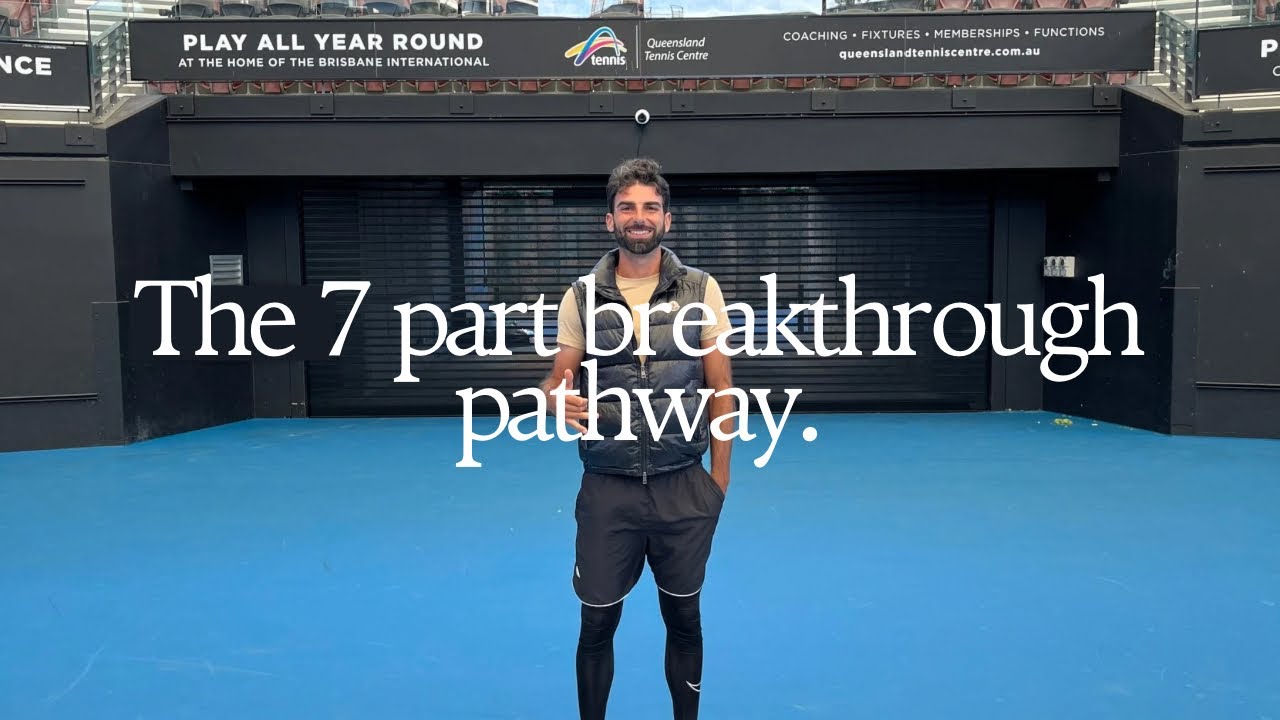



Mastering Your Reality: Why Your "Story" Of What’s happening is not the same as what’s happening.