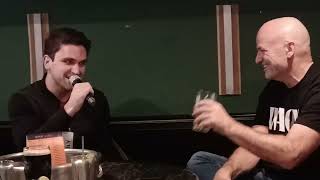
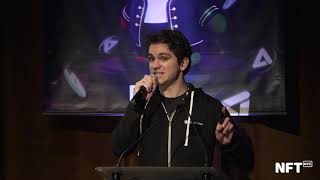
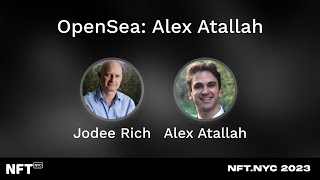
The Growth of OpenSea - Alex Atallah and Jodee Rich - Talk at NFT.NYC 2022
In this on‑stage interview at NFT.NYC 2022, OpenSea co‑founder Alex Atallah reflects on the company’s origins, rapid product‑market fit, and its role as the first multi‑app NFT marketplace. He explains OpenSea’s vision for a multi‑chain, discoverability‑focused platform where users can view NFTs across Ethereum, roll‑ups, sidechains, and other blockchains. Atallah details recent technical upgrades, including the Seaport contract suite, new gallery tools, and community‑driven metadata standards that enable richer NFT experiences. The conversation also covers the explosive growth of the marketplace (hundreds of millions of NFTs, a team expanding from ~20 to ~300 employees), the competitive landscape, and OpenSea’s collaborative approach to rivals via APIs and shared tooling. They discuss emerging NFT use cases such as dynamic ticketing, DAO‑governed auctions, and long‑term collectibles. Finally, Atallah shares his personal productivity habits—meditation, focused problem‑solving blocks, and travel—that help him stay calm while scaling a fast‑growing company.
Chapters
What do y'all think?
What do you think of NFT NYC 2022? Yeah! It's so good. So good. All right. Well, here we are. That was amazing. Kimball was amazing. Joe, you're always amazing. I'm gonna bring out Alex. Are you ready for him? Here he comes. The co-founder of OpenSea. Alex, come on out.
Hey, we first met in a bar in Hong Kong, didn't we? July 9th, July 20th.
The Nifty Conference.
Yeah, the Nifty Conference.
Yeah, yeah.
You thought, who is this crazy guy? I thought, who is this young guy doing interesting things? How do you feel that you've created something of so much value from nothing?
Well, sometimes people ask, how long did it take to find product market fit when we were starting OpenSea? And I usually say that it was very fast. It was just a very small market. We were the only multi-app marketplace with NFTs. And it was kind of a bet on this new type of digital primitive. This new fundamental building block for the web. Either this was going to be a real building block, just like web pages are, streaming video, streaming music, cryptocurrencies, or it's not going to be a building block and no one's going to care. So it's very much an ecosystem-driven market. And we just sort of positioned ourselves in as many helpful places as we could.
But you really hung in there for a few years. You know, you started early and then no one really cared about NFTs. And I think there was a competitor of yours in San Francisco, and I can remember talking to them and talking to you, and we're all going, oh my gosh, no one really loves us, but we'll sort of hang in there. You've gone from creating this extraordinary thing that was just an idea that for years no one cared about to something that has so much value now for so many people. And yet, just like my friend, my new friend Kimball, you have so much humility about what you do, Alex. It's just, it's amazing. So thank you for your humility and thank you for your service to this community.
Thank you.
I didn't tell you, I didn't warn you I was gonna say that, did I?
But, and thanks for setting up the conference. When we started, You know, it was— we were both talking about this conference, but Jody and NFT and Cam and NFT Cred were really the ones who, with the vision, who pushed forward and organized it and executed. And without that, like, America would not have an NFT conference. And this was now— it's the first and the biggest.
Thank you. I can actually remember saying to you and Devin, could you please email a few of your friends to see if we can get some people to come along to our conference. Remember we did that for 2 years and you helped us bring the community in?
Yep. Yep, I remember that was like our main, our main role the first year. Find people to come.
Oh, and you also—
200 people.
Remember the deal we did? I said, well, you know, we'll split the loss that we were going to make. Remember I said 50/50? I said, we'll lose money on this, but let's just go 50/50 on what we're going to lose. You look great.
Yep. What I— okay, you— not many people have been asking you questions. I had one for you. Why— you, you were in telecom, then you went into social influence. Why did you pick NFTs next after that?
So, you know, I've always felt that my life's work, the way I can contribute, is to build collaboration tools because I think that humans are very selfish and very generous all at the same time. And so my thing is, how do I get people to collaborate and share ideas and be more productive? And that has been my life's work. In the microcomputer boom in the '80s, in telephony in the '90s, and then I saw social networks as being this sort of great way for people to share. But I was always bothered with social networks that all the power ended up in the institutions. So we did a Ripple integration for one of our clients in 2014, and that just gave me the idea that we can use the blockchain as a registration device, as a way of registering IP to sort of bring the power and the ownership back to individuals. So now we're in this amazing time, 2022, where we can share, we can own, we can trade, and it's all via NFTs. Back to you. Tell us a little bit about your vision now Now you're in this incredible place in this. So I'm going to embarrass you again, but I would, I would tell my family, and you guys are my family, and very lucky to have part of my family in the second row there. I would tell my family that I think the NFT ecosystem, the NFT boom, is the most important thing I have ever been a part of. More important than microcomputers, more important than mobile telephony, even more important than social. That's how I feel. And you are absolutely one of the most important companies in this most important ecosystem. Tell us a little bit about your vision for what you want to do next.
So we— this is something we've been saying for a while, but we think there will probably be many blockchains and many ways of scaling what's happening today on Ethereum. We have optimistic rollups, we have ZK rollups, we have sidechains, we have completely different blockchains like Solana. And we've noticed that developers pick these different chains for different reasons. And there's very unique activity and unique user behavior that happens each one. They're sort of, they have their own cultures. So OpenSea, we may just be in a very Balkanized world in the future for crypto. There are just going to be a ton of NFTs on a lot of different platforms and many different blockchains. And users will want to have some place on the internet where they can see everything that's going on. That's the core thing we're trying to work on and do really well here, just build that discoverability site. And, you know, there's still a lot more work to do. We just launched new NFT marketplace contracts on Ethereum called Seaport that any developer can build on. And we're building tools and new types of liquidity that users can use to explore the full value of Seaport and create their own marketplaces. We're working on new ways of discovering great content from emerging creators on OpenSea, new ways of seeing what you own. We just launched galleries so you can create your own collections of NFTs that you own, your own featured, shelves of NFTs that you own and share them with others. And that's— and then we're also working on a lot of community efforts to kind of expand what NFT metadata can do and what kinds of things count as metadata and to make it really community-owned so that we can continue to expand the creative playing field for what you can do with NFTs.
It's really interesting because a couple of years ago— you talk about blockchains— a couple of years ago, if, if I was the creator of a blockchain, all I would want in my life is to be listed on one of the crypto exchanges. And now I imagine if I was a blockchain, all I would want in my life is to be on OpenSea so that people can use my— use what they create on my blockchain and have that NFT displayed on OpenSea. So you're providing this incredible role of giving new technology, new blockchains, access to this vast market. How many, how many NFTs are now on OpenSea?
Well, um, it's quite a lot. I, I don't have an exact number. It's definitely in the hundreds of millions.
Hundreds of millions.
But the pure— and there are many collections with 10,000, 20,000 NFTs. I think that the— what it points to is that the number of collections may one day exceed the number of websites. Yeah. And I mean, today the number of NFTs is like catching up to the number of web pages or exceeding it.
I think just to pause you there, if anyone from the audience is from Google or if Google ever watched this, I would have, I would say, Google, you should be indexing NFTs. That is the next big, really interesting thing to do. One day I think you'll learn more about me and Alex by searching what NFTs we've created, touched, liked, commented, than what you might find on the rest of the web. So that's an incredible point. Already we, there are hundreds of millions of NFTs on OpenSea.
It's easy to create NFTs now though.
It's easy to create websites.
Right, right. The unique thing about NFTs is that owning something and owning something that directly in your own wallet is a really magical experience. We see, like, you can go on OpenSea and you can explore Decentraland wearables. You can buy an NFT NYC shirt, and then you can hop over to Decentraland and open up this virtual world and click on your backpack, and boom, your shirt's right there. There's nothing that you had to do. There's no, you know, they're not reliant on an API integration, though they can use it if they want, and your stuff is just truly owned by you and not by some third party. And that feeling is really hard for users from Web2 to understand. But once you do it 2, 3 times, you suddenly realize, oh, this stuff is like actually things that I think about now. I like have memories about it. I remember when I got it. I remember when someone gave it to me. And those relationships—
And it makes you part of a tribe too.
Yeah. Yeah.
And we were talking about that yesterday. Yeah.
Yeah, the tribal— like, that's why these— this 10,000— 10,000 is just kind of a very common number of NFTs in a collection. But a key thing is that when you have a tribe, when you have a fixed supply for a collection, and a lot of— and maybe there's 200 or 300 owners of that collection, they're very incentivized to grow the demand for the rest of the world to become a part of the tribe. They want their tribe to become higher and higher value. So they do all this work for the creator. They market, they develop, they create new side apps, they, they help do partnerships. It's like a community evangelist that you get out of your NFT collection without having to do anything as a creator. And that's like part of the cool unlock that NFTs have for them.
So there are hundreds of millions of NFTs now, and they're on OpenSea. You and I have known each other for 4 or 5 years, and, uh, only 2 years ago your team was, what, about 20 people? Less than 20 people? How many people now power up this amazing company?
It's about 300 now.
So you've grown from 20 to 300 in such a short period of time. Does that do your head in? How does it— I mean, like, how do you— probably more than half your people have only been with you for, you know, less than 12 months.
Yeah, it's— it was, it was really exciting. It was, uh, it, you know, it's crazy meeting people for the first time in person that I've only met over—
oh, you mean at this event?
At this, at this event, because we're mostly a remote company, but you bring everyone in for NFT NYC. Yeah, we invited, I think, like more than half the company came for the event.
I think you told me you took over a whole hotel in Midtown.
Yeah, yeah. And seeing people— this was like actually one of my most memorable experiences from the first NFT NYC. I was talking to somebody for an hour, and they knew a lot about OpenSea. I was like, wow, this is like a very fun conversation. And I read his name tag and I asked if he was on Discord. And he was like, yeah, just take the first 3 letters of both names and combine them together. I was like, oh my God, Trislett. I've been talking, I've known him for months.
Did he work for you? Did he work for you? No, no.
He was, he was just like, like in the community. Yeah. It was, yeah, kind of the connection of 2 different people became one person in my head. That's kind of what it's like meeting an employee that I've only known over Zoom.
But just, just getting people to, you know, collaborate, coordinate, and things who, who haven't really worked together. One of our challenges is this event is going to be 15,000 people in a very short period of time. And, you know, a bit over a year ago it was just Cameron and I running the event. This was our night job, it's not really our day job. And now, you know, now we have a bigger team, but it's still small. But just to have people who haven't together running such an extraordinary company. It must be, must be amazing. And you're so calm, you know, you're always so calm about it.
Otherwise I burn out.
No, well, big well done, Alex. Big well done. Let's give Alex Atallah a hand. Thank you. Maybe just a couple of questions and then we'll finish up. Was there anything else that you wanted to—
I mean, are there any use cases of NFTs that you've heard about in the conference that you thought were unique or exciting?
Well, call out. I am sort of fascinated by the thought that an NFT can be dynamic, that it can change. Based on external events, and that the metadata can change. And, you know, we're working on a project at the moment for a ticketing company where, you know, you just swipe the NFTs, you go into, you know, the event, and now that NFT changes because it knows that it's been swiped. I mean, that's a very basic application, but there are so many ways we can program these things now. And, you know, I like that a lot. It sort of brings it to life. How about you?
I've always been really hopeful about ticketing. I especially think it makes sense if the event is going to last a long time, like when a new show hits Broadway. Imagine if the first 2,000 tickets are NFTs, then it's clear that, you know, you're a true fan of the show. The show's going to be going on for a really, really long time. But as one of the holders of the first 2,000, you would be like, that's a clear stamp of being a true fan. And it becomes a collectible, maybe gives you access to the actors eventually, maybe gives you the ability to like join a private Discord or do something like get a special gift card or something to send your family. But yeah, and ticketing, we're seeing some Stuff like Yellow Heart's been working hard on doing that for music. I've been seeing some interesting experiments with auctions. Like, Nouns is pretty interesting. They create an auction, one per day, for an NFT. And the winner of the NFT becomes a voter in a DAO. And this DAO is receiving the primary sales. From all of these auctions. So it's a truly self-sustaining DAO. They're like getting this daily stream of income and people who can vote on the income.
Yeah, that's really interesting.
Are the people getting the NFTs back.
An NFT in that sense is sort of like a bearer object that gives you voting rights in a sense.
Yep.
Just before, I think I'm running over time, but just before we finish, I haven't spoken to you about competition. I mean, you, you have created so much value over such a short period of time. There are all these people on the sidelines who are going, oh, I want to be like OpenSea, but they're not, they're not getting there. Is there anything that challenges you out in the market at the moment that, that may determine how you run your company? Any, any challenging competitors you see coming up?
Well, yeah, we, this is a bit of a used saying now, but we tend to view competition as a rising tide lifts all boats for good reason. When we see smaller competitors, they can either be trying a new marketplace that's like benefits transactors in some way, or they could be focusing on a specific vertical of NFTs that they think is going to grow quickly. The ones that last more than a few months are usually onboarding a certain group of users in a really interesting way to NFTs. And that is, that's really good for all the marketplace in the space. With Web3, there are really thin borders between companies. It's a very big distinction from Web2. There's, it's, everyone's kind of operating on this shared API, the blockchain. This blockchain kind of creates a tech tree where all these companies are building unique, often composable building blocks that the others can use. And it means that it's easy to create a marketplace. And sometimes some of these marketplaces figure out how to onboard a new group of users who've never been to NFTs before. And then we're excited to work with them. And we have group chats with all competitive marketplaces. And we figure out how to help them. We figure out what their users are looking for.
And so you actually help them?
Oftentimes we, we do it in the name of like the best user experience because your stuff, if it's created on another site, we really want to show up extremely quickly and correctly and accurately on OpenSea. And sometimes that depends on the way developers are setting up an API.
I can see that. And you have an API that helps people with that. I'm just going to have a couple of questions and we're going to finish up. Any short questions? Hi, what's your name? Lance. Lance.
So Alex, I look at you and as Jodie was saying, you seem pretty chill for someone that's doing so much. How do you balance work and life? How do you stay calm and how do you recharge? What do you do with your mind to make sure that you're on top of your game but also you keep cool? [Speaker:ALEX ATALLAH] Good question. I tried meditating. I still try meditating every once in a while. I really like going on walks and trying to think of my number one problem. And I just think about that every week. What's going to be the number one problem or goal that I work on? And I try to create blocks of time early in the morning to work on that one problem. And just having all that focus on just one thing, I think, is helpful. Especially in the morning before all the Slack messages come in and before people wake up. Being on the East Coast kind of helps, 'cause a lot of people are on the West Coast and they're asleep. And I, yeah, I try to spend some time traveling once a month. 'cause that, like, the time on the airplane for some reason really helps me get distance from everything and think about how to reorganize and think about the bigger picture. What? What time do you wake up? Not that early. I wake up at like 7-ish.
One last question. I think that person was the fastest. Sorry. Go ahead.
Hi, Alex. Just wanted to know, as you saw, what were some of the hardest challenges that you were experiencing in capturing the content? Hardest challenges. One of them is knowing what you're not good at and being very, very honest about it. Because our goal from the beginning was to to find the best team, and to wear all these hats as founders, sort of incompetently, and do it as much as we could until we could find someone who really, really exceeds the bar. Holding a really, really high bar, and knowing how to, like, uh, how to help, um, the people we bring on the team is, is actually easier said than done. Um, I now, like, my favorite part of the day is working with the people we've hired, cuz it's incredible. It feels like everyone has some crazy superpower and learning about it, even though we, like, I kind of know about it from when they got hired. It's kind of mind-blowing how, like, what it's like to work at OpenSea, and I'm very, very thankful for it. But I think like understanding those needs and those goals and holding really, really high bars is just something you have to think about every single day.
Alex, thank you so much for the time you spent with us today.
Thank you, Jody.
All right, thank you. I'll take it. Thanks again, Alex. Jody, thank you for everything. Two of the founders of NFT.NYC. What a great story. You know, the reality is without Jody and Cameron at NFT.Cred, without Alex and Devin at OpenSea, this event would not have been started 4 years ago, wouldn't exist today for all of us to enjoy it.
More from Alex
Are YOU getting enough out of your LLM experience? feat. Alex Atallah of OpenRouter
Fun stories from building OpenRouter and where all this is going - Alex Atallah, OpenRouter
Will Open Source AI Overtake Closed Models? Ft. Olama, Fireworks and Open Router
From OpenSea to OpenRouter: Alex Atallah’s Masterplan for LLMs | Data Driven NYC
Beyond Hype Where Are NFT's Headed Matt Medved; gmoney; Swan Sit; Alex Atallah OpenSea, Alex Saln