Iran, the Middle East, and the United States
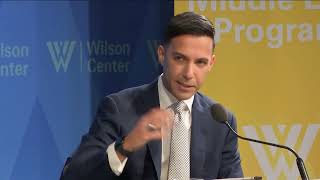
In a moderated panel at the Wilson Center, scholars and analysts examined Iran’s March 2024 parliamentary elections, the historic decline in voter turnout, and the systematic consolidation of hard‑line power within the Islamic Republic. Historian Naysan Rafati traced a decade‑long pendulum swing from the reformist‑pragmatist era of Rouhani to the ultra‑conservative dominance of President Raisi, emphasizing sweeping candidate disqualifications, low turnout (41 % officially, with higher blank‑ballot rates), and the role of the Guardian Council and Assembly of Experts in engineering a “purification” of revolutionary ideology. Holly Dagres linked the electoral trends to mass protest cycles (2017‑2022 Mahsa Amini uprising) and highlighted growing public disenchantment, diaspora mobilization, and the emergence of a new generation (Gen Z) demanding change. Benham Ben Taleblou and other panelists debated U.S. policy options, contrasting pressure‑based approaches (sanctions, diplomatic isolation) with engagement measures (human‑rights visas, tech licenses) and questioned the strategic calculus behind allowing a record‑low turnout figure. The discussion also covered Iran’s nuclear posture, noting hard‑liners’ push for higher enrichment (up to 60 %) and the regime’s use of nuclear leverage despite a public fatwa against weapon use. Throughout, participants underscored the regime’s preference for “righteousness over competence,” the shrinking elite pool, and the paradox of an overconfident yet paranoid state facing legitimacy crises at both domestic and international levels.
Chapters
Good morning, everyone. Thank you for taking the time to join us at the Wilson Center today at the Iran, Middle East, and United States event. To give his opening remarks, I wanted to introduce you Wilson Center's President and CEO, Ambassador Mark Green. Thank you.
Thanks, Youssef, for the introduction, and thanks for the great work that you're doing. Welcome everyone to the Wilson Center. So we're a unique institution in foreign policy. We are congressionally chartered, scholarship-driven, and we're fiercely nonpartisan and independent. I always say that that special status brings with it special obligations to not duplicate what others are doing, but instead to prioritize the most important issues and opportunities and those places in which we believe we can add value and make a difference. So there are few topics that more fit the bill of picking high priorities than the subject that brings us here today. And the discussions on Iran, the Middle East, and U.S. involvement in the region. Our work is focused on both ends of Pennsylvania Avenue. I can tell you that we've done more briefings and responded to more requests for briefings on this subject than any other in recent months. Our goal at the Wilson Center is to do our best to provide informed insights into Iran's alliances in the region and the implications for U.S. national security. We're hoping in our work and in today's discussion to foster a more nuanced understanding of the region's geopolitical dynamics at, I think, what we all believe is a crossroads moment in modern history. I invite all of you to partake in today's discussion, to process what you hear, to ask good questions, This is an important time and this is an important topic. I think we can all sense that there are geopolitical shifts underway, particularly with Iran's most recent parliamentary elections and the ongoing war in Gaza and the gathering storm of attacks on US military and economic targets from Iran's Axis of Resistance. These attacks have significant ramifications, not only for regional stability, but I think for global developments as well. Iran is an active partner in Putin's war plans, and I think we know that it's making new investments nearly every day in many regimes around the world. And so this is an important time, an important topic, and to get things underway, Marisa, I'm going to turn things over to you to introduce the first panel that will delve into Iran, its allies, and its role in the MENA region. Good luck with today's discussions, which I know will help us all better appreciate the multilayered complexities of Iran, its leadership, and again, its activities and involvements in the region and around the world. Thank you.
Thank you.
Good morning, everyone. It's my pleasure to introduce our first panel for today, which will be moderated by Ambassador David Hale, who is currently a global fellow at the Middle East Program at the Wilson Center and formerly ambassador to Lebanon, Jordan, and Pakistan. On the panel are first Ambassador Jim Jeffrey, who is chair of the Middle East program, Ali Vaez, who's senior advisor to the president and director of the Iran project at the International Crisis Group, and last but not least, Michael Singh, who is managing director at the Washington Institute for Near East Policy as well as Lane Swig Senior Fellow. So over to you, David, to start the discussion.
Thank you. And we're very regretful that Robin Wright was supposed to join us, but unfortunately is unable to do so today. So I'm stepping in. But I want to just open with a quick comment, as Robin had intended, of referencing everyone, drawing everyone's attention to the ODNI, the Office of the Director of National Intelligence report that came out last week on Iran with the assessment, which is quite grim, of the scope and malign nature of Iranian behavior throughout the region, their continued commitment to work on accelerating its nuclear program, and in particular, its exploitation of the situation in Gaza. So all of these will be, I think, topics for our discussion today. My own observation as a diplomat for 38 years with the State Department is that since 1979, our presidents and our leaders have tried almost every single strategy you could think of in the national security sort of rulebook, from containment to engagement to maximum pressure to even benign or less benign neglect, none of which has actually worked in changing the nature of Iranian behavior or its threat to U.S. interests. So on that happy note, I'd like to start perhaps with you, Ali, to talk about Iran's profile in the region, its network of proxies and allies, what it seeks to achieve through those relationships as an opening shot.
Thank you very much, David. It's great to be back at the Wilson Center and to discuss this timely subject with Jim and Mike. Let me make 3 broad observations in response to your question, and then I'm happy to delve deeper into any aspect of this during the Q&A. So first point is that the war in Gaza, I think, so far has been a mixed bag for Iran. On the one hand, the war has revived the Palestinian cause in ways that was really unimaginable on October 6th. And Iran, as the so-called standard bearer of this cause, obviously stands to benefit from this reality. Also, the conduct of the war has resulted in a degree of radicalization that also benefits Iran if the objective is recruitment in the future. The war has also fueled the narrative of resistance and highlighted Western double standards in enforcing international humanitarian law, which also grants Iran a victory in terms of its discourse. It has also damaged Israel's image and therefore delayed further normalization of relations between Arab countries and Israel, and that too is beneficial to Iran. But on the other hand, the horrible Hamas attack on October 7th, of which we now know, and it's in the ODNI report as well, Iran did not have any foreknowledge, derailed the de-escalatory path that Iran was on with the United States, especially in the aftermath of an informal understanding that both sides achieved last summer, which resulted in the longest period of lull in attacks against U.S. forces in Iraq and Syria. It has— the war has also put Iran's vulnerability on full display. Iran's preoccupation with what was happening on its western borders resulted in ISIS exploiting its distraction and conducting an attack on Iranian soil from the east. Also, Iran has suffered multiple cyber and covert operations in this period, which again highlights the extreme degree of vulnerability they have at home. It has also highlighted the reluctance of Iran to sacrifice any of its strategic assets for anything short of defense of its homeland. And I think that weakens the credibility of Iran's deterrence. Second point is that the overall concept of Iran's regional strategy, which boils down to forward defense, based on having these proxies and partners away from Iranian borders that would deter an attack on Iranian soil, has proven simultaneously to be successful and yet perilous. Successful because the strategy has basically allowed Iran through axis of resistance to project power all the way from the Indian Ocean to the Mediterranean through the Red Sea, and the axis has, operated in a coordinated— it's a much more coordinated fashion than anything we had seen in all these years. And yet the fact that Iran aids and assists and arms these groups, of course, creates a degree of complicity regardless of how much Iran wants to say there's plausible deniability and these groups operate autonomously. And that renders Iran vulnerable to retaliation against itself and on its soil. We came very close to that several times during the Trump administration. We came very close to that after the Tower 22 incident back in January or February. And this completely undermines the concept of the existence of this forward defense strategy, which again is the protection of the homeland. Final, third and final point I want to make at the beginning is that There are two elements that help with de-escalation and one that risks further escalation under the current circumstances. First is that there is a certain degree of de-escalation that happens by default simply because neither Iran nor the United States want further escalation in the region. And again, Tower 22 is a good example of that. Even, I would argue, if there was no channel either through intermediaries or the channel that we now know exists in Oman between Iran and the U.S. Even if there were no channels, because neither side wants further escalation or expansion of the conflict, I think this would lead them to act cautiously as they did in the aftermath of Tower 22 to avoid direct entanglement. Second point is that the degree of domestic constraints in each of the territories of the stakeholders involved is inversely correlated to their appetite for risk. So for instance, Iran, the regime is facing economic discontent, societal unrest, and therefore does not want to take major risks in its regional foreign policy. Same applies to Hezbollah. And I would argue even to a certain degree, the Hashd al-Shaabi militias in Iraq They are in a good position right now at home, and they don't want to do anything that would upset the apple cart. But none of this applies to the Houthis, whose stock at home has actually increased as a result of the escalation that they have engaged in. And finally, I think the main risk which I'm worried about the most is that I think although the Tower 22 incident It did not end in grief, but it has increased the risks of miscalculation. I've had conversations with American officials and Iranians in the past few weeks which indicate that the perception or interpretation of what happened is almost mirror image of one another. The U.S. seems to believe that the much more assertive reaction to an incident in which 3 service members were killed has restored deterrence because now there are 4 weeks of quiet in that area. And therefore, I think if there is another incident like this, the U.S. is likely to even respond stronger, thinking that this works, right? On the Iranian side, the problem is that because no Iranian asset was directly targeted, they have interpreted that that the US has no appetite for risking too much. And this also, I think, creates possibility of miscalculation in the future, especially when you have an actor like the Houthis over which Iran does not have as much command and control as is the case with some of these Shia militias in Iraq, and especially in a scenario where you have a high number of casualties. I leave it here. Look forward to the conversation.
Okay, well, thank you, Ali. Yeah, I'm struck by recalling the history that when the United States suffered attacks by Iranian proxies directed by IRGC in Beirut, the Marine Barracks bombing and the two embassies, we didn't retaliate at all. And there was a lot of talk, but there was no actual action. And I think that the Iranians have a long memory and have seen a pattern of behavior on our part. Touching on your last point about how we react, which brings me to Mike. And how do you see the evolving pattern of Iranian threats to U.S. interests and the various responses of the United States over the years?
Thanks a lot, David. It's great to be here with everyone. And I thought Ali did a great job with his sort of description of what Iran has been up to in the region and the description of its forward defense strategy, which I think is important to understand that in fact Iran has a strategy in the region, that the things we're seeing from Iran are not somehow, you know, sort of just random, malign acts, but they do fit together in a pattern. And sometimes U.S. actions I think are fitting less of a pattern in a sense and actually have a little bit more randomness. I mean, you mentioned the Marine barracks bombing, our failure to retaliate. I think the French retaliated.
They missed, but they tried.
They missed, but they retaliated. But then President Reagan did retaliate and sank most of the Iranian Navy in the later in his term in the late 1980s. And so we have had highly variable responses. And I think that what we have seen is that the U.S. has never, I think, had a very sort of decisive strategy towards Iran. Iran has never really been the number one priority for the United States in the region, I would argue. But we have changed our strategy over time. I mean, so when I came into the NSC, National Security Council, and I was Iran director, one of the things I tried to do was to determine what had come before me essentially, what was I inheriting. Because one thing that— one way in which actual service in government differs from, say, what you learn in a public policy school, as you know, David, and as Jim knows, is that you're never creating a policy from a blank sheet of paper. You have a policy handed to you and you can kind of tweak it at the margins, and only on rare occasions can you really sort of rewrite a policy. Policy. And what I found was that in the early 2000s, there were many policy debates on Iran in the wake of 9/11, but they really never resulted in much. They didn't result in any consensus on what should our policy towards Iran be because the priority, from what I could tell, was Iraq in the Middle East at that time. Even though you had arguably much more compelling evidence of Iran developing a nuclear weapon, certainly a long track record of Iran being involved in terrorism against the United States, Iraq was a clear priority and the second priority was the broader global war on terrorism of which Iran was a part but not really the primary part. Al Qaeda obviously was the focus at that time. So these debates never really resolved. There was a lot of talk of regime change. There was talk of different strategies. But ultimately, the policy towards the nuclear program at least was to sort of trust the UN and the E3, the UK, France, and Germany to handle it while we attended to other matters, as you'll recall. That may have changed around, say, 2005 when Iran's nuclear program became a much greater concern, whereas Iran's support for terrorism had been our chief concern, I would say, at least up until that time, maybe even through, say, the early 2000s. It was Iran's support for terrorism that was our policy priority in this— with regard to this particular threat. Even after that, we settled into a strategy which was, I think, a strategy which is very familiar to everyone here, which was sort of that dual-track diplomacy and coercion strategy, which was adopted by the Bush administration in around 2005 with the aim of sort of compelling Iran, let's say, to abandon its nuclear weapons aspirations and come to the negotiating table with the idea that then perhaps we could have some sort of accommodation or deal with Iran that had eluded us for so many years between the U.S. and Iran since 1979. That policy was actually largely continued by President Obama. I mean, we have this sense that President Obama had a radically different Iran strategy than President Bush. I would say it's not actually true. That he changed it in some ways, he engaged especially in direct outreach to the Supreme Leader of Iran by writing letters. But fundamentally, the strategy that President Obama pursued at first was that same dual-track strategy aimed at offering carrots and sticks in an effort to get Iran to the table largely to negotiate over the nuclear program. All the while, the backdrop was that we had obviously the U.S. and Iran sort of killing each other actually in Iraq. But I would argue that never really was the focus of American strategy with respect to Iran. It was a big sort of element of the policy, but I think there was a sense that if we could get a— and Jim will have a view on this— if we could get a sort of strong and competent government stood up in Iraq, that that was ultimately the sort of solution to that problem in the longer run. And efforts to say, well, should we not push back harder, should we not retaliate more directly against Iran for what it was doing in Iraq, I would say were not seriously contemplated, not seriously considered. I think what changed was around the middle of the Obama administration, that balance of how we looked at the threat and how we looked at our own capabilities changed a bit. I think there was a sense after sort of the amount of time we had spent, again, in sort of proxy combat with the Iranians in Iraq, that in fact the threat was greater from Iran than we had anticipated. They made a lot of progress on their nuclear program. We had suffered a lot of casualties in Iraq at the hands of Iranians or Iranian proxies. But I think there was a declining— also a declining view of our own ability to deal with it. You know, we had not had the success in Iraq that we had hoped for. President Obama campaigned in part on that idea that we weren't being successful in Iraq. And so there was a real shift in our strategy towards Iran away from that sort of dual-track policy. And more towards President Obama's sort of second policy of let's negotiate bilaterally with the Iranians because we really worry that this is headed towards war. And frankly, we don't want that war. We want to get out of the Middle East to the extent we can. Not out of the Middle East in a grand sense. I think that gets exaggerated. But I think that sort of— by that period of President Obama's administration, 2011, 2012, there was a sense that the risk here is greater than the reward and that necessitated a change in strategy. And that ultimately, I think, is what produced the JPOA and then the JCPOA. It was this idea of this is the most risky, most dangerous issue, the nuclear issue. Let's just sort of get it put to the side so that we can then pursue the Middle East strategy that we want, which is ultimately one of decreasing commitment to the region. That's a strategy that, you know, in some ways hasn't changed. The United States, you know, still isn't looking to increase our footprint in the Middle East for sure. That's been a matter of bipartisan consensus. But obviously the approach towards Iran has changed because there has been a view that that strategy of, well, let's, you know, engage in diplomacy to avoid war hasn't really been successful. And I think that's actually not just a Republican view. It's not just a Trump view. But you can see that from the Biden administration to some extent as well. The, the sense that the idea that somehow we would come to a nuclear agreement and then that would lead to a warming of relations or a rapprochement between the United States and Iran has really sort of fallen away. And so in a way, we are, we are back to this idea of a dual-track policy, kind of dangling the idea of diplomacy while pairing that with threats. But I think with perhaps ultimately a bit of a lower estimation of what we can ultimately achieve in the region and with respect to Iran. So we have seen sort of these different eras of American policy towards Iran, but I would argue that again, in none of these eras was Iran actually the priority for the United States. Iran was always in a sense a risk that we were trying to manage. So even today, if you look at what's unfolding in the Middle East, Yes, Iran is at the center of all the different things that Ali was talking about. Iran is at the center arguably of the Houthi attacks in the Red Sea. Those attacks couldn't be taking place without Iranian help and without Iranian complicity. They're at the center certainly of the story in northern Israel on the Israel-Lebanon border because Hezbollah is a strategic asset for Iran. Why do we not see Hezbollah firing all of its missiles against Israel? Because Hezbollah is held in reserve. As something that is there to protect Iran. And Iran is certainly at the center of the story of Iraq and Syrian militias clashing with the United States. Iran may also be at the center, frankly, of the Gaza story. I'm not sure Iran necessarily knew exactly when Hamas would act or what it would do, but could Hamas have acted without Iranian help? I think most of us would say no. And therefore Iran is accountable for that. And yet if you look at the international response, so little of it has had anything to do with Iran. Iran has arguably made significant strategic gains throughout this process since October 7th. It has driven a wedge between the U.S. and Israel. It has isolated the U.S. and Israel on the world stage. It has elevated Hamas, I would say, in the Palestinian sphere, and the Houthis, as Ali mentioned, have gained in their prestige and their profile. And the price that Iran has paid, the price that we, the United States, have exacted on Iran has been pretty low, arguably has been basically zilch. And so we see sort of this era of one strategy to the next where Iran is never really the top priority for the United States, which I think suits Iran just fine. I think that if you go back to what Ali was talking about, part of Iran's strategy is to keep its adversaries, including the United States, preoccupied with other things so that they're not focused on Iran. And let me just say briefly, I do think that we again are seeing— we're seeing interesting things from Iran now in terms of Iran's own strategy shifting. And I think one question this raises is what will it produce from the United States and from the West in general. So we see interesting shifts. We see a much clearer alignment from Iran with China and Russia, which is something that I hope we'll talk more about. Iran has always been— sort of diplomatically available in a sense. We haven't gotten very far often with our diplomacy with Iran. But Iran has always sort of kept the door open for rapprochement with the West. And that may have to do with their desire for trade. It may have to do with the population's inclination towards the West. There may be multiple reasons for it. But it seems as though that door is increasingly shut for lots of reasons and that's aligning much more closely with China and Russia and all the other actors that are part of that sphere. We see Iran increasingly becoming a player in the global arms market, providing drones and maybe ballistic missiles to Russia. And we see at the same time Iran being interested in conventional systems that it hasn't really fielded before—fighter jets and things like this. That's a big shift from Iran as well. And at the same time, we see inside Iran not just the crackdown on the populace, but what I think most Western diplomats describe as a sort of hardline turn, as well as a preoccupation with succession. And we may soon find ourselves dealing with an Iran which isn't led by this Supreme Leader or any Supreme Leader, but looks very different. It's something like a military junta or a military dictatorship or something like that that is more hardline and again more aligned with big American adversaries than it has been in the past. So I'm not sure, David, what the conclusion is from my initial remarks. We've had shifts in American strategy from one era to the next. Never, I would say, a very close focus on Iran, which is in part why you see the somewhat scattered American response and the reluctance to sort of go all in and to take big risks in our responses to Iran. But at the same time, shifts in strategy from Iran itself. And I do wonder whether those shifts in strategy will prompt something different from the United States and the West going forward. Thank you, Mike.
Very helpful. Jim, I'll turn to you, but let me just comment briefly, particularly to focus our attention on the situation today and what you think U.S. policy should be addressing in terms of threats.
Thank you very much. First of all, I agree with everything Ali and Mike said. And I'm going to answer your question, but it's going to be a frustrating 2 minutes before I get there. Okay. Okay. So here's the scenario. A powerful hostile regional state allied with global opponents of the American-led global order with both ideological and geopolitical interests in expanding in its region by challenging the U.S. and its partners. After huge losses initially, as it started this quest in direct action against the U.S. and its partners, this regional state shifted to a proxy effort throughout its region in country after country finding ideological or other linked forces and worked against the local governments and the overall U.S. interest in an indirect way while never exposing itself directly to the point of actual combat with the United States. Who am I talking about, audience? Who? No. Although Cuba isn't bad, no. Communist China. That's what they did throughout the region. And even though I was involved in that because I've been around for so long, that also challenged. I added up about 9 different countries from Korea and Iraq all the way to India, of which the U.S. was involved in all of them except India, and only partially, because it was very complicated, Burma. But Malaysia twice, Philippines twice, obviously Southeast Asia, two major conflicts there, Thailand, Indonesia. But here's the difference. The Chinese got nowhere. Up to 1972. No clear-cut victory after the limited successes with Korea at great cost. That's where they lost almost a million people. And in French Indochina up to 1954. Beyond that, every place they either lost or the jury, including, by the way, in 1972, I was there in Vietnam, they either lost or the jury was still out. And that was a factor, not the major one, but it was a factor in their, of course, historic flip. So, in looking, my answer to your question, David, is if we want to deal with an extraordinarily similar situation, we have to look at how we dealt with Communist China. And folks, you're not going to like the answer. First of all, for those people who keep on saying, we gotta whack Iran whenever one of their surrogates hit us, and I've been one of those from time to time, we never actually did that. We came close in a direct confrontation in Quemoy and Matsu Islands in 1958, but beyond that, we never really contemplated, including repeatedly when the Chinese shot down American aircraft. Rather, what we did is conclude that it was an existential American interest to stop these people, and therefore we engaged with our own surrogates throughout the region and several times, Kwee Moe Matsu threat, Vietnam obviously dramatic reality, Korea 1968-69. Limited direct combat involvement. If necessary, we put our own troops in harm's way, but most of the time we fought through surrogates, an extremely messy, expensive war. We had to deal with all kinds of corrupt forces. We didn't care. We had to smash people who could make claims that they were the local agrarian reformers that George Washington— we didn't care. This led to, particularly with Vietnam, but On other issues as well, huge dissent within the United States, but we succeeded. But as Mike has said, we have not succeeded with Iran. Unlike China, Iran in the last 20 years has gobbled up directly or indirectly Lebanon, Syria's complicated but at several levels supporting its ally while also undermining its ally simultaneously, Assad. Iraq, jury is still out, but I'm pretty sure it's heading in the direction of Lebanon. Gaza, up until the 7th of October, and largely Yemen. And each of them are specific, just like the Chinese, often these people are, the Chinese surrogates, these people are operating on their own, sometimes against the will of the mother ideological supporter. But at the end of the day, in the case of the Middle East, we have not, with a limited exception of, I would say, the Mike Pompeo period, where David and I were both in the administration, and there mainly in Iraq and Syria, have we really taken on a, we're gonna push back hard against these guys and essentially everything they do, everything they want to do, everything that will make them happy, we have to challenge. We're not there. I don't know if we're going to be there. What I would say is two things to finish up. First of all, because we haven't pushed back exactly what we thought would happen with the Communist Chinese, and that was the argument we made to our American public for all of these commitments we did over 25 years. The thing has gone— it has metastasized with first the Hamas attack on Israel, a direct attack which under certain circumstances was an existential threat to an ally, direct military, and the Houthis shutting down largely the Red Sea. These are dramatic steps. And for the first time, you're getting significant pushback. I'm not totally happy with the U.S. support of Israel and the U.S. engagement against the Houthis. But it is certainly a shift in U.S. policy, again, in this administration and to some degree in comparison to all of the other administrations. So the jury is still out on where we're going to go from here. Well, it's fascinating, Jim.
And building on your comparison to the China of the past, I would just add the comment, of course, that one of our strategies— and you touched on this— was building a multilayered alliance bilaterally, and in some instances multilaterally, around China. We've attempted some of the same in the Middle East, but it is less structured, and a lot of our allies are at cross purposes. So I might turn the panel over to the question about addressing some of the interests and behavior of the smaller other states in the Middle East. The Gulf states in particular, Saudi Arabia, of course, had normalized its diplomatic relationship with Iran last year, but also was working on a normalization of relations with Israel, which may have been the factor in the October 7 calculation by Hamas. And then, of course, Israel itself is going through a period of soul-searching as to where, where its national security strategy and deterrence strategy failed it and what new strategies are going to be needed. To deal with the new realities, and they're much less likely to accept going back to a status quo of Hezbollah and Hamas and others and Iran ultimately posing the threat that it has posed. So maybe starting with Ali, could you delve in a little bit on some of those questions or others that you have that you'd like to share with us? Sure.
Let me just first say in response to Jim's fascinating comparison between Iran and China, that maybe one of the reasons that China failed in its regional policy was that, I mean, was compensated by its acquiring of nuclear weapons and that kind of reduced threat perceptions or at least the perception of existential threat to the regime, which then resulted in them agreeing to normalizing and de-escalating with the U.S., which is a factor we don't have probably enough time to talk about it on this panel, but Mike was talking about the fact that Iran is not a priority. I remember when Mike was in office and Iran had 164 centrifuges. The West, even Russia and China, were engaged in imposing sanctions on Iran left and right. There were 6 UN Security Council resolutions against Iran. Now Iran is closer than ever to the verge of nuclear weapons, and it's not even headline news anymore. And so that's a point that we have to take into consideration. I think the Saudis have been able to get what they wanted out of normalization with Iran, which was to reduce the threats that Iranian policy posed to MBS's economic plans. That has been achieved at a very low cost for the Saudis because the Saudis have not really given Iran anything in return. Iranians expected economic investment, bolstering of trade, etc. And none of that has happened, of course, because U.S. sanctions create a ceiling to how far the Saudis can go. And therefore, in that imbalance, I see risks of sustainability of this normalization unless and until the parties can figure out a way of adding to the relationship, either the Saudis who are now involved on part of what's happening in Gaza in terms of leading on the political process of trying to revamp the Palestinian Authority along with Jordan, UAE, Egypt, etc. If this Arab initiative could bring in Iran and turn it into something a little bit more inclusive, then maybe there is a way forward to keep it and build on it. Otherwise, I think it's just a matter of time before we get back to status quo ante. Same applies to the Emiratis who started this game earlier than the Saudis and realized that a degree of engagement with Iran would help them get themselves out of the line of fire. And of course, the Gulf has been really shielded from the tensions that we have seen in the region so far. Iran also does not want Prime Minister Sistani in Iraq to be undermined. The Supreme Leader of Iran apparently has a very positive view of him and from my research, one of the reasons that the attacks in Iraq have stopped is the direct appeal from Soudani to the Supreme Leader in the aftermath of what happened on January 29th. I think that that covers a lot of the bases, but happy to—
Yeah, Mike, do you have any thoughts on this?
On the specific question of Arab normalization with Iran?
And the behavior of the states in the region other than Iran vis-à-vis Iran?
[Speaker:MR. RHODES] Look, I think that for a long time we had partners in the region— Saudis, Emiratis, and so forth— who essentially hoped the United States would do something about Iran. And I'm sure you, David, and you, Jim, were on the receiving end of a lot of these demarches from Arab partners. And I think now we have a view in the region the United States isn't going to do anything about Iran, whether that's right or wrong. I actually think that it may ultimately be proven incorrect. But there's a view that we won't do anything about Iran, and I think there's a view that Iran is essentially not just— the regime is not just there to stay for the time being, but Iran is a de facto nuclear weapons state. You hear this all the time when you travel to the region. And I think this has produced on the part of our Arab partners a mixed reaction. On the one hand, you see the normalization processes. It's a bit of a misnomer because no one really has normal relations with Iran because Iran doesn't really practice normal foreign relations, frankly. Iran doesn't really engage— it doesn't engage in alliances. It doesn't really engage in diplomatic or meaningful types of military and economic cooperation in the way that other states do as a result of its own system. And I think Ali alluded to some of this at first. And so I think you can overstate what's happening diplomatically between Iran and these Arab states. My own view is that the Arab states view this normalization process as a mechanism to put a ceiling on conflict, essentially, but not as a solution by any means to their problems with Iran, which have existed for a very long time. But at the same time, you see efforts to also deter Iran. For the Saudis, I think that is largely in the form of seeking a defense treaty with the United States. Obviously, they invest tremendously in their own military, and they have talked about pursuing their own nuclear weapon as well. These things are all directed at Iran, make no mistake. They're not directed at— there's no other state around Saudi Arabia that these messages are intended for, essentially. And I think you see versions of this from other Arab states as well. I mean, look, the Bahrainis, who worry a lot about Iran, are the only Gulf state who are explicitly participating in Operation Prosperity Guardian. They have embraced the United States very closely. The Emiratis, it's a little bit more complicated because there are some tensions right now in the U.S.-UAE relationship which are not necessarily just Iran-focused. A lot of that goes back to the question of China and Russia because the UAE has taken a different and troublesome tack from the United States' point of view on those questions. But I think you see basically these sort of carrot and stick strategies operating with respect to Iran. My own view is that Iran looks at what's happening now as we are triumphant— not we the United States, but Iran is triumphant in a sense that you see President Raisi touring the region and it's almost a victory tour in a sense. But I think it's shortsighted by the Iranians because my own view is the Iranians may be sort of taking some pleasure in the fact that the United States wants to sort of shift its focus away from the Middle East, is less inclined to intervene in the Middle East. But I think that Iran's own choices, A, sort of aligning themselves more closely with China and Russia, will have consequences that I think Iranians have not fully thought about, that regime officials have not fully sort of dealt with in a sense. But I also think that the response from the region will ultimately be one which doesn't serve Iranian interests very well. I think their adversaries in the region will— are remaining adversaries are trying to boost their own capabilities, are trying to boost their cooperation with one another through mechanisms like the Abraham Accords. And that, again, won't serve the Iranian regime's interests very well over the longer run.
So, Jim, I'd like to ask you about Israel in particular. And after, you know, the Gaza War will end, it will come to an end, but as I mentioned, the Israeli soul searching will not over a national security strategy that can hopefully, from their point of view, take them out of living in the shadow of Iran and its proxies. Whether that's feasible or not, of course, is an open question.
Jim, that's a tough one because the jury is still out on what happens in Gaza if the Israelis achieve their— when they're speaking rationally, military goal of dismantling Hamas as a military force with offensive action and removing it from territorial control of Gaza, they will be in a very different situation. Now, many people, including repeatedly to my despair, this administration have called into question that goal. That goal, first of all, has been largely achieved in 80% of Gaza, and it can be under considerable more bloodshed succeeded everywhere. And the obvious example that this administration in its last incarnation, the Obama administration, knows very well was our defeat of the Islamic State. When we declared victory in 2019, there were still 15,000 of these guys running around. But they were a very different group of people than we had in 2014, controlling 9 million people and a year later, uh, launching attacks all over Europe. Uh, they were far less threatening and they were easier to control. The other analogy, Hamas is all over the West Bank, but it doesn't launch 3,000-strong attacks backed up by a barrage of 5,000 rockets into Israel. If the Israelis achieve that, they will have done something for the first time in 20 years in the region and seen the defeat of an Iranian surrogate. I would say, but I'm biased on this, that we have a frozen conflict in Syria, but apart from that, everywhere else, the Iranian-backed forces have been advancing. This will be the first time that they are stopped. Now the problem is, and it's a problem I keep on coming back to Southeast Asia, you always had to quote John Kerry, "Well, Vietnam isn't about communism, it's about a civil war." It was a civil war. It was also about communism. And you have something approaching a civil war between the Palestinians and Israel that goes beyond Iran and started long before Iran was a player. And you cannot separate the two. And Israel, to some degree under this government, is trying to separate the two and focus only on Hamas as an Iranian threat, which it is, because if it was able to do what it did on October 7th again with Hezbollah jumping in and possibly Iran, then Israel would be in an existential fix. So that's the problem I have in trying to figure out where this goes assuming, and it's not 100% sure, that Israel will be successful as I'm defining in a modest way success in Gaza, because this requires Israel dealing with the civil war aspect of the conflict as well as the Iranian team, Iran's offensive military capabilities, which Israel sees itself on the path to doing.
Lots of conundrums there. Um, I think, uh, 11:15 now, so I think we'd like to turn over to all of you, uh, of course, the opportunity to ask questions of the panel.
Thank you, David, and thanks to the panelists. So we'll take about, uh, 2 questions from our in-person audience, and we also have some incoming questions from our, um, uh, online audience. So please go ahead, um, wait for the mic in the back. And please identify yourself.
Hello there. My name is Ujwala Pluri, and I'm at U.S. Customs Office of Trade. And my question is, there was a lot of economic and trade agreements such as IMEC and other agreements signed in the Middle East prior to the current conflict in Gaza. To what extent do you believe that as this conflict potentially winds down, hopefully, can we see the resumption of these economic and trade contracts to perhaps further facilitate a reintegration of the Middle East, Europe, as well as Asia that has right now seen some disruption by the conflicts in the region?
Who would like to tackle that question?
Well, I mean, I'll just say that I— so yes, I think what we saw prior to the Gaza conflict was very promising from the point of view of regional integration economically, from a security perspective to maybe a slightly lesser extent, and then we saw very little, I would say, on the political or diplomatic side. You saw free trade agreements being signed. You saw rising trade between Israel and the UAE. And we were poised, we had hoped here in Washington, for an Israel-Saudi normalization that would have had very significant security as well as economic aspects and potentially been quite a game changer in terms of raising regional GDP and benefiting third-party states as well, like Jordan or Egypt. We also saw, I think as you alluded to, the increasing involvement of states outside the region— I think India is really prominent among them— in some of these projects. So we had this I2U2 initiative, an initiative that was not so filled with substance, I would say, initially, but was a vehicle hopefully for more future, especially economic activity. But then you saw also this IMEC initiative, which I thought was quite good and quite promising. This is the India-Middle East Corridor, IMEC initiative from the Biden administration. Some people painted it as a kind of rival to the Belt and Road Initiative. I think frankly it was better than that because the Belt and Road Initiative is often exaggerated, I think, in terms of its coherence and effect. I think this will all continue, personally. I think it will be— elements will become politically more difficult within the region because of what's happened in Gaza. I think that it will be hard for it to resume until we have some kind of end to the Gaza conflict. But I think these changes are not— these were not just diplomatic initiatives from this or that leader or administration. I think these represented more sort of tectonic shifts that were happening in the region which are going to continue. I mean, these are states which I think basically have a shared view that regional economic integration is good for them. I think you see common threat perceptions from states in the region. But I think more than anything, you see states like Israel, Saudi Arabia, the UAE that see themselves much more in a global context and not just in a regional context. And so I think of it a little bit like I see India these days. India had often in the past, I think, been trapped a little bit in looking at the world through the lens of Pakistan. And you were in Pakistan, so you know that issue well. And I think has, under the current government, emerged a little bit from that lens and now sees itself more as a global player. Saudi Arabia certainly sees itself as a global player now. So does the UAE. Israel has, I think, for some time. And so I think they bring a different perspective to these questions of integration than previous governments had. Very helpful. Thank you.
I disagree a bit with Mike. I think the whole future of the Middle East will be decided in Gaza in the next 3 months. I do not think this is the 4th of a never-ending series of Palestinian, or 4th or 5th or 6th, you know, the Intifada, the one, number 2, Southern Lebanon in 2006. How many other times did Israel go into Gaza? If Israel pulls out of Gaza, with Hamas left in charge of the ruins of that place, there will be no two-state process, let alone a two-state solution. There will be no investment in the region. All of the countries that are hypocritically, you know, voting almost unanimously in the UN for a ceasefire will be very, very reluctant to go into a region that they will see will be dragged ever more into violence. That's one reason why I believe that extraordinary, from my standpoint, tolerance of the Gulf states, Egypt, Jordan, and Israeli Arabs for the slaughter of 30,000 Gazans, half probably or more civilians, is based upon the fact that somehow they understand this too. They do not want Hamas to win.
Thank you. Can I just read one online question, then we'll go back to the audience. Iran's deep reliance on China for financial and strategic benefits demonstrates that it would be difficult for Iran to resolve disputes with the US without Chinese consent. What role does India play in bringing the American and Iranian leaders to the negotiating table? Did you say India?
I mean, none as far as I can tell. I mean, unless— I mean, I don't want to be blunt about it, but what role does India play? I think that, just very briefly, I think that India plays an increasing role in the Middle East, and you could regard India— it's a whole separate talk— as a Middle East power in a way. But India has not chosen to really involve itself in this kind of issue in these sort of big international diplomatic disputes. And I personally don't see that changing anytime soon. What about China though?
So China in many ways I think is a beneficiary of the status quo, and I don't see a reason necessarily for China to intervene and try to change it because the U.S. for a long time wanted to pivot away from this region, as Mike said initially, and there is every now and then an incident or something that basically dragged the U.S. back in. And the war in Gaza is now one of them. The Russians are benefiting from the distraction that it creates in the same way that the Chinese are benefiting from it. Even our sanctions regime is beneficial to China because China can get discounted oil from Iran that they wouldn't be able to get in other scenarios. And they are forcing Iran to get to import low-quality Chinese goods that again, if the Iranians had other options, they wouldn't necessarily. And so I have not seen any effort whatsoever on the side of the Chinese to try to bring down the temperature. Even when the Red Sea incident started, they got a free pass for themselves, for their own vessels. They didn't try to convince Iran to rein in the Houthis as apparently the Biden administration had asked them to do. And on India, I think the problem is India has very little leverage over Iran. China has leverage. It's a question of whether it wants to use this leverage. But India really stopped importing oil from Iran when the Trump administration reimposed sanctions. And in that sense, I don't think they have much leverage to deploy anyways. I would just—
the one point where I would not agree with Ali is I actually think that China itself I'm not sure has tremendous leverage over Iran. I actually see this as one of those relationships where the smaller state in a way has more room to maneuver than the larger state. I think that for China, Iran— the relationship with Iran is essential and irreplaceable because if you look at China's dependence on oil from that region and then if you look at all the other states who line the Persian Gulf, they're on the Persian Gulf littoral as it were, they're all American allies. American allies essentially, maybe not formal allies, but essentially American allies. And the one that isn't, the one that is the only one that China could really rely upon in a contingency is probably Iran. And so I think Iran also has options. I mean, Iran is always flirting with diplomacy— well, I just said that maybe this era has stopped, but Iran has been flirting with diplomacy with the West. Iran, I think, can present to China that we can go other directions. But geography being what it is, I don't think China has those options. They have a great economic relationship with the Saudis, but the Saudis are essentially an American ally. So I think the Iranians have a lot of leverage in that relationship, and if they want to make a deal with this or that party, they will. They're not going to check with China. Very good.
So I'm going to inject another very important country into the conversation: Turkey. Turkey and Iran have had a very complex relationship. Erdogan and Raisi met in January to discuss the regional landscape. How can the US approach this relationship?
I assume Turkey questions, I always have to take them first.
It's all you, Jim.
But please, somebody else join in. I'm going to answer this also a bit indirectly by picking up on something Mike said, not just now, but a few minutes ago, because he put his finger on probably the most important thing said here today, I think, and that is when he said Iran doesn't practice normal diplomacy. This is either conscious or subconscious reflecting the introduction to Henry Kissinger's 1950s A World Restored about the Vienna Convention and international relations. Iran and Kissinger's model is whether you're dealing with a revolutionary state in the sense, not so much ideological, that wants to overthrow a regional order, a status quo, or a set of status quo states and the relations between them are driven by that. And Iran is not a status quo state, it is an anti-status quo state. Erdogan, after all of the bluff, or I should say Turkey with or without Erdogan, is basically a status quo country that has done very well over the past 70 years by being a fairly important part, if a somewhat odd part, of the international order, and it doesn't see an interest in forming any kind of alliance with Iran. Rather, in northeast, rather northwest Syria, in northern Iraq, and in the Caucasus, it generally operates against Iran. But it is also a very, kind of like Saudi Arabia, everybody else. It's a complex relationship because there are economic benefits, particularly oil and gas. Especially gas imports. And both sides know they are vulnerable to essentially asymmetric interference within their own borders by the other. So therefore, that limits their tension significantly. But at the end of the day, in its own way, Turkey, rather like the Gulf states, rather like Israel, is very wary of Iran.
Well, thank you, Jim. We're nearing the end of our time here, so perhaps each of you could wrap things up with a 1-minute or 2-minute summation of your perspective. So shall we start with you, Mike? Sure.
Well, look, this is a problem which isn't going away, Iran. It's one that I think as I mentioned from the outset, American policymakers have really struggled to grapple with. And I think we see that playing out again because we have— first of all, we have an idea that we can somehow think of the world regionally, but we really can't. I mean, we were talking just earlier about the links between China and Iran. And so as we turn our attention to, say, the threats in the Indo-Pacific and countering China, that will lead us back to Iran and to the Middle East and what we need to do. We see Iran selling drones and missiles to Russia. So if you want to focus on Ukraine and Russia, you still have a Middle East component to that. So we have to think about the world in terms of threats in a broader sense and not in terms of regions. I think that's lesson number one. But I think what we also see is that, you know, try as we might, put into effect whatever strategies we want. And the Biden administration had a strategy, I think, for the Middle East that focused on regional integration and trying to promote the next step in the Abraham Accords and so forth. We have to take into account that strategies are competitive and that our adversaries have strategies as well. And to some extent, that's what you're seeing now, is you're seeing a conflict play out in Gaza that represents an effort by those who are opposed to the things we want to achieve try to impose their agenda, try to obstruct our own plans and so forth. And Iran is ultimately a key node for that. And so whether you think we should be terribly involved in the Middle East or not, whether you think we should be pursuing, you know, this strategy of regional integration or not, we have to take into account what Iran is doing and we have to come up with a more effective response than we have in the past.
Thank you. Ali. I want to underline what Mike said, that there is a need, number one, for a strategy and hopefully a bipartisan strategy, as much as that appears unlikely at this moment, but I think it's necessary, which is based on two realities, two key understandings. One is understanding the Iranian sources of conduct. If we get it wrong in terms of what Iran is trying to achieve in the region, by definition, the policies that we will come up with will be misguided. Iran is not after— Iran is not an expansionist power. It is an opportunistic power, and it's the power that is very good at exploiting chaos. So the more we contribute to creation of conflict and chaos in that region, the more we're actually helping the Iranians. And the solution to try to rein in the Iranians is to extinguish these conflicts, not to inflame them. Second is a fair assessment of what has worked and what hasn't worked in the past 45 years that we've had experiences with Iranians. I would argue, and of course I'm biased on this, I admit, but the only thing that has resulted in Iran rolling back an activity that we didn't like has been diplomacy. Now, it might have been the dual track that Mike was talking about, but it was our willingness to use diplomacy and come up with mutually beneficial arrangements. And that is absolutely necessary if we want to do it. And finally, it is the understanding of the fact that Jim was talking about Israel managing to destroy 90% of Hamas. I would say the 10% that remains would be victory for the Iranians because survival is victory for them. And if again in the process Israel creates so much resentment within the Muslim world that would then make creation of 10 more Hamas easier for Iran, Israel has actually helped the Iranian project.
Thank you, Ali. Jim, you have the last word. Yeah, two things.
Even if you buy my idea that Iran is not a status quo state in this region. That's a, from my standpoint, a necessary but not sufficient basis to have a policy. You still need, as Ali said, you need to figure out what you do about it. But I will also turn the tables on Ali a bit and say negotiation, and that means at all times negotiate with your enemies, negotiation and your opponents as well as your friends, negotiation is a necessary but not sufficient You have to figure out what you're negotiating about. I think the Saudis have done a pretty good job with their negotiations, aided by the Chinese. That may be a model. Essentially, to some degree, they're paying protection money to the Iranians to keep the Houthis from undermining their economic dreams. But in the short run, it's working for Saudi Arabia. They're not embracing Iran because there's no reason to embrace it. They understand that Iran in the long run is a problem. Problem, but they're finding ways to deal with it. And I never rule out military, but military action without a diplomatic way forward, be it in the current Gaza situation or be it more generally with Iran, is not going to get you very far.
Well, thank you. That wraps it up. So thank you, gentlemen.
Thank you very much also for moderating this discussion, Ambassador Hale. And if you could please stay please stay seated because our next session will include Ambassador Henry Wooster, Deputy— Principal Deputy of Assistant Secretary for Near East Affairs at the State Department, and we will continue in a minute. So please stay seated. Thank you.
Well, I think we want to get started. We're just a couple minutes late. As Marisa said, Henry Wooster is a career Foreign Service officer, is current— was Ambassador to Jordan and is now the Principal Deputy Assistant Secretary of State. Only the State Department comes up with titles like that. But basically, you're the number 2 in our Near East Bureau. And it's never a dull moment in that bureau. And certainly, that is the case today. But we really have just half an hour with Henry. We're grateful for that. No further ado, lots of questions I know the audience will have as well, but perhaps you'd like to open up. I think it just comes on.
Oh, it just comes on. Okay, great. Well, wonderful to be with you today. I know you want to talk about Iran. There are any number of things in a brief intro that I could provide to you, but I think the simplest way to say it is that we fundamentally focus on 3 things on our Iran policy. One, of course, it goes without saying, but I have to I'm going to say it anyway, diplomacy. The other one is deterrence, and the other one is pressure. So if you remember those three cornerstones, or building blocks if you prefer, that will give you a good framework for understanding what it is that we do and what it is we try to do as we contend with Iran and as we have been for some number of years already. David, my understanding has been that folks had questions. So rather than me broadcasting a lot, I'm prepared to just go to that right away, or—
Yeah. The first question I think would be helpful to know is really how the Biden administration has viewed Iran and beyond the three themes, but obviously came into office with a strong commitment to renewing JCPOA, strong commitment to working on regional integration. Things have not worked out as often as the case exactly to plan, but how have you seen that evolution over these past years and what is the administration now trying to do? To do vis-à-vis Iran? What is our goal, essentially? Yeah.
Stop the spread of any conflagration, maintain a situation where, particularly in the region, we don't— we are not contending with escalation or what military commanders or theorists will often call multiple dilemmas. We don't want any more dilemmas. We have plenty on our hands as it is on a given day, much less at the moment. I know that everyone is wide awake to what we're contending with in the Middle East just at this moment and have been, of course, since the 7th of October, which is the Israel-Hamas conflict that is occupying all of our time and energy. And so Iran, of course, does figure into that equation because of its relationships with Hamas, Pidgah, and a variety of other characters. And then, of course, with what everyone has been seeing as well with regard to the Houthis and their hostility vis-à-vis shipping, shooting at innocent mariners, freedom of navigation issues, freedom of commerce, so forth and et cetera, all enabled, all trained, all equipped by the Iranians. So it's the proxy end of the game. We don't want to see this conflict widened. And of course, those of you familiar with the Middle East will know there's a longstanding— before any of us ever heard of Houthis, there was, of course, Hezbollah. And then, of course, we have in Syria any number of groups groups there that are variously called Shia militia groups or Iranian-aligned militia groups. And then, of course, in Iraq as well, we have a number of such organizations. So our goal at the moment is to make sure that this conflict that we're contending with just now does not spread and does not broaden. And for those of you who have been Iran watchers for a period of time, certainly in the wake of the Iranian Revolution and in the more, if you will, modern era That is, number one imperative has been prevent Iran from acquiring a nuclear weapon.
So let's turn to Israel and its perspective on Iran and our role. Obviously, October 7th was a moment of great shock to everyone, particularly the Israelis, also sense that their deterrence had failed, I think is a straightforward matter of fact statement. and they're now going through a process of, as the Gaza War winds down, what will be their new national security doctrine? How will they avoid living under the threat of Iran and its proxies in the future, if that's even possible? And what will America's role be in helping them reach that end? But that they're not going to go back to business as usual, including with Iran. So how do you— what's your— you're undoubtedly in touch with the Israelis, our leadership is. What can you share with us about that?
So what we are pointed at is two states, or the two-state solution in the lexicon of the peace process that many of you will have known for decades. And the idea here is a very fundamental one, David, just as you mentioned a moment ago in your own remarks, there's no going back. So we cannot go back, but everything going forward is also very difficult, and that's probably a gross understatement. Given the nature of the conflict and given the nature of the region. But what we're aiming to do is to aim for a viable— get a path that's concrete. No more talk about political horizons, which is too amorphous, but rather set a timetable, set a pathway, put milestones on it, and begin moving towards two states. That's the plan. But as I'm sure the audience will recognize, I know you will, Nothing, as you mentioned also a moment ago, nothing ever quite goes according to plan, and things certainly are never linear on the best of days, and absolutely not in this relationship. But that's, that's where we want to go, because you cannot go backwards. And we all saw on 7 October the status quo doesn't work. Maintaining those provisions, they just don't work anymore, and there is no other solution out there or fix, if you will, that would resolve the issues that are inherent to this problem set. So two states is our optimal— it's not ideal, it's not without flaws, but it's the optimal pathway forward.
Iran, of course, is a foe of that strategy. They have done everything in their power to prevent us from achieving a two-state outcome. How will we be able to sort of insulate that diplomatic process from Iranian interference?
this Iranian threat? The best mechanism we have for building prophylactic mechanisms to insulate it is to work with a coalition as broad as possible, to get as many partners, to get as many allies as we can. You will have seen that this administration has put a great emphasis on a return to multilateralism, and that's where we are still today. And again, there's safety, if you will, in numbers. Please understand that none of this is regarded by any of us as flawless or not without its own challenges. But again, we're building towards what's an optimal solution here, what gives us the best opportunity to nub down the sharp edges, if you will. And the best opportunity, particularly with regard to Iranian sort of spoiler roles or depredations, is to have as many folks who are partners and allies, not necessarily always in a coalition per se, but people who are— have convergent interests states who have convergent interests and will work towards those together.
Okay. We'll turn to the audience in a moment. I just want— I did want to touch on Iranian internal affairs. In the previous panel, we really discussed the region, although Mike Singh did mention that biological factors inevitably will bring about the point— question of a succession there, although octogenarians seem to not want to leave power in many places. But could you give us your best view of the administration's perspective on the recent parliamentary elections, on human rights issues, the suppression of protests, the treatment of women and other groups in Iran, and how are we trying to improve the situation there through international pressure?
Well, you're not going to be shocked to hear that it's not a good news story. So let's start with the elections. The elections The regime placed a great deal of importance for its own sense of legitimacy and for its legitimacy that it wanted to broadcast also beyond its own borders in the elections. But as it turns out, a lot of that was— to say it's really, it's too gentlemanly to say that it was flawed. It was grossly insufficient to meet the standards of international free and fair and transparent elections. But that's not Not a newsflash for anybody who's familiar with Iran because of course that's been a regime approach. It's not exactly looking for, well, let's just see who's got the triumph of the best idea, if you will. That's not what any regime and certainly not what this regime is about. In terms of the free and fair treatment of its citizenry, let's take a recent moment. The UN had a human rights monitoring mission which looked at the situations in Iran. The methodologies are available online. You can look up what and how they went about getting their reporting. But suffice to say that the conclusion they came to was international human rights violations, calamitous, on a calamitous level. Not so much that there was a violation of the letter of the law or merely the spirit per se, but rather that we're looking at gross violations here of human rights. I say that because— not so much because that's an unusual thing to hear from a U.S. official's mouth about Iran, but rather that it's not from the U.S., it's from the UN. It's from a UN entity, a UN body, not a wholly owned subsidiary of the United States at all. So this is a conclusion that they have come to. We encourage them to maintain this fact-finding mission's role and to to go on with their reporting and to look, pull on some of the threads, if you will, that they had begun examining. And with regard to the treatment of women, in a word, egregious. Everyone is familiar who pays any attention at all to Iran with Mahsa Amini and her death in the fall of 2022 and the result for not wearing a hijab or not wearing it properly. And all of you will have seen, if you even peruse casually the internet, and you don't need to be an Iran scholar or an analyst, you'll have seen plenty of reporting there by the Iranian people themselves about how that situation has been proceeding. And again, suffice to say, it has not been good.
Okay. Well, thank you. Marisa, shall we open it up? Ambassador Jeffrey. Hi, Henry.
Sir.
I think everybody would agree that if you look at Iran in the region, it's in a better place today in Lebanon, Syria, Iraq, Yemen, and certainly after the 7th of October, Gaza, than it was 20 years ago. I assume that negotiate, deter, pressure policy is designed to avoid further advances over the next 20 years. What did we do wrong over the last 20 years, and what are you doing differently now to ensure we don't have 4 more Yemens, Iraqs, Syrias, and Lebanons?
There was a, in the United States at the level of national security strategies, various administrations, a turn increasingly, and this has been going on for some years, it's not unique to any single administration, a turn increasingly towards Asia for reasons that make complete sense strategically and geopolitically. We now have, and we had the buildup to it before we had it go boom, a new land war or a land war again, if you will, in Eastern Europe. Europe. So those are two major issues that both meet the doctrinal test of strategic challenges in the purest sense that are ongoing, that occupy an enormous amount of time here in Washington. And again, not unique to this administration or really to any single one of them. The Middle East for a while was displaced from from attention, from top-level attention, if you will. And again, not out of malice, but we had some other things that were preoccupying us. And then we had, of course, 7 October, just like we've had in the lifetime certainly of yourself and of David and myself, and I can't speak for everyone in the audience, but doubtless of people here as well. We've had the black swan events, if you will, that have come along and have caused us to change change direction. Gaza, for obvious reasons, has become one of those moments. And so now there's much closer scrutiny once again on the region. So among the things that we did, and in terms of things we would do differently, we now are focused much more clearly on the region. We're forced to be. And all the lacunae, if you want, and the gaps that have been there for a while And they have been there for a while. It's just they weren't— it was sort of like Gaza and the perimeter fence. It was OK until it wasn't OK. So that is receiving renewed attention. And much as with any problems, once you turn to it again and you begin to scrutinize it, what do you know? You begin to find a few things. And you begin to uncover things that, had you been looking at it before, you might, maybe you wouldn't, but you might well have caught, you might well have seen. Does that mean that had that attention been paid, then there would've been no 9/11, no Gaza, no so forth? Probably not. But all of these areas, they suffer from, neglect is too harsh a word, but when you turn your attention away, things happen, right? Not all of them are massive or tectonic plate shifts, But things just begin to happen. And once they begin to accrue, they can become the bigger events that we have now seen again with Gaza that they are. So, you know, in terms of the lessons learned, if you will, and how we apply them, the truth of it is that I don't think because we're human enterprises, these institutions that we call governments, they're comprised, of course, of human beings without waxing too philosophical. I just don't know that we're ever going to— I don't know that we're ever going to be able to turn wholly to one area and say, what do you know, we've decoded it, we figured out what we got wrong, we'll just take that magic elixir now and apply it to things and the remain— you know, tomorrow and henceforth things will be good. That's not going to happen. History has demonstrated through ages that just never happens. So can we be smarter? Absolutely. Will we learn things? Absolutely. Are there things that we will see upon reflection and with the benefit of hindsight that we have missed and that we would have been better, stronger, more coherent and cohesive had we not missed them? Doubtless we will. We already are seeing some of those things. But just now I can't point to like a keystone in the arch and say, and this is the thing. If we've seen this, we've discovered this, and now Now that we know this, this variable in the equation is a known variable going forward. Don't worry, sleep peacefully at night. We've got this. It just requires constant vigor, uh, constant attention. Thank you.
We have a, um, a question from Voice of America, and I know Ambassador Wooster, your time is tight as well, so please go ahead.
Yes. Um, hello, uh, Ambassador. Uh, so two questions. Uh, first, um, As early as your colleagues at the White House were saying that Iran is still on track to deliver short-range missiles to Russia to be used in Ukraine, does that mean that the administration's policy to dissuade Iran from cooperating with Russia has failed? And my other question regarding what happened today in the Human Rights Council in Geneva. The report was read, and Iran's actions after Mahsa Amini amounted to crimes against humanity. Now, the U.S. was a driving force to create that fact-finding mission. Is the U.S. willing to take Iran to the United Nations Security Council for a resolution, or even to ICC? Thank you.
Okay, so two questions if I heard you correctly. The first one about ballistic missiles and the second one about human rights and the ICJ, was that right? ICC. ICC, correction, ICC, right. Okay, got it. Okay, so let's take them one at a time. On the ballistic missiles, the missiles have not yet— there's been various reporting. There was a misleading story, I think it was in Reuters, in fact I'm pretty sure it was in Reuters, that said this transaction had occurred past tense, and that this shipment or sale or transshipment, if you will, of these weapons had occurred. That is not the case. But we've been very clear from both the— you know, from podium, all over the place, spokespeople, the President, the National Security Advisor, Secretary of State, and so on, that the sale of ballistic missile weaponry or strategic weaponry, if you will, between these two countries coming out of Iran to Russia, aiding and abetting its attack on Ukraine. One, obviously it's not a good thing. Two, it's a threat not merely to Ukraine, it's a threat to all of Europe. And I would argue it's a threat broader because again, if this continues, both with the range of the weaponry and as well as with continued sales, were that to continue, you'd have a threat not merely to all of Europe, but This is yet another example of the Iranian state's destabilizing behavior. We have seen it for decades. It's a pattern that just keeps getting worse. Every time you think you've hit sort of the bottom or the basement, you just find you can keep going deeper, regrettably. On the matter of Geneva, it's too early to speculate with whether or not the United States would be willing to take Iran to the ICC. Um, you know, I, I'm just not in a position to, to make that judgment today, but, uh, obviously this is a case of enormous concern to the United States and one that has been well documented again for decades.
Holly, we have one more question.
Um, Holly Diger, Atlantic Council. Um, Ambassador, this is a bit of an addition to what you had just commented on. Um, early on, the Biden administration made it clear that Russia, China, and the economy were its top priorities. The Women, Life, Freedom uprising, um, the Ukraine war, and October 7th have demonstrated that the Iran file cannot be tucked away. Do you see the administration making Iran a bigger focus and by extension the broader, broader Middle East, a top priority in a potential Biden second term?
So any, any, um, state who's a malevolent actor, uh, and who's in violation so continuously of international normative standards is always going to be a priority of any U.S. administration. So whether you and I would characterize it as a top priority or this priority or that, it's going to be a priority because we can't afford to not let it be a priority for our own interests, if not for the interests of, you know, broader community of international normative standards, so forth and et cetera. So I think the easy and quick answer is it's always going to be a concern to the United the United States. On the matter of it, say, displacing Ukraine or China or Russia, I just wouldn't think about it that way. I would simply think about it in a constellation of variables that don't necessarily, one, have to take precedence at any given moment over another. There are other times, of course, when they will. Right now, so for instance, in the Middle East, what's taking precedence is Israel and the Gaza conflict. Because it has to, we have to attend to it first. Right now the others, I just, I just wouldn't think of it in sort of a, on a totem pole or superseding hierarchies. But simple answer is it remains an interest of the United States because it affects our interests.
Well, thank you. We're coming to a close here, so perhaps you'd like to make a few closing remarks of your own.
Well, thank you so much for hosting me. I'm sorry that I'm in a jacket jam timeline. I have to go up here somewhere else and use the— if this is the left side of my brain, I've got to use the right side for something, for something else right now. So I've got to go, uh, make a transition. And I, uh, tried to push it so that I have more time here. I do enjoy the Q&A, and I think it's a, a more dynamic exchange. Rather, I think that's the best way to, to have a chat with one another. And for me also to hear from you and to hear from an educated audience, uh, and people who follow these issues what it is that's on people's minds. As you'll recall from your own service, there's a time at which you can begin to live in a very insular world of everyone who's you, right? All the other people in the echo chamber. So it's refreshing to get outside and to understand, okay, our concerns are X, but when you step outside, they're exactly the same, or they're at slight variance, or there's a stark divergence in terms of interests about the issues. So I'm really grateful to be out here today. Thank you.
Okay, thank you very much, Ambassador Wooster, for your time. Ambassador David Hale, we have a very short coffee break with pastries, cookies, before our second and final panel begins at 12:30. Thank you. Cookies. Cookies.
Hi everyone, we're about to start our second panel. For the day. Thank you for coming. This panel is Parliamentary Elections and Implications on U.S.-Iran Relations. Today, this panel will be moderated by Benham Ben Taleblou, Senior Fellow for the Foundation for Defense of Democracies. And also joining him on the panel is Naysan Rafati, Senior Analyst at the Global Crisis Group, and Holly Dagress, Senior Fellow for Middle East Programs at the Atlantic Council. And unfortunately, Suzanne Maloney was not able to make it today, so we will leave them— you in their capable hands. So please enjoy.
Thank you, everyone. Welcome back to the Wilson Center. Thank you for those of you who lingered and remained from this morning, and those of you who joined, thank you for joining this panel, as well as those streaming at home for the virtual audience. The bios of our distinguished panelists are already more fully available online, as you know. And as was just said, Suzanne Maloney can't make it. We wish her well and a speedy recovery. Otherwise, I want to make 3 very quick plugs from 3 very different organizations about Iran and Middle East related news. Holly Dagris to my immediate left— don't take that politically— is editor and producer and creator of The Iranist, which is available via Substack, if I'm not mistaken. Naysan Rafati at ICG contributes to The Sitrep, which is a monthly production at ICG, and FDD has the Overnight Brief, which is the daily kind of compendium of Middle East-related news. For those of you who are struggling to keep up with the deluge of regional and Iran and other events, you can subscribe to all three of those. I thought we'd set the scene a little bit with zooming in on one area of consensus. Which is when we were prepping for this panel, we said, do parliamentary elections really matter? And I want to turn it over to Naysan to begin. Do elections even matter in the Islamic Republic of Iran? D.C. has had some version of this debate, as you know, every time there's a presidential election, every time there is a protest triggered by an election, and vice versa. So do these things matter?
Thank you, Ben. I'll give a classic D.C. answer to a classic D.C. question, yes and no. So for context, Iran on the 1st of March held dual elections for the parliament and for the Assembly of Experts, which is nominally responsible for selecting the next supreme leader. In terms of the results of the election, I can give you a 6-word summary, sweeping disqualifications. Low turnout, conservative consolidation, and we can all go home. But that's not really the point, is it? The point is, to Behnam's prompt, do elections matter? Do parliamentary elections or presidential elections matter in Iran? And I would say that without getting into the details of post-revolutionary history, let's just focus on the last decade where Iran has had 3 presidential elections and 3 parliamentary elections. Elections. And you can look at this 10-year period as a game of two halves, and everything I'll say is qualified within the parameters of what is acceptable under the Islamic Republic. So when we refer to someone being a conservative or a reformist or a pragmatist, I think this audience is familiar enough with that nomenclature to know that we are speaking within the confines of what the system allows as its loyal opposition or its loyal supporters. So if you go back to 2013, we have a pendulum swing within that narrow parameter of what the system allows from the two terms of the Ahmadinejad administration towards the Rouhani administration. And, you know, again, people will say that presidents don't matter, parliaments don't matter. Well, I think that the transition there shows that, again, within that spectrum, there is divergence on economic policy, some degree social policy, certain foreign policy. And that presidential election in 2013 was— and Ambassador Wooster used the phrase, you know, not free and not fair. That is certainly true. Iranian elections by and large are not free and not fair. That is not to say they are not competitive or occasionally capable of throwing out a curveball. And so you had first in 2013 a presidential election that brought in the elements in government that we broadly refer to as pragmatist, relatively centrist, not the reformists of the Khatami era, but also not the right hardline ideologues of the Ahmadinejad era. And those forces consolidated again in 2016 with the Majlis elections, with the parliamentary elections, and again with President Rouhani's reelection in 2017. Again, in all three of those elections, reasonably robust turnout in the low 70s for the presidential elections and fairly convincing wins for that branch of the Iranian political spectrum. But as I said, it's been a game of two halves. And this last election, this parliamentary election, you can look at it with the six-word summary I gave you, or you can look at it as part part of the trend line of the past couple of years, where first you had a parliamentary election in 2020 that kind of set the stage for what we saw two weeks ago, again, with fairly sweeping disqualifications, fairly limited participation. In fact, 2020 set a Majles record low for participation, which was only beaten two weeks ago, with 41% turnout. And what happened in between was the election of President Raisi, again in another record low turnout. And people use the phrase, something flatters to deceive. The numbers actually don't flatter and still deceive in the sense that when President Raisi won office, the second place vote getter was blank ballots. And again, in this recent election, the 41% turnout that has been announced by the government, even there you have high single-digit blank ballots. So what happened on the 1st of March, I would situate within that swing of the pendulum of 3 successive national elections where the system, even by its own standards, even within the parameters of Iranian national elections, has essentially drawn up the drawbridge to kind of bring together a consolidation of not just non-reformists or non-pragmatists, but a very, very conservative leaning towards hardline base. And that, I think, is where I would situate the elections and why they matter.
I'm glad you mentioned those trend lines, in particular the three lower-tiered, historically lowest-tier turnouts— February 2020, spring 2021, and now again March 2024 for parliament as well as for president. But those trend lines tell a story of society as well, not just of elite contraction, but social dispossession, social apathy. And these really built off of, as some of you know, a whole series of boom and bust protests in Iran from 2017 to 2020, and then continued into 2021, twice in 2022, once in May and once again beginning in September with the Mahsa protests. Holly, you've intimately tracked these protests online, social media, following what's been coming out of Iran on a near daily, if not hourly basis. What would you say is the popular attitude towards these elections in general? You know, we had The Islamic Republic is the irony of ironies in so many ways. You have an Islamist authoritarian government, a nationalist post-revolutionary society, secular society. But until really that period that Naysan was talking about and until this period of protests, 2017 to present, you had eerily high turnout by Iranians in even parliamentary and presidential elections. But then concurrent with foreign pressure, concurrent with these domestic series of protests, you've had moving away from the ballot box. Does one trend line beget the other? Is it because of one thing that the Iranian population is moving away from the ballot box? Do they embrace the street as a better measure for change? Or is it about, you know, what Naysan was talking about, the Guardian Council disqualifications, they can't get the candidates they want in there. Is it the legislative process or is it the street power that has attracted them and moved them away from the ballot box?
Well, I would argue it's a bit of both. Started with, I think, just to unpack what Nathan was saying earlier, is that Khamenei, or the Supreme Leader of Iran, has been talking about this Islamic Revolution 2.0, basically his vision for an Islamic Republic postmortem. And he's been thinking about this for years now. He, in essence, wants to see a hardline-dominated, relatively pious, relatively young government in power. And so we've seen it in all three branches of government. The presidency, the legislative, and the judiciary. And so he's definitely made that a thing. That's why we're seeing all these disqualifications over the years. And I think just to tie into the protests, the largest mass protest since '79 in terms of geography at the time was the December 2017, January 2018 protests. And just a year later, we saw that— I mean, 2 years later, we saw that parliamentary elections with a low turnout, with hardliners being only allowed to run more or less in this election. And at the time, the Islamic, the authorities blamed the coronavirus for the low turnout because the coronavirus was starting to just become a thing. And eventually it would be Iran would have the largest number of deaths and cases in the region. But the trend continued with the presidential election. They gave Ebrahim Raisi see the presidency on a silver platter, and a lot of Iranians did not vote. But just to talk about numbers for a second, even before these parliamentary elections happened on March 1st, the Iranian students' news agency ISNA had published polling saying that there would be a 30% turnout, and then Netherlands-based Gamaan Institute had said 77% of Iranians inside the country would not vote. And so what we saw on March 1st was the lowest turnout in the Islamic Republic's 45-year history. So why is that? Yes, it's a mix of hardliners leading the scene, but it's also that Iranians are fed up with the status quo. I mentioned those protests earlier that were the biggest since '79 at the time. One of the popular chants was, "Reformists, hardliners, game is over." And so it really signaled that Iranians didn't really care who was in office. They actually were fed up with the status quo. And I would attribute a lot of the low turnout to this disenchantment with the clerical establishment, but on several fronts, in part because of systemic corruption, mismanagement, and a rise in repression. And I think that the outcome really highlights how illegitimate the clerical establishment has been in the eyes of the people. When you look at Just some of the other things that were happening along the election, there was a hashtag, #RayaBiray, and it basically translates as "No way I'll vote." Yes, there was some former members of the disbanded diaspora opposition coalition known as the Georgetown Eight that were leading some of this, but we were also seeing folks like imprisoned Nobel Peace Prize laureate Narges Mohammadi call for a boycott. We saw some of the other political former political, I would say, candidates in different parts that were reformists that were in prison that were also calling for this. And ironically, or not surprisingly, former reformist President Mohammad Khatami actually did not vote in this election, and that was actually a first and surprised a lot of people. But I think it just shows how bankrupt this trend has been for the clerical establishment.
If there's an image, I'm just going to take the moderator's prerogative for one second in terms of imagery, because Khatami voting was always something that folks were looking at to see almost as a bellwether. But if there's an image of this, quote unquote, election or selection, it is the hand of, I believe, 96-year-old now, Jannati? 97. 97. Happy birthday. 97-year-old Ayatollah Jannati, who is now dual-headed, I believe, the head of the Assembly of Experts and the head of the Guardian Council, him trying to put the paper slip into the quote-unquote ballot box and someone having to guide his hand, the imagery of a guided process of an octogenarian, if not even more antiquated, establishment trying to maneuver their way around a process that does not even suit them. The picture is actually, I think a lot of Iranian state media published that online. If you can find it, Go find it. A picture like that really is worth a thousand words. Naysan, I want to pivot back to you. Ali talked about the mood on the street, this kind of continuing pattern of protests, mass disenchantment. I strongly concur with that, but I also think there's something else at play here at the elite level. Folks, I feel like, have stopped doing the Kremlinology of the Islamic Republic as the political elite contracted. We've seen, for example, people that were the ultimate insiders, and Persian, the word for insider is khodi, who is the definition of the self, khodi, and gheyr-akhodi, of not the self. That pool has continuously contracted just as the boundaries of acceptable political space in Iran have contracted. Was there a story of even exceptionally limited elite competition here? I would just flag for the audience that for the other electoral process, the Assembly of Experts, Rouhani, former president, was disqualified, as well as two of his former ministers, Ali Vaez and Pour-Mohammadi. What does that say? As well as, of course, the fact that this dynasty that in many institutions, I even think at so many distinguished Wilson Center events over the years, I remember sitting in the audience and hearing folks liken the Larijani family to the Kennedys of Iran. To give you a kind of idea of the dynastic power they had. They're essentially all dispossessed as well. What is Khamenei trying to engineer here among the elite, or what's left of the elite? Holly mentioned succession.
Is there anything else at play? Holly mentioned succession. I think Holly also mentioned something else, which is, you know, this notion that one can read about and then kind of wonder how much of this is real, how much of this is hype, but this notion of purification. right, a purification of revolutionary thought that the Supreme Leader has alluded to the last couple of years. Other senior kind of IRGC guys have mentioned, and you hear about it as well when you speak to people who are based in Tehran where, you know, over the past few years we talk about Parliament, we talk about the presidency, we talk about the institutions, but even in civil service bureaucracy levels, of bringing in people who in the past would have been of a more technocratic mold, now being kind of true believer, not appointed necessarily based on qualifications but on beliefs and rewards and patronage and that sort of thing. And you see that kind of the flip side of that with these various corruption cases and mismanagement that you see come up from time to time. But I think the point about the assembly is well taken. Rouhani, who was not allowed to run for the Assembly of Experts, which is the 88-person body, I should say 88-men body, that is again responsible for— Clerical body.
Clerical body. Clerical body. Let's continue to narrow.
I mean, we don't need to narrow it any further, but someone like Rouhani is not, could not really be considered anything but loyal opposition, right, within the system. This is a man who is not even a Khatami. He is a veteran of the national security establishment. He's a two-time president. He's been involved in all of the national decision-making circles over the past 30-odd years. And it— but even that is perceived as too much of a wild card at this stage. The Larry Johnnies too much of a wild card at this stage. And I think part of it is that is where the system believes that it is, which is under siege from multiple vectors, from below, from abroad. I mean, it sounds fantastical, but there are people in the system who genuinely believe that the 2022 protests worried for an instigated plot, right? They genuinely believe that. Now again, it seems a remarkable notion to think that the U.S., Western allies, Western media, a selection of human rights activists would all come together to concoct this grand plan. But it also, if you believe that, it also takes you to very risky conclusions, which is not that actually what is driving the 2017 protests was economic grievances, or the 2018-19 protests sparked again by economic discontent that became, you know, very strong anti-government, or that 2022 was not over social discontent that again quickly manifested as anti-system anger, but rather it's a foreign plot We subdued it. We're doing fine, right? And so it's this combination of paranoia and overconfidence that you have at the same time. And as part of that, you have this shrinking of the circle to all but the most dogmatic, all but the most ideologically pure, all but the most conservative elements of of the system that includes Raisi, that includes people who've been vetted and approved for the Assembly of Experts, that includes members of parliament and succession, obviously, being part of that.
That contraction and that preference for loyalty and zeal, I was looking for a phrase actually, and someone from Iran who was familiar with the university system there told me of this phrase that was used in the '80s during the Cultural Revolution when they were purging older professors and trying to establish a new generation of academic elites. And I just wrote this down as you were speaking. It reminded me of this line. The line was, takva na tavanna, so it's your righteousness, not your competence that matters. And I think nothing may better kind of define how Khamenei is moving these musical chairs than who is most righteous. It's not who is most competent. It's not the managerial class. It's not the conservative pragmatists that have given cover to things like the JCPOA. It is this righteousness. It is who is most loyal. But Holly, doesn't that mean that the next time the Islamic Republic is almost certainly going to be faced with a crisis, domestic, foreign, regional, zealous people, righteous people, not competent people will botch it? Or is this odd cocktail of paranoia and hyperbolic strength or paranoia and strength enough to kind of allow them to muddle it along?
Well, I mean, so far they've been muddling it along. I mean, they survived US-imposed sanctions under the Trump administration. They survived the coronavirus despite having the largest deaths and cases in the region. They survived the biggest threat to the regime's 40-some-year history, which was the Women, Life, Freedom uprising. Thus far, I'd like to say that's still ongoing. So, I mean, so far they've been winging it, but you highlighted a good point. This is probably the most incompetent administration, the Raisi government, in its 45-year history, but somehow they've been able to amble along. And I think part of it is a sense of arrogance. They have two UN Security Council permanent members backing them, Russia and China. They've managed to build ties with its Arab neighbors in the Persian Gulf. They've managed to suppress these mass protests for the time being. And so when you look at the foreign— I would say more or less on the foreign policy front, they are projecting strength. But when you look domestically, yes, they've crushed the protests for the time being, but I think it's inevitable that these protests will continue in some shape shape or form. Yes, there's like a sense of hopelessness on the ground. You're seeing this, this like plight of Iranians, like a flight of Iranians that are trying to leave the country now because they feel that the situation's become so dire and hopeless that their only choice they have is to leave. Brain drain, of course, has historically been a problem in the country. But I don't think that the fight against the regime's over. And I think, like, I talk a lot about Gen Z in my work. And Dayeh Hashladiyya, the '80s generation in Iran, since they don't have actually a word for it in Persian. I really put my faith in this generation of Iranians being able to move the needle in the country in a way that their parents and their grandparents haven't. But just going back to the issue on the ground, domestically, it's not just that people are discontent with mismanagement and corruption and repression. The state of the economy is in a dire place. The environment, climate change is a big issue. I wouldn't be surprised if you see mass movements of Iranians from places like Sistan and Baluchistan, something that Iranians, analysts within the country are worried and predicting. And so until they deal with these big issues domestically, I think that the regime is going to be more so paranoid than it already is, Just to add to what Naysam was saying, and they do genuinely believe that the West is keen on regime change in Tehran. Just, you were talking about Rouhani being disqualified. An IRGC-affiliated Telegram account had posted this advertisement, basically, an ad that was anti-Rouhani, and it was basically suggesting that all of Iran's problems were Rouhani, the economy corruption, the failure of the JCPOA, the protests. And so when this video of course came out just after he was disqualified, but it just really showed that they really want to cast blame on those people that are not the most loyal to the regime and that these people cannot be trusted. And again, within the context of the JCPOA, a lot of these hardline figures really thought the JCPOA was a threat to the Islamic Republic because if you had a nuclear deal and sanctions relief, that meant Western businesses were going to come to Iran. That meant that Iranians would get to have a taste of what it's like to have these Western opportunities to an extent. And that meant that Iranians would start asking for more. Their situation in the country would be better arguably in So they would ask more from their government. And that's why they celebrated when the JCPOA withdrawal happened under the Trump administration. If you all maybe remember, Parliament, they actually had a paper version of the JCPOA, and then they set it on fire, were chanting in celebration. So to them, these are threats to the clerical establishment.
I mean, area of polite disagreement, I think. Cash and sanctions relief is a major threat to us in the hands of the clerical establishment, but we will agree to disagree there. But I do want you guys to make this slightly more conversational now and correct me in a view I have of this boom and bust cycle of protests and boom and bust cycle of elections. In particular, there is an analogy Khamenei is fond of saying. It's the qatara in ghelab, the train of the revolution. And this train has many cars. And as the train is speeding or approaching towards its destination, these cars are cut. And I can't help but think about these different movements over the period of time. In the 1990s, in the first round of the Khatami election for president, the Tehran University students used to say, "Minimi sim Khatami, mi hunan na teghnoori." We write Khatami, they read Na teghnoori. You know, clearly that didn't happen. Clearly, the Khatami election was a shock, but then the system began to insulate itself against these shocks. The 2004 hardline consolidation, the 2005 bringing forth of Ahmadinejad, albeit under a second round, the pressure against even people who contested that like Karroubi. It wasn't the first time people in Iran claimed there was a stolen election. But all of these had an expiration date. Khatami seems to have had an expiration date. Rouhani seems to have had an expiration date. And the regime seems to be, in my view, content with that limited number of trains on the car because it's actually allowing it to approach its destination even further. You know, Khamenei is 84, 85, thinking about succession, something you both have hit on in your comments. These things slow down his train. And if he's talking in the world of zeal or righteousness, not competence, he doesn't want anyone with an independent power base. He doesn't want anyone who will even feign some kind of flirtation with the West. So didn't we all just kind of entertain him in all these years by caring a bit about too much these movements and caring a bit about too much of this factionalism and caring a bit about everybody that they could raise to entertain us with JCPOA and reform and everything else? Or was this not predestined to move in this ultra-hardline direction from the beginning?
So I should express a bias here. I'm a historian, so I'm trained not to see anything as predetermined, but to see events and try to look at them in their own time and in their own context.
I should ask then, is structure or agency most important to you? Right, exactly.
Well, so 3 kind of interlinked comments based on that interjection. One is that you're right, right? And I mentioned the 10-year swing of the pendulum, but as Behnam alludes, it's actually much longer than that, right? You can look at the pendulum swing from Khatami to Ahmadinejad, from Ahmadinejad to Rouhani, from Rouhani to Raisi, right? But it's almost like every time the center of the pendulum keeps moving further to the right, right? Like Rouhani is not Khatami, and in many ways Raisi is not even Ahmadinejad. So every time that that if there is a pendulum and you used the word cycle, we don't know at this point if this is now the consolidated medium-term vision or if there is 2025, 2027, if we can look at it and predict another cycle back. Right. Because at this point, it looks like this is more of a default setting than a swing of the pendulum, that at some point it looks like they just want to hold the pendulum ball, and this is what it is. Again, partially perhaps for succession, but two further asterisks to that. One is that even under the circumstances that we're all discussing, and I think we're all in broad agreement that this current government is well consolidated from the most dogmatic, most conservative elements of the Iranian political establishment, whether the judiciary, the presidency, the executive, or obviously the Supreme Leader's office. You can look at it and say that even under Rouhani it was shades of gray. Now it's more shades of black. That being said, that isn't to take away that they all agree with each other or indeed that they like each other on a personal level. And we've already seen Khamenei himself doing his impersonation of Cillian Murphy's character in Peaky Blinders saying no fighting. No fighting. And even now, before we've even gotten to the things like the chairmanship of the Majlis elections and things like that, you've already seen knives out between what are now the traditional conservatives of the Qalibaf mold and the ultraconservatives that have done well. So that's one asterisk. And the other asterisk is that, you know, we sit here and I think we rightly put emphasis on what's missing from this picture, which is any element of competitiveness, any element of political variation even within the spectrum. What the system is looking at is like, yes, they would love to have 60% turnout. Yes, they would like to have 70% turnout. But it seems like the way that they've— they knew this going in, right? Like Holly mentioned one of the polls, they knew the elections were going to be low. And for a system that puts on so much emphasis over this turnout number, the obvious answer is, well, increased competitiveness, increased competitiveness results in greater interest, greater interest leads to greater participation. That's a fairly straightforward formula. They chose not to do that. They didn't do that under Ayse's election, they didn't do this now. So, that tells you that the emphasis right now is on holding that 40% who did turn out. And again, like I said, that figure fails to flatter and still deceives. If you take away—
That's an official figure, right?
Well, first it's an official figure. Second, it's not inclusive of the ballots that were discontinued. But thirdly, we've always seen turnout in rural areas and like the provinces fare much better than the political centers, like the main cities, right? In the main cities, the voter turnout tends to be more of a political barometer. In the provinces and in the rural areas, it tends to be more a question of, can we get an MP who can deliver for our needs? And that's why usually you see rates going up as high as 55%, 60% in some of the periphery areas. So with all of that being said, the core of what the establishment now relies on, you can say is what, 20%, 25%, pick your number, but it's catering not to getting that 70% out, but to circle the wagons around that core constituency. Maybe try to expand it as Holly was alluding to through these kind of ideation, this next generation and hope that maybe they can expand that basis. But the focus right now seems to be it doesn't matter how much representativeness or buy-in there is from the bottom. The point is to strengthen the core at the top.
I would ask you, Holly, to comment on that, but as well, taking this into account as well, not just everything Naysan said, but everything, for example, ironically, that you had all the Iranian defense establishments say, the Armed Forces General Staff, the IRGC, the Ministry of Defense, that high turnout buys— they use the word deterrence for the first time. They usually talk about this as kind of like a shield against foreign pressure. So is this what's left of encouraging people to turn out just to function as an iron dome against foreign pressure? Or is what Nisan is talking about much more important, holding that ultra-hardline base and per Khamenei dragging the system to the hard right?
Well, I'll start with talking about a social media clip that was shared from a 2002 speech by Khamenei in which he mocks low turnout in Western countries. He said that 40% voter participation in unnamed Western countries show that people, quote, do not care and lack trust and hope in their political establishment, unquote. So it's ironic that he says that, but here we have this low turnout in the Islamic Republic. I think it's been a long time that the Islamic Republic doesn't care about what the international community thinks of it. And we've seen that in the past few years. I think for them, it goes back to just securing that stability. And there is a divide. Iran Wire actually published, I would say, like a transcript of what was former Foreign Minister Mohammad Javad Zarif talking about how this was an IRGC-engineered election. And he seemed to express frustration that, yes, people are voting, but it's not enough, and it's because there's a problem with the system here. And this seems to be an issue across the board with those that are not supporting of this hardline-dominated three branches of government. Speaking out against this, and they're also saying that, you know, if we continue this trend, we're going to lose the people more so than we already have. I remember years ago, just months after that big mass protest— I keep going back to that because I think that, you know, we look at the Mass Amini protests as the big protests, but we've been seeing protests ebb and flow since December 2017. That's when we first saw women take off their bandages the women of Revolution Street. And we've seen that trend since. And I think it's important to highlight that this has been an ongoing thing, and it's not just something that started in September 2022. So you've seen, going back to my point, was that then-President Hassan Rouhani had said, if we don't fix the problems on the ground, we're going to go the way of the Shah. That is, that we're going to be deposed. And so I think there's this of the sense that the direction that Khamenei is taking the country with his decision-making, with, through the Assembly of Experts and whatnot, is putting them on a path of destruction of the Islamic Republic. When and how that's going to happen, obviously a million-dollar question that people arguably in Washington have been pushing for, for 4 and a half decades. But I think that you're getting more in that direction. And it's in essence a crisis of the Islamic Republic's own making.
With that point on crisis, Yusuf, I don't know if there's any questions coming in from the digital audience that may be— is Yusuf here? We'll take from here. But on the way to the audience, I do want to pivot to one more question, which amid this crisis of confidence, we all agree, you know, the Islamic Republic has lost legitimacy. There's this continuing pattern of protests. It's evolved over many, many years. The turnout is just one trend line among many. Where does that leave Washington? Where does that leave Biden in an election year in 2024? And where might that put, if there's a change in 2025, a future Trump administration? You know, cards on the table here, I think a much more forceful approach, at least from my perspective, would be productive or would be useful. But if one has a different conception of risk, cost, timeline, then perhaps restraint might seem more appealing to a different audience. So what do you think is the most appropriate pathway here, that there is now such a chasm between state and society, that these elections are more performative than ever, that the pendulum is being held on the hard right more than ever before? Is this an opportunity for the U.S. to impress, to really bridge the gap with the street that exists between the diaspora and the Iranian population or between the U.S. government and those who continue protesting, or is this counterproductive? Where might you think, given all these trend lines you guys have spoken about, where's the most appropriate role for U.S. policy ahead? Both of you will take that in order, and then we'll pivot over to the questions from the audience if there's still time.
So it's funny listening to the last panel, and you come away with the impression of Iran that is confident and doing quite well and threatening U.S. interests at a regular clip, developing relations with U.S. adversaries, and then you come and listen to us, and it seems as though the system faces a lot of problems, right? And I don't think these things are contradictory. I refer to— Iran system being paranoid and overconfident at the same time. And so, you know, it is possible to look at something and see both peril and opportunity in both cases. Now, during the previous panel, the speakers you all heard say that we've tried a little bit of everything on Iran's regional role, its nuclear program. I would say that to a certain extent, we've also tried a great many things when it comes to Iran's domestic situation. But I think that a case study is— we don't even have to look at November and past November. It's that imagine a scenario where we have a new outbreak of protests that starts tonight or tomorrow or the next week. It's entirely plausible because we've seen at least 3 major rounds over the past 5 or 6 years. And in both cases, the U.S. response has roughly been consistent, which is using the bully pulpit to point out the human rights violations that the system is undertaking inside Iran, nominally speaking out on behalf of the Iranian people, naming and shaming through sanctions authorities, including as we heard today, you know, through supporting the U.N. fact-finding mission. And I think one place to start is not to think of it in terms of the binaries of is it a more forceful approach, is it a more conciliatory approach, is it engagement in whatever mode that means versus pressure in whatever mode that means. We don't have to reinvent the wheel. We have to look at the wheel we have and figure out from a starting point what's worked and what hasn't worked. And I think that if we take a sober assessment of that, and I mean, you We have different views on the nuclear deal, but I think that a lot of people in this town would actually agree on a lot of the fundamentals. I think if you asked Ambassador Wooster about the U.S.'s strategic interests in the region, they would not actually be that different from Secretary Pompeo's 12 concerns, 12 demands, speech in May of 2018, right? And in that sense, the interests are roughly the same. We do not want to see Iran acquire a nuclear weapon. We do not want regional destabilization by Iran or by other actors. And fundamentally, we want Iranians to have their rights respected, have their voices heard, have their economy function to a reasonable degree. And we have again responses that we've tried at various points. And certainly in terms of support, we've seen even in the course of the 2022 protests, some really interesting ideas kind of come out. One of the things that annoyed the Iranian government more than anything was the U.S. lifting a sanction, the general license on tech. Access, right? The Iranian government came out and said basically, how dare you do this, this is interference in our domestic affairs. This was a U.S. sanction that was trying to— the general license was trying to encourage the tech sector to do more work that would be legally facilitated through legal means in order to set up VPNs, in order to advance communication and things like that. I don't think that that's a partisan issue. I don't think that that— or you look at what, for example, some U.S. allied governments have done in terms of accelerating visas or fast-tracking kind of human rights defenders and things like that. There are other, you know, things that we hear about with, you know, concerns that if you have family in Iran, you want to get money to them. How do you do that without spending a lot of money on a sanctions lawyer? —that is a person-to-person kind of thing. Now people can talk about it in terms of a strike fund, they can talk about it in terms of remittances, the mechanism is the same thing, that individuals who want to help individuals or have transactions with individuals, that right now is very difficult. Those are kind of 1, 2, and 3 fairly straightforward practical things that I think wouldn't be a partisan issue, they would broadly have support because they actually try to fix a problem on the ground.
Not to speak on someone else's behalf, but those of us who do prefer at least a more pressure-based approach would see some of those as a Trojan horse, which is there's nothing wrong with more VPNs, but the concern has always been, at least from one other side, is that is this an on-ramp into kind of encouraging more IRGC-owned or controlled small and medium enterprises from getting access to certain kind of American components or tech or being able to have touchpoints to the American system. Or once you open the door to remittances, if it doesn't happen in a controlled fashion, well, the IRGC has been able to find oxygen pathways even under peak periods of American pressure based on not one but many little strands of being able to bring in money or foreign currency. So it raises these questions. But so even the need for me to say this shows even on the fundamentals that there may be agreements, but on the implementation disagreement because of, again, different risk tolerance. One side less risk tolerant, one side more risk tolerant, different time horizons for success. You know, how come sanctions worked or by the Biden administration's Treasury Department, sanctions were successful? If you look at it, you know, 2013 to '15, but not successful 2018 to 2020, different time horizons. And different political capital. But point taken.
And Holly? I'm going to unpack what Naysam said a bit. So, well, I think if you talk to an Iranian official right now, they would tell you that the Joe Biden administration is actually continuing the maximum pressure policy in everything but name. But when you zoom in closer and you look at the realities, yes, the unilateral sanction regime exists. Still, but it's not being enforced or implemented the way that some would argue should be done. And, you know, you talk to Iranian protesters, those that were in the streets, they don't think the Biden administration is doing enough. They want more pressure. And those very Iranians are actually— want a Trump administration 2.0 because they hope that they will pressure the clerical establishment to a point of it, like its demise. I don't, now we can talk about whether that's even possible or whether the Trump administration would even get to that point. I personally don't think that former President Donald Trump cares about the Iranian people. I think if he could get a 2-page paper that was signed and a photo op, he'd just be happy with that. But that's a separate conversation from what the Iranian people want. And that's generally what they've been pushing for. They wish that there would be more on that front. Now, just to unpack a bit about the diaspora, what we saw during the Mahsa Amini protests, it was the first time we saw that the Iranian diaspora was mirroring the wants and needs of the people inside the country. Before, a lot of these diaspora Iranians were arguably in two camps. They were in the reform status quo the status quo camp or the regime change camp. And that regime change camp was much smaller than it is today. And you can maybe argue pro-JCPOA, anti-JCPOA. But for the first time, you saw a lot of the diaspora come out in mass numbers in big Western cities, in DC, in LA, in Toronto, Paris, Berlin. We saw about 80,000 to 100,000 Iranians in October 2022 mobilize in solidarity with the people of Iran. So they were pushing for a lot of those talking points that they wanted the regime gone. And you saw a lot of these Iranians in Europe actually calling for the designation of the IRGC in the UK and the European Union. Of course, they were designated under the Trump administration in 2019 over here. But you really saw that gap, that divide between inside and outside Iran get very small. And so that was something very noteworthy. Now, if a protest was to pop up tomorrow, I would say that that same diaspora would be the ones calling its members of Congress, learning from their past lessons to put more pressure. Just when I talk about calling members of Congress, yes, a lot of Iranian Americans participate in American elections, but they didn't realize the the power of their voice, that they could pressure their local member of Congress to do X, Y, and Z. And so they're learning a lot in the grassroots front, and I think that you're going to be seeing a lot more pressure from the community regardless of who's in office in the near future, especially if protests on the level of Mass Amina take off again, which is inevitable, I would argue.
Thank you both for your insights and comments and wisdom. I think we have a little bit of time now just for a couple of questions, maybe like one or two, and then we'll wrap it up. Sir over here and then over there.
So, Tom Parker, George Washington University.
You mentioned the regime base of, you know, 20-25% or whatever it is. Do they have—
what would be their views about the Iranian nuclear program. Presumably they're very supportive.
Would they actually want weaponization, or what can one say about the views on that?
And then let's lump the questions just for the sake of time, sir, if you wouldn't mind as well.
Dave Ottaway, I'm here at the Woodrow Wilson Center. My question is, it's clear that the government has total ability to rig the elections the way they wanted. So why did they allow such a low turnout figure to appear? I mean, they could have said 55% turnout, and who would have known whether it was 55 or 41?
And they know by allowing this figure, 41%, the lowest ever, is going to be a huge embarrassment to them.
Why did they allow them? They could have said 55%.
Two excellent questions. You guys may take it as you wish. One about what the nuclear desired end states are of that loyal regime base, and about the numbers— why permitting even such a number? You're welcome to split up as you wish.
Well, on the terms of the nuclear program, I mean, When former President Mahmoud Ahmadinejad came out with the nuclear cylinder in 2006, Iranians in general were very supportive of this. They believed that nuclear energy was their inherent right. And now we've got about 20 years of sanctions as a result of Iran's nuclear program, starting I think in '03 or maybe '06 was the start of the UN. Yeah. So nearly 20 years. And that's almost a generation, a whole generation of Iranians that have been impacted by Iran's nuclear program, in essence. And when you talk to a lot of Iranians these days, they're not chanting in favor of a nuclear program. They're actually really frustrated. They don't see it benefiting them day to day. But what I've also seen as a trend, and this is a trend that a lot of hardliners was talking about, the support base is that, well, you've sanctioned everyone except my uncle is what they'll jokingly say. Like, what are you going to do now? We might as well go all the way and go for a nuclear weapon. What are they going to do about it? And so you're seeing more of that sense that as an almost like defiance of the West and its its inability to act on its commitments to the JCPOA because the Trump administration had withdrawn, despite Iran not violating at the time. So you're getting the sense from, I would say, the regime supporters that yes, we should go in that direction now. And again, just echoing that a lot of Iranians just would love for this nuclear program to be gone just so they wouldn't have to deal with the sanctions and whatnot. And again, this doesn't really go in line with what I said earlier, which is that they want more pressure. But I'm just speaking broadly that, you know, they're just— this is boxed under their frustrations with the clerical establishment in general that, you know, these are some of the bad decisions they've made for us and here we are now. So I hope that answers that. Mason?
Yeah. So first on nuclear, Mr. Parker, we already started to see how the hardline ascendancy began to impact nuclear negotiations in 2020. At the time, as many of you I'm sure will recall, for the first year after the U.S. withdrawal, the Iranians remained roughly within the parameters of the JCPOA. They began to breach the restrictions in 2019, and that was part of a kind of two-pronged counter-pressure campaign. On the one hand, you had sharply increased tensions in the region. You had ships blowing up off the coast of Fujairah, drones hitting Saudi Aramco facilities, rockets being fired at U.S. bases in Iraq. The other part of it was steady nuclear escalation, breaching the 3.67% enrichment cap, breaking the 300-kilogram limitation. On Iran's nuclear enriched uranium stockpiles. And among the hardliners, there was a pushback against that the Rouhani administration was being too timid and too modest with those incremental increases. And already by mid-2020, there had been— actually, if you go back to 2013, after the JPOA, interim deal had been signed, Parliament raised a bill saying we should go up to 60%. They just signed an interim deal. And in December of 2020, that hardliner-dominated Parliament finally got its wish after the death of Mohsen Fakhrizadeh, a senior Iranian nuclear scientist, at the end of November. And this bill that had been percolating for several months over the objections of of Rouhani and his team was quickly, quickly approved by Parliament, quickly approved by the Guardian Council, and got a sign-off by the Supreme Leader. And later on again, when Iran increased enrichment rates to 60% in April of 2021, if I'm not mistaken, it was Ghalibaf who made the first announcement that he was briefed by the Atomic Energy Agency of Iran. Natanz had just been attacked a few days prior. And they went up to 60. So whether or not they believe that Iran should take the last step and finally go for a nuclear weapon, I mean, obviously they'll say that that's never their intention. The Supreme Leader has issued a fatwa against the use of nuclear weapon, but certainly as a matter of at minimum leverage, they are far more assertive in its use. And you can debate a long time whether that's actually been useful for them because the bill that they passed is called the Strategic Bill to Lift Sanctions. Clearly sanctions have not been lifted. To Mr. Ottaway's point on the turnout rate, first we're going to take as momentarily true that the turnout rate is 41%. As Holly mentioned, there was a lot of push from activists inside Iran, from actors in the diaspora calling for a total boycott. So the system has taken that and said, look, turnout is only 1.5 or 2% lower than it was in 2020, right? So it's within the cone of respectable failure. And if you listen to, you know, Ben referred to the IRGC officials who've been encouraging people to vote, the spin is this is a great outcome. Look, 41% turned out. Again, for a system that puts so much emphasis on the republic nature of Islamic republic, it is by no definition a strong turnout. And we also know that the system does have a mixed record with giving turnout figures that are not seen as particularly credible, including in 2009. The exceptionally polite way to put it. I focus on diplomatic engagement, so.
All right, thank you, ladies and gentlemen. I won't keep you here any longer. We've gone a little bit over. Thank you for your time and interest and attention, and join me in applauding and thanking the panel. Holly and Nason, thank you for your time, and Wilson Center for hosting. Thank you.
And I, I want to also thank you, Behnam, for moderating this discussion, and particularly thank Robin Wright and Halle Esfandiary for all their support on the Iran work that we do here at the Wilson Center. And I'm sure if Robin was here, she would have also talked about They run Primer, which is a publication that the Wilson Center co-sponsors with USIP. Thanks again for your engagement and questions, and we will see you at future events. Thanks.
More from Ali







Israel and the U.S. at war with Iran: what comes next & what implications for the region and beyond?



Trump ‘Is Living in a Fantasy Version of His Own Presidency’ | The Ezra Klein Show
