Iran unlikely to consider crossing nuclear weapons threshold unless attacked, says Ali Vaez
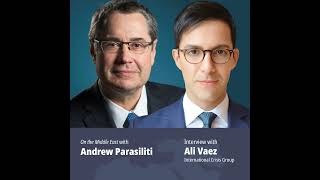
In this episode of Al Monitor’s On the Middle East, host Andrew Parasiliti interviews Ali Vaez, Iran Project Director at the International Crisis Group. Vaez explains why the Joint Comprehensive Plan of Action (JCPOA) negotiations are currently in “suspended animation,” citing Iran’s distrust of U.S. sanctions‑relief promises, the Biden administration’s limited offer, and internal Iranian calculations that the deal no longer serves Tehran’s interests. He outlines the internal debate in Iran between the “economy of resistance” camp, which sees sanctions as a catalyst for self‑reliance, and a more pragmatic faction that acknowledges the need for sustainable sanctions relief to sustain growth. Vaez describes how the JCPOA, once popular among Iran’s middle class and youth, has lost its appeal as the promised economic benefits failed to materialise and the Trump administration’s “maximum pressure” campaign re‑imposed sanctions. The conversation moves to the U.S.–Israel strategic dialogue, where both sides coordinate on a “Plan B” involving possible military or covert actions should a nuclear deal remain out of reach. Vaez assesses Iran’s nuclear breakout timeline, arguing that while enrichment levels have risen, the regime is unlikely to cross the nuclear‑weapon threshold without a direct attack because of intelligence penetration, regional deterrence concerns, and the strategic disadvantages of becoming a nuclear state. The interview also touches on missed goodwill gestures—such as early humanitarian funding for vaccines—and the link between detainee negotiations and the nuclear talks, noting that indirect talks in Vienna have stalled and that a prisoner‑swap could serve as a confidence‑building measure. Throughout, Vaez emphasizes the high stakes for regional stability, the limited attractiveness of a no‑deal scenario for both Tehran and Washington, and the importance of keeping diplomatic channels open.
Chapters
Welcome to On the Middle East, the podcast of the award-winning media service El Monitor, where each week we talk with the decision makers and thought leaders who are making the news and shaping the trends in the Middle East. I'm Andrew Parasiliti, president of El Monitor, And this week we will be talking about Iran and whether there will or can be a return to the Joint Comprehensive Plan of Action, the JCPOA, or Iran nuclear deal. And our guest will be Ali Vaez, Iran Project Director at the International Crisis Group. Ali previously served as Senior Political Affairs Officer at the United Nations Department of Political and Peacebuilding Affairs, and as Iran Project Director at the Federation of American Scientists. Ali is known as one of the top experts on Iran and on the Iran nuclear deal, and he is also an adjunct professor at Georgetown University's Edmund A. Walsh School of Foreign Service and a fellow at the Foreign Policy Institute of the Johns Hopkins School of Advanced International Studies. Iran nuclear talks reportedly will resume soon, but many questions remain about whether it will be possible to return to the deal, which the Trump administration withdrew from in 2018, 3 years ago. The Biden administration, when it came into office in January, gave priority to restarting the nuclear talks with Iran, if indirectly. While the US and Iran have not been speaking to each other face to face. The other signatories to the JCPOA— the United Kingdom, France, Germany, Russia, and China, the EU— they have all been talking to Iran and backchanneling to the US. And a deal was reportedly close back in June, but those talks shut down after Ebrahim Raisi was elected president of Iran. And Raisi took office on August 3rd. Raisi is more conservative and hardline than his predecessor, Hassan Rouhani, and Raisi's constituency in the parliament is less interested in diplomacy with the West. Meanwhile, Iran has expanded its production of highly enriched uranium beyond the constraints in the 2015 nuclear agreement. Highly enriched uranium is necessary for the production of a nuclear weapon. And Iran's development of that material at these levels is getting close to weapons-grade capability. Many are skeptical of Iranian intentions, especially Iran's intentions under Raisi. And those skeptics wonder if Iran has passed a point of no return and whether a deal is even possible anymore. Among those skeptics are the leaders of Israel. Who have been pressing their case with the Biden administration for a Plan B to deal with Iran if nuclear talks don't succeed. We will discuss all of this, what to expect with Iran and whether a new nuclear agreement is possible, and if not, what comes next, with our guest today, Ali Vaez. And that conversation begins now. Ali, welcome to On the Middle East.
Thank you. Great to be with you.
Let's get into it. The Biden administration came into office in January this year and made reconstructing the Iran nuclear deal a top priority. President Biden appointed your boss, International Crisis Group President Rob Malley, as envoy, and the administration made a hard run to close the deal before Ebrahim Raisi assumed the presidency in August. So much for that. Iran has said it will resume the nuclear talks soon, but the mood music so far is less than encouraging. Where do the talks stand? When do you expect them to begin? Will they pick up where they left off in June? And what do you expect as an outcome with the new Iranian president in power?
Look, the talks are in suspended animation right now, and the reason is that they were at an impasse. When they broke up after the sixth round of talks in June of this year. And by that point, although they had made progress on a joint draft, which is basically a pathway for returning to full compliance with the JCPOA by the U.S. and Iran, there were still some serious differences that remained. And the expectation was that the the capitals would have to make a decision. And Tehran at that point made a decision that the deal was not in their interest. And there are several reasons for this. Number one is the fact that Iran was unhappy with sanctions relief. Out of about 1,600 sanctions that the Trump administration imposed and reimposed, the Biden administration was seeking to keep about a third of them. In place that it believed was not— these sanctions were not inconsistent with the JCPOA. Iranians, in addition to this, are worried that, you know, even the sanctions relief that the U.S. is putting on the table is unsustainable in the sense that Democrats might lose control over Congress in a year and over the White House in 3 years, and we will be back to a situation that either Congress can undermine the economic dividends that the deal has promised to them, or that the next president can once again renege on an agreement. And the problem with this in the Iranian mindset is that they believe temporary sanctions relief is actually detrimental to their economy, because this is now an economy that has adjusted to sanctions and is actually now much more stable and growing. In this first quarter of this year, the economy grew by 6%. And that kind of uncertainty that comes with unsustainable sanctions relief is something that they believe creates more doubts in the market and undermines the kind of resilience that they have tried to build through their economy of resistance. There's also obviously vested interest in sanctions, and so that also plays into the internal debate in Tehran. And, you know, at the same time, the Biden administration was asking the Iranians, you know, having refused to provide them with full sanctions relief or guarantees that sanctions relief will be sustainable, was asking them to commit to a follow-on negotiation to get what President Biden has called a longer and stronger nuclear deal. And that, to the Iranians, sounded like a trap, that if they make such commitments and there is no such follow-on agreement in a year or so, that would be the pretext that would be used by the U.S. to once again reimpose sanctions. And so these issues were unresolved when talks, when the negotiators returned home in June. And the new Iranian administration was reluctant to come back to the table. Because it didn't believe that the U.S. was going to change its position on any of these, and it believed that time was on its side, and with the exponential growth of the nuclear program, the, you know, eventually they would have more leverage and the U.S. would be forced to make those concessions. I think this is a miscalculation, but this is basically where we are right now, and my expectation is that talks will resume in November. They will probably be very slow because the incoming chief negotiator on the Iranian side, Ali Vaez, is a former nuclear negotiator himself under hardline President Mahmoud Ahmadinejad, and his style is very different. And I expect that initial rounds will be filled with a list of grievances and the reasons that Iranians are the aggrieved party here, and the onus is on the U.S. to compensate the Iranians for the damages that Trump administration's maximum pressure has inflicted on them. And then eventually, after a few rounds, I think we would get into a deadlock because I just don't see the Iranian position being more flexible. In fact, they will try to drive a harder bargain. And the reality is that the Biden administration was already pretty close to its bottom line in the sixth round of talks in Vienna. And so it's just hard to imagine that there is a way forward here.
Let's talk a little more about Iran's economy and the sanctions. You make a critical point that there are vested interests in Iran in the sanctions, and you also point out the impressive resilience of the Iranian people and its economy under sanctions and under COVID in achieving growth during a very difficult time, including low oil prices over the last year. But the long-term trajectory for Iran's economy requires investment that it seems it will— that can only come with the lifting of sanctions. And even looking east or trying to develop relationships and networks with Russia and China, Central Asia and other countries. Still, a lot of those deals have to go through the international banking and financial system. And the United States, as long as the sanctions are in place, has that bottled up. So is there that awareness in Iran that yes, Iran's economic performance has been resilient, but the prospects for long-term growth— and there's a political aspect to that too. I mean, people will expect economic gains over time from this administration or any administration in Iran.
That's a very good question. And look, my sense is that there's a debate about this in Iran. There are some true and true believers in the economy of resistance who do believe that, you know, this is the first time you have a government in Iran who really subscribes to the doctrine put forward by Ayatollah Khamenei that Iran's economy should become resilient towards external shocks, most important among them economic coercion by the U.S. and the West. And, you know, the idea is on areas that the Supreme Leader has basically— let's say this again, you know, this comes from the idea that whatever the Supreme Leader himself has managed over the past few decades, like the military, for instance. Iran, despite all odds and despite sanctions and arms embargo, has done impressively well. Its ballistic missile program went from nothing to one of the most sophisticated arsenals in the Middle East, a real reliable deterrent for Iran and a threat to U.S. forces and U.S. allies in the region. Same with the network of influence that Iran has been able to build around the region through partners and proxies. And areas that the Supreme Leader subcontracted to the governments, like the economy, that's where failures have occurred. And now, for the first time, the Supreme Leader has his own government in the form of the Raisi administration. And so there is true belief in the fact that economy of resistance this time is going to work because government would no longer just pay lip service to the Supreme Leader's idea of economy of resistance, but actually is going to implement it. And there are, in their views, fixes to Iran's economy. I mean, if you compare Iran's current oil export status, which is about a million barrels to China, and about 4 million barrels of internal consumption prior to the revolution, which was the exact opposite. Iran was exporting 4 times more to the outside world than it was consuming internally and realized that Iranians can potentially, if do this in a targeted way, make much more money of the oil that they sell domestically. Close taxation loops. And now, because obviously you have the deep state running the state, you know, maybe you would have access to resources that the previous governments were deprived of. Rouhani administration tried really hard to get some of these religious and revolutionary foundations taxed. You know, they count about a quarter of the Iranian economy. And he failed. But the Raisi administration stands a much better chance of getting that through. The Supreme Leader is going to be much more lenient to allow this government to tap into the country's strategic reserves. And so all in all, you know, the viewpoint of these true believers of economy of resistance is that the situation is sustainable and Iran is actually able to to become a much stronger economy as a result of turning this threat of sanctions into an opportunity. There is also the view of some, and my recent conversations with Iranian officials indicate that President Raisi himself might fit into this camp, is the view that yes, Iran can survive, can muddle through in the next few years, but it cannot thrive and if it cannot thrive in the medium term, it would not be able to survive because it would not be able to meet the demands of the society. If it's not able to address the, you know, structural problem of unemployment, for instance, this is going to become a social threat to the system. And so those are people who are not in a rush to get a deal next month or in the next 6 months or maybe even longer, but they want eventually to have sanctions lifted in a sustainable way so that, you know, they can use sanctions relief as a catalyzer of creating the economy of resistance that the Supreme Leader has in mind. And I think it's in that space between those who really do not believe that JCPOA really offers Iran the kind of sanctions relief that it needs and those who believe that it's better than nothing It's in that space that the future of the deal would be determined in internal debates in Iran.
Let me ask a related political question regarding the JCPOA inside Iran. As you just explained so well about the constituency for the resistance economy among those in power, but wasn't the JCPOA wildly popular agreement among the youth in Iran, among entrepreneurs, among the middle class when it was signed. I recall that when Zarif came back after the signing, there were parades and so forth, and the economy grew at a substantial pace. And I know it's very hard to get at public opinion in Iran, but it seemed to me that many not only saw the economic opening that came from the JCPOA, but also a sense of a political opening, and probably pride in what was, one might say, Iran's most significant and impactful diplomatic achievement since the revolution, in terms of its outreach to the world. So, does the JCPOA— am I correct in that? And if so, Does the JCPOA still have a popularity among those constituencies that may not be represented in the power structure? And thinking back to this last election, low turnout, blank ballots came in second, and the parliament has frankly been stacked by Khamenei loyalists and conservatives over the past few years.
Yeah, that's right. Look, reality is what has happened is that the JCPOA went from something that a lot of people, especially in the middle class, had pinned their hopes to, to a real testament to the fact that there is no light at the end of the tunnel, and if there is a light, it's a train coming from the other direction. Meaning that the Iranians, because the Rouhani administration really oversold the JCPOA, overpromised really of what sanctions relief would mean, and then underdelivered because they had not put their house in order. And then they got the sheer bad luck of getting the Trump administration on the U.S. side who reneged on the agreement and then reimposed the sanctions. There is a sense in Iran that basically not only the U.S. is an unreliable negotiating party, but that there is just no way out. You know, there, at some point, people believe that maybe a more competent government could improve the situation, even if, despite all the shortcomings, you know, it might be true that Iranians would have to live with social restrictions and other problems. Environmental issues, but at least there will be economic growth. You know, somebody would fight corruption, but none of that happened. Not only that didn't happen, but the situation got from bad to worse, even with the competent people back in power in the Rouhani administration. And then eventually, you know, the idea that diplomacy with the West can provide a way out of Iran's problems, that also proved to be an empty promise. And so now there's no hope left. And there appears to be no exit ramp. And you see that in the sense of political apathy that showed itself in the recent elections of the parliament and the presidency, in addition to the fact that the system also capitalized on this sense of hopelessness and basically stacked the deck in order to get as much of a homogenized, unified hardliner control over all levers of power at a critical moment for the system itself, which is, you know, with the Supreme Leader's succession looming large. So you have, you know, the exact opposite of what the Obama administration had in mind with the JCPOA. The idea was that, you know, you would have in Iran, even despite years of sanctions and mismanagement, a middle class that was open-minded, pro-Western, pluralistic and basically 10 years of economic growth, even at the rate of 5%, would grow this middle class to 85%. And that is the time that Iran would get to the pivotal moment of the original revolutionaries, the Jacobins of 1979, dying out by the force of nature, and the country would be in a better place to transition to something better. Now, the exact opposite has happened in the past few years. The middle class has been devastated as a result of sanctions, and the hardliners have become more powerful and have taken over the entire state. And, you know, with that, it's hard to imagine that the country is in a place to transition to anything more moderate.
Iran Foreign Minister Hossein Amir-Abdollahian was in New York during the UN General Assembly. And he said, among other things, that the only action needed is for the U.S. to lift the sanctions imposed or reimposed since 2018. He also said that an opportunity for what he called a goodwill gesture may have been missed by the U.S. not allowing Iran access to its own money to purchase medical assistance and vaccines. Is this posturing? Do you expect choreography of some sort between the US and Iran to try to get things going. And of course, the provision of funds to allow Iran to buy medicine and vaccines was also the subject of the flurry of diplomacy at the UN General Assembly in, what, 2019, if I'm remembering correctly. When Macron was trying to arrange a meeting between Raisi and Trump. Is that moment past? And do you think such gestures or choreography will be part of the mix if there is to be any traction this time around?
I do believe that the moment for goodwill gestures that could significantly change the dynamic between Iran and the U.S. Unfortunately has passed. You know, I think the Biden administration in its early few weeks could have taken a step on the humanitarian front that would send a positive signal to the Iranians. You know, in addition to the fact that the Iranians were hugely disappointed by the fact that Iran not only did not feature among the priorities of the Biden administration's early few weeks, as part of reversing the Trump administration's legacy of, for instance, returning to the Paris Climate Deal or WHO, but also that there was no mea culpa on the U.S. side, as if what had happened to Iranians as a result of maximum pressure, which in their estimate has inflicted about $1 trillion of damages to their economy was done not by a different administration, different U.S. administration, but by a different country. And so all of that, I think, contributed to the hardening of Iranian position, which was already marked by unrealistic expectations of how the U.S. would do a complete 180 on its policy towards Iran, which was unrealistic to begin with because the Iranians were simultaneously escalating. And not just escalating in the nuclear realm. You know, before President Biden even was sworn in, the Iranians started enriching to 20%. You know, in the early weeks of the nuclear negotiations in Vienna, they started enriching to 60%. They increased the attacks on U.S. diplomatic facilities and military forces in Iraq by Shia militias. You know, we saw an escalation in the war in Yemen. There were skirmishes between the Iranian Navy and the U.S. Navy. So it was hard really for the Iranians to expect that the Biden administration would de-escalate and would demonstrate goodwill gesture while the Iranians were escalating on all fronts. And, you know, the story of Iran-U.S. relations is replete with these kind of missed opportunities. And I think that contributed to both sides, you know, having unrealistic expectations of one another and demonstrating very little flexibility at the table. But, you know, again, at the end of the day, I think there is still a realization in both capitals that the alternatives to the nuclear deal are much less attractive for both sides. You know, although the Biden administration wants a longer and stronger deal, and although the Iranians want sanctions relief, you know, but the alternative to getting the JCPOA back on track is, you know, likely as— we don't need to actually hypothesize about it because we've seen this movie before. This would be reminiscent of the early years of the Ahmadinejad administration, in which there was a race of sanctions against centrifuges. On the one hand, the U.S. would impose new sanctions or double down on enforcing existing sanctions. The Europeans would snap back their own multilateral sanctions and potentially the U.N. sanctions. And the Iranians would just ratchet up their nuclear program and ratchet down the transparency and inspection measures of the nuclear program. And we would end up sooner or later in a situation that, you know, every week there will be speculation of whether Israel or the U.S. or both would strike Iran's nuclear facilities. So, you know, it will be a lose-lose dynamic for both sides. And this will happen at the time that the Biden administration wants to pivot away and focus on China and climate and other big priorities, you know, and it would instead have to deal with a corridor of chaos that stretches from the borders of Afghanistan, with Iran destabilized, further destabilizing Iraq and Syria to push the U.S. out, and also trying to deter Israel from conducting covert operations on Iranian soil through putting more pressure on Israel through Syria and Lebanon and Gaza and elsewhere. So it will be really, you know, the Middle East will become so tumultuous that it would be really difficult to imagine that the Biden administration will be able to pivot away from it. And again, for the Iranians, it would be still living under sanctions for the foreseeable future in addition to threats of military action and probably sabotage of their nuclear facilities and other infrastructure, assassination of their scientists. And so it's, you know, it's not an attractive image for either side. And that's why I'm still hoping that they have not given up on Plan A. But for sure, both sides have started thinking about Plan B, because Plan A looks increasingly less promising by the day.
Ali, you anticipated my next question. The U.S.-Israel strategic dialogue has been primarily focused on Iran, including what you just referred to, a Plan B if there is no nuclear deal. What is your take on the U.S.-Israel talks on Iran, and what is your sense of what that Plan B would look like in terms of very specific moves that the U.S. and perhaps Israel and perhaps other U.S. partners in the region would have to take if there is no nuclear deal?
So first of all, there is much more coordination between Israel and the U.S. right now than was the case just a few months ago. The Bennett administration and the Biden administration see eye to eye on the ultimate objective, obviously, of preventing Iran to get nuclear weapons. And although they might have differences in terms of approach, they're willing to resolve them behind the scenes. And, you know, they're really trying hard to avoid another public fight reminiscent of the time that the Netanyahu administration was fighting Washington on this issue. But, you know, there are still differences in approach in the sense that Israel believes that the current situation is sustainable. Although Iran's breakout time, which is the amount of time that it takes for Iran to accumulate enough fissile material for one nuclear weapon, has now shrunk from 12 months that was basically devised in the JCPOA to about one month, and it's shrinking by the day. But it would take some time for Iran to weaponize this material. Whenever it decides to actually break out and go for nuclear weapons. Israeli estimators that this would take another year and a half to 2 years. And so they appear not to be in a rush to restore the JCPOA. The Biden administration, I think, has a different sense of the timeline. And they do believe that in a matter of a few months, not only the nonproliferation value of the JCPOA will disappear with the kind of irreversible progress that Iran's program would make as a result of technical advancements, research and development, and other activities that Iran is engaged in, for instance, creating uranium metal that could be used in nuclear weapons. And, you know, and that eventually with the shrinking breakout time, the risk of military action would increase. And also there are problems between Iran and UN International Atomic Energy Agency, which requires some sort of diplomatic action at some point to either censure Iran or send the file to the UN Security Council. So it's not a can that could be kicked down the road for a very long time, maybe a few months, but certainly not a few years in the way that Israel considers this situation. Israelis believe that Iran is in a position of weakness that eventually if they are contained under maximum pressure and undermined in other ways as well, what they have referred to as death by a thousand cuts, covert operations, maritime tit-for-tats, cyber attacks, that eventually the regime would have to deal with social unrest in ways that it would have to focus internally and would not be able to project power in the region. and in the best case scenario, it might collapse. The Biden administration is much more pessimistic about, you know, what could happen in this time frame, and they're worried about a serious nonproliferation crisis as well as more instability in the region. And so they do believe that a better way of kicking the can down the road is to restore the JCPOA. That would at least contain Iran's nuclear program for another decade and give more time and space to negotiate a successor agreement. And, you know, I think the final solution probably is that the Biden administration's plan would go forward. And if it fails, then the Israeli plan will come to the fore. That's probably the likeliest scenario, because if there are either the JCPOA is no longer relevant or revivable, or the talks collapse entirely, then we are in a situation that there is no other way other than Plan B that Israel is in favor of. There is, again, the problem that Plan C might impose itself on both sides because of if Iran's nuclear program, for instance, is expanded vertically in a very rapid way, and the Iranians have the ability to do that, then the question of taking military action might become, you know, a much more imminent issue to deal with. But they might also choose to escalate horizontally in ways that it would not provide sufficient justification for military action. But let me add this as well, that there are some in Iran who are not even afraid of this worst-case scenario because their view is that the only thing that poses an existential threat to the Islamic Republic is a land invasion that is just not on the cards. So anything less than that means that the regime will survive. And, you know, as they say, what doesn't kill you makes you stronger. And a limited military strike by Israel or the U.S. or both would basically create the rally around the flag effect that is exactly what the Islamic Republic needs at this stage in its life, political life, with a tired revolutionary ideology. You know, that a strike by the U.S. is the best thing that could revive the revolutionary fervor and add to the Islamic Republic's shelf life. And that's why there are serious risks here, because even the worst-case scenario is something that the hardliners are not too afraid of.
So if the Iran nuclear talks head toward a stalemate, why would or wouldn't Iran cross the nuclear weapons threshold, given the precarious security situation in the region, and especially with Israel in a Plan B mindset, as you just described, if the nuclear talks fail?
Andrew, I do believe that that option is not available to the Iranians at this point in time, in the sense that You know, the JCPOA increased the visibility of Iran's nuclear program much more than was the case just a few years ago. And if you— when you put that right next to the reality that Iran's nuclear program is just so deeply penetrated by Western and Israeli intelligence, which shows itself in the form of the kind of attacks that the program has suffered, from assassination of nuclear scientists to cyberattacks, sabotage, that I do believe that whenever Iranians make the decision of breaking out or sneaking out in a clandestine facility, that Iran's regional rivals or extra-regional adversaries will learn about it and will stop it before it happens. But I do believe that, and so that's one reason. The second reason is that, you know, at this stage I think nuclear weapons are still not in Iran's strategic interest in the sense that if they cross the Rubicon and basically weaponize, what happens is that they would change the strategic dynamic in the region so that, you know, some of the inherent advantages that Iran has will just disappear overnight. The advantage in terms of size and population, depth of, you know, statehood, all of that would disappear because in much smaller countries in the region with much better access to either, you know, Western nuclear umbrella or even off-the-shelf nuclear weapons that they might be able to get from a place like Pakistan or elsewhere, they would have access to more sophisticated nuclear weapons. And then the question of superiority in the region becomes the number of weapons, sophistication of them, and whether you have second-strike capabilities or not. And again, Iran might lose its dominant or preeminent place in the regional dynamics. But I think they will make that decision once they are attacked, if indeed Iran is attacked, not because it's breaking out, but because it's nearing the kind of latency state or threshold state that really concerns Washington or Jerusalem, then that's when the Iranians would, I think, make a decision that they would need to have the ultimate deterrent. That they've already paid the price for in terms of both the economic sanctions that they've suffered for more than a decade, as well as, you know, the fact that they've been attacked militarily.
Ali, we're just about out of time. I wanted to end on a different subject. El Monitor and others this week wrote about the urgent health condition of Bakr Namazi, one of the 4 Iranian Americans still held in Iran. Siamak Namazi, who's also been held, has been a friend of mine for 30 years. He, his father, and his family are wonderful people. They've suffered far too long. Foreign Minister Amir-Abdollahian has said that there were talks in Vienna about a prisoner swap exchange, but the US preferred a separate track. Is that true? And in any case, help us understand how Iran views this prisoner issue. What does it want? And how do you see it being resolved? And can it be resolved soon?
Look, I think part of the problem— and let me first say that Siyamak is also a very dear friend of mine, and, you know, I'm heartbroken over what has happened to this family, and I I do hope that their ordeal will come to an end as soon as possible. But the reality is that the talks that were happening in Vienna in parallel to the nuclear negotiations through the Brits, who were the intermediaries in this case, because they also have some of their own dual nationals basically imprisoned in Iran. Based on similarly bogus charges. You know, the impression that everybody had in those negotiations was that everything is agreed— nothing is agreed until everything is agreed. And basically, the idea was that, you know, it's not possible to get the JCPOA restored without getting the detainees released, and it's not really possible to get the detainees released without the JCPOA. But there might have been a case of miscommunication between the two sides, also given the fact that these were indirect negotiations, and that happens all the time. And, you know, it's true that during the past few months that there has been a hiatus in the nuclear negotiations. This issue of detainees has also not been addressed. And I do hope that actually in this, there is a, you know, there lies an opportunity for maybe taking a positive confidence-building step that, you know, if at least we can get the detainees released on both sides in a prisoner swap, then, you know, this would show that there is potential for progress on other areas of disagreement as well. I do hope that although there is some linkage between the nuclear issue and the prisoners issues, that they could be separated. And, you know, the fate of individuals is not tied to the fate of the JCPOA. Because, you know, if the Iranians could agree to prisoner swaps with the Trump administration, I just have a hard time imagining why a similar arrangement could not be made with the Biden administration. And again, I think it's really critical for changing the atmosphere and also breaking the current sense of stalemate in the nuclear negotiations. Again, those are difficult talks, especially because they're indirect and they would have to go through intermediaries. And I don't know if the Brits will still be the intermediary or whether the Swiss, who have traditionally played this role on behalf of the United States would be back in that position. But it is really critical to figure a way out because too many people have suffered for too long.
Ali, this has been a fantastic discussion. I always learn from you about Iran. You and your colleagues at the International Crisis Group do outstanding work. Thank you for joining us today on The Middle East.
You're too kind. Thank you very much, Andrew. Great to be with you.
We will return after this break.
Hello, I'm Gilles Kepel, professor at Sciences Po and Normale Sup in Paris and author of a number of books and articles on the Middle East. The Middle East remains one of the most vital and fascinating regions in the world. It is rich in complexity and ideas, but for many in the West, it remains a puzzle with many missing pieces. Through my new podcast, Reading the Middle East, on the award-winning media service Al Monitor, we will take a deep dive into the trends in the region with the authors and thought leaders who are shaping reshaping how we think about the Middle East. To begin my podcast, I speak with my friend and one of the most renowned novelists of the region, Egyptian writer Alaa El Aswany, about his latest book, The Republic of False Truths, that chronicles the run-up to Egypt's 2011 revolution and its aftermath. Reading the Middle East will be a fantastic addition to Al Monitor's outstanding podcast lineup, including On the Middle East with Andrew Parasiliti and Amber Inzamam, and On Israel with Ben Caspite. You can subscribe to all three El Manar podcasts on your favorite listening platforms. We look forward to your joining our conversation.
Thanks to our guest Ali Vaez of the International Crisis Group, our production team of Phil Colabro of El Monitor and Beowulf Rochelin of Two Square Media Productions. And thanks to all of you for listening. We will be back next week. And if you haven't done so, please sign up for all of our El Monitor podcasts, Reading the Middle East with Jill Cappell, On Israel with Ben Caspit, And On the Middle East, hosted by Embrun Zaman and me. You can sign up for all of these podcasts at your favorite podcast platform.
More from Ali







Israel and the U.S. at war with Iran: what comes next & what implications for the region and beyond?



Trump ‘Is Living in a Fantasy Version of His Own Presidency’ | The Ezra Klein Show
