The Impact of Coronavirus on Iran's Politics, Economy, and Foreign Policy
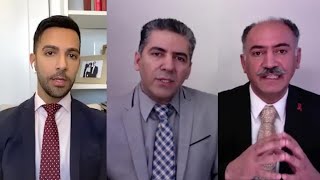
In a live Asia Society webinar recorded on April 7, 2020, moderator Puneet Talwar convened Iran experts – Crisis Group Iran Project Director Ali Vaez and public‑health scholars Dr. Kamiar and Dr. Arash Alaei – to assess how COVID‑19 has reshaped Iran’s health system, domestic politics, economy and foreign relations. The panel first established that official Iranian case counts (≈62,000 cases, 3,000 deaths) vastly under‑report the true scale, with modeling and symptom‑screening suggesting 300,000‑1.5 million infections. Iran’s health infrastructure is relatively strong for the region but suffers from uneven specialist distribution and limited ICU capacity. Politically, the pandemic has become a “football” for rival factions: hard‑liners criticize President Rouhani’s slow response and accuse him of “begging diplomacy,” while the military and IRGC present themselves as the only competent actors, deepening the militarization of politics and weakening moderate forces ahead of the 2021 presidential election and the pending Supreme Leader succession. Economically, sanctions‑induced fragility is amplified by the pandemic: oil exports to China have collapsed, border closures have cut trade, and the economy is projected to contract by up to 20 %. Sanctions also create a “chilling effect” that hampers humanitarian imports of medical equipment despite legal exemptions. The panel discussed Iran’s reliance on China – both for early aid and as a lifeline – and argued that the crisis will likely increase Tehran’s strategic dependence on Beijing. Regionally, the pandemic has spurred limited humanitarian cooperation (UAE, Qatar, Kuwait) but has not eased the core rivalry with Saudi Arabia and Bahrain. The discussion turned to the risk of U.S.–Iran escalation: proxy activity in Iraq, the possibility of miscalculation, and how the pandemic may embolden hard‑liners to seek a “October surprise” against the Trump administration. Finally, Ali Vaez outlined a humanitarian‑diplomacy proposal: a limited U.S. sanctions‑relief mechanism (general licenses, Swiss humanitarian channel) in exchange for Iran’s release of U.S. detainees and a freeze on nuclear‑related escalation, positioning the pandemic as a diplomatic opening.
Chapters
Good morning to those of you in the United States, and greetings to everyone from wherever you may be joining us. My name is Puneet Talwar, and I'm a senior fellow with the Asia Society Policy Institute. I hope that all of you are staying safe and healthy, and I'd like to welcome everyone who's joining us today for the sixth installment of the series Coronavirus, Asia, and the World. So far in this series, we've had events on the impact of the coronavirus on the US, on US-China relations, on the Belt and Road Initiative, on Southeast Asia, on global trade and supply chains. And recently, the president of our institute, Prime Minister Kevin Rudd, recently hosted an event with one of Singapore's leading public health experts. Today, we're moving to the western part of Asia. We're joined by three accomplished and distinguished experts who will discuss the public health, political, economic, and foreign policy dimensions of the coronavirus pandemic in Iran. I'm really looking forward to what promises to be a lively and informative discussion. And let me begin first, though, by introducing our speakers. Joining us from Washington, D.C. is Ali Vaez. He's the Crisis Group's Iran Project Director. He's one of the sharpest analysts I know on the intersection of Iran's domestic politics, and its foreign and security policies. He's consulted closely with all sides in negotiations related to Iran's nuclear program, and he's led Crisis Group's efforts in helping to bridge the gaps between Iran and the P5+1, and is renowned as one of the foremost experts on Iran's nuclear and missile programs. We're delighted that he's with us today. And joining us together from Albany, New York, are Dr. Kamiar Alayi and Dr. Arash Alayi, who are global health policy experts and co-presidents of the Institute for International Health and Education, which works in several countries in the Middle East and Central Asia. They've received numerous prestigious awards over the years for their pioneering work, including on HIV and AIDS. We're delighted that they're with us today to share their deep expertise and their practical experience working in the public health system in Iran. In a moment, I'll turn to our speakers with some questions to help us get started. But first, I'd like to invite our audience to submit questions as well by using the comment function on YouTube and Facebook as we move through our discussion. So to begin, Iran has the largest COVID-19 outbreak in the Middle East. It has the 7th highest number of reported cases in the world, and the fifth-highest death toll. The Speaker of Parliament, Ali Larijani, became the latest senior Iranian official to test positive for the virus. As of this morning, the official statistics indicate that Iran has over 62,000 cases and nearly 3,000 deaths. Yet many believe the official statistics have vastly understated the true magnitude of the crisis. The messages coming from Iran's government are confusing. Not only to the world, but I expect to ordinary Iranians. Indeed, yesterday President Rouhani said that it was a false choice for Iranians to have to choose between the economy and their health. The government announced that businesses would reopen outside Tehran on April 11th and in Tehran on April 18th. Yet on the very same day, a member of Iran's National Coronavirus Task Force said that Iran has 500,000 coronavirus cases, which is many times greater than the official number. He also said that Iran had not succeeded in flattening the curve in any of its provinces. So let me begin by asking our two doctors if they can give us an accurate picture of the current state of the pandemic in Iran. What are— what's your sense of the estimates of the number of cases and where Iran is on the curve?
Thank you very much for having us, and it's great opportunity for us to share our experience with the audience. So let me start with the health system and infrastructure in Iran. So as you may know, Iran has more than 80 million population, and the size of country is one about 1.6 million square kilometers. So Iran has health post from villages to the small city health village polyclinic, and in the capital region, in each region and province's medical university, which are active not only for education but also for as a health commissioner in their area. So if we wanted to compare Iran with the other countries in the Middle East and North Africa, we should compare it with Pakistan, Turkey, and Egypt. Because of size of country and the population. So compared with those countries, based on the World Health Organization indicator, showed Iran has good system with good outcome. What is the issue of health system in Iran? The health system has problem with distribution of human resources, specialists. To be available in country. So more specialists are working in the big cities, capital and 5 big cities, and access to the advanced care is not universal and equal in all provinces. This is one of the main issue we see, but the outcome of health system compared to the other countries is good, and I can say is one of the unique country in the Middle East based on WHO, World Health Organization indicator. Let me go to the coronavirus. Based on the last report, Iran has more than 62,000 diagnosed cases, about 3,870 deaths, and the last report showed they provided 200 more than 200,000 tests. So it means about 33% of people who received coronavirus have been diagnosed. There is another estimation by Dr. Gaffarzadeh Ghan and Dr. Rahman Daud. They used mathematical system and they found, they, they, they found Iran has between 500,000 to 1.5 million cases, which is estimation based on mathematical modeling. Another data showed that during Iranian holiday, when they had a screening, symptomatic screening report, Red Crescent, Red Cross, Red Crescent found From each 4,000 people, about 5% had symptom of coronavirus. So if we wanted to summarize those data, it shows Iran has between 300,000 minimum to 1.2 million cases. From them, only 62,000 have been diagnosed and they know their status.
Thank you. And where do you think Iran is on the curve right now? Is it still in the phase that you're seeing an increase in cases, or do you believe the official statistics that the cases are actually beginning to decline?
So thank you very much. So given there is no accurate data, there is no transparency, it's very hard to have a kind of projections, but there are some proxies that we can consider. For example, just a few days ago, the president of the country, Mr. Rouhani, mentioned that they are managing and controlling the outbreak. For example, he made a clear example. He said, I was informed by the Minister of Health that there are only 13,000 empty beds, which shows that all beds are not occupied. But if you look at the national data, that there are more than— there's supposed to be more than 24,000 empty beds because the occupancy percentage is 75%. So when there used to be 24,000 empty beds and now we have 13,000, that shows 11,000 beds were occupied during the past few weeks. There's some which was unexpected. And if you look at the statistic, 5% of those who have coronavirus, they ended up being hospitalized. So if you use this 5% as a kind of proxy, easily we can get to more than 200,000 infected cases. So why the official report shows only 65,000? That's so they only were able to reach out to 25% of all total who got infected. So it's very less likely that they can controlled. So my idea is that given there is no concrete data, they cannot make a kind of statement that they are managing the outbreak. And given that most of those infected, they are not aware of the status, they can infect others.
So based on what you've said, I mean, the scale of the outbreak is much more serious than is being reported. And I assume you think if you were back in Tehran and advising the government, my guess is you would not advise them to open things back up at the end of this week.
Definitely, and this is a great point that you raised. The challenge we have right now in Iran, they don't follow any guidelines or any single approach, and they change their mind over the time. Initially they said we don't follow China's model, we follow European, and after that when Italy locked down, They said, we don't follow Europe, we only follow UK. And later on, when UK even, they said they have to make more progressive measurements. They change their mind over the time. And that's the challenge, because the question is whether the outbreak is correlated with infrastructure of health system in Iran or not. When we see there are other countries like India, that a significant proportion of them, even they don't have access to minimal sanitation, but they were able to control the outbreak. Or there are some other, you know, underdeveloped countries, even the border countries like Afghanistan, they are not facing the challenge to the level that we face in Iran. This is just more due to the leadership of the country rather than just a healthcare system.
That's good to know. You started talking a little bit about the, how Iran compares to other countries. Are there other countries we should be looking to in terms of comparators? You mentioned some of the neighbors, but are there others that you want to let us know about in Asia in particular?
Yes, just as an example, look at South Korea. So if you look at the timeframe, South Korea and Iran, initially they didn't want to close their borders with China. And that was due to political interest because the head of the state of South Korea was expecting to have a visit from the president of China in April. So they hesitated to make that progressive measurements while there was a campaign by, you know, medical, National Medical Association in South Korea. But later on, they admitted that they have to revise their measurements, and they were very proactive, and they had very proactive case findings. After a few weeks, they were able to control it easily. So Iran could learn that lesson from South Korea, that even they started late due to some political interest, but later on they could look at a lot of best practices that they could easily manage because we have a good infrastructure. We have a lot of great health experts, policymakers inside Iran, but the problem is they are not decision makers. Even, you know, You see, 2 days ago, the Minister of Health wrote an open letter to Mr. Rouhani that we shouldn't open factories. But unfortunately, they don't consider it as an important message.
May I add some additional point?
Sure, Arash. And then we'll move to— I don't want to bring Ali in.
Another example can be Pakistan and Tajikistan. If we look at Pakistan, has same size and same population. And the income of country is very important when we wanted to compare, you know, Iran after 2, 3 years, huge sanction and problem with, you know, export and import. So we have to look at the income of country and access to the advanced, you know, equipment and drug. But when we compare it with Pakistan and Tajikistan, Tajikistan is low income country, but till today, there is no any evidence to show coronavirus in Tajikistan. What they did, they did simple action. They controlled their border and they put those people who wanted to visit Tajikistan in 2 weeks quarantine. And WHO and UN agency and CDC, US CDC are working there and they couldn't find any positive case. So this is very important how decision maker can follow science and scientific suggestion, those are in Iran and they touch the issue, they are very, very, you know, available to them to give them good advice.
Wonderful. Well, thanks so much for helping us set the table and understand the facts on the ground. So I'd like to turn now to the political dimensions of the pandemic. Iran has seen a good deal of political ferment in recent months. And just to tick through a few items, they held parliamentary elections in February amid record-low turnout. The hardliners prevailed, as was expected, due to large-scale disqualification of reformist candidates. The country was also convulsed with protests which were brutally crushed last fall, and hundreds of innocent people were killed. And we saw another wave of protests after the cover-up related to the shooting down of the Ukrainian airliner earlier this year. President Rouhani is approaching his final year in office, and he's effectively, according to many, a lame duck. And finally, the Islamic Republic will at some point see a transition in the Supreme Leader position. So Ali, you're a keen observer of all things Iran. Could you help us understand COVID-19 and how it's become a political issue in Iran? How are the different factions playing this issue?
First of all, Puneet, allow me to start with thanking you and Asia Society for inviting me today to this meeting, and it's a particular pleasure to be on with the Alaee brothers, for whom I have a lot of admiration. Look, like everything else in Iran, this has become a political football. President Rouhani's rivals, the hardliners, have criticized his crisis management. They have accused him of starting very slow in his response and failing to quarantine the big cities and the hotspots in the early stages of the outbreak. In one very interesting tweet from a hardline strategist, he said that we always thought the problem in this country is lack of good governance. It appears that the problem is actually having governance done by the Rouhani administration. There's also been criticism of his appeal for international assistance, and the hardliners have accused him of what they call begging diplomacy. And this is important to understand because it's happening at a particularly critical time in the country's political trajectory. There are presidential elections coming up about a year from now in June of 2021. And the stakes are pretty high because whoever controls the parliament, that is now bound to be a hardliner, likeliest scenario former mayor of Tehran and former IRGC commander, Mr. Qalibaf, and whoever is sitting in the president's palace would play a role one way or another in the succession of the Supreme Leader, which is looming in the horizon. And it's the biggest political issue in Iran, because that would determine how different factions can preserve or lose their vested interest in the country's economy and politics. So I think this has, as a whole, weakened the Rouhani administration even further. And unfortunately, I think, has accelerated the process of militarization of Iranian politics. In fact, the military, the head of joint chiefs, also an IRGC commander, came out about a month ago suggesting to put in place very strict travel restrictions and quarantine requirements. In place, and the Rouhani administration was arguing that this is just unaffordable for a country like us that has been under sanctions for so many years and is suffering economically, but was eventually pushed to do it. This proved the military to be prescient and the government to be indecisive. And now you see that Mr. Ghalibaf, even before taking office, is going around criticizing the Rouhani administration. And the military generally is presenting itself as the only competent force in Iran who's able to get things done and do it in the right way. And I'm afraid this will have long-term consequences for Iranian politics. The second effect that I see here is that obviously the pandemic has diminished the odds of any uprising in the short run, but if the system is unable to address the of long-lasting dissatisfaction with economic stagflation and political stagnation, it's only a question of time in the aftermath of this health crisis that people will come back to the streets and we will see more instability internally. In fact, there is historic precedent for this. In 1904, Iran had to deal with a cholera outbreak and the devastation that outbreak left behind. Government's inability to deal with it led to the constitutional revolution of 1906. So for now, unfortunately, I think all the trends are moving in the wrong direction. Further empowerment of the hardliners that, as you said, have already taken over the parliament and are looking to take over the presidency as well, and the further weakening of the Iranian middle class and pushing the system towards further reliance on its own constituency, which are the poorer, more pious strata of Iranian society. You know, there are many in Iran in the leadership who believe that it's not the breadth of the support that matters, it's only the depth of the support that matters. And the hardline constituency of this system are very diehard, and I'm afraid with less resources the government is going to focus more on them rather than the middle class.
Well, that's a very sobering portrait you've painted there. So fundamentally, the bottom line from you seems to be that, and it's sad to sort of talk about this in this way, but it seems like so much is politicized in Iran that this crisis is actually strengthening the worst elements, if you will, of the government. And do you see that as a longer-term phenomenon, or do you actually see this as contributing to, you know, a further distancing between the government and the people?
Look, it's a bit of both, because some of these dynamics have been in place for a while now. The militarization of Iranian geopolitics, for instance, again, at times it increases or decreases. But I think the security threats that the Trump administration have created, the environment of threat that the Trump administration has created as a result of its maximum pressure policy, which in the eyes of the Iranian leadership is not just economic warfare, but there are many different dimensions to it, covert dimensions, cyber dimensions. Et cetera, aimed at undermining the Islamic Republic has obviously empowered the security apparatus in the past few years. And the fact that the president withdrew from the JCPOA, the nuclear deal, totally discredited the more moderate forces of Iranian politics who had invested everything they had into this project, which has ended in this sorry state. So that is a trend that I think will continue over the next few years in a worrying way. But I think the bigger problem is also internally, that, you know, if you look at the societal dynamics, Iran was already suffering from sanctions. The economy was shrinking last year at the rate of around 9%. 9.5% according to the IMF. Expectations were that the economy would plateau this year. It was starting to stabilize. Now I think as a result of coronavirus, the economy is going to shrink somewhere around -20%. And that's partly because the virus has succeeded in areas that sanctions had failed. For instance, Iran's lifeline was really its trade with its neighbors, Iraq, Afghanistan, Turkey. And also its oil exports to the last remaining oil customer that Iran has, which is China. And now, as a result of this outbreak, the borders have been shut down, and Iran's exports to China have diminished significantly. And add to that the drop in oil prices as a result of this standoff between Russia and Saudi Arabia. Which all combined together has really created the perfect storm. But the regime itself has the resources that it needs in order to survive in the short run. And the people who are going to pay the price for it, I think, are primarily the middle class in Iran. And that's, again, those dynamics, empowerment of the most hardline elements and the weakening of the middle class combined together, is not good news for anyone.
Great. Well, let me turn back to our doctors. You know, both of you were unfortunately imprisoned unjustly by the Iranian government for your work on HIV and AIDS. And so you've witnessed firsthand how political expediency can interfere with a public health response. And I'd like to quote something you wrote in a New York Times op-ed from last month. You said, Lives could have been saved and the scale of the contagion contained if the Islamic Republic had not made public health policy subservient to its politics. Based on your experience, can you help us, can you give us your perspective on the politics of coronavirus in Iran?
Yes, I think you raise a very important, you know, point that when they try to politicize nonpolitical issues like an outbreak, you will see the outcome. And that's very unfortunate because Iran has a very good medical system and great infrastructure. But the problem is when the attitude of the stakeholders and policymakers is to have a lack of transparency. That's misinformed the society. So they are not ready to be protected. And at the same time, healthcare workers that they were exposed with a lot of infected cases, they were not prepared to protect themselves. And as you see, as a result, we have a lot of doctors, nurses who got hospitalized, and several of them, they died because they were not prepared. And you can see it easily When you just follow the news that every 2, 3 days, you know, the policy changed without any kind of evidence-based approach. And because they initially started to undermine the significance of the issue due to those, you know, political interests initially, because they had a strong relationship with China. And later on, due to those public events, as you mentioned, initially the anniversary of the Iranian Revolution followed by the election, the parliamentary election. So they didn't want to admit that they are facing with the coronavirus outbreak because they hesitated that that message may discourage people, even some of their followers, to participate for those, you know, public events. And this is very unfortunate. Still today, they are not admitting the significance. And here and there, we can hear from some experts that they said They were misinformed by initially some data from China, and they tried to undermine the significance of influenza rather than coronavirus, and that was the result. And I think this will remain in the history of Iran, that why they were able to manage a lot of outbreaks. Now recently we had the influenza outbreak a few months ago. They were able to manage it very well. But since the healthcare workers and Ministry of Health, they are not taking the lead, and there are a lot of militia and other parties that they make the decision, and this will be a kind of the outcome that every day we face a lot of people, they got infected and they die due to those kind of mismanagement.
Thank you. Well, you touched on this topic of China, and I wanted to go there next. You referenced some of these statements recently. The health ministry spokesman essentially blamed China for covering up the seriousness of the coronavirus. He called China's statistics, quote, a bitter joke. And now, of course, the government places a premium on its relationships, on its relationship with China. So Ali, I wanted to ask you, what How will this episode impact the relationship with China, do you believe?
That's a very interesting question, Hamid. I think it is quite telling that the Deputy Minister of Health and the Foreign Ministry had to apologize, both of them, for their criticism, the criticism that you mentioned about data coming out of China. Meaning that there is a price associated for even criticizing China and Iran in ways that you can never imagine in terms of relations with the United States. There's actually rewards and benefits if you are as nasty as you can be towards the U.S., but in the case of China, even criticism is not tolerated. And as— As Kamyar mentioned, I think one of the mistakes that the Iranians committed in the early stages of this crisis was not to shut down travel from China early on out of fear of alienating China, which remains, as I said, one of the only lifelines that Iran has in order to keep its economy afloat amid sanctions that the Trump administration has imposed. Imposed on Iran. And I was speaking to a senior Iranian official a few days ago, and he told me, without China in the first 2, 3 weeks of this crisis, we would have failed in containing it even to the extent that we managed to do so. There were 21 planeloads of aid that arrived from China. And I'm afraid this has increased Iran's reliance on China. In ways that would be detrimental to the interests of the United States in the coming years as the U.S. gets more engaged in great power competition with China. Remember that Iran is the only place in the oil-rich, energy-rich Middle East in which the U.S. does not have a foothold. And that's why I think China would not want to see an economic collapse or regime collapse in Iran that could potentially push Iran into the U.S.'s orbit.
And actually, let me press you a little bit further on that. I mean, you had a lot of experience, you know, tracking P5+1 diplomacy. Let's say hypothetically the P5+1 were reconstituted. Would you actually expect China to take a different approach today than it did, let's say, 5 years ago?
Well, Puneet, as you well know, the beauty of the P5+1 process and the apt diplomacy that you and your colleagues were able to put in place at the time managed to segregate a lot of different issues from the question of preventing Iran from moving towards nuclear weaponization. That was the lowest common denominator that all the participants to the negotiations agreed on, regardless of their different geopolitical issues. If you remember, the Ukraine crisis happened in the middle of negotiations, and there were a lot of other issues as well. But the parties managed to focus on the narrow question that they were working on, which was an arms control deal. I think China still has that interest. Of trying to preserve the JCPOA and trying to prevent Iran from moving in the direction of nuclear weaponization, or to basically see a regime collapse or a war between Iran and the U.S. and another Iraq scenario, which would affect China much deeper now than it did a decade ago, given the increased reliance that China now has on the energy coming out of the region, not just from Iran, but also from Saudi Arabia, the UAE, and other places in the region. And so all in all, I expect if there are renewed negotiations, China would still play a constructive role. But I would argue that China would make sure that maximum pressure fails, because it does not want to see Iran change its geostrategic orientation, and it does not want U.S. unilateral pressure, sanctions to set a precedent of success.
Great. Okay, so we have a question from a YouTube viewer. This person asks, how has the continuation of tensions between the United States and Iran impacted the public health crisis in Iran? Has the U.S. eased restrictions on medical equipment getting in and out of Iran? So Ali, if you could, you know, address that nexus of issues primarily it seems related to the effect of sanctions and the question surrounding whether the U.S. is doing enough there. And I should add, I know that you've recently penned an op-ed with Rob Malley on this question and proposed actually a humanitarian deal. Please feel free in your response, after addressing the viewer's question, to elaborate on that idea.
Sure. Look, I think there is a futile and really bitter blame game happening between Iran and the U.S. at this moment. The Iranians are continuously blaming the U.S. and its sanctions for preventing Iran to have access to what it needs to fight COVID-19. And the U.S. blames Iran and its own mismanagement for this situation, and contends that there are humanitarian exemptions in sanctions, and Iran has access to the global market. The reality is really somewhere in between. The reason Iran is where it is right now is a combination of both of those factors. I think it's a mistake to underestimate or overestimate any of them. There is a combination of mismanagement and a lack of proper response, as well as sanctions. It's true that there are exemptions in U.S. sanctions, but I'll explain why it is difficult for Iran to get access to medicine and medical devices, and also the resources that it needs for the production of medicine inside the country. The reason is that there are, because of the chilling effect of sanctions that the Trump administration has done everything in its power to strengthen and to propagate, no bank is willing to touch any transaction related to Iran, even those that are allowed and not penalizable under sanctions. You look at the record even before the corona crisis last year. Human Rights Watch published a report based on evidence from the ground that basically demonstrated the difficulty for Iranian companies to get access to medicine and medical devices and even food because of the banking restrictions. Now you talk to aid organizations on the ground like Relief International or the Norwegian Refugee Committee, and they tell you we have trouble finding a single bank who is willing to process any transaction related to humanitarian trade with Iran. So that's a reality. I think it's a mistake to deny it. But, you know, it has solutions that are actually not so difficult. Even without sanctions relief, the Trump administration could ensure that the Iranians could get access to what they need to fight this outbreak. And we have suggested a few options. Others like the Iran Project or the European Leadership Network came out with a statement by two dozen transatlantic former officials yesterday. Yarbak Mangalish has had some very good ideas. So the ideas are out there, and it would require clarification by the Treasury Department. It would require general licenses or a speedy process of providing general licenses. And, you know, even without sanctions relief, if the Trump administration would allow Iran to have access to its own resources that are frozen outside of the country, Iran would be able to make purchases. I talked to Swiss officials, for instance, who have created a humanitarian channel under the guidance of the Treasury Department with meeting all the standards that OPEC had in mind in terms of due diligence. They say we have two problems. One is that the reporting requirements are so cumbersome that the companies prefer to go and sell their CT scanners or their ventilators to other countries that it's much easier to do it rather than going through the very difficult reporting process that OPEC requires. And second is the lack of financing because Iran's assets abroad are frozen in bank accounts. and the U.S. has not allowed Iran to easily use them in the Swiss Channel or in other humanitarian channels. So these have easy solutions, and that is what we recommended in an op-ed and in a report we published last week. We basically argue that in this crisis there is an opportunity for unlocking diplomacy between Iran and the U.S. that otherwise really had no chance of moving forward before November elections here. And I would argue a simple win-win solution in a humanitarian trade could take the form of Iran releasing the prisoners, U.S. prisoners, other dual nationals who are unjustly held in Iran in prisons, and could risk contracting this virus and leaving a stain on the Iranian record that would be very difficult to wash away. And in return, the U.S. could take some of these measures that I mentioned. To facilitate Iran's access to humanitarian trade. This would be win-win, and it could potentially open doors for negotiations about a ceasefire in which Iran would stop its escalation in the nuclear realm and in the region in return for the U.S. providing it with additional sanctions relief, kind of putting this crisis on ice until U.S. elections. Great.
And let me ask our two doctors who I know are in touch with former colleagues in Iran if they could address this question of the impact of sanctions and steps that have been taken to provide medical relief.
So I agree with Ali, you know, he explained it very well. It's combination of issues. It's not, you know, black and white to say which government or policymaker from which side has this issue and the cause will go to the population. It's combination of issue, mismanagement, and sanction. When we talk with colleagues, it's clear in Iran they need to have access to advanced equipment. This is new disease, new treatment, new test new— Iran cannot handle it without collaboration with other countries. But it's not good to put Iran in the corner and say, okay, everything will be same as previous, and you should protect your people. So it's our role to come and facilitate this, you know, important export for Iranian, because the benefit will go to the population. You know, the problem is for hundreds of thousands people who have been infected and thousands of people have been die. And every day, based on official report, more than 120 people are dying. So we have to think how these two governments can find, you know, way to solve at least as Ali mentioned, for short time to solve this humanitarian, you know, issues.
And if I may add, I think it's very important to distinguish between availability and accessibility. Yes, U.S. made some additional measurement over the past couple of months through the Switzerland channel to make those process more available. But the challenge is they are not accessible. And I know there are a lot of non-for-profit organizations which they are US-based and they have OFAC license and they approach a lot of UK or US-based medical supply chain and they ask them to provide, you know, for test or for medication and they share the OFAC license which was approved by Treasury Department, but those inquiries were denied. And this is, as Ali mentioned, you know, very nicely, is that because as soon as they get involved in those transactions, they get very intensive audits. And some companies, they say it's not worth it, you know, for just doing minor business with Iran. You get huge, you know, audits which may impact the rest of our transaction. And it's very important we use these kind of examples because There's two ways. One way is yes, if Iran wants to buy it, there are some challenge within the bank transaction. But how about those US-based organization that they don't have those challenges and they want to purchase and everything is transparent, they get audits, but still they cannot get those done. And I think it's a very important moment for Western countries like EU, UK, US, or Canada to show and to prove the message that they want to say to the people of Iran that they care. Because who is the most affected right now? They are underserved population inside Iran. And these are the people that they make the future. You know, 70% of population are less than 40 years old. And they never forget these moments that their family member, their parents, they may die due to limited access to the medicine. Medical supplies.
Thank you. So we have another question also from a YouTube viewer, and it is about the situation in the region. And the viewer asks, has the public health crisis in Iran and the risk of the same happening in other parts of the Gulf led to any cooperation or lowering of tensions between Iran and the Gulf states? So Ali, do you want to take a shot at that?
Sure.
Well, yes, it has. In the specific case of the UAE, there has been efforts by the Emirati officials to facilitate transfer of some of the aid that WHO was sending to Iran through their airports. And they've also sent their own aid to Iran. Qatar and Kuwait have also sent aid, although Qatar and Kuwait had a better relationship with Iran. But there were tensions between Iran and the UAE, and the Iranian leadership has already expressed that this crisis has helped de-escalate tensions with the UAE, which is a positive thing. But unfortunately, it hasn't changed anything between Iran and Saudi Arabia and Bahrain, which is unfortunate because, you know, this is not the first common enemy that both sides have to deal with. Before COVID there was, of course, ISIS that hated both Iran and Saudi Arabia, and so on and so forth. There are environmental issues that are of common concern. But unfortunately, the geostrategic rivalry between Iran and Saudi Arabia seems impossible to bridge and overcome regardless of the threats that both sides are facing.
Can I add to Ali's point, you know, some sentence, you know, and I think this is great opportunity for public diplomacy. This is time for scientists in Middle East and U.S. to discuss through online platform and share their experience. We are waiting for Iranian side as well. We send them message to join a webinar to share their experience, how they care their patient, and share it with Saudi Arabia, Emirate, US expert, and lesson learned in public, you know, diplomacy and experts can open this dialogue to protect and save lives.
Well, thank you, and thanks for your efforts as well to try to find some best practices by sharing information. Let me continue on this theme on the, of the international side and the effects that the, or the backdrop that the coronavirus has to some other developments. You know, in the midst of the pandemic, it seems that some of the groups that are call proxies here in the United States that are very closely aligned with Iran, particularly with the Quds Force, that they haven't taken a break. Especially we see, you know, tensions rising in Iraq. President Trump warned that Iran and its proxies were planning a sneak attack on U.S. troops and/or assets, and he warned that Iran would pay a very heavy price if there actually were such an attack. So let me ask Ali, how high do you think the risk is of a clash between the U.S. and Iran?
Look, Muniz, the reality is that there are some in Iran who believe that there is now an opportunity because the Trump administration is bogged down in its own fight against coronavirus, of pushing back against the U.S. in the region and imposing a cost on U.S. maximum pressure strategy with minimum risk of backlash. I think that's a mistake, but there are people in Iran who see the situation that way and see benefits in escalating tensions at this moment in time. It will divert attention from the mounting troubles at home and their failures at home in containing this virus. It also, as I said, has the potential benefit of reducing the risk of backlash because they believe the Trump administration doesn't want to add an external crisis to an internal one. And finally, there is the issue of trying to make sure that President Trump would not be reelected because one of the effects of coronavirus, I think, is the economic devastation that it is leaving behind, it has resulted in shortening the timelines that the Iranians had in mind. They were hoping that not only they might be able to survive until the end of the president's first term, but if there is a second term, they might still be able to rely on their resilient economy and on their maximum resistance strategy to survive until 2025. I think whatever economic cushion they had, has now evaporated as a result of the COVID crisis. And so the timelines have shortened for them. And since this is the same leadership who brought down another U.S. presidency in 1980, of course, with President Carter, and almost brought down another one with President Reagan and the Iran-Contra, they believe they can push back strongly and doom President Trump's re-election. And in all of that, there are very real risks because there is plenty of room for miscalculation. Now, I want to just add that I also think it's a mistake to attribute everything that is happening in Iraq to Iranian orders and directions, because Iraq has its own dynamics. At the moment, there is a lot of rivalry and competition about who will take charge as the next prime minister. And the killing of Abu Mahdi Mohandes, the leader of Kata'ib Hezbollah, who was killed in the same attack that killed General Soleimani in early January, has weakened the command and control over some of these popular mobilization forces. So, all in all, not everything that happens in Iraq could be a function of Iran-U.S. enmity, but I think we should also take into account that there are some in Iran, as there are some in the U.S., who believe that in this crisis there is an opportunity for blooding the other side's nose.
Well, that's, you know, sounds like the risk of miscalculation is high at the moment. You know, at the end of December and in early January, when the U.S. and Iran engaged in a brief military exchange, Both sides seem very eager to control escalation. Would you expect something similar to prevail if, you know, if we come to blows again? Or do you think there's actually a higher risk of uncontrolled escalation?
I think every time we go through one of these cycles of escalation, we get closer to the brink and there's the risk of stumbling over. And, you know, the reality is, I think at this stage, the Iranians believe that President Trump is okay with hit-and-run kind of operations, but he's very reluctant to engage in a full-fledged war against Iran. So the calculation might be that they can push to the brink of war and step back. But I think under the current circumstances, the president is also under enormous pressure in the U.S. as a result of the COVID crisis, and it's probably even more unpredictable than it was just a few months ago when we went through that latest cycle of escalation. But let me say, the underlying dynamics that brought Iran and the U.S. 3 times to the brink of war in the past year are still there. So as long as maximum pressure is in place and the Iranian economy is stifled and the Iranians want to push back and impose a cost on that policy, there is a risk of miscalculation. And I think the fear that I have here is that the less the Iranians have to lose, which now, as a result of the compounded effect of sanctions and the coronavirus outbreak, they actually have much less to lose, they might become much less risk-averse. And that's a very dangerous dynamic, especially in the run-up to an election. Where there is an appeal for some kind of an October surprise that could doom President Trump's presidency.
Okay. Well, on that sobering note, I do want to thank our speakers today for their extraordinary insights into helping us to understand and decipher the complexities of the coronavirus epidemic in Iran. I think we've come away with a much clearer understanding of all the dynamics at play, even if those dynamics and the picture you've painted is again a rather sobering one. You know, and obviously like everybody else in the world, we're all connected right now with this singular invisible enemy that we're dealing with. And just like those here in the U.S. and those in other parts of the world, we, you know, our wishes are with those who have been afflicted by this in Iran as well. So I want to thank our audience as well for joining us today. I hope you'll join us again for the next event in the series, which will take place on Thursday, April 9th. At 8:00 PM Eastern Daylight Time. My colleagues Danny Russell and Wendy Cutler will be joined by Makoto Ridge, the acclaimed New York Times bureau chief in Tokyo. Until then, please stay home, stay safe, and stay healthy.
More from Ali







Israel and the U.S. at war with Iran: what comes next & what implications for the region and beyond?



Trump ‘Is Living in a Fantasy Version of His Own Presidency’ | The Ezra Klein Show
