Inside the Mind of a Sales Coach (The Alli From Corporate Podcast with Hilarie Zombek)
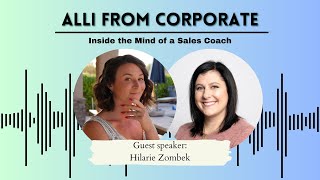
This is a conversational podcast episode (Alli from Corporate) interviewing Hilarie Zombek, a career coach who helps people break into and advance in sales. Zombek shares her accidental entry into sales, recommends starting as a BDR/SDR for ~1–2 years before moving to AE, emphasizes resilience to rejection, practicing via recorded calls/interviews, and seeking feedback. She contrasts startup vs. large-company paths (faster promotion/visibility at startups), discusses in-office shadowing benefits for ramping, and describes her coaching program for early AE-level sellers; contact via LinkedIn (spelled H I L A R I E).
Chapters
What's up, everybody? Welcome back to another episode of the Ally from Corporate podcast. This week's guest is Hillary Zombeck. Hillary, it's so nice that you've joined us today. Thanks.
Thanks so much, Ali. Happy to be here.
Awesome. So you and I have gotten to know each other a little bit in the past few weeks and months, and you are a career coach who helps people get sales roles. Is that right?
Yes.
That is great. It's a tough job market right now from what I'm experiencing and what my clients are experiencing. Are you experiencing the same thing?
Yes. And it's even, I would say, tougher for salespeople just because everyone wants, like, top closers and not everybody, including myself, is a top closer. And so I really help people who are kind of middle of the pack present themselves to get those top opportunities.
That is so great. And I think you and I have talked about this before. I personally don't think that it's whether somebody needs a coach or not. It's what type of coach somebody needs for their career. When I discovered, like, how helpful career coaches were, they help you, like, they help you navigate situations that you wouldn't otherwise know how to navigate until you do it wrong the first couple times. And so they help you, like, save the time. So I love that you are a coach for salespeople. I know that we have listeners today who are interested in sales jobs. And from what I understand, you broke into sales kind of like not on purpose, right? Like, you studied anthropology, I think.
Yes, yes. It was kind of a complete accident.
Tell me about this.
Got my master's in medical anthropology, so around like food deserts and helping bring healthy food to low income communities. And I graduated in an election year. And because most of the programs are funded through the government, everything gets put on hold. And I was like, I need health insurance. Once, like I was 26, I couldn't be on my parents insurance anymore. Not only did I need money, and so I was working at Starbucks at the time as a barista. And one of my coworkers husband was the CRO or head of sales at a trucking company. And she was like, they just look for people, people with high energy, good personalities. They'll teach you the rest. She got me an interview and then that kind of kicked off the whole journey. Spent about a year there and then moved into tech and SaaS is what I wanted to do. So made that transition and we're going on like eight years now.
Oh, that's awesome. That's a really inspiring story. Because I've actually spoken to a lot of people who would love to be in sales. Pharmaceutical sales, medical device sales. I mean, you can make a killing with sales. Some of those commissions. But they're like, I don't. I've never had a sales job. Why would anybody hire me as a salesperson? So what advice would you have for somebody who wants to break into sales, who's never had a sales title? You said high energy and a good personality. Anything else?
Yeah. So I would say if you're looking to break into sales, you're gonna have to start as a business development rep or a sales development rep. Sdr. Bdr. If you've seen those acronyms around, it's gonna be a lot of cold calling and a lot of. And it's grunt work, but you kind of have to pay your dues. So I would say, yeah, high energy, good personality. They like people that are competitive. If you've played any sports, they like to hear about that. I was not an athlete, but like, I'm from Pittsburgh. I like, used my story of cheering for good teams and rooting for that competition and like, spinning that into my first tech interview. I did research. The hiring manager was a big hockey fan. So I was like, how can I personalize my pitch to. To get his interest marked? So, yeah, I would say people who are really money motivated, they like to hear about that as well. And then someone who can power through adversity. Because you're going to get told no 100 times a day, a thousand times a week, it will be no more nos than yeses. So as long as you have that resiliency and you're a team player, I would say that those are probably the skills they're looking for at those entry level roles. And then obviously most people don't want to be like a career BDR or a career sdr. They all want to move into the account executive role. That's where the real money is. So find a company that will promote you into an AE role. If you hit your numbers, I would say on average it takes about two years. There are companies that do it faster. Um, but be okay with like, putting in your time. And I had a lot of people who like, just got promoted in my last management role to AES a couple months, they wanted to leave. I was like, no, you'll never get another AE job right now because you haven't been in the closing role long enough. Yeah, try to get like one and a half, two years as a bdr. Sdr. Get promoted. Do One year as a closer, and then usually you can pivot and move to a different company.
Okay, I want to pick apart some things you just said, because this is gold. So you just described an entire career path for, like, the first five years of somebody's sales career. So bdr sdr, you said. You said that was sales development representative. And then what's bdr?
Business development rep. It's. Honestly, it's the same job. Some companies call them SDRs, some call them BDRs. I think there's, like, a little distinction, but for the most part, it's the same job. If you see either one of those roles, go ahead and apply to it.
Okay, got it. So do those roles for one to two years and don't be afraid to get told no. What is your philosophy on, like, being told no and being resilient against that? Like, how do you not take it personally? Because some people probably get angry and frustrated and annoyed. Like, how do you. What's your philosophy on no?
Yes. So I would say for sales in general, you kind of have to find, like, a homeostasis. Like, you can't live in the highest of highs and the lowest of lows because you will get whiplash. Like, one day you've closed a deal. This is amazing. The next day, you've lost five opportunities. You have no pipeline. You have to start from scratch. And so if you find yourself, like, celebrating the high winds and then getting really low on the days where it sucks, it's going to be really hard. So you kind of just have to be like, it's kind of like in dating, if you get ghosted, like, it's not my problem, it's that person's problem. And just kind of be like, okay, well, that person said no. Click, move on to the next.
Okay.
Like, you really can't take it personally. You're selling a product, you're selling goods. All you can do is kind of like, was it my pitch? Did I talk too much? Did I not ask enough questions? And kind of review your own call. But at the end of the day, there's going to be people who are never going to say yes. And so you can't get attached to the people that say no. And. And try not to get overly excited or overly depressed when things go great or bad if you can just maintain. And then I would also say, too, they put a lot of competition on salespeople to compete with your colleagues. Obviously, there's leaderboards. You want to be the number one seller or the top two. I did that Very early in my career. And it, I won't even say I got burnt out. It was more of like, I just felt like a failure if I wasn't up there. And so I just tried to be better than I could. Last month, last quarter, last year, whatever my quota was. Learn from the people that were better than me and not see them as kind of competition. See them as people I could learn from and just compete against yourself also helps.
That's such a healthy mindset. You just mentioned recording yourself and viewing your recordings. That's something that I advise people to do if they're interviewing. Also record yourself answering the question. Like by yourself. Record yourself answering the question. Tell me about yourself. Or tell me about a time when somebody messed up at work and you had to pick up the pieces and then watch the recording. I've had a client even record themselves in an actual interview and not show the recording to anybody, but just watch it afterwards and they're like, oh, I'm saying a lot. I have shifty eyes. Yeah, it's, it's. I think it's the fastest path to self awareness is watching videos of yourself.
I would totally agree. It's something that I tell my clients to do as well. Practicing and then also recording the interview if you can. Obviously you're not sharing it with anyone. You're just using it as like a teaching learning experience. But I know everyone hates to hear their voice back, but yeah, they hate.
To watch themselves on camera too.
Exactly. But you have to do it because then you will realize because you kind of black out in an interview. You give an answer and you think it was good and then you watch it back and you're like, oh my gosh, I rambled for three minutes. What was I saying? What was I even talking about? I had a client who recorded herself and she was like, I said a lot without saying anything. And I was glad that you could like witness that. And she changed on the next call. Same thing. Had a lot of filler words. So, yeah, highly recommend recording yourself in your sales calls. The companies may have a software like Gong or something that does it. If they don't. If you're at like a really small startup with not a lot of resources, record yourself, send it to your manager. Be like, hey, here's what I noticed. I did well. And here's what I noticed I need help on what's your feedback? Wow.
You ask for feedback. That's ballsy.
I like that.
Yes.
I worked at a company once where CRO was constantly like, feedback is a Gift. And it's true.
I believe that too.
I want to hear what you did wrong. But sales, you only get so many backs. Like, outside of other industries, like, you can kind of screw up and the mistake isn't as large. Whereas, like, if you mess up on a sales call, oftentimes, unfortunately, like, the whole deal could go up in smoke based on, like, one thing that you said. So it's really important to seek feedback from your manager. Take that feedback, whether you agree with it or not, and just try it out. Just try it out and have an open mind. Because the ideal is you want to get as good as you possibly can quickly so that you can close more deals and ultimately make more money.
Yeah. And sales is such a funny position because you can literally measure how good you are at your job. Not a lot of roles are like that. Like, I was a project manager, I was a mechanical engineer. It's not so easy to quantify your work and your progress. But sales, I mean, not only are. Can you say, like, this is how good of a salesperson I am, These are my numbers. But also in an interview, you're selling yourself. And so you literally have to demonstrate your competency at the job during the interview. Like, yes. What tips do you have for people that are, that are doing that?
So the first thing I want to hit on is, if you're not doing great, it don't give up completely on sales. I did that after my first AE role. I was like, oh my gosh, I was just kind of subpar. I wasn't the best, I wasn't the worst. But like, am I even cut out for this Again? I didn't plan on going into sales. And then I became a closer and found out that I was like, oh, this. I wasn't that great. Went to a different company where the environment had better training, a better product. So it is something to be said for the environment. You can thrive in the right environment for you. So if you're. You're struggling, maybe look for something a little bit different. Don't give up completely. And then as far as an interview, as a former hiring manager, I think sales interviews are even harder than regular interviews because every single answer is almost a test, a mini test on how you will sell for your current or future employer, how you sell yourself, what value do you bring? Are you knowledge dumping on me? Are you asking me questions like, are you pretty much selling yourself as the solution to the problem that I'm having versus just getting in there and being like, I hit 95% of my quota last month, mic drop, like, we need a little bit more than that. And so, and I think a lot of people going through the job market right now are realizing like a couple years ago you could just show up, throw up your stats and get a job and get a good job. And now you're not only competing with the best of the best, but you're also competing with a lot of people that are in the middle of the pack. And so you have to find ways to stand out. And so you really should be attacking every call with an interview, every interview with a hiring manager and any message you send on LinkedIn, treat that person like a prospect and pitch yourself. How you would pitch a product is the best advice that I give my clients. And I would give anyone who's looking to break into sales.
Wow. And when somebody likes your style, they'll be like, yeah, I want an interview with you. And some people, some people might not like your style when you're hitting them up in cold DMS on LinkedIn, but somebody's going to be like, oh, I like her persistence. Let's interview her.
Yeah. And I would even say, like, I hired a lot of folks on my team. I think at the time people thought I was crazy because I was working at a SaaS company and they were like, we need people who can come in here and who can sell software. I hired a lot of people who were doing door to door sales, selling freight, which is space on a truck, like these really gritty, hardcore, a lot of dials, a lot of emails. I can teach you how to sell software. I can't teach you to want it and have that grit. And that is a huge thing that sales managers look for. So I would even say if you're in kind of a different industry, selling, and you want to break into technology or pharmaceuticals, medical device sales, whatever it is. Talk about the grit that it takes to do your job and why, if just given the chance, you could outperform someone who's maybe sold at a tech company. Because a lot of companies right now, especially if you're trying to break into software, SaaS, tech, whatever you want to call it, they're like, you have to have two years of software and they just have this kind of idea in their head of their perfect candidate. But yeah, the three people that I hired on my team, that didn't come from a traditional background, one's a manager now, one's an enterprise seller, and then another one is an enterprise seller. Like, they all came from different backgrounds, they just Wanted it?
Yeah. Was that at a startup or a big, bigger company?
It was a startup. So I've actually never. I guess my first job was at, like, a huge corporate company with, like, over 10,000 employees. And then ever since then, I've been in the startup life.
So let's talk about that a little bit. I have some experience with startups, and what I've noticed is that they give big titles out and big money. And do you agree that you can rise up the ranks faster at a startup versus a larger company? And, like, how can somebody navigate that and use that to their advantage?
I would say yes. I went from a BDR to a sales manager in a year and a half, which is crazy. I know I just told everyone, like, hey, you have to be a BDR for two years. But it's a lot of, like, kind of being at the right place at the right time in a startup. Um, and not every startup is created equal. So the first one I worked at was a small marketing tool that was competing against, like, your big guns. And I realized what it was like to not sell at the industry leader. Um, the second company I went to was this, like, crazy new privacy idea startup. They were headquartered in Atlanta. A recruiter reached out and I was like, okay, I'll take the interview. I'll take a shot. I almost turned it down for the dumbest reason ever, and I'm glad I didn't. And I started there as an account executive, and then, like, three months in, I was getting tapped on the shoulder about, do you want to move to California? Do you want to be an enterprise seller? Do you want to move to this other team? And I kept saying no because I just didn't feel like in my heart that's what I wanted to do. But the good thing about a startup is, and I've never worked at a large company, but I think if you say no more in a large company, there's other people to ask. Whereas in a startup like you, saying no is just because, hey, that doesn't align with kind of what I want to do. And I had a very transparent conversation with my manager about, hey, don't stop asking me for things. I will say yes eventually when it's the right thing. And then literally out of a quarter, they were like, hey, we want to start creating an SMB team. Would you be willing to apply for a manager role? And I was like, okay, I definitely management.
You held out for that. You said no to everything until it was good enough for you to say yes to. I Love that.
Exactly. And I had always wanted to go into management. I literally never thought it would happen so quickly. And I was like, yeah, let's do it.
What?
So I would say if you're going to go work at a startup, and this is something that I help my clients with because I've unfortunately like lived and learned through the what makes a good startup and what makes one, that's not going to be a long term fit. Yeah, really do your due diligence and get clarity on what you're looking for. And then one of the best pieces of advice I got actually from an interview is from a vp. I asked like, oh, why did you pick this company? And he was like, I try to take emotion out of all of it. So it's not about the vibes I'm getting from the person I'm interviewing for. I, I want to look at has this CEO had experience before? Does the CRO, have they sold? Do they have a team? Is this their first role as being a CRO? And like these intangible things that make a company successful and making it more black and white. Like, yes, it's important to like the people that you work for but don't just accept or decline a job based on that. And I've used that for every other job that I've applied to because I'm very guilty of like, oh yeah, me and Allie really hit it off. I think she'd be a great boss. And it's like they're selling you as much as you're selling yourself. And so try to take the guesswork out as much as you can.
Wow, that is such a cool story. Did you work for a unicorn? Did we talk about that?
I did.
So the company, Tell me about that. What? Tell us what a unicorn is, first of all.
So a unicorn is a company that reaches a billion dollars in evaluation. It's like a startup term. It's typically like obviously before you ipo, which means going public. So a lot of startups, that's their ultimate goal is, hey, we want to IPO in X amount of years. We want to make it to the New York Stock Exchange, we want to ring the bell and we want to become a public company. So I actually joined back in 2019 was like employee 300 something. And when I left, we had 3,000 employees. I left before. They still have an IPO, but it's on their roadmap. So I left kind of before that happened for different opportunity. But yeah, it was there when no one had heard of us, saw us Overtake the market to become the industry leader. We were the fastest growing company two years in a row on the Inc. 500. And so that was like a really cool experience. It was lightning in a bottle. It's very hard to replicate. That's what I mean by like finding it at the right time and kind of the right place. And I do think now companies like that tend to be headquartered in software hubs, as I call them. So your San Francisco's, your Atlanta's, your Austin's, Chicago's, New York. So if you are local to those areas, I would highly encourage you to be open to a hybrid workforce versus a remote role. Because going into the office, whether you agree work from home or not, is a like a long term thing. It's about playing the game and it's about getting the job. And a lot of people got hired at that company between 2019 and 2020 because we were in office. Obviously that was like pre pandy. So we had no choice. And those people had those opportunities because we. You had to be in Atlanta. So don't be opposed to some type of return to office if it's a really great company and it can set you up for success in the future.
So more on that topic. I think I'm seeing companies do things to make being on site more fun. I think companies are getting really creative with bringing people back to the office, but making it enticing so that people aren't like, oh, I don't want to be here. Like, I'm on zoom calls all day still in my cubicle. I've heard like Salesforce, I heard they do people's laundry and, and they, they like, you can have your Amazon packages delivered to their building.
Oh, wow.
Those might be rumors. Somebody, if anybody works at Salesforce, let me know if those things are true. But like, some companies have a killer snack set up and like drinks. And I went to Zappos here, the shoe company in Vegas. They have a bar for their employees. So what do you think about remote work? Do you think it ha. Like, tell me like your philosophy.
So when we started remote work, I loved it because I was used to going to an office every single day. And I was like, oh my God, this is great. I get to work for my PJs and I don't have to get ready every day. And then I would say a year into it, I was like, really kind of. I really kind of don't love this as salespeople. I think it's not. And I was a manager at the time. So, like, I knew my people could do the job from home. That wasn't a thing. It wasn't like I didn't trust them. They were producing, everyone was at quota. We were all getting paid. It was fantastic.
Yeah.
But being in an office and seeing how quickly I ramped. And also people on my team. So the first eight people I hired started one month in office, and then the pandemic hit and we got sent home.
Wow.
Their road to success and the velocity in which they could do that compared to the people who started remotely was drastically different.
Yeah.
And I think for sales, it's a little bit different. Like, yeah, if I'm a coder, if I'm an accountant, like, why do I need to go into the office?
Right.
I can just sit at home and do that job. But for something like sales, when you hear other people on cold calls or Ali, what was. What did that person just say to you that had that response like, there really is something to be said of sitting in the bullpen smiling and dialing with your colleagues and just kind of hearing what other people say?
Yeah.
And I do find. And I'll speak for myself, I don't think everyone is. I don't think lazy is the right word, but when that five o' clock hits, I'm like, okay, I'm shutting down my computer. I did what I could. I don't think I'm seeking extra work. Whereas, like, when I'm in the office and I had nothing else to do and I saw so and so go into a demo room, I was like, oh, I got an hour to kill. Can I listen to your demo?
Good point.
And, like, I just shadowed more. And it helps me be a better closer because I had the access to witness that. Sure, I can go on gong and listen to it. But again, if you're doing it virtually, you're scrolling on your phone, you're playing with something on your desk, versus you're in a room with a person, you want to be respectful to the AE who's doing the demo, you're listening a little bit more.
So, yeah, you're feeling their energy to. Energy is contagious. When everybody's feeling really enthusiastic and upbeat, then you're like, all right, yeah, like, I got the energy to keep going. But, yeah, I feel the same way like at home. I mean, I love working from home. I love not having to do my hair and makeup every day and just wear sweatpants. And I haven't worn jeans since 2020. Probably love that for me. And I Just feel like, I feel like I'm lucky that my husband and I do a similar thing for work. And so we have like the same energy. It's almost like we're our own bullpen. But if I lived alone or if I was married to somebody who like left for work every day and came back at 6, 7 o', clock, I think it would be a lot different. Um, but yeah, I think, I think the, the point you made about shadowing somebody or just being surrounded by people who are a couple levels above you is really inspiring. It's contagious, it's motivating, it's. I think already it's inspiring. But yeah, like shadowing somebody more senior than you, you can't. I don't know if you can do that from home. I really don't.
I don't think you get the results you want to. But to answer your question about the perks, I am biased because I, the corporation that I worked for wouldn't even let me eat my lunch at my desk because they got new carpet. Ridiculous. Like, we're adults. And then the startups I worked at, the first one had a keg in the office.
Yes.
Back in the day, it was like cool to have a ping pong table. That was like the big joke that startups were like, yeah, we have ping pong.
Yeah, it's not cool anymore. I don't think.
No, no one wants to do that. But the second company and the third company, I mean, they had snacks. We would do a lot of events. We worked in a building where there was a. The bar wasn't part of our office, but it was like on the fifth floor or whatever. So literally after work you just go get a drink with your colleagues and kind of shoot the. And have a good time. And I feel like that's the part of working from an office that I miss. Especially for me. I do live alone. I moved to Atlanta. I didn't know anyone. Like, all of my friends here are because of work. Not saying, like, you have to make all of your friends at work. But for me, moving to a new city, not knowing anyone, that was like really the easiest way for me to make connections with people. And so, like, if I'm coming right out of college, I know everyone's like, remote. Work is so great. But honestly, I would encourage you to look at something that has, in office culture especially, especially if you're moving to a new town and you don't know anyone because it's going to be a lot of younger people, people within Your age group. Like, I just went to my colleague's baby dedication. Like, we worked together for three years and like, we're such close friends and we would have never had that in a virtual setting.
Yeah, yeah. It is strange being on Zoom. You don't have that same connection that you do in person. And I used to go to co workers baby showers. I've been to co workers weddings. I met my husband at a coworker's wedding. Yeah, so go into the office.
You guys were networking. Everyone today is like, you need to be networking. You need to be networking. And like, the easiest way to do that is in person. Like, there is no way I would have had the opportunities. There's no way I would have got tapped on the shoulder to apply for that management role if I wasn't in office. Because they saw me already doing the job without the title and they were like, oh, we want to ask her about it. Like, you can't see if I'm at home helping ramp up new employees. You have no idea if I'm doing that or not. So I would say if you want to just come in and do your job, that's different. If you are looking to move up from the ranks, I recommend trying to find some place where. Because it's all about visibility. So. So the more you can get in front of the people that make the decisions, the better chance you have to be tapped on the shoulder. And again, I think at a startup with less people, that's going to be more of an opportunity than working on a 10,000 person company where on your team you might not just be a number, but to the CEO, does that person know your name? Probably not.
Probably not. Okay. This conversation was great. I think people got a lot of value out of it. Um, I want to ask you more about your program before we finish up here. So you help people who are struggling with their job search get account executive roles?
Yep.
Okay, tell me a little bit about it.
Yeah. So typically it's people who have been an account executive role before one to three years. I have clients higher or lower than that. Just kind of depends. A lot of my clients have been laid off because they make. A lot of people that have been laid off are salespeople because they make the most amount of money in an organization. So it's quick to just kind of cut that when they have to make that choice. And then I also work with people who are like, hey, I got this experience. This is the first startup I worked at. Or this is the first AE role I'VE had. I want to go to a different company. I have no idea what to look for. And like, I don't want to end up in a place that's crappy or like not a long term fit or, you know, not something that they want to do. And so really, I mean, I help with everything from resumes to LinkedIn. But I would say the biggest value that my clients get out of it is the fact I was a hiring manager for four years. I know the questions they're going to ask. I know the answers that they expect to hear when they ask you a question and just kind of how to sell yourself and tell your unique story and how to sell stand out from the pack. So cool.
And that's so valuable too, because I'm hearing people are getting hundreds, if not thousands of applications for a job. And so you have to be the one that stands out because they say the cream always rises to the top. Gotta be the cream. Yeah. Get noticed. Yeah.
And I just don't feel like the interviews have been. When I interviewed for jobs, like literally five years ago, I don't think I was asked one behavioral question. Maybe tell me about Lost. It was like numbers and kind of like, what's your 30, 60 day, 90 plan? And what can you bring to the table? It was very easy. Now every interview you go into, there's like three rounds of behavioral questions.
Yeah.
And again, if you've been laid off for a while, something that my clients really struggle with is like getting back into the sales. What deal did I lose? What did I learn from it? And there's all this sales methodology. If anyone listening is familiar with like spin selling or med pick or, you know, any of the other acronyms, it can be hard to kind of remember to flex that muscle. And so that's something that we work on a lot as well, is like good examples that show your strengths and also what you've learned from losing deals or whatever the behavioral question is. And really working through like the Star method or making it concise is probably the biggest challenge that I see that I'm having.
Cool. If anybody listening is interested in getting in touch with you, what is the best way to contact you?
I would say LinkedIn. I spell Hillary a little bit unique. So check out the screen and how it's spelled and you can find me there. That's my primary social media right now.
Cool. Sounds good.
You have any questions, just about one off or anything we talked about on the podcast, let me know.
Cool. Well, I'm so glad you were able to join us today. I know a lot of people are going to get value out of this because I. I actually believe everybody is in sales. I think everything in life is a sale. You're always selling something. You're selling yourself an idea, your opinion, a concept, a product. So this was really valuable. So thank you for joining us today.
You're so welcome. And if you want to get into sales and then you find out, whoa, I do not want to chase a number for the rest of my life, as Ali just said, the transferable skills that you can take. Because when I was out of, like, my masters, I was looking at, like, public health jobs, and they were like, oh, you have to go out and fundraise. You have to do all this stuff. Like, I can easily go back into that because I know how to pitch a product, pitch a service. So.
Yeah, and the resiliency piece. The resiliency piece, like being told no and just picking yourself back up and dialing again, that is like a metaphor for life. Like, just gotta keep going.
If you're thinking about breaking into sales, I would say try it, do it. If you hate it, you can totally get another job. And if you love it, it'll be one of the best financial decisions you make.
Awesome. Good tip. All right, well, thank you for joining us today, Hillary. And if anybody wants to get in touch, she is Hilary Zombeck on LinkedIn. H I l A R I E. And we will catch you next time.
Awesome, thanks.
See you later.
More from Alli








Change Your Career Without Leaving Your Job: Podcast Episode with Darcy Eikenberg


