Trials & Triumphs: My First Job Out of College
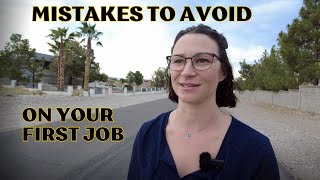
Alli Peck started as a mechanical engineer at a Silicon Valley dialysis startup in 2013, negotiated her way to a $68,500 salary, and learned hard lessons about workplace dynamics when an HR conflict over a hostile manager forced her to resign after eighteen months.
Questions this video answers
2013
$68,500 per year
About a year and a half
Research and development (R&D) mechanical engineer
A home hemodialysis company (Silicon Valley startup making at-home dialysis machines)
Chapters
Welcome back YouTubers. Thanks for stopping by my channel. I need your help with this video today. I am trying to say less, actually less. And so those three words actually and so watch this five minute video and please comment below how many times I say any of those words. I'm gonna try to make it zero for all three of them. Let's get the video going. Today I'm gonna talk to you about my first job out of college, what it was like, what I struggled with and what I wish I would have known. My this is going to be hard. My first job out of College was in 2013. I worked for a home hemodialysis company that made a hemodialysis machine for people with kidney failure that would go in your living room so you didn't need to go to a dialysis clinic. And I was a R and D engineer, research and development engineer, mechanical engineer. I remember the first thing that I struggled with, which is odd, was what to wear. When I was in college and in grad school, in my graduate research lab, I wore jeans and a T shirt every day. But this company I worked for, they were a startup in Silicon Valley and I wanted to dress more appropriate. I wanted to dress professionally because I've always thought dress for the job you want, not the job you have. You know, dress more confidently, dress professionally so people take you serious and you look like you know what you're doing just in case you don't. Like I felt I didn't. I struggled wearing. Do I wear loka tops? Do I wear turtlenecks? Do I wear long sleeve? It's hot outside. Can I wear shorts? Do I wear high heels as a woman? No. I'm working in a labor. I do remember the first time that I wore high heels to work. It was my first week, I think maybe my first day. I wore these really cute knee high leather boots. Probably a bad choice looking back now, but what are you gonna do? I dressed to impress one of the engineers. The more senior engineers came up to me and I was on a ladder because they were having me do something in the lab first week and one of the senior engineers came up to me and he looks at my shoes and he goes, you should probably wear more practical shoes from now on. Thanks, thanks for the advice, man. And so I did, let's see, what else did I struggle with? Mentorship. I had a mentor, God bless that man. He was probably 45 year old man, kids and a wife. But him and I worked together every day. We were on the same team. He was a More senior mechanical engineer. And he showed me the ropes my first day. He said, you can shadow me. I'm working on X, Y and Z over here on the bench. Do you know how to use a multimeter? No. Here, here's some Phillips head screwdrivers. Take this apart. Okay. I think I haven't said those three words yet. I'm doing good, right? I worked with him daily. I learned how to write protocols, I learned how to write reports. I learned how to do design verification, testing of a medical device. I learned a lot. And I did have some friends while I worked there. I remember that I had a crush on one of the other engineers and I remember thinking to myself, is it okay to date somebody at work? I used to go back and forth in my head about it. I decided no. So nothing happened. But it was nice to have a friend. And learning to keep it professional was a whole different ball game. The dynamics between you and your classmates, you and your professors, they're one thing in college, but the dynamics of you and a co worker or you and a manager are quite different. My manager at the time, I remember him, he was very stern, older gentleman, very professional, rarely cracked a smile. And you know me, I'm cracking smiles all day. That was difficult working for somebody like that. He would challenge my. Not my education, but he would ask me questions, almost as if to try and trick me. I don't think he believed that I should be on that team. And I'll tell you how I got the job. I started out as an intern. This is a funny story. This is the story where I learned in negotiating, he who names the first number loses. And she did. I was working as an intern. Actually it was more of a consultant. I was a consultant. So I was a consultant for this company. Same company, originally a consultant full time. I told him, I'm still looking for a full time job and you know, I'd love to work here full time if you'd like to extend my contract when it's over. I worked there, I kept job searching elsewhere because I wanted a full time role. And at this company it wasn't guaranteed that the consulting gig would turn into full time. So I kept job searching and eventually I got a job offer as a sales rep for a medical device company in Santa Cruz. And I told the startup, hey, I got a job offer, putting in my two weeks notice. Thanks for everything you've taught me here. And they said, well, we like the work you've been doing here, so we'd like to offer you full time. I thought that was a real coincidence. You know, play hard to get, I guess, next time. But I said, oh, great. I would much prefer to stay here. If you want to hire me on full time, I'd gladly tell this other company, no, thanks. And then they said, so what kind of salary did they offer you? And without even blinking, I said, 68,000 salary. And without even blinking, they said, we'll offer you $68,500. And then I started blinking, and I thought, oh, God, what have I done? If I hadn't said a number, maybe they would have paid me way more than that. That is how I got my first salary out of college and how we landed on that number. $68,500 a year. Like I was only. They only wanted to pay me 500. No. Yeah, $500 a year more than the other company. It felt kind of rotten. So learned that lesson. Never say the first number. Ask them what their budget is next time. Oops. Oh, well. Life went on. I worked there for a year and a half. Eventually, it did not end well because I was talking to my mentor one day and I said, you know, I'm really having some trouble with the manager. We're not really getting along. He's making it hard for me to do my job. I feel like he doesn't trust me. There was some other stuff that happened, too. And he said, wow, sounds like it's a hostile work environment. And I didn't know at the time that those were very, very special legal HR words. Hostile work environment. And now that I know what that means, I wish that I hadn't said that because I actually emailed hr. This is also where I learned, don't really talk to HR unless you have to. I emailed HR and I said, I'm having trouble with my manager. I thought they were there to help. I didn't know what HR was really. I emailed them and I said, I'm having trouble with my manager. I feel like I'm in a hostile work environment. It's really tough to do my job. I feel like he doesn't trust me. Can you please help? And they called me into the office, their HR office, and they said it was a woman. And she said, this is a very serious allegation. And I thought, what? I looked it up later. Hostile work environment. I think HR has to legally do something about that. If an employee claims that they're being subjected to a hostile work environment. Because if they didn't, then I could have sued them, I guess. Anyway, she. Every conversation we had about it from then on was not via email and it was in person. That was another thing that I learned is when you're having conversations with HR or anything about legal at work, have it in writing, do it over email. Don't do phone calls, don't do in person. If you have to do in person, message them afterwards and say from our conversation that we just had, this is what I understand that we talked about. Can you confirm you'll have it timestamped in your email? She asked me to resign. That's how it ended. She said, all right, well, your performance has been lacking. Sorry you're working in a hostile work environment, but we'd like you to resign anyways. And I said, what? Resign, I don't want to quit. And she said, well, if you don't resign, we're going to put you on a performance improvement program, a pipe. And if you don't do well, then we'll let you go. And I thought that is a bad move. I think I just lost my job. So I went home crying. I burst out the doors of the HR woman's office. I burst out the doors of the parking lot. So dramatic. And I put in my two weeks notice. I announced it to the company and they told me not to tell anybody the real reason why I was leaving. And that's that. Unfortunate. Unfortunate for me, unfortunate for them. At the time I thought it was unfortunate. Turned out to be the best thing for me. It was still a great company to work for. I wish them the best. I wish I had known what hostile work environment meant. So the lesson I learned there was to don't take the word straight out of somebody's mouth and put them in an email to hr. Alright, well, those were all of the things that I learned. No, those were probably a third. The things that I learned at my first job out of college and how it ended. I don't think I said alright or so this whole time, but let me know if I did. I'm actually quite proud of myself so I'm going to end it here. But let me know if you are in your first job out of college. Let me know what you're struggling with, if anything, or if you're thriving, let me know that too. And if you are just graduating, about to head into your first job, let me know what questions you have. It's a long road ahead, but it could be a fun one. Talk to you later.
More from Alli








Change Your Career Without Leaving Your Job: Podcast Episode with Darcy Eikenberg


