Art + People + Social Good
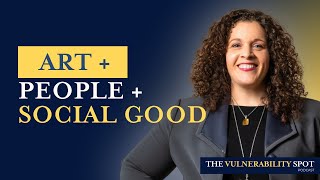
In this V Spot interview, host Andrea Mancuso welcomes artist, storyteller, and social innovator Yuko Kudo. The conversation begins with Yuko’s early exposure to music and performance in Japan, highlighting how a preschool piano teacher and a 1992 TV performance sparked her love for the arts. Yuko explains how art became a sanctuary during childhood bullying, later evolving from a coping mechanism into a deliberate healing practice through writing, scripting, and performance. She describes the "North Star" metaphor—a guiding principle that shifts with each project, exemplified by her show Home My Heart, which helped her navigate longing for home. The dialogue moves to Yuko’s work using art for social innovation, citing a documentary about incarcerated individuals and her own efforts to humanize issues like mass incarceration, climate change, and justice through accessible performances. She discusses the ongoing challenge of "courage over comfort," focusing on financial sustainability for artists, relationship‑building with investors, and confronting personal narratives around money. The centerpiece of the interview is Yuko’s upcoming documentary Dear Asian Girl, which follows three Asian‑heritage Broadway‑aspiring women, exposing the stark under‑representation of Asian performers (5‑7% of lead roles) and the systemic barriers they face. Yuko shares the film’s crowdfunding campaign on iFundWomen/Patreon, the deadline tied to her grandmother’s birthday, and ways listeners can support the project (donations, sharing the 90‑second teaser). She briefly touches on mental‑health habits (naps, exercise, hydration) and participates in a rapid‑fire “Forwarding Four” segment, naming finance as her intentional healing focus, recommending her song "Just Be You," urging people to "be a human first," and encouraging self‑compassion. The interview closes with contact information for Yuko’s platforms (lovelivelife.com, untappedstorytellers.com) and a call for community engagement.
Chapters
Hello everyone, I'm super excited for today's special guest. Yuko Kudo is an artist, storyteller, photographer, and social innovator. Host of the Love Live Life podcast, Yuko creates art for healing, connecting, and changing the world. Yuko, thank you for joining me in the V Spot.
Oh, thank you so much for having me, Andrea. It's such an honor to be here with you and your audience.
Thank you. Thank you. I'm super excited. It's been a minute since we've been able to be together. And so I'm psyched that you are here with me. I always like to begin by acknowledging my guests for their courage. Accepting an invitation to join me in the V Spot without knowing any of the questions that I'd be asking today is no easy feat. So in this moment, I really want to begin by giving you your flowers, you know, and acknowledging you for demonstrating vulnerability at its best.
Thank you so much. Oh, okay, this is the beginning, in the beginning of this call.
So we've only just begun. Exactly. So thank, thank you, Yuko. Thank you for being here. Um, you know, I was thinking about before we actually talk about current, the current times and, and the future, I wanted to go back in time. Um, so let's rewind the hands of time. Yeah, born and raised in Japan, right? Tell us about little Yuko. How and when did she first get introduced to the arts?
Wow, I, I don't think I've ever thought about that, when and how I was introduced to the world. I think, well, my mother always said that before I even came out, the moment she knew that she was pregnant, she started playing classical music around her stomach or played the music and whatnot. So neither of my parents are in art as a profession. The one is a teacher, one has a skiing/snowboarding company, and none of them are artists, but I they've always surrounded me in art. And my preschool teacher, she's also my piano teacher, and she had been such an incredible mentor for 15 years plus of my life. And I had a, I had a very fortunate youth to be surrounded with, um, primarily music and movies. Um, and never had an opportunity to really practice dance, but I always danced around with when the opportunity came up. So I would say I don't remember the exact time that I was introduced to the art, but consciously when I realized, oh wow, this really impacted me was in 1992. And I was watching this traditional Japanese show that happens every New Year's Eve, and I saw this one particular group got on stage and started singing, and I distinctively remember till this day how mesmerizing their performances were. And the name of their band is Dreams Come True, and I'm actually wearing their t-shirt. Coincidence. But yeah, they've kind of opened up a lot of my ideas around what does it mean for me to be performing or sharing my voice, whether consciously or unconsciously at that moment.
I love that. I love that. So, okay, so I hear a few things. First, you say, uh, coincidence pertaining to the t-shirt. I'm going to say not so much. It's probably, uh, meant to be, probably, right? No mistakes that you are wearing that particular t-shirt, um, you know, of the group that it's the first conscious memory of being impacted and inspired by the arts. So 1992, uh, but it kind of goes back— what I heard in your share also was preschool, right? There's something that traces back to preschool. So, um, yeah, history of having art in your, in your world. Well, you speak of, you know, on your website you, you talk about— I'm going to quote you— you say, art is what saved me. "Art taught me to be me. Art helped me heal from my past wounds." Can you share a little bit more about that with us?
Yeah, of course. And thank you for quoting me. It's always weird feeling that.
Art—
as a young child, I had a lot of experience of being bullied. And because I was introduced to the piano, because I was introduced to the music so very often, I would just go into my room, play piano for hours and hours and hours at a time, not knowing how to express what I'm feeling. But I will play Beethoven, I will play Chopin, I will play Mozart, and those are all very dramatic, very extravagant music. And I think I was trying to channel or process all these energy of sadness or anger or resentment through that, which I did not know how to verbalize. I think that was my first iteration of art, was my sanctuary basically. And growing up, as I consciously got more into the place of performing and I started really getting into the performing arts and as a performer, and once I moved to the United States in 2003, 2004, and during that time, Again, the lyrics of the music were something that I was able to communicate, something that I didn't know how to in my own language, in my own personal life. And I had a lot of emotions come up. Oh, this character understands who I am. This narrative is exactly what I'm going through. And I had a lot I wanted to share through that music. So it was— the music was serving as a vessel for me to share something or express something that I didn't know how to in my own life. And it took a turn once I started creating my own work. And that's where the healing comes from. I think up until that point, it was more so of art saved me, right? And the art became a healing when I started, okay, now I want to tell my own story. What does that mean? And writing the script was such a cathartic— cathartic, there you go, cathartic experience. And I wrote it down and it's almost like taking the words and what I thought, what was happening in the past and put it down in the paper, organizing it, processing it, and re-putting into my heart after all the process were done. And once that is done, I am able to, or at least I was ready to start sharing that with other folks. And I realized that during the rehearsal process, if I'm still in the emotion, if I'm still feeling it from the place of pain, rather than the narrative of this is the experience that I learned, this is something I was able to heal, this is something I want to share with you. I am still having a wall between myself and the audience. Hence, I needed to do all of my process before I got on the stage and performed. And thank God for Brandon Ramaker. They are incredible director who helped me go through the process, and they really taught me about focusing on the North Star through this story, through this narrative of the story and music. What do I want to share with the audience? So that's where the healing started to really come in. And it's always a new discovery depending on what I'm creating, what I'm performing, what I am going to be writing in whatever the medium that is. Each interaction teaches me something. Each interaction allows me to learn about myself and deconstruct or create some new narratives or discover something new about myself, and it's an opportunity. And yeah, thank you for letting me articulate this. It's always humbling to come back and being able to share that process with people, and I think it's such a beautiful thing. And once you start doing those things consciously, art really is a gift. And absolutely, yeah. And we are able to share that in such a beautiful way without having the need to prove myself.
Yeah, yeah, I love that. Oh, you said so many good things. So, okay, first I'm going to, uh, go backwards in your, in your share. Um, so thank you for, for all of that because I think, you know, there's so much within and so much vulnerability in terms of, you know, speaking about like the original, uh, influence, you know, and why you turn to music. But so just for clarification purposes, you mentioned the North Star in terms of your process and that being something that was shared, um, by Brandon. So is that somewhat like a guiding, uh, principle or something that leads you, uh, through how or what you want to share your work, like Speak a little bit more about that just so that we understand.
North Star can look like myriad of things. In that particular show that I mentioned, it's called Home My Heart. It was one of the first shows that I ever written. The music wasn't my own, but it was one of the first shows that I wrote about my journey. And the reason that I wanted to create that show is because I was broke. I had no means to go back home, but I really wanted to see my family. And I really wanted to come back to whatever the home meant for me in that moment. And during the breakdown crying session in the kitchen floor, because Brendan and myself were roommates at the time, and I want to go home. That became my North Star. So Brandon kept reminding me, you get to go home, you get to go home, you get to win at the end of this, telling your story. So in that particular example, that was the North Star, and it changes all the time depending on what project and who I'm working with and what story I'm telling.
Got it. So it calls you forth. It absolutely calls you forth. And so you made it home. You visited home, I'm sure. I trust that you got there. Yeah, I love that. So, okay, and what I love too is that you highlight— I resonate with your— it resonates with me in terms of what had you choose into music to begin with, right? So you are, you were experiencing bullying. In my case, it wasn't quite bullying, but it was a lot of like upheaval at home, and music becomes the sanctuary, right? The go-to therapy before we actually have the opportunity to choose into a traditional therapy form, right? And so, you know, everything is happening, whether it be at home, in the world, in your case peers, and music becomes the place where you can turn, the outlet to, um, sort of escape that and find solace in. And, uh, and what I also heard from you is it being a universal language, right? Because at times where you aren't able to actually communicate what it is that was occurring for you, music was doing that for you, right? And I think that's so, that's so beautiful. And to everybody listening, you know, I wonder how many of us like turned to music as a therapy, you know, when we were very young for reasons that we quite didn't understand. So Yugo, thank you for sharing that. I think that's so powerful.
Of course.
I love that. Well, you currently incorporate your art into social innovation work to touch people's hearts. Tell us more about that.
Yeah, that's a newer part of my journey, and I'm always learning, and it's so intricate, to say the least. And as you just mentioned, not only music, art in general, it's a universal language. And you may not understand what I'm feeling, but when you see the dance performance, you see something, you feel something. And if you read the poetry, you see the intricacy and complexity of the person, and you may be seeing the foreign film, not understanding the actual linguistic language, but you can feel something, right? So art is something that would allow us to become human first. I see you as a human. You're sharing your human experience, hence we get to connect with each other from that foundation. That's what I really love about art, and that's why I believe that art is such a strong and powerful vehicle as a social innovation. One of the catalysts for me was a documentary called The Work, and it's a man's spiritual and personal journey within the facility. Those folks are who are incarcerated in one of the, the facility in California, and it really touched me because they were all human in that moment. Like, if folks who are incarcerated weren't wearing the clothing that they were wearing, I wouldn't have been able to tell who is the person who was training, who was the folks who are being incarcerated. I could not have been able to tell, right? Because they were able to connect as a human in that deep level in Being able to tell that story, being able to humanize that relationship, that's something that strongly impacted me. And just expanding from that experience, me being an Asian woman, and also I know that you, some of you may or may not have meet me in the past, but I look like 12 on stage still. I'm 4'10". And it makes it somewhat unthreatening for some people. Some of the topics that I brought into these spaces have been like mass incarceration, climate change, and like all this justice movement, and it could be intimidating for some folks who have never been into the conversation. So I think there is a place for me to bring these topics and make it more accessible for people and being able to go from the place of 'All right, okay, I want to watch documentary with you and let's discuss this matter. I want to talk about this performance who it's based on somebody's experience in, uh, violence or this.' So I think through art and through my work, things can be more accessible, things can be more humanized, and I think I can bring in more crowd who might not have the entry point into these topics, and it's such a beautiful thing, and I get to really learn and understand. And especially someone who is in United States right now, but I grew up in Japan, I have a whole different understanding of what race is, how politics work, how the structure work. And so I get to ask a lot of questions and understand And a lot of researches that I do are from the movies, from the book, from the photography, from the oral history, and those are all art. And because I can see that in a bite-sized level, I can actually become curious and want to go deep dive into the study. So what art can create is humanizing the whatever the social issue that we're facing and also spark curiosity and allow us to really create an opportunity to see each other as human who are going through certain experience. And that's what I love about it. And I am a baby in this field. I just, I'm still figuring it out, but I love doing it.
Yeah. You know, I, I love this because it's so profound, right? Because I feel like what you've done is stepped into utilizing your art for, um, to make the world a better place, right? And to really create opportunities for not only for us to see one another, but for us to create, um, connect heart to heart. Right. And so despite the circumstances, what I hear, despite the circumstances that may be occurring, despite the situation that's, that's at large, let's say you are finding a way to have people tune in and really connect with, you know, the essence of the being, not the circumstance, you know. And I think that's so powerful when you re— when we really like peel that back because there's so many people, right, that have circumstances that if we judged only the circumstance, we would never get to know the incredible person that we're, you know, and I think that that's so profound to do work on purpose, right? Day after day that allows for an opportunity to create that, you know, and I think that when we're in a conversation of being the change. That's such a beautiful example of how it's demonstrated, you know, through your work. And so I absolutely love that. And so, you know, small presence in terms of height, right, on the stage, but gigantic impact, you know, profound impact. And I, you know, for anyone who, who doesn't know you, I think that it only takes a moment to actually experience the enormity of who you are, you know, as a person, um, on this planet. So I, I think that that's incredible. And, you know, yes, you're saying new too, right? This is a new, uh, the, the social innovation is, is new. Although I think if for anybody who does know you, I would say I think it's safe to speak for many of us where you operate as though you've been in it for, for a long time, you know, so it doesn't occur as as infant, as you say, you know. So amazing. Yeah, amazing, amazing work. Um, well, you know, in my work I often speak about courage over comfort, right? Courage over comfort is a big thing for me. Um, talk to us about what that looks like in your life right now. How are you currently embracing courage over comfort?
I need to take a minute to answer that. I think that's every moment, um, as an artist, as someone who's creative, every journey, or just as a human, every journey is choosing courage, right? And there is a good place for comfort, comfort as in grounding space, comfort, as in your peaceful place and blissful place, to ground ourselves back into that root. And for courage piece, right now what I'm really challenging myself, it's like, how can I make every single one of the project more sustainable? And I am someone who's always like, how can I make sure that all the artists and all the people that I work with get paid? And I often forget about myself because I am, I'm pretty much a minimalist. I don't need extravagant stuff, but in order for me to source all the finances, the resources, and the investor and whatnot, I have to constantly use different type of muscle and make sure the project goes on. And so I'm learning the language how these people talk, and I'm learning how the world of financing and investing works, and I'm learning how can I put myself in the equation, and I also get to be sustainable for myself. And that's a courage in that money and I need to have a lot of relationship building here because I'm I've been through a lot of struggling artist narrative for a very long time. And, you know, during the pandemic, like, receiving the unemployment was one of the very first time, I would say one of the very rare time that I felt stable. Like, because up until that point, all my life, whether I was working at the restaurant or juggling gazillion freelance work, everything was, if I do it, things will happen. If I do it, things will happen. And pandemic was the first time, oh, this is what it looks like for me to be receiving something stable as opposed to chasing for something. So there's a lot of relationship building and like healing my personal narratives are around money and the relationship with the finances and resources and even the folks who are in investment, that itself is a lot of work that I need to look inside of me and say, okay, why am I operating this way? Why? And even asking myself, so if I want to have so-and-so, what narrative do I want to create instead? Within me? And so being able to ask myself that question, it always requires courage and compassion, obviously, because we're very stubborn. I'm very stubborn for sure.
I don't know anything about being stubborn.
Me neither. Not me. Not me. I am stubborn with a capital all letters. So yeah, I think even being able to give compassion for myself is a courageous work for me.
Totally. Yeah, I really— I love that. I love what you said because you brought up so many things. And again, thank you for being so generous with your shares, right? Because I think that in courage over comfort, for what I hear for you is that it's ongoing, right? It's a regular practice. It's really being with personal development and introspective work, right? Where you get to pose the questions and challenge yourself and push back on narratives. And in this particular context, finances being, you know, the piece and directly connected to struggling, you know, however, like the artist has been held in terms of lifestyle. And I think it's so powerful to, to really look at, and this is something that, again, this is no mistake, something I'm looking at right now in terms of what narratives do I hold pertaining to finances, you know. And I'm someone who, and it sounds like you were also speaking about this, um, where, so there's this underlying belief that it's like you have to work hard, right, for the, for the flow and the and the ease to sort of occur with, with money. Um, well, I should correct myself because in working hard there's not the ease, but there's a belief that there could be the flow, you know. And, um, I think it's so powerful to actually unpack how finances show up in our lives, right, and how the results we have are directly connected to to the narratives and the beliefs that we hold about, you know, the financial success is directly connected to the narratives and beliefs we hold about money, right? So if you take care of everyone else and leave yourself out in that particular example, you know, how, like, how does the work get to sustain with you not being, you know, compensated in that equation? So it's so powerful to look at and be intentional about, wait a minute, you know, I'm in this equation too. We all get to go. What, you know, how do I learn to sort of incorporate? I love that. And I think for anybody listening, there's an opportunity to check into, uh, what underlying beliefs, right, do you hold about money, right? Because it could be really like dictating what results you have, what results you don't have in certain areas. And especially in this moment, I just want to shine the light on on artists. Right.
Thank you.
That's a big thing. That's a huge piece. Yeah.
And expanding on that piece, and at first, again, a little bit of going back to the stubbornness piece, but for some of the folks who have been doing mindset work, mind-shifting work, understanding something intellectually versus how you feeling or how you can operate, it's such a different thing. So like, that's the compassion gets to come in, right? And because that feeling of, I want to feel what I'm understanding intellectually versus what I'm feeling in my body, it's so different, hence I'm not doing anything— that is such a rough place for anyone to be. And I hate being in that space because I constantly have to beat up myself, like, why can't you do this way? And So if you're listening to this and going through that, you're not alone. I do it all the time. I'm pretty sure there are so many people who did that. And yeah, this time— and the second piece that I wanted to add was thank you for shedding the light on artists. Artists have been through a lot this past 2 years. And being able to advocate and being able to be the cheerleader for artists, it's a huge, huge part of my work right now. And how can all artists, especially the independent artists, be more sustainable? And the disparity between who makes gazillions, billions of dollars versus independent artists who are, quote unquote, struggling to get the visibility or whatnot. The disparity, it's so horrendous. And I think there are so many different ways of what art is. The definition of art, it's so vast and vague. And what does it mean for a person to be an artist? It's so unique to each individual. And I would love for all the people who are listening to this And whether you consider yourself an artist or not an artist or creative or whatever, if you have anybody in your life who considers as an artist, like, take a time to understand what their life looks like, like what the process of their work looks like and what supporting their artwork looks like, because everything is so unique to each person.
Totally, totally. And you know, as you speak, what I'm thinking about is the importance of unlearning, right? Because I think that's so much of what we are— like, the traditional teachings of what we are, um, taught has us believe and operate in a way, and I identify with this, where certain things, certain lifestyles are unrealistic. And so there's an opportunity to really look at, right? And that's where, like, I— when I heard you speak about, like, the intellectual, the logic aspect versus the emotions, there's a disconnect at times that I experience myself too. Because emotionally and, like, physically in my body, there'll be a creative energy that's occurring that goes against everything I learned, right, traditionally. And so there's an opportunity to really push back and challenge my, you know, yourself. Again, all of this usually happens with the person in the mirror, um, to, to really like accept and own and be with who you are and try to find like the, uh, the coming, the merging of the intellect with the emotions, right? All in the name of— but I love, love, love what you highlight, and I want to echo it for everybody who's listening. Um, to those of you who are tuned in for the creatives and the artists in your life, be intentional to take time and actually hone in on why are they doing what they do, how does it impact them, what are they creating in the world, you know, how, how do they like express themselves through their work. There's so much like, there's so much essence, right, to, to the various art forms. And I love that you highlight and, and really call forth folks to, um, be purposeful and, and tune into the artists in your life, you know, because there's a lot to actually experience, learn, and, um, enjoy, right?
There's—
it's profound. So I, I love that you, you do that. You go and you, you know, I just want to highlight too that when I think of like advocacy for artists, you know, I immediately think of you, you know. So to everyone, to the artists that are listening, you know, we know you're in good hands, right? Because as long as Yuko's around, there's advocacy happening in your best interest. Um, so Yuko, you're currently— yeah, yeah, thank you for the work that you do. You're currently producing a documentary, Dear Asian Girls. Tell us about it. Tell us all about it. I'm excited.
Yeah, thank you for having this, like, thank you for opening up this opportunity to talk about this film. Like, I am so grateful that you invited me to talk about this, and I am so grateful that I get to share about this. And this is something— this is a documentary called Dear Asian Girl. It follows 3 theater female artists. All of them are Asians., and all of them are, quote-unquote, international background. One is from Canada, one is from Philippines, and one is Japanese American. So each of them had a dream and passion and pursued the Broadway theater, and they came to New York. So what does that life look like for them? It really comes from my personal experience. Me growing up in Japan, I was fascinated by the theater, fascinated by the musicals, really wanted to pursue the Broadway theater. And once I got here, I realized and learned so much about what does it mean to have a visa that's valid to work? What does it mean to be an immigrant? What does it mean to be an Asian woman? What does it mean to be an Eastern Asian woman or Japanese woman and be 4'10" and English being the second language? Everything has a meaning in this industry. More so than any other industry. At least that's what I feel like because that's my background. So it was inspired during the workshop that I was taking, and I really wanted to talk about the female Asian representation in commercial theater, i.e., Broadway. And there are so much more theater outside of the Broadway, so I'm specifically focusing on the Broadway theater in this particular project. But during the COVID Broadway stage went dark, right? And even before that, this is surprising and shocking for many people, and the 2018-19 theater season was the last full season prior to the pandemic shutdown, and 80% of the lead roles in musicals were white, 89.7% of lead roles in plays were white. And Asian people were about between 5 to 7%. And it— is it okay? It's— and this is something that you're really coming up for me, is like, if we're so used to not seeing ourselves on screen or on stage, we don't even realize that, oh, we don't see ourselves. When you first see someone on the stage or the screen, 'Oh, that's an Asian person. Oh, we have that a possibility,' right? So I think it really wanted to talk about that lack of representation of API folks in the commercial theater. And as we talked already, the lack of infrastructure and sustainable ethical practice of the creative industry and really highlighting on the immigrant artist. And so that's what Dear Asian Girl is about. And the three of the artists, Jessica Woo, Cinderella Mayo, and Sheena Francis— these three are incredible artists. All three of them are incredible artists that I love and adore and I respect so much. And Cinderella is someone who's actually in Philippines right now, so all the interview has been done via Zoom or archival footages. And one of the things that's really for theater artists in general is because they are actors, and unless they're writing their own materials, a lot of us don't have the legal right to any of our performance clips because it was written by somebody else. It was written and owned by so-and-so person, hence we can't share our performance clip and whatnot. So, right, even though we're performing, we're active part of these shows that people love and adore, but we have very little thing to show it to other people or get anything in return. And theater artists had been struggling so much, and especially with the API folks in It really spoke to me, and again, this is not coincidence that we are talking today because today is March 15th and tomorrow, March 16th, is one year from Atlanta's mass shooting. And so many Asian and Asian Pacific Islanders have been speaking up and making of this film not only to address these things But I really wanted for the youth, I really wanted for the youth to have an opportunity to see this thing that we're making and say, oh, I get to be that. Oh, I want to show up and just pursue my dreams and passion because I see these people. And I just watch Pixar's Turning Red. It's such a beautiful thing. Just like that. There's so much more that we get to celebrate, we get to learn, and I always get hesitant around reacting to something because if we fight hate, pain, anger with the same thing, we're just gonna go butt head. There's a space for us to express that. There is a space for us to express what painful experience we've been having, no matter who you are, no matter who we are. But in order for us to move forward, in order for us to heal and connect as an artist, my job is to help people see what's possible that they haven't seen, what's possible when we all get to connect as a human first. And it's such a humbling experience. And yeah, Dear Asian Girl, it has taught me so much about what does it mean to be honoring people's story. What does it mean for me to be listening to people's story and being able to be— share that narrative and connect with them and being able to share that with other folks, whether you are Asian or not, it doesn't matter because we all learn from each other. Yeah, so that's Dear Asian Girl. It's about— that was a long-winded thing. It was great.
I loved it. Thank you. No, thank you. There's so much to it and I'm so excited for it. And what you just hit on, I really think about empathy. Right? Like the ability to really be able to witness the— and experience the project, the documentary, and be able to learn, right? And we don't have to be in the exact shoes of to be able to extend compassion and experience love, right? And so I think that that's like primary. And when you speak about the youth, I think it's so significant because, you know, what I hear is Oftentimes young people see someone doing something, someone who looks like them, and thinks to themselves, I want to do that, right? And so how important and essential it is to be able to look to the theater stage and see people who look like you so that you're able to actually have that experience as a young person, whether you are 4 6, 9, 12, right? Like the representation of, I can see me doing that. And that often happens when, when the connection is made, right? So if there's, if there's not the representation occurring, it doesn't, it doesn't work, you know, and, and therefore the importance of shining the light. I'm super excited for, for the project. And tell us, because I know you're currently crowdfunding, so, you know, to complete filming and get the, um, the documentary share to film festival. So how can the Intentional Healing and V Spot community support you in reaching your goal? Talk to us about that part too. Amazing.
Oh, I am so excited that you are helping us make this film. You can— the easiest way for you is search Dear Asian Girls documentary, and that should pop up. Or you can go to any of my websites. Uh, you go, it's lovelivelife.com, or you can go to untappedstorytellers.com and learn about it. And we are crowdfunding through this platform called iFundWomen, and I love this platform. It really is about to support female entrepreneurs. And so you can, uh, the full URL is iFundWomen.com/fundraising. Www.patreon.com/projects/dearasiangirldocumentary.
So you can go from there. I'll drop it in the show notes so folks could click on it.
And, you know, and the fundraising is very important. And right now we have 12 more days left and we're finishing the crowdfunding on March 26th, which is my grandmother's 96th birthday. Yeah, to honor her life and her legacy. I wanted to really show her respect and she's still with us on this planet.
So yay, Grandma. What's her name?
Her name is Tsuna. It sounds like fish, tuna, right? T-S-U-N-A. Tsuna is her name. I love her so much. And yeah, crowdfunding thing is very tricky and I always tell people there are different ways even if you can't contribute financially. If you're in the space of you can't really donate, but I want to support you, we have a teaser on YouTube. Just go Dear Asian Girl teaser and it will pop up. Like it, share it, and that will help us a lot. And so I really appreciate because— and good thing about this teaser is only 90 seconds, y'all. It's only 90 seconds.
Quickie in a time where I think that folks are inundated with information in terms of social media. A 90-second teaser is an absolute way to take it home. So if you're listening, there are a couple of different ways to lend support to this particular piece. And so the crowdfunding is one option, and you can find the link wherever this podcast is actually posted. And if you go to YouTube and pull up the teaser, Dear Asian Girls teaser, share it out. You know, you never know who is looking. There are people out there waiting to support projects that they believe in. And so, you know, I always say sharing is absolutely caring, right? So it takes a village to get the good word out, right? We're in modern times where lots of bad news travels really quickly. Let's like come together to spread the great news. And so sharing out the teaser is one way to, to promote this project. So I love it. I love it. There's options. So, okay, great. So you go, we are at the last question and then we'll close out with a speed round. You know that I also use my platform to advocate for mental health matters on a regular basis. So talk to us about how you've been supporting your mental health during these exceptionally challenging times?
Always. I want to take a nap every single day. I haven't been able to, but nap is great. And exercise is very important. Drinking water is very important. And that's it for now.
All right. All right. Take that nap, hydrate, all that good stuff. It's important to absolutely shine the light on mental health, you know, during this particular time. So I always love to hear what people are up to. Excuse me. All right, so for our final piece, we are going to do a speed round. I call it the Forwarding Four. I will ask you 4 questions and you will answer with the first thing that comes to your mind knowing that there's no right or wrong answer, right? It's wherever you feel intuitively driven to go. So when you're ready, let me know and I'll give you the first question.
It's one of those things, I'll never be ready, so I'm ready.
Ready, that's it. Ready and on. Um, okay, number 1: name one area of your life where you are intentionally healing. Finance. Great. Number 2, share a song that currently inspires you to be the powerful, authentic, responsible leader that you are.
Shamelessly plugging my own song called Just Be You, also the ending theme for documentary, so check it out.
All right, all right, Just Be You, original piece. Number 3, What's your call to action to the collective?
Be a human first.
Hmm. I love that. All right, I got the goosebumps. Number 4, what forwarding message do you want to gift to the woman in the mirror?
Talk nicer to yourself. Don't be mean to yourself.
Yeah, I love that. Yuko, amazing. Thank you for being so generous. Thank you for joining me in the V Spot. Tell us, how can folks find you if they have any questions or want to connect with you? Share out your, your contact.
Yeah, thank you so much. You can find me, Yuko, it's lovelivelife.com. Or untappedstorytellers.com. And most of my social handle is Yuko is Love Live Life. I am— I answer emails, I answer DM for the most part, so feel free to reach out. I love to connect, I love to learn your work, and I love to really see who you are as a human. So reach out to me.
Yeah, reach out to Yuko. You'll be happy that you did. Um, everybody, thank you for tuning in to this episode of The V Spot. Yuko, thank you. To be continued.
Thank you so much, Andrea.
More from Andrea

From Rejection to Resilience: A Conversation with @thedegoviagroup on Thriving Through Challenges 💥









Reclaim Your Worthiness: A Journey to Internal Value - The Unlearning Lab Live, Washington D.C.
