Bend Without Breaking
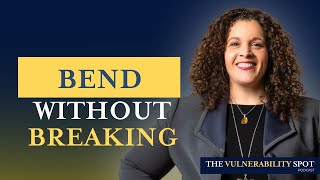
Tamara Kellum Washington, founder of Dynamic Insights and certified EQ coach, discusses emotional intelligence's five core skills and her shift from corporate work to purpose-driven coaching. She shares her personal journey from trauma and dysregulation to creating the My Body, My Vision program, which reframes health as vision-driven rather than transactional, and her new podcast exploring resilience and creativity under fear.
Chapters
Hello, everyone. Welcome back to the V Spot. I'm super excited for today's special guest. Tamara Kellum Washington is the founder and lead trainer of Dynamic Insights. She's a certified emotional intelligence coach and a behavior change specialist. As well as the host of the Bend Without Breaking podcast. Tamara, thank you for joining me in the V Spot today.
Thank you for having me. Excited to be here.
Yeah, welcome, welcome. I'm always excited to share space with you. And I always like to begin by thanking my guests for accepting an invitation to a podcast where they have no clue what questions will be asked. So I want to just highlight your courage, your vulnerability in this moment. And welcome you to the space. So thank you.
I think it speaks to the whole bend without breaking concept, right? Being, being able to bend with the wind, being able to flow with whatever is in front of you and adapt in that way.
So yeah, absolutely. And I'm really looking forward to you sharing more about, you know, the podcast with us. There's so much— there's so many good things, you to discuss with you. So I wanted to jump right in and shine the light on emotional intelligence. So I personally love emotional intelligence. I spent the first 14 years of my career assessing intellectual intelligence, right? And I was always pulled towards emotional intelligence because I felt it was, to be quite frank, more important. I really enjoyed the aspect of it more. One, so talk to us about what it means to be an emotional intelligence coach?
Yeah, so I was recently certified in emotional intelligence, and I work with a scientifically validated, uh, construct— not construct— instrument, um, called the EQI. And, uh, it's been— this instrument has been used for, uh, at least 20 years, maybe more. And what it does is it can quantify a person's level of emotional intelligence. So I took this course because I was always like you, I was always drawn to emotional intelligence. And what I learned was, and what was fascinating to me about this specific instrument was, number one, everyone has, has, so knows, so number one, emotional intelligence is comprised of a number of skills that can be learned and developed. So that's number one. Number two, Everyone has skills where they're very strong, and everyone has skills that are less developed, and that's across the board. So I think sometimes there are some myths that someone is either emotionally intelligent or they're not, but the reality is that everyone has unique strengths and unique weaknesses. And the third thing that really stood out to me, and what the instrument points out, is it's not so much looking at discrete scores like, oh, you're high in empathy or you're high in assertiveness. Looking at scores in isolation doesn't tell you a person's story, but looking at the patterns of scores and where there are out-of-balance skills, that's what tells you all about a person. And I can look at a person's scores now and create a hypothesis that says, well, I can tell that you have trouble with conflict just because of the way that these scores are relating to one another. And so that's what I'm really enjoying about learning and really delving into this specific instrument as it relates to emotional intelligence, because now I can really work with people to bring their skills, kind of bring the underdeveloped skills into, you know, into balance with those highly developed skills. And I think what's important to highlight about that, and this is my approach as a coach, is that my approach is very strengths-based. It's not deficits-based. So we're never looking at someone's weaknesses and saying, you need to stop doing this. We all know from a behavioral perspective that you don't necessarily stop a behavior or a habit. What you do is you understand how that habit or behavior developed, but then you adopt new behaviors. You adopt, you develop new habits. So it's the same with emotional intelligence where we're saying we don't ever want to tell someone, well, your assertiveness skill is higher than your empathy, so let's bring your assertiveness down. No, that assertiveness is serving you, right? It's over— it's well developed for a reason. So we want you to— we want to add tools to the toolbox. We don't want to take anything away. So how can we bring that empathy up? And so that's really what I'm enjoying about using this specific instrument.
I love that, and I love how you highlight that it's a skill set that can be developed, right? Because I think that so often when we hear— and at least I'll speak for myself— so often when I hear people speaking of emotional intelligence, it's very much in the context of they are emotionally intelligent or they're not, right? And there's not this conversation around developing these skills that aren't as heightened as some others, right? And I think, I think that's great. So is when you work with, with someone or, and in a minute, I know we'll go into an org, like organizational change, cause I know that that's a focus of Dynamic Insights. Is, is there tangible suggestions in terms of improving this particular skill, you know, and what, and how that shows up for people?
Yeah. So it all depends on the skill. For example, you know, I'm working on a training now for a university and one of the— it depends on the context as well. So because, because I'm going to be training leaders, my mentor and I were kind of going over what are some of the key leadership skills that are important. One that doesn't get enough attention is emotional self-awareness. That's like the foundation. I think that's the foundational EQ skill. We're talking about emotional intelligence. First, having an awareness of what you're feeling, where the feelings are coming from, being able to distinguish between emotions and thoughts, understanding how your emotions are influencing your thoughts and your behaviors, understanding how your emotions are influencing others. So that is huge, right? So we look at something like emotional self-awareness, then it's kind of going into— some of it is touching on those cognitive behavioral concepts, right, where like being able to distinguish, that's like one of the fundamental skills you learn in using any cognitive behavioral coaching or therapeutic intervention, right. But it all depends on the context and the specific skill. There are going to be very tangible tools, you know, things that you can apply right away to improving the skills, but it depends on which skill we're working on and in the context of, you know, in which that skill is being used. With this instrument, there are, there are 5 composite skills. There's self-perception, self-expression, interpersonal, decision-making, and stress management. And under each of those, there are 3 sub-skills. And so what we do is we look at the sub-skills and we work on whichever sub-skills are, you know, are in need of development.
Oh, wow. So yeah, really gets— it breaks down very specifically. I am familiar more with the Goleman, the 5 different aspects, right? And so when I think about emotional intelligence and think about self-awareness and self-regulation, what, you know, empathy, it's hard to differentiate between which is the most significant, right? Because they all really complement each other and, you know, interlock. So I love that there's a breakdown to go even deeper in terms of what it looks like and how to, you know, support.
Yeah, and Goldman's model is great, and there's a lot of overlap between the two. I like the model that I'm using was developed by Reuven Baron, and his— how he has it, he just operationalizes it a little differently. Um, and I like the way that it is grouped together, all the skills, because it, it really, it makes a lot of sense. It's very clear. It's very easy to understand, um, how they're different but also how they are all interrelated.
Yeah, totally. All right, great. I'm, I'm super excited to, uh, hear more about the work. So, you know, when we first met, you were leading your My Body, My Vision coaching programs Can you share a bit about your personal journey and how it paved the way for you to step into the work that you were doing and sort of where you are moving to now?
Yeah, my, my journey has been one of perpetual personal transformation in all areas of my life. I think, you know, just having a very tumultuous childhood, you know, being heavily influenced by my exposure to trauma and abuse so young, you know, and, and how that negatively impacted me, right, with mental health issues, struggles with obesity, you know, severe depression, severe mood disorders, like, you know, now that I— now I know I don't use mental health labels, but I understand service— excuse me, nervous system dysregulation, right. And that being a function of or a response to being in a highly unstable and dangerous environment, right? So when I embarked on my journey to lose weight, it wasn't about losing weight. It was about becoming the woman that I wanted to be. And the weight loss was more of a side effect, right? It was an output, not really something that I was working on specifically. I just wanted to be healthier. I wanted to be happier. And what was so great is that when we are talking about weight loss, you can't talk about it without talking about things like emotional intelligence, without talking about healing, right? Which I prefer the term integration now. We can't talk about, you know, any type of transformation without doing some type of internal work. So when I launched My Body, My Vision, I was trying to move away from this very transactional relationship that we have to health and fitness where it is, you know, eat this many calories, work out this many days a week in order to reach your goal weight. I felt that that was treating the symptom. So, I started really, you know, I realized even just looking at my, reflecting on my own journey, that there was a lot of internal work that took place.. And so, you know, my coaching with My Body, My Vision was, was really centered around that internal work that people were wanting to skip over because they just wanted the results for whatever reason, right? But as I continued to coach people, I think my, as my, as I continued to evolve in my own journey, my coaching practice evolved and, you know, and I started looking at change in the context of community rather than, you know, on the individual level, which in our culture we highlight, you know, self-reflection and self-work. But what I learned and what I've been learning through my education, you know, just going back to school and studying social psychology, is that we don't develop in isolation. Everything is sociocultural. Everything's happening in the context of our relationships, our community, our communities, our societies. And then just reflecting on some of my experiences within organizations, I realized that I had a lot of knowledge that I could generalize and apply to organizations and maybe reach people on a broader scale. And it's, the work seems different, but it's not because when we're talking about organizational change, or, you know, conflict management and organizations or whatever we're talking about, we're talking about well-being still. It's still a well-being conversation. It's still a health and wellness conversation. And that's what I love about it. And I still get to work with people and do that inner work to support well-being, but now it's just the context has changed just a little bit.
Yeah, I, I love that because I'm super committed to, you know, my work being in the workplace as well, my mental health, vulnerability, right? Like, because I think there's an expectation that when we get to work, you sort of hit the switch and now you go into a robotic productive mode, which is not how, how it works, right? So I love that it's very much about shining the light on the changes and the developments within the community of work where many people spend several hours per day, you know, um, and the collective growth that occurs as a result of that process, as well as the individual growth, you know. So I think that that's, that's so profound. Um, and something that you said I want to go back to, just to highlight for everybody who's listening, this aspect of your journey and your work and your coaching, and how it was super important for you to really go deeper than than the effect, right? Than just the result. And how many people, how many people at points want to bypass the journey, right? And just experience the results. But I love how you created a program which I still have my notes on, you know, and I'm really able to tune into a lot of the strategies and tips that you provided back then that go way deeper than the surface, right? And I think that's so profound to highlight about the work that you do, because I know that with My Body, My Vision, you created that. And so I'm certain that with Dynamic Insights and being in the workplace, it's going way deeper than the surface, you know? So I love that. For sure. Yeah, that's profound work. And so your work evolves, as do you, right, over the years. And so, here you are now focusing on organizational change. And what would you say that you're enjoying most about your current work?
I love that I get to be creative. And so developing trainings, that's something I love and I could spend all day doing. And, but I think my, what I really love is group work. I love looking at, you know, growth and development and change in the context of community. And every training that I create now, I try to include some type of cooperative learning strategy. So how can I, what learning goal can I give back to the group? And they own that goal and work together in achieving that outcome or that objective, rather than the traditional style of, you know, we— the way we're taught to learn, which we're not learning, right? We're, we're, we're, um, we're taught to memorize information. We're taught to get the right answer. There— we're taught that there is only one right answer and only one way to get there. And none of that prepares us for the adaptive, crazy, out-of-the-blue challenges that we're dealing with every day in real life where there's never one answer. There's never one way to get somewhere. There's never, you know, it's not about what you can remember or memorize, right? It's about your ability to generate the solution or not recall what the right answer is, but And I remember talking to a friend of mine about this. I said, you know, sometimes I'm, you know, if I'm stressed out and I'm like, uh, I'm like praying to whoever's listening, you know, please, can you give me the answer? And I joked around, I said, you know, God's looking back like, that's, that's for you to figure out. I don't have the answer. You're in a, you're in, you're on the leading edge. This is what it looks like. You, you actually get to create the answer. And that's what, and when I had that realization, You know, I felt a huge weight lifting off of me because for so many years I was frustrated with myself because I had these challenges and I thought something must be wrong with me because I don't know the answer. And I'm trying to find the right answer to solve this problem. And I couldn't, and I'm like, no, Tamara, there is not that you're, there's no looking for the right answer. It's creating the answer for you. Right. And so once I started to, to to realize that that's what it's all about, I realized we're not taught to learn in a way that supports the active day-to-day challenges that we have living this life. So when I think about how can I change the way we learn or offer groups of people new ways of learning that really capitalizes on their wisdom and their creativity, right? So instead of me being in front of the room with my arms crossed like, okay, So who has the right answer? No, it's come on, y'all, work together and you give me the, you give me the answer. So then it becomes this, you know, reciprocal relationship where I have things that I can teach you, but all along the way I'm learning too. And that's what I love about it.
I love that. I love that. And I just want to really like echo what you said, you know, to folks who are listening, it's about creating the answer for you. Right, as opposed to looking for the answer. I think that's a, that's a significant distinction, you know, because it really lends to the fact that we have everything it takes, you know, to, to create, right, what's best for us, what works for us, what's the solution, as opposed to waiting and searching. I love that. That's, that's exceptionally powerful. So create your answer, your solution.
That's, that's huge. And that's what— that was the premise of My Body, My Vision too. It was, let's move away from what's the right diet or the right workout plan, or like, why don't we start with your vision and work backwards from there, right? Rather than trying to find the right— what's the right body? I saw this meme the other day. It had 4 different women, 4 different body types, ranging from tiny and slim to plus size, and highlighting how each of those women get shamed in some way, shape, or form. And it reminded me of this Aesop's fable where, so there was an old man, his son, an adult male, and then the grandson, and a donkey. And so at first they said the old man should be on the donkey because he's older. But as they're walking through town, the villagers started cursing at them. You have this child walking. The child should be on the donkey. This isn't right. This is child abuse. So they take the old man off the donkey. They put the child on the donkey. And as they're walking through and they go to another village and the villagers there are admonishing them, oh, you have this old man walking, that's not fair, you know, this child, he's young, he's vital, he should be walking. So they take the old man off, and so now none of them are on the donkey, and they're walking through town, and then these villagers call out and go, these idiots, there's just no one, why isn't anyone using it? And so it just speaks to the fact that it's all relative, right? You're not gonna please everybody, someone's gonna have an opinion about something, someone would have done it differently for whatever reason. And, you know, we all just get to mind our business and do whatever, right? Whatever's over for us, you know.
Yeah, yeah. And I think that that's a powerful story to share now because I think that, you know, we are, um, in need of focusing in on what's best, right, for us. What is the way to travel, you know, um, which healing journey, which route, which career, which whatever, right? Everything is, is personal, um, in that sense. But we are very much in a time where it's easy to look out and it should be this way, it should be that way, why is this one doing this, why is that one doing that, uh, you know, it's— so it's really powerful to— you're damned if you do, damned if you don't if you're looking for the outside validation or whatever, uh, approval, and shift to what is it for you.
Yeah, and that needs to look out at what others are doing. That's a function of our own insecurities, right? People who are really whole and, and, um, uh, happy with themselves, and you know, they're not scrutinizing other people, not to the degree that you see happening here today.
Yeah. Yeah, absolutely. Because I think what happens is you get so busy working on you, right? Like, you are so immersed in your own development and your own, all of it, the journey, that the focus isn't there to talk about how you should have, shouldn't have, you know? And it's really about like staying the course. Yeah, busy, busy with my own work. That is for sure. Well, Tamara, I often speak about courage over comfort. In my work. And so talk to us about what courage over comfort looks like in your life right now.
Courage over comfort looked like walking away from a six-figure salary in a multinational, you know, financial services company that afforded me, you know, the best medical benefits, the best benefits, you know, the ability to travel first class, you know, overseas for work-related functions or or initiatives. And, you know, just, just saying, I'm comfortable in these ways, right, materially. But I was uncomfortable, right? There was a trade-off there. I was uncomfortable because I was not able to utilize my strengths and my gifts and my and my talents. So, um, so courage over comfort was saying, forget the fact that I'm in my late 30s, forget whatever shame I have around trying to go back to school now and get my degree, forget what— forget what people put on degrees, right? Forget all of that. Like, It's courageous to say, I have my lived experience, I have my integrity, I have my commitment to learning and growing, I have my commitment to always striving to be as credible as I can possibly be, right? And walk away from what's familiar and comfortable and what feels safe and to really lean into what is it that I truly, not that I want to do, but how am I meant to serve? And I've been thinking a lot about that lately. You know, there's all this emphasis on, you know, what makes you special or what makes you unique or what's different about you, right? Common question people ask, especially when you're competing for a job or some kind of role or something. And people ask, well, why should we hire you? Or what's different about you? And I think a lot of the anxiety that we have, especially in our society, is people are looking around and feeling like they're average and like that's not okay. Like, I'm supposed to be special. I'm supposed to be different. There's something— I'm supposed to stand out in some way. And I thought about that yesterday. I was like, you know, if someone were to ask me that today, what's different about you or what makes you special? I would say what's different about me maybe is that I don't think about being special. I think about the impact that I want to have. I think about how, how I want to serve. I think about what I want to give or How can I leave this space in better condition than when I found it? Right? And so I say all that to say, when you're thinking about it from that perspective, then courage becomes easier, you know, because there's a trust there that if I'm leaning in the direction of my gifts and how those gifts can be used to serve others, I'm good. It's going to be okay. I'm going to be taken care of. I may have to make some sacrifices. You know, I may not— I don't have my monthly spa days or whatever, you know, whatever it was that I had to sacrifice. Yeah. There were first world problems. But I say all that to say, you know, there's going to be some discomfort anyway, right? You can either You can stay comfortable, but we all know that oftentimes what's, what's comfortable, we're calling comfortable, is uncomfortable. But we're conflating comfort with familiarity. So because it's what I know, it's because it's what I'm used to, it's comfortable. But if you really step back and look at it, you're like, no, this is actually not comfortable.
Yeah, it's actually the— no, totally. I 1,000% agree with that. And it's totally uncomfortable to stay someplace where it's— it doesn't necessarily fit, it doesn't work right, it doesn't align, it's not part of the, the vision. But two things that you say— well, first and foremost, um, as someone who can relate, right, to the letting go of the six-figure salary, stable career with all of its bells and whistles to pursue a vision that no one else sees right, except that I only have access to it. And there's— so hearing you share about it in the way that you did, I want to celebrate you because I think that, you know, as someone who's on a similar journey, there's so much courage involved in that particular, you know, venture. And to do it with an ease and to do it with a grace in the way that you have, you know, to stand for the contribution that you're committed to, I think is just so powerful. And in this moment, I want to shine the light on the fact that when you speak of answering the question, what makes you special, and you've been thinking of it through the lens of how will I leave the world better, right? How can I be of greater service? It's so powerful to spotlight that that is really about you, the output. You know, versus, you know, well, what makes me— and, and, and listen, to anybody listening, not to, uh, it's no shade on, you know, how are you different, how are you special. And if you're in that conversation, that's where you are. But the— I think it's so significant to really spotlight that your answer to a question and your journey in sort of thinking about it is really about giving out, you know. And that's That's powerful.
Yeah, because I mean, I think, um, a lot of us are depressed or sad or discouraged about who we are because we're sitting here and thinking, and especially with social media where we have this— your value can be quantified now. Your thoughts are now— have a quantified value. Um, only 3 people liked your joke versus the fact that 3,000 people like this person's joke, right? And so there's like, we have, we're making these comparisons and part of it is culturally we have this need to, so humans fundamentally across the board, we have 2 needs. They're seemingly conflicting, but they're actually on a continuum. We have a need to belong. But we also have a need for differentiation. We need, we do. And it's that balance of, there is that natural feeling of, okay, what makes me special? Which is okay. Yeah. I think some of us live too, we're always on that side of the equation of what makes me different. I need to stand out. And if you add to that, this whole, you know, attention economy that we're in and how, and who's looking at me and how many likes, you know, and all of that, and it can really take you off course. It can really, you know, have you externalizing your value, right, your self-esteem. You're like leasing it, right? So on a day where people are giving you a compliment and telling you how wonderful you are, you're feeling good about yourself, and on those days maybe when you're not getting that kind of feedback, you may be questioning yourself. And so there is something to really think about, like, because I thought about this, I, when I turned 30, 35, I realized like, wow, everything that I am or everything that I've strived to be has been in response to what others have told me I am or told me I wasn't. Wow. And, and I thought, I then, I have no sense of self. And I think a lot of us are, we're not, we don't know that that's where we are. I had a sociology teacher say, stand, stand in the middle of a public place and just watch and don't interact with anyone for 10 minutes. And then those 10 minutes, I felt there was a part of me that was like, I felt, and I think a lot of us feel this existential loneliness in that standing there without the feedback. And that is what I'm— when I realized so much of who we are has to do with, we always talk about the individual and we have this cognitive perspective and how, But no, there's so much about who we are that has to do with our relationship to other people. You know, I want to highlight, like I said, I know I said I talked about courage over comfort and I talked about my own willingness. And but I want to say that I would be wrong if I didn't mention the support that I have from my husband. Right. Or the support that I have from my friends. Who are like, oh, Tamara, I heard, I've heard of this opportunity, the support that I had. So when we talk about courage, I think a lot of us, we, because of how we are taught in this society to value the individual, the hero, but the reality is that there's so many of us who are achieving great things, all of us, whatever it be. And I say great, and I don't mean, I'm not, you know, whatever, whatever's great for you where no one is doing it alone. And so for people who are kind of struggling with fear, or like what they feel is maybe a lack of courage, you know, sometimes it really is all about who's in your community, who's encouraging you. And, and, and, and I think that's the biggest piece for a lot of us. What's missing is not a lack of willingness or effort. For a lot of us, what's lacking is relationships that are supportive, supportive in a way, right? Whatever support looks like for us. So I, I, I, and I, I, and that's— I'm getting into the practice of always bringing things back to community relationships, um, because it's something that we keep skipping over and focusing on the individual. But I would be, it'd be, I'd be remiss to just look over that and not talk about how much my friends and family have, have supported me and continue to support me even to this day, whether they send me money, if I'm, if I'm feeling short, if I'm short on something or whatever it is, I am supported by an amazing group of people. So it's not just about my own willingness to be courageous, it's that coupled with the support.
Yeah, I love that. I have the goosebumps because as I'm listening to you and looking at you, I'm envisioning like the tribe right behind you, right? And so oftentimes we see the person and we don't know the village that is behind them to turn the things out. And so there could be this dangerous comparison, right, of like, How can I do that? Because there's— you're not seeing the big picture, right? It's the highlight reel. And you spoke about what I heard as the dangerous metrics that we use to assess our value, assess our worth. How good enough are we? Well, let's look to these on an unconscious level, right? These metrics that tell us, you know, and what happens when all of that's stripped away. And I think there is this very dangerous comparison theory, like, what's the word that I'm looking for? I don't know, in this moment, like this, this way of being up against people where you're not able to actually see what are you really up against. Because if you were able to see the village behind you, your husband, your family, you know, it would be a very different, like, oh, I'm not even going to compare me to an entire squad, right? And so I, I love that you highlight that because we represent our, our lives, but we're not in it alone, you know? And, and it's always better together, you know? So I just, I love that you're bringing it there.
And if you are in it alone, you know, um, what— how do you get to be different? Like, what, what gets to be different for you Um, you know, how can you show up differently for yourself so that, so that you're, you're in a space where you're drawing to you people who care about you genuinely? Yeah. And, and, you know, because some, some people are, whether it's perceptual or not, that feeling of being alone, I totally understand. I can relate to it. Yeah, um, but if you really think about it, a lot of times it's, it's either a function of the relationship you have with yourself, right? Um, or it's that familiarity. It's, it's, it's maybe entertaining what you've outgrown, right? Who you've outgrown. Because it's familiar and we're confusing familiarity with comfortability.
That part, yeah, I love that. Absolutely. And to anybody who's listening who feels alone, you know, makes me think about the quote like, uh, friends are the family we choose. And so there's a call to action to choose people, right, who will support who you are, where you're looking to go, And keep those people close, right? Keep, keep those people absolutely close. All right, great. So Tamara, talk to us about your new podcast, Bend Without Breaking.
So that concept came to me kind of touching on what we discussed a few minutes ago and thinking about how, how we're taught to live and learn. You know, in this very linear way, you know, you— here are the steps to— here's this very linear path to success. Here's this very linear path to adulthood. You know, everything's in a straight line. There are specific milestones you're supposed to hit at specific times. There are only specific right answers. You don't deviate from the path. And here we are now as a collective dealing with unprecedented challenges, things that we could not prepare for because we had no idea that these problems were even possible, right? And we've all, at the individual familial, relationship, community, societal, right, national, global, at every level, we're all being challenged in ways we did not, we would have never imagined, right? And so unprecedented challenges require unprecedented solutions. And my question is, how do we get to the— and that's what I was sharing earlier, where I'm like praying to my ancestors. Ancestors, tell me how my ancestors— my ancestors never lived through what I'm living through today, right? Yeah. So I'm like, okay, so what's missing? You know, and I think, um, what's missing is that what I've learned, and this is what neuroscience has shown us, that creativity cannot We can't access creativity when we're afraid. You know, when we're afraid, fear narrows our focus. And the very resource that we all have, that creativity, that imagination, the ability to innovate solutions and be that ingenuity that we all have access to, right? That's what we need to solve these problems, but we can't access that when we're afraid. And so my thing is, right now a lot of us are afraid, and our focus is so narrowed, our perspective is so, you know, it's like, it's really closed. You know, we're seeing maybe, you know, 2 minutes ahead of us on any given day. We can't see beyond that, right? And so I thought like what, what, what we need is something that, and we, and, and, and this is something that I'm learning too. I'm not coming as the expert and saying I know how to do this, although I have done it all my life. And I think it has contributed greatly to my ability to succeed and thrive despite unprecedented challenges in my own life and my personal life. But it's how do we increase our capacity for change and uncertainty? How do we learn to befriend that? The unknown, you know, the not knowing, the not having the right answer, there not being an immediate solution. You know, how do we get comfortable with the discomfort? How do we get comfortable with that uncertainty. And so Bend Without Breaking is, I think, you know, it came because I thought to myself, and I've been thinking back to that notion of like, what am I here to do? I was asking myself that a lot. And someone, a friend of mine said, well, what's your story? And so I was like, well, I have many stories. So I don't know, what am I— am I going to talk about losing 100 pounds? What is my actual story? But when I step back, the theme is the same. The theme, despite every challenge that I've lived through and continue to experience today, the theme is being able to bend without breaking, bending with the storms the way that trees do, right? Um, and really learning to be with the chaos, right? Um, but to know where my roots are and what does that look like, you know? And I'm learning things like, uh, ritual, daily ritual, for example. And it looks different for everyone, whether it's meditation or a walk or whatever it is, that that creates continuity for us. That's what— that's something that we get to root ourselves in. We get to— so the continuity that we're seeking out there We're waiting for life to be stable. We're waiting for life to calm down. It never will. That's what I'm learning. Life never— people go, man, when things settle down, I'll finally be able to— no, the settling down is here. It's you. You're creating that continuity. You have to create the stability through your practices, through your processes, through your thoughts, through your mindset. And that's what Bend Without Breaking is really all about.
Oh, so good. I love it. I mean, I hear you speak of it and I think of, you know, resiliency and how it's, it's really about, you know, the outside circumstances, the challenges, the fear, the overwhelm, the events, the unexpected will always happen, right? And how do you build up yourself to bounce back quicker, you know, to be able to bounce back at all, right? To be able to bend without breaking. So I think it's epic. And where could folks tune in so that they can hear more about it?
Anywhere that podcasts are available. So Spotify, Apple Podcasts.
All the spaces, all the platforms. All right, great. Well, and I'll drop it in the show notes. All right, so amazing. And we're going to move into the final piece before we wrap, which is a speed round. And so, um, I am going to— I call it the Forwarding Four. So I will ask you 4 questions, ask you to answer with the first thing that comes to mind, knowing that there is no right or wrong answer, right? Just go where you feel guided to go. And whenever you are ready, I will start.
Okay, let's go.
All right, number 1: name one area of your life where you are intentionally healing?
I'm, I'm not. I'm, I feel integrated. I've done, I've done my healing work. I'm not. No, I'm now I'm at a point where I, I feel integrated. And I am now using all the tools I've learned to, to live.
Great. All right, number 2: What's the best piece of advice you've ever received?
If you don't ask, the answer is always no. Hmm. So you may as well ask.
Might as well ask, right? Yes. Amazing. Number 3: What's your call to action to the collective?
Mind your business. Mind your business. And not like a don't be nosy thing, but like really mind, mind your business.
Yeah, focus in. All right, and number 4, what promise do you want and need to make to yourself in this moment?
Just keep going and to trust myself. Because, and that's the thing, I, when I think back on all those unprecedented challenges that I got through that got me here, they were, it was all me. So this like contrived self-doubt that I was carrying for so many years is bullshit. My first curse word.
Sorry. No, you don't have to be sorry.
And like, I, I, when I, I had that realization, and I have it every other day or so, where I'm like, man, I'm not letting people tell me shit anymore. Like, I know exactly what I'm doing. And that's my promise to myself, is to remember, I know what I'm doing. I know what I'm doing. And I get to trust myself and trust trust my knowing. And just, and just trust myself that I got it.
I got this. Yeah, you do. I love it. I love it. Amazing. Tamara, thank you. Thanks so much. Tell us, how can folks get in touch with you, learn more about the work that you're doing? Share, share out all your info.
I think the best way to probably stay in touch with me is through Instagram, Dynamic Insights LLC. Um, but I also have a website, Dynamic Insights Group. And, but I think the most— where you'll get the most, um, you know, up-to-date information is going to be through my Instagram page. Great.
All right, perfect. So I'll drop it in the show notes and so folks could find you easily. Tamara, thank you for gracing the space. Thank you for being here. Um, so many golden nuggets that, you know, are worth podcast episodes all in, you know, on their own, right? So I appreciate you for being here. Thank you for sharing out your wisdom. There's so much of it to, to share. And everybody else, thank you for tuning in to this episode of The V Spot. To be continued.
More from Andrea

From Rejection to Resilience: A Conversation with @thedegoviagroup on Thriving Through Challenges 💥









Reclaim Your Worthiness: A Journey to Internal Value - The Unlearning Lab Live, Washington D.C.
