Healers Need Healing Too
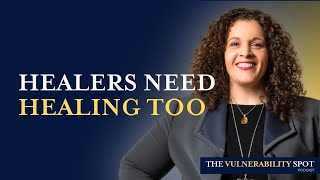
Licensed therapist and Reiki master Ebony Midas Robinson talks about her private practice, the Sad Girls Club, and why healers need their own therapists. She's in weekly therapy herself, does couples counseling and breathwork, and emphasizes that showing vulnerability normalizes the therapist's humanity.
Chapters
Hello everyone and welcome back to the V Spot. I'm super excited for today's special guest, a self-care slayer, an energy shifter. Ebony Midas Robinson is a licensed mental health counselor and psychotherapist here in New York City. She's an IET master instructor which we want to hear more about, and a Level 2 Reiki practitioner. Ebony, thank you for joining me in the V Spot today.
I'm super excited to be here today. It's like I'm coming out of hibernation, so I'm excited.
Yeah, thank you. Listen, we, we are all coming out of hibernation on some level. Um, so I, I, first and foremost, I want to say that, um, it's been far too long right, since we have been together. And I'm grateful that we have the opportunity to spend quality time in the V Spot, you know, today. And, you know, I was thinking about this last night, you and I met, I want to say it was like 2000— and my memory is a little bit off, but 2004-ish, 2005. Is that possible? That far back?
Actually, yes, you're right. I had to think of when I, when I was an undergrad. Wow, time is flying. Yes. It was 2004 we met.
2004. So everybody listening, tuning in, Ebony and I go way back.
Way back.
Absolutely. Well, I always like to start by thanking my guests, right? Because to accept an invitation to a podcast where you have no idea what is going to be asked of you, you know, I like to spotlight the courage and the vulnerability involved in that. So, you know, welcome to the V Spot, right? And we, we will jump in and interact with uncertainty, you know, in a fun, in a fun way. So Ebony, it's Mental Health Awareness Month, right? Tell us more about the work that you're presently doing.
Um, so right now I have a private practice where I see folks on an individual basis. I also work with couples and a few families. All mental health-based. And then in addition to that, I feel as I facilitate weekly mental health groups for Sad Girls Club, which is amazing and a great way to like, if you've been working from home remotely for the past few years like I have been, it's a great way to just like mix up the routine of just doing one-to-one or small group work. In addition to that, being a psychotherapist, I'm also an energy healer. So I also provide remote and in-person energy healing sessions to folks, um, because sometimes therapy isn't enough. So that's really what I've been up to. Um, I love that.
Sometimes it's not enough. It's, it's so true, right?
Yeah. So I've been in full-time private practice for, uh, since the end of 2018. Um, but I've been in the field since 2009. Um, so prior to that, I kind of worked at CUNY for about 7, 8 years. I worked in the crisis prevention and response program, but right now near and dear to me is just my private practice, um, full-time.
I love it, I love it, I love it. And tell us more about what it means to be an IET master instructor.
Yeah, so I always, whenever I talk about energy healing, I have to remember my journey. Like, so energy healing for, for me in terms of like how it came to my life is I was seeking something for my own, to up the ante of my own personal healing journey, uh, back in 2018. Because I've been in therapy, you know, I've been in groups, I've done a lot of, a lot of other mindfulness practices like meditation and breathwork. And I was just like, I need to like just feel a different connection within my body. So I sought out Reiki initially, just some sessions. So I was familiar with that. And then I always say IET found me, like I reached out to another practitioner, she happened to be a master instructor. So that's pretty much like the top tier you can go up to in training before you become a master teacher. So long story short, I met her, she told me about it. I was in the shopping for getting attuned and energy healing. So after talking to her, it just resonated with me a little bit better because of what I was personally experiencing, um, on a fertility side of things, um, just because it works with all 4 layers of our being. So like physical work, emotional, mental, spiritual. And I was like, I need that. Um, so what it means to be a master instructor is that I just went through all 3 levels of training, basic, intermediate, and advanced. And then I went a step further to become a master instructor to be able to teach, to be able to facilitate, and to potentially be able to, which I do now, attune folks in this energy healing modality as well.
Wow, I love that. So two things that stand out. So IET stands for, just for the folks—
Integrated Energy— oh, I'm sorry, it has a technical name. It stands for Integrated Energy Therapy. It also interchangeably, as you get to know folks in the field, they call it heart therapy too. We work with the angelic realm of the energy field and the violet ray. So it's a very gentle, hands-on, similar to Reiki type of therapy. And many of my clients— I don't advertise it, which is— it's on IET and like my profile. So it's— so whenever folks find me, they're just like, I want that. And I'm like, do you know what it is? I'm like, no, but like what I've Googled about it, it like resonates with me. And I love that I don't have to seek out— like folks come. And that's how I guide myself in all of my work. Like, I typically don't post anything. If you follow me on social media, I'm sorry, because I know I haven't posted since like January, but I just like to feel connected to my work in the way where it doesn't feel like work. So for energy healing, it's more about just like, if whoever it's meant for will find it, and I'm just a vessel to hold that space and to provide that offering. Hmm.
I love that. I love that. And I love how you highlight that it was one of the modalities that was very cohesive, you know, and like mind, body, soul, and what became available to you by way of being introduced to it, you know, how it finds you. And I think that for many of us who are involved in healing on some level, and healing work and the journey, it resonates to say that, you know, something finds us, you know, and we begin to explore and go on this journey. So, um, all right, there's, there's so many different aspects to the work that you're doing. This is exciting. Yeah. Yeah. So it's, it's, it's— and especially now, right now more than ever, I think that, you know, people are struggling tremendously, um, not sure where to begin, right? Not sure. There's so much— as far as we've come, we still have so much more to go in terms of the stigma around mental health and seeking out support. You know, and I do believe that folks are still in this conversation of, I should be able to navigate this, I should be able to handle my business. And, you know, reaching out for support is often still considered a weakness, you know. And so I love that the, the different aspects of your work, some traditional, some untraditional, right, which is really a nice invitation to someone who is unfamiliar with all of it. To be like, what do I feel guided towards? What seems right for me? You know? So I love it. Well, talk to us about what had you choose mental health counseling and psychotherapy to begin with? Like, what attracted you to the— to this particular field?
You know, I went to— I went to Syracuse for undergrad, and I had all intention of becoming a lawyer. I knew I was going to be a lawyer, at least up until that point, since I was in 3rd grade. I told my mother, everyone in my family knew. So I went to Syracuse, pre-law, taking these political science classes, getting myself all geared up. And I was part of a program called SSP. It's very similar to HEOP. So we had counselors that were assigned to us, like, that would do— what do you call that again? What do we get when we're taking classes? Advisement. They would give us advisement, but they upped the ante for this program because we also had the option of, like, personal counseling. And I was really close to my guidance counselor in high school. Shout out to Ms. Patelnik. Love her, love her, love her. She held me down. So like, I was so used to that in high school. And when I got to college, like, I was always lingering in that office. And long story short, in terms of like how I transitioned, is that that experience for me, while it came my freshman year, my junior year, I really needed it. You know, my mom got diagnosed with cancer, you know, knock on wood, she's doing well now. But I like lived in that office, like they gave me the tender love and care, support, direction that I needed. You know, I wasn't that far away from, you know, Brooklyn where I grew up, but I felt so isolated from my family, so helpless and hopeless and scared. And I remember that feeling so intentionally. I was just like, oh my gosh, if I could ever pay these people back an eighth of what they— the space they've held for me, it would be amazing. So, but this— at this point I had switched my major from political science pre-law to child and family Studies. So, and Child and Families and a dual major in Education. So I was already taking a lot of classes, but like psych classes, family therapy, things like that. So I was kind of in the field already, but it was this experience my junior year that was just like, I like that. But sealed the deal for me because I had applied to a ton of PhD programs. I was going to get my PhD in Child and Family Studies or psych. The job where we met I had that job and they ended up hiring me after my— after I graduated. And I remember I was running groups and everyone who I was working with was social workers. And I had put everything on. I did a— why am I losing my words? I did a deferred attendance for all of the programs that I got into for grad school because my mom was not— still not well. So I came home for just the summer. So they hired me for the summer. I'm running these groups with them. Everyone's a social worker and we're just running these groups and I'm just like, Everyone's coming, the young kids are coming up to me after, like, talking to me about body image, about stress at home, like real life stuff. They're like 14 to 17 years old. And I go to my supervisor and I'm like, what do we do? Like, can we whatever? And he's like, oh no, we just refer them out. And I was like, who are we referring them to? And it was like counselors. And I was like, ding, ding, ding, a light bulb went off. I would then end up reapplying to graduate school. Under mental health counselor because I wanted to be able to be hands-on in the work that I did. So that's how I found mental health counseling. I knew I wanted to also do that versus school counseling personally because I eventually wanted private practice. I was already thinking long-term and wanting to have my own schedule and own agency.
You are, you are, you are ahead of it.
21-year-old me, like, nobody's gonna be telling me what to do. Wow. So that's how I found it. And it's, it's been— I would have never imagined it, 8-year-old me, you know, in 3rd grade. But it's, it's like, it's like home to me. Like, it's— I know part of this is I needed it for myself in a way. So like, I got it first and I was able to like repay that back. And through my experience, I'm able to do that. But it's an honor and a gift to be a vessel of healing or spaceholding or clarity or air, just listening for anybody. So that's kind of how I got here.
Wow, you said so many things. So first, you know, I want to shout out the counselor, right? Because the high school counselor, it sounds like, plays a significant role in influencing and holding space for you. So then when you are now in college and going through your own personal experiences, there's a reference point, right, for how you met, how you coped, how you got through, who supported you. And, you know, such as the influences that often happen. Right. So I want to shout out the high school counselor because oftentimes as a former school employee too, we don't, we don't see our impact, right? Like oftentimes we learn about it later on if, you know, we're able to, but there's really a trust involved that, you know, the space you held for, you know, your students will, will inevitably impact them in ways. And so to hear you talk about the counselor in this particular moment, I just think it's epic because it is a full circle, um, journey, you know, to this, to the support you received and then are able to give, you know. And, um, I love what you highlight too about first you needing the support, right? And then like going through your own journey and really going on your own sort of yeah, journey, and then choosing and seeing the space and wanting to be able to step into the role to then give back. You know, I think that that's profound to highlight because oftentimes, you know, it's like, well, where did it all— what comes first, right? And it sounds like in a sense this is all just a cycle, right, of like, I receive, I give, I receive, I give.
I'm big on too, like, the fact that, like, healers Healers need healing too, right? So like, how can I hold space if I'm not holding space for myself, right? And like, if I'm not at capacity, I'm doing not only myself but my clients a disservice if I don't take the time to do that homework, that energy work for myself. And I'm always transparent about that. If you have a phone consult with me ever, that's what I talk about. I'm— I'll tell you I'm in therapy if I'm in therapy. I'll tell you if you ask me how I'm doing, I'm not going to lie to you. I'm not going to tell you, you know, every— all of my business, but what I am going to normalize, like, today was hard, or what we experienced here in the city over the last couple of months is crazy, you know? So I'm going to normalize that space because I want my clients to also see me as human too. And I think what I've learned in this bout of my private practice, like, when I relaunched it, is that it's important for that. Like, I want it to be relatable but also appropriate. I wanted to be— I wanted to work in my community, which I'm really fortunate to do. I wanted to serve certain populations because when I was looking for a counselor, it was hard for me to find, you know, modalities or certain folks that looked a certain way. So yeah, yeah, reading it in that way where all the things that I was craving, in a sense, like trying to figure out if I can create that.
It reminds me of the quote, like, you know, be who you needed when you were younger, right? And it's like to be able to actually take that and step directly into it to ensure that you are able to provide all the things that you yearns for, you know, when you were going through your own journey is incredibly powerful. And it sounds like, you know, your original plan was to go to law school, and you then experience, you know, your mom's illness. And so, you know, make a plan and God laughs, right? So would you say that your personal experience and the journey you end up taking is directly influenced by the challenging times that you go through when you were younger?
I think yes. And I also think that, like, I think I, I, the way I am and about my personality, if I have like this idea and like I have it in my mind, like that's what I want to do, I'm really good about just outlining the steps and doing it. I think that the awareness of like finding something that I would be so connected to long-term-wise, because even in those poly sci classes I was bored out of my mind. Like I wasn't connected to like law. And like, even if someone said like, oh, are you excited about law school? I looked at it as like I was dreading it. Like it didn't like, like, you know, spark something in me. So I think what it did too is to your— to answer your question, yes, I think because of like childhood experiences, recognizing that I needed to process some things for sure, but also getting fortunate enough to weed out all the other jobs and potential getting a degree in something I wasn't going to be excited about. Getting lucky to like switch my major in time.
Yeah, I, I'm so happy that, right, that happens because I think about all the people that you are supporting, holding space for, all the people who are navigating the world differently because they have been able to work with you, right, and experience themselves differently, lighten their load, you know. And I love that you highlight this aspect of being real, um, in the process, right, because I identify with that. And I think that Oftentimes people who are in, um, healing type, you know, careers or fields, um, you know, I think about this with coaches. There's this misconception that like everything is all together and that's how you're able to do this work. And it's like, uh, no, right? We're out here doing the thing. And what makes it, I would say, special is that if you're transparent about that You're out here living life and learning and growing and hurting and experiencing the fall downs and the setbacks in the public eye, right? Because then you're like, then you're able to talk about, to be like, this reminds me of this time when, right? And it really makes people, I think, feel safe. You know, that's a lot of the feedback that I get in terms of, oh, it's not that, you know, you have it all figured out and you, and you're here and I'm here. It's like know, we're walking on this journey together.
Yes.
Yeah, that's so big, especially when it's like, you know, there's such a journey to walk, right? It's not just like, oh, there's gonna be a minute, okay.
And there's so many parts of the healing journey that can just feel generally isolating. Like, to speak on the earlier point about like, there being so much stigma around still, like, unfortunately, to this day around like, normalizing the fact that you're in therapy, or that you talk to someone, or that you may actually have a mental illness that you're struggling with and trying to make sense of, or that you've grown up in, meaning there were family members that were going through something that no one ever talked about, but you knew something was off. Like, you know, so like, you're just like floating through this world, shameful around getting help and support that you actually have access to, especially if you have health insurance and like things like that. You know, for folks who don't know where to begin, like, I provide a little bit more grace in the sense of just like, All right, let's find a spot where you can start because there's so many barriers to like, yeah, there's a difference with getting a therapist or professional help via your insurance versus out of pocket sometimes. Like, that's one of the biggest things I hear from my clients. They're just like, I went years ago and I went and it was 2 sessions and I hated it because of X, Y, and Z, or it got too expensive, so I had to stop. And I'm just like, yeah, no, it's, it's, it's a lot in this whole process.
Yeah, totally. And I think that being able to, you know, you may not know where to start, but if you at least are able to identify, you know, people like Ebony and I who you can just say, hey, this is where I'm at, what do you think, right? And at least to get the ball rolling, because I think that that's such an important part of this particular journey. It's like, you know, what's— and I've had these conversations and plan to this month again, just because I think it comes up so much, like What's the difference between a counselor and a psychiatrist and a psychologist? And should I see a clinical social worker or do I want to see a clinical psychologist? And, you know, like that becomes almost like, oh my God, there's too many choices.
Forget it.
I'm not going to do this thing. And really, I think it's our responsibility as providers in the— like in this field to educate people. Right. And to share out like Hey, this is a great place to start. And you know, what are you experiencing? And I love that you brought up shame, right? Because I think that it's like, it grows. The experience of shame grows in silence and secrecy and judgment. And oftentimes when we're struggling with mental health stuff, that's very much part of what's happening. You know, we don't quite understand, you know, and people have a tendency, myself included at points, to kind of pull back because of what's being experienced, thinking like, well, I don't, I don't know. And I think that there's often a relief that happens when you start to understand, like, oh, I'm not able to focus or sleep, or— oh, I'm not going to say eat because that part doesn't happen to me, the appetite. But like, you know, for the purpose of the example, everybody, I'm not able to, you know, focus and sleep or even have an appetite because of— as opposed to like, what's wrong with me? Why are these things happening? So there's a relief, I think, in understanding symptoms, you know, that I sort of want to shine, shine the light on here.
Yeah, you know, it's, it's, and there's, and it's about taking the time to be creative in terms of like not just saying, how are you, right? And accepting, I'm okay, like understanding what each and every client's okay means. Like, I love the fact that I don't, the universe, God, my mother, my aunt, whoever blessed me with an excellent memory, because I can log on and I can remember a lot of things about my clients. And I think that helps too, because not everyone's story or not everyone's diagnosis or symptoms looks the same or sounds the same, you know. So helping them to like name certain things themselves and not necessarily label them, right? So just because you get sweaty palms every once in a while doesn't mean you have an anxiety disorder, right? But helping them to make sense of things, like, so like fine-tuning the way you ask about duration or severity of stuff, because that also gets a bad rap. Like when pull out a DSM and you start going through the question and they start backing up and just like, no, that's not me. And like, you know, helping them understand that a diagnosis doesn't define you or make you or determine what you can and cannot do all the time. You know, making space for that. So yeah, it's always education. There's always an educational piece, you know, to my work.
Yeah, totally. I think for sure, I absolutely identify with that. And I feel a lot of what I catch myself doing is like, you know, psychoeducational presentations in a sense, like on the fly, right, about, you know, symptoms or about experiences, and very much from a neutral, safe, like, oh yeah, you know, this is exactly what's happening, versus, right, pull out the book. That would have me running out the door. I would be like, what are you— what are you doing pulling out books and checking off? Like, it's so— that part is isolating. So I think that, you know, we talked about this in the last episode, and I think it's worth bringing up again, this aspect of feeling safe with the person who is sitting in front of you. And oftentimes when you feel seen and understood and safe, and you could identify with the person that's sitting across from you, there's like a level of, oh, okay, I could unpack my stuff here. And if you don't— for everybody who's listening— feel that you get to choose somebody else to share space with.
Yes, yes, yes. Thank you so much for saying that. Like, I'm constantly— even when I'm on a phone consult that's for me, I'm like, take a day or two, think about it.
You get to think about it.
Just because we even vibed on this phone consult doesn't mean that you even have to say yes. I want you to explore your options. I want you to feel certain about this. I want you to feel ready for this. But that's another thing. Yeah, it takes, it takes a lot to be ready to do the work, right? So like normalizing the fact that like if it's not working out, you can terminate. Right. And I talked about that too, because in all fairness, like being on the receiving end of being ghosted is not fun, especially if you're a caring and compassionate person, because then you're just like, wait, are they okay? And like, it's an energy investment. So I normalize that too. I'm like, if you ever get to a point where you feel like things need to shift in sessions, or you would like to move on to someone else, that is absolutely okay to talk about.
Hmm, I love that. So I'm gonna, I'm gonna say this again for the people in the back who are listening, right? This is a call to action to have the difficult conversation. Right. And this is like, in this moment, you all know this. In this moment, we're speaking about it in terms of therapy and counseling. In this moment, we're also speaking about it in every aspect of life, right? Have the difficult conversation as opposed to running. And I think that, you know, oftentimes when things get uncomfortable and stuff comes up, it can be tempting to just be like, all right, this is too much, I'm done here. But I think that there's such a responsibility, right, to yourself first and foremost, and to whoever it is that you're sharing space with in whatever aspect, to say, hey, I think, you know, it's time for X, Y, and Z, you know, as opposed to crickets. So, so I'm so happy that you put that into the space. That's, that's a point that, that absolutely gets to really be emphasized. And listen, it happens, right? And it's true, there's this aspect of are they okay? What's going on? And, you know, so communicate the difficult conversation or whatever it may be, you know, stay or speak about needing some time. You know, I think that that's, that's powerful. Um, it sort of segues into the next question about— we were talking about clients. Um, what would you say you're noticing a lot of clients experiencing right now? What sorts of difficulties?
Um, still a lot of anxiety. Still a lot related to like adjustment. It's 2 years, 2 months into this pandemic, you know, here in May of 2022. And like so many folks expected to like have a rhythm by now. And don't get me wrong, I have some clients who like they've mastered it from the beginning. They were working from home, they now back in person and like they got their rhythm and bounced back fairly quickly. I have a small pocket of clients who still haven't seen family, which sounds to some it may sound strange because it's like, wait, like outside is open. But like some of my clients, they have a hard time leaving the house consistently still, right? With everything, you know, here in New York City, it's, it's alive in more ways than one. So like the moment for— I can even speak for myself— the moment I got comfortable, you know, I started venturing back on the trains and buses and stuff. And like, you know, things are happening and I'm just like, see, it's safer here. In my little bubble. I wasn't joking when I logged on and said I've been in hibernation. I'm really just starting to come back out. The only folks who saw me was my, my clients, you know, and like, so I think a lot of folks are still ebbing and flowing through anxiety, ebbing and flowing through things that they were able to live via mask for so long until the pandemic hit. So like, I know I saw myself in full view when the pandemic happened. So I for clients I was working with and, and continue to see, I learned so many new things from people being in the house, you know. So like our initial intake became— our goals became different, you know, because it's just like, oh, actually I had this thing since I was like 7, 8. I've just gone through life or whatever, putting my big girl panties on or ignoring it forever. So I think it's a lot of that. Um, and I also think just like folks just wanting to understand what's next. So adjustment.
Yeah, I love that. And I'm just jotting down things because I don't want to forget. I think, you know, first and foremost is part of what you said, you know, like navigating things all along, right? And, um, and then suddenly life happens differently. I think that when distractions were removed from any of us, some of what we've been living with for as long as we can remember suddenly becomes magnified, right? And I know that for, you know, I identify with that. And listen, there's also this experience, you know, full transparency, a lot of I don't want to say a lot. Let me be— give myself grace here. Some things that I saw about myself through the experience of the pandemic, I was like, oh, I don't like this part, you know, like this requires some attention. And, you know, whether it would be a response, you know, whatever it was, right? There's aspects of it. That's a whole nother podcast episode, everybody. Um, but, you know, I want to be invited to that one. Yeah, seriously, that one's like a show. Um, I think that it's really an opportunity, and many of us, right, have, have that experience where it's like, oh, okay, you know, I've been focusing here and this was, was revealed, right? And the mask is such a powerful metaphor, right? Because it's like, in ways, yes, it kept us safe and blah, blah, blah, but then in ways there is a lot of hiding that happens by way of the mask, right? And I think that, you know, it's powerful to see that in, like, playing out now too, you know, when technically masks are able to come off. But there's a lot of, like, you know— sorry, there's a siren going on, you know, Brooklyn folks, this is how it all goes. Um, you know, I think there's a lot of powerful things, and I'm seeing the same thing with, with clients in terms of, like, the adjustments and figuring out, and like, how do I navigate now, you know, and the newness, right? Um, so yeah, it's a journey.
Even being in the field, you know, of mental health, right? Like, how do you then— and look at me asking you a question like I'm over here running the show.
Um, do it, do it.
This is the name of the game, right? How do you then navigate, like, if you're finding these things up about yourself, right? And your job, the nature of your job is helping folks navigate through their stuff, right, in life, right? How do you find that balance to make sure that, like, you're checking yourself, checking in on yourself and addressing your needs, and also being able to show up in simultaneously held space for other people? What does that look like?
Yeah, for me, that absolutely looks like a commitment to my own therapy process and my own hiring of coaches.
Yeah.
So, and I'm very much committed to both You know, where I show up for my sessions regardless of the mood, right? Like, so let's talk about therapy for a minute. It's like, listen, full transparency, there are some days where it's like, I don't want to necessarily like go there. Maybe you're— maybe I'm having a good day, or maybe I'm just sort of like focused on something else. But it's like, this is the commitment, this is the process. Because also, too, it's about walking the walk, right? Because I am big on the people that I work with And I just actually talked about this last night in a post where it's like, if you, you know, if your coach can't remember the last time they hired a coach, pause on, you know, be careful about that choosing. And right, if therapist, if your therapist like is sort of like, I haven't been in therapy and I don't know since whenever, right? That's— yeah. And that's so— that's telling. So for me, as I'm like in real time navigating my own experiences, I'm very much showing up, very much committed, you know, walking, um, music, quiet, you know, sort of time to be able to connect with myself. And that's how I'm able to do my work. And then whether it be log on to a Zoom or show up into a session in person, it's like, all right, you know. And that's, that's how— that's— and it's a commitment, and it is a choice, and it's a consistent show up, you know. And it's also the grace around we're all in this together and the humanity of it, you know.
Yes, that is one thing I'll say in this pandemic, I felt such the energy of the collective healing. I was part of like two wellness collectives before the pandemic hit. I still am, but like their spaces have shifted. In addition to having my own practice and stuff, and like, I was so grateful for those circles. Like to be able to text or call or all the Zooms. I was doing Friday feels when the pandemic started happening, like these free lives for folks to just join and talk about everything that they were feeling like, you know what I mean? Like that collectiveness of like, wow, like if I just watched on Instagram and saw everyone's lives, I would think everyone got their stuff together. No, they're struggling, they're crying, we're crying too.
I'm like, yes, yeah, which is, which is why we do those things, right? Sorry to interrupt you. Sorry, you, you go first.
I was saying it's so good to know that like we're not by ourselves.
In this. Totally. And when I, I believe that, you know, I think about intentional healing and wellness as the example. This business is actually in existence, this podcast is happening because I created what I needed, right? And so when I am having conversations with people like you, uh, it's because it's work that I absolutely, you know, want to be a part of, want to engage in so that I get the benefit and then hold the space, right? Because I almost, I feel like in a in an untraditional, you know, sort of way, the V Spot is a healing circle. It is, right? It's, it's occurring in a different format. It's not the usual type of experience, but the, the messages that I get and the emails and the DMs and the text messages about particular episodes and conversations and different points, I'm like, it's absolutely, you know, providing for. So yeah, I love what you say, like, in the collective healing I think is at the, you know, it's primarily needed right now. And it's beautiful to be able to, wherever you look, see people holding space. And I always think to myself when I do, wow, this is what they are in need of. And like, look what they're creating, you know? So I love that. Well, Ebony, I speak about courage over comfort a lot in my work. So talk to us about what courage over comfort looks like in your life. Right now?
Personal life or work life?
Personal life.
Oh, like, it, it's staring the reality of my life in the face for me. Like, it's, it's every time I, I've had a lot of, um, I have a long medical history, and for me, my medical history, I would say, has been the pillar in the sense of the middle of everything that has shaken up in my world in terms of like on a mental health level, on emotional health level, even on a spiritual self-level. And every day that I choose to wake up and look at my scars and read old journals or be reminded of my reality— and I'll preface this by saying I have a beautiful life. I am extremely blessed and grateful for the life that I do have. But I've had plenty of challenging moments that I'm reminded of, you know. So I'm human. So like, for me, it's continuing to do the work and being mindful of not opening that trauma closet and stuffing some of these memories and emotions in and consciously showing up for myself, consciously staying committed to whatever it is that I need to kind of like get through these spaces in these moments. And challenging the folks that like are part of that. So like I've done a lot of, and it's still a work in progress, like with my parents and understanding. And I grew up in a respect your elders house, a be strong house, don't cry. So like we didn't talk about emotions and you couldn't ask adults questions really.
Right.
And now that I'm an adult myself, I'm going back to my parents and I'm just like, help me understand that because that affected me. And like, you guys didn't go to therapy before, and I'm over here in therapy because of, you know, something I experienced at 12. Like, you know what I mean? So it's like, yeah, continuing to do that and not letting forgiveness be looked at as like, I got to be the big person again, but letting it be looked at as if I'm making space for forgiveness, I'm keeping this soft and tender space in my heart. And, and, and You know, not like not being too hard on myself or being too mean to myself on the hard days. So that's what courage over comfort, I would say, looks like for me right now.
Yeah, thank you for, you know, so being so generous with that response. I think that, you know, for folks who are listening, there's so many different aspects of what you shared that we can identify with, you know, and I love, love, love this aspect of what I heard, right? You didn't say it, but what I heard is that healing isn't a one and done. And so you could find yourself as an adult navigating something that happened from when you were 12, right? And then the willingness to go and have the difficult conversations about like, hey, why and how and this and that, um, all these years later. And I think that I just want to echo really loud for the folks listening that that's a normal part of the experience, right? Because I hear people sometimes talk like, well, I was 12 and that should be finished. And it's like, Wait, wait, no, give more grace because now you're able to look at it through a lens that you didn't have access to when you were 12. And so there's a real processing that could shift the narrative completely at this stage of the game, you know. And so it's like, this is where I always talk about like there's no destination. This is like, get in the car and like go on the journey, right, and see where you experience yourself. I think that that's so profound. And the other thing, before we go to the last question to close out, is, um, you highlight forgiveness. And I, I think that this is a really important point to come at from the, a different standpoint, because I feel I've been looking a lot at self-forgiveness, like, in this, you know, like, in this way. And a lot of times when things are coming up about others, and whoever it be, family, ex-boyfriends, coworkers, friends, a lot of what I'm sort of arriving at is like needing to happen in the mirror about like, all right, you didn't express yourself here. Okay, you stayed longer than you should have there. Yeah. Okay, you didn't feel safe here, right? Like, and it's really then the grease, you know. So I think that it's, it's this journey has lots of unexpected turns and twists, and, um, it's fun too. It's fun. It really is, I believe, fun. Somebody listening might be like Andrea saying some wild stuff, but it is fun to find people to go on the adventure with, right? Like, and that's why I know, you know, we can go on and on, and we have, right? In terms of like time, because there's so much to unpack. But folks, don't worry, we won't go on and on with you all now. Ebony, tell us before we move to the speed rounds, what, what sort of supports do you have in play right now to help your mental health at this particular time? Challenging time?
Oh, my tool— my, my backpack of toolkits is thriving and flourishing. I'm in weekly counseling sessions for myself. I also attend couples counseling. My husband and I experienced so much grief over the last 2 years, so like, we're very intentional about that and protecting, you know, our beautiful love journey. I do breathwork at least 2 times a week, intentional breathwork. I think I do breath— I think we all do breathwork every day. So give yourself a pat on the back if you're like, I never done that. You actually have just by breathing, right? But I meditate every single morning with the sun, every morning without a shadow of doubt. Um, I used to squeeze it in where I can get it in, but now I'm very intentional about it. It's at the top of my morning. Um, I'm not wearing it, but I typically have on this bracelet and it has 3 happy faces on it. And that's my daily reminder to reach out to at least 3 people in my circle. So whether it's a hi, whether it's a follow-up text that I know I've been ignoring, um, and, uh, the thing that I've been doing the longest is journaling. So I journal. Journaling was therapy for a long time for me before I even knew what therapy was. So those are what I would say the primary things are.
I love it. I love it. So everybody, you have some, some new options on deck. I love the idea of the bracelet, you know, and yeah, all of it, right? The commitment to your love and what that looks like in terms of couples counseling. And yeah, listen, I also want to say it that, you know, choosing into counseling doesn't mean that there's something wrong. It means that everything is right, right? And it's like, let's actually work to, like, like, preserve and really grow together, whether that be the couple thing or even as an individual. Yeah, you know, um, everything's right about your choice to choose into a therapeutic process. You know, it's not about anything being wrong. And the great thing is, from a proactive standpoint, when you have it in place, when something is wrong, because it's life and it will happen, you don't have to scramble to find a provider at that time. You're like, oh, have my—
so not waiting till crisis mode, right?
Yeah, that's like a big deal. So this aspect of proactive wellness like has never been more important because listen, stuff is going to happen. So let's like prepare and be ready, you know, in the name of proactivity. I love that. Thank you for, for sharing all of your practices with us. And I love the idea of the sun. That's powerful. All right, all right. So we are moving into the final speed round, which I call the Forwarding Four. So I will ask you 4 questions and you will answer with the first thing that comes to your mind, knowing that there's no right or wrong answer. So just go where you feel intuitively guided to go. When you're ready, I will give you the first question. I'm ready. Ready. Okay. Okay, number 1, name one area of your life where you are intentionally healing mental health. Number 2, share one of your favorite mental health strategies or tools with the audience.
Doing 5-minute empowerment sessions on myself and like pulling out stagnant energy.
Hmm, that energy work, right? Yes. Um, number 3, what's your call to action to the collective?
Providing affordable, flexible access to care, um, for the BIPOC community.
Love it. Number 4, what's your call to action to the woman in the mirror?
There are so many things that just buzz in my brain right now.
But feel free to put them immediately.
I immediately, I said to myself, I see you, I hear you, I am you, keep doing what you're doing. That was the immediate thing.
I love it. I got the goosebumps. You all can't see it, but I have it. I love it. I mean, amazing. Ebony, thank you so much for accepting the invitation, you know, spending time with me in this way. It's, you know, you don't realize how much you miss someone until you're actually able to be with them, right? So it's been, it's been an absolute pleasure. Talk to us about what work folks could, you know, do with you. What do you have happening? How could they find you? All that good stuff.
Yes, before I even do that, like, gratitude is my number one character strength. So I want to take a second to make sure I express gratitude towards you. Like, I've known you for a number of years, but like, I've never seen you the way I see you now.. So if you had questions about, is this for you? Should you be doing something different? This is it. You know, keep doing this. Like, I, I'm, I'm excited to definitely be here, but I know folks who have listened in or will hear future sessions, they can, even if it's a small takeaway, it will be in what you provide. So just keep doing it. So grateful for you and the work that you do.
Thank you. Thank you.
Well received. Yeah. In terms of me, you can, so I am accepting, I have 3 open open spots right now for individual therapy or couples counseling, first come, first serve. Um, and folks can contact me via my Instagram page or my email. My Instagram handle is Flow with Eb, and my email for work is counselorem@yahoo.com. That's the best way to contact me. I provide free phone consults, um, complimentary, I should say, um, about 10-15 minutes long, just to like ask the questions you have and for me to also do a small screening process. Um, and then I am also accepting referrals for energy healing sessions, and I do consults as well so that folks, if they have questions, I can answer them as well.
All right, all right. So quick question, do folks, if they're interested in the individual slot or the couple slot with you, do they have to be in the state of New York?
Also, right now— good, that's an excellent question. So yes, so yes and no. So I am licensed in New York and in New Jersey. Um, in the beginning of the pandemic, they were a lot more flexible about practicing across state lines, but now it requires more licensure. So right now I'm only accepting clients located in New York and in New Jersey.
Great. And then in terms of the energy work, sky is the limit that you could be from anywhere, right?
Yes. Mm-hmm. Because I can provide sessions remotely. And now I also have access to one of my old school spaces, shout out to Heal House, where I can go and see folks in person. I'm still trying to navigate what that looks like because we are still navigating COVID and folks getting sick and things like that. So I want to make sure I practice safely. But that is an in-person option for folks.
Folks in New York City.
Excellent.
Great, great, great. Well, we have listeners— like, we are expanding, right? We have listeners in Canada, New Zealand, uh, Australia. So anybody who is to, you know, tuning in— 9 different countries. So if you're tuning in and you are interested in energy work, you know, Ebony is available. And so, um, I'll drop all the contact info in the show notes so that folks could just click and easily access you. And, um, before we go, any chance that like the Friday Feels, uh, it's coming back? Any plans to sort of, you know, be doing that sort of work again?
Are you—
you're Sagittarius, right?
Yeah, we're psychic. I'm like, why do I feel like Andrea is going to know what's coming next? Yes, that, and I have a few other things that have been in the pipeline pre-pandemic that I shared earlier. These last 2 years were a personal whirlwind for me. So yes, Friday Feels will be coming back. And also I'm hoping to also offer larger platforms to provide, you know, just some space for like healing circles. I'm actually getting trained in sound healing. So like there'll be a lot more to offer. But if you want doses of that, I forgot to mention this earlier when you said, how can they contact me? I facilitate free group therapy on Tuesdays. Tuesdays at 10 AM, anywhere in the world, 10 AM Eastern Standard Time via Sad Girls Club. So you sign up via Sad Girls Club and you can just log on and you find me every Tuesday at 10. So that's a way that I need to connect with people in different states and places.
I love it. Yeah, amazing, amazing. All right, folks, so there's lots of options, right? So Mental Health Awareness Month, jump in, right? Jump in. There are free options that are shared. There are, you know, untraditional routes that you could take. But nonetheless, the point of it all is to lean in and begin the journey if you haven't already, or continue your journey, right? And Ebony's available, you know, stay tuned. I am confident in the name of the Sagittarians who can look into the future that we will have something to bring to you all together. And, you know, I just want to say thank you to you. Thank you so much for sharing so graciously. Everyone who tuned in today, thank you so much for being here with us on this episode of the V Spot. To be continued.
More from Andrea

From Rejection to Resilience: A Conversation with @thedegoviagroup on Thriving Through Challenges 💥









Reclaim Your Worthiness: A Journey to Internal Value - The Unlearning Lab Live, Washington D.C.
