Ignite Your Personal Power
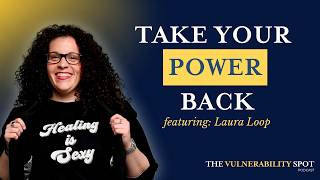
In this V Spot interview, host Speaker A welcomes Laura Loop, a Copenhagen‑based power coach and business mentor. Laura explains that a power coach helps clients reconnect with their innate personal power – a state of being rather than doing – by clarifying who they truly are before societal expectations shape them. She describes her coaching style as blunt, using a signature "frying‑pan" metaphor to deliver harsh truth and trigger transformation. The conversation explores cultural conditioning, especially Denmark’s Jante Law, which teaches people not to see themselves as special, and how that contributed to Laura’s low self‑esteem. Laura shares her personal journey from high‑pressure academic research and severe anxiety to a series of “leaps” – quitting a PhD track, moving abroad, doing yoga teacher training, and ultimately founding her coaching practice. She outlines concrete tools: boundary setting, courageous conversations, and daily post‑it reminders that reinforce self‑love and agency. The interview also highlights practical resources – a free masterclass called “The Leap,” her Instagram (lauraloop_com), website (lauraloop.com), and the Power Loop Collective Facebook community – and ends with a speed‑round where Laura offers a song, a call to action, and loving words for the woman in the mirror. The overall message encourages listeners to own their personal power, set clear boundaries, and pursue joy‑driven “leaps” despite fear.
Chapters
Hello everyone and welcome back to the V Spot. I'm super excited for today's guest, Laura Loop, a power coach and a business mentor from Copenhagen. Laura, welcome to the V Spot and thank you for accepting the invitation to be here with me today.
Thank you so much. This is so exciting. I've really been looking forward to joining you today.
Yeah, me too. So, you know, to those of you listening, Laura and I were going to get together several weeks back, maybe even a couple of months at this particular point. And so I've been really anticipating this conversation, um, about personal power since then, you know. And I've been looking forward to sharing the space with you and asking some questions and allowing the listeners to really get some nuggets from you. So let's kick off by really talking about first time I heard it, a power coach, and we're in Brooklyn, I'm in Brooklyn, so forgive the noise. We have some lawn mowers going, the cars. So for those of you listening, you're used to it, but Laura, bear with us with the sound effects. So I've never heard power coach until I met you. And so talk to us a little bit about what does a power coach do?
Do? Yeah. So a power coach, or I can't say for everybody, but what I do is that I support people in defining who they are and who they desire to be before the world told them who they are, quote unquote, supposed to be. And I help them navigate that no matter how wobbly the world is. So your personal power is that power that lives inside of you. It's not a force. It's not a doing, it's a being. Your personal power is who you be as you navigate life's ups and downs, which we all have to navigate. So your personal power is your authentic self's powerful essence. And what I do is that I support my clients in getting back in contact with that, because a lot of us, we go about our day And then we go to school, we go to high school, we go to— you go to college in the States. We don't have college here. We just go straight to university. And then we get out to get a job. And then you have to find a partner, have some kids, get a house, get a job, get a mortgage, do all the things. And then you just have to do that. And we are so conditioned to believe that we have to do things a certain way. And we are brought up in societies telling us we have to do a certain way. And so many of us are really not doing well. We are really sick. We get anxiety, depression, so many mental health issues because we are not in contact with who we are. And what I support is that connecting back into that power and connecting back into who you desire to be and how do you dare to lead your life boldly with that power, from that power at all times. So that means boundary work. It means being brave enough to be vulnerable. It means being brave enough to say out loud what your dreams are and actually go for the dreams, not giving up on the daydreams. Actually go in and create that unrealistic life that you desire and you dream of and create it into reality. That's what I support my clients in.
So, so much. You said so much, and I love everything you said. And one of the things that stands out is this idea of go, go, go, go, go. Right? Because I, I believe that we are a culture of people who, uh, by nature, being alive today, 2023, in the world, there's a lot of doing that needs to be done, you know. And a lot of what I'll talk to clients about is the willingness and the courage to quiet the noise, you know, so that you can really connect back. And as I hear you sharing about your particular work, I very much hear this, um, purposeful call to action with people to start to hone in on their, their, their essence, their, the inner voice. What are they wanting to do versus what do they believe they need to do? Um, what's the journey like? You know, are people resistant when they first start working with you, or is it something that they very much yearn to experience? What would you say?
It's very different. Uh, mostly I trigger the hell out of people.
I know nothing about that my work.
So like the majority of my clients, they come to me, they follow me for a long time on social media, and they come into my DMs and they're like, hi, I think I need a clarity call. And they like, they would follow and unfollow and follow back and unfollow and follow and unfollow, um, and be like, okay, now I'm ready now. And then they like warm up gently because they start to see like, oh, so you can actually do a different life, you can actually lead a different life. Also because I, I share my story of how I went from working in healthcare research, like really high-level PhD, Oxford, all the things, and letting go of that to go the completely different way, working with spirituality and healing and power coaching and all the things. So I show them that I did it, and then they start to believe they can do it too. And so often they are very, very triggered by me in the beginning which is fair because I am very blunt. I am very honest. I have this thing, I call it a frying pan moment. I didn't even bring my frying pan. I should have brought my frying pan. I have this frying pan that I use when I'm like, I pull it up on calls and like on reels and stuff and then pull up the frying pan. I'm like, are you ready for some harsh truth? I don't want to bubble wrap you. I'm not one to say life is hard. I want to say, yes, life is hard, but you are tougher. And I will never, ever, ever believe your limitations that you set for yourself. I will always believe in your power. And that is triggering to a lot of people who might be stuck in victim mode. So my clients' journey are often they're super triggered and then they reach a point of I'm just fucking done.
Yeah.
And then they're ready to go and then they're ready with hyperspeed.
I love that so much, and it's one of the things that I really, um, you know, took to pertaining to your messaging and how you show up. And, um, I identify, you know, very much direct, and it can be off-putting, especially— I believe that we are again in a culture of, um, you know, people struggle to, to be direct and have tough conversations. And so oftentimes there's like a shy away from. And so when there's people like you and I who are very to the point, it can be jarring because it's— it's— there's a lot of, you know, comfort in going around things. But I think that in the work that you and I do, there's so much value and there is no time to like to waste really. Right. Especially when it comes to people in this case, you know, harnessing their, their true essence and their authentic power. We don't want to, you know, go all around it. It's very much like, let's get to it. So the frying pan moments, I love that. And I love that you also pop up and do frying pan moments different, different places, right? Is that the case? Can you share a little bit about that?
Yeah. So I have this— I have a green frying pan because green is my signature color. My favorite color. So I have this green frying pan and I do these reels where I'm like sitting and talking and then all of a sudden there's me in a frying pan and then I talk or continue the reel. Um, and it's really fun. Like I had a girlfriend who, like one of my best girlfriends, she, she's filming me walking around the streets of Copenhagen just like wearing a green frying pan. Okay, it's such a good space ever.
It's a vibe. I love that. And were you born in Copenhagen?
Yeah, I'm born and raised here. Yeah.
Okay. So what would you say— I was going to ask about your, like, the culture in terms of, you know, I'm here, Brooklyn, New York, and I have the culture that I've kind of gone through my whole life and the influence that it had. And I heard you talk about that earlier when you first shared about what you do. What part has culture played, you know, for you in terms of your personal development journey and this decision to pursue Finding power, accessing power.
I love that question. Um, well, first of all, here in Denmark we are brought up with some— it's like this unwritten law, cultural rules, which is called the Jende Law. And it's 10 rules, and it's like, honestly, it's saying don't believe you're worth anything, you are worth nothing more than we are, don't think you're special, you are not special. And this is so embedded in our culture and the DNA here that you should never believe you are anything special. And to me, that's like completely a contrast to the States where you are special and you are amazing and it's the world of dreams and everything. Like, it's completely different here. It is very much that mentality of don't believe you're any better than us, get back in line. It's very, very that. Um, and the— for me, the problem with that is that it was so embedded in me that I really suffered from like really low self-esteem. And I didn't dare to start dreaming like so I could run a business. Am I good enough to run? Like, I really struggled with my self-esteem. And even though I've always been the person that my friends— I've always been the one who picked up my friends. I've always been the one giving advice. I've always been the one supporting everybody, carrying everybody all the time, all my life. And I still questioned, who am I to? Am I good enough for? Or why would anybody pay me? Like, I'm not worth paying. I really had that Danish voice in my head, like that Jandelaar in my head. And so that really was a struggle for me to deal with because it is very real. There is very much that don't believe you're special. And whenever I have my friends and we see some, I don't know, reality star, like, we nitpick them in the second we see anything reality. It's not like, wow, they're brave to get on TV. It's like, oh, who does she think she is? And how does he handle that? And it's always just nitpicking people who step forward. And that's been your entire life, having seen that, like, I would see it from my family, my friends, anybody would always comment negatively on people standing on the stage or people doing something new or people doing something brave. It's just in the culture to try to shoot them down. So that was very much a hurdle that I had to overcome. And I was also asked to be interviewed on a Danish broadcast, small like social media movie thing. And I just remember being like, oh no, then the entire country is gonna be roasting my ass and say I'm weird and say I'm fat and stupid and who does she think she is. And she's so— like, I remember that being such a fear. Yeah, I did it anyway though. There we go. But I did it anyway.
I love that, I love that. And I was going to say, you know, so you grow up in an environment where you're basically— it's ingrained in you to um, sort of keep yourself in check, right? And don't think you're special and, um, stay in, in the line like everybody else, if you will. And so there's a natural sort of, um, I hear it as an overcoming that's— you are actively pursuing in the pursuit of your dreams. Um, and you're also seeing that whenever somebody else does sort of rise and, and take a untraditional leap of faith, if you will, and go after their dreams, you're bearing witness to them being, you know, like torn down, if you will. And so there's that that you have to push through. And so in this particular moment, because I know that there's, you know, tons of listeners I identify for different reasons, right? But I identify with that process and like the who do you think you are process and the overcoming of it all. Um, to anybody who's listening who is currently experiencing that, whether it be by way of family, right, because we know that that happens, friends, co-workers, society, um, what would you say in this moment you're able to identify as a very impactful support that you called upon to get you over the hurdle?
Well, I had a really good friend of mine who told me— I remember this quote so so raw. She said, well, people are going to talk anyway, so you might as well put on a show. And I was like, yes, I might as well put on a freaking show because I can show up 10% and then they're going to critique my 10%. So I might as well go all freaking in and go in on 100%, and then they can critique my best. Because another really important thing is that the people critiquing you are never the one who's ahead of you. They're always behind you. Yeah, always lower or behind, or however you want to navigate. They're further down the queue than you are.
Yeah, and, and likely navigating some, you know, um, inner struggle themselves about whether or not they will do the thing, whatever that thing is for them, right? So I think that that's a natural— you know, it can be triggering in that way, right? Because now if someone else is sort of standing in line, as you put it, and witness you rising above to do what your life calling, you know, has pulled you forward towards. It can be that, that off-putting thing of like, can I do it? You know, will I do it? Will I stay here in line? So yeah, I love that. So, um, critique my best. I think that's a great piece, you know, for anybody listening, that people are going to talk. It's human nature. And, um, you might as well allow them to talk about you doing your, your thing versus giving a little bit. I think that that's so powerful.
Yeah, yeah. And also, like, I would rather people critique me or not like me for me, for who I am, rather than who I am pretending to be in order to be liked by them.
We got to say that again for the people in the back.
I would rather people don't like me for who I actually am than they don't like me for the person I'm trying to be to please them.
That's so good. That's really good.
On a Post-it note and put it on your mirror at home.
Yeah, seriously. I love, I love that so much because I think so much of what causes us turmoil, and I could speak for myself in this case when I think about my journey, think about my struggle, so much of it was because I at times dimmed my own light, you know, hid in plain sight, tried to, you know, like pretended not to feel certain things or to feel certain things. It was in essence, you know, abandoning my true self, you know? And so I— this is— it's so good that, you know, you rather allow people not to like you for your authentic self than that version of you that you're trying to, you know, whatever. Please pretend, whatever you want to say around it. I think that that's— yeah, that's a good, that's a good frying pan moment.
It is a really good frying pan moment. And like, there's also— I remember this quote, I can't remember who said it, so if you know it, please like give credit. But I, I got this quote saying like, so 10% of people who you're gonna meet, they're gonna absolutely hate you. For no reason other than you are you. 10% is gonna absolutely adore you for no other reason than you are you. And the last 80%, they just need to make up their minds. Yeah, it just really stuck with me. It's like, okay, so 10% is gonna hate me if I'm me. Okay, perfect.
Yeah, yeah, not so bad when you think about the numbers, right? If that's 10, that leaves 90 to be, you know, uh, in a different, in a different space. But this is so good because, you know, there's so so many people, so many clients that I talk to and like prospective clients that, you know, will share their struggle is very much rooted in the people pleasing and doing all the things in the name of making everybody happy or not rocking the boat or whatever. And they're hostage to that, you know, and they're very much like running themselves ragged in the name of pleasing. And so I thought of that when you're speaking because I'm like, in order to really embrace being your authentic self, you have to be willing to not be liked, you know, to be rejected, to disappoint others. And that, for many of us who grow up in ways where it's embedded in our being to please and keep, you know, the peace, and it's new territory when you step into this type of work to suddenly be willing to say, well, okay, let me actually start with what's best for me versus what will make everybody happy. What will, you know, what does the family want? What does the neighborhood want? Um, so I think this is, this is so good because there's so much courage involved in, in being your authentic self. And I hear it as— now I'll add on to that— embracing your authentic and true power.
Exactly. It does take so much courage. And like, so many of us brought up to be people pleasers. And not to stereotype everybody, but like, mostly women were brought up to be like, shush, sit down, be quiet, act nice, be polite, say no, say yes, say thank you, protect the family, do the laundry, do the things, help, support, clean, blah blah blah blah blah.
Yeah.
So like, letting go of all that all those generations of women being told how to be and how to behave. Like, it's generational— trauma might be the wrong word, but like, it's generational conditions that we have to let go of. And it is hard. It's really scary.
Totally. And it's very self-sacrificial, you know. It's, it's a self-sacrificing narrative. Right, where it's like deplete self in the name of making everything else work. And what I have found personally, you know, I don't have children, so I can't speak from that standpoint, and I'm not married, so I can't speak from that standpoint. But what I have found in my own personal journey at different, you know, chapters, if you will, is that when I have decided to go against certain grain in regard to the conditioning, then I'm a bitch, you know? So it's like, okay, so I'm either gonna do all the things and play this game by these rules, right, where I'm going along with it and doing all the things and saying yes and going everywhere and pleasing everyone. And the moment that I make the decision that this doesn't work for me and I don't want to, then, you know, it's, what's wrong with you? You know, you're acting like a bitch, you're being cold. So it's— and there's— you have to be willing to— anybody who's listening, I would say you have to be willing to allow for that to happen. And where it's like you're getting everyone's opinions and insights, but what's best for you, you know, and willingness to choose that.
Yeah. And I want to just like grab that and speak to when you do these things, when you actually say no, when you start being who you truly are at your core and you start leading your life from your power, That also means that you attract those awesome humans who love you for that, who honor you for that, who want to honor your boundaries and your needs and your likes and all the things. Like, the friendships I have created and built the last, well, 3 years intensely— it's insane how deep connections I've built to friends, how much sisterhood wounds I have healed. How many amazing connections that was created out of raw conversations of me saying, I don't want to talk to you this way, I want to talk to you that way, I don't want to do that, I want to do this, I don't want to do that, this is my boundary, this is not. And having that met and learning to pinpoint this and work with this, it's been amazing. Also with my family, like I have stepped up to my mom and to my dad these last 3 years, had so many conversations with Each of them, they're divorced. So I had conversations with each of them, confronting them with what's not working for me anymore. How have we been communicating before that's not serving me anymore? What do I want in the future? And like such simple things as I remember telling my mom, you're not allowed to call me when you go home from work because you get distracted by the traffic and it freaks me out. And I get really annoyed that you suddenly I'm not connecting with me on the phone, so I don't want to talk to you when you're in traffic. Like, that boundary freed so much mental space. So it's sometimes it's the smallest things we can do and really support that.
And I love that courageous conversations. That's what I think about when you share that, you know, courageous conversations. There's definitely a courage involved in, especially right with people, sometimes people closest sharing what works, what doesn't, you know, implementing the boundary, upholding the boundary. And by the way, this comes up in so many conversations with the clients too. Boundaries, right? Big hot topic. And when we speak of it oftentimes and it's thrown around, I'll ask, well, what are your boundaries? And then there's crickets. And so I think that there's so much importance to spotlight You know, upholding your boundaries is essential, but it first requires you to get clear on what those boundaries are, because otherwise you could potentially have people disappointing you or like running amok and violating when in essence you haven't taken the time to really clearly define what they are. So I know that that's something you do. You work with your clients around boundary setting and getting clear. I do too. Um, I think that's so important. It's a huge piece that's not necessarily spotlighted often.
Exactly. And it's like people often say, like, just do better boundaries. Like, what is better boundaries? What is a boundary? How do we do the boundary? Where do I start with the boundaries? Like, yeah. And I remember when I had to start learning about it, and I learned that when you place a boundary, if you don't have a consequence on that boundary, you're placing a suggestion. And I was like, oh, oh, so I've just been giving suggestions my entire life. I never placed a boundary. I just gave suggestions for how you shouldn't treat me or what you shouldn't talk about at the dinner table.
Oh, I love that. That's so good. So that next step, follow through, is really where it's at.
Yeah, exactly. And it, like, it can be simple because I remember that when I heard that the first time, I was like, so that means I have to cut contact and all communications. They don't. And it's like, no, you're not that bad. So just to give an example, I know my clients love it when I give these small tangible examples. So an example could be you are having a family dinner and Uncle Bob says something, let's say something political, and you know that when we start talking political, we are going to be arguing all night. So you say to Uncle Bob, I'm sorry, I can't have this conversation with you. If you want to talk politics, I will leave the table. That's a boundary. And then when he says, oh, you shouldn't be so picky, or whatever Bongo Bob says, you just leave the table.
Yeah, well, that's a great example because I'm sure that listeners can really use that one anyway, because that is a, you know, prime example of what happens. And, you know, this decision to state the boundary, right? State what it is for you. What's your truth? So if you're going to go there, I'm going to leave the table. And not from a threatening perspective, but more from I'm not going to engage, right? Sometimes the trap is we start to engage, right? We start to get into it. And so this is a protection of peace. It's that upholding of, you know, I'm not going to go there. I don't want this to turn into A, B, and C. So, yeah, I love that. And it's great to have the example too, for folks to be able to, you know, apply to their own life because that gets to look a million different ways depending upon the topic. So I love that. Well, one more question before we sort of start to transition to, you know, bring us home. The conversations always go so quick in the V Spot. Excuse me. I believe that we create the businesses that we need. That's my personal belief. And so I'm wondering, is it, is it true for you that there was a time where you felt powerless? And so opting to be a power coach was very much like an important and essential decision in your personal life?
Yeah, I have felt so powerless. I felt like I was a victim of whatever happened to me. So the story goes back to 2015. I started having like severe anxiety and I've had honestly, I've had anxiety and stress throughout my life. I had my first ulcer when I was 17 in high school from stress and anxiety. So I am no stranger to stress and anxiety. But in 2015, I got really anxious, and I had a lot of anxiety. And I remember it just like, it was so intense that I would wake up in the morning, I would wait for my then boyfriend to go to work so he wouldn't see me cry, because then he would feel guilty, and I wouldn't want him to feel guilty for me crying, because I wasn't crying over him, I was crying over life. And I would wait, hold back the tears until he left. I would cry my eyes out, like, from the moment I woke up. And then I would try to put on waterproof mascara. I was using a lot of makeup back then to really just, like, what do you say, hide, hide underneath makeup. Yeah, classic. Yeah. Um, so crying in the morning, I would put on the waterproof, I would go to work, and I worked in healthcare research at the time. I was finishing up my master's degree in uni and I was doing health research on the side with my job. And I remember coming into work or uni and, and just like being so anxious I could barely breathe. And I would many times a day, I would go to the bathroom just to cry a little bit, just to get something out of the system. And then going back home, I would just like lay on the couch. I would watch the same 3 TV shows over and over again because I was too anxious to watch a new show. Because if something new happened, then And it was too overwhelming for me to see. So I watched the same shows all the time. And then I would just cry and then my boyfriend would come home, I would try not to cry, and then I would just cry myself to sleep. And that was my life. And I didn't get it because I was supposed to be happy. I had it all. Like I had a beautiful man, we had a great apartment, he just bought a puppy. And if you know me, puppies are life, dogs are life. Like, literally, it's my favorite things in the world are dogs. Um, so if a puppy does not help my mood, something's very wrong.
Yeah.
Um, had a perfect job, I was doing really well at uni, I was like signed up to go like the research where you do PhD and all that. And I remember one, our New Year's Eve, we were supposed to have a New Year's Eve together, me and him, and It was the most intense moment of my life. I remember dreading New Year's Eve because I was too ugly and too fat to wear anything fitted. I wasn't pretty anymore, and I was just horrible. I was a bad girlfriend, I was a bad student. I was like really, really like zero self-worth at the time. And when this dinner ended, we were washing the dishes, and I had set a beautiful table using my favorite wine glasses. And I dropped one of the wine glasses and it broke in the sink, and my whole world just ended. I was like hysterically yelling, crying, in so much pain. And in that moment, I realized this is not the wine glass, this is the life. And right then and there, I promised myself, when we were done with our exams. Both of us were students at the time. When we were done with the exams, I'm leaving. I'm leaving the apartment, I'm leaving him, I'm leaving the dog. And I moved into my grandma's basement because that was the only place that was available for me to live. My parents don't live in the country, and they live abroad, both of them. So that was the only thing I could do. And then I started from there, finishing my uni degree Um, and I just created a new mantra saying, if you never try, you never know. And whenever I did something new, I would ask, is this fun? And if it wasn't fun, I wouldn't do it.
Wow.
That was literally my only leading light, is, is this fun?
Is this fun? I love that. I'm writing it down.
Yeah, put that on a Post-it.
Yeah.
If you never try, you never know, because I knew I had to do something different. And I remember in this period of my life, I, I was with my grandma for about 3 months, I think, and then I moved into my, uh, best friend's apartment, and she had like this little loft bed in her living room. So I literally didn't even have a room, I had a loft bed. I just started really incorporating things I thought was fun. So I started doing yoga. I remember buying a coloring book because I was like, that sounds fun, coloring sounds fun. I don't have to be able to draw. I can just color like a kid. And I bought my first self-help book. And that was such a pivotal moment for my journey because I remember being really ashamed that I was now that girl who needed help, who couldn't handle her own things, who weren't strong, who was weak because she needed help. Like all this bullshit we get taught.
Yeah, totally.
And I remember getting this book, it was called Warrior Goddess Training.
And I asked you what the name of it was.
And the author is HeatherAsh Amara. And this book just like changed my life. I had never read anything like it. It talked about how you find your— she calls it a warrior goddess. That's like my way of saying personal power. Like how to find that power. How do you find your joy your power, your being, your sensuality, your pleasure, your fun. How do you find that? And I remember reading it and being like, oh, oh, there's so much I don't know. Wow. And from then I slowly started. I did my— in the fall I did my master's thesis in Greenland and traveled there because travel is so much fun. I love travel. So I would go to Greenland like was thinking, how can I make my master's more fun? Can I travel? Can I go abroad? Yes, I can. I will go abroad.
Yeah.
So once again, just like doing that all the time. Is this fun? Is this fun? Is this fun? And it led me to have like my first year out of uni, I worked full-time in research, preparing to do a PhD between Copenhagen, Denmark, and Oxford in England. And I just remember one point being like, But it doesn't look like a fun life. It looks like a prestigious life. It looks like a fancy life. It looks like a life that's really pretty on resumes. I could get a really killer LinkedIn profile on this. But is this fun? Is this fun? Wow. And it wasn't. So after a year, I quit and I went to India. I did yoga teacher training. I came home and I started being like, well, if you never try, you never know. So I spent some time at war with myself and my inner critic before I just opened up an Instagram profile and started talking. And then clients came, and wow, here we are.
Here we are.
Wow.
Well, thank you, you know, for being so generous and sharing with us, you know, your truth and It's, you know, I know that one of the things I think of when I, you know, hear you speak and see your work is this notion of taking the leap, you know, and is it fair to say that that was the birthplace of your leap, you know, really just giving up the traditional good on paper, great LinkedIn, you know, a snapshot, if you will, but then following what you really felt guided to do.
Yeah, that definitely was a major leap. It was also like leaving the ex and the quote unquote perfect life was a massive leap. Yeah, I've taken many, many leaps and I actually also have a free masterclass calling The Leap because I've done it so many times. I made it a free resource for everybody to be able to do because it's scary to take the leap. The leap is always the most scary part.
Yeah, totally. And I was going to actually ask you, um, for the listeners, and at the end, you know, you'll be able to share where everybody can find you and, and get access to, um, but for the listeners who are very much potentially in the traditional, what, living out what they, the life that they basically had laid out for them, right? You do this, you do that, you do this, you do that. Um, and I can res— I relate to this because a former school psychologist, 14 years embedded in me. You get the job with the pension, you stay till you retire. That's the thing. So, you know, for me, the leap meant letting go of all of that in the name of this inner calling and push that I was sort of feeling with no evidence that it's going to turn out right. Scariest thing I ever had to do. What would you offer to the listeners who are, you know, feeling like they desire a leap but don't even know what that means, don't even know how— any, any words you want to share before we go into our speed round?
Um, yeah, go get the masterclass. It's free and it's really good. Um, and besides that, like, honestly, my mantra is, if you never try, you never know. And I would just rather have a life of, oh well, than a life of, what if I did? And The number one thing that people regret when they're dying is that they live the life others thought they should. And I am not going to be a part of that statistic. I am going to be stepping into my grave being so proud of how I navigated life. I am going to be looking back and being like, well-lived, girlfriend! Like, that's how I want to leave this earth. And when we play with that idea And you play with that idea, and the listeners go play with that idea. How do you want to step that foot into the grave? How do you want to feel? Do you want to step into that grave being like, whew, I'm so happy I had that retirement? Or do you want to step into the grave being like, whew, I'm so happy I never asked that cutie out? Or I'm so happy I spent my life hating my thighs. Well done, me.
It's so true. And I love that you bring this up because I speak of this often, you know, the, the 5 top regrets of, of the death, you know, the dying, and how we are in such a special position to have access to that knowledge, right? That the most common thing reported is that, you know, people lived a life true to what others wanted as opposed to living true to themselves. And there's so much value in having access to that where we are, right? Because we don't know how much time we all have, but to know that that's something that's the most commonly reported regret, you're in position to do something about it. So I think it's so important, and I love what you say, that you want to go out being proud of yourself and being like celebrating, like, well done, you know. And that will mean going against the grain, right? It will mean pushing back on that written law of what it means to, you know, to like stay in line and do all the things. And so There's so much courage involved. There's so much trust in self, right, to be willing to go for it. There is vulnerability in— you don't know how it's all going to turn out, but you're willing to do the damn thing anyway. I love that. And I hope for everybody listening, it's different for everyone, right? Your leap is going to look different than Laura's. It's going to be different than mine. And every day we have an opportunity to leap. Really, you know. And so to really start to connect to that and on purpose, right, in the name of— because this comes up a lot with healing work, people will say, you know, I don't have healing work to do. And I'm like, yeah, as long as we're here, there's stuff going on, right? But it's shaking up the system. And when I say system, I mean your own operating system on purpose in the name of living a life that's fulfilling. Freeing, you know. So I love, I love that you highlight that and, um, that you're cheering yourself on in that way. So it's so good. And, um, folks, grab the masterclass because there's that part too. Um, so, all right, all right. So we're going to enter into the final, uh, speed round here. And the way this works is I will ask 4 questions and you go where you feel intuitively guided to go. There's no right or wrong answer, just share what's on your heart., and, um, then you could tell the people where they could find you. You ready? Okay. Um, share one song that you would play in this moment if you needed to remember who you are and what you're capable of.
Um, there's so many good songs. The first one that comes up is— it's actually a song from The Lion King. It says that he lives in you, but I have a mentor of mine who wrote the song, rewrote it, and says she lives in you. So if you go and you find that Disney song, He Lives in You, from The Lion King, and you listen to it with any pronouns that you use and just hear those words.
I got the goosebumps.
I know the song.
Yeah. Oh, that's a good one. You have the version She Lives in You? Okay, I gotta— I have to check that out. Um, epic choice. Okay, what words do you want to offer to anyone who is listening that is currently feeling powerless?
You are never powerless. You— your power is built into you just like the color of your eyes. It can never disappear. You can forget what color of your eyes you have, but you always have it. It is built into you like your fingers and toes and color of your eyes. It will never leave. You can only forget it, and that's the only problem. Maybe you just forgot how immensely powerful you are. I love that.
All right. What is— I was going to word it as, what is your call to action to the collective? But I'm going to remix it and say, what is your frying pan moment, like call to action to the collective at this time?
Yes, I love that reframing. So my frying pan here would be your dreams have landed in your heart because you will create a better world living those dreams. So when you are not living those dreams, you're a selfish little person not making the world better. So go do, go do the world better. Go live your dreams. Your joy and happiness and courage will start the most amazing ripple effect. And that's going to change the world. I love it.
All right. And, you know, July 11th, here we are. Um, in this moment, what loving words do you want and need to offer the woman in the mirror?
I love that. Um, so firstly, it's always to trust, trust whatever is coming your way. And I actually have on my mirror, I have different Post-its, and currently right now I have a Post-it with a question saying, what would a woman who truly loves herself do right now? So that's a question that I use in difficult situations when I have to make a choice or whatever it is. I lead my life from that question. And I have a post-it saying, I am the creatrix of the corner, because we always say like, oh, happiness is just around the corner. Yeah, but I create the corner. Creator of the corner. And then I have a post-it saying, I get to choose to be happy.
So, so remix— I love that. And write your next Post-it in this moment.
If you're going through hell, walk like you own the damn place. I love it.
So good. So good. Thank you. Thank you. Tell the people, where can they find you? And, um, you know, anything you have coming up?
All right, so yeah, you can find me pretty much anywhere. My name is Laura Loop, and that's on Facebook. I have a free Facebook community which is called the Power Loop Collective. I have my Instagram where I am most active, which is lauraloop_com. Website lauraloop.com if you want to read all the things and read about how you work with me. I am currently accepting one-on-one clients, and I will be opening a group program in the fall. That is still not have any dates yet, but feel free to reach out if you want to work with me. There are many different, different ways. And go grab the masterclasses. It's free and it's really good.
Yeah, thank you. Thank you. I love it. So everybody grab the masterclass. Um, you know where to find Laura. It's my hope, um, Laura, that you continue to walk in your personal power. I know that hundreds of people clients have been able to experience themselves differently because of your courage and commitment. Um, to everyone listening, it's my hope that you are inspired today to embrace your personal power and get clear on what that means for you. Um, may I continue to have the, uh, courage and commitment to stand in my personal power. Um, in the name of freedom, right? For all of us. This is, this is what freedom gets to look like when we are totally detached from all these societal expectations and we are brave enough and bold enough to walk through the place like we own it, as Laura said. So Laura, thank you so much for being with us in the V Spot. I'm grateful and looking forward to continuing the conversation. And to everybody else, thank you for being with us today. To be continued.
Thank you so much for having me. It's been so much fun.
Yeah, thank you. Thank you.
More from Andrea

From Rejection to Resilience: A Conversation with @thedegoviagroup on Thriving Through Challenges 💥









Reclaim Your Worthiness: A Journey to Internal Value - The Unlearning Lab Live, Washington D.C.
