Mental Health Matters
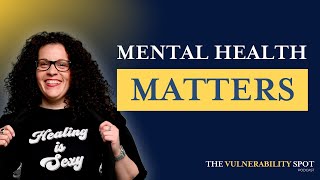
Expansion coach and psychotherapist Bless Rockswell discusses decolonizing mental health for Black and brown communities, her recent autism diagnosis at 45, and why anxiety and depression often signal misalignment between how you live and what matters to you. She compares finding a therapist to dating and recommends walking, meditation, and purposeful silence as grounding tools.
Chapters
Hello everyone, and welcome back to the V Spot. So we have someone special with us tonight, right? This is a first, and I'm excited. I'm really looking forward to this segment. I'm nervous. I'm, I'm all things, you know, all of them and all of the things. But, um, it's a real gift. And so I really want to introduce you to, uh, Bless Rockswell, who is an expansion coach, a mental health counselor, a psychotherapist, and an energy healer. So first and foremost, thank you uh, for a couple of reasons, right? First, thank you for accepting the invitation to be here. Um, I'm, I'm grateful and I'm looking forward to this segment. Second, you know, accepting the invitation when you don't know the questions— everybody, that is vulnerability at its best. So I want to, you know, give you your flowers for your courage, you know. And what I love most about sharing space with you and talking to you and, and seeing you post and do your thing is that I feel we have this unique hybrid action about us, right, where we're coaches and the mental health training. Um, and so I'm excited to jump in Mental Health Awareness Month, you know, and really hear from you. So first and foremost, you know, please share, tell us more about the work that you're presently doing.
Okay, let's see which hat am I wearing today? Um, so the work is around psychotherapy and mental health, specifically decolonizing, demystifying, destigmatizing mental health for Black and brown populations. That's my like heart stuff. Um, and then I'm also a Reiki master, so I work with energy and energy healing. Um, happy to teach people about their chakras because I feel like knowledge is power. Um, so there's that. And then there's expansion coaching. And expansion coaching is really all about mindset, because if you change your mind, you change your life. Um, and all— say that—
wait, wait, sorry to interrupt you. Say that one more time for the people in the back.
Oh, I will. Change your mind, change your life. But I'm also gonna say that's not mine, that's Wayne Dyer, okay? Because I give flowers in this moment.
I love it.
It is the truth, right? And then there's another one who I don't know who to credit that one with, but that one is more along the lines of, um, change the way you look at things and the things you look at change, right? So, um, I'm not a life coach because I can't tell nobody how to live their life, right? But I can tell you how to change your mind. Um, so between mind and energy, that's, that's my wheelhouse, right? That's where I help people find their healing.
Love it, I love it, I love it. Um, so talk to us about you know, why mental health? Why psychotherapy? You know, yeah, you know, it's— we're gonna shine the light on all things mental health. But yeah, talk to us about your decision. How'd you get into that work?
I think that, you know, I've kind of always been that person that seeks to understand behavior, right? Um, and when I was 19, I took a psych class with, uh, it was a senior-level psych class because I was dodging statistics.
I would be dodging statistics too.
I was like, I'm gonna do this senior class that doesn't have the prerequisite. Um, and long story short, the professor from that class, um, told me at the end— he met me for the final exam because I hadn't attended the class before that because it's too early. Sorry. Um, but he was like, familiar. Yeah, he was like, You know, he told me that this was— he had hoped that I would go into this field. And I was 19 at the time and dealing with my own trauma. And I was just like, no, there's no way I'm holding space for other people's stuff when I can't even hold space for my own. But then, you know, fast forward 20-something years later and I'm like, okay, I still need to understand people's behavior. I'm still, oh, like incredibly fascinated fascinated by it. And, um, and then I had done— I think I got Reiki attuned first, right? Because I was— I had my spiritual awakening in 2012, and I was able to see energy after that for what it truly is, right? And then I was like, okay, I'm gonna go get Reiki attuned. And then I decided to do coaching because I found that my Reiki clients weren't just coming for Reiki, right? It was more that they needed. Um, and then with the coaching, it was a similar thing. I was doing it and I was like, wow, people really are bringing a lot to this, you know, and there's obviously a need. Um, and I was like, I gotta understand more and I gotta be able to provide people with a deeper, higher level of care, you know, and be able to really hold space for them in a safe way. And so that's what made me say in 2019 at 45 that I was gonna go to grad school and be somebody's mental health counselor. And so now here we are all these years later, you know. And finding out that I have, um, autism last year, um, also was key in helping me to understand my choice because that's part of why I study even today. Yeah, you know, it's like I have to figure out those social cues and those social contexts that don't come naturally to me. And so I study people just really, really closely. I figured out that that's part of why I always have, um, and it's come into service in this field of psychotherapy because I really do study people. And so when my clients are even sitting in front of me, they don't even have to say things. Like, I'm already aware because I'm, you know, it's that intuitive. So yeah, that's how I ended up here.
Well, all right, so, so many good things. You see why I— do you see why I invited Bless join us. Um, wow. So first and foremost, I want to shine light on what you just shared and say thank you, you know, for sharing in terms of having a diagnosis, autism. And I think one of the most powerful things about that is I think there's a huge stigma around what autism looks like and what the functioning is like. And so, um, you know, last year and this year I'm going to actually be in this space of I am not my diagnosis as a message. And what would you say? Because I think that there's so much value in letting the people know that, um, what we think diagnoses sometimes show up as is not it, right? So what would you— what can light— can you shine on, on autism?
Well, you know what's so interesting, right, is that I just— excuse me— there's a woman, she's the autistic therapist on Instagram, and she posted this yesterday. I was like, this is exactly it. And it's that when you don't have a diagnosis, it comes out as anxiety, it comes out as depression, it comes out as all these other things, right? Because you're so anxious, you know. And so for me, getting that diagnosis to say, oh, it's autism with a sprinkle of ADHD, it's like, oh, I'm not just anxious because I'm anxious. That's it, right? I'm not just, you know, feeling depression because I'm depressed. It's like, oh, these things are at play, right? And then I'm now neuroatypical functioning in a neurotypical world, and I'm sitting there like, no wonder I feel so stressed. Like, no wonder. It's, it's just so many things kind of fell its place. And so on the one hand, I, I— those diagnoses of anxiety, they're just thrown around too much, you know? And it's like, when it could just be that you are neurodivergent and it hasn't been found out yet. And it's not to say I don't still have anxiety, because I still have anxiety, right?
You're like, that part, check.
You're right, right. But at least I, I can trace it back and and really get clear about knowing myself and knowing what is showing up and coming up for me, right? So it was, it was game-changing, and I try to share it as much as possible because I want therapists and counselors and coaches— when people are coming to you and they're saying, 'I'm anxious,' yeah, right? Well, what does that really mean for the client, you know? Because before that, I was just diagnosed with anxiety.
Yeah, and it looks different, right, for each of us.
Exactly.
I love that you are— so first Just share a little bit more about neurodivergent for folks who may not be familiar with the term.
So neurodivergence is the idea of someone, you know, we have this idea of a baseline, right? And someone deviates from that. You know, they're autistic or they have ADHD or they're OCD or like, you know, bipolar. And it's just this idea of not being the quote unquote normal. Form, which in and of itself is a discussion.
Yeah, we'll bookmark that for another episode.
Get back to that one. Um, and then neurodivergent would be referring to a person. All right, so neurodivergence would be the thing, and then neurodivergent would be you're describing someone, right? Um, and I have a theory that no, everyone does not have autism. Everyone does not have ADHD. Everyone does not live with neurodivergence. But I have a suspicion that there's a lot more of us out here than, than is known, right? Because when I even tried to go get diagnosed for autism, the assessment alone was $6,000, right? And so exactly, so for people that are out here just trying to get diagnosed like even that is a challenge to get assessed, you know. And then with the ADHD, same thing. They don't— something about it's unless it's impairing your life, right? And it's like, but who gets to dictate if it's impairing my life? Well, that's right, exactly, you know.
Like, let me tell you if it's impaired, if it's impairing your life, right?
Like, I will be the best judge. I'll be the one to tell you if it's impairing your life, right? So It's a, it's an ongoing discussion that's happening. We just stepped into it last month. Um, we had a panel discussion around autism awareness in BIPOC communities, right? And so my goal is to continue to have this conversation, continue to bring more people to the table to have it. Um, because even in the DSM-5, like that sort of descriptor, even that it's not catching anybody, you know.
No, that— yeah, that needs to be also, uh, that's a whole other story, right? I don't know. I don't know if the, the, uh, volumes of the DSM can keep up with how much it's important to actually keep refreshing and tweaking.
Yeah, exactly.
Um, no, I love— there's so many things that you said, and, you know, this aspect of— I want to go back to what I heard you say is, uh, relief in hearing a diagnosis, right?
Because—
and I really want to shine the light on this for everybody listening— so many people, right, so many of you don't want to seek support because you are afraid of a diagnosis. But there's so much relief in understanding that certain symptoms are a part of, right? And then it's like, ah, yes. And so I think that what could seem so scary to so many people is actually like a relief.
Yeah, it was. I mean, I'm still processing it, right? And I want to say the first month after I realized it, it was very emotional because— but it was emotional because, you know, I'd spent my whole life feeling like weird, totally different, and just like, you know. And so having that moment of Oh my gosh, it's not in my head, right? You know, I'm not crazy. I'm like, I really am processing information different, right? I really am. So for example, there's a sensitivity that comes with it, and I identify as a highly sensitive person. That means I would go to the dentist my whole life. This is— this is what I'm talking about. Yeah, I would go to the dentist my whole life and need extra Novocaine, right? Because my pain levels— I feel pain different, you know? And I would have dentists tell me it was in my head and just keep drilling. Wow. You know what I mean? And it's like, now I have a diagnosis, I'm like, oh no, you're gonna stop. Yeah, because I am telling you, right, it's not in my my head, right? And so even having that— that is the idea of being neuroatypical moving through a neurotypical world, is like you will have people telling you no. And so when you have a diagnosis, you could say, oh no, sorry. Yeah, you know, no, you're wrong. My own brother, who I love, who's one of my biggest cheerleaders, advocates, his initial response was, but you're one of the smartest people I know. I'm like, yeah, I'm still one of the smartest people I know. I just happen to also be one of the more socially awkward people that you know.
I feel like that part didn't change.
That part didn't change, right?
Smartest person you know. Yeah.
So, but it was, it was little things like that that allowed me to stand firm when other people doubted, right? When other people are like, you're not anxious, what do you mean you're depressed, you're not Like, it's like, no, this is not in my head. I'm not making it up. I am, you know. And it doesn't— I think the most important thing is about weaponization of a diagnosis, right? Yeah. Like that idea of being autistic and having it weaponized against you, or having anxiety and having it weaponized against you. And it's just like, no, nobody's weaponize this against me, you know what I mean? And if anything, I would— I realized part of my mission and my purpose, part of my purpose is supporting people, right? But it's also, you know, I'm here to change literally the face of autism because you don't look at me and think that, right? You think, you know, a little boy or something because that's the messaging and that's the marketing that has taken place.
It's totally true. I think that changing the face of— and that's the powerful part, right, of mental health, because I think that there's been so many conversations that I've had in terms of depression, anxiety. Yeah, another one, right? There's a— you say PTSD, you think of a particular profile sometimes, and it's like, hello, yeah, here I am, here I am.
Exactly.
There's so much value in shining the light on that because I think that it's, it's another level of stigma and chipping away at what has been created over the years in terms of our go-to, you know, um, I think that's, that's powerful work to be put into and, uh, a courageous journey, you know, to say the least. And I think that people, um, there's so much benefit in thinking about young people who there's a lot of anxiety around believing or thinking that they have a diagnosis, right? And then being able to look to various people to say, oh, I'm like them, that's, you know, and there's nothing wrong with— and this is something that we don't have to be shameful about. And it's just another way to basically understand ourselves and how we interact with the world. That's freedom.
It's freedom.
It's freedom.
Exactly.
Totally.
And it's just like, you know, there's stigma that comes with neurodivergence is coming from the outside. Yeah, right. And so like, even, you know, the discussion around autism is like, it's— there's no need to find a cure. Yeah, like Autism Speaks, I believe part of their marketing is let's find a cure. Like, what do you want to cure me of? This is my brain. This is not something to cure. And I think about it like this: nature Nature made trees. It's like a thousand different kinds of trees, right? Nature made octopuses. How many kinds of— like, literally look around you. Nature makes one thing and then spreads it out across the spectrum, right?
Yeah.
Why would she only make one kind of woman, right? How does that even make sense that she would make one brain, right? And everybody— like, it doesn't, it doesn't add up.
And how boring.
Exactly, right? Like, who—
think about it, everybody listening— how boring the world would be with one type of brain.
One.
And then, dare I say, some of the brains that we experience modern day, it's like, oh, there's so much like variety. And you know, and there's so much totally old and healing and just innovation.
Yeah, right. Like, it's just, let's think outside the box, you know? Let's stop stigmatizing. Let's stop, like, you know, just putting— weaponizing people against themselves.
Yeah, you know what I mean?
That's not— that's not okay.
No, it's not. And I think they're really— what I also pick up on in this moment is it's the lack of information, the lack of understanding, understanding And people often are uncomfortable. So it's their discomfort that gets added into this, you know, level of, your diagnosis makes me uncomfortable. I don't know how to interact with it.
So, right?
It's like, make it go away. Make it stop.
So I'm gonna pretend that it's not actually there.
Exactly.
Yep, yep. That's exactly what it is.
So it's like, I'm sorry, I'm not going to make you comfortable because this is who I am. You know, there's so much power in that.
That's it. It's powerful. Yep, nailed it. Oh my gosh, I'm so excited about this conversation.
Okay, so we will be right back. We're going to take a brief break. Catch you in a few. All right, so bless, 45 years old, you decide to be someone's mental health counselor, right? And so you've been practicing, you know, studying, practicing now for a bit. Talk to us about what you are experiencing with your clients? What are you seeing a lot of these days?
Let's see, what do I get most often? I get a lot of anxiety, a lot of anxiety. Um, I get a lot of depression, but what's interesting is that I get a lot of anxiety and depression connected to people not living them, right? And so they are in the midst of their midlife crisis, right? Or, you know, they want to be doing this, but instead they're doing that, right? And so it's almost this epidemic of, I did what I thought I was supposed to.
I know nothing about this.
I have no idea what— not judging you in any Anyway, anyway, I don't know anything you're speaking, but I get a lot of, I did what I thought I was supposed to do and now I am 30, 40, right, what have you, and I'm miserable and I'm anxious and I'm depressed and I'm, you know, I don't even know what I want to do because I haven't thought about what I want to do so long. And like, and so I get a A lot, a good chunk of it. Wow. Every now and then, especially post-pandemic, we do get grief. Yeah, a lot of grief right now, um, and that's understandable, right? Totally. Um, and I want to say, but I want to say the majority of it is really the anxiety and depression connected to not living the way, the life, or the way that they would like to be. That's so—
I want to really like shine the light on that. So for everybody who's with us, you know, if you are someone who is experiencing anxiety, depression because you are doing what you think you have to do, you are traveling down a path that was potentially set out for you, right? There could be this experience of misalignment which shows up, um, as anxiety and depression. And so there's a real opportunity to tune in and ask yourself, are you doing the work that you want to do, right? Because I definitely, at points in my own journey, um, and I joke about it but it's like so on point, recognize that a lot of what was on deck for me wasn't mine, right? It was somewhere along the road I received it as a suggestion, or I received it as feedback, or I, you know, was good at something. And so, you know, not everything we're good at do we have to pursue, right? There's, there's a lot.
There's a lot to it.
So I think that that's so, that's so powerful. So I just want to highlight that. And, um, you know, I'm working to complete the internship for mental health counseling, and I would say that what I see a lot of— absolutely anxiety, depression, um hypochondria is, you know, and so people in medical anxiety— yeah, yeah, people are, you know, so hello, I am a hypochondriac, and I'm really experiencing in clients how much it's showing up these days where it's very much like— and I think total residual of the pandemic, right? So, um, there's a great understanding. I definitely felt it, at least that I always stood out in, you know, certain circles with the, oh, I have a headache, is it a— God forbid, you know, like everything to the worst. But now I'm seeing it show up in front of me so often, and so it's like, oh wow, the pandemic really neutralized, um, what was once conceived as, uh, perceived really as hypersensitivity. Yeah, you know.
So, and I think it's also like, I, I, you know, they've been trying to put complex PTSD in the DSM-5 forever, right? Um, and I don't know if your audience knows what complex PTSD is, but really quickly, CPTSD is— PTSD is like one-off event, you traumatized, you can't process it, it's still affecting you years later. CPTSD is it's not a one-off event. It just, you don't know when it's going to end, right? And it just keeps happening. And my suspicion is that that's usually related to, you know, childhood abuse. But within this context, I feel like racial trauma and the pandemic both qualify.
Totally.
Right. And so it's very, it's very layered. Yeah, you know what I mean? And so I think that right now, in terms of what's coming into the office, it's really taking— I don't want to say it's taking me longer per se, but I'm finding that I have the layers that I have to peel back. Absolutely right. To get to like the actual core, you know, we have— it's almost like we put blankets on ourselves each year. Blanket and we put it on ourselves, right? And it's like, then when you come into therapy, you know, you have to sit with your therapist and they— and you have to feel safe. And I like the blanket analogy, I'm gonna go with it, right? Because you have to feel safe to be able to take off the blankets, you know what I mean? And, and some of them are heavier than others, and, you know, and so, um, really finding someone that you feel safe enough with to do those things, I think, is super, super—
that's everything, right?
And so important.
And again, everybody who's tuning in, you may not find that with the first therapist that you sit with, right? So listen, you're interviewing your therapist.
It's like dating.
You're—
yes, right?
Like, you're sizing them up. Like, can I unpack my stuff with you? And if the answer is no, it's— don't allow it to be a knock against the whole profession.
Right?
It's, it's about finding someone who you genuinely feel seen by, understood by, right? Safe with. Um, but I hear it a lot, you know, I tried and I didn't connect, and I'm like, no, don't stop after—
find someone else. Exactly. Like, there's actual research that shows that part of the healing that takes place in therapy is about the connection you feel with the therapist right? And so it's not one of those things where it's not like going to a doctor where you can go to any doctor. Yeah, right. It's like, you know, try on some before you get to that one, you know? And I mean, like, I'm fortunate to say like that most, most of the clients that I get assigned, I'm able to find common ground with on something, right? And so we do are able to build build a rapport. But I've had clients be like, no, this isn't working. And, and your therapist is not going to be offended. Oh no, like, they're not going to be offended because they are probably feeling the lack of connection as well. And it's, uh, I don't want to say it's a waste of time because I don't feel like anything is truly a waste of time, but it's taking time from you and it's taking time from the therapist, right? And you could be with another therapist that's a better fit, and they could be with another client client that's a better fit. So if that first— if that connection isn't there after like the 4th, 5th session, please call it quits. Your therapist is not gonna be mad.
Listen, right, quitting, uh, sometimes, you know, gets the bad rep. You get to pull the plug when it doesn't work for you, but don't pull the plug indefinitely. Yes, right. Keep going, keep trying. Exactly.
There's someone out there for you.
There's that, definitely. So Stay the course. Um, tell us about your own mental health. How are you supporting it these days, right? It's been, it's been a trying couple of years here, so talk to us about what it looks like to support you.
Oh my gosh, lots of meditation. Meditation, meditation. Like, you know, I don't know if y'all ever saw the movie Auntie May, but anyway, um, if you ever do, there's a horse in there, his name is Meditation. But so I use, regularly use an app called Beatfulness. That is my primary go-to because it is about, it works on the concept of brainwave entrainment. And it has got every possible thing you could want. Binaural beats, it's binaural beats. So you'll get one tone in one ear, one tone in another ear that come together to create create a specific frequency that is supposed to sync up.
Oh, I love that. What's the name of it again?
It's called Beatfulness.
Beatfulness. Yeah, that's great.
I gotta check that out. They got everything from health and healing, feminine energy, zodiac, energetic healing. I use it for my Reiki sessions. Like, it's— they got everything. And you can set the time, the amount, right? So like every night for 30 minutes put my headphones on, I fall asleep listening to it, right? So there's that. That is powerful. Oh, and they have little 2-minute ones you can do as well throughout the day, so those are great. Um, so Beatfulness. Um, and I'm currently looking for a new therapist myself, um, because my health insurance changed, and so that— but once I find it, that is going to be important. Non-negotiable. Non-negotiable, right? I loved my last therapist, but I had her through NYU, and so when I left, I had to leave her behind.
Yeah, right. If you're watching, I miss you. Um, there's a connection that's formed. Yes, that's so important to highlight.
There's a connection that's very much— is when you feel safe, you feel safe, right? Right. And so therapy, um, the Beatfulness app, I do a lot of meditation on my own. Um, I love walking, particularly now that it's spring. Um, I feel like that's really important to just share really quickly. Walking is really good for anxiety, um, because it kind of works it, right? It engages both sides of the brain, works it out of the body somatically. So I love walking. So happy that the weather is better now. Um, and when the weather is nice like that. I'm a good— I'm good for the park. I love earthing. Yeah, right. I am a literal tree hugger, so I will walk— you might catch me in Brooklyn hugging an actual tree.
Um, so if you see Bless hugging the tree, make sure you send her love. And if no, it's okay.
Don't call anybody. It's okay. Um, and, and that's, that's an energy thing, right? Because there's a circuit that is created when you do earthing or when you hug trees or engage with nature. And then I want to say in the winter, right, when I'm not able to do those things, I'm big on like a good cup of hot tea, right? And just sitting inside. Yeah. Or if it's the morning, it's guaranteed going to be coffee. I don't play those games. But, you know, just sort of sitting and being. I think I try to do that as much as possible, right? Because I'm also somebody's mama. And so I'm always— yeah, like, when I'm— from the time I go, go in the morning, go till I'm done at night, right? And so I carve out those times to sit and do nothing. No TV, no phone, no input, no nothing.
On purpose.
On purpose.
All right, so I want to highlight that to everybody who's with us too. This is, you know, the name of the game is purposeful silence, right? We are used to plugging in things to distract us, and so to carve out time where you can purposefully be still, uh, there's a therapeutic aspect to— yeah, that's powerful.
You know what, y'all mind yourselves, okay? Because I'm gonna share this. There was a study that was done, broke my heart, that they stuck people in a room for 5 minutes, just like that. No phone, no TV, no nothing. And after 5 minutes, they were giving themselves electrical shocks. People could not sit by themselves for 5 minutes without giving themselves an electrical shock. Wow, that's a problem. Like, it is okay to be with your thoughts for 5 minutes. Nothing's gonna happen.
As a matter of fact, here's the call to action: if you can't be with yourself for 5 minutes, you need to be with yourself for 10.
Yes, yes.
So that— we're gonna go that route, right? Because if you're that uncomfortable, if you're—
there's that—
there's healing and attention that that deserves.
That is calling for you to find a space to get some healing. Okay, so yes, taking those 5 minutes a day, 10 minutes a day to just be still, just be.
Yeah, that's, that's intentional healing, um, all in itself. And I love that it's an untraditional way of supporting mental health, you know. So thanks for sharing that, because that's key, because it's— yes, therapy, right? Like, I'm someone too who has therapy in place, and what else that's untraditional that supports the mental health? And, um, I love that you highlight that. So that's, that's powerful. All right, all right. So we are going to move to our final question before we go to a speed round.
Oh my gosh, I'm so nervous about the speed round.
But no, no, it's exciting. So, um, the last question, you know, I speak often about courage over comfort. Talk to us and tell us, what does courage over comfort look like in your life right now?
I'm a Leo, man. Let me tell you something about being courage. So, um, what does courage over comfort look like for me right now? Courage over comfort looks like ending my company Life Beam Energetics and stepping out in front of it to be Bless Rock as well. Um, and we just had this conversation, right? And so Life Beam Energetics was my baby that started in 2017, I think, um, and it did everything that I do, right, because it was me. But there was something to be said for it in terms of protection and a buffer, um, and then in 2019 when I did Momentum Education, um, I realized that it was— that's what I was using, that it wasn't, you know, there was fear. Wow. It's fear, right? And it was only since, um, and then I started school and then, uh, the pandemic happened, and so I was able to push it off to the side. But then once I graduated and now the pandemic's not around anymore, here we are, right? And so a couple of months ago, I realized that it didn't— felt like the shirt was too tight. So I had to take it off and really sit with, you know, it's time for Bless to step out and be Bless Rockswell, and there's no buffer and there's no mask, you know. And so that takes courage, right? And I'm an authentic, courageous, and powerful leader. So, you know, so it's— that's, that's my courage to comfort, comfort out of her jaw at that moment, because I was like, I could stay here. Like, Beam Energetics is very established. People know it, right? And from a marketing space, I'm probably not doing myself any favors, right? But because I kind of got to start over. But it's like, which might be the biggest favor, right? Right. I get to start fresh.
I love that. And I think, you know, I had a conversation uh, I don't know how many episodes ago with Baron Wright. And you gotta love Baron. And we talked about this idea of giving yourself permission to reinvent and giving yourself permission to, uh, switch it all up, right? And sometimes we are waiting for the outside world to say it's okay to make this change, you know. And what I hear in your journey and Courage Over Comfort is giving self permission to, regardless of the process, yeah, to go forward and establish.
Yeah, because there's always going to be fear. Yeah, right, there's always going to be fear.
Yeah, yeah, absolutely.
And so at what point do, do I let fear continue to be in charge, right? And it's like, you know, you spend your whole life and wake up at 65 realizing that you've let fear dictate everything, you know? And so, no, I was staring down 45 and I was like, oh, oh, that's what the other side of the hill looks like. All right, how do I— do I want to roll down this hill? Do I want to run down? Right. And you realize that you have a choice.
Yeah, you know, but that's the part, everybody, say it again for the people in the back.
You have a choice.
So it's again, for folks who are experiencing anxiety, experiencing depression, you have a choice, right? It may not be the easy choice, it may not be the popular choice, right? But there is that power of choice. And so 45, I mean, you put yourself at the top of the hill a couple of years early, just saying. But if you're seeing it as like, how do I want to come down this side of the hill? Yeah. Um, recognizing that there are choices. I think that's great. And so bless Rockswell, everybody. So, uh, the reinvention is in full effect. Yeah, you know, and I love that. That's courage indeed.
Yeah. And you know, listen, there's nothing like— you know, I think about it, and yes, there are scars that happen and things that happen, but you know, pick yourself up, dust yourself off, and know that it's all a part of the or part of the lesson. You didn't come here to play it safe.
No, that's it. And in the end— and I, I share this often— in the end, you know, is it going to be the comfort zone and the safety that you remember most? Right, right.
Exactly.
No, it's not.
All right, I love it. I love it.
Lightning round.
Rolling up my sleeves. Okay, roll them up, roll them up.
So, um, I call this the Forwarding Four, and so, uh, I will I'll ask you a question, you answer with the first thing that comes to your mind, knowing that there is no right or wrong answer. Okay. All intuitively driven, and, um, wherever you go, you go. So tell me when you're ready.
I'm ready.
All right, number 1: name one area of your life where you are intentionally healing.
Physical things, anything related to physicality. Mental, emotional, spiritual—
got it. Number 2: share one breakthrough you've had as a result of being in therapy.
Oh, one breakthrough I've had as a result of therapy. Um, that I don't have to feel like I have to do. I can pace myself, I can seek help, I can be interdependent. Yeah, I love it, love it.
All right, what is your call to action to the collective?
Go get you some healing. Now, I Um, courage, dear heart. Um, my call to action would be for you to dig deep, believe, and know there is light on the other side. And that is really the degree of your courage that will determine how I love that.
I love that. Great. And number 4, what would you say to anyone who believes that they should manage their mental health on their own right now?
Sorry, that might be what I'm saying. Um, no, uh, let's see. Laughter aside, we just came out of a pandemic. Um, there is a whole racial reckoning going on in this country. We had, um, 4 years of a really volatile presidency. We are currently in the space of a somewhat volatile president. Like, there's climate change. I mean, like, you pick your poison, right? So no, I would not want you to think about managing your mental health on your own. I think that we can all use support. I think that we are all better for the support that we receive.. And I think that, you know, we can create a new society since society is made up of individuals, a new society that understands that, you know, life doesn't come with a menu, okay? And how you show up for it ecologically in community will determine the world that we create. So go out there, support towards yourself and your community and their healing, um, will make the world a better place for my baby when she grows up. She's 7, so y'all got some time. There's some—
there's some time. There's some time. Yeah. So everybody listen, lean into support. You don't have to go at it alone, right? I always say it's better when we're together. Um, Bless, thank you for gracing the space. Um, you know, where can folks find you?
Oy vey, where can you Maybe not. Um, let's see. Google me, baby. No, the Instagram is I Am Blessed Rockswell. Um, website I Am Blessed Rockswell will be coming soon. Life Beam Energetics, I think, is still up there if you look at your specific website. Um, and then if you go to Facebook and type in Blessed Rockswell, you will get my business page. The Life Beam Energetics page is still up there. Um, and you know, message me. I like talking talking to people. So, you know, message me, leave a comment on one of my pictures, um, any of those things, right? And I'm happy to have a conversation or offer support, even if it's a referral. Yeah, right. I do that all the time. People are like, I need X, and I'm like, okay, go to this person, right? So I'm happy to give referrals. Um, so yeah, reach out, find me. That's Roxwell, R-O-X.
There you go. Well, thank again for tuning, you know, for joining us, gracing the space. Everybody, thanks for joining Bless and I in the V Spot. To be continued.
More from Andrea

From Rejection to Resilience: A Conversation with @thedegoviagroup on Thriving Through Challenges 💥









Reclaim Your Worthiness: A Journey to Internal Value - The Unlearning Lab Live, Washington D.C.
