Move to Heal!
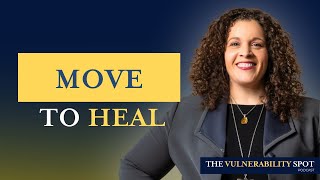
Keomi Taver, founder of Abundance with Kiyomi, talks about how dance became her tool for healing. She creates spaces where people move without judgment, turns the lights off to let dancers choreograph freely, and believes movement is freedom to express and connect.
Chapters
Hello everybody and welcome to The V Spot. I'm your host, Andrea Mancuso, founder and CEO of Intentional Healing and Wellness. I created this podcast because I believe vulnerability is our true superpower, and I want to promote a safe space where we can come together and engage in conscious and courageous conversations to encourage individual and collective healing. In The V Spot, we will choose courage over comfort as we speak our truth and pave the way for others to do the same. For each episode, we will unite in empathy and embrace our superpower as we spend quality time together here in the V Spot. Thank you for tuning in. Hello everyone and welcome to the V Spot. I'm super excited for today's special guest. Keomi Taver is the founder and master facilitator of Abundance with Keomi. She's a healer, an artist, a coach, and a performer. Keomi, thank you for joining me in the V Spot.
Thank you for having me.
Yeah, I'm super, super excited. You know, every time we get together, it's, um, it's always quality time. There's always you know, abundance to say the least. And so let's jump right in because I know we have lots of great stuff to talk about today. You know, born and raised in San Diego, one of my favorite cities outside of New York. Tell us a bit about what little Kiyo was like. How did she first get into dance? You know, talk to us about little Kiyo.
Yeah. So, okay. So to talk about little Kiyo, I'm actually going to go a little further before San Diego. So I was born in Sacramento. All of my family is from Oakland. But when my mother went to college, she moved to Sacramento. And the first thing I remember is being 2 in front of the cul-de-sac, and I'm dancing, and they're like, "Go, Keke, go." Like, it's always been a thing for me to move, right? So, you know, I don't think it's a coincidence that, you know, movement and dance to this day still has that impact on me and also impact on the people who I get to move and dance with, yeah? But when I first started dancing, I would say like professionally or started to learn choreography was at Praise Dance. I had a really good friend, who's my good friend to this day, Jessica, who invited me to do Praise Dance at 12 years old. And the first time I had a performance, I had a duet and I was opening a production. And it was like the first time that I was like, wow, I didn't know that me dancing could have this impact on other people. And I didn't know that it would have that impact on me. So ever since then, I've been continuing to explore, yes, the joy of it for myself, but also the impact that it brings myself and people around me.
Wow. I love that. So your first memory of dancing is actually when you were 2 years old, rocking out, having people cheering you on. Yes, I love that. And I love, I love the, you know, hearing about, you know, your, your faith and how faith influenced your decision to dance, you know, and is really like the foundation for that, you know, that you dance on, uh, pun intended. Um, so okay, so from praise dance in San— now, was praise dance happening in San Diego? That's where you were at the time?
San Diego.
Okay, so from praise dance in San Diego all the way to twerking in New York City.
Yes! Right?
It's a far way from Praise Dance to twerking, but not so much either. But talk to us about your inspiration and vision for creating Abundance with Kyomi when you move here to New York City.
So even before— I mean, after Praise Dance, it really sparked my interest in dancing professionally. So when I did go to college, I did major and minor in dance. I did do a lot of different things. A lot of performances there, which was really great for me to not only be the person jumping into the choreography, but teaching it. And yeah, I knew that I wanted to continue doing that. So when I actually left, I don't say I left the church, but when I left San Diego and I left that dynamic, I really connected my gift of dance and my gift of impact to the church. I don't think I really understood that it was a gift that was mine. Like, the impact looks a lot of different ways. So when I moved to New York and I was actually teaching at the Y, I was like, hey, I teach, I teach. And they let me take a class, and they're like, I will give you a class. And then as I continue, people kept coming back, you know. What I loved about the Y is that It's such a, it's such a great place to learn, um, to build momentum, to really figure out what your skills are. You know, there's a lot of training at the Y. Um, so I love that. Let's go back. So this is 2014. This is when I did leadership at Momentum, and one of the things I saw was the word abundance. I never realized that dance was in abundance. But something about— I saw it that one time, um, it hit me and how abundance moves and how it— it— I knew abundance was going to save my life because I didn't know how much scarcity was really running the show for me. Uh, this idea that I couldn't have enough, I couldn't do enough, um, only focusing on the things that wasn't working, not all the things that were. Very critical. And once I really understood what abundance was— I'm still understanding what abundance, you know, is. Like, every year I learn something new about abundance. But I knew that it was going to save my life. So I feel like it was abundant to be able to twerk and feel worthy and to give myself permission as someone who considered themselves as a praise dancer to be able to be in my body and to allow it to look sensual or sexual, but how it makes me feel mattered way much more than how it looked like to other people. And I would see when people are shaking their body, shaking their booty, giving themselves permission to move freely, where else they weren't allowing themselves to move freely, where else they weren't giving them permission because how they were thinking about it in their head. What it had to be. So I would say I started Abundance because I wanted to be free and I wanted other people to come be free with me and to know that you can still be divine. Sometimes I have out-of-body experiences when I'm doing a twerk out because it's the freedom, it's the release. So I really say, you know, to this day, I'm grateful that praise dance gets to look a lot of different ways. Being in gratitude, being present, you know, it doesn't— it doesn't have a particular form. It's an experience.
I love that. I mean, talk about abundant, right? About the fact that, you know, you really can experience freedom and gratitude through movement, and it gets to look a million different ways. You know, there's so many things you said that I want to actually like kind of go to, but, you know, in this particular moment, first I want to celebrate you because as someone— I really want to give you your flowers. Um, as someone who has you know, chose in various occasions to dance, you know, with you, whether it was in a class or at a special event, you know, um, you were doing small group training sessions for a while there. So as someone who chose in, I'm always blown away at the experience of being able to access freedom through dancing with you, um, and it always occurs in a new way, in an unexpected way. It's never planned, it's never, um, choreographed for, you know, again, pun intended. But there is this opportunity and experience of being able to tap into healing, you know, via movement whenever I'm with you. So I want to first and foremost publicly, you know, say thank you for, um, you know, holding space, creating space, holding space, and really being part of my personal healing journey, uh, in more ways than one.
Wow, I received that. Thank you for telling me that.
Yeah, yeah, thank you. And I know I'm not alone in that sentiment. I know that, you know, I've I've talked to people, you're not always present when the conversations happen pertaining to dancing with you. And I've talked to different people who something is always cracked open, you know, by way of taking one of your classes and experiencing you because you're not only, you know, giving yourself permission, you're encouraging us to give ourselves permission and you're coaching, you know, while dancing. So it's this very unique blend of movement um, outrageousness and mindset, which is epic. So I know I'm not alone in that, and healing by way of dancing with you is always a gift. And so I feel guided to ask you in this moment about your own healing, like how has dancing healed you?
Yeah, I, I feel like dancing has forced me to be in my body. I tend to be in my head head a lot. And there's something about—
I know nothing about that. What?
In your head? Like overanalyzing, you know, trying to get it right too, right? And you know what I have— what I love is that, you know, being in my body, even from— we can go further, you know, now that I dance, you know, not as much. I didn't realize how much me dancing all the time played such a big role in, you know, my health, in my, um, energy, in, um, me being able to be with other people and community, you know, be in community with people, being able to connect and feel. It played such a big part in that part as well. Um, also I would say me being in my body, I could always tell when something is off as well. So it was a great like check-in for me to be like, hold on, wait, what's What's happening here? You know, why, why is this harder to do? Why is it easier? So it definitely gave me room to look within. Also, you know, my energy— if I felt my energy was high or low, being able to check in with what's going on, what's the difference, um, how do you really feel, what's really going on, what are you holding inside, you know. Uh, sometimes I wouldn't realize— I would go into a dance class, it'd be after a breakup or A, B, see. And I would tell the class, hey, listen, I'm having a hard time, but we, we're gonna do this, and leave that class feeling so much lighter, you know. So that's been a really big part in this moment. I am— the way my healing has been set up, yeah, you know, I've been really focusing on performance, and it's been really nice to trust my body enough to show up versus to have to be upbeat and entertain. It's been really nice to be present in the moment and not necessarily have to be in the past or the future. You know, whether that is me taking a breath, whether that is me doing a body scan from my toe to the top of my head, really checking in. And a lot of times I've realized that my head can sometimes talk my heart out of the things that you really enjoy. So me feeling free gives me information on when I'm not, or when I am, to like really check into like, okay, outside of what you think. I always say my thoughts sometimes could be jealous of my body because the thoughts can't really feel it. It could only have an idea of what it is, but it can't really make out what the emotions are. It sometimes— it doesn't make sense to it. So being in my body allows me to feel my feelings outside of what the judgment may be on what I'm allowed to do, you know. So as of recently, it's been really interesting because it takes trust and intuition to allow my body and how I feel to carry more weight than what it looks like and logic and safety, you know, because I realized when I feel safe in my body, it really shapes how I see myself, how I see other people, how I see what's possible, how I even see the past, you know. So yeah, it's been really— it's— I would— even though I've been dancing for years, this is probably the first time that I've been actually checking in with the body first around What do you think? What do you want?
Wow, wow. I love that because I think, you know, what I hear too is this ability to access, um, outside of the, the go-to, which is the analytical minds, you know, to really be able to check in with your body and get a sense of, hmm, you know, what, what do you want? I feel like that could lead in, in so many different directions that the analytical minds wouldn't necessarily pave the way for. You know, so I think that that's like profound to, to check in and be with, you know, your physical body in that way. Um, and it makes me think, you know, in this conversation of healing, I was just recalling too something that it was unexpected that this popped up, but, um, last year, one of the things, you know, when you started to do virtual classes, you know, I am used to dancing with you in person and then did some stuff virtually, but I remember checking in with you about, um, you had a whole, it was like a spring fling. And so there was various events, right? And you had various different types of dance. And I remember feeling guided to ask you, you know, I wanna do something different. What do you recommend? Right? And so you suggested contemporary dance to me. And, you know, I asked you because I trust you. And so I was like, hmm, I wouldn't necessarily think out of the list that that would be what I would go towards. But I remember doing it here in my kitchen. You know, it's the middle of the pandemic. I'm trying something new. And suddenly, like, sobbing, like hysterical because of combination of the movement, the music, and like the body doing something that it was accessing emotion that I've never been able to access in that way before. And so I just want to— it came to me in this moment that dance and movement and giving your body permission to try new things sometimes can really crack something open and deliver an unexpected, beautiful release, you know, in a way. So I'm also like guided to ask you, do you— have you ever experienced that, like a cathartic, unexpected release? By way of your movement?
Yeah, you know, um, definitely. I know I mentioned it earlier around like when I'm done with the class, I'd be like, oh, I feel released, you know. But praise dance was really like that for me as well. Um, just sometimes I'm in the middle of the dance, I'm like, yeah, you know, and just because of what it gives me access to in my own body, whether it's freedom, whether it's fun. Sometimes it's like goosebumps because I love the way the movement and the music just meet at this one point, you know, and to know that I was a part of that creation, you know. So absolutely. And when you were talking, even contemporary dance, like, I think about how, you know, if the hands are extended, how vulnerable that can be, especially if you're not used to that. Maybe if you are having, you know, how you hold your heart, how you hold who gets to be close to you, you know, sometimes opening that up and reaching and slowing down, right? Not going fast, but right. It's not about entertainment. You really have to feel. You have to be intentional on when you're moving and why. And it can give a lot of room for things to come up. Our body has so much information, you know, from the present, from the past, like past our past, right? Yeah, there's so much here. And I think sometimes we're moving it opens up. I've cried, you know, had, you know, had like out-of-body, very, um, yeah, it's, it is very, it is very vulnerable, right? You know, you are, especially when you're teaching, especially when you're performing, because sometimes it happens when I'm performing, um, to let go, to release, and to go for it, you know. And, you know, I even think about sometimes hip-hop requires you to be really tight it requires you to be cool. You're like, okay, but what about when it doesn't? Yeah, yeah, yeah. You're not supposed to be cool, nor are you supposed to be perfect. And I think contemporary is like that too, you know? It's not supposed to— it is more creative movement, so it leaves room for us to have to be with ourselves, you know? Yeah, absolutely. You know, uh, I would say Praise dance has always been— it's the initial space that I knew what movement could do to me and release, you know? But there's something about twerking, like I've seen— I think about when you twerk, you're shaking your sacral chakra, which talks about, you know, creativity, sensuality, sexuality, our different balance of feminine and masculine energy because we have both, and pleasure. Desire. So sometimes shaking that up and allowing it to experience something it hasn't before, you know, the pelvis is like, yo, what is this?
Yeah, right?
It's like, it's like, all right, all right, all right.
No, I, I love that. That's, that's an epic thing. I feel guided to say to anybody who's listening, um, you know, give yourself permission to try on, you know, a form of dancing. It doesn't matter if you've never danced. It doesn't matter if you feel like you have two left feet, if you've been dancing for your whole life. Men and women, like, give yourselves permission to try out a different form of dance and see what becomes available because it has blown my mind at how many different ways I have experienced a level of healing, you know, and then had it connect to, you know, the mental thoughts around whatever beliefs or patterns or ways that I've viewed myself and, you know, then experienced something in the movement or something in the combination of the music, the coaching, and the dance. And then I'm like, oh my God, like, it be— it's a whole different— it's like an unexpected breakthrough that's just epic. So for everybody who's listening, if you haven't already, um, specifically with Kiyomi, you know, definitely you want to try out one of her dance classes. Give yourself permission if you're home alone, like, go for it. Like, that's That's just the call to action here.
And I want to add one more thing with that, you know. Also, what I love is, you know, when you are taking class, I always tell, you know, my folks, is your job is not to look like me. Your job is to look like you and try to do what I'm doing, you know. Because sometimes being so focused on trying to look like the person you're watching, you can take aspects of, you know, movement for you out. You know, when you're saying two left feet, make it a two left feet dance.
Yeah, yeah, serious.
For you, I want you to be able to take that movement with you everywhere you go. One of my favorite choreography forms of dance is pedestrian movement, these very natural moves that we do every day because we're always dancing, whether we know it or not. My definition, my definition of dance is to have an idea You know what I mean? To move on it and then to execute. That's what we do every single time. We wake up, we, you know, we get ready, we go out to wherever we're going, and then we get there. That's what choreography is. Starts with a thought, ends with movement, and it finishes with execution. So I think if we, if we are clear that we're dancing, you know, yeah, and knowing that the way we're dancing, our own choreography is perfect for us. You know, we get to be in class and not judge or not, um, beat ourselves up because we're— we are like having our own experience, you know. Like, I've seen people who, if they didn't look like the person in front, they already feel like they're doing it wrong. And that's not true. The fact that you showed up, you're already doing it right.
Yeah, I love that. Thank you, because I— that's well received on my end too. It's a reminder because I was— I was thinking as you were saying it There's been times in various dance, you know, classes where whether the movements were difficult or fast or, you know, required the choreography was complex, and what I would say is complex, and there would be this experience of like, I'm not good at this, you know, and it's like, you know, you want it so bad, or at least I, in those moments, I'm like, I want this so bad, like I want to get it so bad. So to really hear the reminder of Showing up is the win, and, you know, whatever it ends up looking like is really the experience, not the point. Um, I love that. So yeah, thanks. That's a great, great nugget for all of us. Um, well, I know that you've written, choreographed, and directed various films and projects that highlight the power of art and movement. So in this moment, I know we hit on it a little bit, but what would you say to men and women who are listening listening, um, about what can they access about themselves by working with you?
Hmm, yeah, abundance is obviously the word that comes up, right? Because I, I want people to know that their process and them being who they are, you know, self-awareness is such a big part, it's going to play such a big role, you know. So I never ask people to do anything that they're not comfortable with. That they— that's not in alignment with their desired experience, you know. So, you know, I would definitely say expect it to be— I always want to say abundant. Why is that my word? Well, the number one thing I would say is connection, you know, because I think— because checking in for me is so important because I never want to give something because I never want to give something that the room is not ready for just because I believe that this is what I want to give, right? So I love meeting people where they're at, right? That's the abundance. Uh, fun. I am a fun celebration queen.
Yeah, fun will certainly be delivered, definitely.
Yes, I love to, you know, I'm a clapper, I'm a yay, I'm a cheerleader. You know, I'm always going to point people back to themselves. And you, you know, you could definitely count on that. You can definitely, um, yeah, self-awareness. Learn something new about yourself, you know, learn something new about how you get to express yourself and really check in with how you might be seeing yourself. I love that. Self, self, self, self, self. I really think, you know, about me being the only child early on was like, man, I'm selfish, I'm this, I think about me. But I didn't realize that I think that was an opportunity to teach people how to choose themselves.
I love that. That's, that's epic. Yeah, it's— I would say the emphasis is so much on self, you know. The breakthrough is always there. The, um, something new, it becomes, you know, available The fun is, you know, oh, that's an understatement. Abundance for sure, you know, it's very empowering, you know, and I feel guided in this moment, like two things are coming up. Let's talk to the men for a second, you know, who are listening, because I think that at least in the conversations that I've had with various male friends when I would be going to one of your classes and, oh, what kind of class? And I'm going to twerk. And you know, it's always, it's there's, I think, an experience of that's for women. You know, and I've been in classes with you, all of the classes, there are always men present. And so in this moment, what would you say to the guys who are listening about twerking or giving self-permission to dance? You know, what's coming up for you?
Yeah, the definition of twerking to me is when you shake something up really quickly and see what what happens. So you can twerk your relationship, you can twerk your mindset, you can twerk your career, you know. So I think also how you're holding it can play such a big part in your experience in it. So I would definitely start there, you know. B, you know, also being clear that there's society— like, society-wise, there is— it can be a, um, a restriction or an oppression, honestly, culturally of what men are allowed to experience in their bodies, from emotion to, you know, how they're, you know, some men are allowed to move. And I think it can do us a disservice because we all have both energies. I have masculine.
Yeah, totally.
You know what I mean? So sometimes I think about if we're only using half of what we have, they can create an imbalance, it can create an underdevelopment as well. And I would always say when I see men twerking. Even, even, even the men who say they don't and then I catch them, right? Or I think about the baby boys who I've seen, they don't know they're twerking. They're literally just getting it out, you know? And I think that's really important for men too, you know, to also get the energy out outside of how we might be thinking about it, you know? And masculine energy is very in the head, it is very here. So I think there is you know, a lot of information for us in the body. So I would first start— shift your— how you're holding it in your head. Um, shift— check in with who's allowed to do what and why, and check into where that came from. It says, yeah, because I check in— even though I know we're talking about men, there's a lot of women who have their own, you know, beliefs around twerking, you know, or what certain religions may have their own thing around, like, twerking. So I would always check into what's the origin, says who, yeah, why. And, um, try it, check in.
Yeah, I love that.
Play some music you like and just see what happens, you know what I mean? Judgment. But, um, I've, I've, I've seen some men bust out in the twerk out of nowhere, and it may not be like hands straight on the knees throwing it back. Yeah, it looks different, right?
Yeah, yeah.
So freeing. Every single time I've seen— I see inner child. I'm literally inner child. So, um, yeah, try it, try it.
I love it. Yeah. So for the guys listening, shake it up, shake it up, shake it up. And I love, I love, Kiyomi, that you highlight, you know, about the women too, because I, I also just want to go there, um, for a moment. This idea of— and I'm one of these women who felt almost like, who do I think I am to go take a twerk class because of how I have a lot of stuff around my body? And so I definitely held it as you need to look a certain way, you need to be in a certain type of shape, you need to be, you know, proportioned in a particular way to step into this. Um, and so what would you say to the women who are listening who might be resistant to try it on for whatever the reason? The gamut is, you know, it runs huge. What would you say to them?
Yeah, you know, I, I would check in and say, well, I mean, I was one of them, you know, in the very beginning when I was twerking. And then I moved to New York and I didn't want to post that I was twerking because my people back home would be like, how'd she go from twerk to— to how she gonna praise dance and twerk, you know? So there was a level of shame that I had around, um, enjoying it so much, experiencing so much freedom and worried about how other people were going to, um, receive it. Some people hold age, like, oh, at a certain age I can't be— yeah, you know, that's not true.
Yeah.
So, you know, I would definitely say what's the desired experience? Same thing I would say to the men. Where's the origin? Says who? You know, and, um, you know what, it's on my heart to say, like, where is it in our belief that moving a certain way can take away from who we are, um, the— like, the definition of it, of who gets to do it. So what? You know, there's room to, like, check in with the says what and says who. I don't know why that keeps coming up, but that's all. It's the permission too. Yeah, it's also like, yes, you can be like, oh, I'm not this, I'm not this, I'm not this, and I'm still gonna try it. So I would definitely say check in with the permission. And when you're moving in your body, it gives you so much information around, um, a lot of different things, you know what I mean?
Yeah. One second. Yes.
You know, it's— there, there's so much room to shake up even how we might even think about ourselves. We do not have to be right about who we are and what we can or cannot do, because even that creates limitation. And it's all based on the past, literally. Like, these, these identities and these boxes are self-made, right? I mean, even though it's societal, I would say it's made, but we're the one you know, dictating it. We're the one creating the rules behind it, you know, with one fall. Yeah, you know, totally check in with like, you know, what's my why? What, what are my own— this is what I'm working on now— what are my own self-principles? What are my personal principles? And where does this fall in line at, you know what I mean? Because I think sometimes we could be holding things because of what we've never saw or what society says, but where does fall into my personal ethics? Where does this fall into my personal principles? And really check in, what, what's the underlining conversation behind it, you know? And I always say, I feel like God wants me to be fully expressed, to, to be clear about how divinity and duality shows up. So I think, you know, there's room for both, and there's definitely—
yeah, I love that, I love that. And so I'm thinking in this moment in response to that, fully expressed men and women permission, what happens at the end of many of your dance classes when the lights go out? Let's talk about that for a minute.
Yes. So I love— so two things. It started because— well, it's layered. It started because I was clear that when you are leaning on something, you know, on a wall, it is easier to access the lower part of your body, right? Because if all of your balance is in your feet, there's probably only so much you can do. And there's something around being supported that you get to be like, oh wow, I can do this, and then play with doing it without the support there. So that was one. And I realized that some people felt self-conscious doing it with the lights on, trying to figure out, you know, their, their, uh, how their body likes to move, you know, because that's also what they're figuring out. They're exploring. Yeah, what your body likes to do. Everybody's twerk looks different. Everybody's comfortability and different positions feels completely different. So I wanted to give room for people to figure it out on their own, because when they're not with me, I want them to still be able to figure it out on their own. I don't want them to only twerk when I'm in the room. I want them to twerk when they're not. So that's one. And B, I love to cut the lights off because it lets them know that their own personal choreography matters too. I don't only want you to do what you're seeing me do in front. I want you to also know that you expressing yourself, you going for it, I want you to feel that and then take that with you. That's why it's also at the end. I want you to feel that. So good.
Yeah.
And then take it with you out the room, you know? So it is a— it's a safe space for people to explore their own bodies, definitely one. And it's a safe space for people to explore and celebrate themselves.
Yeah, it's so— it's, it's amazing. And it's definitely something that, um, speaking about it is one thing, experiencing it when you least expect it— because as someone who has attended several different classes, I know that it's part of the experience, but you're never really expecting it because you're so immersed in whatever it is that's happening. And so for anyone who's listening, um, there's an opportunity for you to experience yourself in a way that is unexpected, you know, freedom turned up and just outrageous on a whole nother level once the lights go out. And so, um, whether it— again, whether it be virtual or in person, get to the space to experience yourself in that particular way because it's, it's a, it's a gift all in itself. So yeah, I felt guided to go there. Thank you for, uh, for sharing about that particular, you know, cherry on top, I like to call it. Um, so before we go to the— well, before we head to the speed round, this will be the last question.
Um, you know, in—
at the— while you were with me in the beginning of the year, I kicked off the event, the Space The Space Between, and thank you for, you know, gracing the space and, you know, sharing a live powerful performance, you know, for everybody who opted in to attend The Space Between. And so it was on my heart to end the year with an event that I am calling— it's on December, Thursday, December 30th. It is called Unlearn and Unleash. And so for anyone who's listening, tickets are on Eventbrite if you want to join us in the Zoom space for this special event. And my vision was really to gather community to hold a powerful discussion at the end of the year about some beliefs that are worth leaving in 2021. And then pivot to look forward to discuss what does it mean to unleash in 2022. And I do believe that unleashing looks different for each of us. And so in this moment, I wanted to ask you, What does it mean for you to unleash as we step into 2022, and what can we expect to experience from you when we go into the new year?
Um, this year is the year of the 5, you know, and 5 is, you know, 2021, it's, you know, add all that together, you get 5. And, you know, 5 is so much about structures um, transformation, moving out of the physical. And what I loved about— well, I would not say I loved about this year, but one of the things that challenged me and pushed me and elevated me was for me to take a good look at my structures. You know, what, what were some of the beliefs you had about yourself? What were some— you know, now that you're not teaching in front of a full class like you used to and you are virtual, what are some things that you get to shift around how you hold possibility or impact, right? Um, so I am so excited. So next year is the year 6, you know, and what I love about the year 6, it's about harmony, reciprocity, allowing myself to give and receive, being able to move away from past thoughts and past beliefs about myself that are not in a reflection of where I'm looking to go, you know, to only, you know, to be mindful of when I'm bringing up the past, you know. Am I using the past to make a decision? Am I using the past to be right? You know, so really checking in. So when I think about next year, I am sharing in a very different way through performance. I'm going to be bicoastal. So I'm originally, as we started, Yeah, so I'm going to be doing a lot of work back and forth. And what I love is that, you know, me having the— this virtual platform, I get to take everybody with me, you know. And no matter where I go, I get to, you know, share the spaces that I'm in, share the things that I'm working on, and be a part of the self-healing journey together. I am betting on myself next year in a way that I've never have before. I'm investing in myself in a way that I never had before, and being really intentional around community. Um, I don't think I realized how important, um, community was until this year, until not having it like I thought. Um, yeah, not having it like I thought I did, mostly because of lack of vulnerability sometimes. Um, leaving room for conflict leaving room for hard discussions and hard conversations to, you know, to teach me more about myself or to share with the other person where I'm at. I think before, the people pleasing or the looking to be right would really take away from the opportunity to get understanding or to vocalize my boundaries, whether they are understood or not, you know. So that is a part of giving. I didn't realize that giving boundaries are— is a giving. I'm actually letting you know what works for me in order to be in my presence. It is a giving, you know.
So yeah, I love that.
Yeah, 2022, sharing, giving, betting on myself, um, praise dance again. I feel like I am— it feels like a cycle but in a very different way.
I love it, I love it. All right, all right, so there's a lot of exciting things that we, we will experience, uh, with you, um, in 2022. That's amazing, um, and full circle, right, to go back to praise dance in that way, to be bicoastal, um, to be able to bring the community with you is epic. Um, I love it, all great, all great things. All right, so for our final piece, we're going to do a speed round. I call it the Forwarding Four. I will ask you 4 questions. You will answer quickly with the first thing that comes to your mind, knowing that there's no right or wrong answer. Just go where you feel guided. You ready? All right. Number 1, vulnerability is a highly personal experience. What is vulnerability for you?
Feedback, giving and receiving it.
Love it. Excellent. Number 2, what would you identify as one of your greatest life lessons so far?
I'm the magician. I— my mind is running the show.
I love it. Number 3, name one area of your life where you are intentionally healing.
My belief around who the little girl was.
Wow, that one, that one got me. Oh, all right, number 4. The world is in need of a session with Kiyomi. Abundance with Kiyomi. If you could use one song to teach a worldwide dance class, designed to set everyone free, what song would you choose?
Hmm, first one that comes, it's, it's, it's, it's by RDX and it's Jump. It's like, everybody jump, jump, jump, jump, jump, jump, jump. It's like a soca or, or dancehall song. It, it just—
all right, yeah, that's it. Set it, set yourself free. Amazing, amazing. All right, Kiyomi, thank you. Where can folks find you and what's coming up for you? Share, share where where you're at.
Yes, so, um, you can find me on my website, www.kiomitarver.com. I'm also on Instagram, Abundance with Kiyomi, um, also on Facebook, Abundance with Kiyomi as well. Uh, so I am going to be having a master class on January 4th. It's an opportunity for us to be able to celebrate the fact that we are us. I know sometimes we get to the top of the year, we're like, oh, I gotta be a new— I I gotta do this, I gotta do that. And I want to create the space for— now I'm going to just celebrate you exactly where you are. Like, you, you being here in the new year is enough celebration. Um, so that's happening, uh, January 4th. Also, I am working on a praise dance film that's going to be coming out on January 23rd, and I'm going to be opening the doors to the membership. I'm not going to give any exact date.
All right, all right.
But in January, we're going to be opening the doors and letting people in to be able to experience, uh, the membership.
Amazing, amazing. All right, so there's a lot of great things we could, we could absolutely sign into. Thank you, thank you, thank you, um, thank you for being with me in this way in the V Spot. Um, it's always a pleasure to share space with you.
Before you close, I am so proud of you I want to let you know that I have seen you, you know, mention things, manifest it, and go for it. My experience of you is courageous. Um, my experience of you is open and willing. And, um, to watch you invest in yourself these past 2 years has been such amazing to witness and watch. So just know, just as impacted that you are around, you know, impactful people, I really believe is because it's a reflection of you, and you are so impactful. So keep doing it your way, because there are people who need to hear it just the way you say it, you know.
Thank you.
Keep dressing yourself, because you're freeing us, um, you know, giving us international and intentional wellness, right, by who being who you are and your story. So thank you.
Thank you. Thank you. Thank you. Well received. Um, I, I totally received that. Thank you, um, everybody. Thank you for tuning in to this episode of The V Spot. To be continued. Thank you for spending quality time with me here in The V Spot. If you enjoyed this episode, please subscribe, write a review, and tell a friend to tell a friend to meet us in the V Spot. To stay connected and in the loop about all special events, join the email list at www.intentionalhealingandwellness.com. You can also join the Intentional Healing and Wellness community on Instagram, Facebook, and LinkedIn. I'll catch you soon.
More from Andrea

From Rejection to Resilience: A Conversation with @thedegoviagroup on Thriving Through Challenges 💥









Reclaim Your Worthiness: A Journey to Internal Value - The Unlearning Lab Live, Washington D.C.
