Therapists Are Born, Not Made
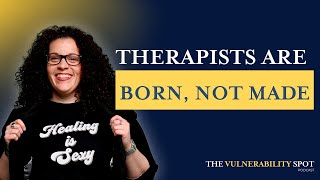
Psychotherapist and corporate coach Giovanna Gathers explains why great therapists are born, not made, and shares how she went from private practice to working with companies like BMW and Eli Lilly on emotional intelligence. She credits her own anxiety and depression recovery to gratitude, meditation, and choosing courage over comfort.
Chapters
Hello everyone and welcome back to the V Spot. I'm super excited for today's special guest. Giovanna Gathers is a licensed psychotherapist, a clinical life coach, an international speaker, an author, and a consultant. Giovanna, thank you for joining me in the V Spot today.
I am so happy to be here, and I love the name, right? The—
these, you know, you got to get a little catchy, catchy name, right? Draw some folks, draw some folks in. Thank you, thank you. Well, you know, it's— I was thinking about this last night, that it's been several years, right, since we've been in each other's company. Um, and so I'm excited to be able to spend quality time with you in this way, you know. And I always like to acknowledge my guests before we jump into the conversation, because I like to point out accepting an invitation to a podcast where you do not know what will be asked of you is a courageous and vulnerable act. And so first and foremost, I just want to, you know, shout you out and give you your flowers before we actually even begin.
Thank you. Thank you.
Yeah. Thank you. Thank you. We're excited to have you here with us. So, um, talk to us more about the work that you're presently doing at this particular time.
Well, I am one of those people that have a lot of jobs, but none of them feel like labor because I absolutely love everything that I do. As you mentioned in, in the bio, I am a licensed psychotherapist, and I like to call that my day job because that's pretty much the majority of what I do and, and how I spend my days. I am currently working teletherapy only, so I only see my clients virtually. I did have a physical office until mid-COVID, and then I decided to close the brick-and-mortar location and just go completely virtual. And that has actually worked out. And so I see clients that are struggling with a variety of different mental illnesses, such as depression and anxiety. Those tend to be the most prevalent. I've also treated people with bipolar disorder. I treat couples and, you know, just working on communication issues or infidelity or just different types of relationship conflict. And I also do family therapy. And again, that could just be a different combination of individuals who call themselves family. So it could be parent-child, it could be siblings, it could be just someone maybe that you've had a disagreement with and want to, to reunite with. So in addition to that, I just started doing consulting and Leadership Development in November of 2021, I, I had a dream, Andrea, that God told me basically that he was going to open a door in the corporate environment for me. And I didn't know what that was going to look like. I had that dream probably in 2017 or 2018. And, um, and so I just kind of was like, okay, sure, God, you know, I'll go where you send me. And, um, and so when that door opened last year, it was I— all I could do was kind of smile because I said, you said you were going to do this. And so I work with BMW of the Americas, I've worked with, um, Eli Lilly and other, other companies, tech companies headquartered in India. And basically what I do is I go in and I, I do leadership training and development. I teach on emotional intelligence, psychological safety. I'm getting ready to get certified in DISC um, in the DISC behavior profile. I've been to Momentum. Uh, I'm still waiting to do my advanced class, but I do plan to do that soon. So that's a little bit about the work that I kind of am doing. In addition to, um, I released my second book in October 2020. I have my Women's Breathe Women's Retreat coming up in May. Uh, I was trying to do a Breathe Men's Retreat, but these men are you know, they're, they're not as eager as women, uh, to dive into their feelings. And, uh, but I, but I still haven't given up on that. And then I have my women's conference coming back in November of this year, so I stay pretty busy. And in addition, you know, I'm a wife and a mom, and I just got a very new little puppy named Zoe.
Wow, wow. Okay, so you said so much great stuff that we'll, you know, at certain points revisit aspects of it. I, I want to highlight two, two particular things. I love what you said about, um, you had a dream in 2017, right? And I want to highlight the power of patience, right? Because 2017 is when the dream happens, and it's not until 2021 that you are presented with the opportunity that sort of connects the dots and, and opens up the door. And I think that's so powerful to highlight because for anybody who's listening, um, and I identify with this, right, it's when we sometimes want or we're eager for a particular result, it's like we want the results yesterday, you know. And so to highlight the fact that you get presented with something, you then have a process and a journey in between. I like to call that the space between. And then it's 2021, and boom, it all sort of clicks and makes sense. So I just want to highlight for everybody who's listening, like sometimes the opportunities don't necessarily come immediately. But there's like a process and a preparation, if you will, right?
There's preparation.
Yeah, we're either being protected or prepared, you know, like God is prepping us or protecting us. And I just love that. So I want to really, you know, make that clear that there's so much power in the process.
Is there anything you want to say about your journey, like during the time of Well, again, I was already still doing work I loved, and I, I didn't know what that would look like. But again, I just said yes to it. If that's what you have next for me, then sure, let's do it. I, I didn't exactly know what that would look like, um, logistically, um, or even on paper. And, and the way that it came about was honestly just kind of out of the blue, but of course it wasn't out of the blue, uh, and, and I was just happened to be connected to the right people in the right place at the right time. And And I, and I wasn't sure I was even going to like it because it was a learning curve for me. I'm trained in psychology and psychotherapy and clinical tools, and this was a little bit different, but it— I love teaching just in general. And so it really allowed me that, that other love of mine, which is really teaching and being in the classroom and being around people and helping people just to transform, you know, their ways of thinking and their ways of doing things. But, um, absolutely. And, and I've had a couple of other dreams. Because I, you know, I used to think my dreams were just entertainment from my subconscious mind. But when I had that dream, I knew that it was prophetic. I knew that that was not a dream for me to just chalk up as entertainment. So I actually wrote it in my journal, um, and again, I just said, okay, yes God. And, uh, so you're right, it was 3 and a half to 4 years before it actually manifested.
I love that. Well, congratulations. That's, that's incredibly powerful and exciting. And I think that if for everyone listening, there's an opportunity to check in, don't dismiss whether it be a dream, a vision, an idea, right? If it occurred a while back, because there's a process involved, and if you hold to it, it will come true. So I love that. And something else that you said, so your practice, you know, you end up closing the brick-and-mortar practice, during the pandemic and you go fully virtual to see your clients. Um, anything about— look, anything stand out about a willingness for clients to keep appointments, or what has virtual opened up for you?
For one, it eliminates the issue of transportation. Um, you know, it, it just eliminates the need for that because I can really— unfortunately, with psychotherapy and being licensed, we can only practice in a state that we're licensed in. However, with brick brick and mortar, that more or less looked like the people that were probably within 30 miles. Now that I, you know, that I'm only doing virtual, I can serve people across the state. And so I'm also licensed in the state of Georgia. So not only can I serve people throughout the state of South Carolina that may not have been willing to drive 4 hours for a 1-hour therapy session, but I can also serve people in the state of Georgia, which 2 hours away and the entire state of Georgia. And so it definitely has opened that up. My clients were a little skeptical at first, but once they realized that this was the only option we had because of the, you know, the, the threat of the spread of Corona, they were willing. And honestly, I don't have one client now who complains or says, when are you going to open an office back up? Um, I, I really don't treat pervasive mental illness, and because I wouldn't think that virtual would be an ideal setting for that. Um, so I'm very careful about screening screening who I feel would be an ideal client for virtual, but the clients that I see, I mean, they like it. They're in the comfort of their own homes. They can say, hey, can I go use the restroom real quick or grab a drink of water, and we continue the session. So it's honestly allowed us a, I guess, an element of vulnerability, of intimacy that I'm not sure we would have been able to have in a physical setting.
Yeah, I love that. And, you know, I think that there's so much power in being able to serve so many more people, you know, who are now not limited by the amount of miles that stand between you and them, right? And the willingness to— and the commitment to opening up the computer, and then, you know, you have your session and closing the computer. And now, you know, downtime has, has really been eliminated in terms of travel time, rather. And so I think it's so powerful to, to point out that You know, yes, there's lots of, you know, negatives, if you will, right, of the pandemic. But I think that mental health really, you know, there was an incredible boom in people showing up. And I think that that is the win, you know, that I hope sticks around. So I just wanted to ask if you were having that experience. I love that. Well, talk to us about what had you choose psychotherapy. Why did you— like, why were you attracted to the field of mental health?
It chose me. It wasn't my choice. It chose me. When I was in college as an undergraduate student, I majored in criminal justice because I wanted to become an attorney. And when I graduated, my plan was to take a year off, study for the LSAT, hopefully take it and pass it, and go to law school. And my first job out of college was at a group home for girls that were— that had been sexually abused and molested. And as a result, we're dealing, like, with all kinds of just mental health issues as a result of that. And when I worked there, like, I just knew something— like, a light bulb went off inside of me or came on inside of me. And I knew this is why I came to the planet. This is why I'm here. And even though I still have a love for the law and love all law shows and forensic shows, but I know that I was built and created for this. And, um, so I like to say it chose me. And, um, and, and one of the things that I often say to people in our profession is that great counselors and therapists are born. We're not made. We certainly can go to school and be educated and trained in the technical aspects, but it's, it's just something in you. I think we're just born with that, that, that ability, um, to, to help heal, and, and, and an intuitiveness and a desire, and, and, and also a built-in protection system, because we take on a lot, right? And, and I have people say to me all the time, I don't know how you do that all day. But when I look at someone who's building houses, I might say, I don't know how you do that all day. But to them, it comes easily and it's effortless. And that's how this is for me. It's effortless. And so what might require a lot of, you know, effort or, or put a lot of strain on someone else doesn't put that on me. I know how to separate. I know how to care. But not carry the weight of what my clients are struggling with.
I love that. And I think that's so significant, right, to point out that, um, not everyone is made for and meant to do certain things. And, uh, that's the win, right? So to be able to tune in and really focus on this is what I was designed to do and it comes naturally, and the schooling and the training draws out, right, the natural innate abilities. I think that's so, that's so powerful. And I love how you highlight that you then could look at someone else to say, yeah, I'm not quite sure I'm cut out for, for that, right? And that's what makes us so unique. I think that that's, that's so powerful. Well, you know, we— so there we have so much in common, which I just love about the training and the passion, right? All of it. And talk to us about— this comes up a lot. Therapy versus coaching? Because what had you step into the coaching world?
Yeah, well, for me, I had all already started doing coaching because it was becoming the new buzzword. It was becoming the new in thing, you know. It first started with Oprah and Dr. Phil. And for me, I started doing it way back before it became trending because I— people were still afraid of therapy. They were afraid of mental health and calling their issues a mental health issue or crisis. And so what I found was that people were more willing to accept coaching, that maybe I need coaching because I have anger issues, or I need to be coached on assertiveness or improving my communication. It was less threatening to people. And even though I was going around speaking at a lot of different organizations and churches and colleges, because I wanted to make therapy and mental health less taboo. And so I would go and speak so people could see, hey, she's a real person. She's down to earth. And that they didn't need to be so afraid of it or think that Black people didn't do it or Latino people didn't do it or Asian or Indians don't go to therapy. I wanted them to see a representative of it. And I would share my story of how I too had struggled with depression and anxiety and how I overcame that in my life. So again, I was already trying to make it very personable and relatable even before. So coaching was just a natural segue for me. Doing this business and leadership and executive coaching, it is a little bit different. But what I've discovered is that people are people. And as psychologists or therapists trained in behavior and psychology, it's a great way for us to find out what motivates people, what do they fear, what are their challenges, what's holding them back, what do they aspire to. And then I get to use those same tools, just again, in a different type of environment. And so I do the life coaching for people that don't necessarily need a diagnosis. They just need to work through something, maybe a breakup, or they didn't get the job that they wanted or didn't get a promotion. And so I'm not necessarily depressed or suicidal, I just need to process that and work through it. And so I offer coaching for those issues. But then I also offer the business executive coaching for someone who may have conflict, or they're in threat of losing their job, or maybe they're just aspiring to improve their leadership skills because they want to move up the corporate ladder. Or it might be someone that's starting a business and trying to take the business to the next level. And again, I just go in and identify those psychological mental blocks that are causing them to keep repeating unhealthy habits, or to identify those self-sabotaging behaviors or things that are keeping them stuck or, or affecting their money or how they manage their money. So I really just look at it all from a holistic point of view. And so regardless of, again, the, um, the environment, I guess, or the setting, I'm really utilizing those same tools, which is, again, I think I was just born with this just really incredible gift of intuitiveness. So I'm, I'm good at intuiting and and just kind of assessing where people are and what's really going on. So they may be saying one thing, but sometimes I can assess and I can discern that there's something else going on and, and really draw that out to the surface in a very threatening— non-threatening, safe way. Yeah.
Yeah. So great. And I think that highlighting— I love that you highlighted all the different reasons people potentially work with you, right? Because I think that sometimes Uh, for people who are unfamiliar, it's— it could be, um, do I hire a coach because I have X goal and I want to arrive there, you know? But what you've pointed out is there is a multitude of reasons why you are able to support people with the coaching process and how, you know, you stepped into it in a sense as an untraditional route because psychotherapy, the word alone scares people, right? Sometimes in conversations I'll You know, when it comes up, people are like, you know, and I think that one thing that's coming to me in this moment that I want to highlight as a result of this particular conversation is I've often, when psychotherapy comes up, people will say to me, um, you know, I don't want you to read my mind, right? And I always laugh and sort of like chuckle around it because I'm like, this is about observing your behavior versus reading minds, right? And I think that people have a tendency to feel very afraid of the unknown. And, you know, like psychotherapy, therapy in general is unfamiliar for a lot of people. So there's this very, uh, like there's a taboo thing around it being too scary. And so I love how you've neutralized the experience to be very intentional and let the world see like, hey, this is who I am, this is what I'm up to, because I think that it creates a safety You know, and when people are more safe, they're willing to choose in to, you know, going to some places, right? That, by the way, has a hold in a lot of cases anyway, right? And there's a tendency to think like, oh, lean out and you don't have to deal with it. But everybody who's listening, we deal in some way or another, you know? So I think that there's so much power in being purposeful and choosing in on a conscious level. So yeah, thanks for all of that. It's just incredibly powerful. Well, you— I was going to ask the question before about what are some things you experience with clients, which you actually shared about in the beginning. So I'm going to circle back to something that you highlighted about yourself. Um, you said history of anxiety, depression, and you, you know, were able to navigate those things and come out the other side. Anything you want to share too about that particular process and to anyone listening who may be experiencing those struggles right now?
Sure, it, it may not be the response people may be looking for though, um, because for me it wasn't just about me overcoming my anxiety and depression. It was really about me awakening. It was about me, um, about self-discovery, self-awareness, me self-acceptance, me loving and accepting myself intrinsically and inherently from the inside out. Not just loving my hairstyle or what I look like or how these jeans fit me, but truly loving the essence of me. And, and I think that a lot— that's my approach really, even within the, the psychotherapy mental health field, which sometimes can follow a very medical model, um, of diagnoses and all of that. But I have always had a very holistic approach. And so what I discovered, even for myself, and that I utilize in my work with clients, is, you know, the more we get back to the source of who we really are and we truly love, like, and accept ourselves from the inside out there really eliminates a need for depression or anxiety. I often talk about anxiety. Of course, there can be organic causes of anxiety. It could be caused by medication. It could be a family history. It could be a part of an illness that someone is suffering with. But just when we're talking about general anxiety, just that general feeling of unease or, or discomfort, a lot of times you can identify where that's coming from. A lot of times, that's people just not being comfortable in the skin that they're in, people just not truly liking and appreciating and loving themselves holistically, people being very hard on themselves, picking themselves apart, perfectionism. You know, if I'm perfect, then no one will reject me, or I will always be accepted or fit in, or people will know that I am worthy or that I'll be approved of. And so what you're doing in doing all of that is that's actually rejecting yourself, the self. And so of course that's going to create anxiety because you're rejecting the very, um, being that makes you you. And, um, and so again, I use a very spiritual, practical, psychological, behavioral approach when I'm doing therapy. And I just really help people get back to who they really and truly are and were designed and created to be. And that's what I had to do for myself. I really had to get through all the BS that told me who Giovanna was and to discover who I am for myself. Momentum helped me with that, my therapy journey, because I had my own therapist. And honey, she and I went to war, you know, in her office some days because I still wanted a quick fix, you know. Even though I was a therapist and this is what I was trained to do, I just wanted to quit hurting. I wanted to quit, um, having these sadnesses that would just come over me for no reason when on the outside I had every reason in the world to be happy. You know, I'm happily married, I'm fairly healthy, I have a great profession I love, I have an amazing husband and children. And yet there was this part of me that was just still longing for something and, and feel— and again, just feeling sad or unfulfilled. And so I had to really get to the root of that. And so I did hire my own therapist so I could work through my own shit. I'm not— I don't know. Yeah, we curse. Face and work through my own shit, because how can I really be authentic and go out here and show up authentically with others and try to encourage them to be authentic when I'm not willing to be authentic? So I went through my own 3-year process, um, in therapy, in addition to going through what I went through spiritually, which is just God and I sometimes hashing it out. And, and in that process, like I said, I grew, I overcame the depression, most of the anxiety. I still get nervousness, you know, in, in certain situations or whatever, but I don't have just that general feeling of uneasiness and that I'm not safe in my own body and, and, and that I'm constantly, um, looking and searching and seeking something to fill that, that inner void or that inner space that feels like something's missing. Like, I just get up and I smile for no reason, and I'm happy for no reason. And people ask me, what happened? Why are you so happy? And I'm like, it's Wednesday, right? You know, it's Wednesday.
Yeah, I love, I love that. So, I mean, so many, so many things that you said, it just could be sort of episodes, right, all in itself, because it's so powerful. I love and want to highlight this aspect of when you looked around, and this is something that came up, you know, recently in a different conversation, when you looked around, you have all the things in place, right? The family, the profession, the kids, the life, right? That would warrant a certain experience. And yet there was a different experience occurring. And so what I heard you say is there was a process of you making peace and love with you in order to overcome the feelings of anxiety, the feelings of depression that were presenting at various times. And I, for anybody listening, I want to just really, like, if I could get the loudspeaker to drive this point home, because I so resonate with that. Um, there's often, you know, we think that the anxiety, the depression is occurring because of outside circumstances, and I want to just highlight that there's so much power in going inward and making peace because so many of us are walking around navigating intense feelings of shame. And I think, and so many other, right, like unpleasant emotions and experiences, if you will. And there's an impact, right? We don't always realize what that impact is, but Giovanna, thank you for, uh, so beautifully like spotlighting the process for yourself, because I think that it's a process many listening will identify with, you know. And so that's, that's exceptionally powerful. Um, yeah, so, you know, there again, there's, there's so many places I want to go, but talk to us, you know, in my work I often speak about courage over comfort. And so talk to us about what courage over comfort presently looks like in your life.
It is amazing you asked that because I very recently adopted that slogan. For myself. Courage over comfort. So that's amazing, and synchronicity that you would say that and ask me that question. So for me, I realized it is doing the things that may feel uncomfortable or unfamiliar, but doing them anyway, having the courage to do them anyway, whether that's therapy, whether that's exercise, or changing your diet, or, um, changing some habit that you— just stopping smoking, or, you know, some other habit that you just want to want to change or something you want to improve, having the courage to do it and putting that above the discomfort, because there's always going to be that discomfort of the letting go or the shifting, or I'm getting up at 6:00 AM to work out instead of 7:00 just to go to work. And so when we choose that courage over comfort, it just always yields so many benefits and rewards. And I feel like even God honors that. Like, God— because I always joke and say, God isn't interested in our discomfort. And so he will make us uncomfortable just to sometimes get our attention to focus on something better that exists for us. And as humans, sometimes we need the discomfort in order to begin making the changes. If I don't feel any discomfort in this space or this relationship or in this season of my life, then I'm not going to move. You know, we're lazy by nature. And so I'm not going to move. I'm not going to change. I'm not going to evolve. I'm not going to grow. Steadily evolving and ever evolving. And so for me, even though, again, I might want to sleep that extra hour, that's when the courage comes in. Do I have the courage to say to myself, it will be nice to sleep, but get up?
Yeah.
Get up anyway. Choose courage over what feels comfortable, over what's familiar. Sometimes my bed feels amazing, and it's warm and soft, and the covers, and I'm lying next to my husband. The last thing I want to do is get up and go work out, or get up and meditate, or pray, or do qigong, or something like that. But guess what? Every time I choose that, every time I do, not only is it a display of courage for myself, but I'm sending a message into the universe that this is what I'm willing to do for me. This is what I'm willing to do to grow. This is what I'm willing to do to change and to heal.
You know, this is great because I oftentimes, when I think about courage over comfort, I can think about experiences that are, you know, where I'm calling myself forth in ways— I'm just going to use some examples just for folks who are listening. Maybe it's about, you know, asking for the raise, right? Maybe it's about delivering a speech publicly. Maybe it's about, you know, in August, me resigning from my position. So I have a tendency to, to think about like doing, right, these actual things. I love that your example spotlights you against you, right? And, and the, the comfort involved in whatever it may be, whether it's sleeping, whether it's exercise, whether it's nutrition, whether it's conversations with loved ones, and the push around that particular piece, because I think that so many of us, if not safe to say all of us, are up against us, right? And so this, this, this power of highlighting that, you know, courage— for those of you listening, courage can be choosing daily habits that, that serve the vision, you know, that align with where you're looking to go. It doesn't always have to be this like grand extravagance, because I think that we get tripped up over around that. So that's, that's so powerful to spotlight the power of daily habits and how it serves. Yeah, you know, that's— and where you could call yourself forth to really, you know, get uncomfortable, do the challenging thing, all in the name of, you know, so, so that's, that's exceptionally important. And I love, I love that. Well, you've sprinkled through the, the last question I was going to ask you before we go to the speed round was about your own current practices and supports, you know, around mental health, given that we are living through one of the most challenging times in modern-day history. But you sort of sprinkled them through the conversations, right? You know, highlighting therapy, highlighting your own physical practices. But is there anything you want to elaborate on pertaining to how have you been able to navigate this particular time and hold space for so many people to navigate their journey?
Yes, thank you for asking that question and giving me this opportunity to share. I, I know what I need. I can fool myself into thinking— so I think so often, Andrea, we want to operate on autopilot. We just want it to work because it works. We want the marriage to work just because we're married, and it doesn't. Everything takes effort and work and, and an investment of our time, our commitment, our efforts, everything. And so, um, for me, I know that I have to pray and talk to God daily. I don't want to harp on that because I don't mean that in a very religious, fundamental type of way. I just mean I have to spend time in his daily because that starts me off feeling very centered and focused, um, especially when I didn't get a lot of sleep, especially when, you know, I may not be feeling physically well or, or I've got something that I'm dreading that day or some something I just don't want to do but I know I have to do. And, um, so prayer and, and meditating. And, and I'm not one of— I'm not a guru, so I don't, you know, I can't tell you that I'm phenomenal at meditating, but meditating for me is just being silent and Being silent with my thoughts. I do a daily gratitude journal. I, I really probably do that at least 25 days per month. Goal, of course, is to do it every day, but sometimes I don't get to, but at least 25 days a month. But just giving thanks for my health, for my life, for my family, for that people love me, that I have the opportunity to love others. And I know it may sound corny or hokey, but it really does work. Gratitude is one of the highest vibrations, emotional vibrations, that we can hold other than love. So the more that we are in gratitude, the more that changes your life. I've literally had clients come out of depression just by practicing gratitude, because a lot of times depression, the thoughts make you focus on what's not working and what's not right and what you wish you had, and you're comparing yourself to someone on social media and you're feeling inept or inadequate or incompetent. And so just focusing on what's amazing about you, even if it's the smallest thing, that, hey, I, I may not be, um, uh, Kim Kardashian, but I got cute toenails. You know, can't anybody— you know, no one can compete with me with toenails. But, but just finding that small thing and building upon that, you know, that you're breathing, that you get to sleep in a warm bed at night, that you get to make have a choice about what you want to eat each day, that you have a choice in your refrigerator or in your cabinet, um, of what you want to eat. So you can get very specific about what you're grateful for. So I do that on a daily basis. I journal, um, you know, I have my trusted council of women that I can talk to when there's something that I just need to process or talk through. My husband is a great person for me to talk things through with. Um, I, I write. Writing is very cathartic and therapeutic for me. Singing, you know, sometimes working outside, and, and my daughter and I are growing strawberries, so that brings me joy. Playing with our new puppy. I, I think there are so many ways we could just identify things that, that for us make our soul sing, because for someone else it may be painting, or it may be golf, or it may be dancing or something else. You have to identify what it is for you. And be willing to give yourself permission to do it. You don't have to wait until you're on vacation, or you don't have to wait until you're on the verge of a breakdown. You get to give that gift to yourself every single day. You're worth it. And that was part of my self-love, falling back in love with me process that got me out of my, my dark space was just, you know, falling in love with life and falling in love with me and then being committed to that and making the time and the investment.
I love that. I think too, so, you know, you, you triggered a couple of thoughts. So first and foremost, there are so many people who say like, I don't have the time for that. I don't have the, you know, there's too much to do. And I think that if you're someone who, if you're listening to this, you're someone who is finding yourself saying those things, there's a call to action to, uh, be all the more intentional, right? Because then it's, it's really over comfort, right? Yeah. And like, you know, a mentor would say like, you may be in need of double the amount of time, right? Because if there's this conversation around too busy to, you know, tend to your— the things that you enjoy, you know, then there's an opportunity to really be purposeful to spend more time doing it. And I love that you point out gratitude because I'm a huge fan of Brené Brown's work and she speaks about oftentimes this— there's a belief that that the experience of joy and the events that happen in our life that bring us happiness will lead to the gratitude. And what she points out is that what she has found in her work is that it's actually the reverse order. The more you're in the practice of gratitude, the more the experience of joy. Yeah. So I just want to highlight too, you know, for anybody who's listening, there is this idea that it's, it's joy first, then we're grateful. And it's reverse it, start to practice gratitude in whatever, and Giovanna shared many ways in which you can do that. And then the experience of joy occurs more and more. So, so, so powerful. Well, you know, for May Mental Health Awareness Month, this particular time, I wanted to spotlight team vulnerability, right? So I want to say thank you for being player on the team because your work is evidence of, you know, what you, what you not only share with others, but what you practice based on all of what you shared so far. And so we have a solid team playing. And so I'm grateful that, that you are, you know, playing, playing with us. So we're going to head into the speed rounds. And so this is something that I call the Forwarding Four. So I will ask you 4 questions. You will answer with the first thing that comes to your mind, knowing that there's no right or wrong answer. Go where you feel guided to go. Um, are you ready?
Yeah.
Okay. Number 1, name one area of your life where you are intentionally healing.
Relationships.
Number 2, share one of your favorite coaching questions. With the audience?
Wow. If you woke up tomorrow at your best, what would your life look like?
Hmm. Oh, I got the goosebumps with that. It's exciting too. Love that. Number 3, what's your call to action to the collective?
Be intentional. It's time out for playing and, and hiding and pretending. Um, life is real, and we all— it's time that we all wake up. It's time for all of us to wake up and again just to do what we say and, and mean what we say.
So good. All right, number 4: What's your call to action to the woman in the mirror?
Girl, um, you are so worthy, and You, you deserve so much, and you always did. And even though there were times when you needed reminding and you weren't sure, even that was necessary. Even that was valuable and plays a role in us becoming. Love it, love it.
So good. Well, so Giovanna, thank you. Share with everybody, how can they work with you? What do you have happening? What's the name of your book so they could pick them up? Share it all, all the magic out.
Okay, I am Giovanna Gathers. Gathers is spelled G-E-A-T-H-E-R-S. It's like feathers with a G. And you can definitely find me on social media, Facebook, Giovanna Gathers. I have a speakers page. I'm also on Instagram. I am Giovanna Gathers. My website, giovannagathers.com, where you can see a list of my services, cost, and all of that. I actually do private retreats, Andrea. I'm not sure if you knew that, but I, I recently started offering private retreats where someone could literally hire me for the weekend for a couple's retreat where, you know, we would go somewhere and I would work with them on whatever the issue is. If it's an issue with intimacy or communication, or again, there's been, you know, some infidelity or something, or there's just conflict going on, I can do that with families and also individual wellness retreats. If you just need to get away, you get to take me with you and have your own private coach for the, for the weekend or 3 or 4 days. And So I've got my women's retreat, the Breathe Women's Retreat, coming up May 21st, the Breathe Women's Conference November 5th in Greenville, South Carolina. But I just love to connect. And again, I, I do offer corporate trainings to, to companies and working on things such as change management, diversity, equity, and inclusion, emotional intelligence. So definitely available for, for trainings, webinars, workshops. One-on-one executive or business coaching if you're starting that business or just wanting to move up the ladder or, or build a better team. And, um, so I would— again, I would just love to connect. Uh, I, I do stay busy. Um, I am in high demand, which is a blessing and a good thing. But, um, if I can't do anything else but respond to a question, then I will definitely do that. My books— Why Am I Still Single, which was my first one. I've been married almost 10 years. However, it is a lot of the mistakes and the lessons that I learned on the way, ladies. And so you will, you will hear it from a real perspective, my own and, and clients and friends and family members. You will learn from a psychological perspective about relationships and relationship habits and behaviors. Um, there's the spiritual aspect in there, the emotional aspect is in there. You know, if you keep dating the same guy over and over but he just has a different name, or the, the same woman and she just has a different name, Then you can discover why, like what's motivating that behavior. And, um, and then my second book, Epiphany. And so both of those are on Amazon, barnesandnoble.com, borders.com, all your major book online bookstores. So you can definitely, and you can also order those through my, my website, giovannagathers.com.
Amazing. Amazing. Okay. So I will drop the, uh, link for your website into the show notes so that folks can, you know, head over there. Listen, everybody who's tuned in, you have options, right? You can have your own private retreat. You can have, you know, particular services that will support you in certain areas to learn about yourself. And, you know, the books and all of this amazing magic retreats coming up. So Giovanna, I want to say thank you for gracing the space. It's been a pleasure to have you with me here in the V Spot. You know, I'm looking forward to, uh, all that is to come. And, um, I want to say thank you, you know, for taking out your time to be with us in this particular way. Yeah, thank you. Uh, everybody else, thank you so much for tuning in to this episode of The V Spot. To be continued.
More from Andrea

From Rejection to Resilience: A Conversation with @thedegoviagroup on Thriving Through Challenges 💥









Reclaim Your Worthiness: A Journey to Internal Value - The Unlearning Lab Live, Washington D.C.
