Trauma Talk
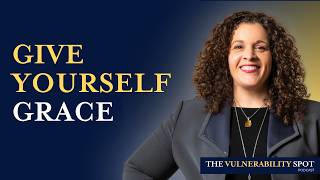
Andrea Mancuso talks about trauma in all its forms—abuse, violence, addiction, race, religion, sexuality—and the shame that keeps survivors silent. She argues that healing is possible, that each person's journey looks different, and that we need to stop judging how others recover.
Chapters
Hello everyone and welcome back to the V Spot. I want to have a brief conversation with you today about trauma. Now I know the moment I say the word, some of you may go running, but this one is going out to everybody who stays and listens and tunes in to process what becomes available during a conversation about trauma. So first and foremost, I want to begin by acknowledging that I know that many of you have experienced levels of trauma that no one should ever experience. Right? I also am aware of the fact that that trauma has shaped you and changed you in a lot of different ways, right? And so I want to begin by being exceptionally empathetic and aware of the fact that you have been through a lot, and here you are, right? And so I want to celebrate your resiliency. I want to give you props and credit for getting yourself here. And I want to send you love and prayer as you continue to navigate what it's like to experience life after experiencing great trauma. Trauma looks a lot of different ways. And it gets thrown around a lot. It's a buzzword. We hear it a lot. Gets thrown around a lot. But I want to just, like, summarize a couple of things. Trauma is the result of a lot of different types of incidents. It can come as a result of abuse. It can come as the result of violence, addiction. There could be a trauma that comes as the result of race and religion. And gender and sexuality. It can happen when you're an infant. It can happen when you are a young, you know, child. It can happen as a teen. It can happen as adults. And the spectrum is vast. There's a lot of different ways in which you can experience trauma. It's important to highlight in this particular episode that there are supports that are available so that you do not have to go through the impact alone. I think that one of the most important things I spotlight in this episode is to remind you that there are people out there that are available and want to hold space for you as you heal and move through The aftereffects. What I also want to spotlight is that oftentimes, depending upon the trauma and the source of its origin, there's a lot of shame that can be attached to the experience. And that is the reason why people will often attempt to go through what it looks like to be navigating trauma alone, right? Because there's a discomfort in even talking about it. And so if you are someone who up until now has found it difficult to express, don't feel comfortable to share, I want you to know that you're not alone. And I want you to know that support does exist. Safe spaces exist where you get to process and be— feel seen, supported, heard, and cared for in a way that you may not even think to be possible. There's no right or wrong way to navigate life after experiencing trauma. No one has to understand or make sense of your trauma. This is not for everyone else to get. The most important piece here is that you feel supported and you feel understood and you come to learn you. I think all too often it's sort of communicated that how I experience my trauma and cope with my stuff is how you should experience yours and cope with yours. And that's not true, right? Because we are all highly individualized. And we come to the table with a very unique set of life experiences and influences. And it's never going to look the same. The same exact trauma can occur to two different people, and the way in which will impact them, the way in which it will be coped with can be totally different, and neither one of them are wrong. It's just different. And so this episode is really also about empathy, and empathy is one of the, uh, constructs of emotional intelligence. And the good news about it is that it can be developed. And I think when it comes to trauma, I believe it's safe to say that empathy surely has a space to be developed. I think that the less we hear, so-and-so should have done that, or you should do this, all the should, right, which is a lot of judgment when it comes to trauma and it comes to anything else, um, the, the— that's the time in which we'll be able to see the progress, when all of the should and the judgment and the criticism stops. Only you know what it's like to live your life experiences. I don't know. I'm not you. You don't know what it's like to live my experiences. Only I know that. And so there's no one size fits all when we're navigating trauma. But it's important to navigate it. And I know that that may come with, like, varying opinions because it's challenging, it's painful, it's unsettling, right? It can be triggering. But what I also know to be true is that that's happening anyway, whether you're consciously and, like, intentionally processing or not. All of those things are happening anyway. So I wanted to come to you today. I wanted to lay the foundation for a conversation where we get to really normalize and empower people for choosing to tend to themselves in a responsible and loving way. Right, for extending compassion and grace not only to each other but to ourselves for the things that we've been through, and not to keep ourselves, you know, in like playing small or down or hold ourselves back, right, or justify why we are certain ways. Not for all of that. Simply because as a human being who has gone through some things, there's a decision to extend love and compassion and grace, right? If you think in this moment about one of the people that you love the most in this life, if they shared with you that they went through something traumatic, how would you comfort them? How would you seek to hold space for them as they shared with you about their experience? And if they went on to say that they feel damaged and they feel flawed, how would you console them? If they shared with you that they have a hard time functioning, that their relationships are suffering, or their going to work is suffering, or their relationship with themself and their health is suffering, How would you seek to soothe? How would you seek to support? How would you seek to stand by and extend love? Because everything you just thought of, you deserve to. You deserve it. You are not your trauma. You are not damaged. You are not broken. You are not flawed. You're not. You have been through some things, and for some of you, you have been through a lot of things, all of which make you stronger, all of which give you an access to humanity that makes you different, right? Because you, you get it. So I wanted today to be a moment to come together, to shine the light on trauma, to normalize speaking about it, to be conscious and consistent about extending love and compassion to those experiencing it, to refrain from judgment and should about how anybody should navigate their process, and to really encourage support. Because a healthy level of processing allows for a healthy level of processing. And when you look to some of the people that you are most inspired by, right, some people with some of the most difficult life experiences behind them, they have processed their trauma. In many ways, they have used it to propel them forward in ways that they maybe would never have been able to be forwarded. And if that's possible for them, it's possible for you. So allow yourself the grace and the space to process where you are, whether something happened 25 years ago or something happened last month. You deserve to allow yourself to be supported. You deserve to remind yourself that you are not your experiences. You have multiple experiences that have occurred, that you deserve compassion and grace. You deserve to be kind to yourself, and you deserve to be supported. You're not expected to be over anything. You're not supposed to be someplace else feeling something different. And you don't have to justify or rationalize your pain or your hurt or your feelings with anyone who doesn't get it. And so if you are consistently sharing with people who are making you feel worse, about what it is that you have lived through, what it is that you have gone through, what it is you are struggling with, you may need to consider who it is that you're talking to. But allow today to be a day where you really decide that trauma doesn't define who you are on this, on this planet. And there are places and spaces and professionals and people who who are out here wanting to support you so that you can share and say and express what you maybe have never said aloud in order to move forward in a way that you have never moved before. But this conversation needs to happen, and it needs to happen more often. Because I think that there's this continued— at least I have seen it and heard it— this continued, like, come on, it's enough now, move forward. And I think that that's judgmental and insensitive and doesn't work. And I don't want the V Spot or Intentional Healing and Wellness to be a space, you know, um, or platform that doesn't encourage Letting things take time. Let it take time. You are exactly where you are to be. Your journey's unfolding the way it's meant to unfold. There's levels to this stuff. I'm amazed sometimes when I, I look and I'm like, wow, now there's all of that that I'm gonna go through, because there are so many layers. There's layers of processing, there's layers of healing, there's layers of acknowledging and facing all of the things. And that's why I say that this work does take courage. But you have it. You have access to it. And at any given moment, you can choose it again and choose it again and choose it again. But your trauma does not define your value and your worth. And no matter what it is that you have been through, You have the ability to experience a life that in this moment you want to experience. And if that feels far away, and if that feels unattainable, there's some work to be done. But it surely can be done. Because if we look around at some of the people that we admire, that we're inspired by, and can see that they have done it, So can we. So can you. So can I. So let's do it. Let's do it. Let's challenge to push back on everything we've come to know, believe, and understand about trauma up until now. Let's recognize that just like a fingerprint, everyone has their own unique experiences, and it gets to look different depending on who we are. But you owe it to you to process, to be with, and to accept, right, what some of what has gone on in order to have tomorrow look different, you all. And I'm not saying that that makes it right And I'm not saying that that takes, you know, people or things off the hook, but this journey is for you. So it's my hope that you got exactly what you needed, maybe you didn't even know you needed today. It's my hope that you get off of this podcast recording and connect with someone, hold space for someone, allow someone to share with you what it is that they've been through, what they're struggling with. And it doesn't have to be trauma by nature, right? It's holding space for humanity. It's paying it forward to one another with intentional acts of kindness, something that this world absolutely needs more of. And guess who it starts with? Yep, it starts with you. It starts with me. So let's do it. There's a lot of work to do. I challenge you today, do something intentional, an act of kindness that was not scheduled to take place simply because you heard this episode. And then let me know what it is. We have the ability to create a ripple effect. Let's start it. It's my hope that you tend to you with extra TLC. It's my hope that you tend to each other with extra TLC. Rev up the empathy dial, turn it all the way up, lean in to support, and recognize and start to really connect to this idea that nothing that has happened defines who you are as a person. And tomorrow and the day after that You have the ability to create the life you want, so I hope it's going to be good. Thank you for being with me for this episode of the V Spot. To be continued.
More from Andrea

From Rejection to Resilience: A Conversation with @thedegoviagroup on Thriving Through Challenges 💥









Reclaim Your Worthiness: A Journey to Internal Value - The Unlearning Lab Live, Washington D.C.
