A Conversation with former JPII Swiss Guard Andreas Widmer
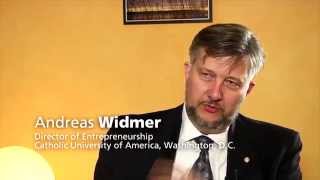
Andreas Widmer served as a Swiss Guard under Pope John Paul II and witnessed the pope's physical strength and humility up close. He learned that great leadership points beyond yourself, a principle he now applies to business ethics and Catholic teaching on work that dignifies people and includes the poor.
Chapters
Let's start by talking a little bit about your years in the Swiss Guards. How did you end up in the Swiss Guards? And tell us about how you got to know John Paul ii.
So the way I ended up in the Swiss Guard, it helps to know that the Swiss Guard is a foreign legion. So it's not a. It's not a part of the Swiss army or anything like that. It's completely separate from Switzerland. It's a foreign legion. But the Swiss Guards insist that before you go there, you do the Swiss military service first. And that's relatively easily easy because everybody has to do it. So I did my Swiss military service and then applied to come here to join the Swiss Guards. I did that mostly. I mean, when I learned that I could become a bodyguard and they would pay me for it at 20, I'm like, okay, I'm gonna have to do that. And it was actually not a. There wasn't really anything religious that played into this. I was fairly secular at the time. You know, growing up in the 70s, 80s, I didn't. I'm definitely a product of that, you know, of secular Switzerland. And so I signed up for that because I wanted. I thought being a bodyguard was pretty good. And so that's how I arrived here. But then, you know, I went through the recruit school and I got to do my service. And as the service in the Swiss Guards, you actually. You're not like, they're talking with the Pope all the time, but you're there all the time. It's like, if the Pope would be here, there would be a few of us around, you know? And so I see him. I see what he does, and we have some interactions. And I started to be intrigued by his interactions with me, both in how sincere he was, how human he was, and I was not impressed with him as a Pope. I was impressed with him as a man. And I thought that this was the most joyful human person I've ever met in my life. And I thought, whatever this guy has, that's what I want. And then I started to pursue this of like, saying, so what does he do? What does he. The funny thing is that he had my admiration and he knew it. He had all of our admirations, and he knew it, but he didn't keep it. He pointed the way and said, look what I have, you can have. I have a relationship with Jesus Christ, and you can have that. And I have nothing special that anybody else couldn't have. And that intrigued me because I thought, well, how can you have this? And who is this? And, you know, religion is sort of a part of fairy tale, right? And Catholicism to me at the time was something cultural, certainly not something alive of a risen Christ that you can have a relationship with. He told me that he liked the rosary a lot and felt that that was a good introductory prayer. And at first I sort of didn't want to. I thought, my grandmother prays the rosary. I'm not going to, let's say it didn't go along with my tough guy image. But I tried it eventually and I had this profound, beautiful experience of prayer. Because one of the things he would always say is that if you seek God, God response, God is waiting for us. And so if you just take that plunge and take a risk on God, you won't do it for nothing. And so suddenly I have this experience of God and I now I can't be agnostic anymore because now I know that God exists, right? And there was a profound period of my life, these two years I was with him is when I found that God existed. I found that through him. And then once God exists, what are the consequences of that? Now you know, God exists. Now what? I mean, that's the question. That's the question we. We have to face. That's a core question of our life. And I was very blessed to be in the presence of him and many other great people around him while I went through that discernment process.
You knew him in the late 1980s when we would say he was sort of at his height, you know, physically, he was still very mobile before the disease stricken him. For those of us who don't remember, you know, what was it like to have a pope with those qualities and characteristics?
You bring up a very good point there. A lot of people today either don't haven't seen him or weren't aware of him when he was younger. And a lot of us have gotten used to him at the end of his life when he was really incapacitated. When I served John Paul, he was a very vigorous, sportive, active man. He was swimming and walking, vigorously hiking, going up, you know, cliffs and stuff, like really hiking. And he would go skiing and was really quite something to keep up with. And you see, that was part of the. The part of him impressing me. Remember, I come there as. I make fun of it now, but I come this as a wannabe tough guy. I come at this at 20. You're not gonna impress me by saying the rosary. Real focused, right? As a secular, you impress me because you are tough. What I would consider would pass as a tough guy, except he wasn't only that he did all things fully. So I saw him. I didn't see him ski, but I saw him as doing physical stuff really well. And he was a strong guy. But then I also saw him pray. And when he prayed I felt different. But I also see him prostrate himself on the floor praying. I see him asking to invite the circus to come and perform and see him laugh like there's no tomorrow. I see him come to our barracks and have a drink with us and laugh and jovial and tell a joke and wants us and then sing something and being curious about our life. I see him all doing all these things and then I see him write and speak and see heads of states and beggars and being the same fully present person. That's why I said, hey, whatever that guy has, that's what I want. And of course he. I mean, his physical presence was just overwhelming. This was a really strong man. And so what we saw at the end is the remnant of that in that any other man would have long ago gone into hiding and also would have probably succumbed to this disease a long time before. But, you know, I like to say that I knew, always knew, that he wouldn't just go away. He would go until he can't go anymore. And we've seen the testimony of that. It's a very valuable testimony in the world to speak both to the strength of the human person before, but then showing that suffering can have meaning as he had it. A lot of his lessons to us, though he wrote so beautifully and had such profound things to say to our time, much of which we haven't even really understood yet. But that's another. That's for another question. Much of what he did to him, he's the Pope of action. He saw that the human act was central, you know, to who we are, how we express ourselves is to act. It's an externalization of my soul is my action. And even the last thing he did the last time he came into public, he couldn't even say anything anymore. But with that last thing, without him saying a word, he taught us more than most people do. With a lifetime by him just being there and the symbol and the act of him doing this and trying to speak, but then not giving up, but by then using a different mode of communication and showing suffering and looking it in the face and offering that up. Powerful. I mean, it's powerful stuff.
Tell me, what's your most memorable moment with John Paul ii?
My most memorable moment with John Paul II was when I introduced my parents to him. And, you know, I left for the guards as a kid, you know, and I had this privilege and this great honor to work for this man and that I became to know who he was while I was there. But of course, my parents knew that all along, and I left them as a kid at 20, and then they came a year later during my swearing in. You know, when you were swearing in, you pledge your life to the Pope and to his protection, to give your life. If the job would, the security would demand it. And for that, the Pope invites your parents to Rome and to meet him and to attend the swearing in ceremony. And I remember we had mass with him, and then afterwards we got ready and we all, each guard with his parents could walk up to John Paul and he would have a little private audience with us. And when I walked up towards him and he said, there's the Pope and my parents, and we walk up, it's the first time that my parents held my hand. You know, we held hands, but it was them holding my hand and not me holding their hand. And as soon as we showed, as soon as we were in front of him, he says, oh, Andreas, my great, my large, my highest, tallest guard. And my mother just starts to cry. And it was a beautiful change in relationship. It's a coming of age. And how he then played to me, to give me honor in front of my parents is something that somebody who you work for is a beautiful thing to do. And so when you see today, when you meet somebody that may be one of your employees, you meet their parents or their family, to be able to say something profoundly, purposefully nice about this person to the people around is a really beautiful gift. And that's what he gave me. He role modeled this for me. I tried to do this today myself. That was a defining moment, both with me, with him, but also for me with my parents.
You learned a lot of leadership qualities from John Paul ii, as evident from your book that you wrote, from the years that you knew him, called the Pope and the CEO. What was the most profound lesson that John Paul II taught you and taught us about leadership?
I would have to say that aspect of humility. Remember how I said that I admired him like people would admire a great guy? We have this today in popular culture. People get admired. People at work, you know, a big famous CEO or somebody who's successful as an entrepreneur.
Celebrity culture.
Celebrity culture. Well, he was my celebrity. He didn't keep that. He didn't keep it. He pointed it away. Are we taking and sucking this in ourselves and let the focus the bullseye be on us or do we become away sign? You know, in business that's the same way. I'm not saying that every business person has to be faith filled or Catholic or Christian or have any faith. But what I'm saying is, do you keep this to yourself or do you point at something bigger, greater, true leaders transcend? Leadership is not about them, it's about a greater cause. And that makes a successful organization. That's something he did in one of the largest organizations in the world. And the organization that should do this most and best of all is the church where he pointed to Christ. Something more transcendent than just him as a personality culture.
When you were working with him in those years, did you think of him as a saint?
When I worked later on, yes. But when I was in his presence, I didn't think in those terms. I. I just had nascent faith. And to me he was somebody who encouraged me in that faith. So I didn't think that far ahead. But I felt that he. I certainly felt that this was the most fully human guy I've ever met. And so I was in awe of the man. And he knew that I had a faith conversion while I was there. And I didn't think in those times as saint or so what I thought of is as spiritual guide, spiritual father, kind of. That's more the category I had in mind. I'm going to jump back now just.
A little bit to the conversation about leadership and business ethics and that kind of thing. Now that the Catholic faith informs your perspective on these things from all the things that you've learned, what do you think is really at the heart of the economic crisis and the leadership crisis that we seem to have in our world today?
John Paul was very careful in pointing out what business is all about. He would call it a business. He calls it a. Kaczinka means in Polish, I understand. He means a little family. And just like a little family, it should reflect the larger family, namely a marriage. It's a shadow of it. A marriage is a sacrament and so on. But I'm talking in principle, like as a shadow of marriage. A marriage has to be profoundly creative because marriage reflects God and God is first and most the Creator. And we imitate God by creating ourselves. That comes back to the act, right? And the primary act of marriage is to be creative, to create. We get the privilege to create a human being that will never die. Right. Well, the Primary objective of a business ought to be to create. It has to be creative. If your business doesn't produce goods that are truly good or provide services that truly serve, then you're not really doing business. If all you're doing is betting on somebody's failure or all you're doing is to derivatives of. Derivatives of derivatives which caused our failure, then you're not really doing your work isn't anymore reflecting God's image of creativity, of being creative. And when I mean creative, and I mean creative in the sense of creating something out of nothing, from thought to product or from thought to service, if that's not what you're doing anymore and those goods aren't truly good and those services don't truly serve, then you're not imitating God with your work anymore. And I think that's at the core of today's business and leadership crisis.
What do you think is the way out?
The way out is a reimagining of work and a reimagining going back to the basics of figuring out what this is all for. Profits are absolutely important. But in business, profits, it's not, you know, the way to go is not to say, oh, we have to be non profit or profit is an evil word and everything. No, actually, no. You wouldn't want to have a garden without, without fruits, right? It's just that profits, profits to a company are a bit like white blood cells to a human person. If you're watching this or you're sitting here, you're not, you're not thinking about white blood cells right now, right?
Not until you said it.
And you're not trying to produce them, but if you wouldn't have them, you wouldn't survive. You die pretty quickly. Well, that's profit to a company. The company can't sit here and say profit, profit, profit. As a matter of fact, you're not controlling profit. That's not what you control. What you control is your creativity, your culture, what you're all about. That's what you. And then the profit is an effect of that, one of the effects of it. So absolutely, it's essential, even moral to have a prophet, I think. But we have to go back to saying what is work? If work is truly our acting in imitation of God. First thing we know about God, God the creator. First thing the Bible tells you, he works, he works. First thing we do, then he gives us the charge, you're made in my image and likeness. Go forth and work. Also finish my job here, you know, in the garden, when we work Therefore, in that image of God, we don't just make more, we become more by being, by working, we become more human. And we become more human because we imitate God. Eventually this means, this is why work is a path to holiness. That's why it's a vocation. And we have to go back to saying that business is a noble vocation, business is a good thing to do, but we have to understand out of what energy, out of what perspective we're doing business and who we're doing business for.
The Catholic Church has for a long time now spoken on social and economic issues and matters, especially in the 20th century. Since the beginning of the 20th century, how have you seen that teaching or that doctrine develop? I mean, John Paul ii, he spoke very often about the social inequities around the world. We know that Pope Francis now is someone who is very close to the poor, who is very concerned about global poverty, refugees, things like that. How have you seen the Catholic social teaching develop in the last hundred years or so? And where do you think it's pointing us today?
I think the core of social teaching comes from that recognition that work is our expression and our participation in God's creative power. Therefore, there is a right to work, it's a right to develop. Work is part of the common good, to fully flourish who we are. And I think Catholic social doctrine has expressed a lot of very valuable principles that we are challenged to apply in business. I don't think the Church has ever specifically said, do this or do that. That's not the point of the social doctrine. Social doctrine is. The point of the social doctrine is to inspire us to say, for example, this balance of subsidiarity and solidarity, where subsidiarity is to say, let the lowest level make the decisions for themselves that affect them and push this down. And then solidarity means we're all in this together, let's help each other. The two would be actually attention. But the Church gives us this both end to say, don't neglect this, don't neglect that. But then how we do it together, that's, you know, how do you put the whole thing together? That's the challenge that is almost in a pastoral sense. That's a challenge that we then are called to apply. So from that perspective, I think the social doctrine has developed. I don't like the word develop because I think it's always been there. It has been explained further, it has been explained further. And what we're explaining, it's like a gem that you can turn. And on the one Hand, you can see that the preferential option for the poor is that if you take care and help the weakest of any society, you're helping the entire society. That's where we're coming from. Also what we should do is to help the people who are the weakest and who don't have work and cannot access this creative power and therefore not develop themselves fully to let them into this circle, as John Paul would call the circle of productivity and exchange to fully fulfill their call from God. A greatly misunderstood thing is that the church is not business hostile, is not hostile towards business. As a matter of fact, John Paul pointed out a very brilliant thing way ahead of the times where he said, you know, everybody goes around and they talk about poverty means $2 a day or $1 a day or so he says, a very demeaning way of treating people. I mean, I measure you in, in a dollar a day or $2 a day. That's not a dignity. There's much more about you than a dollar a day, no matter how you do it. And also there is a fallacy in that measurement. I want to point out, or I think John Paul would point out, that measuring humanity by this many have a dollar a day and this many $2 a day and then you have $1,000 a day. That calls for a redistribution of wealth. Yet when we really look at what the problem is in economics, we see businesses to make money. The economy is not a fixed sum, a fixed pie game, you know, a zero sum game. When we do business together, we make more money. You know, every time we do more business, you create new money. So the way to take care of somebody only a dollar a day isn't to give them my $2, it's to do business with that dollar. And then there's $2 afterwards and do business again and there's four. And that isn't, that is then seeing them, and John Paul would call that seeing them as an opportunity rather than a problem. The poor are not a problem to be solved. The poor are people with unfulfilled potential. The poor are people that we should embrace and integrate into our networks of productivity and exchange and integrate them into our, into our business networks. Don't create a separate network. They do fair trade now and things like that. I'm critical of this because I say let's not create a separate network for the poor. Let's bring the poor into my network. How much of your investment is invested in a poor country? How much of your 401k does business and invest in companies, in emerging markets. And I'm not speaking of the ones where you give them a thousand dollars. I'm talking about the investment that really is needed of $200,000, $2 million to nurture those companies that really make up an economy, the small and medium sized businesses. That's the engine of prosperity. Yet we are happy to give charity to the poor, but we're not happy to do business with the poor. And I think this is where the church calls us to task to say you need to integrate the po poor into your networks, you need to do business with the poor. And we have a lot, you know, you have to say our system has a long way to go on that.
And so do Catholics in understanding what's at the heart of this teaching.
A large part and inspiration of the business school, the Catholic University, is exactly this. How do you do business based on human dignity, based on virtue? And the idea that business is our call, is a noble vocation, is our call to imitate God and to participate in God's creative power. And I'm excited about it because I don't see any other school do it. And we are a brand new business school and we have a lot of plans and a lot of ideas of how we can do this and how we can work with our students to, to elaborate and explore these issues.
One final question for you. What would you say is the greatest contribution of St. John Paul II for humanity?
St. John Paul, you know, the quick logical answer people expect is this whole the fall of communism and the USSR and so on. And I think that's important, but in a somewhat of a short term, and I don't mean to offend that question in somewhat of a short term, I think long term what he did is he has in my opinion, concluded an age that started with Descartes, with enlightenment, with the great questions of this separation of spirit and physical with the body and the Spirit. I think, therefore I am and I can't prove you anything. And that has led humanity into a great odyssey of all kinds of things. And we've seen that through the enlightenment. And I believe that John Paul, through his writings and his philosophy, specifically through his theology of the body, has given us answers to that. And that is a bookend to one of the great crises in humanity, an existential crisis. And the reason why I'm very happy about the canonization and that this really is a resurgence of interest in his work that I hope will continue for us. This is a task that will go on 50 or 100 or more years. Like some of the great thinkers in the Church. I would compare him to things, to people like Augustine or St. Thomas, that we are going to chew on this for a while. But he has given us some of these great answers and great pointers of where to go with the thinking about what it means to be human that go far beyond just Christianity. And I think in the big picture, I think that's what John Paul the Great will be remembered for.
Andreas Widmer, thank you very much for taking some time to speak to us today.
Thanks for having me. It was my pleasure.
Ra.
More from Andreas



He Teaches Entrepreneurs How To Be The Leaven of Society | Andreas Widmer | The Pope and the CEO



Principled Entrepreneurship with Andreas Widmer: Lessons in Leadership and Humanity

Principled Entrepreneurship with Andreas Widmer: Lessons in Leadership and Humanity



The Virtues of Free Enterprise and the Heroic Spirit of Entrepreneurs | Villanova University | 2024
