Andreas Widmer | What is Principled Entrepreneurship?
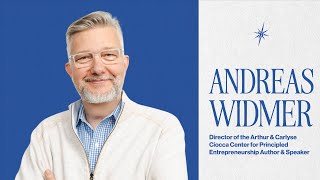
Interview (YouTube, published July 26, 2023) of Andreas Widmer (Bush Business School, Catholic University of America) by Doug. Widmer recounts his faith conversion while serving in the Swiss Guard for Pope John Paul II, his entrepreneurial career (early role at FTP Software — IPO in 1993 — and later at Dragon Systems — sold in 2000), and how those experiences led him into academic work on principled entrepreneurship. He argues the free-market (creator) economy enables human creativity and flourishing when anchored by a moral people and person-centered corporate culture; he teaches these ideas in a required freshman course (Vocation of Business) emphasizing "How may I help you?", vocation, and investing in people rather than solely optimizing short-term outcomes.
Questions this video answers
July 26, 2023.
1990.
1993.
Sold in 2000 for $600 million.
Chapters
Well, hi, everyone. A little while ago, I had a chance to sit down with Andreas Widmer from the Catholic University of America. He's a professor there with the Bush Business School principal. Entrepreneurship, and that's what we talked about. As you can imagine, he's written books on this. He has an incredible personal story in his history of how he got to that position. There's a phase of his life where there's a faith journey that is really powerful and was unexpected when we were talking about it. And then his own phase as an entrepreneur and what happened, some of the experiences he had there and how it shaped his thoughts and his writings today about principled entrepreneurship. It was a really fun discussion. Got me thinking about a lot of different things, and I trust it'll have that same impact on you. We believe, and have always believed in this country that man was created in the image of God, that he was given talents and responsibilities and was instructed to use them to make this world a better place in which to live. You see, this is the really great thing of America. It's time to discover what binds us together and finding it has the power to transform our world. That's what I believe. How about you, Andreas? Thank you so much for taking the time to be here. And you're here for the Acton event, which is wonderful. So I know you're gonna have a good time with that, aren't you?
Thanks for having me, Doug. Yeah. It's one of my favorite meetings every year at the Acton University. I highly recommend it.
Yeah, yeah. Fantastic. Fantastic. But as we get started here, just reflecting a little bit of the relationship we've had, we first really connected my visit to the Catholic University of America, and you took us all around, and we were at the bush of business there, which you lead, and it was a magnificent tour. The basilica is one of the most incredible facilities I've ever seen.
It's the largest Catholic church in the United states. It took 100 years to build, like, to finish. Finish. It just finished, like, three years ago, just before COVID with the last mosaic on the ceiling on the dome. And so it took a long time to finish, but, you know, it's been standing the way it looks now for a while. And it's just a beautiful mosaic of American history because every nationality has its own chapel in there. And then it comes together as a whole as the national Catholic Church. It's a gorgeous place.
It's just magnificent. It's kind of like a la Sagrada. Familiar, where it's just always being built.
Right, Yeah, it's always been. Yeah, they're always working on something, but it's just breathtaking. And I think that's so important for a place of worship to be breathtaking like that. This is larger than life. This is beyond. And I think they really struck that. They really did a good job with that.
That was my experience. It was just magnificent. And you gave us the full tour. We were able to go up in the tower, which is a pretty interesting set of stairs to climb.
There's an office up there, and it's the organist's office because the organ is all the way in the back of the church and so. And the organist's office is in the tower. That's their sort of job perk. And then from up there, of course, you can see all of Washington, D.C. it's absolutely breathtaking.
Yeah, it was a little scary getting up there.
Yeah. And I remember you then. You addressed all of our students, the whole thing. And our dean Abella, Andrew Abella, was there. And then we had a little reception afterwards.
So it was a wonderful time and having a chance to see the students there and see what you're doing. And that's principally what we'll talk about a little bit about your role with the business school. We're going to talk about your role with. We got to know each other more as you collaborated and wrote the book with Artsy Oka about principled entrepreneurship. And so we'll talk about that. But you just. Let's stay on you a little bit. You also gave me a book about the Pope and the CEO. And you had, as a native Swiss, you had a role in the Swiss Guard.
Yes, I did.
With Pope John Paul ii. Pretty fascinating history that you have. And we'll go through how you're an entrepreneur, you're in the business school, but talk about that a little bit.
Well, it looks fascinating from the outside. From the inside, it's very similar. Switzerland is a small country and I come from a very small rural village in the Catholic part of Switzerland. And I was a kid who didn't really know what to do with his life. And also I was exactly excelling at school or anything. I was, you know, I have ADD and all over the place. And besides, we lived out in the mountains. Like, why would you want to go as a boy? Why would you want to go into the school room? I was much more interested in being.
Out in the world. Sure.
And so the. So early on in life, the only thing I excelled at is the physical stuff. I wasn't 6 foot 9 then. But I was a tall kid and strong, and so I was very good at phys ed. And then of course, we're a militia and I went into the military. And that's the one thing I excelled at. And then when I heard that I could become a bodyguard, I thought, that's the perfect job for me. And then only afterwards did it register with me who I would protect. And you know, I wasn't. I grew up in the faith, in a sense, like this was my parents faith, not my faith. And so I wasn't really religious per se, but I'm like, I have nothing against the Pope. I mean, if anybody else would have paid me to be their bodyguards, I would have done it. But then I go there and I immediately, I actually, funny enough, I immediately regretted it because I never thought it was gonna be that tough. I thought it was, you know, easy peasy. And I go there and just hang out a bit. No, no, no, this is serious stuff. And you're in the military. I'm like, oh boy, I made a mistake. But I signed up for two years and then you're in. It's like a foreign legion. It is a foreign legion. And I was miserable. And in the first time it hit me to be so miserable, I was actually outside of the Pope's apartment and he came out and he saw me and I was, I was devastated. I was like crying, honestly, really. And he noticed and he started to talk with me and said that he was so glad that I worked with him. He didn't say for him this all stuff I see in retrospect. And he basically said that he was very glad that I was there. I think he noticed right away that I had sort of this tough guy image on the outside, but inside was very insecure and didn't know what to do with my life. And he offered to start to pray for me. And I'm like, you go right ahead because I don't know how to pray. I don't pray. And so he says, no, you know, let me pray for you. And he sort of embraced me and says, everything is going to be okay. You know, I'm so happy that we work together. And off he goes. And from then on, I started to have this connection with him in this relationship. And he kept coming back and, you know, it's not like long conversations. You're a bodyguard, you know, you're in the background. I don't talk to him unless he talks to me. And so he would check in with me and saying how Are you doing? And eventually, he taught me how to pray. And he. I have to say, he changed my life primarily. So I started to, like, look at him as, like, that's my hero. And he wouldn't take it. He wouldn't accept it. He says, no, your hero is Jesus Christ and the peace. Because I told him how much I liked. You know, to me, he wasn't the Pope. To me, he was an older man, like a guide, like somebody I admired. And he would not take my admiration. He would always deflect it, and then teach me to pray and say, you can have that relationship with Christ. And so that's how I came to believe and how I came to have an encounter with Christ. And, you know, from the outside, it sounds so amazing. Like, the Pope introduced me to Jesus.
Well, that is amazing. Let's just stop right there. But it wasn't like that.
Yeah, but to me, it wasn't like that because this was just the guy I worked with, and I had no concept. I come from this mountain village, Doug. Yes. But at the time, I had no concept of this. And it's just beautiful how God uses this. This situation to. I think if I would have approached him as the Pope, we would have never had that depth of understanding and of him being able to truly minister to me. And so I had this huge conversion when I was there working with John Paul ii. And then because I had this conversion, I suddenly started to understand who I am in the context of me being a follower of Christ, the Son of God, and then go out and start to say, okay, I'm gonna do something. And during that time, I met my wife Michelle, and introduced her to him, and he liked her as well. So I'm like, okay, I'm gonna marry her. But I didn't speak any English.
Oh, really?
No, not a word. I mean, I sort of spoke in song titles. I never learned English. But then I'm like, okay, she's American, and I have to follow her to America. And to me, that was like a tall order. But I left, and he gave me his blessing and says, go. And then he said, you found Jesus here. Now take Jesus with you and bring him wherever you go. Like, do what I did with you with others, right? Go and bring. He sort of commissioned me, in a sense. And so I came to America and I went to Boston to study. And they. They took me at this university without me speaking English. It's amazing. My goodness. And we got married, Michelle and I, back in 1990, and then my career started kind of as an entrepreneur because I had these two first jobs. The first one where I met these kids who went to MIT and I didn't, but I met this group of young, they were a bit older than me, some of them. And they told me, hey, we're doing this software and we are bringing this network to the PC. And remember this was in 1989 and I had never used a computer before, right? But they loved the fact that I speak five languages. And they said, why don't you be the guy and help us to deal with these foreigners? I'll do it. And so I started and I was here as a student, so I wasn't allowed to be paid or work like that. And so they said, well, just, you know, come and work here and we'll give you some shares or something. It didn't mean anything to me. And that ended up being a company called FTP Software. And we ported TCPIP, the Internet Protocol to the PC. This became a rocket ship.
My goodness.
And in 93 we went public and it was just. And it took. It became my entire focus of my life. And I dealt with everything outside the United States. Eventually Michel and I moved to Munich to Europe to open up like much like actual offices and expand and everything. But something changed. This was so much fun. But something changed after 93 that everything became about short term performance because now we were public. Right before we called FTP's File Transfer Protocol, we called it Fund that Pays.
Fund that Pays.
We were just a few friends.
There you go.
And then I left because I couldn't handle that because I felt that it just didn't feel right anymore. And then I met another couple who was. I'm very Boston focused. And I met this other couple who coincidentally also went to mit, though I have nothing to do with mit. Jim and Janet and they. Jim and Janet Baker. And they invented speech recognition. Again, I didn't know anything, but they asked me to join them because they said, what you did with FTP, do that with us. And they haven't released their product yet. They just figured it out. They figured out the technology and said, you have like two years to prepare before we launch the product. Come and join us and make this worldwide this product. And I joined and it was a rocket ship again. Dragon Systems, the company was called. And anything you like, Siri, anything you have on speech today is based on that technology. And again it went way, it shot up. We sold it in 2000 for $600 million.
Oh my goodness.
And three months later. So I lived the American dream. I come from this small village, I come to America, fall in love with this whole free market system and entrepreneurship. Three months after we sold the company, it turned out that the people we sold it to were fraudulent, really. And we lost the entire amount of money. This was a wake up call to me that I'm like, what is this? All the criticism against the free market about capitalism, is this true? Because I just experienced this and I sort of fell back on two things. On the one hand, I went back deeper into my faith, which is something I practice more on Sunday rather than Monday through Saturday. And I decided to study through my faith if the market economy is a moral or an immoral thing. On the other hand, I was too old to go back to the business school, but I joined a company, a consulting firm called Monitor Group, which is the Harvard Business School Professors Consulting Group. And I led one division in there that was focused on business strategy and on certain environments. I kind of did it to learn business strategy because I didn't have an mba. I did this straight out of college, and I felt like this is my to do the mba. So I learned everything I could running this company about business strategy, and I brought the two things together. On the faith side, I went back and I talked to my spiritual advisor and said, well, I want to study theology. And he says, no, you don't. I said, well, it's like, why not? Because I need to understand this. And he said, no, what you need to study is ministry. Because if you just study theology, you learn some theory about something. I need you to. If you really want to understand how your faith plays in business, then you need to study ministry. Applied faith. And he was a very wise man. I thank God for him. And so I have a master's degree in ministry, and I put the two things together, and that is the result. The result is a book. The first book I wrote called the Pope and the CEO because it goes back to John Paul II on my conversion, and then the CEO, my experience in capitalism. I put the two things together. I first thought of calling the book My Faith in Capitalism because it would be the same. But since I'm putting my personal story in it, I call it the Pope and the Seal because I sort of think it's more catchy. But that's in a nutshell, sort of my story of how I came to sit here now to even talk about this issue.
Well, this is fascinating, Andreas, because we've known each other, but we haven't had the chance. That's why this format is so fun because now we have a chance to unpack your story. Who you are, what you've experienced and how you bring it to these ideas. These are not just theoretical ideas, like you said about studying theology. This is practical experience and you can connect the dots.
It's reality and practice, otherwise it is worth nothing. Yeah.
Well, that's just fascinating and thank you for taking the time and sharing that because it just, it helps a lot of things make sense about who you are and what you've done and the work that we've done together, that I've known with you, which is primarily the principled entrepreneurship pieces. But to know the depth of how you come to your principled basis in your life and the experience. I knew you were an entrepreneur. I knew that. But we haven't had the time to unpack the stories of what that experience looked like for you and how you put those together.
Yeah. And basically what happened, Doug, is that based on this book is how the university found me, because they were thinking, Andrew Abella was saying, I'm going to start a business school at this old Catholic university, the Pope's university, in a sense, in America. And they said, but it has to be a Christian business school. Like, how do you do this? And he read my book and said, you need to come and lecture here. And so I'm all the way in Boston, he's in D.C. and I'm like, look, I'm no teacher. I'm a business. I'm an entrepreneur. And he says, well, just try it. And that's. So I tried it for a year, flying back and forth from Boston to D.C. and that's when this birth of the Bush school happened, because I knew Tim Bush from my past business experience. So everybody came together and we sort of said these insights of this book, which is, these are not my insights. These are deep Christian truths about who the human person is and what is good and what is evil and how to put this, but also how we incorporate freedom and God's creativity, that we are meant to be co creators with God, not shackled, but God wants us to invite him into his creativity. How do you build the business school around this with these principles? That's the project of the Bush school.
Isn't that fantastic? And that's in the context today where there's a lot of mistrust in business. There's a lot of mistrust in this idea of capitalism. And as you say, you experience that firsthand. There's bad people, there's, you know, fraud that you've experienced personally. And so in the world, not everything's perfect, but you can still study it and you can compare it to other ways of thinking. So help us talk through, if you will, how you see economics connected to morality and how you have a trust in that space, but you can recognize that other people may not. Help us connect those dots a little bit. This would be really fun to kind of dive into because I would tend to live with in your space. I haven't had the terrible acts of fraudulent against it, but I've experienced enough in business to know that. But I'm still a champion for free enterprise for sure.
Yeah. It's two sides of it. And so let me first say that overall, what I found out, the great lesson I have learned through all of this is that the economy is a tool of freedom to create prosperity. I believe that in our work we are invited to exercise the freedom that God gave us. God made us free so that we can be like God in a sense that we get to decide the goods we make and the services we provide.
We can be creative too.
We can be creative. We co create with God in a sense. It's the stewardship mandate. People just think we were caretakers. And just after, like in the great story of Genesis, that God just says, keep everything this way. No, no, no. God said, continue my creation like you're the master now. You are in his image and likeness. So we go in and we continue to create. In order to be creators, we need freedom. In order to love, to do something in love, you need freedom. Otherwise it's not love, it's coercion. Now we have an economic system that allows exactly that, that it is the true system where human freedom plays into creating prosperity or poverty.
What words would you use for that? Because capitalism, socialism, how would you describe that system? What are the words? We should.
I would call it the free market economy. I like the free market economy. It's also the creator economy that you have a right to create the system itself. A system itself is not per se moral or immoral. It can just be easier to be moral in it or less easy to be moral in it. It can be easier to create prosperity and less easy. The free market economy. Capitalism as we know it. Capitalism is an ideal. Nobody says we have perfect capitalism on this side of heaven. Nothing is going to be ideal.
Exactly.
So this free market economy, where we have freedom of initiative and ownership and all of that kind of thing, is the greatest opportunity for the human being to create, to imitate God and create surplus and the surplus then of course means prosperity. It requires. However, it's a bit like I compare the market economy to democracy. Do you know that democracy can become a mob rule of the Nazis would probably vote to eradicate another race or something. And we see this often when genocide happens, that the majority was actually vote for that. Right. And so democracy can be a mob rule if there's nothing else behind it.
Interesting.
That's a tool and that's.
Our founders were scared about mob rule in the United States.
And so what you need along with this freedom is responsibility. But the responsibility doesn't come from the system itself. It comes from human individuals. This is something I very much rely on the foundation of the US which I think is an amazing feat. It's one of the pinnacle achievements of Western civilization that we say we need a moral people. But the morality doesn't come from the system itself.
It comes from the home, either democracy or from capitalism.
That system isn't going to imbue morality into you. That comes back to your personal. We are called to create goods that are truly good or to provide services that truly serve. What's the truly right? When I talked with one of the key perpetrators with this fraud that we experienced and he literally sat in front of me and I said, why did you. How could you do this? And he says, look, Andreas, it's nothing personal, it's just business.
Wow.
What that taught me is that this man truly thinks that this is how business is done. It's a dog eat dog, zero sum game. You eat or be eaten. That is something that comes before the system. So that is a fundamental worldview. Most of my teaching, my books, what I propose and how I help people run their company has to do with mental models. Why am I doing this in the first place? In the book that Art and I put together, the first principle or the first pillar of principle entrepreneurship is that the economy exists for men, not men for the economy. This has to do with the ultimate why of everything to say the human person needs to be sacred in the middle of all of our efforts. And if our efforts hurt the human person, we do we're doing something wrong. Then you cannot have this attitude of saying, oh, it's just business. Even if a few people fall off the. Fall off the edge or I have to pull somebody over the table. Sure.
Because in that way you could be, you could use anything, whether it's business or politics or arts or sports, whatever it may be. If you're a bad person, you're going to use that system or Structure in potentially a bad way.
But the combination of a moral people and a free market economy has created the greatest prosperity we have ever had. Many people talk about. If you listen to the media, you would think I often do this in my classes, to say, everybody here, how many poor people do you think there are in the world, and is it getting better or worse? And usually students say it's probably about 70% of the world that lives in poverty and it's getting worse. Well, the truth is it's less than 10% who live in abject poverty. And 100 years ago, it was 90%.
99. 0.
Yeah. And so what happened here, right, and.
What happened in the last hundred years?
It's very clear what happened. These are not government programs or handouts that turned the tide on this. It's freedom and the free economy that created this. And so it's important to keep that in mind and to recognize that and do more of something that works and then to say, okay, are there some abuses? Yes, of course. How do we deal with this? We deal with this not by punishing everybody in that system. But to me, the important thing is even this man who I talk with about, who says, it's only business. Do you know, at the core of it, I feel kind of pity with him. I forgive him. And he has a. It's almost like he's invited into a football game and he thinks it's badminton, right? So he has a complete misunderstanding of what's going on here. And so he's playing the game as he truly thinks. He's not trying to hurt. He's not standing up in the morning and saying, let me see how many people I can hurt. He's trying to get up in the morning and saying, I'm gonna play this game as good as I can. And he did, except he misunderstood the game. And so this is one of the reasons why I'm in education, that I want to make sure people understand what this game is, because it's a beautiful game, and it's a game of freedom, of human excellence and mastery. But if you misunderstand what the game is about, you end up in a.
Horrible place, personally and for those around you because you bring them down with you. And those are the examples that we see all the time, right? Those are the examples. It's somebody falls from grace in the church. Somebody falls. Somebody falls from grace. And that's what you hear about in business. Somebody falls from grace. And that's what you hear about in politics. Somebody falls from grace, and you get this idea that the whole system is broken when what you're talking about, it's just people that are broken and they're acting out in different systems that their belief structure somehow doesn't see things as win win. Doesn't see it with people in the center. It sees them more selfishly with them in the cent serving others. I love what you say. If you're in the service industry, is it truly serving? If you're selling goods, are they truly good? Talk about that a little bit more. Help us.
If I may, bring my faith into the center of this, which my companies, it has to.
You have to bring your faith into your business.
So my companies are not faith companies.
Of course not.
But I am a faithful person. So anything I do is informed with this. So that doesn't mean I'm proselytizing or something. But you can't deal with me without leaving the major reason for my existence out of me. So what I'm trying to say is to say my Lord is Jesus Christ and I say I will imitate him in anything I do. I try. Right. Well, he came to earth to save and he came to earth to say, how do you, I mean imagine this, God becomes man and says, how would you organize this? Well, if you take my advice, I would take over the Romans. Well, at least take over the Sanhedrin or something like that, but definitely take over the Romans and then go from there. Like put the system. Do you know he didn't put the system in place. He was so person centered that he took 12 lowly people, most of them couldn't read or write. 12 lowly people. And started to individually convert them and to give them the why. What are you looking for? Right. And give them the why. And it became the most successful in a sense, campaign.
Changed the world.
Changed the world.
Changed the world forever.
Okay, now we're asking ourselves, how am I going to run this company with some system? You know, Art once told me he wrote an HR manual that he says it was threatening to become this thick. And then he's like, I'm an idiot. So he took it and he just threw it away. And he says, no, I'm the HR manual. So he starts to go, what we need to do is to sit down with people and put the if you really put the person in the center of your company, not put people at the center, the person. And then individually focus on the person and start to see each person you're dealing with for their potential.
Yes.
Rather than lack or faults. So this is why I'm so big on corporate culture. And look, I'm somebody who ran a business strategy consulting firm and I promote culture. I have nothing against business strategy, but the best strategy isn't. Is going to be, as I say, it's cliche, eaten for breakfast by culture.
Culture always wins because it gives the people the why.
The reason why this guy said, it's just business, nothing personal. That's cultural. That wasn't strategy. And so if you want to change your company, then you have to start to stop focusing just on outcomes because then you'll use people as a means to an end. And you have to start to focus. I don't want to say process, but you have to focus on excellence itself, human excellence. And how do you enable that? Unless we let go of pure outcome measurements, we will always use people as a means to an end. And how would you. How do you feel when I use you as a means to an end?
I feel abandoned. I feel amused.
You get angry. This is why Today we have 80% of our workforce is disengaged. They can't wait to get home in the evening. This now is a systemic issue that our culture has let go of the intrinsic human dignity of each worker. And they react. The reaction is that they, almost 16, 20% of them, are now actively disengaged. They're trying to hurt the company. Yes, we can say, well, these are bad people. And so. But I'm taking a step back and saying, no, this is our responsibility. Let me actually make a human connection with my employees and how do we do them? When we do this, you will see a transformation. I think your dad started like this. Yes, to you will have a transformation of this company your dad led. I remember I met him once at one of the meetings and he heard me speak about this and he called me out and I went to sit down with him afterwards. And the transformation of an entire organization and the building of an organization with putting the human person in the middle. He's a champion of that. With so much proof of this, why do so few of us do this?
Isn't that fascinating? And that's the question. But what you're saying, when you talk about culture, it applies in the business sense, sure. In a company or anything like that, but it applies in your community, applies in your family, it applies in your neighborhood. And we talk about culture all the time. And is it enhancing people's prosperity or their life in every way or is it not? And I think, think that it's absolutely vital what we talk about. What I talk about, what do you believe? Where are you coming from? How do you answer that? Why? So talk a little bit more about what you see when you talk to students and you talk to them about the moral strength and then the application to business and how can we bend the curve where people are mistrusting business to say, oh, I'll see business in a different way. Not because of a big marketing campaign, because they'll just see people in business who care about their customers, who care about their employees, who care about their communities. Talk about that a little bit.
So I'm very enamored with the. So I teach a course called the Vocation of Business. And every freshman at the Bush school has to take it and I do insist on it. And it's my privilege and, and great pleasure to teach that class. And it's a large all the freshmen have to take. So I have 300 students in two sections because I would like that privilege to be the first person to tell them, to introduce them to business. And my first question is very simple. When they come in, I stand there and I say, how may I help you? And they're like, what?
You're supposed to tell me stuff and I'm supposed to take a test and I'm supposed to how may I help you? Remember what you told me?
I show them that that is the genesis question of business. How may I help you? Don't you love it when you walk into a bakery or something and somebody comes in says how may I help you? And how do you feel with the absence of that? If they go to one of the large stores and they don't come and say how may I help you? But the business, business from its, the way it is envisioned, from its core of its potentiality is me coming to you and saying how may I help you? Which means I'm going to try to see if there is a need, a problem, an opportunity that you have that I can help with. And the second question for me then is to say what talents and skills and attributes do I have to help you solve that problem of yours? And if I can solve that. And these are God given talent, like I have natural talents. Like if you need somebody on a basketball team, you can call me. I'm six nine. So that's what you know. So these are what I mean to that is God given talents. Like I didn't do anything for my height, I just got it. There are skills that I can add, but most, the most important things are your talents, God given things which each One of us difference. So how may I help you? How can I use my talents to solve your problem profitably? Which means that there's this free exchange of two people, that I create value for you that is worth to you more than it is, than it costs me to provide it.
And when you say profitable in that term, it's not just money.
Exactly.
Talk about that.
Exactly. There is many levels of profitability. There's something we do, the buyer's profit and the seller's profit, and especially with the buyer's profit, this goes far beyond money. There is a psychological and emotional, even a spiritual sense of growth and benefit that you get from somebody. And then for me, my profit of living out my talents to benefit others is in Christianity, a core part of my task. Imagine when I do this, well, who do I imitate? I imitate God. What do we become when we imitate God? Well, we become saints. The prophet on my side is that this is part of my path to heaven. It's your existence and it's the fulfillment of me, of the potentiality that God has put in me, that has planned for me. And therefore work in that sense is an integral part of our path to holiness to heaven. And that's when we say, how may I help you? If we put it in that light, then we understand profitability and everything. But the ultimate profitability of this is of course, the plan of God and our destination of heaven.
And it's far beyond money.
Yeah, that's why we call it the business as a vocation. This is a vocation for God, your life's work.
And that's what the vocation part is.
And it's interesting that you have to, the society our culture is so strong in keep showing business as selfish and self centered. They can understand the difference between self interest and selfishness. Those two things are different.
Talk about that a little bit more.
I often talk to the students about this. That self interest means if you come to my diner and I'm cooking the eggs for you, if I cook them the way you'd like them as my customer, is that selfish or is that self interest? If I say, look, my diner, my eggs, you take the eggs the way I want them. Right. Is that selfish or self interest? And when you know the difference, you know which one applies to business. Right? Right. And it's the self interest, because it's in my interest that you come back and it's in your interest that I give you a good meal. And that's the self interest and that's.
The That's a free exchange of ideas. And you put money with that, you put services with that, you put products with that, you put other things with it. But it was a free decision by people to go to start a restaurant, to go to a restaurant, to start a business, go there, whatever the, whatever the case may be. But it's a relationship between people. And you talk a lot about relationships being win win and it's in the free exchange. But win win is just such a simple way to.
One of the things I found, Doug, is that when I'm talking about business and somebody hasn't done business, when I'm talking about what it means, like to not know if you meet payroll or not, or to me or to be able to do this or not, people who haven't experienced. It's like being in the swimming pool. Like if you. I can tell you how it feels but if, unless you've been in the water, you don't know one of the key recognitions. Therefore I contemplated this and I figured out that business is one of the only trades that you learn without ever doing it.
How do you mean?
Because you wouldn't hire me as a surgeon if I never cut somebody open before during my school time. But in, in business we just do like make believe stuff. Like we do a case or we do a simulation and everything. But I'm like, okay, every I have 300 students. Everybody from finance majors to accounting to, to, to sales to marketing. I say today's your first day in business school, let's start a business. And they're like, well, all together. No, everybody separately. And they're like, I don't even know how to. Okay, there's a good turn around and ask somebody how may I help you? And then let's find out what your talents are. Do you know I've had a thousand 100 students and I've never had somebody who couldn't come up with a business really. Now I'm not saying they're going to be the most successful business because again, I'm not focusing on the outcome as much as I'm focusing on the mastery, the process to say how can you learn through this? And what I want you to learn is unless you've been. I started in sales because I did this international stuff. Unless you know how it is to ask the question how may I help you? And get the answer, which can be tough. You don't understand how other directed this is and you don't understand that all the strategy and everything needs to be behind this empathy for your customer. And I cannot teach it to you unless I throw you in the water to swim. And so you could criticize me that I'm, you know, with all my background in strategy and everything, when I teach, I'm not very theoretical. I'm actually super practical and then super abstract on the why side. So I have a balance then in the middle, I feel that's the stuff that's much easier to figure out. You're going to watch a video to figure that out. But your why People can teach knowledge, skill and character, like attitude. I'll go for attitude every time. Because that's the part that if we don't work on this together, it doesn't come on its own. And then you walk off into the jungle. You have no idea what this game is all about. And so that's why I think half of my course of this Intro to Business course is to actually do business. And the other half of it is to develop yourself. I call it my moral compass, to develop a plan for your life. Because when the two things come together, then you have a vocation.
And if we keep going on this track, you have a vocation, a business school. You're teaching people about business. But these are life skills that you can apply. How would you ask your spouse, how can I help you? How would you ask your children? How would you ask your neighbor or your boss or your subordinate or your colleague, whatever it may be? These are things you would practice in life. And you've also, by encouraging or requiring somebody to do it themselves, you create entrepreneurs or at least. And if they're not good at it, at least an entrepreneurial mindset. My father would say one of his early businesses was a restaurant business. He said everybody should do that once because it's really hard. And those who do it are amazing because they work really, really hard because of a lot of characteristics of that business. But it's an entrepreneurial mindset. It's an approach to problem solving, it's approach to relationships. It's building win wins. That's what I'm hearing from you. Am I hearing that right?
Yes. And it's a deeply. It's the proper Christian attitude. How may I help you? How may I serve you with my talents that has so many layers in it. And I love that how may I help you part because it answers the why of business. And then we can talk about the profitability and everything. And I of course compare it to God's creation. And it's interesting to note that God never created anything that Isn't profitable. Look it up. There's nothing that not multiplies because it has to do. Because God is love. Love is abundant and we need to have an abundance mindset. If you have a scarcity mindset, then you move into the realm of bureaucratic thinking, of harvester thinking, and we need creator thinking. And with the how may I help you? There's never a time where we can't ask that. And therefore this absolute abundance and that's where this people criticize our economy to say, well, this is always more and more and more. No, it's also. It's like love. There's no bottom to this. There will always be somebody. I can say, how may I help you? And they will have an answer for me. And if I fulfill that properly. You have a growing economy and you.
Have a growing economy, you have growing prosperity, have more and more part people participating, talk about. And here's an element that I also hear a lot and see a lot, that business leaders stray away from entrepreneurship and sometimes especially in the service of government or in collaboration with. And there's a lot of discussion around crony capitalism and there's a lot of discussion around how this system gets messed up by other systems or other interventions for certain circumstances. Help us understand how you see that. Because a lot of people would look at that and we're throwing the baby out with the bathwater. We're just not. All these people are colluding. They're bad. They're this. Whatever the case may be, help us understand how people maybe even when they start well, can drift away or come back to this. Well, it's just business mentality. And forget about service.
A couple of things. What first comes to mind is that I'm so sad that so many people have given up on humanity. The promise. I never said that. How may I help you? Is an easy answer. And that this is easy to do. When you put the human person in the center of your business, you have to deal with humanity as it is, which means there's ups and downs and we are complicated human beings. Everybody has to deal with us, right? And so we have to deal with others. This is the challenge of our humanity. And the opportunity of our humanity is that we actually need to deal with each other. If we create an economy that has the human person at the center, we're going to have to deal with humanity. And that means with all the things that come along with this. Well, let's not go into detail, but you know what I mean. It's difficult to deal with employees, they have this going, that going. Other things in life do things and don't do things and stuff like that. But that's the problem worth solving. The people who give up on humanity say, we need a system that will just take care of this and just basically use them as a means to an end. Unless you deal with the human person, you're going to end up using them as a means to an end. That's what crony capitalism, they're cutting corners, trying to say that's also this utopian bureaucracy vision of government that says, oh, we'll trust us, we'll take care of you. Trust us ultimately, like in socialism. But even short of that, government saying, no, we'll take care of you. That all is a shortcut away from saying no. Let's deal with each person. Let's actually recognize that every person has the same dignity and needs to be taken as a full rather than a peg. Right? A full human being. That's difficult. Look, I know I dealt with. You've hired thousands of people. I hired thousands of people. This is not easy. I'm not saying I'm taking the easy way out. Actually, the easy way out is for an elite to start to say, okay, enough of this. Now you all do what we're saying.
Because we're smarter, we're better, we're this and that and people, it's a lot of people get there. You see that a lot, you hear that a lot.
That's crony capitalism. We're saying, well, we're going to decide this. We're going to choose the winners in the economy and everything because we know better. We're the enlightened class and you guys are just a riffraff. No, we need to recognize everybody as equal and we need to see. For example, one of my big things is enterprise solutions to poverty where I believe that we're seeing poor people as a problem rather than people with unfulfilled potential. And our whole approach to eradicating poverty. When you see somebody as a problem, you want to eradicate them. Somebody's gonna get hurt. If somebody's a problem, somebody's gonna get hurt. We need to take an abundance mindset and say, how can we integrate the poor, the outcast, the marginalized into our networks of productivity and allow them through work and the realization of participating in value creation. How can we put them on the path to self fulfillment and prosperity? That is again an abundance, how may I help you? Attitude rather than the attitude of saying these people are a problem, just trust me. I'll take care of everything. And basically totally disregarding the individual and the dignity of the human person.
And that's if I stick on that. A couple things. We had an experience many years ago, a productivity exercise that actually looked at the person and it was a beautiful thing. It's a division at Amway and they wanted to talk about it because colleagues were honestly saying, I didn't like this person, I didn't like that person that I was working with because of this or this until I found out what they were dealing with outside of work. Once I understood and then I went, it makes sense now. I can have empathy or compassion. I understand what this person's dealing with. And the knock on effect was that we were more productive as a company, or they were more productive as a team, or they were more. Had a greater level of enjoyment in their, in their work because they paid attention to the person outside of work. And it was powerful for them, it was powerful for us. And that is the essence of caring about people. And that applies in our community. When you see people in your community who are hurting or suffering and you really care about them, but sometimes the care is to say, you can do something for yourself, I can help you. But is that a piece of the puzzle too? You work together, it's a partnership, it's a win win. Is that a piece of the puzzle?
Do you know, when I going back to my time with John Paul ii, I was struggling, I didn't know. And I had a lot of failure as a young man before I met him. And as we went through these opportunities and me to discern what to do and whether to engage in something or not. One of the key sentences he always said is you get to decide like you get to decide. And then he would say, look, I cannot want for you. If you don't want this, I cannot want for you. I can give you opportunities, I can encourage you, I can do this and that, but I cannot want for you. This is the same in a relationship with somebody who works with me. That's another thing, by the way, that he always stressed, nobody works for anybody. We all work with each other. It just sets the right stage. So if I say, look, work with me on this and the person doesn't want to.
Then they don't want to.
Then I'll work with somebody else. This is part of the freedom, this is sort of, this part of love of saying, well, I'm not going to coerce this. Do you want to or not? This also means there is transient in labor force and things like that, that people can go where they fit and where they like.
They can choose.
Yeah. Now when we do work with each other, and this is sort of something that doesn't become obvious right away, but we're so short term focused and outcome focused. But the trick and the secret is actually that if you do engage in the human person, then the only investment with infinite return is the human being. Like what you did with this exercise is the only investment that create infinite return. You can't even measure it. The funny thing is everybody else is after the outcome. And here what I'm asking people to do is to focus on the actual process or excellence, the person developing excellence in people. And then your outcome will be infinite. And it's sort of an oxymoron if you wish. But the right path is to not cut the corners and to actually invest in human beings and allow them to find their excellence. And not everybody's going to have the same excellence. And your outcome will actually be infinitely better than our short term profit optimizations.
And it's interesting, the bigger the organization, whatever it is, it's a business, it's a community organization, it's government, whatever it is, the bigger it is, the harder it is to know the human person. Right.
It's very difficult the larger you get. I've seen it myself once. You don't know everybody by by name anymore. It becomes difficult to be personal. And then. And then you're called. And this has to do with culture. Culture. So big on corporate culture.
There you go. Corporate culture. But community culture. Because if people are helping each other, you know, because nobody's going to know everybody but you know somebody who knows somebody who knows somebody, you know, it's kind of in my life, but. And that can take you to, to a place where it's this culture and it's this idea that if everybody uses it, you can have infinite return.
Yeah. It's the foundation I think also of. I'm of course enamored with the American dream. I think this is this idea that we can, out of our initiative and with the collaboration of others, become creators and create value for others to the point that it creates social mobility for us. That most of our ancestors came here without anything. Your dad didn't really start with a leg up.
No.
So and so most of people come to United States didn't start with anything. And this idea that we can go to a place and that in that place through our effort and collaboration and this other directedness, we can actually make it has Become such. It has happened here and it's been able to create it here so much that it gave it its name, the American Dream. But the American Dream doesn't mean you can only do this in America.
Right?
You can do it anyway. It's just like it happened so much and the opportunity was so large in America that it gave this idea its name. Unfortunately, this. You can look at the social mobility of a society and you would know right away how healthy the American Dream is. And While in the 50s and 60s and 70s you had 60% of children having ending up having a better life and a more prosperous life than their parents, now this is down to 30 or so percent. And so you're starting to see how the American Dream is winding down. And I write about in the book of what I think some of the issues are. But the bottom line is that as soon as you move away from this American dream, and to me that's the entrepreneurial culture, not just starting companies, but entrepreneurial thinking.
Mindset. The mindset.
Once that goes away, the society ossifies and then the movement goes away and you decrease opportunity and you start to have classes. And we're starting to see this and we're starting to ossify. We have these classes and we should do everything in our power to fight that, to reflexively like to put oil on those wheels that re energize the American Dream. And that's one of the things I really like to contribute to with my books and my writing and my speaking and so on.
I observe, I try to look and think about things. I'm going to take this chance to tell them to ask you if I'm on the right track or if I'm completely out of bounds. But you talked about, okay, you talked about ossifying in these different classes. And here's the experts telling everybody else what to do. And it seems like in the era of COVID a lot of things in the world got accelerated and heightened. And you see this fight and this angst between, well, they're the experts, they're telling you what to do. And I'm all for listening to smart people in, you know, in, in positions where they know things, but none of us are perfect. Is that an observation or maybe a correlation? That's kind of happened. But you're seeing, you're talking longer term where families or the next generation was more prosperous than the previous generation, where that's shifting. So it's probably, it's in business where classes of experts are telling everybody what to do. It's in government where classes of experts are telling everyone what to do. Is that a reasonable observation?
Yes, very reasonable. What I'm seeing as I'm hearing you say this, what you notice is that I have nothing against experts giving their opinions on things. The problem is, and this is the same with management, management is in no sense experts. Yes, yes, and, and again, dealing with the human person, what we should always keep in mind is not to manage with fear. Fear creates a fight or flight reaction. If you manage by fear in a company, you will have disastrous results. That's when things go sideways and people start to cheat and everything because they're afraid, right? And that's when they bend, afraid that.
They'Ll lose their job or they'll think about it.
Doug, right now in our society, fear is the dominant feature of how we're being managed. Whether it is the climate, whether it's the economy, whether it is Covid, whether it is social relationships, Everything is based on fear. What happens, what's the consequence of us as a nation, as a world being managed by fear? Right now fear is not a natural environment for humans and it does not lead to human flourishing.
And so it's a win lose relationship.
Exactly. It's a win lose and there's no growth in it. And now look, so. But I'm not a gloomy person. What I'm saying is again going back to Jesus, that that was the same thing that happened at that time. And how did he do it? He started with one person at a time. And so our task today in September, I will take 300 students in and we start one person at a time. When you run your company, you start one person at a time to just start to give that person this environment of peace, this environment of how may I help you? Which is a non threatening environment that invites human flourishing and invites the desire, the will that I cannot want for you, but I can make you feel in a way that you feel safe enough to take the risk of pursuing your excellence.
You know, one of the things I think about again, if I try to observe economic systems or businesses, capitalism, free markets, that opportunity is not equally distributed, that some people find an opportunity more than others. And that's the case around the world. And so that's a frustration. But you're saying, or I think I'm hearing you talk about the idea of connecting with that person, wherever they are, that's the essence of opportunity. It's a relationship and whatever. If you can have somebody say how can I help you? Is that maybe the best Opportunity somebody could have.
The beauty of it is that personal poor people are not a problem. They're people with latent potential. And to go in and how may I help you to engage them as individuals is the only way we're ever going to solve any poverty. And it's not just poverty that we need like this. There is an.
I think that poverty can go, not just, you know, there's a lot of people suffering from addiction or health issues and mental health. There's lots of ways that people can.
Hurting loneliness, yes, an endemic of loneliness. And what we need to do is to focus on. We have as far as the material poverty in the world and this whole issue of access. We need to have a system of equal access. Not equal outcome, but equal access. And we have a long way to go for that long way to go. If you want to talk about systemic issues, that is an issue. You know, that we have education desert and food deserts and banking deserts and stuff which people just do not have the access. That's something we should work on. But we can only work on that if we keep our focus on the input and not on the output. It's again the process part of it. But we are so focused on output that we get in our way of allowing the system actually even to work. And so we become micromanagers of this, of human flourishing. And you can't put human flourishing into a box and you can't manage it. You can only enable it because you can unleash it. And then that's the infinite part of the return and let it go. And so as long as that access in a sense is. Is managed by a bureaucracy, they're always going to focus on the wrong end of it.
Well, and that. Okay, let me go with that. And observe when you talk about focusing only on the outcome and you view poverty only in financial terms, a lot of people land on the solution is give people money. But you're saying there's food deserts, it's health, there's banking deserts, it's access to thinking about financial issues, there's education deserts, there's places where that's not money, that's other enabling characteristics for a person that can help them.
We need to stop measuring poverty with money because money, we're misunderstanding money. Whenever we do that, we say this person lives on this much a day or so, we have an implied. We're begging the solution. We have an implied understanding then that there's a certain amount of money in the world. That is a lie. That is not true.
Throw that out and it's not true, because over the last hundred years it's been proven not to be true.
Whenever I make this and I sell it for more than it was before, we call it profit. People get a different attitude to profit. When I call it something else, which is what it is. New money. New money. When I make a profit, I'm not taking the money from anybody else. The money that went for this, what it actually cost to make, goes to the person who sold it to me. When I'm selling it for more, I create new money. That means if you want to solve poverty, create as much new money as possible, but not by printing it. By creating it. It's the only way to create money.
Well, if you print it, then it makes money less valuable and has a whole other set of issues.
One way that the economy works and people misunderstand the most fundamental idea of the economy, that when you create a profit, you create new money. There's no time in, no time in history where there's the exact amount of money. If you have a free market where the buyer and seller can easily can agree to a price, and if there's a profit, that's how we measure GDP and things like this, so that we print more money. When the production, you create more money.
You create more money.
This is how we say make money. So this is sort of this circle that I see the poverty issue go around. So what do I say instead? So let's never mention money in terms of poverty, because money is maybe a side effect of poverty. Let's say, okay, what is poverty? And see, when one of the things that John Paul talked about is you should send 80% of the time of the time, thinking about defining the problem before solving it, because then you only need 20% to solve. He was a philosopher, right? So what he said, my dad used to say too. So what he said is, okay, think about what this poverty, the state of poverty is. And he came up with this very simple definition. He says, to be poor is to be excluded from networks of productivity and exchange. Bingo. Now you want to fight poverty.
Say that again.
To be poor is to be excluded from networks of productivity and exchange. So on the one hand, the productivity and on the end, exchange. What I love about is this can take a million forms. Productivity could be a computer, productivity, a bicycle could be a bicycle. Exchange could be a bank. But exchange also could be alumni, college, network and access and things like that neighborhood. And so now when we say, okay, how do we solve poverty? Now you're away from the Money, which is just redistribution of wealth. The biggest mistake we're making is this whole redistribution idea because that's just like rearranging deck chairs on the Titanic because it doesn't produce anything, right. It's just makes it even go down faster. But this idea of bringing, of integrating people into these networks, now we're talking about input, stuff like access. Let's give people access to creating companies, let's give people access to banking, to loans, to opportunities to not legislate them and use hair braiding certificates which nobody can afford. And so licensing and so the licensing fees, that somebody can't even start this business. But we actually give people access and open up the doors, the doors, the doors all open them up for people to express their excellence through saying, how may I help you? Which is we're not allowing the poor to say how may I help you? Even though they have this latent potential to add value just like anybody else.
And that changes your whole mindset about how you look at people and how you look at problems. And like, you know, like Pope John Paul II said, focus on the problem and really be thoughtful about it. But we all want to get to the solutions. Oh, I'm a solution. That's what's cool, right? I'm a solution oriented person. We're going to find this. I got two minutes on TV to tell you how we're going to solve all this. So here's what you got to do. And then you start to get back into, well, experts telling people what to do, forcing people, coercion and things of that nature. Nobody wants to live in that environment yet. What I'm hearing you say is through fear, a lot of us are more.
Willing to, yeah, we're being feared into this, but it won't have good consequences. The reaction to fear is fight or flight. Remember that?
And we've seen that around the world too, throughout history. That's why I try to be observant and just look around. What have we seen? What's happening? We're not the first people on this planet and not the first people trying to exercise these ideas. We've seen it throughout history. We've seen, you know, you can go back throughout recorded history, there's a lot of different ideas that have been tried and we see kind of what's better.
And we have the history to solve this. We have the groundwork. We have, you know, the U.S. many people don't know this, but the U.S. was not founded as a military power or as a political or, you know, high society. Power. It was created as a commercial republic. It was built on commerce. It was the first constitution in the world of a country that actually had property rights and intellectual property even baked into the Constitution. We are so set up for this like nobody else. All we have to do is to take this seriously again and take the risk of freedom. When you give freedom. Freedom is the opposite of fear. When we give freedom, we allow people to make goods that are truly good, to provide services that truly serve. But it requires us two things. It requires us to let go of the power and let the other person. I cannot want for you, but that means I give you. This is one of the greatest things God did in the history of, is to give us free will, like without it. Remember that, guys, when you think of what to do, think of what God did, right? And then before you take the right of a person away, you know, take into consideration that God didn't. Right? That's a very important thing. And then to be open to deal with the messiness of humanity, that's what we need to invest in, not to make. To cover the messiness with a blanket that says, okay, I'll make a decision for everybody. I'm not saying it's easy. I've worked with a lot of people and had a lot of things that I deal with when you, when you manage people. But that's the good messiness. That's the messiness that leads to an infinite return on investment, you know, and.
You talk about those things. I can't help but again observe or reflect. There are so many good things put in the Constitution. There are so many bad things. We failed immediately as a country, and we continue to pay for that failure in so many ways. And so many people have been hurt so deeply, and we can't forget that. The solution is to what you're saying. The solution is to create more opportunity, know the people as individuals, and create more opportunity with people in that way, for whatever the history may have been. And we have a chance to learn and we have a chance to get better as people, as organizations and as a country.
If you're right that right away the United States made critical mistakes by even just going against what it said on paper. This does not really happen when you focus on the human person, when you actually have the person in front of you and you deal with them. It's a long history. And I'm coming from Europe or Switzerland. I'm not going to weigh in on that. But what I'm seeing is the potentiality and compare it to all the other foundations. And there is this germ in there in a positive sense of freedom that created the progress that we had. And so don't throw the baby out with the bathwater on this. I think it's a unique opportunity.
It's worth working on to get better.
Oh, yeah.
It's worth working on to get better. And there's again, there's not one solution. There's a lot. It's going to take a lot of different.
Exactly. And the question is, again, I don't want to think the danger, sort of the temptation we have is to always look, it's easy to talk about systemic solutions because that doesn't involve me doing anything. I would like to turn that around and say, what do I do next? The only thing I decide right now is what am I going to do in the next five minutes? Because beyond that, I don't know. And so when we talk about solutions and we talk about human person, human or a person centered, economy and company, everything, the only thing I decide, what am I going to do next? And that's the part. That's what a goal is.
It's not, not a few decisions by a few experts. It's millions of decisions by millions of individuals. What am I gonna do with my neighbor, my colleague, my family, my friends, my community right now?
Stop abdicating that responsibility, Be abdicated up. Makes us feel good. We can say these people, they did. But at the end of the day, we make these decisions every minute, every day, every month, every year. Yeah.
Andreas, we have to wrap it up. I could sit here and keep talking forever. We can keep doing. I love this format because of that and your story of belief and seeing how you have expressed your belief, how you came to find that in yourself through people who invested in you. It happened to be Pope John Paul ii, but somebody invested in you and you can invest in somebody and anybody can invest in somebody else. Whatever that is, that is the truth. And to say we can be helpful, but also, always remember, it's up to you to decide. I can't want it for you. You, I love it. Andreas, thank you so much.
Thanks for having me.
Doctor, Great time.
More from Andreas



He Teaches Entrepreneurs How To Be The Leaven of Society | Andreas Widmer | The Pope and the CEO



Principled Entrepreneurship with Andreas Widmer: Lessons in Leadership and Humanity

Principled Entrepreneurship with Andreas Widmer: Lessons in Leadership and Humanity



The Virtues of Free Enterprise and the Heroic Spirit of Entrepreneurs | Villanova University | 2024
