Episode 80: The Kingdom principles for a fruitful life
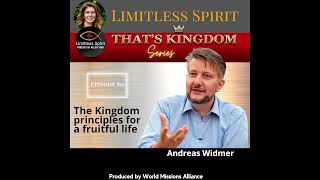
Andreas Widmer, a former Swiss Guard for Pope John Paul II, explains how his faith shaped his approach to business. He contrasts 'creator' and 'harvester' mindsets, arguing that principled entrepreneurship means creating genuinely good products and including the poor in productive work, not just charity.
Chapters
What if you had a guide who could tell you how to bridge a gap between who you are today and who you're destined to be? What if each week you could hear a story of someone who has tried and succeeded, or perhaps tried and failed, but learned something in the process? Limitless Spirit is a weekly podcast where host Helen Todd interviews guests about topics and personal stories on defining life's purpose, pursuing personal growth, and developing a deeper faith in Christ. There's two ways to approach your business as a creator or as a harvester. It's not that you never harvest, just like the good farmer, but the key is to have to all of life the creator attitude, because that is the attitude that reflects the image and likeness of whom we're made in foreign.
Welcome to the Limitless Spirit Podcast. I'm your host Helen Todd. We continue this series titled that's Kingdom, in which we explore various aspects of the kingdom of God and how do we fit into it at the present time? In Matthew 25, the passage verses 14 through 30, Jesus uses a parable in which the king entrusts his servants with different amount of money and sometime later demands of them an account of what they have done with it. Only those who multiplied what was given to them receive praise and are invited to share in their Master's happiness, but the one who just preserved what was given to him receives a harsh rebuke. In this episode we explore what are the kingdom principles for a fruitful life and how do we reflect the image of God in our work. My guest today is Andreas Widmer, who is an entrepreneur, business leader, and a professor of entrepreneurship at the Catholic University of America's Bush School of Business and Economics. Andreas has an interesting story. He was led to Christ by Pope John Paul ii. This beautiful story is documented in his first book, the Pope and the CEO, and his second book, the Art of Principled Entrepreneurship. Creating Enduring Value is an insightful and practical guide on how business can be run both virtuously and be profitable. In our conversation we talk about Andreas story of radical salvation while he was serving as a Swiss Guard for Pope John Paul II and what he has learned about bringing the Kingdom of God into the workplace for a more fruitful business and a satisfying and meaningful life. I hope you enjoyed this episode of the Limitless Spirit Podcast. Hello Andreas, welcome to the Limitless Spirit Podcast. How are you today?
Thank you. Thank you very much for having me.
I've been looking forward to our conversation for a while. In the meantime, you have been busy finishing your latest book, the Art of principled entrepreneurship. And we're going to talk about this a little later in our conversation. But in the meantime, I'm so deeply fascinated by your story and which is really reflected in your previous book, the Pope and the CEO. So let's talk a little bit about that. You were deeply impacted by Pope John Paul II in a very unusual story.
Yeah, it is an unusual story. I was very blessed. I'm from Switzerland. I was born and brought up in a small village in Switzerland. Like small, as in 400 people kind of small. And, you know, grew up. Switzerland has a militia. I started to go into the military. Well, like every. Everybody had to. And I was sort of a kind of kid that didn't quite know his place. It took me a while. Well, in my youth, I never figured out what I was good at other than the military. Like, I, you know, I was strong. I grew up in a countryside, so I knew how to be outdoors and all that. I learned at some point that I, that there is a place where you can learn to be a bodyguard and they would pay you for this. And I'm like, that's what I'm going to do. Because that's the coolest thing I could think of when I was like 17 years old. And so I signed up and I have to say, if I, if I would have known how hard it was to get in, I would have never applied. I wouldn't have had the self confidence. But I did. And I actually made it through the different rounds and was selected to be one of the Swiss Guards. It is only in the process I found out that I would protect the Pope in Rome, in the Vatican to do this, which was fine with me. I wasn't exactly religious, but I grew up as a Catholic in a little bit more than nominal way, but not strong. And so then I, when I went there, I actually ended up meeting John Paul II at a very delicate moment in my life where I, I just. It's one of these moments in your life where you realize that what you've done so far hasn't worked, that you don't have the answers. And I was really. I call it my perfect emotional storm. Like, I was really down. It was late in the evening. It was actually a Christmas and it was late in the evening and I was just totally depressed and down on myself. And exactly then. And see, this is the beauty of being in the Swiss. Exactly then the Pope comes into the room that I'm in and sees that I'm crying and says, well, you know, in a Sense, he says, what's going on? And he saw my desperation and he. Instead of. See what I found in retrospect, of course, instead of him saying being prescriptive, he was saying what he was going to do for me. And first of all, he says, I am so happy that you're here, and I'm so glad to meet you and have you on this team and everything. I will now pray for you. And that's how he left me with. He didn't say, you should learn to pray more or something like that. He actually said, I will pray for you. And from then on, he always continued from there and eventually taught me how to pray. And it was. At first I focused on him and sort of said, oh, this is how I want to be like this person. And sort of. I put him on a pedestal. He wouldn't tolerate that. He said, no, you don't want me. You want who I have, Jesus Christ. And that's how he taught me how to pray and move the focus of me over to Christ. And through these prayers and spirituality that he taught me, I had very profound spiritual experience and in that sense converted and found Christ as a living being and living presence. And it changed my life fundamentally.
This is incredible. Even though I'm not a Catholic, I have a deepest regard for Pope John Paul ii. And just from everything that I have heard about him, you know, and of course, I grew up in the Soviet Union, and I know that he had a lot to do with the fall of communism. And, you know, that is just. I consider him a hero, a hero of faith. And so was it common for him to talk to his bodyguards or did he kind of single you out?
No, it's very common. Because you see that if you're a leader like that, I presume it's the same with the President of the United States or leaders like that. The protocol is so formal around them, and people usually want something from them, I presume. And it's so stiff around that the people who are around this person all the time, I mean, these people have to talk to somebody. And so he gets used to being, you know, there's a hundred of us. He gets to know everybody. We're always there, but in the background, we don't initiate conversation. But he very regularly spoke with us and wanted to know what's going on and truly ministered to us. There were. When I entered the Swiss Guards, there were nine of us at the time who entered. Eight of us had this profound conversion where we found Jesus.
You know, I think this is so extraordinary. The fact that, you know, he was entrusted with such a high position and responsibility on his shoulders and yet, you know, he saw people around him as individuals that needed Christ and impacted people close, you know, that served him and supported him in his work on such a personal level. So how did that impact you later on in life? Andreas?
After I met him, I met my wife in Rome actually and came to America because, because of her. And I'm happy to say we're 30 over 30 years married now and but I got involved in the high tech industry and very blessed like with some really large successful startup companies that I helped build and more and more Jesus and my faith was pushed into Sunday, right? And then, you know, you're not a fallen away Christian or anything, you go to church on Sunday, but then Monday through Friday it becomes like, well, there's a different area of my life. And I fell into that pattern until I started to see and experience some real challenges and troubles of seeing people cheat and lie and do really bad things through business. And a part of that affected me where people lied and cheated. And it's funny that in those instances then you go back to God. As long as everything's going well on Wednesday, you don't need God. But when something happens in a way you're more susceptible to grace when you have trouble. And I went back and re examined all of this and I realized that what he taught me, what John Paul taught me back when I worked with him, I misapplied my understanding of work. You know, I started to not focus on right on work in the right way throughout my career because I started to focus only on the outcome of my work. I'm a high tech entrepreneur. I look for the exit. I try to make, you know, an roi. I'm, you know, as many multiples as I can and so on, which per se, there's nothing wrong with it. But if this goes into my heart and what I'm trying to do, then work becomes a means to an end. And it had and that is no longer in the spirit of what we're supposed to do as Christians. And so I went back and read and relearned what our faith actually teaches about work and how to imitate God through work. And that is something that he gave me back then and he explained to me back then. But I was too immature to actually understand it properly and I had to run through all these problems to get to the point to actually then restart. And my book, the Pope and the CEO is actually about that experience. Of explaining what happened and then say, here's I had to go backwards a bit. And then, and then re approach it. And getting work, right, is one of the key aspects of being a faithful Christian.
You know, we are right now in the middle of the series that's kingdom. And we dive deeper into different aspects of the kingdom of God and trying to understand better the concept of the kingdom of God. And as, as a leader of a missions organization, I sometimes hear a person say, you know, I admire so much what you do and the emphasis of the work that you do. And I would love to just leave my business, you know, and commit myself to missions full time. And so there is that perception that business and being involved in business is something very secular. It has nothing to do with our faith, you know, and so to, to become a person of faith or to be a good servant of Christ, you have to set aside your business and devote yourself to missions. And I, I disagree with that. So I, I, I don't think that God called every single person into missionary work full time.
It's like, you know, the body of Christ is made up of different members, right? And so each one has a calling. What I would just like to say about work, and the first thing we have to understand is we, you know, animals can't work. No animal has ever done a day of work in their life. Which means, work means that we have our own will and we create something out of nothing. And whoever did this, this is my, my little Swiss fountain pen and, and somebody took metal and formed it exactly into this and takes ink and really out of nothing, out of their thoughts, creates this. This is exactly analogous to Genesis where God thinks of doing something and then does it, and it becomes a reality out of, out of God's thoughts, right? And, and this is exactly what we're doing. And we're doing this because we are created in the image and likeness of the Creator. Why can you create, why can you and I create this podcast right now? Because you or I have the power to create? No, because we are made in the image and likeness of the Creator. And that creator allows us to participate in that creative power to do this, right? And that is how we are in the image and likeness of the Lord of God that we can actually have this power to create. So then God creates the whole world. And at the end says, I want to make somebody like me, who never dies, who is creative. And then once we were created, God comes and says, you continue my creation. And we will call that work. The fall is after the creation of work. The fall makes it more difficult afterwards. But in the beginning, the beauty of this call to the stewardship mandate is for the Lord to ask us and say, you're my steward, continue the creation I have started. I'll make you master over it. Not master in the abusive sense, but master in the sense that we can bring, we can continue the fulfillment of it. And I think there's a theology of work behind this. That is, that makes every act of creation, even if it's me cleaning my kitchen, if it's a willful act where we allow God to come into, becomes a prayer. And that is so beautiful. And John Paul used to talk to us about this, that this, you know how Paul says pray unceasingly? We pray by every creative act we do.
I think that's absolutely beautiful. And I agree with you that we are different members of the same body and we have different duties and responsibilities, responsibilities. And no matter what it is, we are called to glorify God. And I think. So you just finished this second book, or your last book, and I think it really touches on what we're talking about is the title of it is the Art of Principled Entrepreneurship Creating Enduring Value. And so my understanding, I have not read your book yet I am confessing that. But my understanding is that it specifically highlights certain principles that help you transform your business from just a money making machine into something that creates more than just physical value. Is that correct?
And let me stress this. So I am an entrepreneur. I teach at the business school at the Catholic University of America in Washington D.C. i'm heading up their entrepreneurship center. And so I am not against profit, I am not against money. But there is an order in the world, right? And as Christians, money is not the top of our order. Our work is much deeper than that. John Paul used to like to say, when we work, we don't just make more, we become more. And when, when, if that is true, when we become more, if you're made in the image of the Creator and you create, then that act of creating is a path to holiness. And so that should be the first thing. And so the first. So I'm using these principles of principled entrepreneurship and I'm saying this in a more secular way. But the first thing to say is that the economy in business exists for people, not people for the economy. We have an economy because of people, not people because of the economy. When you get into this race of creating companies and work and all that, we tend to lose sight of that. And it's just important. The first thing, why are we doing this? We're doing this for people. So the person is the central aspect of everything we do. Never forget it just, it's not forgetting the forest, missing the forest for the trees. The second thing, the second principle then is to create. To create is to be human. So and we should create companies and teams that allow people to flourish in their creativity, each according to their talents. God gives everybody different talents and we should see our teammates. You know, John Paul never said, never liked to say, oh this person is working for me. He says, no, nobody works for anybody if not for the Lord. We work with each other. And so what do you do really well. And what do I really well. If we put this together and we sort of create a circle, if you wish, of mutual benefit in that sense, and we make up for one's weakness, the other strengths and what their talents are, we can create a team that is actually a super winning team and then focus on creating. And you see with the creating, God gave us this freedom of our will and in a sense the freedom from choosing between good and evil, which is an unbelievable freedom that God gave us. And so in business that means you have a choice to create goods that are truly good and you have a choice to provide services that truly serve. And you could add to this at the end end are profitable otherwise that's a difference between a business and a hob. I'm sort of putting that in the second realm. Do the goods that you produce, are they truly good? And the services that we create or provide, do they truly serve? This is something goes to the core of our soul, you know, where, you know, when the Lord says that the evil stuff comes out of the person, it's like with our creation as well, what do we create and is this a truly good thing? One of the things I sort of about profitability, because that's often where people have a concern. Is it? When you're a Christian you talk about this. Well, you know, you're not against profitability. No, our Creator never created anything that wasn't profitable. Look around the world, even stones multiply like with volcanoes. And even, even that multiplies. Everything God created is abundant. And so therefore when we create, we should also create in abundance. If it's not abundant, you're doing something wrong. And it's not a business. Now I'm not saying we shouldn't have charity where you're basically giving stuff away, but that's not a business. Right? And so the business, the more the constraint of Business is not profitability. The constraint of business ought to be are your goods truly good?
So this, I completely agree with everything you have said so far. I want to touch on something that I think is a deeply flawed theory, but it seems very alluring and, and not. Not dying or going away anywhere. But. So the idea, and it's not necessarily a Christian thought, but just a thought that floats right now. And it seems to be populous, that somehow it is bad, not necessarily bad to create profit, but it has to be evenly distributed between the people. So. So we should minimize the difference between the rich and the poor and have an equal distribution of the wealth that is being produced. So what are your thoughts on that?
So I would like to. Because we have a limited amount of time. This is one of my passions. I talk a lot about it. I've traveled the world to do this. I've done a lot of work in emerging markets in an area called Enterprise Solutions to Poverty. Most of what I have to say is captured in a movie called Poverty, Inc. And you can easily find is a documentary. And it speaks a lot. Actually. A lot of the entrepreneurs in that movie are people I found through the work a team of us did in emerging markets. In order to understand the answer to this, the gap between the rich and the poor is. And again, I'm going back to John Paul, the seed that he gave me. John Paul talked about and said poverty should not be measured in dollars and cents because otherwise you fall into this fallacy that there's a fixed amount of money in the world. No, poverty is not about dollars and cents. Poverty is about being excluded from networks of productivity and exchange. Because you see, networks of productivity and exchange are our vehicles to create value for others. The access that we have here on the Internet, the access of how we met each other, having common people, friends in common, and so on. These are networks of productivity exchange. The fact that I know somebody at a bank or at a venture capital firm who invests into my company. Networks of productivity and exchange. The poor are excluded from this. Even here in the United States, you can see banking deserts, food deserts. The. The poor live in there and they can't get a loan and they can't have access, even education access and so on. And if you want to fix poverty, we need to include the poor in our networks. We all do charity with Africa. 30% of all charity in the world goes to Africa. And is Africa getting less poor? No, it isn't. But only 4%. Well, not 4%. 1.4% of foreign direct investment in the world goes to Africa. That's the money where we do business with. We want to do charity with Africa. We don't want to do business with Africa. We want to do charity with the inner city in America or the rural area that is poor. We don't want to do business with them. Better said is that we should actually include them in our profit by help them make profit. Profit is a. Profit is a measure, is the financial measure of value created when you create something. You know, we go back to my pen, these people in Switzerland, they created this pen with metal and everything. It probably the ingredients, even the work and all probably cost $3. I however paid $30 for this or 60 probably. So let's say it cost them $20 and I pay $60 for it. Where do you think the 40 extra dollar come from? On top of this? You can call that profit, but from my perspective, this is additional value that they put on top of this, which is the ingenuity of the human mind. This is the creative spirit in us, right? That's new money. That money that is profit has to be printed. It's new, new manner created has never existed before. As long as we in a free market create goods and services that we freely buy and pay more for than it cost the person to make it, there's not one second, there's only. That's the same amount of money in the world. So instead of this redistribution idea which takes away all the incentives to be innovative, what we should do is to add everybody and do business with everybody and add everybody into our networks of productivity and exchange. Invite them onto the table. The Christian part, the Christian love for a humanitarian emergency should be charity to give it away. The kind of charity for the economic development should be to invite them into our circle of exchange. That's different than giving something away because that doesn't feed the person tomorrow. But if they're included in my circle of exchange, then they be. Then I regard them as equals and they can make their own money in that sense. And that is the solution for economic development.
This is a very interesting conversation and maybe even a subject for another podcast sometime later down the road. Actually, my son introduced me to that movie Poverty Inc. And it really made me think a lot about how we even approach charity within our organization because we do missions work in some countries that are definitely third world countries. So going back to the subject of the kingdom of God and people who are involved in business and you know, they are believers in Christ, but they're called to create value. Create run businesses or work for businesses? What would you tell people like that who want to do the most in their work, but also the most to glorify their God? What would be your advice to people like that?
So we talked before about how Jesus says, what is the kingdom? What can we compare the kingdom of God to? And it's, of course, so beyond our imagination that we have to use all kinds of analogies and similes and so on. But at the end of the day, it would be fair to say that the kingdom of God is grace for God so loved, you know, humanity and the world. So my view for Christians to work for the kingdom of God is that in business, there are, you know, how I talked about the food and the banking desert? Well, there is a love desert in the business world. And I'll give you again a story that John Paul told me. And because, you know, love in business is sort of loving your employees. And so John Paul used to say that, you know, love in English is sort of a simple word that has 5 million meanings. You love a dog, you love pretzel, you love your spouse, one kid. It's just weird. It is the same word in Italian. You know, the Italians are going to love their language. They say different things and they have more. Especially for love, they have more. So what he would point out is that in Italian, me talking to you, we're working on this together. I wouldn't in Italian say, ti amo, I love you. Because that would be reserved for a personal relationship, for us to work together. The way that the Italians would express it is to say, tivoglio bene. It just gives you goosebumps to think of what that means. I want your good. You know, goodwill. I want your good. And so. So we have to ask, as Christians, what good do you want of the person you work with? It doesn't matter what their faith is. It doesn't matter if they're Christians or not. What good do you wish the person to have that you work with? The person to have that you bought, that buys from you? The person that invests in you? Tivolio Bene. Do you want their good? And then refuse to do anything that isn't the good you wish for them? And the highest thing we wish, and this is again the reality bringing about the kingdom of God is in a sense, to populate it, right? And to say, I wish you into heaven, Tivoglio Bene. And the Bene I want is heaven. And so that is something I can do without a fist, without a finger, but with Love to say, I wish you in it, therefore, I refuse to do anything that is harmful to you. And I'm telling you, if we start to be acting like this, I think that is what Christ meant when he said that you be the leaven in the world, that love is so radiating that it would. You know, I just had a friend who told me this morning a story that he basically worked with, you know, in a competitive environment. And he was in, and he's the CEO of a pretty large company, and he walked out of a meeting with some vp. And I remember, I don't remember what the issue was, but this VP somehow said, and it was years ago, oh, my son has this special condition. And they wouldn't take him into the healthcare when he joined and so on. And the CEO, my friend said, what are we talking about? And he says, well, it's like $14,000 a year and this and that. And the guy just says, I'll take care of it. And then now, like 10 years later, this VP is still in the company. And he says, the reason why I'm here, because I want to find out what drives you, because I've never met somebody who, when I'm just on the way out of a meeting, say, you know, my son has this issue. And you said, I take care of it. And 24 hours later, it was taken care of. You never spoke about it again. You know, the witness, Tivolio Bene, the witness you give on this speaks louder than 5 million words. That is building the kingdom of God. And there is a desert of that in our economy. And my book, the Art of Principled Entrepreneurship and the previous book is a call to that to go into business, rather out of business, to go and bring this other directiveness back, which is how it's meant to be in the first place.
Wow, that was a great analogy. Very beautiful, Andreas. So I'm going to post in the show notes the links to where people can pick up the book. Actually, both. Either one of those. But is there a quote from the Art of Principled Entrepreneurship that you would want to share on the podcast today that as sort of a takeaway for our listeners? Did I catch you on the spot?
We talk about there's two ways to approach your business. As a creator or as a harvester. It's not that you never harvest, just like the good farmer, but the key is to have to all of life the creator attitude, because that is the attitude that reflects the image and likeness of whom we're made in.
That is great. Thank you. So much Andreas for a wonderful interview and I'm looking forward to reading your book.
Praise God. I'm glad. Thank you for giving me the chance to be here.
As Christians we should be known by our love and we can make the kingdom of God manifest by loving others the way Christ loved us first. As I was listening to Andreas story, I couldn't help but think that he was led to Christ by an act of true love. A highly exalted religious leader noticing the tears of a humble young guard and helping him find the light and the truth. Today, Andreas is essentially doing the same, helping people find a deeper meaning in their work. You can find links to Andreas book in the show notes for this episode. At World Missions alliance, we believe that changed lives change lives. If you feel called to missions or would like to learn more about what we do, I encourage you to Visit our website rfwma.org for more information. There you can also find out information about our upcoming conference, Greater Purpose Conference. Our theme is that's Kingdom and you can find out more about the speakers and and register for the conference. We also have a digital version of the conference if you can't attend it in person, so everything can be found there at the website rfwma.org I hope you have enjoyed this episode of the Limitless Spirit Podcast. Until next time, I'm Helen Todd.
Limitless Spirit Podcast is produced by World Missions Alliance. We believe that changed lives change lives. If you want to see your life transformed by Christ's love, or if you want to help those who are hurting and hopeless and discover your greater purpose in serving Christ through short term missionary work, check out our website rfwma.org and find out how to get involved.
More from Andreas



He Teaches Entrepreneurs How To Be The Leaven of Society | Andreas Widmer | The Pope and the CEO



Principled Entrepreneurship with Andreas Widmer: Lessons in Leadership and Humanity

Principled Entrepreneurship with Andreas Widmer: Lessons in Leadership and Humanity



The Virtues of Free Enterprise and the Heroic Spirit of Entrepreneurs | Villanova University | 2024
