EWTN Bookmark - 2013-03-10 - Andreas Widmer - THE POPE & THE CEO
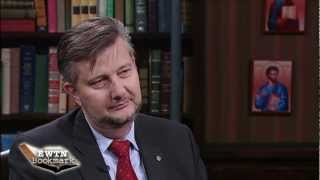
Andreas Widmer served as a Swiss Guard under Pope John Paul II and Cardinal Ratzinger. His book The Pope and the CEO draws nine lessons from those encounters for business leaders: vocation, humility, prayer, stewardship, truth-telling, long-term thinking beyond quarterly metrics, and integrating faith into work. Each chapter includes practical exercises.
Questions this video answers
He served for two years (between about ages 20–22).
Two years ("Two years is the minimum you have to sign up for").
About 500 years old (Widmer: "You're 500 years old").
About three months.
He cites "April 2nd" as the day John Paul II died (Widmer traveled to Rome then).
Chapters
Sam. And welcome once again to EWTN's bookmark. I'm Doug Keck, your host. Our special author is Andreas Widmer. We'll talk to him about his book, the Pope and the CEO John Paul II's leadership lessons to a young Swiss guard. Welcome to EWTN's Book Talk.
Thank you. Thanks for having me.
Now you look like you could have been a Swiss Guard. You don't look quite as young. So this is back a few years then, Right?
They start when they're 20 years old. And I started. I was a guard between 20 and 22. So a couple of years ago.
So. So you're there two years, right?
Two years is the minimum you have to sign up for.
Okay. That's what it is. Okay. Now, could you have stayed forever?
Not forever. You usually can stay for 20 years. So until you're about 40, 42 years old or so, you know, it's a foreign legion. So we're Swiss and we're serving a foreign head of state. The Pope is a head of state. If you're an American and you go serve a foreign head of state in their army, that's treason. But for the Swiss, they allow it. But you give up your passport while you're going there, and then you can come back without being caught.
And you talk about the history of that in the book of where the 150 and serving the Pope and where that came from.
You're 500 years old. I write about this in the book. Yeah.
Okay, let me ask you about that. Because you were a Swiss Guard, you were there for a couple of years, and now you've come out with this book, the Pope and the CEO. It struck me, one of the things, because one of the concerns, many times it seems to be, I know certainly in the United States has been that the model of bishops as being CEO wasn't really the best model to move into. But you're not suggesting that. What are you suggesting with this book?
I'm not suggesting the Pope is a CEO. I'm suggesting that I am the CEO and I have led several companies and made my career in business, but was very early on in my life influenced by the Pope. I found my faith through John Paul II and ignored and left most of my career his advice outside of my business life. So I took his advice in the personal space.
Okay, so you were certain dualistic.
Yeah.
Like you weren't Catholic or you walked away from your faith. You just didn't necessarily have it impact your business life as much as it should.
Jesus was the man on Sunday. I was the man on Monday through Saturday. Okay. And to me, the Pope and the CEO means that I, you know, that these two things were silos to me before, but they ought not to be.
Now, you just said that you kind of got your faith from John Paul ii. Now, did you not have faith before you went to work at the Vatican?
I was a cradle Catholic, and I was confirmed and baptized, but I myself did not embrace the Church or, you know, faith to say, well, I don't know if this is true or not. And my participation in the Church had more to do with the pressure of my parents.
Oh, I see. Okay. So when one was. Goes to be a Swiss Guard or wants to be a Swiss Guard, you have to be Catholic, but you don't have to demonstrate some knowledge.
There's no litmus test. No litmus test. And I'm glad there isn't because a lot of so many of us have profound, profound conversions on the influence of the Swiss Guards and our life there. I think I heard recently about three. Every year we have about three vocations to the priesthood. And most of the guys who come there. Switzerland is totally secular. And, you know, my catechesis was nil. I mean, I knew more about Buddha after my catechesis than I knew about Jesus Christ and Jesus Christ as a reality, as a living person that I could have a relationship with. Maybe, you know, I want to give them some credit and blame me to some extent, but that was foreign to me. So when I saw somebody like John Paul II who had a living faith, that just blew me away. And I think still today, people see Benedict having this living faith, and a lot of the guards have profound, profound conversions.
Well, it's interesting you mentioned our present Holy Father, and you talk about a time that you spoke with him in the book when he was a cardinal. And I think you were referring to a time when he and the Pope were in Germany and they had some people throw things at them. And you kind of asked about, didn't that get you upset? What did he say?
Can you believe it? They went to Berlin. And I see this was. So before I go on duty, I watch TV and I watch the news, you know, in the barracks. And you see these news where the Pope and, you know, usually the highest prelate from that country is with him in the Pope Mobile. And that was Ratzinger at the time. And so Ratzinger and John Paul II drive whatever to the airport, and they drive through this downtown Berlin. And all these people started to Scream at them and threw eggs and tomatoes at them. And I'm seeing this as I'm putting my uniform on and I'm going upstairs and I'm going to be a guard at the Papal apartment. And I go up there, I think it starts at 8 o', clock, my shift at that point. And then half an hour later Ratzinger comes in and I'm in the antechamber to the Papal apartment. And Ratzinger stood there and they weren't ready, you know, they didn't say to let him in yet. And so he was just standing there and I thought, excuse me, do you mind? You know, and I knew him, I knew who and he knew me. And I said, I just need you to ask you a question. He says, sure, sure, go ahead. And you know, he has this very calm and non threatening demeanor. He invites you to speak. And I said, I saw you today, you know, they threw all this stuff at you. And he was just there going, yeah, yeah they did. I said, how can you live with this? Doesn't this hurt you? And he looked at me and he says, you know what, they're not throwing stuff at Joseph Ratzinger or Carl Wojtywa. They're throwing this at the message that we're bringing. And I feel bad for the people because I can't change the message that we stand, that we proclaim is the word of God. And that's what they're throwing this out. If I would personally and I would never have gotten involved with the church and would go to Berlin, nobody would throw anything at me. So he knew, he looked at this from the perspective of saying this is really the message that we're bringing that is being rejected. Right, right.
The message of Christ and ourselves personally. And that's why I think even talk about the utter humility there of obviously our present Holy Father and John Paul ii. And you talk about in the book about the whole aspect of how important humility is in one's life, especially humility for a leader in business like a CEO. Right.
You know, the first thing that went, when I became a CEO or when I became a senior vice president, vice president, companies, the first thing that went was humility. And with that goes the kitchen sink that, you know, when I started to become successful, I started to think it was me. That is a big, that is a big error. And that erodes all the other virtues, you know, that you suddenly think it's me, then you're better, you're better than others. And that's so the More you get into. You know, we all say, we all know the funny story, that as soon as you become the CEO, you sing well and all your jokes are funny. I mean, it's difficult to remain humble. That is why faith and leadership go together. That at least in front of God you can say, have mercy on me, a sinner, and I thank you for all the graces you're giving me, because this is not me, you know, but it's you who's giving to me. It's like what Jesus said to Pilate, you wouldn't have any authority over me if it wasn't given to you from somebody above. And I think that's what we often forget in business life, that when we make all these decisions, we are really only servants. Right.
Right now. And we're stewards, as they talk about, of the goods that have been given us, either by the organization or ultimately by our Lord. Now in the preface, you say, the Pope and the CEO is a guidebook for people seeking to integrate faith into all aspects of, of their lives. And you talk about John Paul II's sincerity impressed me both in his faith and how he brought that faith to all aspects of his life. How did you see what he did and how he acted as the Pope in the two years you were there, that you look at now and reflect back in this book as to how one should integrate those things into their business life.
So the overall integral aspect of life has to do with never losing sight, the big picture, the whole. I say to CEOs, you make a plan. I do a lot of coaching and working with CEOs and business leaders. And I often say, you have a one year plan, you have a five year plan. What about eternity? Do you have an eternity plan? Keep in mind where you're going in the long run, what is the goal? I think that's something that John Paul had from the beginning. He always looked at the very long run in that sense, in the eternal sense. But also, if you have a plan like this, you can truly pay attention to the moment. Can you imagine? I have a story in here about how I met him first when I was very distraught. My coming to understand and recognize I was nothing. I was in the wrong place. And I played all this game all this time, and then I realized I'm here and I'm a failure. So the stories in there. But then at that point, he met me. He's just walking by and he noticed and he reached out to me and said, look, I'm going to pray for you. Tonight it was Christmas Eve.
That's the first Christmas way where he said, this is your first Christmas.
He noticed your eyes, and he says, I'm going to pray for you. You see, when it was somebody again, there's so many meanings in there. So he sees somebody in need and he doesn't say, why don't you go and pray? He says, no, no, I'll pray for you. Because at that moment, I wasn't even able to pray for him to live so much in the moment. A man who leads a billion Catholics and has all kinds of troubles on his mind notices somebody like a doorman if you wish, notices this person's sentiments and their pain in their soul and reaches out to them. How many of us know the person in the garage who parks the cars, or the receptionist at our best client, or our own receptionist, or the person who comes in and cleans the office late in the evening? Maybe you're still sitting there. Do you know who that is? How many kids do they have? What are their dreams? How are they doing emotionally? John Paul knew that's because he could live in the moment. He doesn't have to worry about the future because he has that plan and he has that confidence, and then he can pay attention to what's going on.
Well, Mother Angelica always talk about living in the present moment and that same concept.
I think these two people have a lot in common.
Right? Right, you say. I myself didn't learn these lessons right away. It took me years to see the connections between the Pope I once served and the work I did every day. And he said I had to make and lose millions of dollars before I began to understand? Do you think sometimes with people, it's only when the tough times come that we realize it's not all upon us, that we do have to turn to the Lord. Or we either turn to despair or we turn to the Lord. Is that how it works? Is that what you've seen?
Not with everybody, but I do think that I would have not found my faith the way I have it today, thank God, if I wouldn't have gone through this trouble. And so I thank God to have let me experience this. And, you know, I'm a work in progress. We all are, and I have a long way to go. But to understand that it isn't me, I think I got that.
Does that take the pressure off you? In a way.
Gives you freedom. It gives you freedom and it gives you confidence because you know who I work for. It's beautiful to look at this in the bigger picture of the world and to let him be the boss. You know, John xxiii, Once they asked him around Vatican ii, they said, well, you have so many troubles and everything. How do you sleep at night? And he says, I sleep very easily. Basically, my last prayer is, you know, God, this is really much more your church than it is mine. So I'm just going to go to sleep now. You worry about it overnight. I'll be back tomorrow. That's right. And then he goes to sleep. That's the freedom you get as a Christian.
Now, with this book itself, you say, how to use this book? It's divided into nine chapters or lessons. Each contains several stories or reflections about John Paul ii, as well as practical applications and a good dose of church teaching. Now, it's nine chapters because you picked out nine things related to John Paul ii. Right. And how long did it actually take you to put the book together and whose idea was.
It took me three months to write the book. I had, of course, a lot of help with some of my colleagues and staff. The idea to write it percolated. The actual process to start writing it was the long part because I just did not want to write this book.
Have you ever written anything before? Well, you talk. Well, you wrote proposals and things for Templeton and some other.
I'm a business ride.
So your business plans?
Yeah, you know, marketing stuff and things. But never, never written a book. I really didn't want to write this book. But when. Through a long. Through a long providential journey, I ended up being in Europe. The day John Paul died, I was on my way to Afghanistan. My company had an office in Afghanistan, and I was going to go there, but I land in London and John Paul dies that evening, Saturday evening, April 2nd. And I say, well, I'm not going to go to Afghanistan. I'm going to go to Rome. I go to Rome, within 24 hours, I'm in front of the remains of John Paul ii and I'm saying, lord, why do I have all this privilege?
Why?
You know, I'm crying. What I hear back is to say, yes, I give you this. What are you going to do with it? So I give you this privilege. What are you going to do? You're going to go around and say, this is your second chance to say, it's, you know, I'm.
Look how important I am.
Yeah, it's me. No, this is a gift to me. I'm sharing the gift. All of these privileges I've had, I'm trying to share this now, to turn around and Say, look, here's what has happened and here are some of the insights that were granted to me and things that I learned the hard way. Maybe somebody else then doesn't have to learn it that hard way right now.
You've also got it laid out in such a way, you say in each chapter, connect the teaching to the world of business and make it as relevant as possible. You find a practical exercise. You have, like questions and stuff at the end format. So why did you decide at the end of the chapters to kind of do something like that and almost make it like a little workbook?
Because I'm Swiss. I'm very proud. See, that's part of why I'm not. I'm not an author in the sense of wanting to write something pretty. I'm interested in change and I'm interested in saying, okay, what are we going to do now? What you do next is the most important thing, not what you do in two months, what you do next. Part of this is, look, everything in this book is basic Catholic doctrine, basic Catholic teaching, all of it. None of this is mine. This is all something I received myself. What I can do, though, is to help you turn this into action. What does it mean to put the person into the center of your company? What's next? To give you some exercises, some things that you can write on, write about that will lead to specific action. That's my goal with each chapter.
Now, you came up with, like I said, there's nine. And you relate those. So let's run through them quick. Know who you are, the importance of vocation. And you talk about different levels of vocation in the book. What do you mean, vocation?
You know, your mission from God.
Okay, we're all placed even in your secular life, in the whole.
There is one primary mission we all share, and that is to become saints. We're made to be with God and glorify God and rejoice with him. And that's our universal vocation. The primary vocation is then the path. I say like this. So the overall idea of the universal vocation is like a map of saying, here are you and here is God, and you're meant to be with God. The primary vocation, then is the vehicle you're going to use. You and I have the vocation to marriage. We're using that as our vehicle to holiness. Your wife is your path to holiness. My wife is my path to holiness. The secondary vocation is what we do all day. That is now taking that vehicle and driving down the different alleys to get to point B. That's what our work is. And that's in a way then these three vocations together end up in giving us the opportunity to Saints.
Now, in that chapter, Know who youo Are, you talk about the chaos of competing priorities. What are the competing priorities?
You see, we all have different roles. So I'm a Christian, I'm a Catholic, I'm a husband, I'm a father, I'm a son, I'm a brother, I'm a CEO, I'm a teacher, I'm doing this, I'm doing that. All of these pull at me. It's very difficult to figure out what to do next if I don't understand what my priorities are. That's again something we do in the book to say, okay, here are the priorities that you understand. What comes first, what comes second, what comes third. And sometimes the things can melt together. But if you don't have the priorities set straight on that path, you're going to go way off the map. Believe me, I've been there.
And you talk about seeing others start off, even in the companies you work with, the startup organizations, where it started off with the right premise, started off with a good family business type approach. But many times as the business expanded, competition, a lot of these things go out the window.
You know, intention only goes that far. Good intentions, as they say, the road to hell is paved with good intentions. Nobody starts off saying, I'm going to be a miserable leader, I'm going to only go after money, I'm going to be totally selfish. Nobody starts off like this. Everybody justifies. There's nobody who gets up in the morning and says, let's see how bad I can be today. That's not. What they're doing is they're starting without the proper map and without the proper understanding of what is most important, what is second. And just to take that step back and say, what is my life all about? Where am I going here? I think if we do that, and that comes back to starting your day off with prayer. If we do that, it becomes much easier to do. A quick word about prayer that I learned from John Paul, he would say, you see, prayer is not for God. Prayer is for us. Prayer is for us to think more like God. So by me starting off with prayer, or let's put it into the. When I pray for my employees, what that helps me to do is to think more how God thinks of them rather than I, because I have all these layers, maybe they remind me of somebody who had a bad Experience with or something. But if I pray for them, it actually helps me to see them more like God sees them.
And yes, less utilitarian.
Less utilitarian.
Less difficult in business to get it right.
But also, on the other hand, still in the sense of saying, are you in the right position here?
Right.
Is this.
Well, you say prayer in the CEO. It takes more to run a business or manage a team than just prayer. All the prayer in the world is not going to make up for a lack of skill. Piety does not replace expertise or knowledge. It enhances it. Do you think it cuts the other way?
Sometimes places with very much. Look at many of our parishes where there's no. Basically, at the end of the day, expertise doesn't help anymore. That it's just you have to sit here until you get to the next job. I think, you know, John Benedict wrote about caritas in veritate, Love and truth. That's what I'm talking about when we talk about employee evaluations. Are you truthful with this person? Are they really good at this or are they not? We are made for excellence. God made us be perfect, like your heavenly Father is perfect. He made us to excel. If we're not tougher on each other and demand more of each other, not just in the prayer life and the spiritual practices, but in our work, which is a spiritual practice, then we're just going way short of the goal.
And that's why you talk about, and maybe George Weigel mentions it in the opening of the book, the idea of not lowering the bar.
Not lowering the bar.
You have to have the right expectations and keep them there.
John Paul said that through. When we work, we don't just make more, we become more. Do you become more through your work? Is this still working for you? So if we're seeing, you see, as a CEO, as a manager. Not just as a CEO, as a manager, you have a certain stewardship over the people who work with you. If they're not becoming more through what they're doing, then you should intervene. Because it's like a plant not growing anymore. And if you're a gardener, you ought to do something.
Well, one of the things you mentioned earlier and the whole idea of are you thinking a million years from now, meaning from a point of eternity, and people don't really think that way anymore. But especially in business. And you talk about it, and clearly, I think in my own experiences, once stock options became the major concern of most people running companies, which meant that the stock price became what was the most important, not Necessarily the health or the long term health of the business, it became very short term. And that's what we're experiencing today. In some ways, that's the way people are living their lives in general, right? Without this sense of the eternal look.
You do what you measure, you excel at what you measure. We didn't have the quarterly numbers and the stock price before. When I was at FTP, we didn't have the stock price ticker to see where we're at. But suddenly this become the number one measure. It's okay to have this to be as one measure, but before we had to use all kinds of other measures, actually much longer term measures which were healthier. So as a leader in your company and as us, us as the public as well, people always talk about the system ought to do this and that. No, you and me, we can make a difference. Everybody who's watching today has somebody they're supervising or somebody they're working with. Start to measure something differently, start to measure something longer term. If you have an employee review, what do you measure people by? And if you are a CEO, start to move your company away from simply measuring stock price. And then people say, well, no, but the market demands this. Well, I can tell you of plenty of companies who don't measure themselves like this and are just as successful and are doing well.
And now chapter five, you talk about know where you are and where you're going. If you want to lead your company in the right direction, you have to help people understand that you want the truth, even when the truth is hard. You have to foster a corporate culture where honesty is rewarded.
You know, it goes back to this idea that as soon as I became a CEO, my jokes were funny. And I know they're not because the Swiss are not known for their funny side. Okay, so. But suddenly everybody laughs at my dumb jokes. And it's just one example that then people then figure out what it is that you want. And they start to tell you what they think you want to hear.
They mirror you.
They mirror you. Benedict did a really interesting thing when he was the head of the Congregation for the Doctrine of the Faith. And that's from the Benedictine rule, actually, that he started every meeting by the youngest, most junior person saying what they had to say. And then the second and the third, and he spoke last. Think about this. When you go into a normal meeting and the CEO is there, the CEO speaks first. And if he or she says something, everybody else is going to say, right?
He sets the tone. And then people pick up on what's acceptable?
It's a small change. Start to change that you're starting to get more honesty.
Right. And you go through all nine here, which people can read through themselves. I just want to touch some beautiful color photos in here when you were a Swiss Guard. And one of the pictures I thought was really interesting, besides indicating how tall you actually are. Standing next to our Holy Father is a page here where there's a picture of you with your four year old nephew Michael when you were in the guard. And then there's a picture, I guess 18 years later when he became a guard.
Yes.
And then there's also another Matthias.
Yes.
So is that another nephew?
That's Michael's brother.
Yeah.
Two of my nephews. And Michael is my godson. And he, he was there the first year of Benedict's pontificate. We almost made it. He entered in June. John Paul died in April. So he served for two years and now Matthias worked for two years and he just left earlier last year.
For the people who leave, I mean, obviously you kind of went off into a very interesting life. That's maybe not what most people would think somebody who was a Swiss Guard would go into. But is there a typical place that people who leave the Swiss Guard tend to go into kinds of business or area?
There's a lot of different people doing different things. There's 2,000 of us who have been, who are alive, who were guards. Many of them go abroad to other countries like I did, but also quite a few of them keep going in security jobs. So you have people at the un, you have people at the Swiss government, and then in all the different police departments in Switzerland, because that's just sort of a natural. And you come with good credentials on that.
Well, let me ask you one question. Going to Rome helped your faith. Does it help everybody's faith?
Doesn't help everybody's faith. Some guards lose their faith. It depends. It's like in a relationship. It depends what you look at. You know, the church is like our mother. And if you meet my mother, there's plenty of things you can see depending on how you look at her. But I just. And you have to look at the. You have to let her show you her good face.
Very good. Well, thank you so much for helping us see that.
Thank you.
And John Paul ii. Thank you.
Thank you very much.
Speaking here with Andreas Widmar, the author of the Pope and the CEO, John Paul II's Leadership Lessons to a Young Swiss Guard, it's published by Emmaus Road Press and available through the EWTN religious catalog. I advise you to check it out. And check us out next time. Right here on EWTN's bookmark Sam.
More from Andreas



He Teaches Entrepreneurs How To Be The Leaven of Society | Andreas Widmer | The Pope and the CEO



Principled Entrepreneurship with Andreas Widmer: Lessons in Leadership and Humanity

Principled Entrepreneurship with Andreas Widmer: Lessons in Leadership and Humanity



The Virtues of Free Enterprise and the Heroic Spirit of Entrepreneurs | Villanova University | 2024
