How to be a Disciple of Saint John Paul II: Divine Mercy Sunday with Andreas Widmer
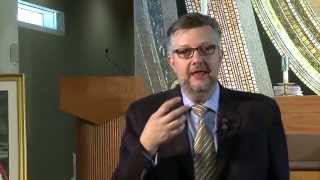
Recording of a talk by Andreas Widmer (Swiss Guard veteran) delivered for Divine Mercy Sunday. Widmer opens with prayer, recounts his personal conversion and formative encounter with Pope John Paul II (met on Dec 24 while serving as a Swiss Guard), and uses vivid anecdotes to illustrate John Paul II’s pastoral style: personal attention, humility, coaching approach to conversion, and emphasis on action. Major theological themes: Divine Mercy ("Jesus, I trust in you"), theology of the body (creation, marriage, parenthood as co-creation), and work as participation in God’s creative action — "when we work, we become more." The talk ends with audience Q&A about John Paul II’s life and examples of small acts of compassion.
Questions this video answers
December 24 (Christmas Eve) — during his Swiss Guard service (met in the Pope's doorway on midnight mass).
No. John Paul II was shot in 1981; Widmer entered the Swiss Guard in 1986.
Chapters
Sa. Let's first maybe have a prayer to help me and put us in the right mind frame. In the name of the Father and the Son and the Holy Spirit. Lord, we thank you for bringing us together on this eve of the Divine mercy. Sunday I ask you to bless me and bless my thoughts and my words. Bless us as a group that we may grow in holiness and in understanding of your revelation. May we grow in the divine mercy and in our dedication to the works of the Lord. May we see In John Paul, St. John Paul, an example of living and maybe inspired to improve and further our own life as we pray. Hail Mary, full of grace. The the Lord is with thee. Blessed art thou among women and blessed is the fruit of thy womb, Jesus. Holy Mary, Mother of God, pray for us sinners now and at the hour of our death. Amen. St. John Paul II. Pray for us. I worked for a saint. Can you believe it? I can exactly remember the day I met him for the first time, because it was a big deal for me. And it wasn't because he was the Pope or it wasn't because he was in the Vatican. Nothing like it. It had not even anything to do with faith. I met him on the 24th of December. I know exactly when that was. When I first met him. The. The reason why I know this so well is that I became a Swiss Guard two months before that. I entered a recruit school there and I went through the recruit school. And the deal with the Swiss Guards is that you go through two months of training, but if you take a test, you're done. And my duty was supposed to start January 1st. And that's why I know I passed the test on December 23, which meant I was going to have a week of free time now to go and enjoy La Vita Bella in Roma, right? And so I do what any 20 year old at the time would have done. And that is I slept until 11 o' clock and then I got up because I was free. I got up and I went downstairs and I walked straight into the sergeant major who told me, what are you doing today? I said, well, I thought of seeing the Pantheon and maybe go to Piazza Navona or something. And he says, no, there's a guy who got sick today and you're going to do his duty. No, no, no, you don't understand. I'm not even on yet. Like my duty doesn't start until January 1st. This is how I learned not to speak against the sergeant major because he almost bit my head off. And he said, no, you serve tonight at 8 o' clock until tomorrow at 8 o', clock, all night. And the reason why this had such a great impact on me is twofold. For one thing, he broke the contract with me. I was supposed to start on January 1st. And as you can see, as you probably know as a 20 year old, we have a lot of. We know our rights really well, not so much our duties, but our rights we know very well. But more Importantly, that was the 24th of December. And where I come from, that's when we celebrate Christmas and the vigil. Christmas vigil is much more important than Christmas Day. Christmas Day, you go see grandma. And so. Which is nice, but that's not when you celebrate Christmas. Christmas Eve is when we celebrate Christmas in Switzerland. Now, I come from the smallest village you can think of. My village has 400 people in it and I'm the youngest of six kids. So there's eight of us. We control that town. We can sway elections one way or the other, as long as we vote in a bloc. And I grew up there sort of very much. Have you ever seen Heidi? I'm the male version of Heidi. And I was living outside, you know, always wanted to be outdoors and do things and run around. And I was a very wild child. I did not excel at school at all. I wanted to be outdoors and run around and I excelled at that. And so being the youngest of six, how many people are the youngest in their family? Here, you see, we have a special bond because what you will understand that I'm saying is if I have three older brothers and two older sisters, it doesn't matter what I do, they're always better than me at it. It's very difficult to find your place if they're always. I mean, even if they have no talent in this whatsoever, they're still better than me. So it made me as a kid very insecure. It's like, you know, what am I good at? So they'd say, what are you going to do one day? And I'm like, I have no idea. But God blessed me with growing pretty quickly and having three rambunctious brothers that fought with me every day physically. And so I became really strong really quickly. And I, over my insecurity, put on this tough guy image that you look at me the wrong way and I'm all over you. So whenever there was a trouble in my village, it came. Look for me out of my insecurity as a kid, I started almost layer by layer to put on this, don't get too close to Me kind of thing. And it actually worked very well when the military was looking for, you know, we were in a militia in Switzerland. They loved me, you know, they asked me to do, to become an officer and to keep staying in the military and so on. And I excelled at that. This is the first thing I ever did in my life that I actually excelled at. And then I met a friend who came to me in between my time in the military and said, hey, guess what I am. I'm a bodyguard. And I said, you're a body. You mean with a bug in the ear and a gun in the ear? And he's like, yeah. I said, that's the coolest thing. Can I do it? And he says, I don't know. You have to call these people. You have to write, you know, this is like in the 80s, you have to write a letter to them. So I wrote a letter to them. Then I found out that the person you have to protect is the Pope. I thought, that's fine, I have nothing against the Pope. But you see, I'm a product of the 70s, let's say that my, my religious education was eh. So. So if you grew up in the 70s, you can relate to me. It's funny now, but we have a high price to pay for this. This is one of the things he fixed. So I against, you know, I just applied without. I didn't tell my parents about it, I told nobody about it. I applied. If I would have known how hard it was for me to get in there, I would have never had the self confidence to apply. But I, but lo and behold, they took me. I'm like, I can't believe this. And so I travel to Rome and I get to the barracks and I go through this whole training. And on December 23rd I pass the test and I'm in. And then the sergeant tells me to go to work before it was time. And I was livid. I was so angry at this man. And I, you know, the commander allows you to call home on Christmas. There was one phone. The Pope is protected by 115 Swiss guards. And all we do is protect the Pope. We don't protect the Vatican or anything. We just protect this one person. It takes 115 of us to protect him 24, 7 and wherever he goes. And so out of the hundred and fifteen, if that day everybody gets to call home, there's a line outside of the one phone in the barracks, there's a line of like 30 people all the time. And so I stood in line there and I remember, you know, as a 20 year old, you can work up and anger like you wouldn't believe. Like, my head almost exploded. I was so indignant and angry about this, of this injustice done to me. I came up with new swear words for the sergeant standing in that line to make time pass. And then finally it was my time to call. And I called, you know, you had to dial not. And I called and my dad picked up the phone and my dad says, oh, Andreas, it's great to hear. Are they going to keep you? As if I was some damaged goods or something. It's like, what do you mean, are they going to keep you? Of course they're going to. I said, I actually, I passed the test yesterday. And he says, oh, I'm so proud of you. And this is so great. Now you can go and celebrate Christmas. I said, no, Dad, I can't. I have to work tonight. Only my dad. What work tonight? I thought this was the mannequin. Of all people, they should know it's Christmas today. You don't work on Christmas. And that's when my mother heard this and grabbed the phone away from him. Now, did I say it, that I'm the youngest? You see, some of us, some of the other siblings would call us the youngest. Who are you all? Yeah, see, some of the others call us the baby. That's not really the term I'd like to. I see this more as we're the masterpiece. Like, my mother gave birth six times until she had it just perfect. And then she said, that's it. My family is now complete. I have the perfect baby, right? So needless to say, I have a very special relationship with my mom. And she grabbed the phone, she started to sob on the phone because she heard that I'm working that night. There's a problem that you see, I'm a tough guy, but when my mom cries, I have to cry with her. Except there is 30 guys standing behind me and I have a tough guy image to defend. I tell you, it's the only time in my life I hung up on my mom. I had to choose my honor. My mother. And I chose wrong. But I chose. And I hung up on my mom and my tears were welling up and I run to my room to go change and put on my uniform and go to work. It was 8 o' clock and I had to. The Pope is protected in circles. And I had to pass all the circles. That night I was guarding the Pope right outside of his apartment, John Paul ii, right inside the apartment. I'M all on the third floor. And the apartment has. It's basically a two bedroom apartment, very simple place. And there is a little room outside. And in that room is a little desk with a lamp. You know, it has a cone of light and that's about it up there. And there's a chair and you can read there because you're locking yourself in with both doors. You're locking yourself in. And I locked myself in and it was dark. And that pretty much represented my mood. This night I call the perfect emotional storm that I ever went through. Ground zero of my life. You know how you can accuse yourself of something much better than your worst enemy? Because I know I'm faking it. You're a tough guy. You're no tough guy. As a matter of fact, you're crying like a child right now. You're a seven year old inside, you're a seven year old wanting his mom. And you're the supposed tough guy bodyguard. Not even close. As a matter of fact, you're such a fool that you signed up with these people. The first thing they do is cheat you out of your right of seven days. You know, they say, oh, you jump this high, you get time off. You jump this high, you go to work. They immediately cheated you. And then you don't understand a word these people say because they all speak Italian and I don't speak Italian and Italians are all crazy. You're trying to cross the street, there's red, green. I mean, we don't need. There's not, there's. At the time, there was not one red light in my village, right? There's no. I mean, there's like every hour a car. We don't need any red light. Red light outside the Vatican. Green, orange, red. Doesn't mean, doesn't matter. The Italians, they drive anyway. I mean, you might as well not have it there. They, they. I tried to cross the street. I couldn't. I went back into the barracks. I said, what are you doing here? You're wasting. You paid. This is the worst decision you've ever done in your life. And as a matter of fact, you haven't succeeded at anything else. And you're no good. I tell you, I cried my eyes out up there in that small room. And nobody there, it's just me. Christmas Eve, 24th of December. And then the radio goes off and it's the commander and he says, widmer, the Pope is going to celebrate midnight mass. He's going to use your door. Let him out. I'm saying What? Let the Pope out? He's like, yeah. And I said, okay. When? Now. Okay. So in this little room, like this big, the desk is here, and here's this door as big as this. And there is another door going out into the loggia, you know, on the third floor. And I'm in the middle. And here's how this works. You basically go over, you turn the key. You don't open the door. You just turn the key. Because you see, so when he opens the door, it's open. He has no idea he's locked in. Every door he tries is open. We know where he is. We open the door right before he gets there. So I don't open the door. I just step back, and then the door opens. And in the door frame stood John Paul II in his white cassock and with the succhetto. And he. And this warm yellow light came from behind him, shining into my dark room without hitting me. I stood at the side of it. And there he stood, just stuck, staying in the door frame. And when he was interested in something, he would tilt his head, and he tilted his head, and he pointed at me, and he says, hey, you're new. I've never seen you before. What's your name? Nice to meet you. No, I basically gave him my Social Security number. I couldn't speak. I couldn't. And then he comes right towards me, and I see his hand stretched out, and I stretch out my hand, and our hands meet. And then I lift my head and I look right into his eyes, and I go, uh, oh. Can you imagine how I looked? My eyes must have been this red. And he looked at me, and he immediately noticed, and he said, of course. This must be your first Christmas away from home, isn't it? Boy, that was the wrong thing to say to me. I'm like, I can't answer. My lips are like, blah, blah, blah, blah. And I'm starting. Tears are coming. I'm holding this man's hand, and I'm, like, starting to have red eyes, and my tears are coming down, and I'm holding his hand, and he just pulled me in and held my right. With his other hand, he held my elbow, and he had these light gray eyes, and he looked at me and he says, andreas, I really appreciate what you're doing tonight. You're making a sacrifice, and. And I appreciate things are going to be okay. I tell you what, I'm going to go celebrate midnight mass right now. I'm going to pray for you. I said, finally, somebody cares, right? Somebody cares. That this injustice is happening to me. It was later that I started to realize, oh, he said the prayer, you see, one of the things he did, this was the pivotal point of my conversion. I didn't even really believe in God before. I didn't know. Can you really ask a 20 year old if they know if God exists or not? They don't know yet. Some lucky ones do. I didn't. And it was the point of change. And the point of change came in how he approached evangelization. The first thing he said to me is, I will go and do this, and then left. He didn't say, you know what, you should do more of this and that and that, right? No, none of this. He said, I will go and do this. And for me, this put him on my good side, Sergeant, bad side, Pope, good side, right? So, you know, you split the people in your life. So now he's on my good side, but he's still not the Pope. You know, that's not something that I understood yet. He was a good guy. And I started to watch him and I started to see, as an interested party, how he behaved. I saw him pray in front of you, Lord, on the floor, prostrate for a long time. I saw him invite the over 80 Cardinals to his birthday, see his birthday party. He invited those cardinals who are over 80, which is like being in limbo, because they have no influence anymore in the Vatican. And he invites them to his birthday party so that they have time with the Pope, right, to lift them up. I saw how he interacted with the homeless people, with the gypsies that everybody hates, that he had an audience just for the gypsies, and he went right into the midst of them. I was there when President Reagan came three days before he said that famous speech, Mr. Gorbachev, tear down this wall. And I was there when I saw how President Reagan went in and met with John Paul and came back out again. I saw when General Yaruzelski, who was in charge of Poland and was a tinderbox, and how John Paul was, be it Reagan or Jaruselski or the gypsy or the homeless or me, was the same to everybody. Everybody was able to have that experience I had when you meet him one day he comes to the barracks and he has a couple of beers with us. A real guy like, I can relate to this man. He would hike, he would swim, tough guy, strong. One day I said, whatever he has, that's what I want. Right at the point where he had all of my respect and admiration. This is like our celebrity culture today. Isn't this what it's all about? I want to be on the COVID of whatever magazine. And I look at me, I got it all, and watch me, the celebrity, I have it all, and we soak it all in. And exactly when at that point, he could have had this from me, and he did have this, he turns and says, what you're looking for is not what I am, what you're looking for is him. He turned himself into a way sign to the Lord and said, andreas, if you want to, you say, I want what he has. This is what I have. This is who I have. And you can have him too. Isn't this the new evangelization? This is how he turned. You see how this all starts is by being. By praying for somebody, by doing something for them. Pope John Paul never once told me, do this, do that, do that. Never, never once. He would always talk about, you have to make a decision. He would enlighten, he would counsel, but not in terms of do this. He would lead with example. And verbally, he would just say, pray. And what I found is just around that time when I started to be at that point, he would give me a rosary and say, this is my favorite prayer. Pray this. He would, in conversation, hear things that we go through different guards. And he would always approach us as a coach, not as a critic. And the difference is, you see, the coach is just as hard on you than the critic, but the coach has a belief and a conviction that you can do it. You know, a coach of an Olympian is going to say, there's the world record, and that's exactly what you're going to do versus the critic says, you're worthless. You can't do it. John Paul and his approach to conversion is to have every confidence that you can do it. He's a coach. He says, did you ever think of this and that? You know, best practices would say this or that. Prepare you for the Olympics. This is the ultimate Olympics. Prepare you for holiness, for preparation to get into heaven. I felt like when I was with him and when I listened to him, he brought me to new heights and to new visions. When he explained things, that is almost like bringing me on a hill and seeing a whole new vision of a city that I never saw, that whole new horizons that I never saw before. Once he broke open the word for us, and he said, you know, many years ago and many eons ago, God had an idea. And this idea was, why don't we? Wouldn't it be cool to have a universe and an earth. And God actually thought about it and says, wow, that's a good idea. And he developed it and it happened. And so there was a universe and an earth, and God steps back and says, attaboy, that's good. I like it. And then he developed and he thought, wouldn't it be nice to have fish and animals and plants and flowers and everything? He thought about it and thought, that's a good idea. And then he started to work on it, and there suddenly it was. And he would step back and say, that's good. I'm proud of this. It's a bit like, you know, when you garden and you step back from the garden and you say, wow, that's good. You know, I'm happy. I'm pleased with myself. It's the same feeling. God steps back from creation, says, wow, that's good. You know, if I say so myself. So then God said, you know what? But now there's something missing. Everything is an object. There's no subject like me. I'm an actor. I act. There's nothing yet on earth that can act. That is a subject. Let me create somebody in my image and likeness. And so he goes down to the ground, and he grabs this huge chunk of clay, and he forms a person out of this. And out of this person, he breathes air into the person. And the person comes to life and says, hey, what's up? Who are you? And he says, I'm God, and you're the first human person. Pleased to meet you. And then he says, you're going to take dominion over all of this. Let me show you. We go on top of this mountain and we show you. I show you all of creation. They go together on the mountain. And on the way up, he says, you're a bit like me in that you will never die. And I want you to be a creator, just like me. And look at this. And this person opened their eyes and saw. Creation says, wow, this is so beautiful. Who made this? And God is like me. And this person said, you're amazing. You are amazing. Why did you make it? He says, for you. Well, how can you do this for me? How can this be mine? This is yours. You made it. It's yours. He says, no, no, no. I made it for you. It's my gift to you. What? Well, how can it be mine? Well, remember how I told you you're a subject. You can act. You see that little furry thing over there? Give it a name. Bunny. God says, okay, bunny it is. We'll call this one Bunny. What about this other one? Elephant, Giraffe, you know, zebra. You name it. And God said, you see, as soon as you name it, it's yours. Still true. Go to an an. We've tried that, Mom. Right. Go to the animal shelter. As long as this is a stray dog, it has nothing to do with you. Don't name it. Once you name it, you're going home with that dog. Once you name it, it's the first act you can do upon it. It becomes yours, right? So God says, go around and name everything and named everything and comes back this person and says, this is so beautiful. But I mean, I'm lonely. It's just me. And God says, of course I should have thought of this. I'm not lonely because I'm the Trinity. I'm a union communion. I'll fix it. And he puts this person back to sleep, back into its form of clay. And now he doesn't go down and create and grab another chunk of clay. He parts the clay apart and he makes two people out of it. And he breathes life into one of them and says, you are Adam. And he breathes life into the other person, says, you are Eve. And Adam looks at Eve and says, this is amazing. This beautiful woman. I love her and I'll never be lonely again. And Eve looks at Adam and says, thank you, Lord. I think he'll come in handy later. And gives him a list, right? Gives him some to do items. No. And says, this is great, you know, I will never be lonely again. And God says, okay, I'm going to send you out. But before you send you out, just come here. Quick group huddle. Come on. I want to tell you something. So he grabs the two people back together and says, remember how when we walked up the mountain, I said that you were never dying, just like me and that you're creative? I want to amend. Add something to this. I want to give you a gift. The greatest gift I can give you. The greatest privilege I can give you. You know how I made you. I'm going to give you the privilege to make other beings that will never die. I will give you the privilege to make immortal beings. Except that for this, you need to come together to the original form. That's why one man and one woman come together. And we'll call that marriage. And we'll call the resulting person that comes out of this a child. And this is the highest form that you can imitate me because it's the ultimate creative act. And I will be there and sanctify this and that will be a sacrament, that will be marriage in a parenthesis. If I just step out of the story he told us, if you understand this story, and if we repeat this story to others, this is the theology of the body. If you understand that story I just told you, and it is a simple, beautiful story that he would tell, then you know everything the church has to teach about sanctity of life and the meaning of life and the purpose of persons and sexual morality, morality in general. If we just understand this simple story about Genesis. As he breaks open the Word, he went on and said, but you know, you can also go and be creative in other ways. Like you can go out, I hid stuff out there. What I want you to do is to finish creation for me. I invite you to become my co creators and we'll call that work. And you can go out and find the, you know, some chemical industry and some chemical over there. And if you put them together and you make a pill out of it, it might take away headaches or you might see, you might have an idea, just like I thought. You imitate me, you have an idea, you apply yourself to it and it becomes something. You can make something out of nothing. Whenever you do this and every work is like this. Have you ever thought about that? Whatever you do, even if you clean the floor, in a way you're making something out of nothing, you're resolving to do something and you act upon nature and you change something or you create something. You start with just an idea and you start to type and you have an article at the end with an idea inside which is like an extension of your soul. When we work, we create something out of nothing. There's only one being who can do that, and that's God. So when we work, we participate in God's creative power. And when we work, we imitate God. Now if you keep doing this, if I keep imitating somebody, what do I become? How do I become more like them? If you work out of that initiative and out of that vision, work is a road to holiness. John Paul would say, when we work, we don't just make more, we become more. Isn't that beautiful? When we work, we don't just make more, we become more. You see, the work that one person does and another person does from the outside looks exactly the same. It's the internal disposition and the eternal will and reason for why we do something that is the different. And as disciples of John Paul, we go out and we show the world. We explain the World. This, that is the proper Christian way of understanding work. We're pilgrims on earth. One of the things that I think is so beautiful now we're celebrating divine mercy. Why was he so committed to divine mercy? Jesus, I trust in you. Look at this from both sides. There's an inactive way I look at it, an active way of trust. Too often we look at it as an inactive way that I'm just sitting here and say, I trust in you, Lord. You keep going, you know I'll trust you. Or just the active way of saying, lord, I'm doing this because I trust in you or because I trust in you. I'm going to do this now. I like the proactive way. John Paul is in a sense, the Pope of action. He has a theology of action. Action as an extension of our soul. Action as meaning in how we externalize our beliefs and shape our will. Right. We are the ultimate subjects that we can act. And so that that simple utterance of Jesus, I trust in you. How can that inspire us to action? What action does this trust lead me to take? Set out into the deep, he said, set out into the deep and don't be afraid. Go and do this. He didn't mean for us to sit here and just contemplate only and not act at the end. As a matter of fact, John Paul was a man of action. I've seen it. Action in the smallest, smallest ways you can believe and in the largest ways. Once he walked by my friend Bernard. It was a big. In the summer residence and you know, if you've ever been, it can get hot there. And so Bernard is like standing there for like a four or five hour shift. And he's standing there and you know, they want you to stand exactly there. And he's like streaming. I mean, he's just. And then on the other side, suddenly he sees the door open up and Pope is walking by. John Paul is walking by with about three or four other people and they're like gesticulating in a debate or something and they just walk by and on the other side, in the shadow, and the door closes again. And five minutes later one of the sisters comes out with a pitcher of water and goes to Bernard and says, oh, he said that you were out here and he thought you might be thirsty. Little actions, big ones too. He went to apologize to the whole world for all the sins that we Catholics have committed. You know how many people we meet, you and I, who have a real beef with the Catholic Church. And you know why they have a beef with The Catholic Church. Because people like you and I have behaved real bad and have done things maybe to them in their experience that if you would experience the church that they experience, you would hate her too. Whose responsibility is this? John Paul put this on himself and he went to apologize to the Greeks, remember that? He went to apologize to the Jews, he went to the Turks, and he apologized and he apologized to everybody to say, for what we have done, my brethren, and what we have done. I apologize to you because it's the act, right? Nobody ever did this. Have you ever apologized to somebody for what our brothers and sisters in the faith have done to them? Jesus, I trust in you. What does that trust make you do? What does that trust make you dare do? Because of the trust, I think that when I An examination of conscience, according to John Paul, focuses more of what we have failed to do than what we did. Summarize what you did and summarize what you have failed to do, and I guarantee you that what you have failed to do outweighs what you have done. Because we all stand the chance to change the world. Could one kid, you know, I feel akin to him. Could one kid from this insignificant village without even parents after, you know, mother dies, then the brother dies and he's an orphan, basically at 21, the chance of success here, not very good. Suffered under every one of the totalitarian regimes that we had in the last century. And this kid can come and change the world. Certainly not if he would have omitted doing things the impossible. And certainly not after saying, jesus, I trust in you, leaning back and saying, let's see what happens. Why are we doing with that? How much? Here's something that he inspired, an image he inspired in me. We're so unique. You see, once I started to notice that God exists and the rosary is a beautiful prayer. And through that prayer and through his guidance, I had a. A faint touch of God so that I had to get off the fence and say, well, God exists. There is tremendous consequences to this. You see, the easy thing is to sit on the fence and say, well, maybe yes, maybe no. If you say no, there's consequences. I respect that. There's huge consequences. If you say God doesn't exist, the best place, the easiest place, is to be on top of the fence and say, well, maybe, maybe not. Once I say, yes, God exists, huge consequences for my life. I can't say maybe anymore. Therefore, now I have to get concrete. You know what I did? As soon as I realized that God existed, I started. Lord, this is. This is a Chapel, you know, this is what he's used to hear. Tell me what to do. Tell me what to do. Just tell me what to do. You know, when we go to church on Sunday, I love it when all the kids are. And crying, everything. Imagine they can't control their utterances, and they just do it out loud. We all do this silently. Can you imagine what God hears in here? This whole cacophony of saying, lord, I need this and I need that. It's like numbing, right? And John Paul says, this is all. This is good, you know, this is a good prayer. But it took a while for me to understand what John Paul meant when he said that we have to take action. And it actually started to dawn on me when I had a son, Eli, who's outside. He's outside there. Eli's now 10 years old. And my wife Michelle. Is she here? In here, maybe? She's outside. Shelly, are you here? Yeah, she's right there. So Shelley is an artist, and she paints with Eli and so on. And I used to run. I was very blessed with a career where I ran large companies and things, and I was on the road 80% of the time. And as in classic American fashion, if you're gone a lot from your children, the way to make up for that is to give them gifts. I don't recommend it, but I did. Guilty as charged. I did that. And so I would come home and bring Eli a big box of crayons. Like, you know, the crayons you. Have you ever seen the crayons? They're this big. These. There's every shade of color in these crayons. You can. You could just hang that on the wall and it'll be a nice piece of art, right? But he comes to me and he says, papi, Papi, what do you. What did you bring me? And I would bring out the box of crayons and give it to him, and he's like this. What do you want me to paint? And I go get a piece of paper and. And I give it to Eli, and I say, I want you to paint anything. Just go ahead. Well, do you want me to use blue or yellow or green? Eli, I want you to use all the colors. What do I really want? I'm his dad. I give him this gift. What do I want? What do I want him to do with the painting? Do I care what he paints for what he paints? No, I want him to paint his heart out. What I want is for him to take the painting at the end and who Do I want him to paint it for me? I want him to give me the painting. Right? When you were born, God had you born in a specific place, to specific parents, in a specific country, in a specific situation, gave you talents, ups and downs. All the circumstances of your life are so unique that somebody like you has never been born before and will never be born again. If you don't live your life just as the best version of yourself, that life will never be lived. Some of the things that God gave you are challenges. Maybe you had an illness as a child or have it now, or maybe you have three older brothers that plagued you as a kid, right? Or maybe you had a sergeant who was not so nice. But each one of these things are something that you are given. It's like when you're born, God gives you a box of crayons with all of these things in it, all your talents, all your opportunities, all your challenges, and there they are. Every shadow of a crayon is in there. Every color of a crayon is in there. And here I am. And our prayer is, lord, Lord, what do you want me to do? What do you want me to do? I have this big box of crayons. What does God say? Paint. Right. Well, which color do you want me to use? I want you to use all your crayons. Even the black one? Even the one of my illness? Yes. I didn't give you a crayon not to paint. I gave you all the crayons I want you to paint. Don't make the whole thing like, you know, white or black, but paint your heart out. What does God care about? He doesn't care the particulars of what you paint. He wants you to paint with everything he's given you. But he wants you to paint for him, boldly paint for Him. You see, if you do this, there are people who painted so beautifully. Well, here's an example. This man painted a painting so beautiful that we're all sitting here because of him, that we have vocations in this room because of him. Because he painted so beautifully that he changed you forever. He brought me to faith because of his painting, right? Because of his action with his life. He painted a beautiful picture, and that's what he wants you to do. There are some of you in here, all of us in here, who have not used certain crayons. I don't care how young or how old you are, you have not used some crayons that you know you have. Can we, on divine mercy ask for God's vision And God's understanding of what that crayon is, what those crayons are, and that we may have the mercy and the wherewithal to start using them. And that when we use it, to use them boldly for God. That's what John Paul wanted us to do, to inspire us to declare saints. And because with saints, every time you put the painting up of somebody and says, watch this. Watch what this person did out of these circumstances. And then he goes on the next saint, watch what this person did with these circumstances. This is all meant for inspiring us to start painting boldly, not their painting. Your painting. If you don't paint your painting, nobody ever will. He'll be missing forever. But the most excellent example of a painting that was ever painted is the perfect human being is our Lord. We often forget when we talk about the saints, that the ultimate example is Jesus Christ. Man, that guy could paint, I'm telling you. Of course, he had a couple of crayons that I don't have, like walking on water and multiplying the loaves and fishes, right? But he painted so beautifully. You know, we just. Last week we had Good Friday. And we sometimes sit there saying, how could they? How could they? I tell you what. Very easily. And we would do it again. You see, I was a terrible student. If I'm sitting here and you're my neighbor and I'm drawing stick figures and you're Michelangelo, you think I'm going to come esteem you? No. If you're doing this next to me and I can hardly draw and you're drawing like a master, that doesn't make me respect you. That doesn't make me admire you. That makes me hate you. You're the A student. I'm the F student. I'm not going to go saying, how great are you? I hate you for being. Doing this. You remind me of. Of my own faults. As a matter of fact, we hated him so much that we could not let him live. And we didn't just want to kill him. We want to slowly torture the man to death. That's how much we hate him even today. That's how much we hate the perfection of Jesus Christ. And you know, he keeps painting. We hang this man on a tree and do the most awful things to him and torture him almost to death and then let him die the most agonizing death you can think of on this cross. And he keeps painting his beautiful painting of his life. And the last thing he does, and then he rolls. With the last effort, he rolls up this parchment of his painting of his life. And he says, father, into your hands, I give this. I painted this for you. And then he died. And you know what God the Father does? It takes him less than three days, and he brings him back to life and gives him a hundred times more than he had before. You see, you can't outdo God in mercy and you can't outdo God in generosity. This is the lesson for us today, that if we paint for God, there is no. There's infinite happiness and infinite beauty that comes back to us. So I challenge you on this day of divine mercy to first look inward and say, what are the. What are the crayons I haven't used? Which crayons have I used wrong? And I should use them in another way. But I want you to be proactive of saying, you know what I have failed to do. Forgive me for what I have failed to do? What are we going to start doing instead of stop doing? What are you going to start painting that you didn't paint before? How can you more strongly make your painting be for God? If God gave you this beautiful crayon and you can paint excellence with this crayon, you should paint for him. And then it is my prayer for all of us that when we die, and all of us will sooner or later, that you, too can roll up the scroll of the painting of your life and hand it to the Lord when you die, that he may come and embrace you and say, well done, you, good and faithful servant. Enter into your Father's kingdom. Praise be Jesus Christ. Amen. We shouldn't clap in front of the Eucharist, but I'd love to answer a couple of questions if I. If I may. Does anybody have a question? I don't bite. I'm not a sergeant. Please. I was wondering if you were part of the Swiss Guard when John Paul was shot. So. He was shot in 81, and I entered the guards in 86. One of my other sergeants is the one who caught Ali Akca and arrested him. And. Yeah, see there again, what did he do? That was a very dark pencil, that crayon that John Paul was given, and he fully painted with that one. But no, I was not there when that happened. You had a question mark. What is the most profound experience that you have with the probe? It doesn't necessarily have to be a conversation, you know, actually, the most profound experience I had is when he died. Michel and I, my wife went through many difficult years right beforehand. And the chances that I would get to Rome right When he died would be very, very small. But Providence had it that I was on my way to. We had an office at the time in Afghanistan, and I was on my way to Kabul on April 2, and I took a day flight from Boston to London which arrives at 8 o' clock in the evening, London time, which was 9 o' clock, Rome time. And I got out of the airplane, changing airplanes to go fly to Saudi Arabia. And I saw that John Paul died and I thought that I'm here for a reason and I'm not going to go on my business trip. I changed my flight and I went to rome. And within 24 hours of his death, this little kid, maybe not so little, but kid from a nowhere town in Switzerland, by no reason of his own doing, gets to stand in front of John Paul II's remains while he's still upstairs. And I just lost it. I just. Lord, why are you giving me this privilege? I didn't do anything to deserve this. I'm standing here because of this man and has nothing to do with me. I didn't do anything. I don't deserve to even speak about this. Yet all of these years in my business life, I've never really spoken or be outwardly Catholic or speak about Christ. And I'm standing in front of him and I pray and I, you know, I have a tendency to cry. Crying is good from the Holy Spirit. And I sensed that the Lord was saying, first of all, you're welcome. Like you could say thank you maybe, you know. And second of all, so I gave you this gift. What are you going to do with it? Forgive me for what I have failed to do. I've lived, I led large companies, I was a successful entrepreneur. And I have never given credit to Jesus Christ. I would go to church on Sunday, I believed. And I've never given him his credit, his proper due. And it was there in front of his remains that I realized that the gift that I've had and the privilege that I have. And you see, when you receive a gift, what do you do? You give it on. And so that's when I committed myself to say, from now on, everybody will know that I'm for Jesus and that John Paul is my spiritual father. And if you're going to talk to me, that's what you're going to hear. And if you don't like that, you're not going to listen to me, to me anymore. But it won't be from a lack of me speaking about it. And that's when I committed to write this book. And that's when I committed to change my life and start to do this. And he was, see the beauty that we have here is we have eternal life. You know, it used to be that we all had to go to Rome to see John Paul. Not anymore. He's right here. You know, he's closer to us now. He's the guy, the go to guy for the intercession. Right. He's the go to guy to say, my friend, I have a problem. You know, I need some heavy duty help over here. This is the beauty of what we can do. This is what I think this whole effort here at the shrine is, is to show that this is a generation that is fully alive and that this is a spirituality and a movement that is just getting started to roll. And that the best and the strongest impact of John Paul II are still laying ahead of us. Thank you, sir. Just a question regarding divine mercy in Sister Faustina. Yep. Saint Faustina. There was some problem with her early version of her book that was held up for quite a while before it was promulgated. Did Pope John Paul II have any role in moving that along? I have no idea. One of the things that I can attest to, what often happens with holiness, it's tested. Padre Pio was tested. Mother Teresa was tested. Holiness is tested by the institution of the Church. This is why the Church is so difficult. The fact that the Church exists is the greatest proof of the existence of God. The Church. The way we manage ourselves should be out of business in three days. It's a miracle that we are 2,000 years old. And it's a miracle sometimes that something is trying to be suppressed, like Faustina, and you can't. The Church knows this in her wisdom, that it's okay that we have some bureaucracy and do some things this way and that way. And it's not always the most nice process, but holiness prevails. And so even if you try to have Mother Teresa not start her convents, or you have people say Faustina's visions were some kind of a figment of imagination. Or think of Hansus von Balthasar and Adrian from Speyer, where they were uninvited to go, where Balthasar was uninvited to go to Vatican ii. The. Because they thought he was like, crazy because he believed this woman. The Church did that. And then by persistence and by obedience, even to the crazy stuff that they're asking you to do, by obedience to that, you prove to holiness and holiness comes through. And I think that's a Lesson for all of us that holiness is humble. And I think that's one of the great lessons that we learned from John Paul is that all of this and all of our efforts to holiness have to be driven by humility, because pride is such a strong and powerful destructor of our efforts to holiness. Anybody else? Thank you very much for your talk, for your book. I had the great pleasure of reading that at a time when I really needed to read. Oh, praise God. Very, very helpful. And the story you brought up about the water, where John Paul II noticed the water in the hot sun, really, really moved me, this example of proactivity and humility. And I was just wondering, kind of more out of curiosity for us, do you have any other stories like that? I have a lot of stories. There's time limits here. So as far as the stories are concerned, yes, I do know of other stories from. For example, one of the things was one of my good friends, his name is Francesco, he got married right when I was there and I left. But right after, he gave birth to a beautiful girl, Maria, and his first daughter. And the day after the birth, the phone rings and it's Monsignor Chivi saying, the Pope would like to know if you've made a decision about the baptism yet. Like, do you have a priest yet? And Francesco is like, what are you talking about? He just wanted to know because he loves to baptize babies. And he heard that, and he heard that you had a child. This is, I mean, how does this happen? He knows and he cares. One of my great pleasures was to, you know, after, when I was sworn in which we swear to protect the Pope's life, even if we have to give our life for it, then as a thanks and as an honor of this, the Pope invites your parents to go meet him and you have a small private audience, you know, one after the other, not long, but, you know, a few minutes of talk. And so we walked out and we had a mass in the morning. And then we walked down towards him and he was standing here and my parents and I walked down and as we walked, both of my parents started to hold my hand. It's the first time. It's my rite of passage, of becoming an adult. I held my parents hands all the time, but it's the first time that they held my hand. And when we got there, he immediately reached out and he says, oh, it's Andreas. To every one of the hundred guards. He would not who would say, oh, this is Andreas. And he would tell something he appreciated about me to my parents. My mother's, of course, dissolving, crying at this point, and he lauds me in front of her. That's a beautiful thing. Can you do that? Can you give a heartfelt, true compliment in front of somebody when you meet their family? You know, it's a small thing, but I tell you, goes a long way that we notice each other's talents and give each other credit and praise for. Especially when our loved ones are around where the intersection of work and family happens. You know, these are. You know, there's a ton of stories like this. This isn't. You know, you notice that my talk here. This is a man who turned back communism. I didn't speak of this because it wouldn't give the effect of who he is by telling you something that is out of our reach in a sense of. Well, this is, you know. No, no, no. He noticed a kid outside of his door who was missing his mom who had the perfect emotional storm. Because you see that, you know, the parking attendant, the secretary, the person who comes to your office if you stay late and picks up the garbage. Do you notice that person? Because that's the kind of job I had at that time. And here's the leader of a billion Catholics, and he notices that I miss my mom. He was once asked why he notices these kind of things, and he said, it has to do with my prayer. You see, it's great to go and ask, Lord, I need this and that and the other thing. And he says it's legitimate for you to PR for this. Absolutely legitimate for me to go and say, lord, here's my list. Okay, this is perfectly fine. But beyond that, his favorite prayer was, lord, please make me see the world and everybody in front of me the way you see them. Praise God. Look, if God wouldn't love them, they wouldn't be alive. You would. Poof. If God wouldn't love the person that you're seeing, they would immediately disintegrate. Right? So as long as you're here, it must. The Lord must love you, right? And he says, lord, let me have a glimpse of this. Let me see this person with a glimpse of your love. I believe this is why. He saw how much disturbed I was. And the Lord at that point probably saw me with sorrow and compassion. And so if he has this simple prayer to the Holy Spirit, give me the vision that you have of this kid, of anybody, then he gets that vision, and he's moved with compassion right away. Because that's the feeling that comes up tying into the Lord. It's the small actions that matter, because the small actions all together end up changing the world. He didn't start out saying, I'm going to change, you know, how the world is structured, and I'm going to defeat evil, communism and everything. He started with the small actions to say, what I do matters, and my actions are the externalization in a sense, of my soul. That's what we all need to do, the little actions, but one after the other. Okay, thank you for listening.
More from Andreas



He Teaches Entrepreneurs How To Be The Leaven of Society | Andreas Widmer | The Pope and the CEO



Principled Entrepreneurship with Andreas Widmer: Lessons in Leadership and Humanity

Principled Entrepreneurship with Andreas Widmer: Lessons in Leadership and Humanity



The Virtues of Free Enterprise and the Heroic Spirit of Entrepreneurs | Villanova University | 2024
