Revealing the Diamond Means Breaking the Stone with Andreas Widmer - Episode 293
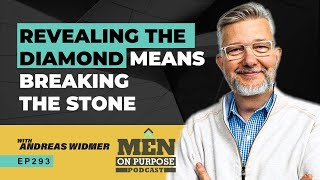
Andreas Widmer was a papal bodyguard who built tech companies, lost everything, and rebuilt his life around purpose. He talks about work as a way to become more, the difference between creators and harvesters, and why breaking yourself open matters more than what you achieve.
Chapters
I lost my why. And this didn't feel anymore. Like when I worked with the Pope, I totally worked myself into a corner, I tell you. I got depressed, I got disengaged. I felt used. I felt like a cog. I felt replaceable. I called it sort of in my mind, I had this constancy, the monotony of crisis. I felt like a monotony of crisis. Everything was an existential threat all day, every day. And after a while, you just don't give a shit anymore, so you don't care anymore. Right? And then at the same time, I work seven days a week, every week. I never took off, and it started to threaten my marriage.
Hey, everybody. Welcome to the Mental Purpose podcast. Your host, Ian Lobos.
Wow.
This interview was. I have not had a smile like that on my face in a long time. This episode, man, I have to take a breath. I record the intro right after the main episode, and it's. I mean, we sat on the phone for another 30 minutes or sat on Zoom, just. Just chatting and. And figuring these collaborations and these trading ideas. It was so nice to talk to somebody like. Like Andreas Vidmer and. And so today, look again. I always. I don't always do this. I have been doing this lately. I want to make sure that, you know, you're in the right place and you're going to have a great time and you're going to learn some stuff and you're not going to. So let me go over what you're going to learn on this one, and then we're going to jump right in. Right? So Andreas worked for the Pope, so he's going to tell stories of how the Pope was his mentor and he was getting pep talks and advice from the Pope, and that is so, so cool. We're going to talk about when we work, we just don't make more, we become more. That was one of the Pope's pep talks to Andreas. And we're going to talk about feeling used in your job or in your family. We're going to talk about need for validation. We're going to talk about when the money got taken away, when the. When the. The foundation crumbled and the rug was pulled out from under him and what he dealt with. And I know a lot of you guys do that or have been through that. Starting the personal development ride, becoming the best version of ourselves, the miserable state that we become entrapped in. And then the birthing process. We're going to talk a lot about the birthing process of the new, evolved you and how one of my coaches said to me this, it's, you're birthing something new here. Of course it's going to be painful and suck. The birthing process sucks. It's, it's, it's painful. It's, it's incredible. So we're going to talk about that. We're going to talk about making career changes. The answers are within you and being responsible to get them out, to clear the distractions and to remove the things in the way. That's your responsibility. We're going to talk about choosing for yourself and that change is never done. And sometimes that can be frustrating and it's okay. Change is never done. You're always working on you. We're going to talk about a story about Francis Michelin, the tire guy, and believing in people and having a heart and believing in humanity. We're going to talk about breaking the stone open to reveal the diamond. We're going to get deep into that. We're going to talk about the story of the inventor of the box wine and, and how Andreas worked with him and, and, and got his story out and a week later he died. And, and how this guy was the, one of the most inspiring people he'd ever worked with. We're going to be talking about creators and harvesters, that, those are two types of people. Most people are harvesters. They're trying to harvest pleasure and money and their work. And we're going to talk about how to create those things so that you actually live with fulfillment, setting goals, managing yourself, making decisions. Now being accountable for yourself, declaring a value for yourself, school, self, love, self advocation, you name it, we're going to be talking about it. The episode is fun. It's deep. This dude knows his shit. You are going to get a lot out of it. Real quick, let's take care of some business. MenOnPurpose.net is where you need to be for everything that we've got. Our show notes, our coaching, our retreats, our masterminds. Start monthly. You literally. They're self paced by the way. You can start them anytime you want. Go to mentalpurpose.net and just click and inquire if this episode moves you. I encourage you to send to somebody that may need it and be that stand for them. Okay? There's a ton of free stuff on the website. I love all of you. I really appreciate your support. This podcast is growing, our audience is growing. I get so much feedback from you. It's awesome, right? Remember guys, if you, if you want to become irreplaceable You've got to be on purpose. All right, enjoy this episode and enjoy this episode. All right, Andrea, So what we were talking about before I. I hit record, and I somehow, the last couple weeks, I get into these conversations with people and I'm. And I forget, okay, we're not recording. Let's get some of this out. So what we were talking about was fulfillment and how most men that we know, ourselves included, have been in this place for many years, many decades, in fact, sometimes where they're going through the motions, compensating, overcompensating, avoiding, masking, coping. Their job is their identity. And they get to a certain point in life and they go, shit, this isn't what I wanted. I'm have. I'm not happy at home. I'm not happy at work. I don't feel like I have any options to escape. I can't get out of this because I'm the provider. I have to keep making money. And then there's this thought process that I went through which was, what about me and what I want? Like, what about me? When the fuck do I get what I want? Like, that's what I kept saying to myself, right? And. And then I realized that at the end of my first year in what I would call personal development, reading 65 books, going to, like, 50 seminars and courses and all this stuff, and my wife said, I think I want out of this marriage. And in that moment, I realized that not only was I now miserable in my business and trapped, that I was now going to potentially lose this relationship that I loved with my daughter, who was a little baby. And in that moment, everything came down to the fact that I felt replaceable, because in my marriage, I was about to be replaced as a husband. And in my business, I was about to be replaced as a leader and as a professional real estate agent, as I used to be, I could be replaced at any moment. And so my whole life was based on this constant, like, pinball back and forth where I was the ball and felt like I had no control over my entire life. And I was angry at my mom and dad. I was angry at society. I was angry at. I was angry at myself. I was angry at my wife. I was angry at everybody. Until I finally said, man, this is on me. Like, if I don't want to become replaceable, then I need to become irreplaceable. And that's how Men On Purpose was born. So I want to start. I want to start there with your story. Yeah, take us back. First of all, welcome. My team says don't forget to welcome people. Thank you for being here.
Thank you, Ian. It's my privilege to be here. Thanks for inviting me.
Of course. Of course.
So my confusion started very early in life. I grew up in. I'm from Switzerland. I'm from a small village in Switzerland and I grew up just totally not fitting in. I'm sort of glad that I grew up way out in the village. I think my village had 400 people in it. More cows than people, really. So you couldn't get into that much trouble? I think if I could have. Well, I got into trouble, I could. And so fortunately that didn't involve drugs and, you know, crime, but. But I just didn't fit in, didn't find myself and I sucked at school. Now I know I have dyslexia and adhd. And so that's just. It's just like putting a square peg into a round hole. But I didn't. I didn't know that. And so you basically grow up thinking exactly this, that I don't fit. I also thought I was stupid because I just couldn't measure up. My self esteem was in the cellar. And that is actually then the recipe for doing some stupid stuff. When your self esteem is down, you assert yourself with the wrong kind of things and it leads to a strange, not a good path. And I started to go down on that path and providentially, a part of me was totally into physical fighting and physical activity. And in Switzerland we have a militia and so everybody has to go to the military. And they had an eye on me for, you know, back, like since I was like 12 years old. The school is actually checking out, you know, is collaborating with the military. And I, I very much qualified for that. And they loved me and they sent me, you know, I went through basic training and then I went to the sort of officer school, the beginning of the officer school. And then, and then I found out that I could become a bodyguard. And I'm like, okay, that is it. Like, that's the coolest thing you could possibly do and get paid.
What's up, guys? I'm so sorry to interrupt the episode. I just need one minute to share with you all the new and exciting, amazing stuff we've got created here at Men on purpose. First of all, thank you for listening to the podcast and supporting the movement we're creating for all the men in the world. Next, you've got to check out our new website, menonpurpose.net where you'll find all kinds of Cool stuff. Including links to our podcast and the free mental purpose community. You're also going to find our new free purpose driven formula mini course and ebook and links to all of our new coaching programs and products. Look, I've had so many of you ask me where to get started with your personal growth journey or where you can go to level up. So I put this thing together, this free ebook and mini course and we're going to be talking about and coaching you through a really light version of our personal purpose driven formula, which is our foundational formula. And for those of you who are ready now, we got you. Listen up. Whether it's becoming the best husband, being the best dad, quitting that job that doesn't serve you, or just understanding how to put you first, we've got what you need to align with your authentic self and find that true fulfillment and live a life with no regrets. Look, we're helping men with structure, support and sustainability. That's what you've asked for and that's what we deliver as we lead you through proven and tested curriculum that focuses on formulas to help you get farther faster. So make sure you go to menonpurpose.net, click the button to download our free powerful purpose driven formula mini course and ebook. And while you're there, make sure you check out some of our amazing products designed to help you find your purpose, stop self sabotage and dial in your mindset skills and habits to evolve into the best version of you. Why? Because we want you to live and have the best life possible, nowhere compressed. So mental purpose.net let's get back to the episode.
And I didn't really think anything about it. I'm like, I'm doing. I heard a friend of mine saying that's what he did. And so I'm like, I'm in. Show me where to write. And I did so pre, pre Internet and I applied and lo and behold, I was accepted. And that's when I started to realize that actually the person I would protect is the Pope.
You know, in Rome, I was going to ask you who, who was, who was your.
To me, I wouldn't have cared who it was, you know. And then you know, I wasn't exactly practicing. I'm Catholic, I was born Catholic, but I wasn't exactly practicing or, or convinced or had a concept, even a proper concept of God. And so I go there and that's really my first job. And can you imagine my, my first so cool real boss was the, was the Pope. And that's just surreal, right?
I Mean, real story kind of pressure are you feeling?
Actually, I was so oblivious. I didn't really feel pressure. I was so. I was licking my wounds because I still was very insecure. And actually, I did this only to bolster my ego. And believe it or not, but he noticed, and I was actually in terrible shape. I was very sad about. And I regretted ever going to work there very quickly because it's tough. Like, if you were. It's like a Secret Service and very demanding. And I'm like. As soon as I got there, I'm like, shoot, I should have never done this. And then. And then you're always around him, of course, Like. Like you would in, you know, if you would protect the president.
Sure.
And. And he noticed, actually, he caught me crying once. Sort of caught me. He walked in and he saw that I was not in good shape, and he ended up sort of reaching out to me and saying, look, I'm glad we're working together. And you'll see things are going to be okay. I like having you here, and I see you're doing these things good. And so. And so he also said I would. He would pray for me and so on. And he just kind of said, look, I got you back, you know, my team.
Yeah, the Pope gave you a pep talk.
That's. Yeah, that's unreal, isn't it?
Yeah, it is.
And so. Because it's just like, if you work, you work. I mean, even he has. Any leader has to have people around them, and I happen to be one around him. And I'm telling you, it changed. Actually changed my approach to that work. And it gave me a why. And I sort of really felt like I was on his team, and I totally flourished. That's when I suddenly. And he. He sort of coached me a bit. Coaching is too much to say. It's not like we sat down like you and I here, and I get coaching session. But first of all, I'm always there when he talks, and I sort of. And he walks by and he will exchange words, and he gives me. Give me some advice or ask me questions. But he kind of coached me in saying that he would always say, you know, when we work, we don't just make more, we become more. When you work right, you don't just make more, we become more. And that always stuck with me. I've always stuck with me. And I have to say, working with him, he also would always say, you don't work. Nobody works for me. You just work with me. Because in the dignity of the Person that nobody works for anybody. Everybody works with everybody because it's a voluntary thing. And you know, it took me a long time to figure this out. I was a. I was an idiot 20 year old, okay? And who didn't know any better. But I started to flourish and I started to discover my thirst for knowledge. You know, when I saw him, I'm like, I want to do whatever he does. I want to be who he is. Yeah. And he introduced me and just showed me that. It's almost like if somebody takes you on a mountain and shows you a vastness you've never seen before in your life and that, that sort of, you know, in that sense, the Pope is kind of my guru in that sense that he showed me something that just blew me away. And once I had that, I'm like, now, okay, now I gotta go. And he was fine with that. And I left. I met my wife there in Rome and I came to America and lo and behold, I found these guys who in the 80s who port a TCP IP to the PC, which means it's one of the main companies that brought the Internet to the PC. Now, I have never used a computer before and these guys were only interested in me because we were all kind of students. I think the oldest one involved was 30 years old. And these were MIT students. I didn't study at MIT, I studied somewhere else in Boston. But they talked with me and said, look, we need somebody with languages. I spoke five languages and they're like, well, we have all these foreigners calling us. We don't know what to do with them. Why don't you take care of them? I did and I got a little piece, tiny piece of the company and it was. That was FTP software, one of the main companies that brought the Internet to the PC, you know, and in 93 we go public and then. And after that I joined Dragon Systems, the inventor of speech recognition. I mean, I had an amazing career in that sense, but I lost my why. And this didn't feel anymore. Like when I worked with the Pope, I totally worked myself into a corner, I tell you. I got depressed, I got disengaged. I felt used, I felt like a cog, I felt replaceable. I called it sort of in my mind, I had this constancy, the monotony of crisis. I felt like a monotony of crisis. Everything was an existential threat all day, every day. And after a while you just don't give a shit anymore. Sorry, you don't care anymore, right? And. And then at the Same time, I work seven days a week, every week. I never took off and it started to threaten my marriage.
Let me ask you something real quick about that because I know there's a lot of guys that have talked to me when you say like, you just get to a point where you don't care anymore. And it's, there's this juxtaposition between the guy that works seven days a week and the guy that doesn't care anymore that just doesn't give a shit. Yeah, he wants, so he wants to self sabotage so badly and his identity is created and kept in that space so he has to work seven days a week.
Yeah.
And, and it's interesting to me that I. Did you ever just pray for something to happen? Like can, can they. Can the economy just like tank or can the kid? I, I would love it if I'm. I remember this. I remember waking up one morning, I had a condo back then. I left the condo building, I saw this giant plume of smoke and I'm like, wow, that's near my office. Oh my God, if my office building burned down, I would be so happy right now. You know why? Because I would have a day's worth of excuses to not do what I have to do today. I can actually my day by myself and go this legit. My office burned down. And they go, don't you work from a laptop anyway? Yeah. And everything's on the cloud anyway.
Yeah, yeah.
But I'm distraught.
And you know that if you feel like that, and I did feel like that, then that's a cause for concern. Deep down I started to run in the right and wrong direction. If I need my validation, my identity from what I do at work, then I'm at the mercy of that makes a bit, you know, work and money make a good slave and a really bad master. And so I made work and money my master. And then you become a slave. And that is a really harsh master. And it was sort of a Sisyphus work where you just push this up and you have a success and it rolls right back down and you start over again.
Can you say that again about the money and master part? That was great. I want to write that down.
Well, money and work, so it's connected. Money and work, but especially that kind of work is make a really good servant. If you have a. It's a really good means to an end, but they make a horrible master. Because you see, money and work are not an end in themselves and therefore they're a means. And so use them As a means to an end, right?
Yeah.
And so that's very important to remember I did get my break. And that is when we sold. We sold. So FTP, we went public and Dragon, we sold, I think in 2000, something like that. And we sold it for $600 million. Wow. And three months after we saw I could have sold more, I sold a little tiny bit. And of course I wasn't the main shareholder or anything. Like, I don't want to give you the wrong impression, but. But I had a chunk enough for me to live.
And so you're married at the time, right? You're married.
And my wife kept saying, look, let's sell. We have more money than we ever need. I mean, let's sell. And I'm like, you don't understand, this is gonna go big. And you know. I know. And so three months later, it turned out that the company that bought us was fraudulent and $600 million goes poof away. And I'm telling you, people say, what do you do when this happens? Well, the first thing is you go into the fetal position under your debt. That's the first thing you do. And then you, you go through the process of grief and denial, the whole thing. But you know what, it was one of the greatest blessings in my life because in a sense, the office did burn down. It's almost like God took the money away and woke me up and said, you know what? Your life is much more about that. Your work is so much more important than that. And I actually started to, I mean, I can't say I didn't go through a period there of pretty much gloom and doom, but it gave me this, this understanding of saying, it's like when, when you're saying you, you went through all the self help books and all this, I, I had your experience, I actually studied, started to study theology to understand. Is what I'm doing an intrinsic evil? Everybody's talking about business and capitalism, free markets being an evil thing. And, and what is my meaning and my end in life and so on. And remember I had this, the Pope in the background, in a sense, keeps saying, when we work, we don't just make more, we become more. And, and then I also took, I joined Monitor Group, which was a consulting firm, a strategy consulting firm, and sort of got my MBA by working with them. And I run, I ran one of their companies, actually spun it out, a business strategy company. And they're famous for being like Harvard Business School's strategy arm. And I took a small company and we spun out of there. And we did business strategy and uncertain environments. And so. And so I had these two things together, and I found my answers. I also devoured all these. You know, anything. Tommy Robbins and I mean, you name them all, and I went through them and I kind of found my. My feet again in my answer, that work, you see. Do you ever notice that when we work, animals can't work? I was. If you. If you look at the. The history of the world, the only animal that can work is the human person.
Yeah.
No animal is ever going to develop antibiotics or the Internet or speech recognition, but we can do this. Yet biologically, we're very much made in the same way. Like, a gorilla is 99.9% my DNA. I mean, you take us apart, I have less hair and he has more muscles. Right. And so. And have you ever thought of why that is? Because that means work cannot be purely biological.
Yeah.
It has to be above that. Psychological, spiritual. Yeah, of course, that goes back in the great traditions of. Of all the religions, of all the spiritualities. The reason why you can create, Ian and the gorilla cannot, is because you are made in the image and likeness of the Creator. That's the difference that we can create. Just, you know, in this analogy. Analogy, just like God created the universe, and then this is sort of the idea of then God saying, and now you continue, you know, stewardship, man. You continue this work.
Yeah.
So when we do this, when I go to work and I create speech recognition or I wrote this book, I write something out of nothing, you know, and I have it, then I am, in a sense, playing God. I get to make something out of nothing. I create value where there was no value before.
You know, don't you find that fascinating, too?
This gives you. This gives you this why. It gives back the why. And you see, the why there is what happens to you if you then imitate somebody. Like, if you imitate somebody, if work is sort of the imitation and participation in God, then what does work make out of you? And we call God holy. And I want to say whole, as in maybe the whole, you know, the wholeness of the human person. When you work like this, you actually become who you're meant to be, your full potential. You become the best version of yourself. And so finally, understand what the Pope taught me. You see, when we work, we don't just make more, we become more. And so then I. The riddle was. Was solved for me that I suddenly started to realize that our work is actually about developing ourselves into the best possible version that we can be. And money is of course a part of that, but not the critical part of it.
Yeah, one of the tools, a lot of the guys that come to us, they'll say, you know, but I got this, I got this. And I'm like, cool. Those are two measurements, both having to do with financial. What about the other measurements? You know, like, I, I, I shoot these cool little videos of my kids at sunset. I live in la, and so, you know, we live really close to the beach and, and I take them down there most nights and I watch them. I just watch them be free. They have no cares. Especially my two and a half year old son. He has no worries in the world.
Right?
He has no responsibilities. He has no worries. And I, I, I shoot to capture the moment on film to show my wife, because sometimes she's not there. And I'm also just looking at them and saying, this is what freedom is, internal freedom. And when I was working with my dad in the shipping business or working as a real estate agent, I felt completely restricted and constrained inside. And it was like, I don't know, years of that, and then all of a sudden, what you're talking about, I realized I'm missing this creative component in my world that I love. Right. Same thing. Dyslexic add. I need this creativity. That's how I express myself. It's how I make myself feel fulfilled and feel good about myself. And so when I started to learn about personal development, my wife said, why don't you teach other people? Why don't you create something for them? And when we started to create these little exercises and someone would go, hey, I pay you 50 bucks. It could take me through that. And I'm like, wow. Wow, this is cool. Even in real estate, we made a lot of money in real estate. I made a lot of money in my dad's business and even in the real estate business. We created that from scratch. I felt, I honestly felt like, well, this is kind of interesting. We created this from scratch with the coaching business. I feel like, oh, my gosh, I, I actually feel alignment with something I'm meant to be doing, like a real purpose here. And my creativity is benefiting the world, and I'm making money that's cool. And money's the byproduct.
I want to point out the thing because I'm thinking that if somebody listens to us and they're saying, well, these guys, they have found this. And here I am in my miserable state. Let me tell you something.
Yeah.
That miserable state is a Part of who I am. And you wouldn't be as effective today if you didn't have your story. If I would not erase my life from before because it made me who I am, I have empathy, and I understand what's going on because of the difficulty. The question is not that you condemn your past. The question is that you. That you take all the options in front of you today and choose those options. Everything in the back I look as my assets that I bring to this new situation, and especially hardship is something that becomes very valuable. It's sort of how you use it and how valuable it becomes. So I wouldn't want anybody to listen to us and say, well, they have figured it out, so. And I'm this miserable thing. No, you're not. You're actually working on something that you may go through the gold time right now to experience, something that will amazingly transform you afterwards.
Yeah. My coach, My personal coach says, you're birthing a new version of you, a new idea, a new concept, a new. A new result. And I go, yeah, I guess if we want to reformat it or reframe it like that, that makes sense. And he goes, think about it, man. You watched your wife have two kids. Did that look easy? And I said, confirmed. Gotcha. I don't know what you're talking about. Right.
So true.
The birthing process sucks sometimes. I mean, it really sucks.
Definitely painful.
Yeah. Pain, pain, pain. So we're talking about the actual birthing process, and we're talking about it in terms of. Well, it's not that much pain compared to what I watched my wife go through.
They say a man would faint. And the woman doesn't. Just tells you who's the tough. Right. But, you know, I mean, that's the thing. So I've done it a couple of times. This. Reinventing myself, I call it, which is a career change, you know, So I was. I was in the military, and then I switched over, and I. I went into high tech, and then after that, I went to strategy, and then after that, I went to. Actually into philanthropy, and then. And then education. And so each time I have to say it's painful. And it's almost like, you know, depending on how you see things, God or the universe is trying to tell you something. And sometimes if you're thick, it just has to. Like, to me, with the, you know, with this loss, it had to be said in strong terms to make it painful, which is now I look at it, and it's a. I wouldn't want to miss it. I learned a very important lesson. And also I tried to, at times, to start new companies, and I couldn't find a VC to give me a dime. And I've done a thousand, thousand presentations trying to pitch something, and sometimes it's just not meant to be. And then that's when you have to stay flexible and say, okay, what is it that I'm doing here? And in that sense, I also want to encourage people that that answer is within you. It's not when we. When I discern what I need to do or what I ought to do, it's usually not something that's completely foreign to me. It's something that's somewhere close by and that has been just dating inside of me. And so that, in a sense, these are all things that lie close. Like if you're looking in your, in your career, Ian, that, that. So you, you basically always solved problem for people, you know, whether it was with shipping to get something there at the same time.
Yeah.
Or in real estate, where you get somebody their dream house, or now you're helping people, in a way order their life in a. In a. In that sense, you're. You're helping people solve something. Yeah. And. And there's a red thread to it. That's what I'm saying. It's. It's usually not. You don't have to, you know, move to the other side of the world and. And be a completely different personality. That's not it.
Well, that won't work because you're taking you with you. Yeah. I had some. I had some friends that, that left Maryland when I used to live in Maryland, because. Because it was. It was. The job market sucks and the, and the government of Maryland sucks and this sucks and this. And I'm like, okay, okay, great. That's you, though. That's. How are you going to escape you. You're going to move somewhere and expect that the government and this is going to be different.
It's not just rearranging the furniture. The real change comes from within.
Yeah.
And, you know, that's another thing. You know, at the core of this whole change in my life has been the Pope, I have to. I have to say. And one of the things he would always tell us is, I cannot want for you. You know, this is very deep. I cannot want for you. At the end of the day, the one freedom again, the thing that makes you godly is your free will that you get to choose. He would say, you get to choose. You say, well, what should I do? And he'd Say, well, that's exactly it. You get to choose what to do. And I cannot want for you. I can wish for you, I can pray for you, but I cannot want for you. That's something that when the change comes, you have to want that change. Otherwise it's not going to happen. And no change of furniture, no externalities are going to make that change.
It's inside you ever feel like you're maybe too many times that. I like to admit there's this sadness and this kind of dark cloud, so to speak, that comes over me when I've made these changes and. Or like, go get to the next iteration. And I go, man, like, this summer, I experienced it a lot. I was going through some major changes with my health and my body composition was changing and. And my business was. Was evolving and my ideas were growing and, like, I was starting to mourn the old ways that I got used to. One, two. The. I think the real deep piece that. That honestly affected me was I started to feel like 40 years old. Like, man, you've wasted a lot of time. And I started thinking morbidly of, well, you only have. You don't have a shit ton of time left. You're not 20 years old, popping new ideas. Do you ever feel like that? Do you ever feel like that?
Of course. Of course. But the thing is, we have to actually approach this as this change is not. Is never done. It's always becoming. We're always in the change. There's this story that we mentioned before we went live is, you know the famous entrepreneur, Francois Michelin, the guy who started the Michelin tire company, One of the things he did, he had this. And this is what I love about those kinds of entrepreneurs. He had this deep belief in humanity. And there was this kid showing up. It was like now, probably 100 years ago, just in the beginning of the whole automotive industry. And they. I don't know whether you know this, but the speed of cars was limited not by the engine, because the tires would always blow up.
Yeah.
So just at that time, there was this kid showing up who lost his job somewhere. And he asked the HR person, hey, I need a job. And they're like, what? What are your qualifications? He says, well, nothing. And they said, well, why don't you go in the mail room? And so then Francois walks around and finds this new person and says, and he's the owner of the company. And he's like, well, what are you doing here? And he says, well, the guy gave me this job and what are your qualifications? And he said, well, not really, I've done this or that. And he says, well, I tell you what, why don't you go into the foreign exchange office because of the European currencies and we sell in different countries. You go figure this out. And he's like, well, I do like math, but I've only gone whatever to sixth grade or whatever. And so the kid goes in there and before you know it, Michelin goes back and he sees that all the transactions go to him because he figured out something that made it very easy and it would just. And then he talked with the HR manager, came in and he says, why did you not send. Why did you not send him into a more challenging role than the mail room? And he says, well, because he doesn't have any qualifications. How am I supposed to see what his qualifications are? There was no telling. And Michelin said something very interesting. He said, don't you understand that the stone has to break for the diamond inside to show, for the crystal to show? You know, they have to break the stone to see it. And of course, this is the perfect analogy for us for this feeling that we're breaking, that we're in a sense breaking open. Look out that breaking open, not just breaking. And this guy, Minol was his name, Francois sent him on, actually to the engineering department in which he. Obviously, the guy didn't even have a college degree. And that is the guy who invented the radial tire, which is today, if you wrote, if you drove to your car, to the office today, you used Ninja's radial tire, which is the way. The reason why tires don't blow up. Yeah, this is a guy with a 9th grade education. And Michelin took this chance on this guy because he believed in humanity and says, look, try this. And you know, if he wouldn't have worked in the first department, he would have sent him in another one, another one. And find his particular talent. No, but it is this painful breaking open that frees up this human genius, you know, in all of us, you.
Know, there's the human part of me on the one side that says this is amazing and you're only 40 years old and look what you've discovered and look who you are. You're free. And now you coach other men to release the internal restriction and constraint and empower themselves. They don't feel it. And then there's that other side of me that says, how much, how much more time you really have here? I mean, you know, how much more do you like? And it's just this weird feeling Fight. I, I love that story. And I, and I think. Or what, what do you think? Do you think that most people have been scarred or affected negatively by taking a chance on someone and that's why that guy, that HR manager was like, I don't know, get in the mail room, you're safer there. My job's safer because if you mess something up, I'm not going to get fired by Mr. Michelin. Just think about that, that aspect in, in, in the same context. You're talking about humanity and seeing the best in people and cracking the rock open. If you take all the human, right, the human experience, the simulation bullshit. If you take that out, I am so damn happy that I've been cracked open and that I bled this summer and that what my past looks like now is so freaking clear of what my purpose and my mission is on this planet. And then the human, right, the hologram, the made up bullshit from the feelings and emotions, the amygdala and the societal pressures says what would it have been like if you did this at 25? You know, like no appreciation at all.
You see? So this, this book that I just wrote called the Art of Principled Entrepreneurship is about art, both as in being, you know, because entrepreneurship is artful or so. But I wrote it about this guy called Art Sioka, a dear friend of mine. And he unfortunately passed away, or for him, fortunately, you know, he went to heaven last December and I had this chance to, to work with him for the last two years of his life on this book. And it was just one of the great privileges of my life to work with a man who said, who knew he had end stage cancer and he knew he was going to die. And I worked with him for two years to sort of say, what do you have to say, right? He, he is somebody, he built out of nothing, the second largest wine company in the world. And it's just, I think, one of the most innovative and greatest entrepreneurs in the last 50 years.
What was the company is that black box?
It's called the Wine Group, it's Franzia. And like this guy, this is the guy boxed wine, boxed wine, who invented or who came up with the, or made popular the wine spritzers and California wine spritzers and coolers and all that stuff. He created a huge conglomerate of a company, very successful. And he says at the end of the day, he told me, at the end of the day there's two kinds of people. There's creators and harvesters and there's these two mentalities and too Many people walk around the world and this is what we do when we say, I should have done this at 25, or when the kid walks into your shop and you're saying, well, you have no credibility on this, so I'm going to put you in the mailroom. Those are harvesters. To say, how can I take advantage of this guy and basically suck it up, you know. And he says, but if you're. And he used this analogy. If I were only a harvester in my business, which is an agriculture business with the wine, if I would not tend the vineyard, if I only focus on the harvesting my harvest, my vineyard would be dead within two years.
Interesting.
Always be a creator, always. And as a creator, what you're doing is you look, you're, you're creating potential and you're always looking at the next and you're going to the root of things and you actually nurture the plant. And he says, the harvesting takes care of itself. It's the, it's the nurturing that needs to happen. And that's when we look at ourselves. Just. You gave me this idea when you said that you're happy to have gone through the pain.
Yeah.
To come out on the other side. That's the creator mentality.
Yeah.
The creative mentality looks at the glass half full. It looks at the potential and the furthering, the growing as a person, the growing in our capabilities. And I think, you know, here I was able to sit with this 86 year old man at the end of his life and even then, you know, the week of his death, he was a creator and he, we finished this book like the week he died, the week after. And he was a creator to the end and everything to him was only just becoming and, and in a positive sense, you know, the miracle of life and the miracle of work. And I tell you, this is so inspiring. But it also is what gives you the why the harvester ends up running dry with the why because you end up having a clump of gold and then what? It's not an end. Whereas the, the faith in humanity, the faith in ourselves, our constant development is something that keeps on giving, you know, that never goes away.
It's so interesting that it was like he waited to get his story out and then knew that his time was just there. I always wondered that about Steve Jobs, somebody so instrumental in the, in the advancement of our society as a whole, you know, our planet. And then to be taken so early, if you think about it in terms of his contribution, pretty freaking major, changed everything about everything Right. And so it just. It's a weird thing to think about. It's just a weird thing to think about sometimes. But I can tell you right now that there are. My coaching business started as helping men kind of move through, you know, what's their value and what's their. What's their understanding of themselves and how to actually have a little bit more fulfillment at work and that kind of thing. And then it really said. Then it really came to, basically when I came to the fact, like, I have to leave this real estate business, it's not for me. I'm replaceable here. I don't care how good I am or how good I think I am. I went to my team leader at the time, the guy who owned the office, and I said, I have a really strange question for you, man. And he goes, what's up? And I said, if I died tomorrow, what would you do? And he said, everything okay? And I said, yeah, yeah, I'm fine. I just. I'm going through some really weird transition in my life.
It's.
It's pretty cool. And I just need to know that answer. And he said, how many transactions do you have? And I said, right, Bam. Right to transactional, right? How many transactions you done? I said, like, like, 16. And he goes, first, you're having a great month, man. Having a great month. I said, yeah, yeah, remember, I'm dead tomorrow. And he said, your transactions would just go to, like, the admin in the office, and we would contact all your clients and we would just let them know that, you know, you're not here and we'll finish up the transactions. And I was like, so you think anybody would just, like, be so distraught that they couldn't buy their new house and, like, their entire life is ruined because I'm not their real estate agent? And he goes, no. And I said, okay. And, man, I. I went home. That was 2018, and I went home and I. It took me another year and a half to actually make the move, where I realized, bro, you are absolutely 100% not important here. You're making yourself important and you are wasting your life. And so coaching started out as, like, these basic things, and then it really got into this depth of, like, what do you want to pursue and how do I help empower a man to be courageous and confident and clear to go get it? And that is my business today. And it's fucking awesome, man. Like, it's awesome to be sitting in my house in LA knowing that my entire day is packed. I spent three hours with my kids this morning. I swam a mile this morning. I'm going to have a cool dinner tonight with them. I'm going to take them to the beach. I'm going to watch them be free and dance in the sand and I'm going to hold hands with my wife and walk down the beach and we're going to come home and watch a movie. And I'm in this homeostasis, right. This equilibrium of this is what it's supposed to be. And on top of that, I now get to educate and help other men discover that. I'm not sure if there's anything better. Right.
I mean, that's beautiful. I also found this. You know, I'm doing what you're doing, but I do it in the university setting and I helped start this business school here. And so I do the intro to business course, which is the first course students get when they get here. And, and I sort of do this as a why am I here? What am I doing here? And it's sort of the moral compass kind of saying, okay, what do I even want to study? And so, and I get this huge privilege to actually introduce work, business and the meaning of why we're going to have this career and everything to the students. And I have to say it's one of the more fulfilling things I've ever done. It gives me so much encouragement and joy to be with the, with the students. I have to say that though, I don't want to give the impression that I figured it out and then everything is fine. I have a tendency to overdo things. Okay. It's one of my character aspects that I will get. I, I have the hyper focus add.
Me too. Me too.
And I will lose, like my wife will come and say, hey, dude, you know What? It's, it's 10 o'. Clock. Maybe you should stop doing what you're doing. And I have a tendency to sometimes overdo one thing and I focus on this. And you know, when you work with students, they're like up in the evening, they can do this until 2am to have these counseling or advising meetings and working on stuff. And so it's something I constantly have to work on in saying what is important today and how do I create a balance? And I don't create the balance on a daily, even weekly basis, but certainly within the month and year I try to have the balance to sort of hold myself accountable to it. And even more importantly, I try to pursue certain goals because it is a matter of. And actually do an exercise with the students on this that you have to look back on saying, you know, what's the famous book now? 4,000 weeks. We all have 4,000 weeks in our lives. You know, you wouldn't do a business without having some plan in how you're going to break out. What are you going to do with that time? Why are we doing this with life? Right. It pays off to think of what happens. You know, is there an aspect of an afterlife? And does it matter what we do here? What do I want my legacy to be? Who do I want to be at my funeral to actually love me? And I invest in these accounts or these, you know, emotional accounts of people. And so I'm trying to keep a track of this and then put, you know, that's the classic thing. Go put the big stones in my calendar first to make sure I spend time with my family. I'm very blessed. My mom is still alive in Switzerland, and she's 88. And I. I go three times a year, I go over there and I spend time with her because this is one of those things that when she's gone, she's gone. And so you make the decision now to do what I. What am I? My future self would wish I would do? I would do now? It's not so that you. I don't want to give people the impression that once you figure this out, everything's going to be fine. No, once you figure this out, you learn how to hold yourself accountable. If I gotten better at anything, it's being accountable to myself to do things like this, to do the. It's like I declare a value to me. So family is important to me. And my mom, who's given me birth and life is important to me. And then I say, how do I turn that into a habit, into a virtue? And so I put things around me in a way that I. I habitual that. That visiting her becomes a habit. So I actually took a board seat in Switzerland. In Switzerland. That makes me go there three times a year, guaranteed. Yeah, I have to. And it's. I'm going to see my mom. It's like. It's like putting your alarm clock away from your bed to get up in the morning, you know?
Right, right.
And so it's not. It's not that one day I figured it all out, and then that's what I'm gonna do. And. And there's never a step back. No, it's two steps forward, a step back. The only thing that I'm really getting better at is this accountability. And Creating habits out of my desired behavior.
It's really amazing what you're doing for young people, students especially. Honestly, when I was in college, I really didn't like it at all. And I just. So the ADD thing, we share as well, we're kindred spirits. Just maybe, maybe a decade or two apart. I'm not sure how old you are. Just a decade or two apart.
More than a decade.
And so I, I, I think the, the training from kindergarten on was that you're a bad kid, you're a disruption, you're, you're, you know, distracted easily, you're defiant. And I just.
You don't care because you're not paying attention. Yeah.
And I'm like, well, of course I, I, yeah, of course I care. But I, I don't really care about what you're talking about. You don't care what you're talking about. You're here for the paycheck. I can tell by your, like, disgusting, you know, form of a body that you have adopted here. Right? And, and so the ADD thing was like this detriment that everybody told me I, I had until in college, which I just didn't like. And I wish I had an advisor that said, what are you actually doing here, man? Because I fell into the same trap, my parents fell into the same trap of good grades, college, like that whole thing that most of us fall into societal pressure. You don't want to be the only parents whose kid doesn't go to college. Because look, if, by the way, I'm breaking that, that in the generation, let's say my daughter says, dad, I don't think I want to go to college. I want to take a loan from you for 100 grand and travel the world for two years. And I want to make a documentary. And I'd be like, sick.
Go for it.
If anybody, first of all, no one in my friend group would actually give a shit, they would applaud that more over college. But if anybody in my friend group did, like, for some reason, say, whoa, you're how irresponsible as a parent, you're letting your daughter do what she chooses instead of pushing her into college, they wouldn't be a friend anymore. They wouldn't be in the friend group. I wish that somebody like you was there for me to say, yep, what do you actually want from your life? Why are you here? Do you really want to study marketing? Do you want to pursue this?
You know, I do a lot of coaching like that and I have recommended for students to go ask, Go actually Do their business. You know, I do two things. I do. I help them with their life goals and I start a business with every student. That's the first thing. If you come to our business school, the first thing you do on the first day, start a business. And you. Not somebody else, you. And I'm going to go through ideation until you have the idea. And then you start a business. Just because I think, why would, you know, business is the only thing you study where you never do it. Would you go to a doctor who's never had a patient?
That's so true. That's so true.
Ludicrous. Or you learn to swim and you never go into swimming pool. Come on. But in business, we do this all the time. So to me, like, first thing you do is do this and actually try it. So then, okay, if you hate it, great. You have an answer. If you hit this off. I had students who started businesses in the first semester and they paid for their entire education with it. I mean, so cool. And I had students who started this and say, I hate this so much. I'm going to do something else. Go. And then go to the liberal arts and study somewhere. Something else.
Yeah.
And I also think a lot of what I'm actually doing, as I call unschool, because we have been, you know, the creativity has. Has been trained out of us by the time we're 18 and 20 years old. Yeah. And. And so I'm all for it. I think education needs to transform. It needs. It's a market that's ripe for a huge transformation. Yeah. And actually a part of my book, I say how to hand this on to the next generation. How do you teach entrepreneurship? In a sense, it's a little bit. How do you teach people? Play an instrument? Well, you know, there's nature and nurture, but it has to be a transformation. And I start to believe in lifelong learning. Learning should be like being a member of a health club where you belong to that club and we'll work on the muscles that you need at the time. There's no point in giving a college student a course on M and A, which they wouldn't. They have no idea. And they're going to memorize this and then regurgitated on a piece of paper after it's done. How about this? I. When you come here, I work with you on your character, on your habits, and on your vision for your life. And then you go out and you get sort of a ticket a membership with us. And when you meet M and A, call me. Best people on the phone with you. And I'll tell you anything you need to know because then you're in hyperdrive to learn. Yeah, that's my experience and how I learned. And so we're starting to work with our team on this lifelong learning project where we, where we slowly move in that way now, you know, education, not the most agile of industries, but I bet that's sort of what the project I'm working on.
I honestly, I just had that conversation with a bunch of the parents at my daughter's school this morning. Every Friday, all the kids get together, all the parents get together. It's a small private school here in la, and we chose it because it actually nurtures her gifts, not puts her into a box and then blames her for not following the status quo. And, and, and anybody that's like, doesn't agree with that or gets pissed off that email.
Andres Ian. I used to example, I'm six foot nine. I'm a big guy. Okay? Six foot nine, 250 pounds. It's like making, forcing me to become a horse jockey and then saying, what's wrong with you?
Yeah, yeah.
It's like talking to me about my ADHD or my dyslexia or my talents and non talents. I suck at numbers, okay. And then looking at me and saying, why, why don't you tell me why? What's wrong with you? Why don't you fit on the horse? Yeah, it's about the same thing. So what they're doing to your daughter, if they do this, is to blame her for something that is her nature.
So this is the school she goes to is phenomenal, right? It's phenomenal. And we were, we were talking about the parents, we were talking about our public school education experiences in elementary school and how we put our kids in this type of school because we were so turned off by that. And I said to, that they were like, I don't think that would ever change. Because I said, you know, my elementary school was like a jail without bars on the windows, concrete box, muted colors, you know, sterile environment.
And it's an institution.
It's an institution. And, and I was, I did, I remember honestly, like, I was so ADD. I remember taking Ritalin at 5 years old. And, and, and honestly, I can still remember like that, like the really bitter taste of that, that pill in my tongue. And, and I had these cards, red and green. Whether I was good or bad that day, there was no context, right? There was no context of good or bad. There was no, it was just and every day I got a red card.
Yeah.
And one day my dad, my dad said, your mom, your, your, your, your. This whole card thing, like how, what's going on? I remember this like it was yesterday. And I remember we went to a Ben Franklin store, which is like a, like a, I don't know, like a Walmart, I guess, or like a Staples, but back in the 80s.
I remember them. Yeah.
Yeah. And I remember getting. I said, dad, my teacher's out of cards. Let's just pick them up now. Right. This is how I started to think how to manipulate the system back then. Because I felt like shit every day.
Yeah.
And my dad said, good idea. So here I go with a whole stack of green and red cards. Threw the red ones out. So every day I brought home a green card. Guess what? That taught me how to fend for myself. And, and when my mom, when my mom, when went in and the teacher was like, you know, your son's got a lot of behavior issues. It's. He's got a red card all 30 days. This, you know, or whatever, whatever. My mom's like, what are you talking about? Guess what? Guess what saved me. My dad said, let's not fault him. He didn't lie. He manipulated the situation to make himself feel better. That's actually a really good thing. And he started to teach me to, to self advocate.
Yeah.
Be powerful.
One of my big. I had very similar experiences in, in school. And I, I ended up being just a bad boy. And then you play the rule. It's, it's assigned to you. You play it. One of the remainders of that that stays with me to this day. I have a visceral repulsion to playing the victim. To say, well, this. I can't do anything about it. No. I can do something about everything. I'm the protagonist of my life. Right. I'm doing this.
Yeah.
And I can. And I. From the beginning, I acted like in the beginning, I sort of. When you're, when you're very small, I just did. I just assumed that they were right in what they're saying. But as I started to figure out and discover myself, I became the protagonist of my life. And that's the most valuable lesson I ever learned in my life. Yeah. Is to actually then say, no, here's what I'm going to do. And then that turns into the self love that we need to become successful to say, here's who I am. Look, I know what I suck at and I know what I don't. Today I call this My talents and non talents. And you know what? Everybody has them. And what you do is you invest in your talents and you mitigate your non talents. I started all kinds of efforts and now even here with this center, the first thing I hire is a very pedantic, detail oriented person that is going to make sure that nothing falls on the off the table and keeps all the books so that I, so that I can't screw that up. Because if you let me do it, this is not my thing.
Totally, totally.
And so I know how to mitigate it. But when it goes to investing in what I do, it's all on my talent side. And that's my writing and talking and enthusing and my working with students and creating stuff.
You know where I completely got add off track about the schooling. You get it?
Yep.
I truly believe that over the next decade the schooling will be changed and, and, and it will have to be forced into change. These, the traditional college, you know, it's already more online schools than ever and that's changing and the traditional model will have to change because kids like my kids and a lot of my friends kids are going to like Acton academies and things like that. My daughter did something very similar. Yeah, they, they're not going to take that normal track and if they do end up going to college, they don't want to learn about English and writing and literature. When they're not interested, they're like, hey, I'm here to learn how to be an entrepreneur. I have spell check and an assistant that's going to help me. So I do believe that that is going to be an evolution and a shift.
I hope so. And I think we're still going in the wrong direction with this. That in school we too much teach people what to think rather than how to think. Teach people how to think and then they can make up their own mind on things. But I think it's going to take a while, especially with the, with the lower, lower grades in high school because it's so entrenched. Higher education will change more quickly. Sleep.
Yeah, I completely agree. Well look, on that note, you and I could talk for hours, my friend. This has been really fun. I, I, I love these interviews or just these conversations when they're, when it's just like you and I on a phone call and we just so happen to be recording it and the world will hear it. So I really appreciate you being here. This has been fantastic.
It's been a blessing for me. Thank you, Ian.
Yeah, yeah, absolutely. Tell, tell people about your book and where they can find it.
So it's called the Art of Principled Entrepreneurship. And you can find it on my website, andreas-widmer.com and on all, you know, Amazon and so on.
Yeah, and we'll put that in the show notes and, and, and I'd like to have you back on. I'll send you an email. I think this is, that's going to be very. We can just dig into some of these things. I know we didn't, we didn't even really talk. We had, we had to do buffet.
But look, Ian, this is very important stuff. Nobody talks. I go to a lot of podcasts. Nobody talks about what you're saying. This is very important things. And this whole, this whole idea of helping, of uplifting people and having a creator attitude towards people, with people, it's. I'd rather talk about that than any book or anything else that we could be.
I'm in full agreement. I'm in full agreement. Well, look, it's been, it's been an absolute pleasure. We'll have you back on. We'll, we'll figure out which part of the 95 things that we talked about today we want to dig into. I'll get some feedback from the audience. I'll shoot you an email. Yeah, we'll definitely have this back on. So thank you again for being here.
Thank you, Ian. My pleasure.
An audience. Thanks for listening. Appreciate your support. Remember to check out menonpurpose.net for anything you need in our coaching world, our retreat world. The show notes about the podcast. And remember, you want to be on purpose so you can become irreplaceable. And if you need help doing that, please let us know. We'll catch you on the next one.
More from Andreas



He Teaches Entrepreneurs How To Be The Leaven of Society | Andreas Widmer | The Pope and the CEO



Principled Entrepreneurship with Andreas Widmer: Lessons in Leadership and Humanity

Principled Entrepreneurship with Andreas Widmer: Lessons in Leadership and Humanity



The Virtues of Free Enterprise and the Heroic Spirit of Entrepreneurs | Villanova University | 2024
