"The Pope and the CEO: John Paul II's Leadership Lessons to a Swiss Guard" Andreas Widmer
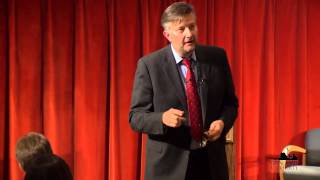
Andreas Widmer, a former Swiss Guard, describes his 1986 Christmas Eve assignment guarding Pope John Paul II and how the Pope's attention to individuals transformed his understanding of leadership. Widmer shares what he learned about compassion, vocation, and work as collaboration with God.
Chapters
Let me say a word in defense of reason in dialogue with faith, because faith is that proof. Faith unites us to that substance. But reason, in order to realize its full potential, needs the horizons revealed by and truths contained in the faith. And not just anything but the Catholic faith. One of my very first assignments when I became a Swiss Guard was to protect Holy Father's apartment. It was actually in 1986. December 24, 1986. Now, see here might be a little different, but in Europe, where I come from, in Switzerland, the big event at Christmas is not Christmas Day, but it's Christmas. Christmas Eve. It's my family's favorite holiday. I grew up in the mountains of Switzerland. A little village, 400 people. There's more cows in my village than people. And I'm the youngest of six kids. And I didn't really, you know, I was an outdoorsy kind of guy. And I didn't care so much for school at the time, but was very much into physical activity, and I was a regular tough guy. And I heard when I was about 18 years old that there was this opportunity that somebody would teach you how to become a bodyguard and that they would pay you for it. And I thought, that's it. That's what I'm going to do. That's my calling. So I joined and went to Rome that December, a bit earlier than actually in November of that year. They called me to surf that night on the 24th. It was one of my very first times. And given that this was our family's favorite holiday, I just hated the thought of having to work on Christmas Eve. Now, see, my family, what we do on Christmas is very much structured. We get up, and in the first half of the day, we fast and we go out. My. My father and my brothers, we go and get the tree. You know, you don't buy a tree. You cut a tree down where I come from, and we put the tree up. And then my mother and my sisters, we cook a special meal every Christmas Eve. Always the same thing at Christmas Eve. And it's all the ingredients and everything. It's a meal that you only get once a year on Christmas Eve. Biggest holiday of the year for my family. And I had to work that night, so I was very sad. As I stood, I called back. I wanted to call and at least wish my parents a merry Christmas. So this was before the Internet, before Skype and everything. There was one telephone in the barracks, down where the dining room was, and I was standing there in line for all day. There were like 20 people standing, standing in line to get to the phone. And I took, you know, I waited my turn and I stood there. And while I stood there, I thought of new names for the sergeant major who had the guts to put me on duty that night. And I just felt worse and worse. And then finally it was my time and I pick up the phone, I called my parents and my dad picked up the phone and he said, hey, Merry Christmas and what are you doing and how are you celebrating tonight? I said, well, dad, I'm not celebrating tonight. I have to work. He says, what, they're making you work today? This is the Vatican. Do they know it's Christmas? I said, yeah, you know, and you know, he says, but anyway, I'm proud of what you're doing. You go and do what you have to do. And so I did. Then he put my mother on the phone. Did I say that? I'm the youngest of six. I'm her baby. Even though I'm six foot nine, that doesn't change. I call myself her masterpiece. Anyway, mom comes on the phone, she doesn't even say anything. She heard him say, you have to work tonight. Immediately starts to cry on the phone. Now look, I don't know about you, but I have that thing that when my mom cries, I just have to cry with her. Except there's 20 guys standing behind me. So all I could do is say, mom, I love you. And I hung up and I ran to my room and put on my uniform and went to service. Now the service that I did was at the Pope's apartment. Now the way it is up there is, you know, they say the Pope lives in a palace. Well, sort of. But he basically has a two bedroom apartment on the top floor of the Vatican. In one of the corners of the top floor of the Vatican. And in front of that two bedroom apartment is a little room. It's about as big as this area right here. And there's two doors. One door goes in to where the Pope's apartment is. There's a hallway and the chapel and then the bedrooms and office and so on. And then, and that's one door. And the other door goes out to the loggias, you know, with the courtyard in the Vatican. Now I'm in the middle there and I have two keys and I lock both keys and I'm in sight. And there's not much going on up there. By then it was, you know, it's late December by then it was dark. It was probably 8, 9 o' clock in the evening by that Time you have a little table there with a little one of these old office lamps that shines down. That's the only light. And you'd be allowed to read there. So do you think I read there? No. You know what I did? I cried my eyes out. I just, you see, I had that even before going into the guards as a young person, I had that feeling, that feeling, it's about here, of longing. And I tried to quench that feeling with all kinds of things, you know, starting with loud music and smoking and drinking and, you know, and it was this longing. And no matter, even if you turn the music louder, it doesn't go away. You eat more, doesn't go away. And I tried then to be into physical activity and you know, the tough guy to cover it up, cover up the soft spot that was just longing. And I didn't find, what am I doing here? Who am I? And I felt insecure, but I made up for it with size and. But inside I was still inside. We all are, the seven year old ourselves. Well, that seven year old was doing a lot of crying up there that night. And then the radio went off and the commander calls and says, widmer, the Pope is going to go out, celebrate Christmas Eve mass. Let him out. And I said, let him out? The Pope? He says, yeah. I said, okay, I'll let the Pope out. I go, what you do is you turn the key, you don't open the door. And he opens the door when he's ready. And I stood. All I had time to do is don't open the other door, just that door. I just stood back and I pulled my uniform straight and I stood. And then the door opened. And I remember this yellow warm light flooded into my little room there. And in the doorway stood this figure with the white cassock on and the little zucchetto. And it was John Paul standing in the door frame. And he had this thing that when he was interested in something, he would sort of tilt his head a little bit. And he tilted his head and looked at me and he says, hey, you're new. What's your name? I've never seen you before. And I said, well, you know, Holy Father, my name is Andreas. I'm from Lucerne. And you know, I just started and he walked straight over to me and stretched out his hand and our hands touched and he shook my head and then he looked into my eyes and my cover blew. Without asking any question, he said, of course, this is your first Christmas away from home, isn't it, boy? That was the wrong thing to say to me. Tear coming down the cheek. He held my hand. He grabbed the other hand, the elbow, with his other hand, and pulled me in. And he had these gray light eyes. And he looked me in the eyes and he said, you know, Andreas, I really appreciate the sacrifice you're making here for the church tonight. I'm going to pray for you as I celebrate midnight mass tonight. Finally, somebody noticed my pain. This man acknowledged this was another human being who acknowledged that I was in pain and said it was okay and embraced that little me who was feeling lonely and sad and confused. And he gave me validation. You know, I walked by 15 of my best buddies in the guards, and nobody said a word. Nobody noticed my pain that I. That I was in. It's only later that I realized that, of course, the one guy who noticed my pain is the man who leads over a billion Catholics, who at the time, in 86, was at the height of the Cold War. You know, that was before the fall of the Berlin War. This is when it all came to a head where we didn't know which way this was going to fall. Inside the church, the left and the right were pulling on both sides later, you know, later the next year, resulting in a schism in the church. And this man who has all of these things on his mind, has enough presence to notice that the guy who's standing in front of his office or in front of his apartment, who's supposed to blend into the background, that this kid is in pain because he's not with his mommy on Christmas evening. I'm telling you this because part of what we're doing here is to learn how to be leaders. And one day, when I see you again in 20 years and your leaders, I want to ask you if you know, if you even know the name of the person who is the parking attendant or who picks up the phone and leads the phone to you, or who cleans your offices after you leave that day. If you. We don't even know that person's name, never mind. To actually recognize this person as a full human person, as a full human being and. And being enough present in the moment to notice what their joys and sorrows are in life. This is something that was remarkable and was typical of my experience with John Paul, of having been privileged to live with him and work for him for two years every day. One of the most profound things I felt is that with John Paul, when he met you, it doesn't matter who you were, you felt that you were the reason why he got up in the morning. And I think that is something that, if we think about leadership in a general way, that is something that we should aspire to. Now. The way I'd like to have the evening go is tell you I brought him back with a little bit of a story. I'd like to share some pictures with you and a little bit of music that I have of John Paul and then I will continue. So bear with me. I hope this works. We are. The holy spirit. To say mio filio IO og tio generad IO lisaro padre. I'm going to just let that run a bit. I hope that this gave you a bit of a. Brought his spirit back a little bit. What I often like to share with the younger generation is that when I was with John Paul, he was still very healthy. And I like to show he saw a little bit the decline afterwards. But I like to show how very much of a sportive man this was. There were 115 of us, but we could not keep up with this guy, just his whole schedule. And his vitality was something that I've never seen that before. You see, I went into the Swiss Guards not for religious reasons. I told you that. I went there for selfish reasons. I thought this was just a cool thing to do. And I really focused on the bodyguard thing, not on the Swiss, not on the spiritual side at all. As a matter of fact, I wasn't really spiritual at the time. I was catechized somewhat as a Christian, as a Catholic, but, you know, I'm a product of the 70s. I knew more about Buddha when I was done with my catechesis classes than I knew about Jesus Christ. And so going there, it didn't mean anything to me. Who is the Pope? I didn't understand that, right? But then I started to meet him, starting with that evening on Christmas Eve. And I kept seeing him. And in a way, God planned that very well. Because the way I ended up being introduced to him is as him, just as a man. I didn't have a big image of, oh, this is the Holy Father and so on. I just met him. This is the guy I protect. And that's, you know, he's the boss and we protect him. So I met him just like an older gentleman. And one day I was asked to protect him while he was in a room about this big with as many people and he was praying the rosary on a prie Dieu and, you know, for the Vatican Radio. And I was standing about over here and I was supposed to Take, you know, have this group in my view. But of course, you know, I stood close to him and I watch him too. And then he started to pray. And as he started to pray, I started to feel differently. And I thought, he's faking it. And I thought, well, hold on a minute. How can you fake it? And I feel differently. That doesn't add up. The more he prayed, the more I felt different. But the way I felt different is that hole, that longing with my interaction with him. It started to satiate. I felt that this is where the source is, where I would find that saturation. He would. I mentioned that to one of his secretaries at the time that I noticed the prayer and so on, and. And he says, hey, look, why don't you pray? You know, John Paul said, you know, prayer is something that you can learn. Anybody can do it, and just you stay with it and you can pray just as well as I do, he would say. And one of his secretaries said, look, what do you have to lose? You're standing around all day, just, you know, start praying. I thought, well, you have a point there. But, you know, my grandmother prays the rosary. I'm not going to pray the rosary. What am I going to do? And he says, very simple. I'm not going to threaten your, you know, your maleness by praying the rosary. Just take the rosary and then have him like this. And then you put your one hand in your pocket and walk around. Nobody will ever know. Just try it. And I did over and over again. And some of the priests there were very kind to guide me in this. And I eventually discovered that our faith is not a philosophy, that our faith is not a movement, that our faith is not some political group, that our faith is about a person, and that I can meet that person in many different ways. And one of the ways was that I had this encounter with God through my prayer, that I felt the presence of God, where I had to get off the fence eventually and say, wow, actually God really exists. Now what? Well, now everything changes. John Paul would be a model in a lot of different parts of my life. I left the Vatican eventually and went into business, and praise God, I was very successful in business. But I also sort of lost. You know, once you go, once you leave here and you have a structured environment in this school, it's going to be hard to keep that same structure up where you go back into the secular world and there's all kinds of shiny things that pull you in this direction and that direction. And that's why it's a good thing to start off by really discerning where it is that you want to go, why you're here and what God made you for. And I want to spend a little bit of this evening talking about that. John Paul had a great interpretation or explanation of how this all came about, how your vocation, what God made you, and the privilege of us to be alive, how that came about. And, you know, it started with God creating the world. God is actually a worker because he had to work six days. I only have to work five days. But he had to work six days, and he worked six days and created the sea and the land and this animal and that, and all the bushes and all of this fish and everything. And at the end, he says, you know what? Now I'm going to create a being in my likeness, in my image and likeness. He didn't say that before to all the other. With all the other animals, he said, now this one is going to have my image and likeness. And he made one out of dirt. And so what's different between the other animals and this animal? Well, this animal is in image and likeness. But what does that mean? Well, what that means is that this one is also a worker. This one is also a creator. So he takes this person and goes around the garden with them, with this person and says, hey, look. Look at that animal. What do you want to call that? He's all overjoyed to have this person, his image and likeness. And walks around the garden and say, you know, take care of that and this bush. What do you want to call this? Isn't this great? And, you know, walks around. Can you just see God walking around with his person? And then says, okay, now go and, you know, tent this garden, you know, go wild. And the guy go. The person goes around and after a while sees God again. And God goes, hey, what's the matter? And this person says, you know what? It's nice. You know, I like what you did here. No, no question about your brinkmanship. Okay? But I'm lonely. These are all these animals. I can't. This is not. I'm lonely. So God goes on. Okay, I see what you mean. I have an idea. Bing. He puts the guy to sleep, goes, takes a piece of this person and makes a second person. Remember the old. The other one he made out of dirt. This one takes a piece away from him, makes a second person. This one he called woman, and the other one he called man. Man comes back and God says, this is a woman. The guy goes, whoa, I like That I like her. And she says, wow, this is a cool guy. I like him a lot. And then they weren't lonely anymore, but they were still in his image and likeness and they could still create. There's only one thing they couldn't. They didn't have quite in his image and likeness alone. And that is the most important aspect of what he let them do as creation, as creators, them as creators, as co creators with him. Because. And that was to create another immortal soul. Because these were immortal people, they would never die. And so what he said is, now we're going to do this all together. In saying, you man and you woman come together at your free will. And you can create another immortal soul, a child. That's the one thing that you can't do alone anymore. After, after this one person, and now it's two persons. That's the one thing I split. And for that I come. You know, I am there too. And you'll feel really great doing that, because I am here. This is a piece of heaven, you know, this is the foreshadowing. I, God, the Creator, come here when you, when you conceive a child like this. And, and this child will never die. And that's why there's one man and one woman coming together and having children. But the other parts of creation and of creativity in humans, they remained intact with each one of them alone. Namely, that they could invent things, think up things, because all the other animals, they can't think up things. The only one who can think, the only one who can make something out of nothing is of course God the Creator. That's what we say when we create a child. We make something we call a being from nothing into being. Then you know, God is there. He has to be there, because otherwise it couldn't happen the same way. When you have an idea, we call that work that you're looking at some wild overgrown area and you envision a beautiful garden with beautiful sculpture in it. Anything. And you do that. You're in that sense making something out of nothing. Where do you get this from? You know that when you do this, God is there. God is with you. You're participating in that creation. You're a co creator. So God takes the two of them and walks around and says, you know what? Now what I want you to do is I'm going to give you this garden and I want you to finish it. Because I didn't finish it. I left all kinds of things undone. I left it sort of in a rough state. And you finish It. And one of the things I've done this is me adding it now, is I hid little Easter eggs all over the place. So there's these nice little Easter eggs. And if you go to school and you study a certain thing like chemistry or biology or literature or something, then you can go around creation and look for things and dig and find. And then when you find one of these Easter eggs, it's one of these ideas that you find a new compound, that you find something that can heal other people that doesn't exist on its own. But I put that Easter egg somewhere that if you find it with your effort and your co creation with me, you can create something new and you can better the world. Of course, we did that as human beings, but he gave us that free will. You know, the reason why we had to leave that garden is what. What's the core reason of why we had to leave that garden? The core reason why we had to leave that garden, I believe, is pride. We had to leave that garden because we wanted to do things our way, that we wanted to know it all. I'm a know it all. I want to know it all. I'm not happy in just knowing a piece of it, and I'm not happy know that you know a piece of it which is different from my piece because I want to know it all. This is at the core of all of all the ills that plagues us is this pride, this pridefulness that we have that we can't. That it wasn't good enough for us to say, you know what? This tree, I'm happy to not know the difference between good and evil. That's fine. That can be God's and I'm going to be the creature and he's going to be the creator, and that's fine. No, that wasn't good enough. We had the pride and said, no, no, no, no, no. I'm the jefe. I want to know. I want to be the guy. That's what made us leave that garden. But then God still didn't give up. And when we're out there now, work became a little more serious. But still, that co creation that we are called involved labor. But still the core of work is still focused around co creation within the world. That God tells us, go into this garden and make it better. See, what we can do is we can make a choice. We can go into this garden and make it and invent something and use it for something good, or we can go into this garden and make something and use it for Something bad. God isn't going to force you. That's the difference between the culture of life and the culture of death. The culture of life is what's life giving that we actually give this on. There's a little story about this. I have a little seven year old, Eli. You know, when I travel, I always bring home. You know, I have to bring something home. And you travel and you come back. Well, I bring home a box of crayons. There's these Swiss crayons called caran d'. Ache. I mean, these are best. Beautiful crayons, beautiful colors. And so I come home and I say, hey, come here. Look, there's a box of crayons. You know what I want them to do? I say, go wild. Here's some paper from my office. Go wild and just draw something beautiful. What do I want from him when he's done with the painting? Do I care what he paints? Not really. But what do I want him to do with that painting? Any guess. I want him to give it to me because I have them all on the wall in my office and I keep them there. And then my. I'm proud of them. I love, I love those pictures. You see, I want him to express all of his creativity and everything he learned and then put this into this great piece of art and give it back to me. That is what God is doing to us. What's your name? Karen. God gave Karen a box of crayons. What year were you born? 9 84. 84. In what month? February. So on February, nine months earlier. I'm not going to do that math. God says, God gets up in the morning, says, I have an idea. I just thought of somebody. Karen. I'm gonna make Karen with dark hair, beautiful complexion, beautiful eyes. I want to have her be born on February 5th. And I want her to be about this tall. And I want her. And these are her parents and I want her to have certain siblings. I want her to be born in no where. I want her to be in Florida. And I want her to be really good at math and struggled a little bit with literature, just, you know, because keep her humble and all that. And I want her to be born in February 5th. Because 20 years from now, on February 5th, there will be this and this event. And I want Karen to associate her birthday with this and get an idea about her life on that very day. And I want Karen to be in a family that has these opportunities. And I want her cousin to be doing this. And you see what I'm doing. I'm putting pencils in your crayon box. Because God gave you a box of crayons when you were born, and he keeps giving you crayons. And what does God. These are these graces, these gifts you receive. And what does God want Karen to do? God wants Karen to go wild with those crayons, to paint. He's not God. You see, when you're thinking about, what do you want me to do, God? You know what the answer is? Yeah, what do you want to do? It's like when my son asks my wife, what should I do? She'll like, yeah, what should you do? Think of something that's a little bit like what it is with God. God gives you all of these opportunities and then you can say, lord, you've blessed me with this and that and that and that. Thank you so much. He's blessed you to grow up in that richest country in the world with wonderful parents who have the means to send you to school and everything. And you're standing there saying, God, why me? And God comes back and says, yeah, why you? What are you going to do about it? This is the pivotal moment. Are you going to take this drawing and put it in your pocket and use it for your own, or are you going to give it back to me? Are you going to go with the culture of death or are you going with the culture of life? Our greatest example in this is our Lord. This guy could turn stones into bread. You know what I would be? I wouldn't be a carpenter. I'd be a banker if I were him. And I would, like, have a monopoly. Did he do that? No, he takes all of this and he takes it all and he goes to his father and gives it back. And what's the father's response? That's the same with our life. This is the model. What is the father's response? Three days later, not even he gives it all back to you. So you know the end of this story. Take what you have. Take all of these gifts, all of these ideas, and take a risk. Like, look at the empty. Now you're in your 20s, you're going to school here. That white paper in front of you. Take a risk. Like, really don't do black and white painting. Take some color. Like, really go all out and start to paint and think. John Paul would always say, do not settle for mediocrity. Don't make a good old painting. Look around here. Look at all of these beautiful art that is in this room. Do that. Like, shoot for the moon, Shoot for The stars, with your career, with your vocations, with your life. But then at that pivotal moment, remember to give this ultimately back to him. Some of you will think, yes, so what I'm going to do is because I'm a Christian, I'm going to go into a non profit organization because profit is evil and I'm going to save the world. I'm going to go to Africa and live in a hut and tell Africans what to do all day long. Yeah, well, I have a good parable for you and it's the parable of the profitable servant. It's also the parable of the fig tree. You know, we're sometimes selective in how we're reading scripture, that we say some scripture you can read at face value, but some you can't. But I like to read it first of face value and then go deeper and at first of face value, both of these parables say that you better be profitable or you have another thing coming. Because what we're doing here is God. We're gardeners with God. You remember that garden that he sent us into? One of the laws of nature is that if you're a good gardener, there's going to be figs on that tree. And the owner of that garden wants some of those figs. And if your tree does not bear fruit, he's not going to be happy. But so what's wrong? When we look at the world right now, there is a scandal. There is a scandal in some of the things that happened at companies like Enron or with Fannie and Freddie Mac, and you name them all, there is an issue. The issue is that we, that man is not made for profit. Profit is made for man. Do you see the difference? Profit in a company is one measure of how to look at how well you have allocated the physical resources of this company. But does a company only have physical resources? No. As a matter of fact, there's one resource that every money has finite return on investment. Every natural resource has a finite return on investment. That means you can work with it, but it sort of has a curve. First it gives you a lot of return and then it sort of flattens off and at the end you can't squeeze more out of it. Except one resource. And that resource is the human mind. And the reason why that doesn't have a, why that has an infinite return on investment is because that is the creativity. That's the godlike part of where we're invited to create. Because that's where we make more. That's where we're creative where we can build the garden and. And make more of the garden than there was before. That, of course, is not only physical. You see, one of the things. When. Are there accounting measures in here? Wow. You're just not. Come on, you can dare admit it. You are. So other than the two of them, everybody else here, when you run a company, you don't think of profit in everything you do. It's a little bit like this, that profit is like oxygen. You're all sitting in this room. None of you right now is saying, breathe in, breathe out, breathe in, breathe out, breathe in, breathe out. But if I would take the oxygen out of this room, within four minutes, we'd all be dead. That's profit. You don't run a company thinking all day long about profit. But if you don't have it, the company is going to be dead in a short period of time. That's the right attitude towards profit. Man is not made for profit. Profit is made for man. Does that make sense? I'm just going through a few points that I wrote down here that I want to make sure I tell you all about. What is the profit that God ultimately seeks? That's what we, as leaders, and there's a certain leadership crisis today. And the leadership crisis that we have to a large extent has to do with the fact that we live in a relativist culture. In a relativist culture, I can't tell you what's right and what's wrong anymore. The company that I was a part of was sold to somebody, and they misappropriate or misappropriate. They cheated for $600 million. That was there one day, and the next day, poof. It was gonna. The person who looks at who does this says, no, I didn't. You know, what you're doing is maybe your truth, but what I'm doing is my truth. So you have no right to tell me here that I'm right or wrong. If we live in a relativist culture, that's where we're moving towards. It says, maybe with loans that you're giving or with products that you're selling. When Engrand sells futures to somebody who has no idea what's going on, they're saying, well, you know, in the very, very small writing at the end there, it did say this. And you'd say, well, but that's not fair. That's not. You're cheating. I mean, this is. Well, no, no, no. This is not really cheating. You know, the law says so and so. And we're sort of just finagling our way through. If we have the law equals morality, then we're in big trouble, business wise and for humanity in general, that morality has to be much higher than, than the law, otherwise we can't do business with each other. The question becomes what morality? People right now are protesting at Wall street and you name it. And I want to make a few points on that. First of all, I want to protect their right to speak up. I think one of the key ingredients in our system, and this is. Now I'm giving you another John Paulism, another framework that he put together. One of the keys in a system or in a system of prosperity, is that we have a participatory government and that includes freedom of speech. You know, freedom of speech starts where I'm starting to defend a fool's right to say something. It's not, you know, screaming fire in a room like this just for fun, but it's, you know, they have an opinion, and maybe it's not the most educated opinion on everything, but they have a right to say this. You stay within the law and all that, no violence and so on, but you should have a soapbox. And they get to stand on there and say, well, this is freedom of speech, we ought to have it. And it starts where you defend somebody's freedom to say something that you disagree with in, in that sense, a participatory form of government. The second leg that he describes for a system of prosperity or a society of prosperity, is a free market. That means that if we both start a company and you have a better product than me, or you could have a better service than I have, that you win. And there's not somebody coming in at the end and saying, oh no, no, no, you can't, you can only sell three. And then he's going to get the other two right. But that means that we have competition. Because you know what? When you create that product that is better, guess what I'm going to do? Make a better one. Guess what you're going to do? Make a better one. We are called to excellence. Humanity is called to excellence. And a free market, a free market, competitive free market, is designed to bring excellence into the market. Because our products, as long as they are truly good products and our services, as long as these services truly serve, will bring us excellence in competition. So we need that free market. This does not include that I'm a little more, you know, I'm more equal than others so that if my company gets into trouble, I can go because I know him, and he happens to be in the government right now. Say, you know, I need a little help over here because, you know, I'm employing some people, and so you have to give me the money. And if I take a risk and I win, I take all the benefit. And if I take a risk and I lose, the government takes all the risk. If you don't know the analogy I'm talking about, then think about it. That is not a free market. Much of what we're doing today is not a free market because we're having all kinds of organizations, including the government, play arbiter, picking winners, picking losers, saying, who does what? There's no monopoly in the world if it wasn't for the government playing along with it. So we need a free market. So we need a participatory form of government. We need a free market where everybody is equal and can compete and we pursue excellence. And here comes the kicker. The third one we need for a system of prosperity is what John Paul calls a public moral culture. What is that? Well, because we already had rule of law earlier on in the first two pieces. So now this is the public moral culture. That is the glue that holds the entire society together. And this is not even. I'm not talking about this from a Christian perspective at this point. I would want to. I talk about this in an economics class on Wall Street. Anywhere you go that you need to have a public moral culture. Why? Because the glue that holds business together is that we can trust each other, never mind the law. How many business relationships end up calling a judge in and saying, who's enforced this? Less than 1%. If I would need the law for every one of these things, I could never do business. What we need is the good old American way of having a handshake, and that my handshake is as good as my word. Or is it the other way? Which way is it the handshake? Is what? You know what I mean. In a relativist culture where I have my truth and you have your truth, can you see how that disintegrates? And once you lose that, John Paul would say that the reason why we need that public moral culture is because the first two, the democracy, or it's not democracy, it's a participatory government. Because there's not only one way to do this, the participatory government and the free market, they set free tremendous forces. And these forces can be used on a mass scale for really good stuff or really bad stuff. This is the kind of Force that you can start selling organs. And what's holding that back is a robust public moral culture that helps you define what is right and what is wrong and what is up and what is down and how much is too much. And what should we do and what should we not do that requires all of us to exercise? Something that I write quite a bit about in the book, and that is an ongoing project for me too, is to exercise our will, our free will, our just simple will has to do is you don't have to train it because you put a dessert in front of me. Guess what I'm gonna do? I'm gonna eat it. That's my will. My free will is to not eat it and do what I ought to do. And that is to instead go to the gym, right? But that's always a difficult choice. The gap between what I feel like doing and what I ought to do is the gap of the free will and the free will John Paul would describe as a muscle. And that muscle you can train, like going to the gym. The reason why the church, in her wisdom, tells us not to eat meat on a Friday is partially due to her knowledge and to her lending us a hand to help us practice, to help us exercise our muscle of free will. To say, today I will not do this or today I will not do that. And the easiest place to start, because it's the most difficult in that sense, is with food. And that's what the church teaches, is that we do fasting on a regular basis and abstinence on a regular basis. But because she knows that the difference between what I feel like doing and what I ought to do, that muscle is best trained through the stomach, believe me. But that, of course, later on prepares us, and we should do this at any age according to what is appropriate. The reason why the church is encouraging us to do this, and John Paul would talk about this at length, is that this prepares us that when you are in a leadership position, and you will, in your family, in your community, in your business, so many of these choices come at you that if you're not really, really trained to first of all, know what you ought to do, and second of all, and very importantly, to have trained the muscle that you can automatically throw your way over to the ought to do and not the want to do, your life and the life of everybody that is in your care is in trouble. And that leads me back to saying, with leadership, the ought to do, what is it? Where are we going? What is the leadership in my company? What is my responsibility in my family. What is my responsibility at this school? If you're in leadership, what is my responsibility? All of these institutions don't serve a purpose by themselves or in themselves. They're not an end, they're means. It's like with profit. When I said that we don't exist for profit. Profit exists for us. Ultimately, what we need to understand and what we need to celebrate is that we're made for the ultimate happiness and for the ultimate fulfillment, which is to be in heaven with the Lord. It doesn't matter what your situation is. It doesn't matter who you're leading. That is your responsibility to bring yourself first and everybody else in your sphere of influence with you to get to that heavenly banquet.
More from Andreas



He Teaches Entrepreneurs How To Be The Leaven of Society | Andreas Widmer | The Pope and the CEO



Principled Entrepreneurship with Andreas Widmer: Lessons in Leadership and Humanity

Principled Entrepreneurship with Andreas Widmer: Lessons in Leadership and Humanity



The Virtues of Free Enterprise and the Heroic Spirit of Entrepreneurs | Villanova University | 2024
