The World Over July 14, 2022 | PRINCIPLED ENTREPRENEURSHIP: Andreas Widmer with Raymond Arroyo
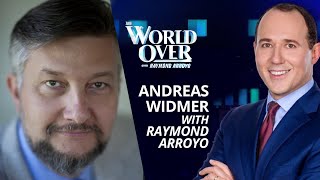
Televised interview (July 14, 2022) on The World Over where Raymond Arroyo interviews Andreas Widmer about his book The Art of Principled Entrepreneurship: Creating Enduring Value. Widmer links his Pontifical Swiss Guard experience and Catholic anthropology (the "gospel of work") to a person-centered model of business. He describes five pillars of principled entrepreneurship (economy exists for people; work as creation; culture over strategy; seek win-win solutions; think like an entrepreneur), argues for competition and creative destruction over bureaucratic protection, and uses examples (Art Choka, Mother Angelica) to show how culture and vocation produce enduring value. The interview closes with a book availability note.
Questions this video answers
1986–1988.
July 14, 2022.
9.1% (described as a 40-year high).
The Art of Principled Entrepreneurship: Creating Enduring Value.
Chapters
Is it possible to run a business and be both profitable and virtuous? This is a question often asked by managers and employees. How can a business make money and still be people centered? For answers, we turn to the director of Entrepreneurship at the Bush School of Business and Economics at Catholic University and author of the new book the Art of Principled Creating Enduring Value. Please welcome back to the program Andreas Widmer. Andreas, thanks for being here. Before we get to the book, I need to start with your time serving in the Pontifical Swiss Guard under Pope John Paul II. You were a Swiss Guard between 1986 and 88. How did that service shape the way you look at business and entrepreneurship today?
Thanks for having me, Raymond. It's always a pleasure to be here. And thanks for giving me this opportunity. What. What changed in my life during those two years is that I entered the guards not exactly as a non believer, but as a sort of more cultural Catholic. And of course that all changed when I met John Paul II and he showed me a view of the world, an understanding of the world, an anthropology of humanity as he would call it, that once you ring that bell, you can't see the world in another way. And that has had a huge impact on my life. And that's actually ever since what I do and what I now try to write about.
You often speak of the gospel of work. In fact, you teach an online course on the subject where you explore the meaning of work and how it contributes to the human fulfillment and success. What do you mean by work as gospel? And how should faith inform our work and the way we conduct business?
I mean work as gospel in a sort of play of what John Paul called the Gospel of life. The gospel principally just means the good news. And the good news is that when we work, we actually get to imitate God the Creator, because we're made in the image and likeness of God. So work itself is a way that we imitate God. And when you imitate somebody like that a lot, then you become more like them. And so work is a part of our path to holiness.
I want to move on to the new book, the Art of Principled Entrepreneurship. From where did this concept of principled entrepreneurship originate and what inspired you to focus on that concept in the book?
So I have a friend called artsyoka and he was very much into a business strategy or a business theory called MBM market Based management. And in there is this principled entrepreneurship as a piece of it, which basically focuses on the person centered management of a company. And that is something that he talked to me a lot about and I became very interested in. I sort of merged that with my view of the theology of the body with John Paul ii and, and the result of it is this book.
What is that? Person centered entrepreneurship. Define that term. Look, everybody will say they're person centered because they're worried about their, their clients or their, the people they're serving. Right?
Yeah. Look, at the end of the day, the economy should exist for people, not people for the economy. And we have lost kind of the view, the center of this. It's okay to make money and all that, but we have to understand again, going back to that principle that when we create, we imitate God, that that itself is a fulfilling and important thing. And if we lose, if we lose traction of that, if we put other things in the center of the economy, just pure profitability or financial speculation or so then we lose track, we lose focus on the human person. And that leads to alienation. And we're seeing this every day. Recent research by Gallup has shown that two thirds of our workforce is disengaged. Those are people who can't wait to get home in the evening. And I think that that is not a sign for them being bad or doing something wrong. But that is a sign of our culture, of having lost the focus of what work is really all about.
We hear a lot about entrepreneurship today, particularly when it comes to well known entrepreneurs, Elon Musk or the founder of Amazon, Jeff Bezos. In your book you hold up a different model. You mentioned him a moment ago, Art Choka. Why is he a model that you hold up in the book and tell us who Art is?
Yeah, Art to me is sort of the CEO that nobody knows, but everybody should know, because what he was all about is to create a person centered company not just on the basis of the employee, but also on the basis of the folk of the customer. He basically put the customer and his employees or his teammates into the center of the equation of business. And then instead of setting out to just create a product or a company that does a certain thing, he actually tried to focus on creating a culture that is a company that then produces ongoing new products and new innovation and new ideas to create what he calls enduring value. All of that comes is the result of a culture in a company that produces this. Not just an idea for one product or one service.
Now I want to get into that idea of the culture of a workplace, the culture of a business. But in the first chapter of the book, Andreas, you address the market economy and Capitalism as we know it here in the United States, at least. And you're right. Through a process of soul searching, study and analysis, I reconciled myself with the market economy. Although it has lots of room for improvement, primarily among its participants, I found it to be a system that best supports human flourishing and freedom. It's the system that to me, represents the highest achievement of Western civilization. A system of personal freedom and responsibility that can bring about the common good. Now, how did you come to that conclusion?
Over time, I looked at the economy and really at the core of it, which is freedom of creation, freedom of coming together and choosing what we do and really using our strengths to add value for others. And then whoever does that best has an edge and goes up. And if somebody else comes and does it better, it causes progress and we move forward. All of that works. You know, people, I don't like it when people say that the economy or business is like war, is nothing like this. Believe me, I'm a soldier. I was a soldier. And the economy is nothing like the war. Business is nothing like war. Business is more like the Olympics where we compete with each other. And if you watch last year's Olympics, you see that people who may have not been first, they may have been second or 10th, and they're still happy to have competed because it was their personal best. They learn something. They compete better when there's somebody running next to them. And for us as a society, having an economy that is based on free access in competition, where everybody gets to participate, brings out the best in humanity.
At the center of the book, you've defined five pillars of principled entrepreneurship that you insist. Nourishment, the American dream. I want to run through them and explore them quickly. The economy exists for people, not people for the economy. We've kind of hit that number. 2. To work is to create. To create is to be human. Three, culture eats strategy for breakfast. Four, always seek to create, win win solutions. Five, always think like an entrepreneur. I want to go quickly to that second point. To work is to create. To create is to be human. Why is creativity, innovation so crucial to entrepreneurship?
Goes back to the idea of us as humans to fully flourish when we work. If you ever meet somebody who is out of work or you have the experience yourself, it is actually something that diminishes us, that makes us, in a sense, less human for us to work and to compete like this. And to create is to be fully human. Spiritually. Of course, this is because we were creating the image and likeness of the Creator and we are Meant we are made to create. This is a part of how we fully become who we are meant to be.
Yeah, I love the line culture eats strategy for breakfast. Explain that to people.
So I use this sentence, which is a well known and much used sentence with many of these titles. I use things that people are sort of aware of, but I go over them and give them deeper meaning. Culture, eating, strategy for breakfast. What I mean with this is that what I said earlier, that most people, when they start a company, not most, but many people who start a company think that this is like the Euroco Eureka moment where you come up with a business idea or a product idea and then you create that. Well, the result of that is sort of a company that has, has one good thing like a product or something and then it stifles, then it, then it sort of lands again. Much more important is to focus as an entrepreneur or as a manager or as a CEO, creating the culture of the company that then begets the innovation and the progress and the competitiveness of the company. And so I would say more in the beginning, more than just a product, we should build and focus on creating a culture in our economy, in our businesses. That is to say, that is conducive to human flourishing. And the rest sort of comes like a cascade from that.
Yeah, well, unleashing creatives and sort of, you know, managing them at points, but unleashing that creative spirit, that ingenuity and guiding it, that really is what a business exists to do. And all too often enterprises crumble on that one principle I love. Always seek to create win win solutions or situations rather. If only Catholic groups would get this right, Andreas, it could make an enormous difference. Sadly, you often see envy and pettiness and it keeps everybody in this very small ghetto and the message never gets out. How do you get around that? Creating a win win situation where when people feel there's the only way for me to win is for you to lose.
That is the greatest misunderstanding of the market economy. People think that the economy is a zero sum game and nothing could be further from the truth. The economy exists by somebody saying, how may I help you? That's the core question of business. How may I help you? That includes everything we need. It includes me and you and how I can help. Now, if I do this right, I use my God given talents to add value for you, which you then are willing to pay more for than I paid for it to make it that new. That new value we measured out with money, profit. That new value is new. Money has Never been there before. So to compare it to the idea of the economy being like a pizza, the economy is not like a pizza. The economy is like a pizza shop, like a pizzeria. We make pizza. So this whole idea, then when you look at the economy as a zero sum game, you come up immediately with the idea, well, we need to redistribute wealth. No, no, no. What we need to do is to make more pizza, give more people access to enable their creativity, to integrate them into networks of productivity and exchange so they can be productive and fulfill themselves. And not only through the work that they're doing, but through the creativity and through the generation of new wealth.
Andreas, I am not a huge fan of bureaucracy, as anybody who's watched this show over many years can tell you, though a certain amount is necessary, I understand. How can bureaucracy get in the way of the principled entrepreneurship that you are making the argument for here? Doesn't it stifle creativity? You know, and is there a way to make it work in harmony with this entrepreneurial vision you put forward?
Yeah, the first thing is to understand that idea that the economy is not a zero sum game. That's very important. And bureaucracy as a government need to understand that. Second is this concept is one of the ideas I explain in the book about creative destruction. The way think of a forest, the way a forest grows, is that the big old trees fall over eventually. First they dominate and they give shade to everything, things coming up underneath. And then eventually they fall and new growth comes up. That is creative destruction. Right. And the fall of it even has a benefit. It creates soil and new things come up with it. The economy is exactly the same way. We should not try to uphold large old trees that sort of, you know, outlived their usefulness in a sense. But we should always encourage competition in the economy. We should do everything to increase and to ensure competition and nothing to decrease it. Because as long as we have this competition, the consumer, us, all of us actually benefit because we get the faster, cheaper, cheaper, better kind of solutions out of that kind of system. And that's also good for, for the bureaucracy of the government because that there you're looking at tax systems and tax revenues and so on. So. So the bureaucracy sometimes gets in the way by trying to maintain the status quo. And in the economy that. That is actually not the way to go.
Yeah. Or, you know, in the creative arts, you often see these companies where the bureaucracy tries to pick winners and losers that the audience don't agree with, you know, so they're Fighting counter programming, their own audience. And you see this in big studios, in small operations. It's an amazing thing to sort of witness, what do I call it? Fail upward. People failing upward. You know, they get less and less ratings, less and less audience, but people continue to push them. It's astounding. And you know, as long as we're talking about Mother Angelica, or rather we're talking about, I was thinking of Mother Angelica who used to say she could not stand committees or bureaucracy. She said, you know, a committee, most people, the Lord tells them to do something, they gather a committee, they do a feasibility study, they lay out a budget and by that time you've already forgotten what the Lord asked you to do.
There is this idea that she taps into there that what we're meant to be, we are meant to be teams and work in teams and you can even have some rules for that which you can compare to bureaucracy. But the teams and what our Mother Angelica did so well, she found people with different God given talents and then let them do like what you're doing, totally focus on what their talent is and then have other people make up for their non talents. And if you have a team together where everybody gets to practice and fulfill their God given talents, then the teams become larger than the sum of their parts and that's where you get this economic miracle of great prosperity.
I agree. You know, Andreas, years ago a university in Miami contacted me after the Mother Angelica biography, you know, had spread around the country. People had read it and they were using it as a textbook in entrepreneurship and kind of inspired entrepreneurship. Talk to me for a moment about that branch of study that sort of, you know, Mother Angelica never had budgets initially. You know, she sort of went with her gut and where the audience was going. Is that a, is that illicit approach to a business in this day and age?
It has always been and it will always be. I think Mother Angelica is, when she becomes a, when she's declared a saint, I want to make her the patron saint of the American dream. Because that is exactly what she represents. That she comes from nowhere within an environment where you think she's not, she's not going to have any chances or amount to anything. And she overcomes all that by finding her God given talent and finding a way to add value for others. None of this at EWTN would work if the value proposition of how may I help you? Wasn't figured out. She did. She helped them with the network and with the kind of news and information and programming that people loved. And she found the people to deliver that value, value proposition that were just excellent. And it's a case study in how to be innovative and how to, in my opinion, be a principled entrepreneur.
Yeah, no, no, she, she identified that need in the audience and then she fulfilled it and expanded on it and.
Never lost, she never lost sight of the person, of the human person. This to her was of course about Jesus Christ. And as, as through an extension of that through, it was about each person who's watching this every day. I remember seeing her on TV and she talks to the individual person. It was about each individual person and it was also about each and each individual employee. And that is what I mean by.
Person centeredness before we run out of time. Inflation is at a 40 year high right now, 9.1% currently, and you and I know that's probably much higher. The government uses a lot of voodoo to come up with that number. This makes it awfully hard for folks who want to buy a home and who dream of a business. And I often think of that old adage, necessity is the mother of invention. Andreas, is there a silver lining in this harsh economic environment?
I think there is. If you're looking at the latest numbers of entrepreneurship over the last 40 years, we had a dramatic decline. I think we're at 40% of what we used to be in the 70s, literally. And this is even with all the tech boom and everything, we have 40% of the amount of entrepreneurs that we had back in the 70s. Except after Covid, and now with this mass exit they call it, you're starting to see numbers where we have in a few months as much new startups as we had in years, in a year before. And I think there is this silver lining that a lot of people are saying, okay, enough of this bureaucratic large company thing. Let me go out and actually pursue my talent and my happiness and start my own company. And I encourage everybody out there to really to look at this book. And it's a step by step approach to think about how can I do this and give you some ideas and some points of reflection to go about this, to put this into reality?
No, it's a fascinating read, Andreas. We'll leave it there. The book the Art of Principled Entrepreneurship Creating Enduring Value by Andreas Widmer is available at bookstores everywhere and online. Thanks for being here.
Thank you, Raymond.
More from Andreas



He Teaches Entrepreneurs How To Be The Leaven of Society | Andreas Widmer | The Pope and the CEO



Principled Entrepreneurship with Andreas Widmer: Lessons in Leadership and Humanity

Principled Entrepreneurship with Andreas Widmer: Lessons in Leadership and Humanity



The Virtues of Free Enterprise and the Heroic Spirit of Entrepreneurs | Villanova University | 2024
