Andrew Feldman, Cerebras | Cerebras SUPERNOVA 2025
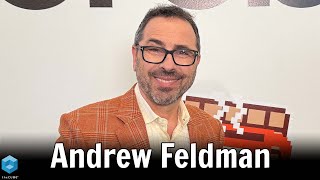
Cerebras CEO Andrew Feldman unveils Qwen 32B, an open-source reasoning model that runs 20-30x faster than the fastest GPUs. He highlights token latency as critical for reasoning workloads and describes partnerships with Meta, IBM, and Mistral leveraging Cerebras' inference speed. The company is offering developers a free million tokens daily to build applications solving real problems.
Chapters
Hello, I'm John Furrier with The Cube. We are here in San Francisco at Fort Mason. We are here for the Supernova event. Cerebus is having a big news launch. It's turning into quite like almost like a conference. A lot of people coming, oversubscribed event, a lot of buzz. And of course, Andrew Feldman is the star of the show, the founder and CEO of Cerebus. Andrew, great to see you again.
Good to see you again.
It's our pop-up Cube. It's not like the— but we will do whatever it takes to get the stories that matter.
We appreciate that. We appreciate that.
So obviously we've had a couple of conversations before. You guys really on a tear recently. Meta announcement. I saw the IBM news, just continuing to thunder away at pushing the envelope on the speed. Yeah. And this is not new for people who know what you've been doing, saying speed matters. The market wants more.
It does. Faster.
Slow is bad. Fast is good. Simple message, but hard to do. What's the core news that you guys are launching here today?
Well, we're putting out a new model, Qwen 32B. And it's, you know, as with all our models, it is sort of the fastest in the industry bar none, you know, somewhere between 20 and 30 times faster than the fastest GPU offering. Qwen's a really interesting model. It's a reasoning model. It's one of the smartest models. It behaves in line with the leading closed-source models while it's an open-source model. Fast model, a smart model. I think it'll give some OpenAI's models a real run for their money.
You've obviously been at this and seeing all the, I call it the Olympics, the AI Olympics. It's, hey, I got the faster thing. A lot's changed. Reasoning's putting a lot of pressure on the tokens. And so there are some key requirements that people are paying attention to. Could you share in your mind the key requirements that people should pay attention to? We had Russ on, one of your early partners here from LiveKit. He's talking about first token out. How fast you get those tokens. You know, speed, of course, matters. But what are some of the things that people should pay attention to? Because it seems like the goalposts are shifting a lot. People kind of taking advantage of the stats, saying certain things. What do you advise people to look at as you guys push the envelope on being the fastest?
Well, reasoning models behave much more like humans, right? If you set out to write a paper, you don't just sort of disgorge the paper, right? You don't just sort of think for a second and then write the whole paper. Likely, you'd write a draft, you'd edit it, you'd think about it again, you'd review it, and you would iterate. Reasoning models perform sort of that workflow. They develop an answer, they review it, they improve it. And this requires more work.
Yeah.
More tokens. More tokens.
That's right.
And tokens are just a measure of— computational work. And so, you know, nobody really wants to wait 30 minutes for their research report to come out, right? You'd like it out extremely quickly. And so for this type of work, for agentic workflows, for the reasoning, for the smartest models, performance is particularly important because you have so many more tokens to work through.
Yeah.
So if you are 20 or 30 times faster, You get something in a second or two instead of several minutes.
In your talk, you got some stats and always the bar charts. Break that down for me. Simplify what the message is. Is it first token out? What are some of the key bullet points and stats for the new model?
So, you know, you spoke to some of our customers and partners. I think it varies based on your workload. For somebody who does voice, first token, time to first token is a crucial measure. How fast can you get the first part of the response? I think for most other applications, output speed is the best measure. How fast can you finish the work? And that's measured by output speed. I think, you know, the best place to look is you can go every day and you can look on Artificial Analysis. They're sort of a thoughtful benchmarking firm. They go to everybody's API, they ping it without you knowing it, and they report the results every single day. That's a good way to measure us.
So I gotta ask you about the application. I love talking to your partners because you got an entrepreneur, you had a new AI entrepreneurial class. I was just making a comment on a keynote I was moderating this morning across town in San Francisco. And I said, when I was breaking my first stride, I was an internet startup. They called it, I was an internet entrepreneur, right? And then web entrepreneur, whatever you wanna call it. But that was categorical. Now AI entrepreneurs are coming to the scene. You're attracting a lot of them. You also got the big partners. So it's like, This is big, old and new, right? Or big and small. So what is an AI entrepreneur and what are the use cases that you're seeing that you guys are enabling? Because now that the horsepower is coming out, speed, what use cases are coming out? What kinds of use cases and what kind of startups are emerging in your mind?
Let me share with you several different examples, one from the largest and one from the smallest. We'll take Kim Branson at GlaxoSmithKline. They've been sort of— they're a 300-year-old company. They're a leader in the design and development of pharmaceuticals. They've built an agentic flow that can ask the entire corpus of literature a question, right? The hundreds of thousands of papers or millions of papers that have been written around the world in any language, they can distill that down They can then develop a hypothesis. They can then have pros and cons of the hypothesis. It can then search data in support of the hypothesis, and eventually it will be able to link to automated labs, which could then run experiments in support of the hypothesis.
On robotics.
That's right. On robots.
Robots that have precision.
That's right.
So the AI, physical AI meets the human.
That's right. And it designed, it asked a question. It scoured the existing knowledge. It played the role of a professor, of a researcher. It scoured what was known. It thought about it. It delivered some questions to the community. It then went out and it answered them. And it then criticized itself, critiqued itself, whether it was a good answer, good hypothesis or not.
You bring up a good point that comes up a lot. The robotics is hot right now, but it's also phase one was get the machines right. Get the computer vision. Now, that's a lot of machine learning, a lot of tech. Now, the open-source software world is now plugging into these robots as a software interface. So smaller, faster, cheaper hardware. That's kind of like the Moore's Law world that you live in— make it faster, make the next version better. But the software has to get smarter, more intelligent, and smaller code.
Sure. Understanding— for those robots, understanding the world around them is the fundamental challenge.
And computer vision is going to be huge inference.
It is a big eater of inference compute, for sure.
You're seeing that too?
For sure.
Okay, so what's the relationship with Meta? You guys just want to come— I just want to review a little bit of some past couple weeks for Cerebras.
You had some good run.
You had a good run. Yeah, not a bad week for you guys. So, or a couple weeks. Take us through what's happened because a lot of breakthroughs happen. Just walk us through storyboard. You had the Meta LlamaCon, you had that event, and then IBM, a bunch of other things.
Take us through the news. So Meta announced that they would be providing an API-based service. So you could go to their API and it would serve Llama 4, and that behind their API was Cerebras. So they would be our fast tokens that they were being served through their offering. So this was the first hyperscaler win for Cerebras. Immediately following that, IBM announced that they would be doing approximately the same thing. We would be providing fast inference to their clients. So if you think of Meta as at one end, developer-friendly, right? Mobile-first, developer-friendly.
And huge. The numbers are up huge. The numbers are huge.
Huge. And then IBM, you know, does business with the largest 100 customers in the world, largest accounts. We sort of have expanded our reach from the developer all the way to, the largest financial institutions in the world through IBM.
It's interesting. The IBM is not obvious, but I cover IBM as well pretty deeply. And they have a lot of, I call hyper-enterprise scale enterprises like the big banks. They look like hyperscalers.
They are.
They have huge— I mean, I think JPMorgan Chase has a $10 billion annual IT budget. I don't think they call it IT, just say tech budget. Right. That's $10 billion a year. Lori Beer, who's the CIO, and I talked at re:Invent last year, and it's off the charts. They are huge.
Huge opportunities.
But there's still other big ones too. They need inference.
They do. They need inference and they need training. And I think those financial institutions, the JPMorgan Chases, the Citibanks, right, the Deutsche Banks, these are some of the largest institutions in the world.
So you're powering basically the model deployments from what I— let's see if I get this right. If I can read the tea leaves to put this together, You're basically going to Meta and say, hey, whatever models you want, we're serving it out fast. So if I got Mistral over here, I got whatever, you can just say, pick your model, you're powering it.
Is that oversimplifying it? No, that's what we bring that message to our customers around the world. We brought it to Perplexity, to Mistral, to Meta, to IBM, right? To our strategic partner in the Middle East, G42. We're delivering that message around the world to our partners who are here, AlphaSense, doing really interesting things, that you pick the model and we'll make it blazing fast for you.
So the startup ecosystem is here. We're in the little startup room. It's going to get populated in a few hours. Love that growth because that means there's entrepreneurship involved. So I love to see those applications. Are there other things you could share around how you guys win? I mean, obviously startups love power, horsepower. They want to code. But when you do a bake-off— that's an old term, but in the old days, you'd do a bake-off, two people against— I'm sure there's a lot of bake-offs going on because you're claiming the fastest.
Sure.
When you go into a bake-off, take us through what happens. Like, do they line up Cerebras against the other guys?
I think sometimes they do. I don't think there's any doubt we're the fastest. I think that that is— in fact, the others have modified their claims faced with the truth. I think what they do is they jump up on your cloud and go through your API. They run through a set of inference tasks and they compare.
Got it.
And I think we win those with extraordinary regularity.
I know you don't like to talk about competition in a direct way, but just by— but you know, strategy, always talk about your benefits. But there is— I get this question a lot, so I'll ask you is people want to know whose benchmarks are real, right? There's a lot of benchmark Olympics going on. Hey, I got the fastest.
Sure.
What should people look at to pay attention? You gave that site as good reference. That's good.
Artificial Analysis is—
Is it— if I just use the power, I could say the tokens could pop out faster, or is that my oversimplifying it?
No, that's not quite true. There is no amount of power you can throw at a GPU to get it to perform inference at the rate we can. And that's because the problem is one of memory bandwidth. They just can't move information from memory to compute fast enough. To compete with us. And so I think my strategy with benchmarking has always been, how do we make it the most realistic? And you don't want to run a drag race, right? And then say, well, look, therefore it's better to go to the grocery store, right? You don't want people with months to tune and to try and cheat and to try and do all these things that you don't get when you buy the product. And I think many historic benchmarks were sort of that way. What I like about some of the modern benchmarks, artificial analysis I think is the leader, is they go to your service when you don't know. They do a little bit of work, right? They're smart enough. That's right. They do a little bit of work. They collate the results. They publish the results every single day. This is exactly what your customers get. It's not a special tuned version, maybe like MLPerf. Something that, you know, we used to do that in the compute world in spec and spec int where people would tune and tune for months for a test. That's not what you want.
Not all workloads are considered equal too. I mean, it's all situational.
That's right. And so what you want is exactly what your, if your customers are gonna use it, right? To try and evaluate what their performance will be, right? It should mirror what their performance should be. And I think a blind test of your service is an excellent test.
Well, Andrew, great to have you on TheCUBE. Love to get the perspective on a business question. As you guys hit your growth strategy, as you hit Escape Velocity, you got the best product, that's cool, that's a win. That doesn't hurt. It's great.
Doesn't hurt. Product matters.
Being ahead of the pack is a good thing.
Marketing is good, but product really matters.
Be the lead dog, the view is still the same, right? That's right. So, okay, get that. Now, as you prioritize your business, obviously you want to win the big CapEx spends.
Sure.
That's obviously the Mazars of the world. The enterprise is a huge market and that's wide open. The data's on-prem, startups are coming online. You're starting to see the signs of the maturation of Cerebras.
True.
What are you optimizing for? Do you have a sequenced approach? Is there a plan? Can you share as much as you can publicly to the, to the strategy that you guys are taking?
Sure. You know, we've, uh, we pursued at the start those who had tremendous data assets for training and for inference. And so who has huge assets? People in life sciences like Mayo Clinic, people like GlaxoSmithKline or Novo Nordisk, right? And we won across the board there. As inference came to the fore, they were able to move into inference and we were able to move very quickly into sort of AI-first companies, companies like Mistral and Perplexity and AlphaSense, and deliver to their customers sort of value through them, right? To deliver Mistral blazing fast, to deliver AlphaSense's product blazing fast. And I think that helps them separate themselves. And I think, you know, in our cadre of, of developers, of startups. You've got the next Ryder, you've got the next Cursor, you've got the next— all the leaders.
There's always new brands that come out of the woodwork, right?
That's exactly right. And today they're, they're building on blazing fast inference from Cerebras.
So I'm doing a special— we're doing a special focus starting the second half of the year at Silicon Angle and TheCUBE, both Silicon Valley and New York, and then going to 2026 around the AI developer. It's a little bit categorical, loosely defined, but I want to share this because I want to get your thoughts. You guys are announcing today that you— that all developers receive a million free tokens per day, no waitlist. Okay, that's awesome. So developers want to know, where's the action? What do I do? What do I code? Am I spinning up models? What's your message to developers? Because they want to get in on the action because I hate to say picks and shovels, but like there's a market of real good software that can bring into a long tail. This is what I was talking to someone who's just doing one unique thing in the enterprise. And that startup's going to run the table in the category. It wouldn't have been funded 10 years ago by any VC, but they'll do $100 million.
I think you're quite right. I think maybe through the end of '23 or middle of '24, you know, it was AI for AI's sake. And now the question is, which problem do you solve with AI? And how much better are you at solving it than other techniques, right? Now we've sort of flipped the script and we're using AI to solve particular problems, right? Can you do better marketing? Can you use fewer people in HR? Can you find drugs more quickly? Can you, right? Can you find—
These white spaces are actually hugely profitable.
That's right. That's right.
And if I can tap into the best tokens per second engine.
That's right.
I could create a niche domain-specific, based on my expertise, a product.
That's exactly right. That's exactly right.
It's like a SaaS app.
It is. It becomes a SaaS app. It's the engine underneath, I think, not just a SaaS app.
All right, so I'm that developer. What do I— tell me, what do I do? I'm that developer. What do I do?
I log in, you sign up, you get an API, and you think about how to use inference to solve problems that are top of mind for your customers.
And it's free for me for the first million tokens per day?
Free for the first million tokens. You can buy in little buckets. So it's sort of friendly to the little guys.
You're open for business with developers?
We're open for business with developers.
All right, Andrew, thanks for coming on TheCUBE. I know you're busy. You got to go up on the main stage. Great to see you again.
Thank you so much.
Congratulations for breaking the speed record, Need for Speed here at Supernova. Need for Speed. Love the name. Implies, things are going supernova here at Cerebras. I'm John Furrier, The Cube. Thanks for watching.
More from Andrew



How Cerebras is Democratizing AI at Scale with Andrew Feldman, CEO of Cerebras



Cerebras CEO, Andrew Feldman on Why Raise $1BN and Delay the IPO & Why NVIDIA’s Worried About Growth

⚡️Raising $1.1b to build the fastest LLM Chips on Earth — Andrew Feldman, Cerebras


Andrew Feldman, Cerebras Systems | theCUBE + NYSE Wired: AI Factories - Data Centers of the Future


Andrew Feldman | How Cerebras Built the "Impossible" AI Chip Now Challenging NVIDIA