Powering High-Performance AI: Cerebras’ Andrew Feldman

Cerebras CEO Andrew Feldman raised $1 billion from Fidelity and now employs 730 people. The company's wafer-scale chips run AI 15 to 25 times faster than NVIDIA systems by keeping data on silicon and cutting power consumption. Customers include GlaxoSmithKline, Mayo Clinic, and governments.
Chapters
You recently raised a sizable round, I think over $1 billion. Fidelity was one of the leads.
That used to be a big round.
Yeah, I think it still is. Um, so maybe what we could do is just hear about where the company is today, kind of in its life cycle. Um, maybe give us a sense for the scale of the business currently. Sure. And, uh, kind of the, the reason or the rationale for the capital raise.
Sure, you know, we have about 730 people. We have offices here in Sunnyvale, in Toronto, in Bangalore, and a little one in Dubai. We are growing unbelievably quickly. I'd say we have order 100 open recs right now. We've just hired key leaders in the sales organization in the Middle East. We just hired one in the, in Asia. Um, we are in the midst of sort of the, the inference boom. We are sort of awash in demand because we are delivering the fastest inference in the industry, not by a little bit, but by more than an order of magnitude. And that's, uh, uh, being deployed in coding, in deeper search, in sort of this collection of, of different areas that are just booming right now.
And when we think about the client base or maybe the end user, where is it most prevalent? I mean, can you break it down by either, I guess, sector or use case?
Sure. We have large enterprise customers like GlaxoSmithKline and Mayo Clinic and governments and research institutes. And we have customers all the way down to individual engineers and startups who are served by our self-service cloud offering. Growing extremely quickly right now are IDEs or coding agent makers. They're booming right now. And also we have business in the sovereign clouds in building sovereign infrastructure for nations. And that business is going well too. So it's a, It's an exciting time. There's a huge amount of demand in both inference and in training. It's a good time to be building AI hardware, it turns out.
Mm-hmm. And was this, I guess, demand that you're currently experiencing, was it anticipated when you founded the company? I mean, the original idea was that you would be doing exactly this?
I wish, I wish I were that good, or that my marketing was that good. Uh, I, I think we had some idea, right? In, in 2016, late 2015, we had no idea it would be this big. I had no idea, but we knew it was on the horizon, and we knew it would be big enough to be interesting. And we knew that if we, uh, worked hard and were creative, we could build a processor that was vastly faster at AI than anything that has— what had been built at the time. And what we decided to do was to see if we could build a chip the size of a dinner plate. This is our chip. And by doing that, uh, we could solve some of the hardest problems in AI compute. We could keep data on the silicon. We could move it less, therefore use less power. We could put fast memory onto the silicon, and therefore our movements to memory and from memory were thousands of times faster and used less power. And we knew that if we did these things, we would be in a leadership position. Now, we didn't know that the market would be this big, that— all these great things that were, have happened in the last 2, 2.5 years would happen. But we knew that by making bold decisions, by solving problems that others were afraid to tackle, that others hadn't been able to solve in the entire history of the compute industry, we would put ourselves in the middle of something big. And that's sort of when you start, that's sort of what you aim to do.
Mm-hmm. And now to get a little bit more context around this, that chip that you just displayed there, like in what percentage of the, you know, data centers out there could you find your chips?
Well, I think you'd have to work pretty hard right now, even though our business is ripping and our numbers are really, really big. Look, NVIDIA is the market share leader. They have a lot of share. And, but look, we have now data centers in Santa Clara. We have data centers in Stockton, in Dallas, in Minneapolis, in Oklahoma City, in Montreal. We're opening data centers in Toronto. We're opening data centers in Norway, in France, in, uh, in Vancouver. Uh, so we're, we're going, but I, I think, you know, the honest answer is, is we're still a modest market share.
And is there a way to make a direct comparison as to how fast or efficient, more efficient?
You absolutely can. You can run the exact same open source model on an NVIDIA processor or server and run it on us. And what the benchmarks will show you and what production use will show you is we're between 15 and 25 times faster.
Mm-hmm.
All right, that's not nothing, right? You get more than an order of magnitude faster than NVIDIA.
And is the constraint then more capital? Then, like, if you threw more capital at this, you would You could, I mean, the market's gonna be there, right? If you're that much better.
We think, I mean, we just raised more than a billion on that hypothesis. Right. And we are getting more data centers, we're hiring more engineers, we're expanding manufacturing. We are, yes, we are growing about as fast as any hardware company in history has grown.
Mm-hmm. And you're no stranger to the hardware space. Maybe if you could tell us a little bit about your background and kind of the prior companies you were leading?
This is my 5th startup. Immediately prior to this, I, I started a company called C-Micro, and we, we were pioneers in, in building extremely energy-efficient servers. And we were acquired in, uh, in 2012 by AMD, and, uh, we all worked there for a couple years. The founding team here at Cerebras all worked with me at, uh, at C-Micro. So we'd all had years of working together. In fact, we have nearly 100 people here who've worked with me before over the past 25 years at one of those startups. And so, uh, we have a, a world-class— I mean, I'd say there are probably 8, maybe 10 great chip teams in the world, and, and we have one of them. Those guys have been with me since the late '90s. We have a collection of truly extraordinary people who've chosen to come back and be part of the team, not once, not twice, in many cases, 3, 4, 5 times.
Do you have a philosophy around leadership? You're able to retain talented people that are probably highly coveted you know, throughout the market that you play in. So do you intentionally have a way?
I think, uh, one of them told me I was the least bad boss they ever had. So I seek to be less bad than others in leadership. Uh, no, I think a couple things. One is, um, I never bullshit them, ever. They can ask me anything. How much I make, how much stock I have, anything. And I will tell them in person or in an all-hands, I'll tell them. Number 2, it's been shown over years that after you're sold and everything is public in legal documents, that I've done exactly what I said, that I didn't seek to enrich myself, that I put their interests first. And that I really was working every day to make them and their families better off. I think the final thing is I have a nose and an interest in hard technical problems. And I'm not afraid to raise money in pursuit of them. And I think extraordinary engineers don't want to do what they did last time. They don't want to work on trivial things. They want to work on really hard things. Really interesting things. And so if you can bring together, uh, interesting problems, uh, plus really smart colleagues and management that has integrity and is actually really working every day for what's better for, for the team and their families, I think you've got a good chance of keeping good people.
Mm-hmm. You know, given your current scale and how fast you're growing and the amount of capital you just brought in, do you, do you find that you're spending a good portion of your time recruiting and dealing with, um, you know, just the, the key executives and ensuring everyone's aligned?
Yeah, I think right now I'm spending a lot of time working on data centers since they're a limiting factor in our, our growth. I'm on the road. I'm, Talking to people who are either owners of data centers, who are developers of data centers, who own the key inputs to production of a data center, whether that's transformers or generators. We just signed an agreement with the government of Guyana to build a giant data center in Guyana, which is south of Venezuela and north of Suriname, if that helps. It didn't help me at first. We are talking to people who own gas rights and mineral rights. We're talking to people who have access to geothermal in the Nordics, people who have, and organizations that have access to low-cost hydro around the world. We are constrained by power right now. And data center space. And so that's what we're chasing now. Until we were about 400 people, I interviewed every single person we hired. I think I still interview everybody who's over a certain comp. I think if you're going to come in and be a leader, it's nice to know the CEO. And that doesn't That's not just managers, that's world-class individual contributors, that's people who are going to have a big impact and seek to have a big impact. Um, I'd like to, to, to get to know them.
Mm-hmm. Mm-hmm. Uh, referring back to, to the data centers and how that's the limiting factor, um, it sounds like you're playing a key role from the— in the orchestration of the construction, meaning you're bringing You're one of the parties that's part of the team that has to get the data center off the ground.
Yeah, you know, you used to, in our business 10, 15 years ago, you'd pick up the phone and call Equinix and ask for some capacity or Digital Realty Trust or some guys you knew who are regional players who had 2 or 3 data centers and you'd say, look, I need 20 racks and they'd say, all right, I'll get you a quote. And day later you get a quote. No more, right? Now you're talking to people and they're talking about delivery in the first half of 2027. You're talking about understanding which generators and how they're getting their power and whether you're on the grid or behind the meter. You're trying to think about what level of redundancy you want in your data center, because that impacts cost. The, the data center has become the, the factory floor for making AI. And this isn't sort of BS marketing, it's sort of, uh, it's heavy equipment. You're bringing in an enormous amount of power, right? I mean, we hear about these gigawatt facilities being built, and, you know, I think Pittsburgh is 5th or 6th largest city in the US, and the whole city consumes 3 gigawatts. And so we're talking about in these deployments, sometimes data center deployments that use the same power as millions of people, millions of people, in one set of buildings, in one patch of land, uh, in Texas or in in Louisiana, Mississippi, and so— or in the UAE. And, and so these are extremely complicated structures, and I, I think those of us who, who would love to be in the business of just renting space ended up having to integrate upstream and being more involved in, in their construction and their sourcing and, uh, in order to get them Is there such a land grab, so to speak, such that if you were not to be actively involved, someone else— Oh, for sure.
Yeah.
For sure.
So you gotta be there first.
You gotta be there first. You gotta be creative. I mean, the guys who've been really creative are some of the Bitcoin mining companies. They, early in the game, they were experts at sourcing power. They didn't really know how to build data centers for AI, but they knew how to get cheap power. Uh, and so, uh, you know, Crusoe came out of that heritage. TerraWolf came out of that heritage. Uh, LiquidStack, uh, or FluidStack, excuse me, came out of that heritage. Um, Hut8, a whole group of these guys are really good. Mara came out of this heritage and now are looking around saying, we really understand the power landscape. Well, I had to learn it. They had to learn how to put up a, a tier 1 data center. That's something I knew. And so we're coming at the problem, us from above and them from the ground up, and there was a lot of learning for both sides.
More from Andrew



How Cerebras is Democratizing AI at Scale with Andrew Feldman, CEO of Cerebras


Cerebras CEO, Andrew Feldman on Why Raise $1BN and Delay the IPO & Why NVIDIA’s Worried About Growth

⚡️Raising $1.1b to build the fastest LLM Chips on Earth — Andrew Feldman, Cerebras


Andrew Feldman, Cerebras Systems | theCUBE + NYSE Wired: AI Factories - Data Centers of the Future


Andrew Feldman | How Cerebras Built the "Impossible" AI Chip Now Challenging NVIDIA
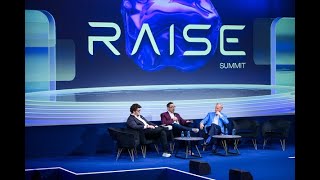
Fireside Chat with Cerebras CEO Andrew Feldman and former CEO & Chairman of Google, Eric Schmidt