Andrew Feldman, Cerebras Systems | theCUBE + NYSE Wired: AI Factories - Data Centers of the Future

Cerebras CEO Andrew Feldman says the company's inference engines run 10-20x faster than competitors by building chips 56x larger than the biggest GPU, with on-chip memory 2,500x faster to access. Cerebras just opened its fifth U.S. data center, a 10-MW facility in Oklahoma City, to meet surging demand from OpenAI and Anthropic.
Chapters
Welcome back, everyone. I'm John Furrier, host of TheCUBE. We are here for our Future of the Data Center series. This is the large-scale systems that are changing the game, and we're interviewing the leaders who are powering that trend and continuing to invest in fastest, latest, and greatest enablement for the software tsunami with agents and all the new AI native applications coming. We've been reporting on that on Silicon Angle. Andrew Feldman, the founder and CEO of Cerebras, is back on The Cube. Last time we were together was in Paris at the RAISE Summit. Andrew, thanks for coming in. Thanks for coming into our NYSC Cube Studios here as part of the NYSC Wired community. Appreciate it.
Thank you for inviting me. What a cool spot you have here.
Yeah, I mean, you got the active trade and the energy. I love it here. The energy, of course, with the Palo Alto studio connecting. Silicon Valley and Wall Street, those, those, those environments are now merged, right? So you see money and tech. It's not Mad Money, it's Tech Money now, right? So it's like really now a tech-enabled scene here in this market. We've been covering the crypto trailblazers, which essentially— I mean, decentralized infrastructure, financial infrastructure. Yeah, that's being dislocated and innovated on. So that's one vertical. Life sciences. I mean, every single area is popping with new discoveries, new capabilities, and enabled by large-scale systems that can compute and infer around things that they couldn't do years ago.
That's right. New processes, new methodologies, new techniques, new ways to find insight in data. They already have guidance to which data they need to collect to gather new insights. It's really an extraordinary time.
I want to unpack that with you because you're, you're at the forefront of this with Speed. And scale. But first, give us an update on Cerebras. What's new since we last saw each other in July? Give us a quick update.
Well, the inference market has continued to accelerate. It is white hot. And speed, which is the reason we exist, you know, as you remember, we're the fastest at inference in any model we do. Not close, 10x, 15x, 20x faster than the nearest competition. And that's important as we use inference to do more, as we use reasoning models, as we use agentic models, right? As we use inference to write code, the willingness of people to wait 10, 20, 30 seconds, a minute, 3 minutes, right? Nobody wants to sit and watch the little dial spin while they achieve nothing. And so by being able to deliver inference at these extraordinary rates, we found extraordinary demand.
So talk about the demand curve. We're seeing in the news huge financing and CapEx growth. More data centers are being built, applications that are AI native getting funded. We saw NVIDIA going all in on OpenAI. I think they have like 5 major customers that represent a lot of their business. So obviously that they have some big customers, but it's concentration.
It's true.
It points to though the demand and watching some of the, you know, the hot takes on TV. Obviously they're pretty obvious, low-hanging fruit, kind of obvious ones like, oh, the sector's hot. It speaks to the buildout.
Great insight there.
I think it's super insightful. Okay. I mean, it's hyped up. So hype and hot kind of synonymous in that layer of analysis. But When you look at the demand curve, the infrastructure enablement is still firing away. Can you take us through your thoughts on, on that? Because again, on the software side, there's a huge activity going on, certainly open source on all the models. They're moving faster. So the models are like hitting a flywheel. People are decoupling the app layer. They're natively infusing AI and either native AI or they're consuming AI to manage the models. And then the underlying infrastructure is kind of decoupled from that flywheel that's being optimized. You have, you have layers above and beyond the models. Wait, that's where the smart money seems to be. So the software side is in massive demand. They need horsepower.
I think one of the things that leads you to believe this is not a bubble is that all of us are looking for more capacity. And we just opened a new data center in Oklahoma City. It's our 5th data center in the US. This is a 10-megawatt facility and we immediately began expansion. We opened it, we expanded it, and we're looking for data centers around the world. And I think when OpenAI, when Anthropic, when other leaders are saying we need more compute, all right, when leaders in the, in the IDE space All right. Cognition, it's curse or lovable. When they say we need more capacity. Yeah, right. What you're seeing is this sort of groundswell up out of the application and it's washing over the makers of software and there is just this giant sucking sound And that sucking sound means we need to deliver more compute to do more inference. That compute needs to live in more data centers and it just washes back down the supply chain.
You know, one of the comments that's come out of some of these interviews on these future of the data center is, well, we've had x86 for a while, we got GPUs and XPUs. They've had that relationship for years. It's an interconnect. You obviously have a semi background as a founder. It's to kind of just interconnect them and get the same. And then these Neo Clouds are just resources. It's just resource capacity, not so much a game-changing software perspective. What's your take on that reaction? Is it naive or is it outdated? Both.
Both. There are very little problems in this world where you can just add and connect for free, right? When you break up a problem, and you separate it, there's a communication overhead. The probability of miscommunication jumps through the roof. Right. And so as you fracture a problem and spread it out over, over thousands of GPUs, the problems multiply, the complexity multiplies. And that's why there's so few organizations that can train with 10,000, 15,000 or more GPUs. There may be a handful in the world. And this is complexity that at Cerebras we seek to eliminate by building the largest chip in the industry. We keep more information, more data on chip. We move it less often, we use less power, and we deliver answers in less time.
You know, we saw the news this week of Intel has government stake in it. They all come from the philosophy of go smaller. Not bigger.
Yeah. How's it work for them in AI?
I mean, explain, because it's not— they would probably throw shade on what you're doing.
No.
What's the net-net of going bigger with the wafer? Because you have cracked the code on speed.
First, Li Po is an extraordinarily knowledgeable and seasoned executive, and he was one of our early seed investors. So he knows exactly. What the benefit is. I think that the notion that there's a one-size-fits-all in technology or that there's a single silver bullet is always garbage, right? It's just never the truth. The interesting parts about AI are that the challenges that make the AI work difficult for a processor is several. First, you need a lot of very simple calculations.
Yeah.
More than generally fit on a small standard-size processor. That means you need to tie them together. So that means you've got this crazy communication pattern of moving intermediate results. Final thing is you need to get to memory. And we are 2,500 times faster at getting to memory. And getting to memory is the speed factor in inference.
I mean, SRAM was the holy grail.
SRAM's the holy grail.
How much can you put in there?
Well, that's why you make a big chip. That's why your chip's 56 times larger than the largest GPU is so you can stuff it to the gills builds with the fastest type of memory on Earth. And this is this architectural decision we made, these inventions. This is where the advantage comes from.
Yeah, we talked about that big bet on our last segment. So folks watching, check out that interview from the RAISE Summit with Andrew Feldman. He went into great detail on the speed there. So I'll just put that out there. I want the data centers because inference is where the money's being made. Everyone I talk to, inference is where the money is. Now let's unpack that. Certainly on the infrastructure side, you're building inference centers. My word, not yours. I'm just— maybe it's the wrong word, but that's fine. They're inference—
massive data centers filled with machines to run inference. They're running inference.
And so software writers, whether it's written by a machine or human or both, they want to deploy software that's intelligent, right? They're going to need to have that capability. Talk about where that goes, because I think this is where I'm connecting the dots with Cerebras, because, okay, I'm a software— I don't really care who's got what.
That's right.
I just want the fastest. No one says I want the slower product.
Nobody's ever said, can you make my results appear slower on the screen?
Right? No one says that.
No one says that.
Yeah, totally. So take me through that enablement, because I think this is where I think the crossover is on the money-making on both sides, by the way.
So what happened in early 2024 was for the first time AI sort of moved from being a novelty, right, to being valuable, right? In the sense that before that, the emphasis was on training. There was a little bit of inference, but we couldn't do useful things with it. And so it was cool. You could do this or that, but could it be useful? And starting in the middle of 2024, what we saw was sort of the rise of AI being an extremely useful tool. And it could write code, all right? It could generate text, it could deliver thoughtful answers, it could do deep research, it could survey vast amounts of information and synthesize it, summarize it, and deliver it back. And so what's happened is software writers wanna take advantage of that technology.
Right.
They want to bolt on to AI. They want to use AI, use a chat service inside their application. And what's happened is it's become dead simple to move, right? It requires no special coding. You can move from a competitor to Cerebras in 10 keystrokes. Oh, all right. And once you do that, you're getting results 10, 15, 20, 50 times faster. That's what's sort of driving this, this sort of adoption across all app makers are including some form of AI and they want it dead fast. And that's where we come in.
I want to get your thoughts on the AI hype and to reality, because I think if you go back to 2024 into 2025, every company, we're an AI company. I mean, no one's going to say they're not an AI company because that's like, I mean, unless you like clearly aren't an AI company.
Right.
Construction equipment.
Right.
That probably has some IoT, AI in it, actually, too. But then, then now we're starting to see the rise of AI-native startups, people who are thinking AI first, who are building AI into the products from day one, not bolting it on. That's right. What does AI-native mean to you? What does that definition mean? Because we saw cloud-native. Cloud-native really powered the SaaS market.
It did.
Is AI native real? 'Cause agents have workflow knowledge and you mentioned things like moving data around, I'm paraphrasing, moving data access to memory, the bigger chip does all that. That handles a lot of that velocity.
It does.
And it's nonlinear.
Right.
It's also not predictable. It's generative.
So I think what AI native means is that AI and AI's capabilities are in the very architecture of your product. They are not an add-on. The product is built around those capabilities, right? And you are thinking about in every step how the product can benefit from AI, not how AI can help the product. If you're bolting on customer service or a chatbot, That's great. It can do really interesting things for you. It can save you a ton, but that's not central to your product, right? When, when the very value proposition of your product is sort of cornerstone with AI, then you're an AI-native product. Otherwise you're sort of an AI drag.
You know, one of the things about New York that I love and some people might not understand—
The taxi ride today couldn't have been it.
Well, the UN.
No, that was not it.
Is that they're results-oriented and Silicon Valley is a little bit of a long game on tech. As a founder and as a technical founder too and CEO, you're in like a great machine hype machine. We are. How do you balance that? Because you got to balance results. Okay. Speed. You certainly deliver the speed side and then also play the long game knowing what the bet is and what you guys are going to see through. How do you, how do you handle that? Because it's easy for some founders that may not have the experience, say, I got to get the shiny new toy. I got to be on that high horse and look at the deals I just closed. Yeah, a lot of people, you have to squint through that. So we're trying to get that. What's— how do you view that, handle that, and what's your philosophy?
Well, as you know, this is my fifth startup. And over the past 27 years, there's some big highs and some deep, deep lows. Right. And what I tell people in the startup world is you can get kicked in the stomach 3 or 4 times before lunch and have it still be a reasonable day. Right. You are being whipsawed. And I think you add that to the fact that, you know, no great company here, no company that changed the landscape did it quickly. All right. Change, fundamental change takes years and it takes real R&D and it takes the type of R&D that is unafraid to fail. That is working on problems that other people have refused to take upon themselves, that either they've been too scared or they didn't think they could solve it. Those are the problems we're interested in. We talk about it inside the company as doing fearless engineering. And when you solve problems that matter, that are hard, that others haven't solved, that produce real benefit to your customers, it doesn't take 3 weeks. This isn't a 10-day sprint. These are years of extraordinary work and it produces massive results like our innovations in chip design and in chip packaging, which lead us to be an order of magnitude, an order of magnitude and a half faster than companies that are 50 or 100 times larger than we are.
I appreciate you sharing that because it's— I guess it's important to kind of keep the eye on the ball and you guys are doing that. What are you guys optimizing for now? Obviously, with the long game view, What are some of those problems that you see that you're going after? What's the 20-mile stare look like for you? And also you look out on the horizon. By the way, I love that line about getting punched in the stomach. Marc Andreessen's got a good one, getting punched in the teeth every day multiple times and you're shaking it off and moving on.
And then that's, that's exactly right. I think if you want to be an entrepreneur, grit is one of the top several things you need and things come at you so fast. You're going to make some mistakes, you're going to get clobbered, and it can still be a good day. And it's, it's, it's an amazing ride.
What's your 20-mile stare? You guys have great R&D. Again, counterintuitive, always sometimes being misunderstood for a long time. It needs to be tolerated. What is the 20-mile stare? What problems are you guys working on now? What's some of the fearless engineering? Can you highlight without giving away the competitive jewels?
You know, I think since you brought up Mark, Ben Horowitz wrote a book, The Hard Thing About Hard Things. It is one of sort of the The Most Honest Feeling book for entrepreneurs, right? When you attack problems, they're hard because other people couldn't figure them out because the answers weren't obvious, right? They're hard because not just your team, but other teams across time couldn't do it. And there aren't tools that make it easy to do it. We're committed to solving that type of problem because those are the problems that unlock massive advantage. Yeah, right. You don't get massive advantage by doing the same thing that NVIDIA is doing a little bit cheaper. All right. That's not massive advantage. You get it by, by identifying fundamental problems and working on them with the knowledge that these problems aren't easy to solve, that they haven't been solved for a reason. That's— and that reason is a lot of thoughtful people couldn't come up with a good answer.
And being on the right side, on the business side, knowing the structural change and keeping the pulse, knowing what you know?
Well, you know, we have 5 founders and I have tremendous faith in the guidance from the other 4, the technical vision presented by them. And we've surrounded ourselves with extraordinary people and we foster an environment, a culture in which it's okay to disagree. It's okay to have competing opinions, but once we decide, everybody gets in the same, same boat and pulling in the same direction.
I love it. Debate in a line. Love that. Love that. Love that concept. Final question for you while I got you here is obviously you're playing in a world where the big dollars, CapEx spend, big centers are being built out. You've got your data centers, the enterprise market slow to adopt, very well documented. We are predicting that 2026 will start opening up as and they're just a different animal.
Sure.
Maybe smaller footprints compared to some of the larger scale data centers being built on the hyperscalers. And then what you guys are doing with the NeoCloud and everyone else, as the data center opens up for the enterprise because the on-premise activity is high, because that's where the data is, right? It's not like they're moving from cloud. They've still got cloud. It's distributed computing. We talked about that many times. What's your view on the enterprise market right now? Just as an industry participant, is it core for you guys? Is it something you're looking at hard? Is it developing fast enough? Are they— is it about to explode open?
Right. I think it is about to open up. I think it's about to open up because it is the traditional enterprise that is most under threat by newly formed native companies. Right. It's— it is traditional banks that are under threat by Klarna. Right. It is traditional insurers that will be under threat by, by this new wave of insurers and fintech companies. It is the way we used to do business. All right. That is under threat by the way we might do business in the future. And if they don't— if they don't recognize this, I think they get smoked.
Yeah. And I think, you know, I love the old expression. It's kind of cliché to say it now, but when we started TheCUBE 16 years ago, Hadoop was big. Remember the big data days? The phrase was data is the new oil. Yeah, you could laugh, but The enterprises have the oil. It's called the data. So if you're a large insurance company, you got a lot of data that you could reason against, right? They, they have the ability to thrive and survive.
So it's interesting. I just thought of something as you said that. I mean, data is the new oil. Midstream in the oil industry is extremely profitable, right? Turning it from sweet crude into a collection of things that are actually usable in the world is an enormously profitable business. That's where AI lives.
Yeah.
Right. AI takes this data and it can break it into a collection of insight, things that are valuable. And that's— they may have the data, but if you don't, if you don't have processing, right? If you— exactly. It has to be converted into something valuable.
Yeah. And then you could build an engine for anything.
Then you slice it, slice it and dice it. You can find insights in it you didn't know you have. You can. And that's what we're seeing with the most forward-looking pharma companies, the companies who are our customers, like Mayo Clinic, like GlaxoSmithKline, are using data in ways to find insights.
Yeah.
All right. And then make decisions that might otherwise not have been made.
And they're making discoveries because they're not— they don't have to implement some hardened manual process migration.
That's exactly right.
They can integrate into their workflows that they got.
They can narrow the number of hypotheses they need to test. Yeah, right. With better AI, there's a whole range of things that leading-edge companies are doing to make their data more useful and to find insights in it.
Andrew, always a pleasure. Thanks for coming on as usual. Great unpacking of some of the key things that are creating value and frankly extracting value. And I think the agents point to what's coming—
extraction, extraction. I think utilization, extraction. I think these are extraordinarily exciting domains. When we look out there, we see, I think coding is just on fire. Yeah, the IDE space is just plain ripping right now. Productivity gains are off the charts. And I think, you know, we're proud to partner with leaders there.
Andrew, looking forward to our next time and continuing to get stuff thrown at you really fast. Oh, we take a couple of punches, get back up. You know, continue the mission. Great to see you. It's always a pleasure.
Not a business for a glass jaw.
If you want to do startups, not for the faint of heart, but the rewards are there. There are structural changes. The future of the data center is going to look completely different. It's going to be a systems game. It's going to be a data game. It's going to be a software game. Again, you know, all everything's up in the air. When it lands down, there'll be winners and losers. There'll be a right side of history and the wrong side of history. Of course, we're doing our part. To share that data with you here at TheCUBE. I'm John Furrier, your host. Thanks for watching.
More from Andrew



How Cerebras is Democratizing AI at Scale with Andrew Feldman, CEO of Cerebras



Cerebras CEO, Andrew Feldman on Why Raise $1BN and Delay the IPO & Why NVIDIA’s Worried About Growth

⚡️Raising $1.1b to build the fastest LLM Chips on Earth — Andrew Feldman, Cerebras



Andrew Feldman | How Cerebras Built the "Impossible" AI Chip Now Challenging NVIDIA
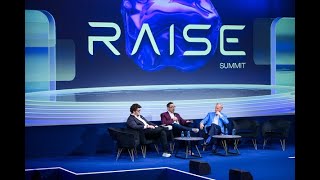
Fireside Chat with Cerebras CEO Andrew Feldman and former CEO & Chairman of Google, Eric Schmidt