How Ian Blair Jumped From Building Apps to Selling Laundry Sauce With Acquire.com
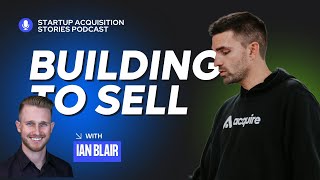
This is a YouTube video titled "How Ian Blair Jumped From Building Apps to Selling Laundry Sauce With Acquire.com" featuring an interview with Ian Blair, founder of Build Fire and Laundry Sauce. The content is a detailed conversation where Ian discusses his entrepreneurial journey, from starting Build Fire, a mobile app platform, to selling it and focusing on his e-commerce company Laundry Sauce. The interview covers topics such as company growth, acquisition process, and personal reflections. The conversation is between Ian Blair and an unnamed host, but Andrew Gazdecki is not a participant.
Foreign.
I'm here with Ian, the founder of Build Fire. Ian, how you doing today?
Doing great. It's good to be with you. Yeah.
Likewise for people that may not know you. Do you want to give a brief introduction of yourself?
Yeah. My name is Ian Blair. Been a serial entrepreneur my whole life. Started off selling with lemonade stands when I was a kid, selling golf balls on ebay in high school, and then learned a lot about Internet marketing and building websites. And then the App Store was the hot thing when I was in college. IPhone4s had just come out. Siri was brand new. People are making millions in the App Store. And then apps were the hot thing. So how do I build these for businesses? And started actually. Well, it's probably worth mentioning this. So I started off as a white labeler business Apps, which was your company.
Yeah. This is going to be an interesting podcast because I'm thinking, you know, usually I'd ask, you know, what does Build Fire do? How'd you get the idea? But I had a similar company, so.
I already know the answers to those things. Yeah, totally. I mean, you probably know better than most people. So, yeah, actually started off selling mobile apps, being a white label reseller of business apps, Andrew's company, and sold a couple hundred apps, and then, you know, realized we wanted to go off and build their own technology platform and make it a little bit more extensible. So that was the kind of the genesis of Build Fire. And then, you know, spent a little over 10 years building that company and published over 15,000 apps to the App Store. And now we're, what, two months after we sold it now, and onto my next company, which is called Laundry Sauce, which is essentially like designer laundry detergent. You know, you can think of it as like Tom Ford meets Tide, and create a really elevated experience. Been doing that for a little over three years now, and it's just grown like an absolute rocket ship. And it's very fun to be focused on E commerce because that's really, like. I think where my passion lies is just more on the Internet marketing side than, you know, building really complicated software.
Right on. What a story. In, like, two minutes. That was probably the best initial intro I've done. Let's bring it back. Let's start with Buildfire. In the beginning, do you remember how you got your first customer? I don't think I've ever asked you this, but I'm curious.
So I think when you're starting companies, you always need partners. I mean, there's some people that can just do it totally on their own, but I think you build much better companies with partners. And the guy that I started it with, he. He was Salesforce. So he had, like, kind of a warm network that he went out to, and we started making sales. And then once you start to have, like, enough customer wins, like, bringing in other customers becomes a lot easier because you have a track record and then you get word of mouth. So that was really how we got started. It was really my. My business partners. Warm network.
Nice. What vertical did you start with?
So we started selling into churches. And that was a good vertical?
Yeah, that was a great vertical.
A hundred percent. Mainly because, like, they kind of all follow the same format. Because the initial business idea was like, how do we build, like, templated mobile apps? Like, over and over, and, you know, you need to go after a particular vertical in order to do that. And churches, you know, had a massive need for this. They were willing to pay for it. And then we could essentially just take these templates and clone it. And that was kind of the. The world that my business partner was, you know, heavily involved in. And, you know, there's also a great network effect there. And it was a really strong market to get started. And then, you know, once we had our own technology, that's kind of when we expanded out into selling to more businesses.
Nice. I remember schools and churches were probably the top markets that I worked in. And then I started in restaurants, a little different. I don't know if you ever did this, but we would cold call restaurants when the iPhone was just new, and we'd say, hey, do you need a nap? They'd say like, hey, what the hell? Like, appetizers. What are you talking about?
Yeah, I mean, you were probably the first to market with this, which is nuts. And, you know, I think restaurants were really strong early on. I think it was. I don't know. There's such a hype around it, I feel like. And it kind of felt like everything was going to go towards apps. I mean, ultimately it didn't, you know, apps became still a little bit more, like, specialized. But I think you wrote a pretty good wave.
100%. We made ask for, like, attorneys and stuff. They don't need mobile apps, but hey, we'll happily make them. All right, let's move to the point where you got your own software platform. Tell me about the initial build for that. How long did it take? What features did it have to have? What was the big differentiator? I think I know the answer.
Well, first, it just started off with Replicating the features that our customers were using essentially on your platform. Right. So that was kind of step one. Then we could migrate them off and then once we had that, then we could kind of expand the feature set and kind of like v1 of the platform was just truly that, like, how do we just replicate what you have? And then we had V2, the platform where we kind of created like a different architecture where it was like much more modular. Kind of like the WordPress of mobile apps where you could have these. You know, each feature in the app was like a modular unit of functionality. You kind of pick and choose from like Lego pieces for your app. Um, and then made us customize and add additional ones. Um, but I think like V1 of our platform probably took us almost a year to build. Um, and then like, as you guys are adding more features, like, we had to kind of catch up to those as well.
We were in such like an R.
And D, like battle.
It was never ending. Just new feature, new feature. What you guys would always beat us on was the custom modules. Yeah, didn't have that.
I mean, that was the kind of our big selling point. But then, you know, as, I mean, it adds a whole layer of complexity as well. So one thing that I've learned is like, simple system scale. And, you know, when you have to add tons and tons of new features, it just becomes like this endless treadmill that you're on. And then, yeah, you know, some would get a bit of technical debt just because it's a larger system to maintain, because you're kind of catering to all these other customers 100%.
What do you think your favorite moment building that company was? Or maybe the biggest learning or just something that comes to mind that you'll never forget.
Probably when we moved into our 32nd floor office in downtown San Diego. So it's one of the tallest office buildings in all of California, actually. We're two floors from the top, had panoramic views of the city. And, you know, before, you know, we were on the 28th floor and then we were like all crammed in, you know, so it kind of just felt like the company is growing. And, you know, when you get to move into a nicer space, I mean, it's a very physical, like, representation of, like, how, you know, we're growing as a company. It gets everyone excited. And the views were kind of, you know, second to none. So that was a, a very cool moment, especially because we started off, like, working from home, then to a shared office space. Then we got our first office, like, that was cool. Then we got a really nice office. Like, that was. That was really sweet.
Nice. My first office was in Chico. It was like one just studio room. We had like eight guys in there. It. It was not fun.
Yeah, I mean, I started this when I was living in the house of 11 guys, so. In college.
Were you in college? What a senior? Were you?
I started it. I think it was really like second semester. Junior year is when like we really got started with it. And then I had summer break and then I had to come back to finish senior year. Fortunately, I graduated a semester early. But as soon as like, like I had four months off just to work on the business and it was growing and I don't know, we probably got it to like 20, 30,000amonth in recurring revenue.
Nice.
And yeah, I came back for senior year. I was like, why the hell am I still in school? And like, I called up my parents, I'm like, hey, I'm gonna drop out. And I was just expecting them to be like, you know, you have to finish this. I wanted like them to basically tell me I had to do it, and they didn't. And then I was like, all right, I'll finish it anyways.
Nice.
In hindsight, smart. Well, it didn't matter. I think, you know, college is just less and less relevant today, you know, and I don't think it's getting any better with AI and just how much the knowledge is essentially just democratized on the Internet. You can learn anything on YouTube at this point, unless you have a highly specialized skill like becoming a nurse or a doctor, things like that, that's what you need to go to school for. But business marketing, no, I didn't even.
Learn anything even though I majored in business marketing. But it was fun. You know, I always say you learn more outside the classroom than actually in it.
No doubt. I mean, there's a couple of good classes like finance, accounting, business, law, but there's only really like, I don't know, five to ten tactical classes where you can really learn stuff other than that, it's just more or less the experience.
I would agree with that. Let's move into the acquisition part. What made you Want to sell? BuildFire.
So yeah, when you raise capital, I mean, at a certain point you have to return capital to shareholders to, you know, kind of around the 10 year mark, you know, they're looking for liquidity. So that was certainly, you know, part of the impetus. And then, you know, my e commerce project, which was like a side project, became you know, increasingly bigger and bigger. So you need to focus on that. So you know, the fact, yeah, I had to like hunker down and run two businesses that, you know, you're working, you know, 60, 80 hours a week, you know, but that's what I'm, you know, willing to sign up for. That's why I started early in life. So it was just kind of like ready for this journey to come to an end and you know, I had another company I wanted to focus on. So just kind of all those factors coming together and yeah, it kind of creates like unique situation because sometimes when you get bought, like people want you to stick around for two or three years and have an earn out and stuff. So you're kind of looking for a more specific buyer as well.
Yeah, 100%. Tell me about the process, the acquisition process. What were your initial thoughts? How did it go? Give me the, the 62nd version. We could pull back a little bit.
Yeah, I mean it was, it's definitely like a long journey from the moment you're like, hey, I'm going to sell this to. When we actually got it sold, it was much longer than I had anticipated. And we started, you know, and I also think like macro has a big part to play in it as well because like this is when interest rates are getting cranked up, software multiples are, are getting cranked down. So I think it just became an increasingly difficult time to sell a company because your valuation expectations might be one thing, what the market has been the last 12 months versus what it's going towards. So we started working with an investment bank early on and unfortunately did not get a transaction across the finish line. And then you're kind of at square one again. And that's kind of the tough part about selling your business is you never know like, you know, when you're doing management calls like, is this going to be the buyer? Is this one actually going to go over the finish line? Are we going to get an offer? And so forth. So kind of went through that process, realized it was a bit, you know, difficult and then yeah, ultimately ended up working with you guys and you guys made it a hell of a lot easier.
100%. Who'd you work with on the acquire team and how's that experience?
Well, I get to work directly with you. That was a big selling point. You know, the fact that you knew our business inside and out, you knew the market, you knew who the buyers could be. That was definitely one of the primary reasons why I wanted to work with you. And Then I also thought it'd be, you know, kind of nostalgic. Bring it full circle too. Yeah. 100.
I enjoyed this transaction a lot because, you know, we literally had very, very similar businesses. And yeah, I did know a good amount of buyers that could be interested. Tell me about just the process. Like, when you found the buyer, you ended up moving forward with what stood out about them. How was their process? How was due diligence?
Yeah, well, I think they had a really solid approach and I think part of it is we were well prepared from the due diligence side. You guys had some amazing materials that we could essentially use as templates to build up the SIM and the data room. And I think it made a lot easier for the buyer to come to a conclusion on whether or not they should buy. And they made it pretty easy on us. It was only a 30 day due diligence process. You know, they kind of put their money where their mouth is and they have, you know, here's all the, you know, here's what we need to get through in week one, and if we get through this, we get onto week two and these are the things that we need. Then we get to week three and then, you know, you get to that asset purchase agreement. You know, you work through legal with that. Like, they were pretty straightforward and, you know, they didn't really throw too many curveballs at us. And it was quite nice work from them.
Nice. Tell me about, you know, actually closing the transaction. Did you have any hiccups in that part? I know we helped a little bit with SRS Acquiam or. No, you went no escrow. Correct. Because you have. That's right.
Yeah. I think there's a sense of trust. Yeah. But I, yeah, transferred everything over and, you know, we're sharing screens on the last day and then they share their screen and they got the wire pulled up and they're like, send.
Nice.
That. That felt pretty good. You know, I think closing, like selling your business is always going to be like an emotionally stressful process. Like, there's a lot at stake and Yeah, I mean, you know, the couple days before, you know, the deal's not done till it's done. You know, like, I would skydive a lot and, you know, when I'm in ERA under canopy, it's like, you know, the skydive's not over till I'm on the ground, you know. Yeah, you know, it's nice to parakeet above your head and, you know you're coming down. But yeah, the skydive is not over tool on the ground in the same way, the business transaction is not over until the wires in the bank account 100%.
I've seen it go the other way, and it's. It's not fun when that happens.
Yeah, huge emotional letdown. If it fell apart in the. In, you know, the last hours.
Oh, it's the worst. If you can go back in time and give yourself, you know, three pieces of advice as you're going through your acquisition, what do you think that'd be?
I would have sold sooner, you know. Yeah. I mean, in 2020, 2021, I mean, we had some serious tailwinds. I mean, you know, our signups were, you know, off the charts. We had so much inbound traffic, you know, we were hitting all of our sales records, you know, and the whole world was, you know, basically going digital. You know, you can look at the stock prices of, you know, public companies such as, like, Zoom. I mean, they were on a huge high. They've come down since. So, you know, I think we kind of missed that timing. So, you know, kind of one of the. The lessons that I'll take moving forward is, you know, when things are, like, really hot and frothy and, you know, the future is looking bright, I mean, that's really the time that you want to sell. So I wish, you know, we had. We had made those moves at the time. So that's one thing. You know, I think there's hindsight's always 20 20. You know, there's certain, you know, you have some great employees, you have some employees that are not so great, and you're getting more of those right than wrong, you know, would obviously change the trajectory a bit.
Was there any parts that surprised you about maybe the due diligence process? Yours was fast. It was only like 30 days. So I don't know if you have much there, but like, hey, put together this in advance, or if you have.
A good data infrastructure and you use, like, the right tools, you know, it's pretty easy to audit these companies, you know, because you have essentially, you know, all your recurring revenue in one system. And then you can, you know, plug it into other reporting tools where you can kind of like, easily get a sense for what the numbers are doing. You know, there's not like a whole lot of, like, manual accounting. So. Yeah, I mean, if you're on the right tech stack, it makes things a hell of a lot easier.
Nice. You do anything to celebrate? Like, you on vacation? Like, what did you do?
Yeah. So I wanted to go on this trip for quite some time. So basically as soon as we sold the company, um, I, I started planning a trip to Indonesia. Wanted to go on a surf trip out there for a long time. So I made my way out to the mentuice and spent 17 days out surfing there. And basically the middle of nowhere, it feels like opposite side of the planet. And absolutely scored, got the best ways of my life, got to hang out with surfing legend Josh Kerr. He was staying on the island with us. At Most there was 10 of us and it got down to only four of us at one point. And that was for, yeah, 17 days and just got some unbelievable waves. So that's still absolutely burned into my memory because I just got back a couple weeks ago.
Is that where Chopu is?
Chopu's in Tahiti. Tahiti, okay. I've been to Fiji and I've seen cloud break, which is similar to Chopu. I've seen that 25, 30 foot plus, you know, one of the biggest swells to ever hit Fiji and I happen to be there for that. And then even when I was in Indo, it was the biggest swell of the year and it came late, so. Been pretty fortunate with seeing some pretty big swells.
Right, Alan? Well, dude, what are you doing now? Tell me about laundry sauce.
Yeah, so laundry sauce, you know, I'm just all in on E commerce. I think, you know, my skill set, like as an entrepreneur has always been around marketing, right? And I wanted to essentially create a business where like that is the, you know, primary lever of growth. So kind of my general thesis is like, how do you take like a non discretionary consumer good that has high lifetime value, that you can acquire a ton of customers at scale through media and, you know, have something that's like, you know, relatively simple to produce? Because I, I knew I didn't want to be back in the whole like R and D world where you have to spend, you know, hundreds of thousands or millions of dollars to develop new products. You know, how, how can you, you know, is this somewhat like, I guess, in E commerce in this case? Like, how do you leverage, like existing manufacturing infrastructure, you know, great suppliers that can help you build a product and like they're also carrying some investment along with you and bringing equity expertise. And we've been like the brand layer on top of this product category. I mean, you know, I think we've done a lot, you know, to create this kind of elevated, you know, experience for laundry, which like no one really has done. And it's kind of obvious in hindsight, but there's kind of this, like, wide open market and, you know, it scaled that, you know, eight figures in the first, like, year and a half. So it's. Damn. That's the level of growth.
Good for you, man. Well, dude, excited to see how far you take this one. I'm excited. And it's been. It was fun building next to you two companies doing similar things. So glad I get to be a small part of your success story.
Yeah, and building a B2C company is quite interesting, you know, because if you're like a hundred million dollar B2C company, like, everyone in America knows who you're, who you are. If you're $100 million, like B2B Company, no one knows who you are. Yeah, it's true. You know, like, I'm just. The other day, I walk into a coffee shop and I had my laundry sauce shirt on and, you know, the barista was like, oh, like, no way. Like, do you work for laundry sauce? Like, I love it. Like, I have all the fragrances.
Yeah, there's. There was two people that acquired that I'd heard of your brand.
Yeah.
Yeah, it's awesome.
That's one of the fun aspects of working in consumer rather than in B2B.
Definitely. Well, yeah, that's all I got again, rooting for you all the way. Excited for this one to be, you know, 100 times bigger than anything you've done. So keep building. If people want to, you know, learn more about you or just get in touch, where can they find you online?
Yeah, best way to find me online is on Instagram. It's Ian Blair, 44. And you'll see some, you know, exotic cars, skydiving, surfing, snowboarding, and then some business tips along the way.
But I'll put down the show notes. Ian, it's been a pleasure room for you, man.
All right, thanks for having me.
More from Andrew




The Buyers Who Made the Move: What They Bought, How They Did It, and What Happened Next






