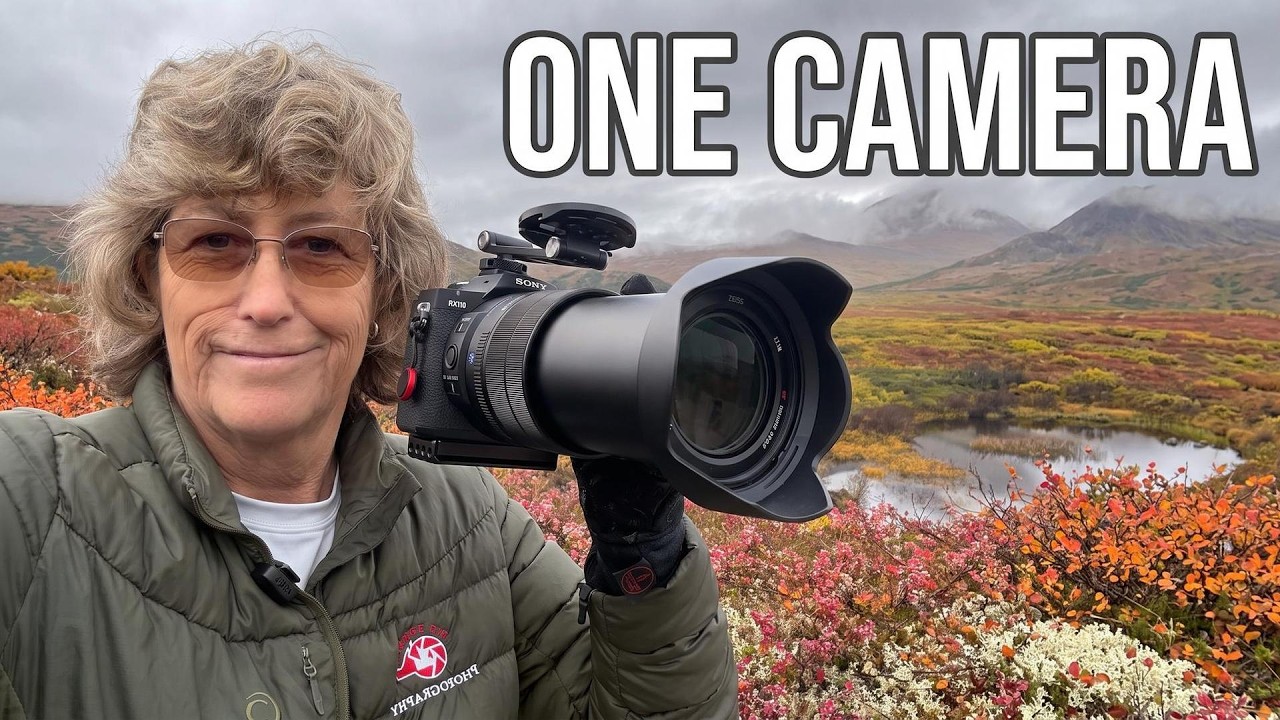
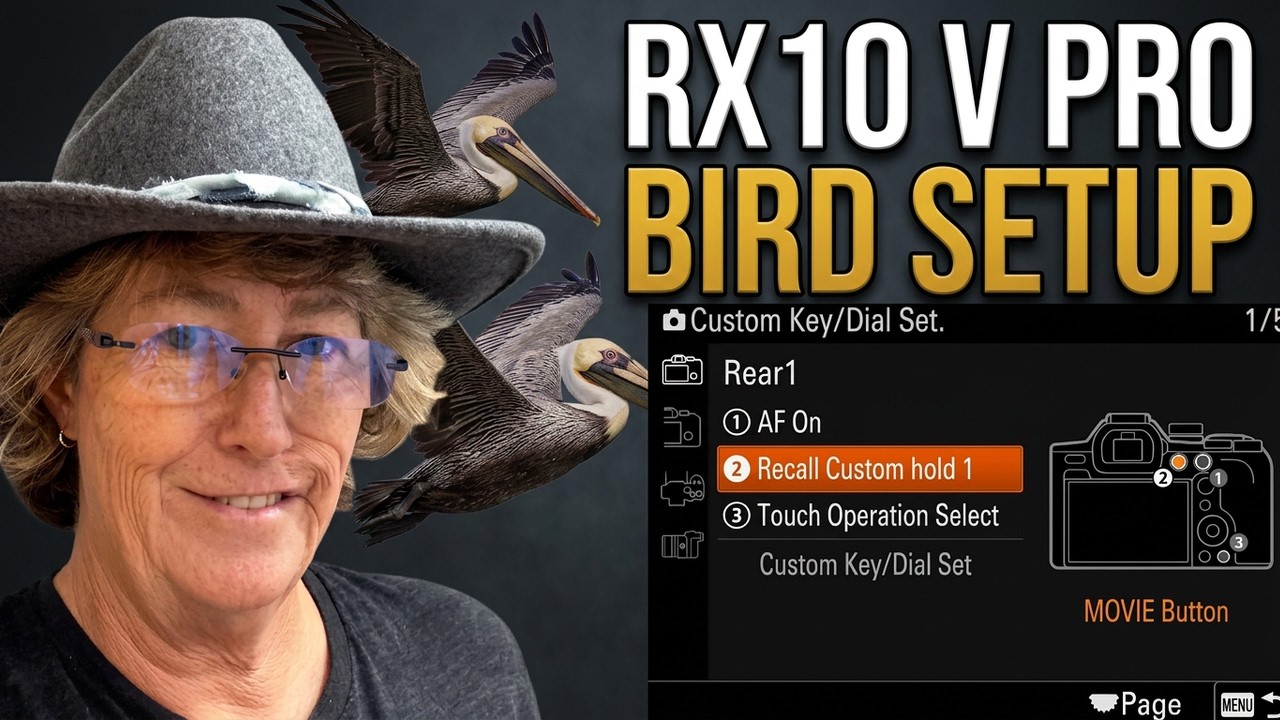
In this four‑day photo‑vlog, Angie Birmingham and her crew travel to Nome, Alaska, to capture the tundra using only a Sony RX10 V and a companion drone. The video walks viewers through several iconic spots – the Train to Nowhere, an abandoned dredge, a river rock outcrop, the harbor with Arctic terns, and muskox grazing areas – while demonstrating concrete camera settings (shutter speed, aperture, ISO) for landscapes, wildlife, and birds. The hosts explain why each setting works in the low‑light Arctic environment, show the resulting frames they chose to keep, and discuss how the light and colors of the tundra contribute to the images. Interspersed are invitations to join their annual Nome photography workshop and to participate in the online community “Feathers,” where members share settings, critique photos, and learn together. The video ends with a call to like, subscribe, and stay tuned for future content.
Chapters
What's that? Did I hear you want to see Nome? Ever wonder what 4 days on the tundra would look like with just one camera? Join me on a photo adventure. Let me take you behind the lens and show you what I kept.
Here we are at the Train to Nowhere. Yeah, we're gonna get set up and do some landscape shots here, and, uh, let's see what this little RX10 can do.
Go with f/16, probably shutter speed down around 1/30th of a second, and we'll let ISO do its thing. So this right here is the best composition I can find here at the If you notice, the train starts in the right-hand corner and it progressively works its way through the frame and out into the distance. And we have behind us some muskox, but you notice we have very low light. I'm gonna go for 1/125 on my shutter. F-stop, I'm gonna shoot it at f/4. ISO, we'll just let it be what it's gonna be, but see what we get.
Here's one of my favorite spots here in Nome. It is the abandoned dredge. We get nice reflections in the water. I took one with my drone. I'll share that with you. And now I'm going to take one with the Sony RX10. I'm going to put the shutter down to 1/125th of a second, ISO hopefully 100, and f-stop somewhere around f/16. Alright, let's take a look at it.
Found this beautiful rock outcropping. It's along the river. We're gonna photograph this for a landscape. I'm gonna go at 1/30th of a second, f/16, and ISO should fall somewhere around 160. And here's Take a look at this, it's gorgeous. And then if you turn around, you've got the dredge right behind you.
So let me just pause here for a second. So here's something that I don't mention much on this channel. Every place you've seen today in the video— the train, the dredge, the muskox, and the beautiful landscapes— I've shot that with a group of photographers that are right by my side. Once a year, I bring a small group up here to Nome for 4 days on the tundra, and by the second morning, nobody's asking what settings do I use anymore. They're asking, where to next? Here's who came with us this year. If you want to come along next year, the link is in the description. I'd love to have you join us. If Nome is not going to work for you, I have other workshops coming up as well. You can find the link below and the dates. Okay, so back to Nome. Let me show you what the birds are doing. Doing in the light. Here's what I found down by the harbor. Down here at the harbor in Nome, came up on some Arctic terns, and I'm going to photograph him at kind of a low shutter speed for a bird, at 1/1250 shutter speed, of course f/4. It's going to be 600mm, and ISO, well, we'll see what ISO does. But, uh, I think it'll turn out pretty good. He's pretty darn close.
All right, let's get it.
So we found some muskox that are hanging out real close, and I've got the Sony RX10 right here. And since the background is so crappy, we're gonna do some tight headshots. So for this, I'm gonna be at f/4, of course, wide open, and my shutter, I'm gonna put it at 1/500 because they're just kind of laying around munching on grass, and there's a couple standing up, but the ISO, it'll probably be somewhere around maybe 1,000, 2,000. So let's see what we get. Alaska on the go. Cougar Rock Road. We really enjoyed the view of this spot, so we decided to stop and find a composition. And let me show you what we're looking at here.
So those are all the frames that I kept from our tour in Nome, with just one camera and one drone. Landscapes, birds, furry muskox— not a lot of wildlife this year, but you know, that's wildlife photography. The light and the color of the tundra did most of the heavy lifting for us. If you have a clicking problem, well, you belong right here. And if you want to keep learning together, come and join us over at Feathers and We share settings, we look at photos, we answer questions. I'll put that link below too. And don't forget to like and subscribe and ring my bell so you get notified the next time I post a video. Don't forget, see you next time and keep on clicking.