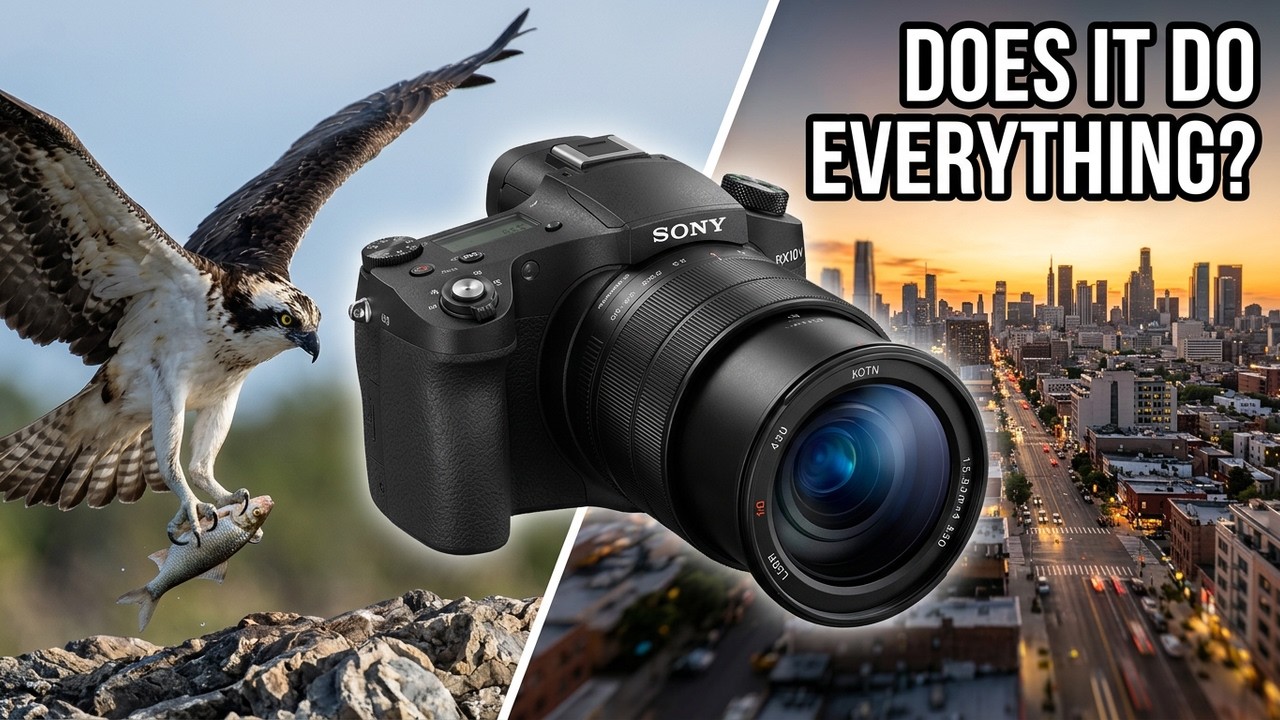
In this two‑day Yellowstone vlog, Angie Birmingham (Speaker A) and her companions take a single Sony RX10 Mark V on a wildlife photography adventure. The video walks viewers through on‑location shooting of bison, coyotes, elk, mule deer, pronghorn and other animals, explaining concrete camera settings for each scenario—aperture f/4, focal lengths up to 600 mm, shutter speeds ranging from 1/800 s to 1/2000 s, ISO management, and exposure compensation adjustments as the sun rises. The host also demonstrates the RX10’s down‑shift (5 fps) and burst‑mode techniques for locking eyes on fast‑moving subjects. Interspersed are promotional plugs for hands‑on photography workshops, the author’s book “Journey Through the Lens,” free travel‑guide PDFs, a B&H affiliate link for the camera kit, and the Feathers and F‑stops online community. The tone blends instructional detail with enthusiastic, poetic narration, encouraging viewers to “keep on clicking” while providing actionable tips for mastering the RX10 in challenging wildlife conditions.
Chapters
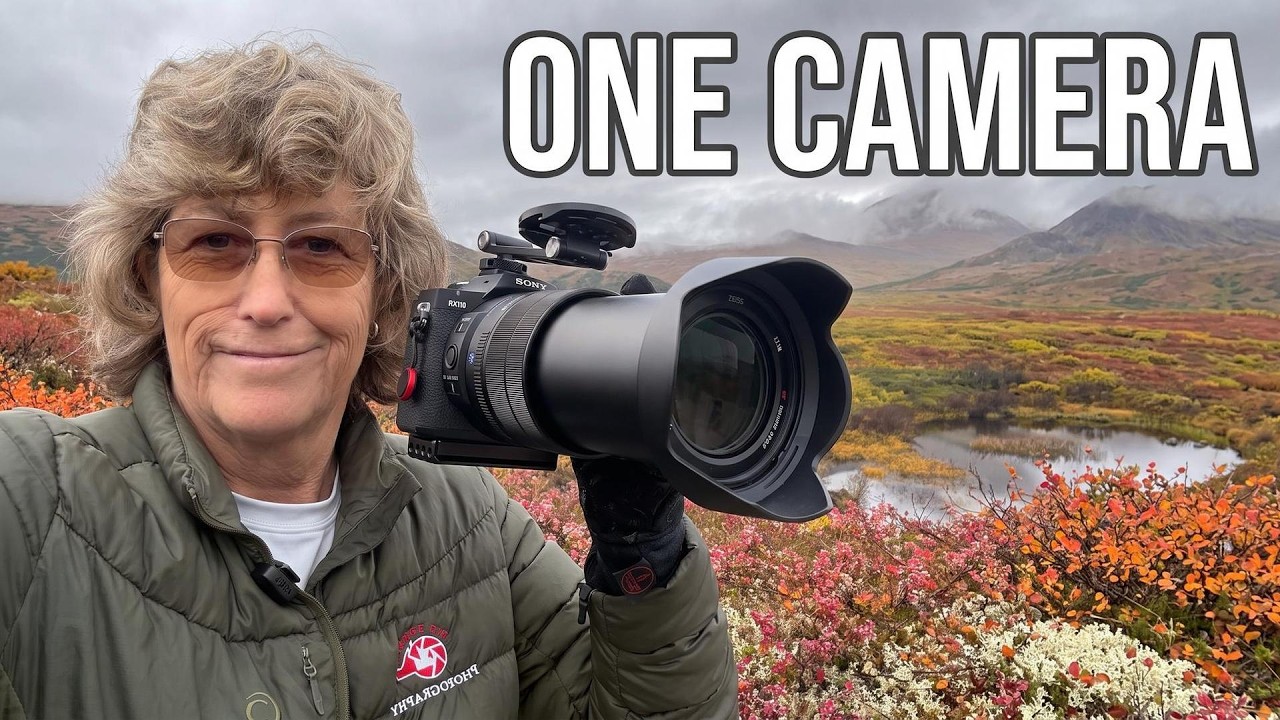
For the next 2 days, Jeff and I decided to take a pit stop on our way to Alaska to take a group to photograph muskox. And my 2 days in Yellowstone, I am going to only take the RX10 in with me. So join me on the adventure into Yellowstone. Our goal is to find some wildlife and I'm going to shoot it all.
Welcome to Yellowstone! Let's go find some animals!
Here I am in Yellowstone with the RX10 Mark V and I got a really good shot right here. The bison are up on a ridge with the mountains in the background. My settings, I'm gonna go for f/4. I'm gonna use 600mm. And probably set the shutter speed probably at 1/800th of a second. All right, let's take this shot.
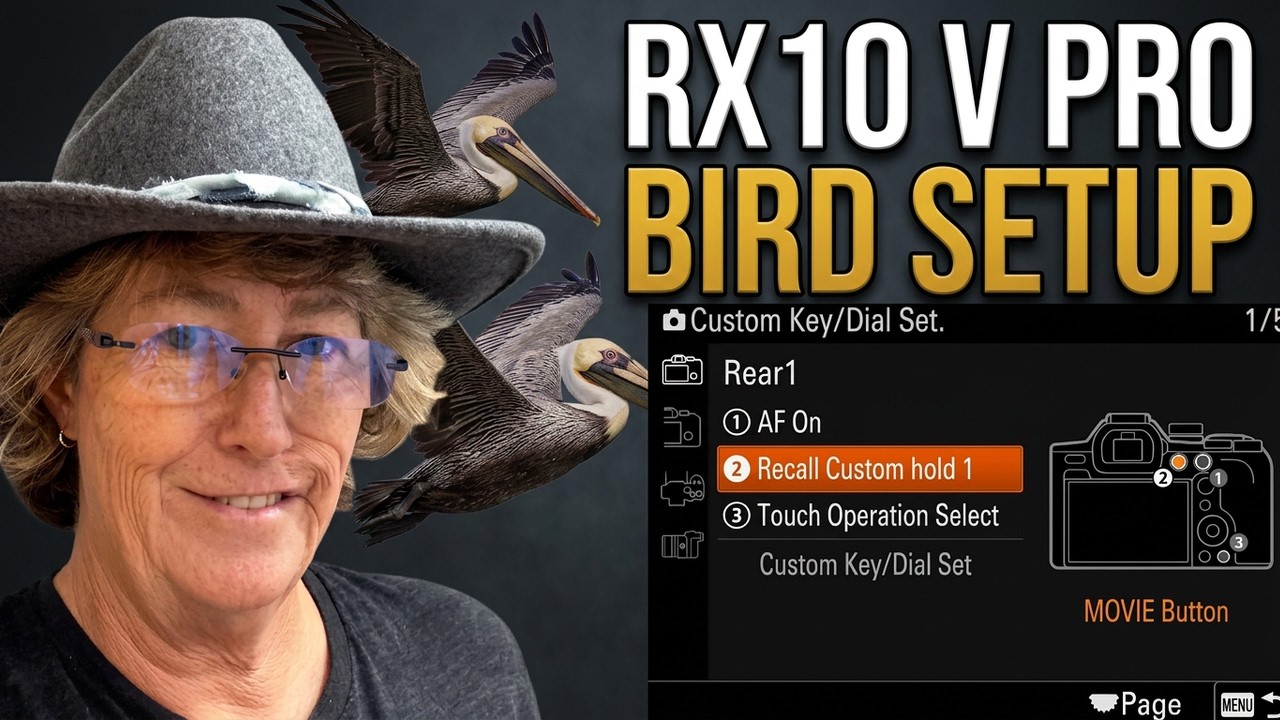
And I use exposure compensation. Typically I start off at 0 when the sun is low, and as the sun rises, I increase my exposure compensation so that it is shooting more on the dark side. So like -1/3, sometimes even -1 1/3, and And I do have my movie record button programmed as my quote-unquote downshift, which takes it to 5 frames per second, and it turns it into a single spot that does not track. So I can get the bison eye or the chipmunk's eye or whatever's eye exactly where I want it.
So now we just pulled up on a couple coyotes. We might get some hunting action, and I'm still on the RX10. Mark V. These settings are going to be a little faster. We're going to be at, uh, probably 1/2000 shutter speed just in case we get some action. Let's get some shots.
Before we continue, check out our upcoming hands-on photography workshops at and come learn with us in the field right here in Yellowstone. You can also check out my book, Journey Through the Lens, along with the field guide that I offer. And don't forget to download your 2 free resources. I have a travel guide and a Get Out of Auto PDF designed to help you take control of your camera and create better images. The camera and lens, well, this is a combo unit. is linked below at B&H Photo. As always, the opinions are completely my own, but this really is the gear that's in my bag when I travel out into the field. Using our B&H links helps support the channel at no additional cost to you. Now let's get back to the video. Keep on clicking.
Okay, well, we just located a bull elk, so So I am going to grab the RX10 and I'm gonna put my settings— I'm probably gonna go down to 1/500th of a shutter because it's kind of dark and I want to get my ISO as low as possible. So I'll definitely be shooting f/4. So let's go see what we can find.
I came out here to test the camera, but Yellowstone had other plans.
'Cause when the wild starts happening, So far this morning, we have found a group of mule deer. Quite a few bucks in this group. Um, nothing really big, but they're good size. So this is what they look like. Let's take some pictures of them with the RX10. And what I'm thinking this morning Is because we got low light, I'm going to reduce the shutter speed down so that I can get a lower ISO. So let's see what we get.
2 days, 1 camera, a whole lot of Yellowstone. Keep on clicking. The rut is going strong. Heads are down and dust is flying. You can feel it coming on. One turns and starts another. Then the whole herd starts to move. 30 frames are rolling. And now let that tracking do its thing. 2 days in Yellowstone, running with the wild bison, kicking up the dust. Coyotes mile by mile, 24 to 600, bringing distant worlds to me. Oh, oh, oh. 2 days in Yellowstone. Wild and running free. Then 2 coyotes hit the meadow, running side by side. No warning, no directions, just hold on for the ride. Pronghorn through the grasses, little faces on the rocks.
Every turn another reason not to put that After two weeks in Yellowstone, my RX10 and it worked really well. Birds, wildlife, and landscapes. Come and join us on your next photography workshop. Check the link below. If you have a clicking problem, well, you belong right here with us over at Feathers and F-stops. It's a school community, our online community for birders and photographers who want to improve their photography, learn more about birds, ask questions, and keep on clicking together. And remember, don't be a Karen. Get that heron. If you found this video helpful, don't forget to like and subscribe and ring my bell so you get notified the next time I post a video. And if you want to see the real-world review for the Sony RX10 Mark V, click right here. And until next time, keep on clicking.