In this YouTube video, Angie Birmingham tests the Sony RX10 Mark V—a compact camera with a built‑in 24‑600mm Zeiss zoom—by shooting birds in the field. She explains that B&H Photo loaned the camera and that she provides the RAW and full‑resolution JPEG files for viewers to evaluate themselves. The review walks through the convenience of an all‑in‑one lens, the new AI subject‑recognition autofocus (including bird eye detection), and the 30 fps burst capability, noting both strengths and where it falls short of professional bodies. She discusses the 1‑inch sensor’s low‑light performance and the limited background‑separation compared to full‑frame systems, offering a side‑by‑side comparison with an A9 III/600mm setup. Powered‑zoom operation, battery life, and the lack of pre‑capture are also covered. The camera’s 4K video mode is highlighted as a useful way to study bird behavior. Throughout, she balances technical observations with personal experience, concluding that the RX10 V is an excellent travel‑friendly option for birders who want a single, lightweight system, but it won’t replace a dedicated full‑frame wildlife rig. She encourages viewers to download the sample files, join her “Feathers and F‑Stops” community, and watch a future setup‑focused video.
Chapters
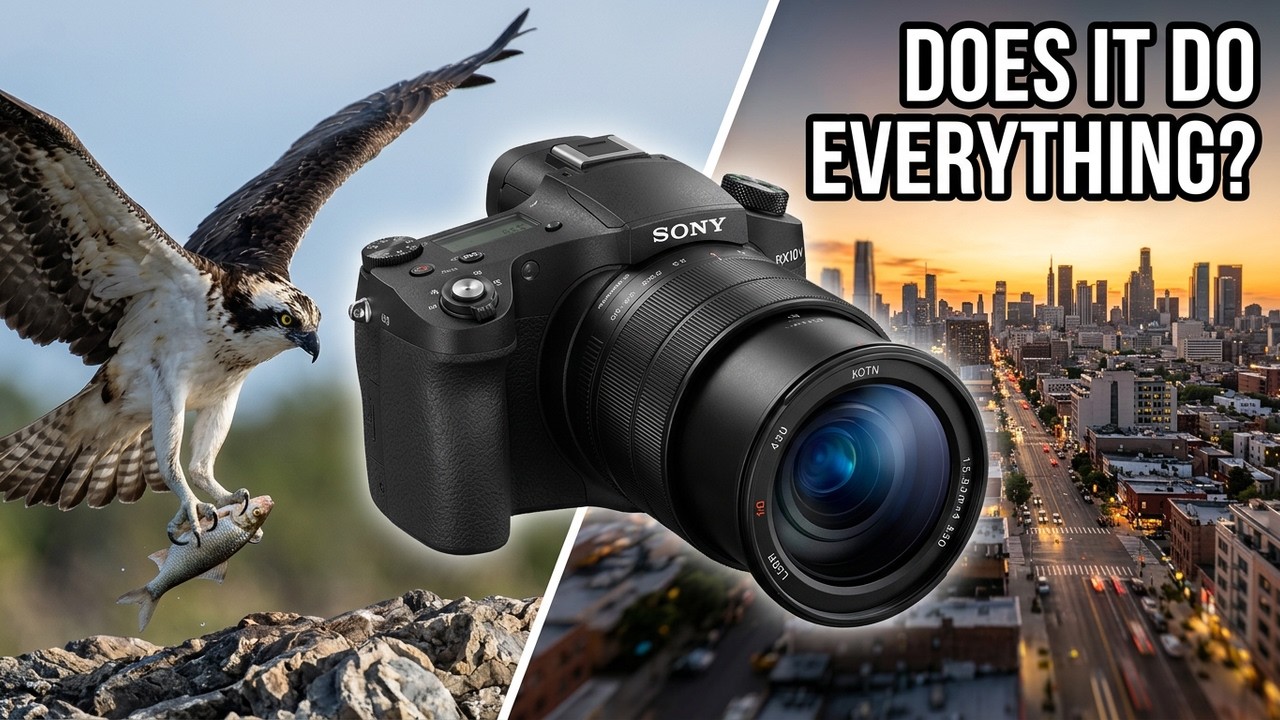
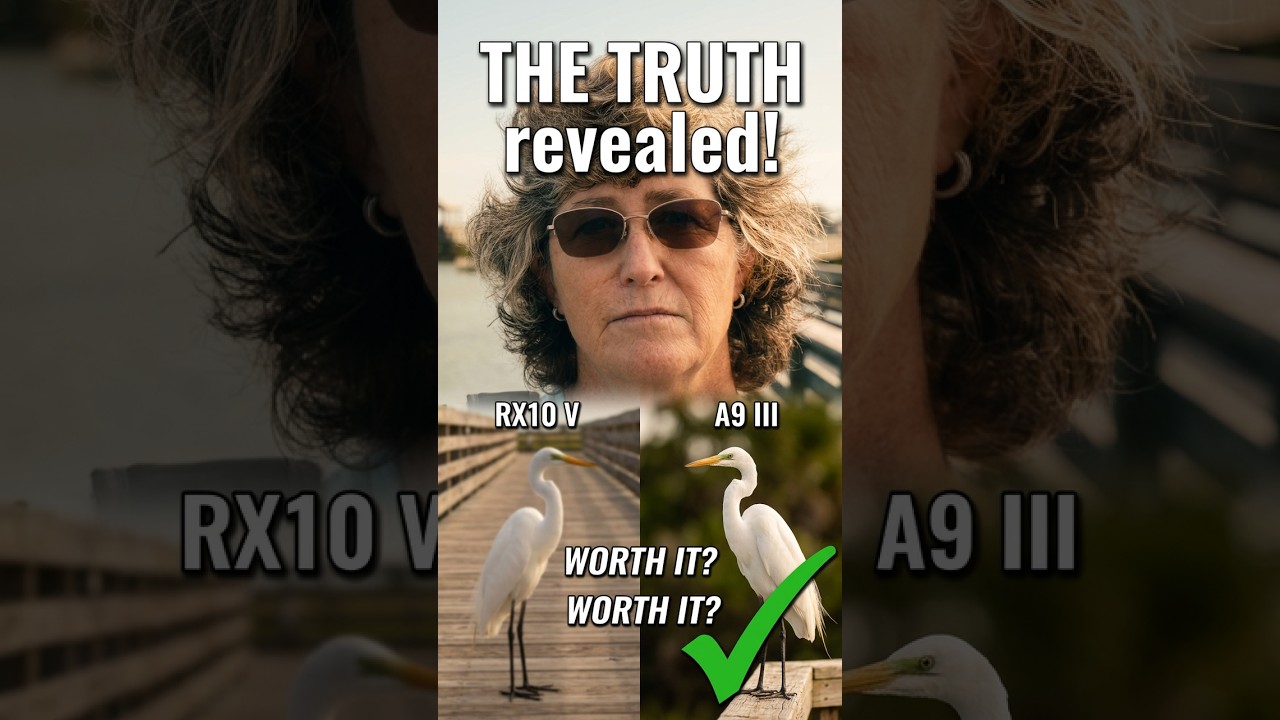
So do you ever wonder if a camera that costs less than a single photo lens can actually get you keeper bird shots at 600mm? Well, that's the whole question with the RX10 Mark V. One camera, built-in lens from 24 to 600. No lens changes at all. Quick transparency note though. B&H Photo did send me this camera to test out. They haven't paid me and my opinions are all my own. And I'm not just going to tell you what I think about the image quality. I'm going to give you the RAW files and the full JPEG images so you can decide yourself. So let's go birding. This lens is really The heart of the RX10 Mark V. It has the 24-600mm Zeiss lens with the built-in zoom right in the camera. So I could be here at 24mm taking photos and— hold on, let me turn the camera on— showing you the entire habitat shot and zoom all the way in at 600 and get that bird shot. That is incredibly convenient. Here's a roseate spoonbill at 600mm. Handheld. No tripods. Just me and the camera. And this is where I started going, okay, because these weren't just ID shots I was getting. I was getting photographs I actually wanted to keep. And maybe even more importantly, I started noticing something else was happening. I wasn't thinking nearly as much about my equipment, and I was watching the behavior. I was watching the light and watching the birds. And for me, that's where wildlife photography starts getting fun. Before we continue, I want you to go check out some of our hands-on photography workshops. Come and learn with us in the field. We're backed by 5-star Google reviews. And if you want to keep learning in between videos, join us over at School Community. It's called Feathers and F-Stops. It's our online community for birders and photographers who want to improve their photography, learn more about birds, ask questions, And we just keep on clicking together. I also have some links below for some free stuff, so go check it out. Now let's get back to the video. Let's get into some good stuff. Let's talk about autofocus, because if you photograph birds, this is probably what you really want to know. The RX10 Mark V has Sony's new AI subject recognition autofocus. Including bird recognition. And it finds the eye pretty darn well. Once it locks on, it can be surprisingly sticky. But I want to show you the real thing instead of just telling you about the autofocus and how amazing it is. So right here, you'll occasionally see the focus come off the bird, but then it grabs it right back again. So no, I'm not telling you it tracks like the high-end professional bodies, Because it doesn't, but it also— don't think it's fair to give it that expectation. What surprised me was how capable it actually was, and then you add in the 30 frames per second. 30 frames a second gives you a lot of opportunities to catch the wings in the right position, the head turn, the splash, the takeoff, or even that split second when everything comes together. And for birds in flight, that can make a big difference. One thing it does not have is that pre-capture. I was hoping, but that's okay. Just keeps my trigger finger in shape. So now we need to talk about a couple of items everybody brings up with the camera with a small sensor: low light and background bokeh. The sensor On the Sony RX10 Mark V uses a 1-inch sensor, and anytime we talk about a small sensor, somebody is going to ask, well, what happens when the ISO goes up? But I don't want to sit here and tell you that ISO 1600 is good, ISO 3200 is bad, and 6400 is unusable, because image quality is way more subjective than that. So I'm gonna let you be the judge. Now where do you draw the line? Because what works for me might not work for you. If you're posting primarily online, you may be completely comfortable with an ISO that somebody who's making a big wall print couldn't even use. And cropping, of course, that goes into the equation too. So instead of hiding behind the YouTube images, I'm gonna give you the files. There's a link below in the description where you can download my original RAW and full-resolution JPEG images from the RX10. Then take them into Lightroom, whatever program you use, zoom in, crop them, edit them, and use whatever noise reduction software you normally use. And then you decide for yourself. You don't have to take my word for it. And then come back And tell me in the comments below what the highest ISO you were comfortable with. I think that discussion is going to get interesting. The second concern is the depth of field. You won't get that creamy full-frame background separation. Well, check out this side-by-side comparison. The RX10 Mark V versus the RX600. f/4 with the A9 III. So which one's which? Well, the A9 III is on the left. This is what I really want you to know before you spend about $2,300. If you know that going in, then you're gonna love this camera. And if you're expecting a full-frame look, You'll probably be disappointed. Now something I wasn't expecting was to enjoy this quite as much as I did in making videos. The RX10 Mark V can shoot in 4K, and for birds and wildlife, that's actually kind of nice. It's a different way of seeing bird behavior, the wing movement, the feeding, The water coming off the feathers, and the best thing about video is that seconds before I could have been shooting a still at 600 millimeters, and I'm on the same camera.
Got my binoculars, got my camera zoomed in tight, chasing that glamour. Click, click, shutter, don't move slow. Egret in the frame, I'm ready to go. Oh, big white bird, yeah, elegant stance. Yellow bill shining like it's ready to dance. Black legs tall, moving smooth and slow. Gliding through the marsh like a quiet pro. Don't move. Click. Gotcha. That's the shot I know. Great. Egret in the frame. Now you know. Let's go. Oh, now hold up. This one's wild and rare. Reddish egret throwing feathers in the air.
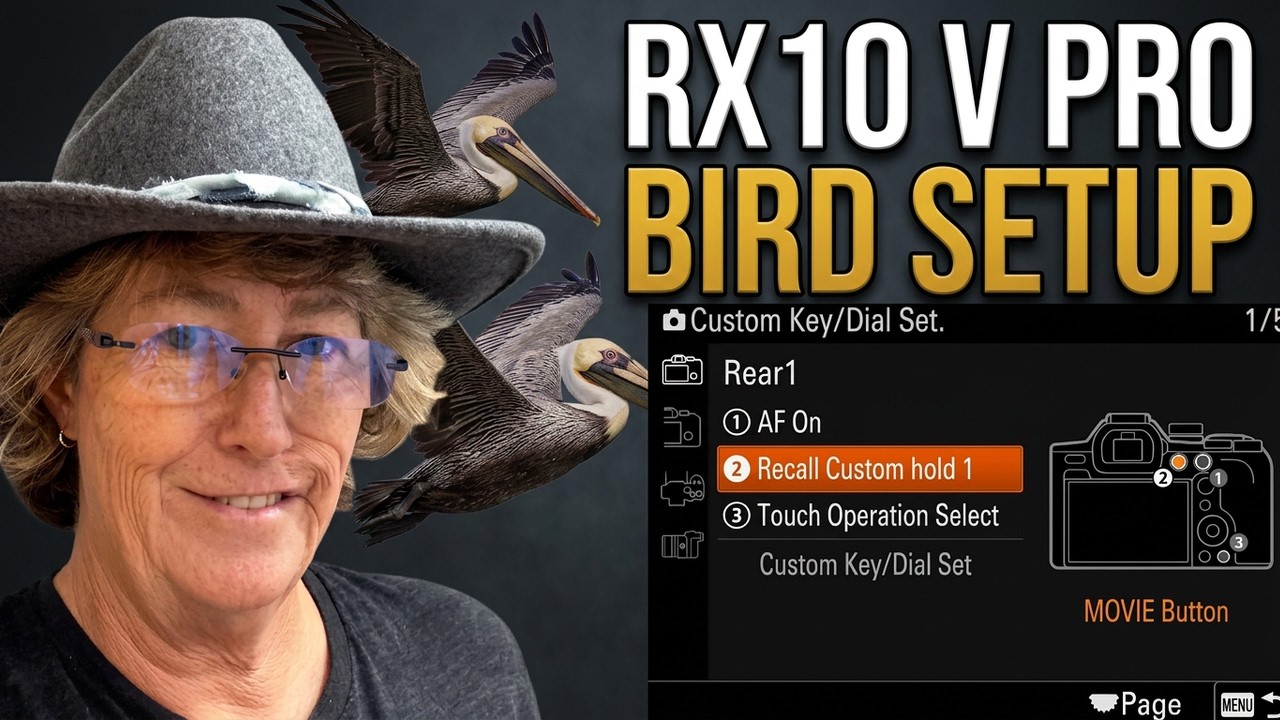
Now I know a lot of you already own the RX10 Mark IV, and I think this deserves its own video. So if you want a deeper dive into the video on the RX10 Mark IV versus the RX10 Mark V comparison, completely separate from this video, let me know in the comments below. But I'll give you my short answer. If your RX10 Mark IV is already doing everything you need it to do, Just keep shooting it. Just because they came out with a new camera doesn't mean you need a new one. Where I think this RX Mark X gets much more interesting is for the bird photographer. The newer autofocus system, the faster shooting performance, and the larger battery. All these things, if they're important to you, then maybe it's time to upgrade. So what I didn't love, because no camera gets a free pass around here. The one thing bird photographers will notice is the powered zoom. If you put it in normal zoom, you're going to be much slower. I actually put mine in fast, and it takes about a second off of the zoom, but that does make a difference when you're out photographing because if the bird is coming at you, You can't override and continue to shoot. You have to take your finger off the trigger and then continue shooting. So that takes a little bit of getting used to rather than your traditional zoom lens that either twist it or push and pull. And when a bird suddenly appears from somewhere completely different, sometimes speed matters. That took some getting used to, and then there's a lot of files to look at. And you're also dealing with a smaller sensor. So if what you want is the exact same background separation and low-light flexibility you get from the big full-frame sensor cameras paired with giant telephoto lens, well, this isn't the camera for you. But again, I don't think that's what it's supposed to be. The better question is, how much can you get out of of one camera that goes from 24 to 600mm, and after a week with it, I think I can say, uh, quite a lot. So after spending a full week one-on-one with the Sony RX10 Mark V, would I recommend it to bird photographers? Absolutely. Would I sell My big wildlife setup to replace everything with this? No. Would I take it on a trip when I don't want to carry a giant bag filled with camera gear? Absolutely. Would I recommend it to somebody who's primarily a birder to take a serious look at it if they wanted one camera that would let them photograph everything from habitat To 600mm for birds? Heck yeah! And here's the one thing I probably liked the most. It wasn't the 600mm. It wasn't the 30 frames per second. It wasn't the autofocus. It was how often I forgot about the camera and I just watched the birds. For me, that's a pretty good compliment. A big thank you to B&H Photo for sending me the RX10 Mark V and giving me the chance to spend some time in the field. Again, they didn't pay me for the video, and what I say is my own opinions. If you want to check out the RX10, I'll put the link to B&H Photo below in the description. You'll find the link to the RAW files, JPEG and RAW, so download them from there. Let me know what you think. And if you want to keep on talking birds with me and other photographers, come join us at Feathers and F-Stops. That's where we share images, talk gear, editing, ask questions, work on photography, and most importantly, we keep learning from each other. I'll put the link below, and I'm definitely not finished with this camera. Next, I'm going to show you how to set up the RX10 Mark V, especially for bird photography. Autofocus buttons, shooting modes, the settings that I'm actually using. So make sure to like and subscribe so you don't miss that. And remember, if you have a clicking problem, you belong here. So keep on clicking.