Anu Hariharan: You Can't Build With Managers - Permanent Podcast
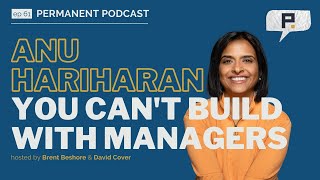
Anu Hariharan from YC Continuity Fund explains why early-stage startups need builders, not managers. Founders often hire the wrong people too early, mistake activity for progress, and burn out from doing everything themselves. She walks through hiring rigor, equity compensation, and when to bring in senior leaders from outside.
Chapters
Welcome to the permanent podcast. Real talk about owning, operating, buying and selling small businesses. The reality is that businesses are made up of people and people are messy. So how do you navigate such a messy and complicated landscape? Well, let's talk about it on the permanent podcast. Hey, welcome back to the permanent podcast. We have another episode of our guest appearance series that we call Outside Insights. People from outside the SMB space. Really? Outside people from outside. The people who are not. I can't speak now. People from outside. Permanent equity sharing insights in and around the SMB space. Today we're talking with Anew and Brent. I'm super pumped about it because Anu is one of my favorite people. So I met her at Capital Camp. I'm going to tell her this. I met her at Capital Camp and she was just immediately this person who, like, she just radiated kindness and energy and excitement. And she's for you and she just met you. So I'm very excited. I'm a bit of a fanboy, which I think also makes me a little bit intimidated.
Today.
I'm a little intimidated to talk to Anew.
I mean, to be honest, like, you should be intimidated to talk to Anew.
When you see the stuff she's done.
She's done.
I don't know what I don't know, but I know enough to see Instacart and she's.
She's done all the things. Yeah. So Anew is. I'm blown away at her. I don't know how else to say it. Like, I'm blown away at who she is and what she's done and really just the. The seat that she's in to be able to see the things that she's seeing on a daily basis. She's in Silicon Valley. She's currently at Y Combinator, the continuity fund, which is kind of.
Tell me more about that. Because I saw that. I know I'm supposed to know that and I don't understand. Yeah.
So Y Combinator is really pioneered the accelerator model for the startup world. So they're known for being the earliest of stages. So you come to them with an idea, you apply. They do these very short interviews. If you make it to that stage. Like, I think they're 10 or 12 minutes. So very, very short. Like, obviously I've never done it, but like, I know people who've done so out of Columbia has come to Y Combinator firms Zapier. Oh, and Equipment Share.
My boy Brian works for Zapier.
Yeah, okay. It's not Zapier. Zapier.
Zapier Never said it out loud.
Yes.
Until this moment on a public podcast.
That's what I'm trying to call you out for it.
Zapier.
Zapier.
So practice a new Hariharan. Hariharan. Very good. I said that out loud now too. Yeah.
So she is at Y Combinator, but she's actually part of their what's called Continuity Fund, which is a little bit later stage. These are YC companies typically that are raising follow on capital and doing later stage things. So really she's involved in things like Boom, which is building supersonic travel, trying to bring supersonic travel to the masses.
I definitely want to hear more about that.
Yeah, it's incredible. Instacart gusto, which is helping organize.
That's how I get paid.
There you go. That's how you get paid. So amongst lots of other things and prior to that, she was at Andreessen Horowitz, she's done investments like Airbnb, Medium Offerup, Udacity, and then prior to that she was at bcg, actually in their private equity practice. So I mean, all the marquee. She's like everything that I'm not.
Right.
Like, I don't have any of these check marks. She's got all the check marks. And she also happens to be, as you said, just this incredibly kind, generous, just wonderful presence wherever she goes. I agree with you. At Capital Camp, like you meet her, she lights up the room like everyone wants to be around her. She has this effervescent personality and she just feels like very free when she's talking to you. And it comes with this incredible technical background. So she's got a degree in electrical engineering.
Okay.
And she was a software engineer as well. And she's got an MBA from Wharton on top of all that. I mean, she's got literally, she checks all the boxes. She's just a freak in all the best ways. And so today, I mean, we're going to be talking about early stage companies, but really trying to really bring how do early stage companies do what they do in the context of what would help small business owners and operators. So the early stage world feels very different. It's techy, it's high growth. A lot of our audience is going to be more what I call Main street manufacturing, construction, business services. And it can seem like the game, quote unquote, in Silicon Valley doesn't really apply. It's like, okay, raise as much money, grow as fast as you can.
Everything I know about that only comes from the show Silicon Valley on hbo. Which is hilarious.
Fantastic.
How true is that show? I don't know.
I think it's more true. The people I know who have intersected with that show say it's actually more true than not true. But I would just say so. Today, the goal is to get the best of what Anew can share from sitting at these incredible tables, talking about incredibly high level business, worldwide businesses that all started as small businesses. And so we want to take her from the big down to the small and the practical. And we'll see if we can get there today. I don't know. I'm going to try.
Let's do it. I'm excited and nervous. Okay, so, Anu, I just want to say two things to you as we get started, and I'll turn it over to Brent. But at Capital Camp last year, I was very impressed with you. I hadn't really met you. I just had heard about you. I experienced you from the stage. But my job is to produce what happens when it comes to the main stage. And we had someone back out last minute, and I was talking with Clayton, who is the event director at Capital Camp, and he's like, I'm gonna go ask anew. And this was like an hour before you had to go on. You're like, oh, yeah, totally. And you get up there and you just ripped.
Just.
I was like, is this woman.
I know she directed the other point.
Where I just grew in my respect for you and my connection to you. It was in 2021. You were on stage and you were talking about how you were helping your companies, you'd invested in and founders navigate. Covid, what are the. You know, you may have 20 things you guys are trying to figure out and do. What are the top one or three that are actually working? That's all you do now.
She's kind of smart. Maybe we should interview her.
We should interview her. Get her. Get her insights and wisdom.
Should we interview her for insights and wisdom?
You guys are too kind. Too kind.
Well, we're just accurate.
Capitol Campus is my favorite. I actually have to send Clayton something. I met someone at the camp last year in the flight back, and I'm now trying to recruit him for one of our campuses.
Oh, that's great.
Fantastic.
That's music to our ears.
Yeah, we'd love to hear it. Well, David, what do you think? Can I get rolling?
Let's roll. I'm excited.
You know, you have been incredibly impressive, both on paper in terms of your career and your background at Andreessen Horowitz at Y Combinator, what you're doing now and really you've had your entire career at the intersection of technology and these businesses that have turned into really big businesses, but they started as small businesses. And that's really where I want to start today is when you evaluate the founders of a startup. So this is pre, maybe pre traction. This is the very early stages. What are the characteristics that you think most lead to success or most predict the successful outcome of a company?
I've refined my own thinking on this over the years. YC is very well known as the world's best accelerator. So founders that apply every year, when they do, they usually don't even have a solid idea that they're working on and they surely don't have any traction. So what matters at that phase is really only two to three things. One, are you working with good people? We are strong believers that co founding teams do better than solo founders. It's not to say that solo founders are not successful. There are even NYC examples of solo founders. But generally speaking building a company is really hard. And so if you have a co founding team, two or three co founders, it's just way better from a morale perspective. So that's one we look for. And second is do you have an idea that you're working on that's truly solving a customer problem, which is why are you working on this? Does this truly solve a customer pain point? What would your potential customers say about this offering? And then third is if you're especially building a tech company, I think one of those co founders having some programming capabilities, it's not just about the best programmer, but it's somebody who is willing to try iterate and has a great attitude. We think that is really important because great people can turn bad ideas into great ideas, but bad people can't even turn a great idea into a great company. So let's take the example of Brex. It's corporate card for startups. The idea that they launched with was a virtual reality startup. So this is where I mean good people can realize they're working on difficult or bad ideas and change and they realize, well geez, we don't know much about virtual reality, we shouldn't be working on it. But we do know a lot about fintech and it's really hard to get a credit card as a startup founder because startup founders start with only $200,000 in funding maybe. And as a startup you do need an expense card, especially when you start putting expenses on, maybe even for software or Google Apps or what have you when you start or when you hire that first employee and it turns out their core customers, startup founders, and startup founders all said, I just don't want to think about my corporate card. I just want a company to give me a card in 24 hours if I have funding from YC. That's all it is, right? And for 18 months, they probably had only 80 customers. And these 80 customers would use the product, give them a lot of feedback. And that's really what's going on in the first two, three years until you have at least, you know, we often say 100 to 1000 customers that love you. Not like you, but love you. Paul Buchite, one of the partners in YC who is the founder of Gmail, he's the one who coined this. He, you know, find hundred customers that love you versus thousand customers that like you. Why is that nuance important? You have to be honest and ask the customer, if we disappear tomorrow, how unhappy would you be? And if, like, you know, 40 to 50% of them say, I'm gonna be very disappointed, that means you built something that customers want and you start with hundred customers and then you go to thousand and then you go to 2000 and. And people think it's easy. It's not. I can tell you, many of the YC startups took two, three years, them grinding it out. They're under the radar. No one knows about them. No one knows if they can make it. They don't know if they're going to make it. But so it takes a lot of grit and not giving up and continuously being focused on that one question, which is something that we have built. Is it really that valuable? Another way to ask that question is what I said earlier, which is, what happens if we disappear tomorrow? As a company, how disappointed would these customers be?
How do you think about advising your teams, the founders, about kind of that stage of growth that scaling up from. Once you have something that customers really love, how do you get more of it? How do you do more of it? And then how do you think about the adjacencies to that core product in terms of adding on products and how quickly should you think about adding on new products and sort of kind of almost going through that repeated cycle of product market fit again, or just sticking to that one core thing?
We actually think there are two phases of scaling a company. One is as soon as you find product market fit. Usually as a startup, you have around 10 to 12 employees, predominantly engineers. Right. And you're still a do it yourself CEO. We actually Run a program called a post a program. And what we are teaching in that program is essentially for founders to scale from a do it yourself CEO to how do you get better at hiring? And that's the first. Hiring is a big component. The second thing we focus on is, okay, now you have 20, 25 people. What are the tools you have to have as a CEO to run the organization? How do you align everybody behind the same mission? How do you communicate monthly goals? How do you run your all hands meeting? Those are essentially the two big focus areas. And then the third thing, as you said, is continue to measure product market fit. This is actually what many founders get wrong at this phase. They think they've achieved product market fit and it's done. And they take the eye off the customer. Companies don't die because they run out of cash. Startups usually at this phase die because they took the eye off the customer. And so now even your existing customers are churning and you have not put the metrics or tools in place to catch that and you suddenly have a big leaky bucket problem.
What are the things that are maybe counterintuitive about growing a company? What are the biggest mistakes that you see founders make that are just normal, everyday mistakes? Unless you've been through it, you're going to make those mistakes.
I think, look, first I would like to say you're going to make mistakes. That's just the. You're learning as you go, right? And so you're going to make mistakes. I think sitting on a decision too long is the most costly mistake you could do. So, for example, you've never hired, you know, one extra employee. Let's say you're a team of five to six. You know, the seventh person does have a strong influence on culture and a lot of influence on the way you work. And if it's a mismatch, then you made a hiding mistake. It's okay if you know that in two weeks, call it, make a change and move. That's where I see some founders really struggle, which is they start getting emotional. It's hard. It's really hard to tell a person to go right. Firing or laying off a person is not something anyone wants to do. And it's hard. It's mental torture. And I actually say it's the hiring manager's mistake more than the person because the person has skills. It's just not a fit for what you want. But the difference between founders that have built very successful YC companies and the ones that kind of have struggled is not that the Successful founders haven't done mistake. They are willing to course correct really fast. They will notice in two weeks that it was a hiring mistake. They'll call it and they will say, okay, this person has to go because the longer you let the person stay in the org, you're just causing more problems down the line. And I have got to say like 10 out of 10 times every front revised. No one has ever told me I fired too soon. They all say I should have fired even sooner. And that's just because they're learning to correct their hiring mistakes. So that's one, two I'd say is taking the time to learn. Sometimes you feel as a CEO, you have, you have to know it all you want. That's just humanly impossible. But if you are willing to say, I don't know this and I'm going to learn along the way, then you bring a different mentality to it. I would say, like, I attended this off site with the Brex founders. I bring them as an example only because they were 22 years old when they launched Brex in winter 2017. And I remember this vividly. We were at an off site in Napa, late 2018. And they had asked me to come to the off site. And, you know, I spoke at the off site and then I listened to the other sessions and they went up, they opened the off site up. It was probably like 30 people. That was the total number of people at the company. And they stood up in front of everyone and they said, we are 22 years old. We don't know what it takes to be an excellent cfo, an excellent head of marketing, an excellent head of sales. We know that everyone who is in this room have amazing potential. But Brexit's scaling faster than any of us have ever seen any of these functions scale. We have to bring leaders from outside, and we have to bring leaders from outside because we, the two of us, don't know how to teach you to be the best head of marketing. Let us all learn from this experience. And in three or four years, we all will have opportunities to lead various functions and we'll get better because we have continuously learned from people who have done it before. And I thought that demonstrated such humility. They didn't act like they know what to do. They said they were quite honest in saying we won't be able to help you get there because we don't know. So let's ping people from outside who have scale. And I think you need that. You need that humility to recognize that we have to continuously learn, which we often call in the startup world as growth mindset, but also recognizing when you have done mistakes, we need to fix it asap.
I really want to dig in on this idea of bringing in leaders from the outside because I think this is something that I've seen repeatedly at the companies that we've looked at for our investment. These are, you know, small to medium sized businesses. There's a lot of them that really have never brought in outside talent. It's almost all homegrown talent. And what I would say is the upside of that is that they get very good culture fit. Everyone thinks the same way, everyone's doing things the same way, which honestly creates incredible amount of trust and speed in a direction. But we've also seen that they lack a lot of skill sets they would otherwise and a lot of outside perspectives. The diversity of perspectives at the table seems low. So as you think about an organization that's scaling, how do you think about the sort of tension I would assume there is between the more people you bring in, the more disruption, the more sort of integration of systems and thinking that you have to do versus home, growing talent and really promoting from within?
Yes. So I think this is where there is a big difference between a startup and an SMB and that comes down to the scale curve. Brex, for example, I mean, they went from 85 customers to 2,000 customers in one year and then 2,000 to almost, I think 10,000 in year two. And your org is also scaling to support that. So you go from 12 people to 50 people to, I don't know, 150 to 200 people. And then now you are, you know, four years later with like 700 to 800 people. So you're scaling so fast within four years that I, you know, this is a little bit of a controversial take, which is I don't think startups can pull it off without hiring people from the outside. Now does it mean for every function you have to always hire from the outside? The answer is no. There are success cases of what are the functions where people have grown from the inside. But the reality is the startup is scaling so fast that you don't have the time to learn and grow with it in that same duration that the startup demands. You know Claire from Stripe, she was the CEO of Stripe most recently. She often teaches one of our sessions in the program. She's exceptional at this. She sincerely believes that everyone at a startup has the potential to scale and be a leader of that function if there was time. But what Startups often require is for a person to go from, like, started off as a marketing person to head of marketing in 12 months, which is humanly impossible.
No doubt.
Yeah. Which is why you need outside leaders now. The danger is, as you exactly pointed out, outside leaders are a hit or a miss. And I would go so far as to say it works 50% of the time and it doesn't work 50% of the time. And that sucks. Right. Who likes a 50, 50 odds? But as a CEO, you can really get better at this and you can raise that odds to 70 to 80%. But we almost see CEO spending 50% of their time hiring senior leaders when they hit the growth phase. And they may have to revisit that every two, three years because the leader you hire usually can scale for 18, 24 months. Very few leaders are able to scale, like, for four to six years.
That's incredible. How do you think about the human side of sort of relational capital that's built up in these companies? And, like, what are best practices that you've seen? How do you advise your companies to learn how to deal with people or how to be better at people in general?
Yeah, two things, I'd say. One is they have to get way better at hiring so that you can reduce the stress of having to fire or churn your team that often. Tony from Doordash has this great quote, and he had to go through his own learning journey, but he says on average he spends 40 to 60 hours with an exec before he hires them. So what's he doing in those 40 to 60 hours? Right. It's essentially really getting to the bottom of the projects or impact the execs have had in prior companies. Because when you keep asking why, why, why? What did you do? What did you exactly do to drive impact? You kind of know whether this exec is a builder or more a manager for a startup. You don't want execs who are just managers because a startup is still young, growing. You really need someone who rolls up the sleeves and is a builder and is willing to do the work till they're in a place where they can hire the team and put systems in place. So, for example, one of Tony's favorite questions, and I thought that was really awesome, was he would tell an exec that you have, I don't know, 10 or $20 and you have 24 hours to go acquire a thousand DoorDash customers. Go do it. The answer was, I mean, what he was trying to measure was not whether they actually got at a Thousand. But how much did they get to and what kind of hacks and tactics did they use to really acquire? That kind of shows how scrappy you are, how resourceful you are. You know, Chris Payne, who's the CEO of DoorDash, before he got the job, he actually signed up as a doordash driver and delivered, I don't know, like, I don't know, 30 to 50 deliveries with his son and wrote a long list of feedback for Tony on process improvements and operational improvements that Doordash needs to do. This was before his interview, and I don't think Tony even asked him for it, but that showed, like, Chris really cares and he wanted to understand the product, he wanted to understand the delivery, and he wanted to deeply understand the pros and like the weaknesses in the current operational service offerings.
You had mentioned a couple of minutes ago this idea of builders versus managers. And in my head I'm like, oh my gosh. Like builders, you know, just a bunch of people who are building stuff. That's what you want on a team. When do you actually not want builders on the team? When do you want managers? And what would you say are the rub points between managers and builders and how are those conflicts avoided or smoothed over over time?
I haven't seen yet at a stage of the company where you could say, hey, let me just hire for a manager and not a builder. Because I think having that builder mentality goes a long way no matter how much you scale. But I think the balance is at some point, just because you're a builder, if you're a roadblock to scaling, that's bad. But usually I'd say if I had to err on the side of always hire a builder who can also be a manager, I'd go that path versus hire a manager who cannot be a builder.
So it's more flexibility to have both skill sets, obviously a part of it, but it seems like maybe when the company gets Google size or Facebook size and you just need sort of people to corral and to organize, but you don't really need people to build new things. That's kind of when you maybe would shift over.
Yeah, and I think, look, that's where actually the good analogy you brought up is Google. Right? They may have some manager of managers, but I think that's risky for them. I mean, that's exactly why we say a startup is a huge threat to a big corporate. Right. Versus I think Amazon has done exceptionally well in filtering for builders at all levels to this day. I mean, I can't Think of a single Amazon leader who's just a manager. It's important to know how to manage and lead teams and put systems and processes in place so that you're not always in the weeds. But if you have, you know, companies always go through tough times, they are going to go through really rough tough times. And if you have a builder on your team as a leader, they will not be afraid to go to the weeds. And that usually raises the bar of the entire team because the team is now dead scared because the leader is all over it. Right. The analogy I use here is actually Parker from Rippling who he does a phenomenal job of this. One of the things he talks about is his biggest learning from Zenefits, his prior company was he wished he was more customer obsessed and focused. Not that he's not customer obsessed, but I think in Zenefits he felt like as they were scaling, maybe he was not as much in the weeds of really understanding the customer problem. And so when he started rippling, and now it's rippling, like everybody in the company knows that Parker is on all the customer slack channels. He's still the admin for Rippling. So if anybody gets added and you know, from a workplace or HR software platform, he's the guy who's approving. But that's because he is dog footing his own product. And if he, he is, he's on it on any customer complaint, any customer issue and he will track it down and he'll ask the teams, why were you not on top of this? And if you remember the analogy to Bezos was, you know, there's this famous thing in Amazon, they would say Bezos would forward a customer complaint email with either 1 question mark, 2 or 3, and if it was 3 question marks, that means he's really upset and needs an answer soon. I think that's super important. And companies that relax and have too many managers of managers who are not in the weeds take too long to respond to critical issues. And that's usually when I think the company starts going a little sideways. So I would always say hire for the builder. But you also have to be careful where the builder is, not the roadblock. You don't want a micromanager where it's like you have 200 people reporting and he or she has to approve everything. You don't want that because that's going to slow down the arc. So you need a builder who is also a great manager as a senior leader who is willing to delegate, who is willing to put systems in place so that the velocity with which the organization is shipping is still fast. Right. You need that.
Yeah. So I'm thinking about a lot of owners who are going to listen to this, who are like, gosh, I would love to hire a builder to help build my firm with me. And there I think their experience has been they've hired people they thought were builders who are going to come alongside them that turned out to be managers. So if you were at a, let's say an interview or maybe it's a dinner and you're interviewing somebody for a position to really build a company or build a division within a company and you're scared that you might hire a manager, what are the questions you're going to ask that person and what are you listening for in your response?
Yeah, first is you have to really dig deep into their prior experience and ask what exactly did they do? Not their team. And then I would ask, okay, well who came up with the idea? How big was the team when you started? Over the two years that you built it, what was the exact impact of just that initiative? What did you do? Right. Or sometimes they'll give you surface level answers. They don't know the details because the team did most of the work. No. If you keep digging, why? What? Why what? At some point they're going to plateau and you want to make sure that they don't plateau quickly. Right. So you really get a sense for what's this person doing. The second thing I would say is if they are really a builder, they would have already used your product or services that you are doing at your SMB or at your startup. If they haven't, that's a sign. Right. So let's say that's why I said, like when you are interviewing at DoorDash, if you haven't used DoorDash as a food delivery service, big red flag if you are interviewing for their operations team. Yeah. Like sign up as a dash driver and tell me all the things that are wrong with our current operational process. That shows you're a builder, you're willing to go deep to understand the product and the service. So I usually tell people, some people are great at interviewing. So they may game the system and still come through, but give them homework. I'm a big believer of giving homework. And you know what? 70 to 80% of the people won't do the homework.
Well, you tweeted Anu, the girl from Facebook who interviewed for the job by making a fictitious Facebook stores, which is, what is that? Facebook Marketplace now.
Yeah.
And she just did it fictitiously. Here's how I would execute it, here's what we would do, here's all the things I've thought through and that wanted the job and.
Well, exactly. Sometimes I would say, even for SMBs, because you have fewer people, you know, bring them on for a week and make them work with you as a contractor or a consultant. It's usually very telling. How, I mean, how open are they? How much do they engage with the team? Are they waiting for someone to give instructions? Are they rolling up the sleeves and learning on their own? You know, giving a piece of homework is for me the biggest test of how driven they are to do the work.
I love that. The idea of pairing up the keep asking why until you hit the plateau where they've sort of lost expertise. I love that. Because you're going to be able to like sort of dredge up the depth and then having them come alongside you in some way. Right. Doing homework or doing some project work with you. I think the combination of those two things you, you really can tell for, for the most part, unless they fake it incredibly well, means they have some skills. I want to know from you, what are the most likely things that would hurt a company? Again, that got product, market fit, they got real traction, they built a real team, they got real funding. And let's say, let's eliminate that. Somehow the market shifted. So let's say that they should have won but they didn't win. What would be the causes that they didn't win?
Hmm, that's interesting. I usually say, like, you know, if you use a long enough time horizon, 10, 20, 30 years, then the only reason you don't win is the team.
It's a good thing we have a 30 year fund here.
Yeah, thank God.
Yeah. If the team was really good and they had this incredible appetite for learning and evolving and never giving up, there's no way they were not going to win. I, I don't have a single track record of a YC company that didn't do that. Right. Even Doordash that went through such a rough time versus Uber in 2016 and Uber was getting all the funding and they were at the top. And even though doordash numbers look great, everyone assumed that, you know, it's a winner take all market, look at them today, came from number three or number four player in some markets to number one. Right. And that's because the team is exceptionally good at grinding it out. Did not give up, learned from their mistakes, course corrected. And I always say, what cannot kill you makes you stronger. So the only reason that doesn't happen is the team has given up along the way. Usually it's the co founder fallout or the co founders have just given up or not as motivated anymore. And if they are not as motivated anymore, they're not going to continue to learn and go for the long haul.
Yeah, sounds like a loss of kind of a drive towards excellence. So we talked a lot about talent and I think there's this vision for people outside of Silicon Valley that you throw free massages and unlimited high end food and seemingly every convenience that can be dreamed up at people. And that's how you recruit, that's how you hire. Right. What is the role that these perks have and what are the best practices for recruiting, compensating and retaining top talent?
Yeah, those are, I would say, good old days, no longer true. And I think that's more true among companies like Google and Facebook. Actually young startups can't afford to do that. And surely after the pandemic a lot of them have gone remote. Right. Look, the fact is the cost of engineering in the Bay Area has had gone up so high that it became almost impossible for companies to scale their engineering teams beyond 50, 80 people in the Bay Area because the costs are exorbitantly high. So fair. They are the B2B marketplace that service retailers. They have around 350 people in the engineering team. Guess how many are in the Bay Area? Some total of three. The rest of them, wow. They're all outside the U.S. it's predominantly a team in Canada. So I think that gone are the days of the perks. People are not. If you go back to the builder mentality that I said, which is essentially what you should really be hiring for, what do true builders want? They are driven to work hard and they want to be a part of owner of the company. They want equity more than anything. I usually say the test of a great builder is do they want equity or do they want cash? Builders want more equity. They believe in what they're doing, they want to see the upside of the company and they want to play part of the role. They don't ask for more cash, they ask for more equity. And so I'd say the best way to cater a comp package would be to align with what you're trying to achieve in your business. Are you willing to give them part equity, part upside, or compensate them for certain metrics or incentives or goals that you want them to hit and play a part in, help grow your business? All right.
I want to shift gears a little bit and talk about the stress and the pressure that comes with running a company. And I think that whether it's a high growth startup and you're, and you're adding a lot of people and you're adding a lot of funding or, or you're, like I said, a rural manufacturer of something and you've been doing it for a long time, there's a certain level of commitment and struggle that comes with that role. How do you advise CEOs, executives, founders, to stay healthy personally while they're on this incredible, stressful journey?
Yes. You know, being a founder, I often say, is like getting punched on the face or the gut like every other maybe quite often be more often it's the most difficult, difficult job is I.
I can't absolutely the most.
Brent's analogy is a knife fight. He rolls out of bed, he does a 14 hour knife fight and then gets back in bed.
Yep.
It's such a roller coaster. Like you could start with a high and then suddenly two hours later you have bad news and then it, you know, it's extremely stressful.
That was my morning.
So, yes, I think it's very important to be human. It's okay to acknowledge that step one, that it's trustful. And that's why I always say a team of coaches or therapists, including therapists, it's not just a therapist, but a team of coaches and therapists goes a long way. Having a peer group of other founders really helps people underestimate it. But that's one of the biggest benefits of going through yc. You can ask. Founders will tell you that I never feel I'm alone. I can always talk to another founder and realize, man, jeez, they're all going through the same issues and they exchange notes and they learn from each other. Third, I think is a very important thing is this is your baby, this company is your baby and it's never going away. It is for the long, long, long haul. So sometimes taking that view is important because as human beings, I think we all want everything yesterday, we all want everything to be resolved by tomorrow. But take the view that sometimes it may take longer. And that's okay because if you think about it, very few companies have lasted more than 20 years. Very few funds have lasted more than 20 years. And so sometimes all you need to do to win is, is just stay in the game. That's all you need to do.
Well, I want to actually dive a little bit deeper into this topic of what's required for Success. And there's this sort of ongoing. It's hilarious to me. I'm laughing because about every six months on Twitter, there's like an eruption between two sides. One side says that in order to have success, it comes at a maniacal focus and there's a huge cost to your personal life. And like, look, if you're not going to work 80 hours a week, do something else. Then there's this other side of the debate that says, wait a minute, that's not sustainable. We want sustainable lives that can build things and compound over a long period of time. Where do you fall in this debate? And when you talk to founders, how many hours are you telling them to work a week? And how do you help them avoid burnout in sort of the pace that they're trying to set for themselves?
Yeah, I think, look, this is a hotly debated topic. I think that great companies don't get built without hard work. I don't know a single one of them. And I have never told founders how much they should work a week. But I think the really good founders don't have to be told how much they need to work a week. They're aware of their burnout when they're burning out. They know when to step back. And so often that's kind of why at startups, I always say, look, there's always everything that feels like it's burning and it's a burning needle, and humanly, it's impossible to get everything fixed. So pick the top two. So ruthless prioritization becomes super important as a founder, especially as you scale. And you've got to be good at identifying what are the top two most critical things. And that's all you can do. Forget the rest. Let it burn. Let some of the things burn. But the odds are if you pick the right things, they will be the lowest hanging fruits that give you the highest leverage, help the company, or maybe even sometimes they are hard things. Right? But it's time well worth spent to put the company back on track or to basically change the course of the company in a different trajectory. But that's what it takes, ruthless prioritization. The really, really, really good founders in yc, like the top ones that I've worked with, I would say the first two, three years are incredibly hard because you're a nobody. So the first two, three years are usually a grind. And I don't have to tell them how much to work, but they know that they need to get to product market fit. They need to make sure that it's A great idea. And there are like hundred thousand customers that love them when they start building the team after three, four years. And if you have like really good exec team, even if not all execs, but like let's say 40 to 60% of the execs, your team is kind of humming and you have time to think about strategy, you have more thinking time. And the intensity does drop. Now it may come back in spurts. Like, you know, there might be a competitor or a market condition that's changed and you have to suddenly now work two, three months, like, you know, crazy amount of time. Mark Zuckerberg was known for this, right? Even during the pandemic. He basically ran a tiger team for three months and he would do a check in every day in the morning and he would end the day at 6pm again doing another check in. Those things are needed. But as you scale, if you hire the right people, you are going to get leveraged. And so what I've seen founders do is they are quite strict about their time.
Yeah, it sounds like you establishing healthy rhythms, it's sort of establishing that human connection than staying healthy. Personally, I want to talk about technology. Obviously you've built your entire career on technology in the technology field. And a lot of our audience. Right. Is not in technology. They're in services, manufacturing, construction. What should they be doing around technology with technology? Like, how should they think about technology?
This shift has already started happening in the last five, seven years and it'll be even more true in the years to come. Is technology is no longer a different sector. Technology is more horizontal and permeates every sector. So as an SMB, I think that you should really spend the time either yourself as an owner or maybe younger family members. But learn what are the tools that you can use to drive your own business with tech. That'll give you a lot more efficiency. Right. You know, there are lots of tools available these days and so and the access to information because of the Internet, like even your own podcast is exceptional. Right. And so like it takes very little to put in the effort, but we should, we all should. So as an SMB, for example, how do I get incorporated? Should I use Stripe Atlas? Stripe offers an Atlas offering. Should I just use that to get incorporated? Then you have Gusto now that offers payroll. Great, Sign up for Gusto. Payroll helps you a lot. It helps your employees actually a lot more. Get a sense for what are the tech tools that are available to you that you can use that will speed up all your processes so that you can focus on, on the core business. And one thing that's not changing if this might benefit the audience. Customers going forward are going to demand more tech, not less. They're going to want to talk less to operators, they don't want to pick up the phone. They want most things done automated. They want it done through an app, they want it done through a text message. So at the very least, whoever the SMBs are interacting with, they're going to demand more tech. And now there are a lot of tech tools that are available. There are a lot of low code tools. You don't even need to know programming. You can build a website very easily. You can build amazing logos using canva. Like there's just a bunch of tools available. So I think it's really important that owners spend time. If they don't know themselves, they should hire young folks or lean on young folks. They think trust to recommend good tech tools and they should try it.
Well, maybe we could go through so what are, what are the current technologies that are on the market and maybe you could even push into some emerging technologies that you think if you were an operator of a small to medium sized business, let's just say it's, you know, you got 100 and 150 employees and you're, you know, providing some sort of business service or product, what would be the first areas that you'd look at to try to modernize the business?
Microsoft Excel.
Oh, they had Excel. Yeah, I've never met, I've never been able to use that.
So you know, I think that's a good one actually. I would go, I would look at the P and L line item by line item and see which functions can be automated.
Well, like what are those like? Like when you think about going through a P and L of a, like I said, a manufacturing business or a business services, what would actually be the things that you'd say, oh, that could be automated, that could be automated. That could be automated.
I would look at. So for example people processes, that's where gusto comes in. Which is, it's not just payroll, it's like onboarding, employee offer letters. They do everything in software. So I would look at business analytics and metrics. How do you run the business? My guess is these type of businesses have a lot of operational folks tracking metrics daily. There are so many analytics companies now in dashboards. It takes a little bit of investment at the start to build dashboards at every level. But usually a 2, 3 people finance team can do that with the new tools like you can use amplitude mixpanel, whatever tool you want and set up the metrics so that you measure the health of the business more real time and you have information available to make decisions more instantly than before and to communicate with your customers. Right. That has significant value. I would just go, oh, there's another one. There's this company called LifeFlow. I actually invite Z. They actually help accountants reconcile the books much faster because they built better QuickBooks, you know, synthesis and information. For accountants to do that, it saved many companies like two weeks of closing time. Great. Do that Keeper is another company that services, you know, accountants and bookkeeping and SMB. So another one is operations on construction side. Like, I don't know if you all are familiar with PlanGrid, but PlanGrid is a company that really helped construction contract workers at the building construction site to get information faster. And it's more like a workflow automation tool that improved processes and communication within the teams that reduce the time it takes to complete buildings, reduce wastage. So there are companies that are targeting operational and workflow improvements at manufacturing level. And if you can do that, that's amazing.
It sounds like there's the owners and operators who really just take a look at every single area of their business and if they have an interest in it, no matter what their age or stage is, they should really dive in and research. I assume just Google what are the best tools in small businesses in each area and then run experiments internally is what kind of it sounds like you're saying. Is that correct?
Yes, absolutely. And the only way to know whether it works for your business or not is by trying. And it's okay if it doesn't. You can strip it off. And the worst case is you go back to your prior solution. But I think there are so many Companies now targeting SMBs and building for SMBs as SMBs have digitized a lot more and they're more accessible that it would be a mistake on their part to ignore and not research these various tools.
Yeah, no, we appreciate you funding all those. Can we talk about new technology and maybe the things that are emerging that are coming out next? I think there's a lot of buzzwords that are thrown around with AI and ChatGPT and all these different things. And I think there's like this hype cycle that, you know, people kind of outside the tech world look at that and say, oh, I don't, I don't know, there's so much hype around these things. What are the things that people really should be paying Attention to as owners and operators in the SMB space that are kind of the next thing that's going to come out that'll impact them maybe three, five years down the road.
Yeah, I think, you know, it's not just people outside the tech world. Even some people within the tech world, me included, know that some of these are hype cycles. So I don't want to sound like, oh, everything in AI is relevant for SMBs today. Probably not. I think the real use cases of AI will pan out in maybe two years, three years, five years. It's always interesting to keep on top of new trends. So there's this company called mutiny in the YC portfolio that leverages GPT3. What it does essentially for companies is you have a marketing page, right? You have a website and you have a marketing page. And the landing page can be more personalized depending on who is coming to your website. And you know, they use GPT3 interface to like, make it more personalized so that your conversion rates are higher. But I would say it's probably still very early for SMBs to jump right in. I would do the same kind of research, like look at companies like Gusto and see how they implement AI over time. They all will, especially if it benefits their end customers. But I think I would look at it from the lens of companies that service SMBs versus directly going and trying to use them.
Yeah, you said there's some hype cycles out there. I want to hear more new hot takes on these emerging technologies.
Are we going to do a lightning round?
A lightning round.
Let's do a lightning round.
So throw out some technologies that we're thinking about, Brent, and just get your hot take two or three sentences anew.
All right, great.
First hot take. Supersonic flight.
Boom. Supersonic jet. Hopefully will commercialize that by 2030, so I'm excited for it.
2030.
All right. Hypersonic flight, which I think is different than. What's the difference? Isn't hypersonic where you go like way up in the atmosphere and you're going.
Like around like five times faster? Yeah.
Isn't that okay? What's your. What's your hypersonic take?
Speed of sound, hypersonic take. My only take is SR72 that flew in Top Gun Maverick.
Oh, yeah, Skunk works.
I love it.
It exploded and he was just fine.
He's fine.
He was fine. He's.
He's Tom Cruise. He hasn't aged in 45 years.
So have you seen the one of him jumping off of the mountain on.
A cycle for mission he's on a motorcycle. Yeah.
Oh, my God.
So good.
He actually does that now.
He did two videos. One he's driving a motorcycle off a cliff and, you know, does that stunt six times. Another one, he does a little selfie video as he's skydiving towards the ocean.
Oh, all right. Quantum computing.
Excited for the potential, but I think it's still going to take years to years to get there.
Okay, Blockchain technology.
Blockchain. Super bullish. Super bullish. On blockchain and crypto, I think they're going to change the way financial systems work.
Okay, well, okay, we're going to double down on that. Hot take for a skeptic of blockchain and cryptocurrencies. And maybe you want to separate this too out. You can do whatever you want, help convert the skeptics.
I think, look, everything looks like a toy. The Internet looked like a toy before. I think cryptocurrencies have real value. What is the real value? I think, look, fundamentally, I would recommend everyone read Satoshi's paper. It's actually so well written and clear and it's amazing. And the brilliance behind how the ledger system works without having a centralized ledger is just simply brilliant. And right now, the geopolitical situation in the world is really fragile and a lot of countries and people don't believe their governments. And therefore, I think, like, if you're in a place like Argentina, you rely on keeping your money in crypto, not by holding their currency. And so there is a real use case for this, for applications to build. There is a lot of advancement that's happening on Ethereum. It'll take time, you know, for something like a Facebook to work on blockchain. There's still a long ways to go. Right? We should be able to do multiple transactions per second. We're not there yet, but there are lots of exciting developers working on it. So I look at developer activity on the various blockchains, and that's usually a sign for me as to whether progress is being made or not.
Okay, so David, who's lost hundreds of dollars on crypto, should just hoddle, should you? Hodl.
You have to understand, Anu, he has been dunking on me because I had a little bit of Bitcoin and a little bit of Ethereum and I got a little polka dot. My bad. And I just been. Been dunked on the last year, especially these last few months.
Hey, you know, you gotta take it.
Hey, I say in crypto you should never look at your portfolio, even on a yearly basis.
Love it.
You've put. If you put money in it now, it's for your college tuition fund for your kids.
There we go.
That's what it is. That's when you look it up.
I have four boys under the age of 10 anew, so I'm gonna need all.
So you're good. Look it up in 10 years.
Need that to go way up.
Maybe you can use this next one, because I want to ask her about Chat GPT. And maybe you can use that for parenting.
Yeah. No.
All right.
Chat G GPT.
Very excited. I've used the interface quite a bit. The Internet has so much information, and I've never been able to study the Internet to get really good feedback. Like, for example, I use the interface a lot to study. Hey, give me all the feedback on DoorDash. Give me all the feedback. What is. What are the top three complaints customers have last month? What are the top 10 complaints? Yeah, and that's really good. It's exceptional. Now. It does. The challenge is they can be quite opinionated. So it's not just a result, but they are opinionated. And sometimes it's incorrect. So we have a long way to go.
So the AI's opinion is incorrect.
Yeah. So sometimes we often internally joke that it's lying. And they are capable of lying.
I was going to say it sounds like humans. Often wrong. Never in doubt.
I heard they're losing, like, what, 10 million a day or 10 to operate that. Like, how are they going to make money on it?
Well, commercialization is a long way out. But if you believe in the thesis that this is the next search or the next foundation for how, you know, applications can be built, it could be powerful. I think that I'm actually. Look, have there been advances in their language in LLMs? Yes. And I think it all comes down to bandwidth and gpu, which is why it's super expensive. So I'd say I'm very bullish on Nvidia as a result. That's my hot take.
Oh, there you go. Any podcast listeners? That's the stock tip of the day here on the podcast.
I need to do the disclaimer that none of this is investing advice, please.
Yes. Don't hold me accountable. But I always say, whenever something is taking off, I always like to look at the underlying infrastructure. And I think Nvidia plays a very critical role in any of these, you know, in AI taking off.
Okay, one more, Brent, that you just did. Personalized medicine. Yep. And the future of that and whether that could become more accessible to People beyond the Brent B. Shores of the world, like myself.
When you say personalized medicine, what are you referring to?
Well, what did you just do?
I don't know. I signed up for this thing where they take your blood and they tell you all the bad things that you've been doing and, and tell you to do better. I think that's what we're doing. I don't know.
Like concierge medicine. I'm generally very disappointed with any consumer health care progress, to be honest. And I think there is a need for it. Like, I actually think our health care system, our access to health care is not great. Like when it's almost like I always say, when the shit hits the ceiling, it's amazing, right? Like you go to the ER and you're amazing doctors, but it's like they wait till that. You have to wait till the shit hits the ceiling. Because.
Is shit hitting the ceiling a good thing or a bad thing?
I think it's a bad thing.
I'm just trying to get the idea.
But no, but I'm saying if the shit hits the ceiling, I'd rather be in the United States because they do have excellent doctors and they fix everything. But they're going to tell you, hey, oh, you have this problem, let's just meet you in two months, right? And then it's like it gets worse and worse every day. So I'm very disappointed in all consumer healthcare and I think there are lots of regulatory blocks. So I don't know what to say. I wish from a consumer need there is a clear need. But I don't know how much progress we're going to make.
My take is that we've gotten really, really good at acute health care. Like you, you break, you break a leg, we know exactly what to do. You know, you have an emergency, we know what to do.
I hear your kids rocking and rolling.
I'm sorry, give me one second.
No, I love it. I love your 8 year old tweet. You probably can't hear me. Go ahead.
They don't have school today because of the barrier storm. Level five.
Oh, that's right. Yeah. You guys all right?
You're underwater, actually, it's not rained that much, so I don't know, but was canceled.
All right, I want to talk about Metaverse.
It'll evolve in Gaming First, I think we need the VR headset before everybody can log in. And for that there's going to be multiple steps. It has to become mainstream access. But gaming, it'll pick up in Gaming First. I think that's already real. If you look at my 8 year old who lives in Minecraft and Roblox, he lives in that world, but I don't. I think to get mainstream, there's a lot more hurdles we have to cross.
So then specifically, what's your hot take on Facebook's massive investment in the metaverse?
Well, I never want to bet against Zuck, but I, I'm skeptical. I'm skeptical because Facebook unfortunately has not had a single innovation beyond the Facebook. Everything else was an acquisition they don't have. They haven't demonstrated so far the DNA of building from scratch outside of Facebook.
Be honest. Did you ever poke anybody on Facebook?
No, Never.
She doesn't seem like, she doesn't seem like.
Oh man. Out in 2006.
I'm not the poker type.
David, you're for sure a poker 2006.
This girl poked me. I was like, what do we do? I guess I poked back.
All right, last, last. Hot take. Elon's acquisition of Twitter. Does Twitter become highly successful? A typical Elon win or is this a big black mark on the history of Elon's successes?
I think I, I mean, I, I actually think he's gonna turn it around. Wow.
There you go. I like it.
I like it and I love the way he's doing it. He start a lot. I mean, there are some mistakes, yes, but that's what startups and entrepreneurship and iterations are about. And I think he start a whole roster of founders that don't sit around thinking. I mean, the fact, I mean the fact is he laid off 50% of the company in like what, three weeks and he didn't blink twice. Now, am I going to agree fully on the way he did it? Probably not, but that's his time and he was honest about it and he did it. And guess what? The company didn't break down. It's totally fine. He's turning it back on its path and he iterates like crazy. People had so many complaints about the views, the button that came on and the left. He could care less. He still kept it on. I just think somewhere along the way, Silicon Valley lost the essence of iterating by paying too much attention to whatever people think. The cancel culture became very strong. Feelings got hurt. There was like a left and a right and Elon just through Twitter is showing. I don't give damn about what you guys think. I'm just going to iterate. We're going to see what sticks, what doesn't stick. We use data and we keep building.
Yeah, he's willing to own it. All right. Well, you have an incredible vantage point. I mean, the companies you work with are huge multinationals that started small, you helped grow them. There's a lot of things shifting in the global economy right now. I mean, we've got wars going on, we've got inflation raging. Some say it's inflation's coming down. We've got all kinds of upheaval in the economy. What is your take on. Is there anything like non obvious that you have high conviction about? Something that wouldn't be obvious to somebody who lives in Columbia, Missouri and operates a private equity fund focused on small businesses?
Hypothetically.
Hypothetically, of course.
We did this analysis of our entire portfolio last year, late last year, in December, and also where the trends are for each of the subcategories. But when we take a view of how will each of them be in 2030. 2030, right. Seven years away, not two years away, not three years away. They're going to be amazing. They're still amazing. But look, there's a lot of things that are uncertain this year, very uncertain, like growth in most of the economy is gone. The access to funding for private companies in the growth stage is pretty much nil. But coming out in 2425, whenever the Fed decides to reduce the interest rate, which seems a long way out, I do think these businesses that survive are going to be foundational, like nothing can stop them. And I truly believe that will set them up for a huge success by 2030. Because guess what? Tech is not going away. I think companies building engineering teams outside means entrepreneurs and founders are going to come from everywhere, not just from the US or not just from Silicon Valley. For sure. I'm very bullish. When you take the long term view of 2030, 2028, 2030, it's probably safe to say, which is everybody knows it's not non obvious, but it's going to be a very bumpy ride in 23 and 24 and probably something that the tech industry has not seen in well over 10, 15 years. Like if you started your career as a venture capitalist in 2009, you have not seen a downturn.
I'm thinking about that Rafael Nadal quote, you're in a 4, 4 set. The person who weakens the next point is the person who can control their nerves. I was in control of mine. And you said the teams that are going to win are the teams who can control their nerves and focus on the next point. And I guess it's a question for both of you. You've talked about the ups and downs of owning companies, investing. How do you control your nerves? How do you deal with the emotion? And how do you focus on the next point? What advice are you giving to your companies?
Yeah, you know, the number one thing that really bothers founders is competition. And I don't get it. I absolutely don't get it. I get it from the emotional standpoint because they're like, oh, now my baby is competitor. But I'm like, the competitor never decides how you do, to be honest. Because if you're focused on your customers and you're delivering value and you just keep plugging one point of the other and build the next product, the next feature, you never die because of competitors. You never. Now, the famous Netscape analogy often comes, which is, was this Microsoft? Like, they released the Internet Explorer? Now that is true, but I usually say that's why we always tell founders that you then have to ask yourself, have you built something valuable? Will your customers be deeply disappointed if they disappear? And what you've built, did it take long? Like, will it take two years for someone to copy or six months for someone to copy? Because if it's gonna take six months, then you don't have a moat. So I think that when founders go through really tough times, they have to learn this through experience. So I saw this at doordash. Like, Tony, even in the darkest hour would be like, I'm gonna be a $100 billion company minimum, and I'm gonna be the next to Amazon. That just tells you how he is built. And so I really think if you take the long term view and if you know that this is what I'm building and I can only focus on things that I can control, what's outside my control, you can't. Right. And that's kind of what Rafa Nadal's book actually highlighted. He was like, federer is a better player. He says that openly. He says he's way good at serving aces. I can't do anything against that. But I can do one thing. I can never let him break myself. And if I did that long enough, then it comes down to who can control their nerves. And that's all it is. You as a founder, what can you control? And do you have that completely under control and just keep going long enough that the rest of them get tired and leave? Yeah, that's all it takes.
Yeah, I would agree with that. I mean, I think for me, not having my identity wrapped up in the success of the business has been like a really big Unlock that's actually allowed more success in the business to occur because going back early in my career, it was every time something negative happened, it was negative for me and it was negative about me. And so I took everything incredibly personally and it really held back the business because I wasn't willing to take as much risk as I probably should have. And the risk that I took if things.
Because you didn't want to be a failure.
Because I didn't want to be a failure. Not that the business might fail. It was. I couldn't tolerate, I couldn't stomach not being successful as a person, as a human. I think that's been a big sort of disconnect that now has been reconnected for me in recent years is being able to have disappointments. As you know, as New said, it's going to be a, it's going to be a rocky road. And it has been a rocky road. I think, I think the economy is going to add to that. But it's always a rocky road road when you're a founder, when you're operating a business. And so how do you handle those bumps? And I think putting one foot in front of the other, what is, what is under my control, just doing the next thing super important and then being able to disconnect and say, hey, if the business fails or we have failures in the business, that doesn't make me a failure. New I want to talk about. You've been so generous with your time. I want to end on a personal note, which is you've been wildly successful professionally. Obviously you don't need to keep working. Why do you do it? What are you trying to drive towards? What motivates you to stay in the game? And ultimately what are you driving towards?
That made me chuckle because I can never think about not working. I think I will work till I die. I love it. But I also think that's a work ethic instilled in me. I mean, look, I grew up in India. I don't take anything for granted. We came from a very middle class family. My dad gave up his savings to send me to the United States. He took his entire pension to help pay for my flight tickets. I don't ever take that for granted. So what drives me is essentially I think, something my grandmom inscribed in my head when I was growing up in India. There are two reasons, I think she said that. One, she said, you will never ever quit your job. I remember her like reciting that like almost every month. And I never understood why, but I think she did that because I was a girl and she really took me pride in the fact that all the women in the house have to work. So she wanted me to know that I was never going to quit, you know, and I think she did it more from that lens. But also I just know how hard my entire family worked to make sure the next generation, that is me, my sister, my cousins, all did way better than them. And so I never take that for granted. And the second thing is what I do for founders, however small it is, I'm just a small puzzle in the big equation. But it's so fulfilling. It's so fulfilling to see them grow, to see them have an impact on the companies. Like, I'm not driven by investing or returns. I'm driven by the passion to see them succeed and see especially the really good people succeed when they go through pain. I don't sit on the sidelines. That's not me. That's not how I was raised by my parents or my grandparents. They worked very hard on every step of the way to make me better. That gives me satisfaction when I do that for the founders, when I work with them to solve the problem hand in hand with them. And I'm willing to go to the trenches.
Thank you so much for listening. Thank you so much to Anew for taking the time to talk with us. Every time I talk with Anew, I feel encouraged. And it's a good reminder to me that the presence I bring into a space when I meet people, when I talk with people, it really matters. I want to be the kind of person that like Anew that just brings light and energy and momentum and encouragement. I want to be a thermostat, not a thermometer. I want to set the tone, set the temperature. We did our best to put a lot of the references that Anew made. Some of the companies, some of the technologies, some of the people in the show notes. So if you're interested in some of the things that she referenced, you can look there in the show notes. The permanent podcast is rolling on next week. We've got a five minute management with Mark Brooks on how to manage in crisis. Mark's so good at that. I just. What I love about Mark is he takes maybe complicated or stressful concepts and he makes them really simple and fills you with the confidence to solve it, to get better, to grow. And so that's what I appreciate about Mark. I also just really like Mark. He's a friend of mine. One of my favorite things to do that Mark just really loves. It's his favorite thing is, anytime I see Mark out and about, I'll take a picture of him from across the room and zoom in real big so it's all pixelated and it's just a picture of him doing whatever he's doing. He really likes that. Big fan of it. So I think we should start a movement. If you see Mark out in the world, where's Mark? Take a picture, throw it up on Twitter at Mark Brooks and say, found him. That'd be epic. Let's do that. Okay, thanks for listening. We'll see you next week.
This podcast is made available solely for educational purposes and the information presented here does not constitute investment, legal, tax, or other professional advice and should not be construed as an offering of advisory services or as a solicitation to buy, an offer to sell, or a recommendation of any securities or other financial instruments. The thoughts and opinions expressed by or through this podcast are those of the individual guests and speakers and do not necessarily reflect the views of Permanent Equity. The discussion on this podcast of any entity, product, or service does not imply endorsements thereof, and the guests of this podcast may have a financial interest, whether through investment or otherwise, in any one or more of such entities, products, or services. This podcast is presented by Permanent Equity and may not be copied, reproduced, republished, or posted in any form without its express written consent.
More from Anu
Company Building, Network Effects, and Understanding Different Business Models with Anu Hariharan

5 Critical & Company-Altering Learnings from B2B Startups | Y Combinator MD Anu Hariharan

a16z Podcast | E-commerce, Payments, & More in India's Evolving Retail Landscape