Pedro Franceschi and Anu Hariharan - AI-Powered Fintech: A founder's journey
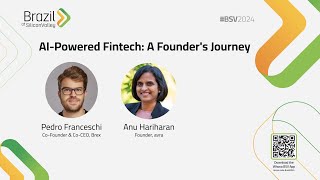
Conference panel (YouTube) in which Pedro Franceschi (co‑founder & co‑CEO, Brex) and Anu Hariharan (founder/GP, Avra; former YC Growth) discuss founder origins, concrete early Brex tactics, a painful pivot, leadership and operating-at-all-levels, burnout and mental health, and practical AI experiments. Key points: Pedro’s early exposure to coding and first job at age 12 (iPhone jailbreaking community); Brex’s early technical/legal hustle (prepaid-card workaround by fronting funds and billing later after reading detailed card rules); the strategic decision to exit SMB customers (offboarded ~20,000 SMBs) and refocus on core startup/mid‑market customers in late 2021; leadership expectation that senior leaders remain deeply connected to execution ("operate at all levels"); Pedro experienced burnout in 2021 and now prioritizes therapy, sleep, meditation, diet, exercise; early internal AI experiments (calendar-integrated memo autofill) and advice to founders to prototype with models themselves.
Chapters
Hi everyone. Good afternoon. Are you excited about our last and amazing panel? Let's go. Are you excited for the happy hour after that? So it's a pleasure to announce. My name is Daniel. I'm a Berkeley MBA and Director of Sponsor Relations here at DSV and I'm excited to welcome to stage Pedro Franceschini and Anu Hariharan to lead the panel. AI Powered Think A Founder's Journey. Pedro is a co founder and co CEO of Brex, which he founded in 2017 with Enrique Dubogras. A native of Rio de Janeiro, Brazil. He was the first person to jailbreak the iPhone3G in Brazil at the age of 12 and co founded payments company Pagar Me with Double Grass when he was 15, establishing it as a leader in the Brazilian payments ecosystem. He rolled at Stanford in 2016 after selling Pagar Me, but a year later he joined y combinator Winter's 2017 batch to fund Brex with Dubograph after noticing that early stage startups could not get access to corporate credit cards. Anu is the founder and Managing partner of Avra. She was most recently the co founder and managing director of Y Combinator Growth Fund where she worked with several hundred growth stage founders. She led YC Growth's investments in Brex, Fieri, Gusto Whatnot, among others. Prior to yc, Anu was a partner at Andersen Horowitz where she worked with the management teams of Airbnb, Instacart and Udacity, amongst others. She has an Ms. In Electrical Engineering from Virginia Tech and an MBA from Wharton. Please join me in welcoming to our Stage Pen Pedro Franceschini and Anu Hariharan.
Thank you.
Thank you. Well, I interviewed Pedro last year at the same conference, but in Boston, and I told him I'm not going to repeat the same questions. So we switched the questions. But I think this will be new information for all of you because I think we've all heard the founder journey of Brex, especially you Anu, many times and I actually did lead for context. I let Brexit series be in late 2017, early 2018. So I've known Pedro and Enrique now for six years and so we can go into bunch of topics. I think what we're going to do here is bucket them in two or three areas and we also have time 15 minutes for Q& A. So do submit questions and I'll make sure I'll get to them towards the end. But the first chapter I want to touch on Pedro, is I think you've not talked about this publicly. But I do know this was a big influence in how you've shaped as a founder. Your mom's role.
Yes.
Can you touch a little bit on that?
Yeah. I said this to. To a few folks on my team and to Anu as well. Anu's a parent, so I was telling her the stories of, like, what's the role that my mom played in my upbringing? And there's a few decisions that I think your parents make that sort of totally change the trajectory of your life. And my mom had this decision when I was 8 or 9 years old. I was learning how to code and spending a lot of time at the computer. And there was this article that came out that Bill Gates daughter could only spend 45 minutes a day in the computer. So my mom read that, and she was like, well, if Bill Gates daughter can only spend 45 minutes, maybe you can spend half an hour. And that's super fair. And had she done that, I wouldn't be able to learn how to code, and my life would have been totally different. So that was insanely valuable. And then she also let me work when I was 12 years old, which was a little controversial back then, but thank God she did talk a little.
Bit about that, because I think you had written. So the way I knew the story is for Women's Day, Pedro had written this note of all the decisions his mom had made and helped him, which really influenza. Talk about the first job you had at 12 years old and how your mom sort of walked you into the office.
Yeah, for sure. So when I was 12, I was very involved in this iPhone jailbreaking community back online and in Brazil. And then this. This company in Brazil was looking to hire iOS engineers, but no one knew iOS development. Back in 2009, the App Store had just came out, and then they were looking for someone that had experience, and I had some. And then they asked me, hey, were.
You looking for a job at the time?
I was not looking for a job. I was just working on open source and having a lot of fun at it. And then they reached out to me and they said, hey, it looks like you know how to code. We're interested in someone that knows how to code. You know, why don't you come work at us with us? And I used to lie my age online. I used to tell people that I was 14 and not 12. Made a huge difference in my mind. Trust me, 12 to 14 is a pretty big gap when you're 12. And then they're like, well, you're 14 in Brazil. You can technically work legally when you're 14 under a few different circumstances. And I was like, well, you know, I saw that email and then I showed it to my mom and. And she's like, well, you can't work. And then I convinced her to let me go interview there. And then she came with me interviewing their office, and then she ended up letting me go there. But it was not very obvious on her side, so I'm grateful she did it. And she also told me that if they did anything to me, she'll kill them. Probably a fair disclosure.
She also told them that, right?
She told them that.
Yeah, I remember this.
She interviewed and was like, hey, hey, if anything happens to him, I'm going to kill you guys. And not laughing. But I'm glad she let that. Otherwise I wouldn't have learned how a company works, how a startup works, and so on and so on.
So definitely she's helped enabled you to pursue the areas that you wanted. But also at an age where it's not obvious and it's very difficult to make those decisions, and it gave you an opportunity set to really scale. There's another story that I want to touch on, which is you had this extreme fear of public speaking. And I remember this video from when you were 13 years old. Well, now we can't tell, but if there is a video of when you gave a talk, 13 years old, talk about that was like the. How you overcame that.
So I gave this, like, Ted Talk in 2010 when I was 13, talking about the stuff I was doing, the iPhone, jailbreaking community. And my mom helped me write the talk content, the talk track. And obviously was great that she helped me because I had no idea what I would do. But, yeah, I don't know. I think it's just exposure therapy, shock therapy. You just do it every couple of weeks, especially internally in the company, and then you learn how to get better at it. But I don't think there's a. I think it's just doing it more and more, and then over time you learn the cues. But I was. I was pretty bad at it early on. Now I'm just like, okay. But there's people that are really good, and I think you see what they do and what makes them really good. And like anything, I think you can learn it, but it's a journey. You look at the folks that are really good, they spend a lot of time and energy getting there. So rehearsing also helps.
Great. Okay, so now moving on. You touched on Hustle. You said you've hustled a lot. And as a founder, I think that's the most important skill one needs to have because you get punched in the face every day. I'm probably the youngest founder in this room, only six months old, so I do realize that. So talk about, maybe give two or three examples. It could be from the early days of Brex, or it could be earlier than that too, where you had to learn to hustle and what did you exactly do?
Yeah, I mean, there's a few stories. I mean, we were talking about this one before, but one is early on at Brex, we had just built this previous company in Brazil called Pagarmi that was basically a version of Stripe for the Brazilian market. We sold that in 2016 and came to the US for college. After three months in school, we saw that we like to work more than we like to study, so we wanted to get back into working. And then we wanted to get to know who are the great people in Fintech. Max Lavchin from PayPal, the founder of a firm, was one of those folks. And then there was this job fair at Stanford and then there was this booth from a firm, his company, and then a firm was smaller back then. And then we decided to interview Enrique and I to get to meet him. And then we sort of went through the whole process, got at the end and said, hey, actually we want to start a company in Fintech. We just want to pick your brain. Sorry to waste your seams time, but we just want to get ahead of you, in front of you. And he ended up investing. He was literally our first angel investor back in 2017, which we're grateful for.
I remember that because in YC we were like, how the heck did two 19 year olds get in front of Max Levchin? We were like, did you get an intro? They were like, no, we just applied for a job and in the end we said, to accept this job, we need to meet Max Levchin. And then you convinced him to invest?
Whatever it takes. I mean, throughout the course of Brex, there's been, I don't know, hundreds of stories of not just us, but the whole team having to hustle to get the company off the ground. I think early on, I remember this was people had this idea of building credit cards for startups before, but no one has succeeded. And we went to talk to a few folks that have tried to do it before and they all said, well, it takes two years to launch it because you have to get all these regulatory approvals and you have to get A partner bank on board. And it's all this sort of whole set of obstacles. And then we had this idea, well, it's very easy to launch a credit card, but it was actually very easy to. It was very hard to launch a credit card, but very easy to launch a prepaid card. So we're like, well, what if we have a prepaid card that we upfront the funds and then we tell the customer it's a credit card and then we just bill them at the end of the month. So we had that idea and then turns out that was much easier to get going in life, but we had to get compliance people and Visa MasterCard on board. That was technically okay. So I remember having this conversation. People said, well, what are you doing is like, is legal? And then I say, well, where is it in the law that says that it's illegal? And then back then MasterCard had these manuals of 1800 pages with every single requirement, every single rule. And we read all of them. Back then there was no chatgpt, so you had to read it. Speaking of AI and I read it over a few weekends and then we just knew all the regulations and then those kinds of things sort of equipped us to just be very deliberate about where we were taking risk and where it was just like completely okay to do what we were doing. And over time there's been so many examples of things that people said, well, that's not possible or that's not supposed to be this way or something, that we had to push the envelope to serve customers better. And it just became part of how the company operates and how Enrique and I operated. But I mean, there's a lot of stories.
So. So I know that hassle is super important and you guys actually do that exceptionally well, but not always it works and most of the time it doesn't work. So can you go back to some of the hardest moments where you tried everything? Because there are times I know you try everything and you're like, geez, nothing is working. So can you give an example anywhere in your journey where that was a moment and how did you power through it?
Yeah, I mean, I think Brex was like unusually lucky early on to find product market fit very fast. Really the challenge was not like, do people want credit cards? We knew there was demand. The question was like, could we build it? And we sort of had this sort of first 18 months to 2 years of early success. And then we hit this phase where we were hitting just sort of an asymptote on the startup market. Share and then we had to find where else we can grow. And we had two options. We could either go serve small customers like small businesses, traditional small businesses, or we could go serve like larger mid market enterprise companies. And we made this decision and we went sort of all in of the whole company towards serving small businesses. And then we realized that it was harder than we anticipated. The unit economics didn't work the way we anticipated. It was harder to just grow the customer base and just deliver value beyond what a bank would do. And then we had to sort of look inward and say, well, we're sort of a year down this path. And I think a lot of times you as a founder you have these sun cost fallacies where oh, I put so much time and energy behind this thing. But realistically one of the things that I talk a lot about internally is like, well, ignore your own mistakes and just imagine a new management team came in, they looked at this company at this market, like what would they do? And then just do these things yourself. And this was one of these moments where we're like, well, if anyone looked at our own customer base, like all these startups that are growing and becoming large enterprise companies in a matter of years, and then you have these small businesses that you don't understand enough how to serve them well, well they would tell you that you should might as well focus on your core customer and do that really well and serve them throughout their whole journey. So it was a pretty painful moment to just like pivot the whole company. We did this at the end of 2021.
Can I double click? Yeah. So what, because how long did you try SMB and what was the scale of the business in terms of customers, how many SMB customers, how many startup customers and what made you realize it's not working?
Yeah, so I think we were probably, I would say 40,000 customers back then. Probably half were SMBs, half were startups.
So 20,000 SMBs.
20,000 SMBs.
That's a lot of SMBs, a lot of SMBs to feel like it's not working.
Yeah, I think the thing is like when we zoomed out it's like, can we be the best in the world at this? And the answer was like, no. Why? So because like fundamentally like we're competing with banks, right? That's like the whole thesis of Brex started as like, well, you know, you don't need to have a traditional banking relationship. That's why, you know, we sort of replaced SVB and we did a lot of that movement in terms of Positioning the company as a bank alternative. And then when you look into what a small business cares about, ultimately it was about credit. It was like, and realistically, is there any edge that we can have on providing credit better than a bank? And we just didn't find it. We just didn't think there was something structural that was that important to the customer. To the point where they would say, well, actually I'm fine having either more expensive credit or worse credit because of your tech, or we didn't find a way of using tech to do that better. So that was a little bit of the reason. And then at the same time, when we looked at our own customers, they were like, well, we need more software, we need more automation, we need more tools to help us manage spend at scale. So it was both, one thing sort of pulling us away and repelling us, and another thing pulling us in, which gave us the conviction. And we went all in in the decision. We literally off boarded 20,000 customers. We said, hey, we can't serve you well, we're sorry. And it was extremely painful. We did a lot of mistakes in how we communicated and rolled that out also so we can talk about that. But was not our finest PR moment. But the fact is, I think if we hadn't done it, we would not be able to serve our customers as well as we do today because we'd have 20,000 customers that we sort of made a promise to serve them well. And I think sort of not living up to that would be frustrating for them and for us.
So let me ask you this. It's very hard for CEOs to change the decision at that scale. And most companies would say, well, we got to figure it out, just make it work. Both how it's not just, I mean, the really good thing you all did was not just embracing that decision, but executing it. It's really hard. So how did you do that at that moment to tell the entire company, okay, that's it, what we've been working on for 12 to 18 months. And by the way, 20,000 customers. But that's not the right thing. How did you make that change?
Yeah, I mean, I think there's no easy way. I think the first thing is like, hey, we made a mistake. Here's the data we had back then, here's the data we have now. And I think we run Brex pretty transparently. So we share our memos and how we make decisions, we share our board meetings materials. We share a lot of this stuff internally. So people have the context. So it Was not like, hey, by the way, we're changing our whole strategy, and you've never seen this before, and then now we're doing this whole other thing. I think people were brought along the decision in the first place. And then in terms of the change, I think the biggest thing was probably just telling people, hey, we're going to go back, take one step backwards, to take two steps forward. And we were back in the weeds of building the product ourselves. I was in design sessions of engineers building APIs and the kind of stuff you do really early on. And I think in many ways it's sort of forged a lot of the way the company operates today. But I don't think we're sort of done yet. We're not where we want to be, but that's how we've done it thus far in terms of just like, really going back to getting your own hands dirty and operating at all levels, going deeper. And I think a lot of the company ethos became around that.
And how did you personally manage your emotional state during that phase? Because that was not, you know, as a founder now I can say it always feels like you're holding a deck of cards and it can crash any moment. So how do you feel?
I think pretty hard. I'm pretty bad. I mean, I had like a burnout in 2021. Was not fun. And if you're a founder and you haven't focused on your mental health, I highly recommend doing so, especially before you need it. I think I learned it the hard way what happens when you don't do it proactively, but, you know, you deal with it. You go to therapy, you go to psychiatrist, you take meds, you do whatever is necessary to get back on track. And I think, like, a lot of people don't pay attention to before the right time because they sort of have to be in this position of like, oh, we're like, invincible, or you have to sort of show strength all the time. And I think having a place where you can be real and honest, like therapy, for example, I think really helps. But I think 50% of the journey of being a founder, as I'm sure you can tell, is like, it's all in here, it's not outside. I think we make the problems much bigger than they actually are and in our own sort of weight of our own expectations on ourselves, I think make sometimes us our worst enemy. And took me a lot of work to learn how to manage it. And I don't think I'm done. I think it's A constant journey. But 2021 was like a pretty hard year on that dimension, besides the pivoting, even though we're growing 7% month over month on a $200 million revenue base, so things were going really well. But I think we knew that internally there were issues in how the company future would perform.
So how do you manage it proactively now?
Well, I do a lot of things to sort of keep it on track of therapy. Meditation, sleep, diet, exercise. That's like the five things I do. And I think like a lot of times people say, well, I'm really busy, I can't do all these things. And it's like, well, you can either do them proactively or something's going to give you. Sometimes something's going to happen and you're going to have a hard stop where you can't manage any of these things. I still work 12 hour days, so you still have to do both and probably sacrifice somewhere. But I think you just have to make time. And I think the moment you see what happens when you don't do it, you start to really pay attention, which is what happened to me, unfortunately. But hopefully people can be more proactive about it.
So I have to tee this up to the next question, which actually a lot of people from Brex told me to ask you. Which is Pedro's favorite thing to say now is operate at all levels. So what does it. And I do know that what is the day in the life of Pedro and what does it mean? Can you show, like, share that in terms of how you operate at all levels?
I mean, this is one of those things, like I say a lot internally and then people started talking about it externally and then all of a sudden became like a meme and something I maybe regret saying in the first place, but no, I mean, in all honesty, so the story, this story started with like. So I was in this, like, yc. I think it was a YC dinner. And then this founder asked me like, hey, like, if you look historically at every single leader that worked in the company, what is the single biggest predictor of leadership success? Like a leader that works and a leader that doesn't work in the company. And I didn't have a good answer back then, but I started to think about it because it's a pretty profound question. And I think, and the answer to me sort of over time became pretty obvious, which is like someone that regardless of the level of seniority that they are in, can operate at all levels and what it means to operate at all Levels is, you know, you can be a very senior leader and there is no such a job as like just setting a strategy. It's just like the execution actually like matters tremendously. And I think really the way this means is like, you know, I think we expect people at the highest levels of leadership to be intrinsically connected to the sort of finest details of execution. And I think a lot of companies have this model where you grow a little bit. You have a team of like 50, maybe 100 people, and then you start to sort of operate through like proxies, right? So you have someone in the end, like an engineer or a salesperson that's actually building a product, talking to customers and doing the actual thing that delivers value. And then you have the decision makers, like the CEO and the executives who sort of many layers removed from where the value gets created. And then it starts to have these layers in between. And what we saw is as the company gets bigger, first it's super slow because you have all these layers between where decisions are getting implemented and where decisions are made. Second is you make wrong decisions because you're not familiar with the nuances of what it takes to make something really work. And the third thing is you start to sort of lose the passion for the craft. And what does it take to build a great engineering culture? If your leader does not understand what it means to be a great engineer, it's extremely challenging to do that. So one thing we started doing, which very controversial people don't like it, and I'll tell a story of why is that we started to interview for individual contributor skills at every layer of leadership at Brex. So when we're hiring a cmo, last year we were literally reviewing website copy with them. We were hiring a sales rep, a sales leader now. And you're literally going through sales pitches of them and saying, hey, what would you do differently on this call? What's your feedback? Because that's sort of the way the company runs. And I think the biggest thing that we did is you just set the expectation that there are no people managers in the company. So you, if you are a leader, you are responsible for the work output for the work product. And the story I tell internally is there's no such thing as, oh, my team is doing that. No, you're responsible for whatever's shipping or whatever is in front of the customer and your team is helping you do more, but you're still accountable for the final result. And imagine you get, I don't know, Jony, I've at Apple Designing the iPhone. And it's not like, oh, I have a team on the corner designing the iPhone. No, he's designing the iPhone himself. The team is just a way of getting more done. And I think we sort of took this to heart and we did a pretty big restructuring the company earlier this year, and we sort of very deliberately changed a lot of the leadership expectations. And we bring leaders right into the details and into the things that matters to customers, which is hard, but we think adds a lot of value.
Yeah, no, I would underscore that because I think that's one of the big differences of startup. Why startups move faster than large enterprises is because there are many levels of decision making and information flow is not as smooth. In fact, Max from Fair, he runs this leadership meeting on Monday. He doesn't allow any of the leaders to bring anyone from their team. And if the leaders don't know the numbers on the deck or cannot answer the questions, he says, then you're not responsible for the output. You don't know. You need someone else to answer this question.
It works really well.
That makes sense. So what's the day in the life of Pedro today? How was your day today leading up to this event?
Well, how am I today? It's sort of funny. We're rebuilding a lot of how our go to market works. And yes, we're using AI for some of it. Yes, Surprise. But I was literally a group of two engineers figuring out how to tailor the way we do segmentation of our customer base and how we message them around things that we do well for the customers that they don't know about that are getting lost in translation today. So putting the weeds there. And then typically the way I sort of think about my life and where I spend my time is there's like two big buckets. One which I would call. Which is what I probably call general company management, which is what you would typically expect a traditional CEO to do, which is a mix of running a leadership team, internal company events, all hands, communication, metrics, meetings, those kinds of things, and some external things like this and external things like investors. That's like bucket number one. And I probably spend 40% of my time on this and then 60% of my time. I try to spend time diving deep in one or two topics that can really materially change the trajectory of the company. And typically, the way I approach it is like I start by asking a very simple question, like, what is the company bottleneck? And there's always one bottleneck in a company. And the question is, like, what is the single thing limiting your rate of growth? And there's always a single thing. Typically doing that. For Brex, for a long time it was underwriting, then it was demand generation. Now it's probably product simplification in a few segments. And then because the bottleneck limits the rate of throughput of the whole thing, it's definitionally the highest leverage place where to spend your time. And then in that single place, I, you know, people hate what I do, but I run daily meetings with the teams, and I'm just like, every day there's a meeting at the same time in the morning, super early, and then we want to see progress on the topic in the next 24 hours. And we just, like, break all the rules and how the company runs to get that thing done. It's pretty disruptive, but I think it's how a lot of things get done, I think, and we've seen it working over and over, a lot of our leaders do the same thing. And I think it just really becomes the exercise of, like, what truly matters and how do you really prioritize that one thing? We don't always get it right, so. And it's pretty painful when we don't, because when you're focusing on one thing, you're not hedged, right? So you're not doing three or four things, you're doing one. So, you know, probably, you know, we spend as much time thinking what that one thing is as much as doing and then just like, diving really, really deep, like speaking to customers, looking at designs, looking at, listening to a lot of calls internally, speaking to folks externally. But it's a lot of just gathering information and pushing the teams to perform above what they would probably normally do and just raising the bar all the time.
Yeah, I love your framework on what is the bottleneck that's the single limiting rate of growth. And your style of, hey, people hate this, but I'm gonna do this. So Pedro was recently at one of the sessions we do in Avra is teach post Series A founders how to scale as a CEO. And you came for the first session and he said, I think you said, I used to really mind the P's and Q's. And I was like, hey, this exec knows way more than me, so let me give them rope to you now. Have rotated to, I'm unapologetic about what I want and I'm going to go for it. And many of the founders really embraced that because it's the delicate balance of when do I go in versus Not.
Yeah. I think you can't do it on everything. I think you have to be very deliberate on what you choose to do it. Because obviously, if you're hiring people that are better than you, they probably know more about that area than you. And I think typically, a lot of what I end up doing is just breaking silos. So it's just like, it's not that someone ever thought of an idea. It's that getting it done required five teams to coordinate to get something across the line. And Brexit's 1,000 people, so maybe it's a little different. But even when you're 10 or 100, there's more context that's required. And someone is just doing one thing, may not know. And you as the leader, typically has more of that visibility. So a lot of it is just breaking walls and just letting people run. So I think it's less a matter of, do I know more or less in this person, but you may be more equipped to. To eliminate the barriers that they have to get that done.
Great. Now, one question before I turn it over, I'll move to the audience. Questions is, how do you learn? Because you have this focus on growth mindset, and maybe given the theme of this conference is AI, how are you learning today? And how have you been learning the last six months to get up to speed on AI?
Yeah, I mean, I think you have to do it yourself. So I played with a lot of the foundational models personally, and I think the biggest thing was, I think there's two buckets. One is, I think you just have to try out stuff. And I think when you are a lot of the sort of. There were a lot of Playbooks on how to build great companies and how to build great things. And a lot of these Playbooks, they are changing now. So there is this sort of. You should always have some degree of skepticism of Playbooks, but I think especially now, probably should have even more. And we've seen internally how a lot of the go to market Playbooks, customer success, customer service Playbooks will change with AI. And I think, how do we just embrace those early and think if we were to start a company from scratch today, how would we do these things? And a lot of things would be different. And in some ways, we're at a disadvantage for being larger because we have so much more to change, to embrace AI. And I think the. The second thing on learning is like, I think you have to be okay making mistakes, right? So you have to be okay saying, well, we're gonna try out this one thing and we took like three or four bets in our product with AI, a few round accounting, a few around automation of expense tasks and a few round onboarding. But the reality is like a few of them worked, probably half of them worked, half didn't. And I think if all of them were working, we'd probably be too late in pushing the boundaries of what's possible of AI. But I think nothing replaces you personally getting involved, getting a feeling for the models, getting a feeling for what they can do and what they cannot do. And building that intuition yourself, I think helps you whenever you go call bullshit on someone and when you say, well, we can't do this, I think you have firsthand knowledge on what the limitations are and what's changing. But I mean, I'm not going to lie, I think it's incredibly hard to keep up with the pace of what's happening. And I have a lot of friends that do that and I ask them a lot of what's happening and I try to stay up to speed, but it's super, super challenging.
And when you say you played with the foundation models yourself, can you give an example of what exactly you did?
I mean, I built some things internally. So I coded this bot that would go through. We have this thing called memo requirements at Rex, where whenever you have a business expense, sometimes you have to justify the memo. So I build this saying that integrated to your calendar, got your calendar and then said, well, here's an event. Can we tell something about this expense based on your calendar? So if I'm having coffee with Anu at Google and then I swipe my card somewhere nearby, probably it's because I'm here with you. And that context eliminates a lot of friction for the employee who'd have to typically manually add that by hand. So I build a little app that did that internally and it worked. We tested with a handful of customers internally, then a team that was much better than me productized it and made it into something we could put in front of customers. But I think if I hadn't built that, I would not know what's possible, what's not possible. And also building intuition. And I think generally people respect you more if you still stay sharp into what's happening on the ground. So I try to do that. And especially on engineering, sales and finance, I try to stay connected to what's going on.
And any advice you have for people who are non technical on how to.
Keep up on AI, gosh, I think, well, find someone that is.
It's not a lot of fun. Find Pedro.
Yeah, No, I mean, in all seriousness, I think there's a lot of tools that are making that easier now, and I think a lot of these things are going to be available for everyone. So I think at the end of the day, I don't think there's going to be a big competitive edge on just AI alone. I think the things that matter are still the same, which is like, do you understand your customer well? Can you build something that generates more value for them? Can they pay you for that? These are sort of like, you know, tales as old as time. But. But I think AI just, like, is just sort of a new tool to do the same thing, so. And I think a lot of the tools that we already use are going to start incorporating that. So, you know, if you're trying to do marketing to your customer base, like, what are the new things of AI that are possible? And, yeah, maybe if you're technical, you can try out a few more things. But I think you maybe have, like, an advantage of months, not, like, years. So I think the accessibility of these tools, I think, is making this much easier. So even if you're not technical, I think you're going to get the benefit of this a lot. But I do think there's an importance still in being ahead, even if for, like, three or six months, because you have some alpha there that you can capture in terms of whoever you're competing with not doing it as aggressively as you are.
By the way, I don't have any questions from the audience, so I'm surprised that you don't have. Oh, I have to refresh. Okay.
Yeah.
I have.
Fun.
Sorry, I was like, maybe this audience have. Oh, there you. Sorry. Okay, great. Okay. Oh, great question. Did you share with your.
There you go.
Did you share with your investors aboard that you had a burnout?
I think probably not at the moment. I think Enrique was very, very, very bright and smart in how he helped me navigate it, which I'm very grateful for, as I was sort of had it under control for sure. I think one thing is when someone that you trust a lot, like a co founder is next to you, they sort of give you a lot of the reassurance that, hey, things are fine, you're fine. This is like a moment in time. And that alone gives you this sort of, like, peace of mind to navigate it. But after, Yeah, I mean, probably a month or two later, we were like, hey, this happened. I'm fine now.
But, yes, I do know. Enrique told us that I'M very worried about Pedro, but we're making sure he's fine. But that's all he said, so he didn't know what he was worried about.
He had a co founder really helps.
Very good. Co founder. Yes. You touched on a very important point, which is. This is another question. You touched on a very important point, which is mental health. Can you share a bit of the culture at Brex and the importance of taking care of yourself? Is there anything you've implemented at a company level to make sure burnouts don't happen?
Yeah, I mean, I think, look, I think we do the basic things that every company should do, right? So people take time off. I think people, we talk a lot about it, we give people mental health support and coverage. But I think there is this sort of myth or belief that some people have that because people are working really hard, they will burn out. And I think that's like, not necessarily true. A lot of the times that you burn out is because you're working really hard, that's for sure. But probably the moments that I was working the most in terms of number of hours or intensity are sort of very lightly correlated with the moments that I had a challenging time in mental health. And I think the reason is because, like, if you just think about, like, hey, what are the best moments in your career? You're not going to talk about the day that you left the office at like 4, 5pm and went home and was sort of completely uneventful. You're probably going to talk about the days you were launching this product. It was like 11pm and things were exploding and you had so much traffic that you couldn't handle and it was phenomenal. And then you sort of crushed your metrics and that sort of completely changed the trajectory of the company. Those are the days that you remember. And I think a lot of what we try to do is create work opportunities that feel and are like that. And I think a big benefit of focus is that more people get to experience that. So when you're working on a lot of things that don't matter, those things typically don't have an impact. And I think the dopamine cycle of I work really hard on something, that's a very hard problem, I ship it and nothing changes, I think is pretty frustrating. And I think that's as big of an issue as burnout. So I think a lot of what we try to do is, yes, that take care of mental health. Let's make sure all these things are covered, but at the same time, let's create like, you know, an environment where people can do the best and most impactful work of their careers. And that's, that's sort of very deliberate thing we do a lot.
Yeah. And I would say that I think people often confuse work, life, balance with burnout. There's some truth to it, but I also think burnout actually happens when you don't get momentum on the things that you're doing, or you're just frustrated because it's not working the way you want. And when you get momentum, you don't think about burnout. So sometimes it's like taking a step back and saying, okay, let me reset. But to figure out what is actually working and do we double down on what is working 100%. Right.
Your own perspective into the problem, I think changes your mental model of how you feel about it. So if you say, well, we've been trying this for one month and we haven't seen anything working or six months, and sometimes how many companies, you know, that take three or four years to break out, that's a long time. It can take a lot longer. So I think just calibrating where you are.
Yeah. And I'll give you the example of OpenSea there, because NFTs took a long time to break out, even before, like now, of course, they had a big run in 2021 and people knew about it. But I think for three years, and I remember asking Devin this, I was like, how did you stay motivated to work on NFTs when, like, no one knew what the thing was? And he said, well, you all didn't know, but every week I was getting 100,000 customers and they came back and the retention was really high. It was like, from my angle, I had immense momentum in the NFT community. And so it was a little bit like, you have to really tune in to what you're working on and what's actually working and just focus on that flywheel versus if you're trying to. Like, the NFT market didn't have 1 million customers at the time. And so he was not aiming for it to be a million. He was like every week. But I was adding 100 customers and that was great. And I didn't pay for it.
Right, yeah, 100%.
Great. Okay. What are the challenges and benefits for Brex having the two core CEO model and in which situations do you recommend?
Fun question. Anu, as one of our most helpful investors, helped us, actually the most helpful investor, I should say, helped us a lot navigate this over the years. But look, people Ask me, oh, do you recommend Coco? And I'm like, as a rule of thumb, no, I don't recommend it. So take that with a grain of salt. Look, I know Enrique for 12 years. We worked together for 12 years. And the sort of level of symbiosis or whatever that we have is probably unusual in most co founder relationships. You know, we're best friends, we lived together in the past. You know, we spent a lot of time together outside of work. So there's a lot there that goes into it. The way we split it is we have this like internal, external CEO model where Enrique is external, I'm more internal and like the leadership team reports into me. I spend a lot of time in the sort of product go to market customers and we can manage a lot of the external stuff. So investors, pr, big hires, regulators, customers, a lot of the things that are external engagements, it requires a lot of coordination. But what I would say is over the 12 years, every six months to a year, we had to evolve the relationship. And I think it's a little bit like a marriage in which you have to find ways to make it work, work and continue making it work. But we're constantly learning. I don't think we're done yet, but it works well for us. But I wouldn't recommend it without a lot of disclaimers around it because it can go wrong in many ways if people don't know who's making decisions.
Yeah, I think you guys made it work well. It's not for everyone though. And I think you have to really know the co founder and trust and have it. You both are honest to each other, you argue with each other. So it's not, not like. Yes, last question. You've hired a lot of engineers from Brazil in the early days. You're hiring engineers in Brazil now. So how are the engineers from Brazil different from the engineers in the us? What skill sets do they bring unique to them?
That's been, by the way, Braxton's hiring Brazil, I should say that. So if you're ever interested in getting a job at a great company, you should apply to Brex. So a few things. One is we started hiring in Brazil because we had this belief that great talent was everywhere. And we started Brex in the Bay Area, then we very quickly opened an office in New York, then an office in Vancouver, then an office in Salt Lake City. And then during the pandemic we were like, well, Brazil has the same time zone mostly, so why not just try there? And I think what we found out was a couple things. One is a lot of people in Brazil, unsurprisingly, were equally smart as the people in the US And I don't think there's a difference in IQ or anything. There is a difference in training. So the training that someone gets in the US when they come to college here, when they go to work at a US Company, is pretty different. So a lot of what we had to do was just like, how do we adapt our assessment of talent, especially during interview, to calibrate for that? So in the beginning of hiring, for example, the role that we hired the most in Brazil is engineering and operations. But we started with engineering. And then I remember we had these very, very bright people that just failed the interview process, and they just didn't know how to answer the questions. They didn't know what we were looking for. And then someone on our recruiting team had this idea of saying, well, why don't we just send them a video of how to prep for a US interview? Like a YouTube, a public video. Nothing about Brex, just like a generic video. So we send it to the candidates and they started performing just like the US People. Right.
What was the video? What did you do?
It was a video on how to prep for interviews of U.S. companies. And what's the structure of interviews? Like how to do coding, whiteboarding, how to debug a problem life. And there's a bunch of websites that prepare you for that. I think we send them a few. So the question is, the talent was the same, the training and the opportunities were not. So a lot of the first learning was like, well, teach them at least how to get through the process. You're not going to teach them how to code because you can't do this in a week, but you can teach them how to interview. So we did that, and the results were pretty dramatic. Two is, once they got in, I think we saw that, like, hustle and hunger were a sort of pretty big offset for perhaps lack of experience that some of them had on paper compared to someone that worked at Google or Meta for their whole careers, which we hired in the US And I think I started to hear things unprompted. And folks at Braxton confirmed this, like, oh, the engineers from Brazil are amazing. They're great. They work so hard, they're so motivated, they're so happy to be here. So that was a pretty big energizing thing for everyone working around them, which culturally was very big. And then the last thing is, when you get someone who is smart, driven, capable, and you put them to work with other smart, driven, capable people that were trained in the very formal computer science program, program in the US or a very sort of like excellent engineering company. You give it a couple of years and those two people are at the same level again. People learn by working. I don't think people learn only in college. And I think we started to see, now it's been two years, we have 120ish people in Brazil already out of like almost 1000. And I think we started to see these layers of leadership emerging from folks in Brazil just by learning from the folks in the US and now they're at the same level. And that's something that we feel really proud of, Brex, because yes, those folks are working from Sao Paulo. They're working remotely mostly or from all over Brazil, not just Sao Paulo. And that they're learning these skill sets in a US based company and they're going to leave Brexit at some point and then start their own companies in Brazil, go work for other great companies in Brazil and sort of even basically level the playing field in many ways. And the talent bar in many ways, which we think is something we feel proud and excited for Brazil that we get to play a little role in. So we're pretty happy about doing it and we're very, very impressed with the talent in Brazil, I would say.
Great. Well, thank you so much, Pedro, for taking the time to answer the questions and thank you all for the audience questions as well.
Thank you so much. Thank you.
More from Anu
Company Building, Network Effects, and Understanding Different Business Models with Anu Hariharan

5 Critical & Company-Altering Learnings from B2B Startups | Y Combinator MD Anu Hariharan

a16z Podcast | E-commerce, Payments, & More in India's Evolving Retail Landscape